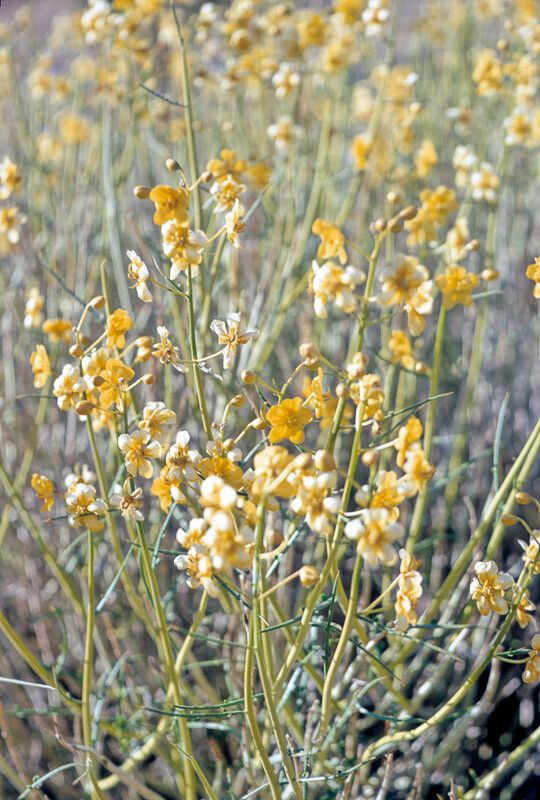
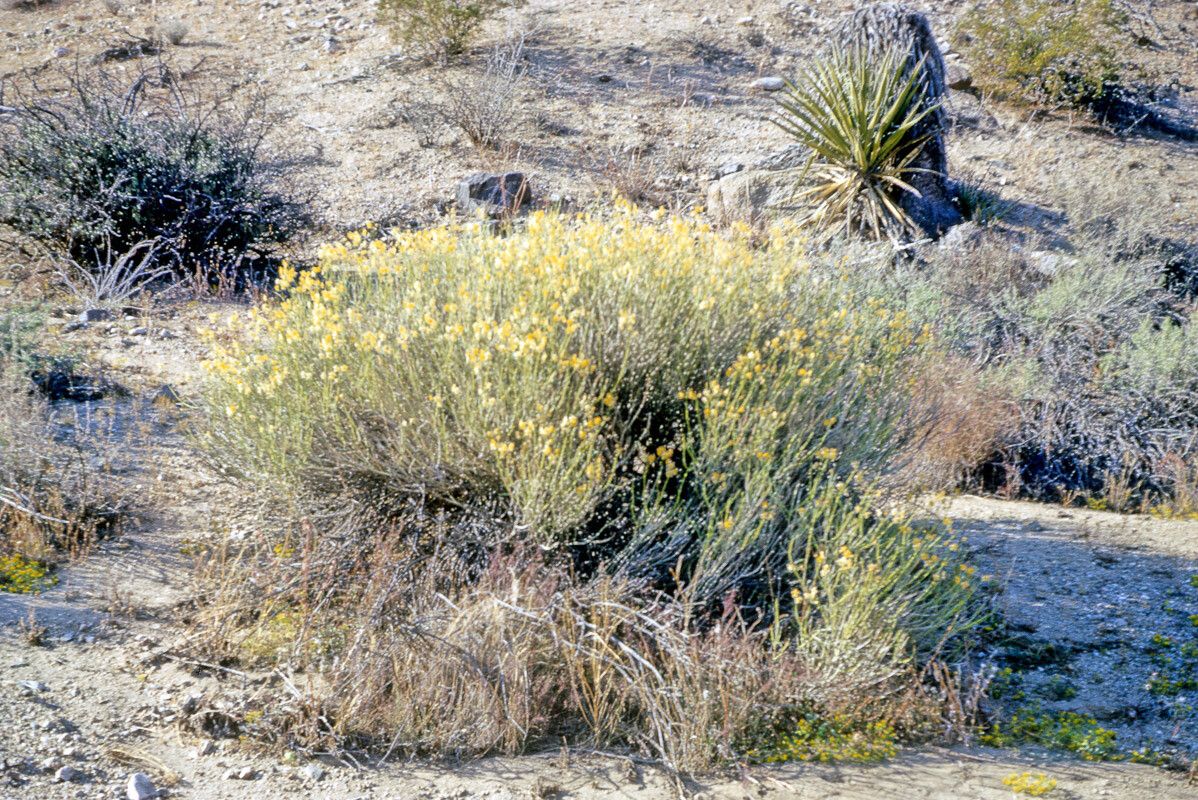
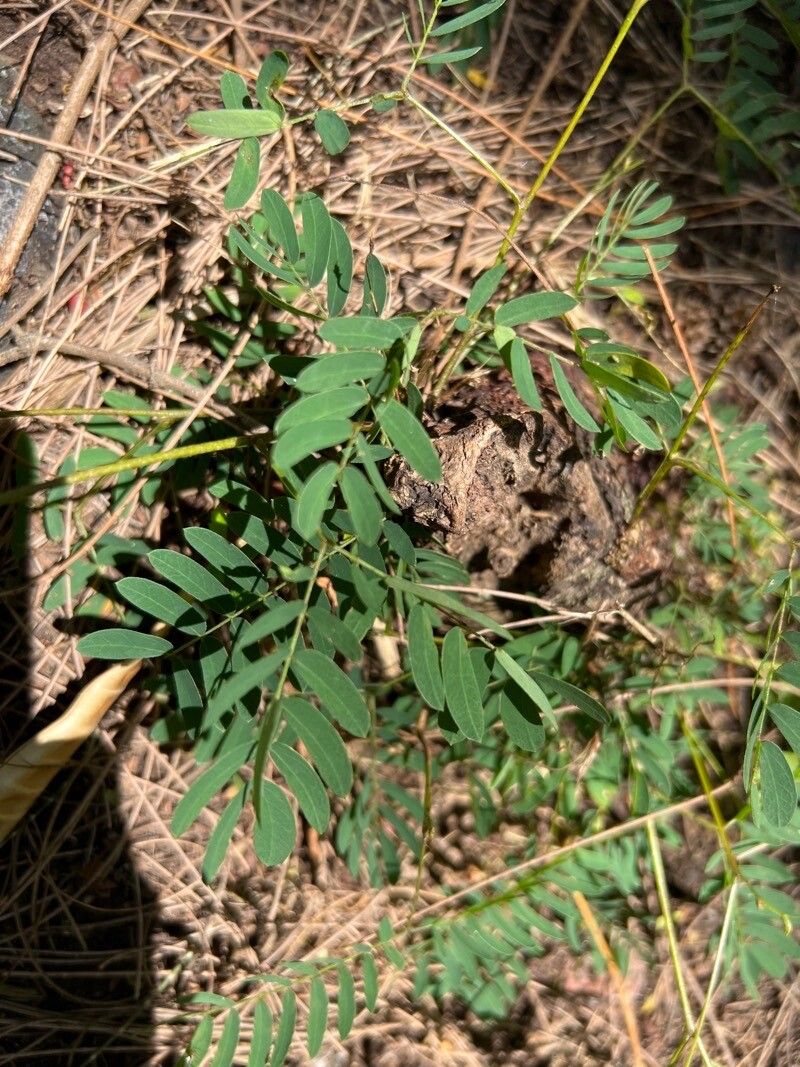
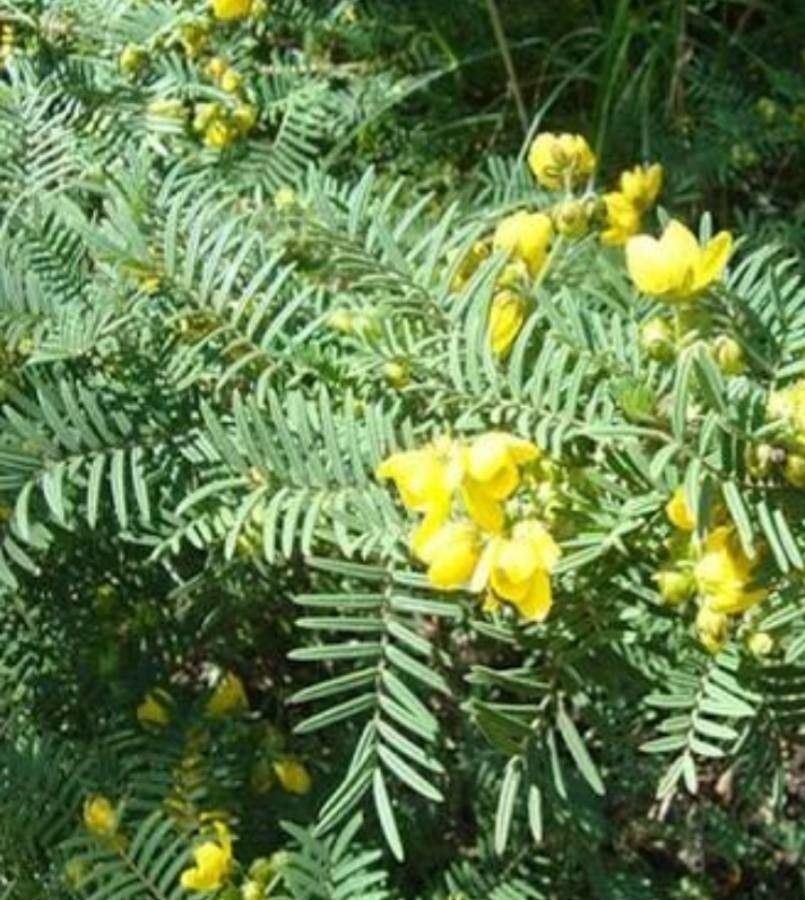
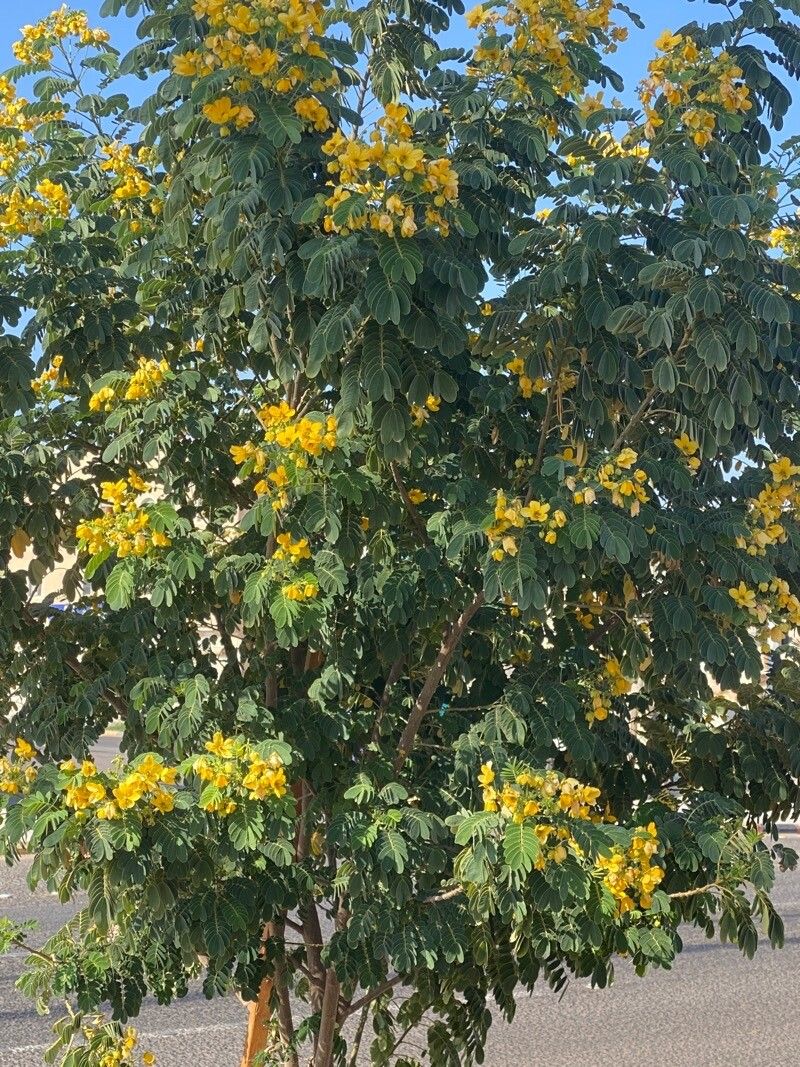
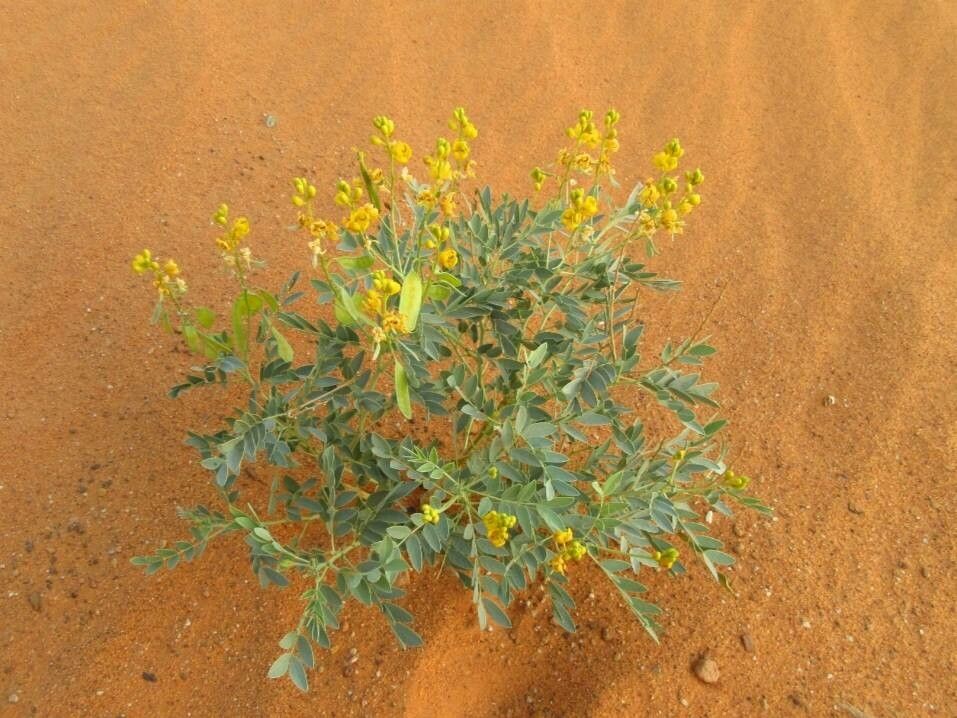
Senna armata is a species of flowering plant in the legume family known by the common names spiny senna and desert senna. It is native to the desert regions around the intersection of Nevada, Arizona, eastern California and northern Baja California, where it grows in sandy and rocky habitat, such as arroyos. It is a shrub growing up to a meter tall, its grooved, branching stems often narrowing to thorns at their tips. The spiny branches are coated in tubular hairs which help protect it from hot desert air. The spine-tipped leaves are each made up of two to four pairs of small leaflets. The leaves are ephemeral, dropping soon after emerging, leaving the shrub naked most of the time. Flowers occur singly or in small clusters in leaf axils. They are fragrant and showy, with five petals in shades of yellow to salmon pink, each measuring roughly a centimeter long. The fruit is a legume pod up to 4 centimeters long.
Desert senna is strongly resistant to disease and is generally not susceptible to illnesses. In terms of care, this plant is fairly low-maintenance. When grown outdoors it needs only minimal watering, and larger specimens usually do not require pruning. Smaller plants, however, should be pruned after they finish blooming. Desert sennat is appropriate for anyone with an outdoor area, such as a garden or deck, and does not need extensive care experience.
How to keep Senna Armata.
Light
Desert senna is native to open habitats, such as sunlit meadows and forest margins, which provide abundant light. It thrives in Full Sun but can also tolerate Partial Sun, adapting well to various sunlight conditions.
Temperature
Desert senna comes from tropical areas, where the climate is generally warm and humid. Consequently, it is adapted to high temperatures and humidity. It is sensitive to sudden temperature changes and prefers a steady thermal environment, so avoiding temperature fluctuations indoors is important. It usually cannot tolerate cold and requires warmer conditions to grow. If the environmental temperature falls too low, the plant may stop growing or even die.
Fertilizer
The best time to fertilize a Desert senna is in early spring as it breaks dormancy. This supports overall growth and encourages flower development. Fertilization improves the foliage, stems, and branches, while encouraging large, vibrant, and long-lasting blooms. It helps transport nutrients from the roots to the flowers and enhances the plant's health and resistance to disease.
Pruning
Desert senna is a drought-tolerant shrub known for its bright yellow flowers. To keep the plant healthy, prune it in early spring. This helps remove dead branches, improves air circulation, and shapes the plant. Regular care and pest inspections are essential for vibrant blooms and managing the shrub's size. For more specific advice, you can consult your local extension services.
Botanical profile.
- Plant Type
- Shrub
- Life Cycle
- Perennial
- Genus
- Senna
- Family
- Fabaceae
- Hardiness Zone
- 8-11
- Mature Height
- 0.91 m to 2.13 m
- Mature Spread
- 0.91 m to 1.52 m
- Leaf Color
- Green
- Leaf Type
- Deciduous
- Flower Color
- Yellow
- Flower Size
- 2.03 cm to 3.05 cm
- Bloom Time
- Mid spring, Late spring, Early summer
- Planting Time
- Spring, Summer
- Harvest Time
- Summer
- Native Area
- Mexico
Other names.
Reader questions.
What are the sunlight requirements for Desert senna?
Desert senna, known botanically as Senna armata, thrives in areas that receive full sun to partial sun exposure. Full sun locations are those that receive above 6 hours of direct sunlight daily, while partial sun locations get about 3-6 hours of sunlight. It's important to observe the movement of sunlight through your garden to ensure you pick a location that offers the right balance between light and shade. This careful placement helps in ensuring the well-being and happiness of your Desert senna plants.
What is Desert senna?
Desert senna, scientifically known as Senna armata, is a plant species. There is no additional detailed information provided about its essentials or symptoms related to it.