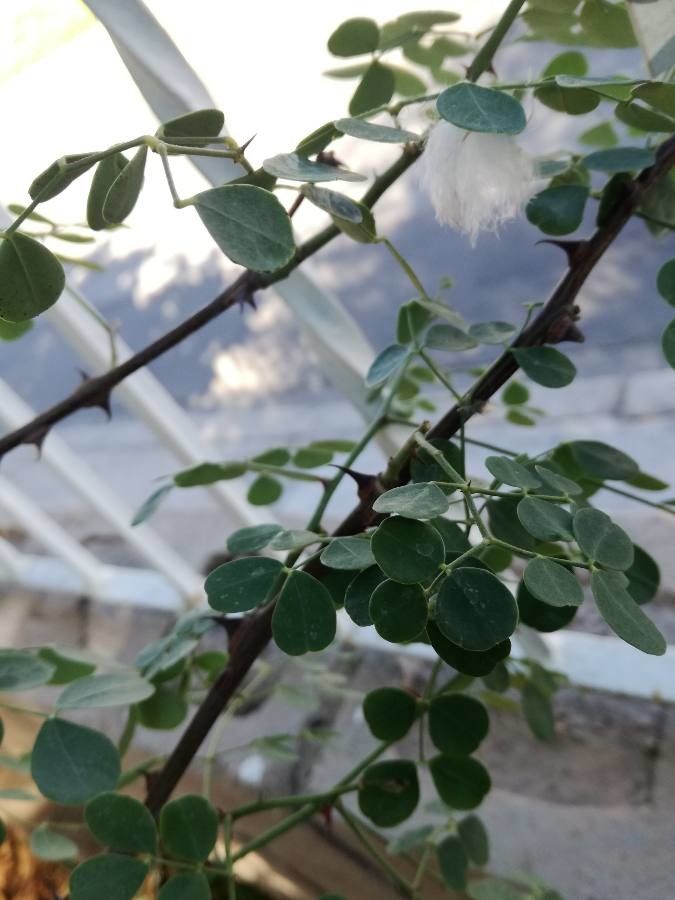
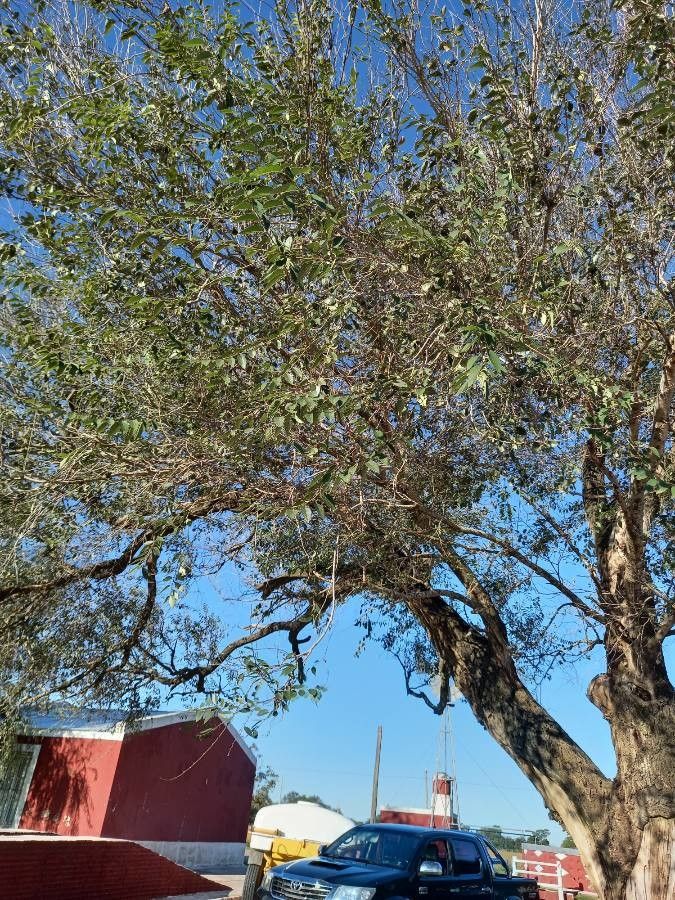
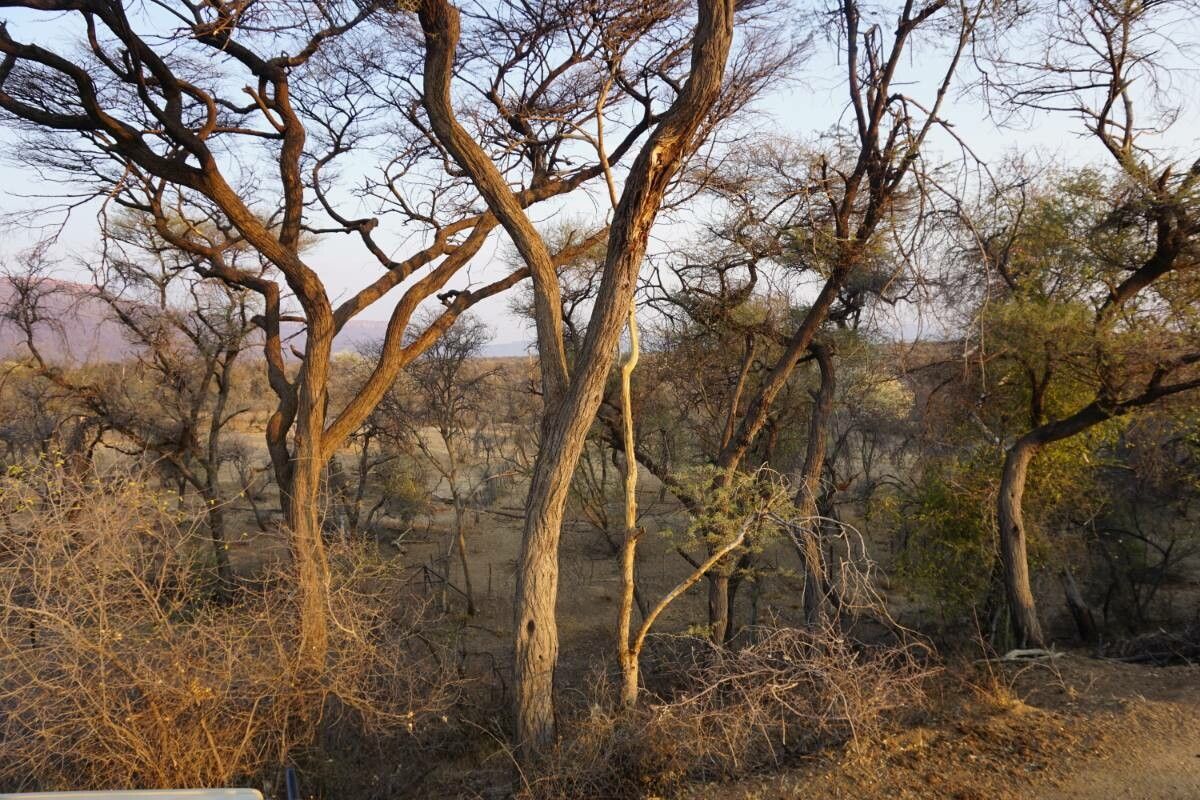
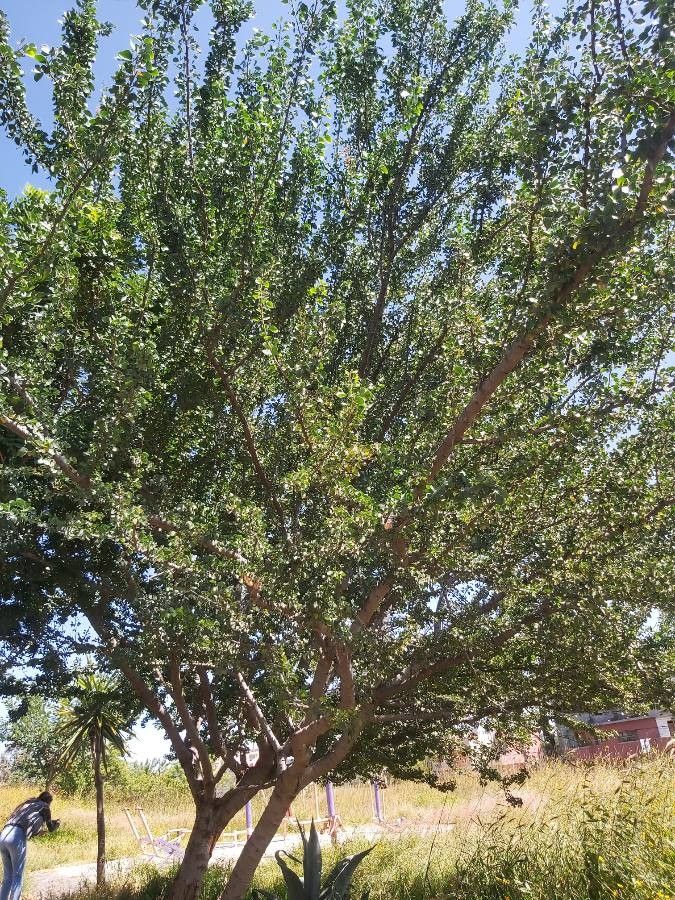
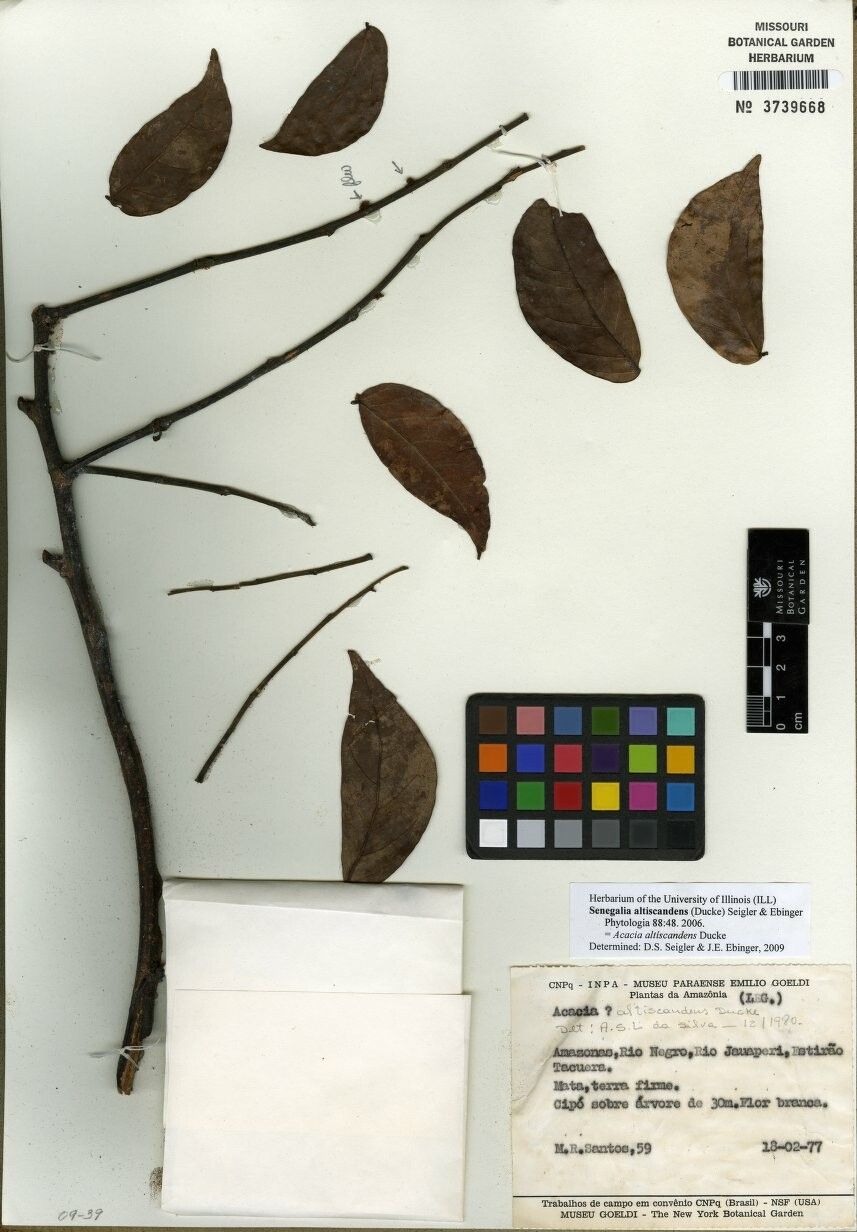
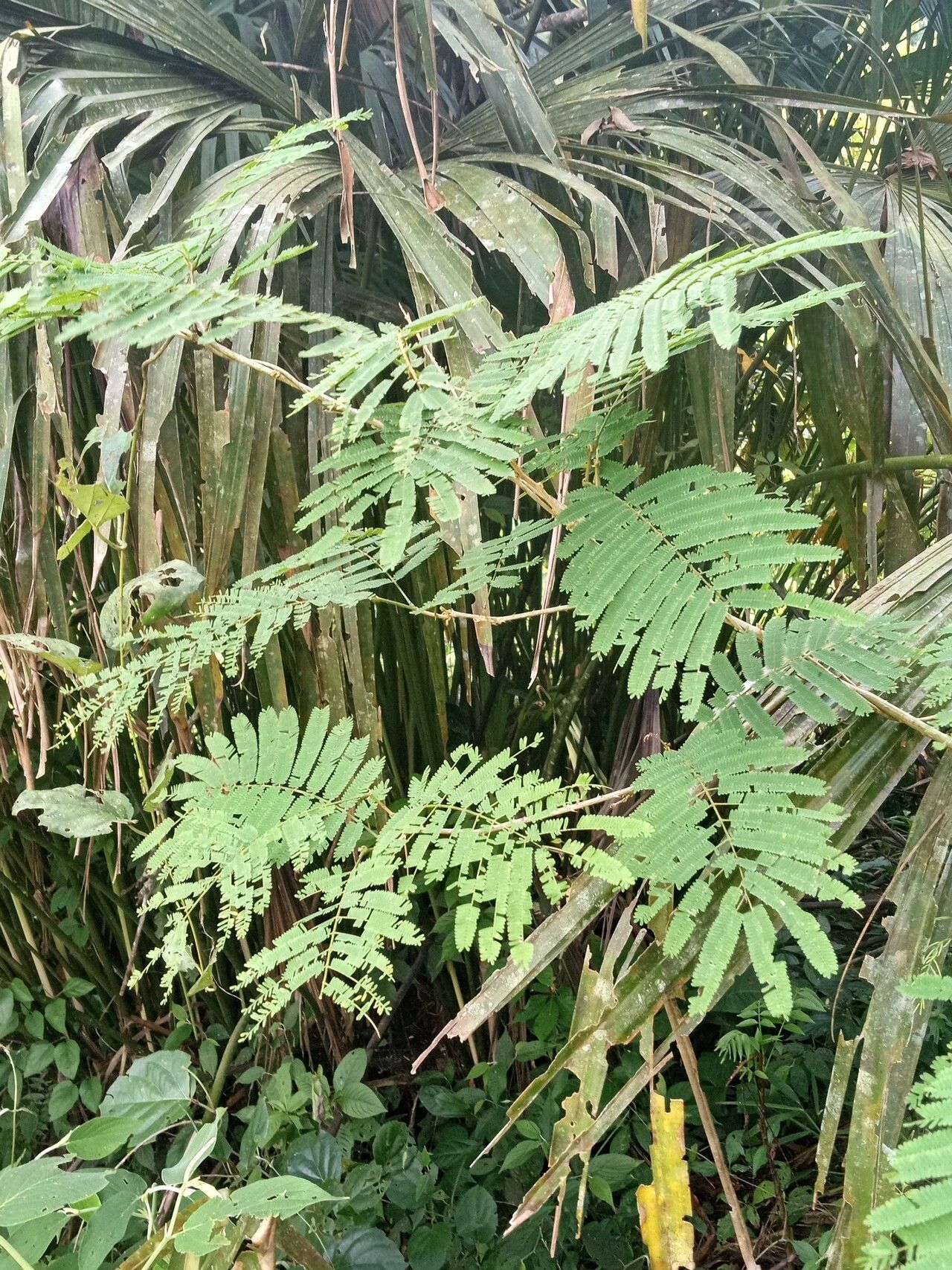
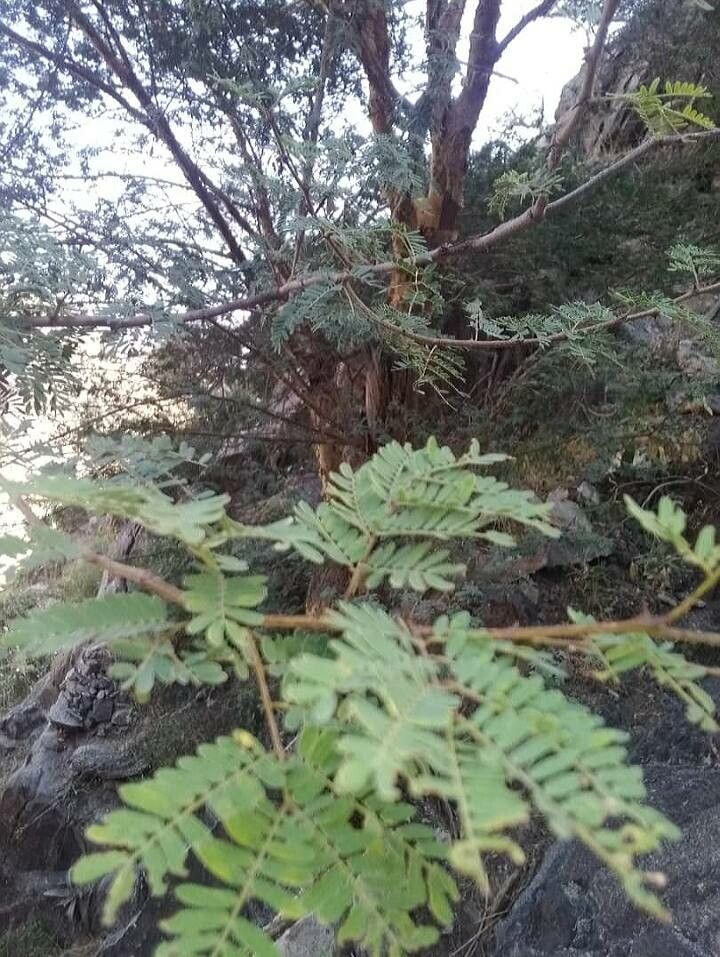
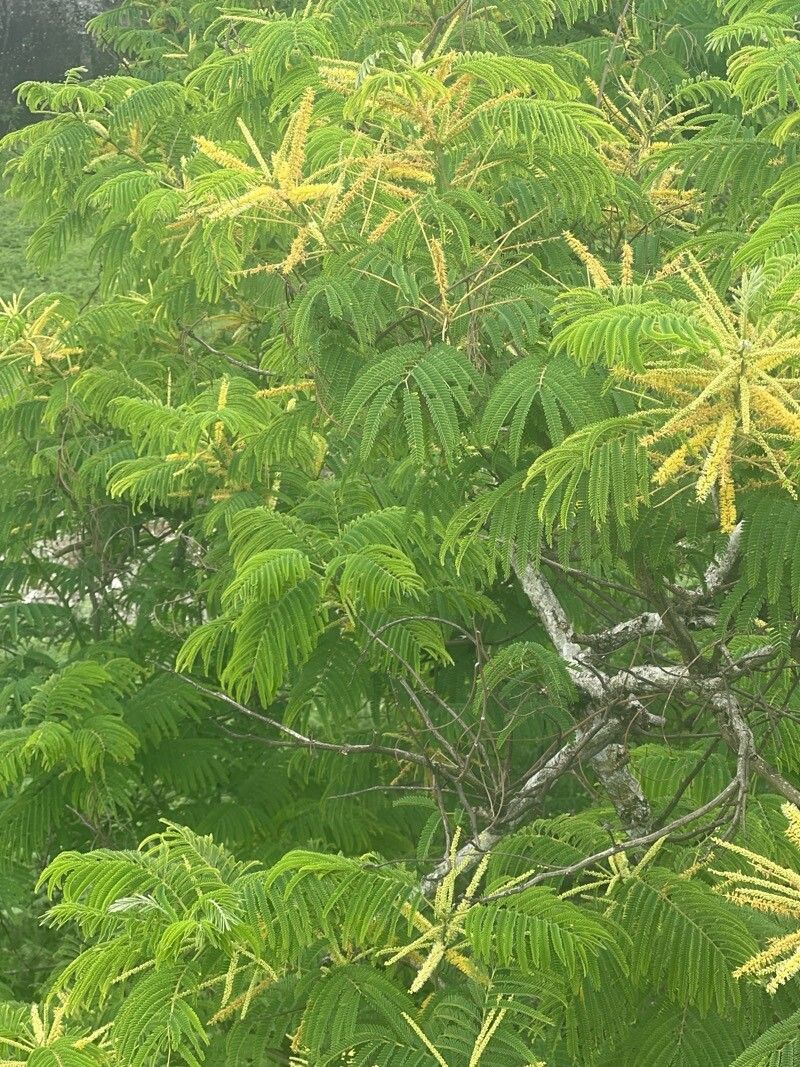
Senegalia nigrescens, commonly known as the Knobthorn Acacia, is a tree species that belongs to the Fabaceae family. Native to Africa, it thrives in various habitats such as savannas, woodlands, and grasslands. This tree can grow up to 10 meters tall and features a spreading crown. One of its distinctive characteristics is the pairs of thorns that grow at the base of each leaf. The leaves themselves are small and feathery, composed of numerous leaflets that fold up at night or during drought conditions to conserve water. The Knobthorn Acacia produces small yellow flowers arranged in spherical clusters, which bloom from August to November. These blooms attract a variety of pollinators, including bees, butterflies, and birds, aiding in seed dispersal. The tree has multiple uses. Medicinally, its bark is used to treat fever, and its roots are employed to treat diarrhea. Additionally, its wood is utilized to make furniture, and its pods serve as food for livestock. Ecologically, Senegalia nigrescens plays a vital role by providing shelter and food for various animals. Giraffes feed on its leaves, while baboons often use the tree as a sleeping site at night. Overall, Senegalia nigrescens is crucial both ecologically and economically, making it an indispensable species within African ecosystems.
Knob thorn has strong resistance to disease and is typically not susceptible to illnesses. With regard to care, this plant is fairly low maintenance. When grown outdoors it needs only light watering, and larger specimens usually do not require pruning. Smaller specimens, however, should be pruned after they finish blooming. Knob thornt is appropriate for anyone with an outdoor area, like a garden or deck, and does not demand much prior plant-care experience.
How to keep Senegalia Nigrescens.
Light
Knob thorn is native to open habitats, such as sunlit meadows and forest margins, which supply abundant light. It grows best in full sun but can tolerate partial sun, demonstrating good adaptability to different light conditions.
Temperature
Knob thorn shows good temperature adaptability, able to endure higher heat and wide temperature fluctuations. In hot conditions, attention should be paid to watering and appropriate shading should be provided to prevent sunburn. However, knob thorn is fairly sensitive to low temperatures. Although it can tolerate some cold, excessively low temperatures can cause frost damage.
Fertilizer
Apply fertilizer to your Knob thorn in early spring to encourage healthy growth. Regular fertilization improves overall health, promotes vigorous growth, increases resilience to harsh conditions, and enhances resistance to diseases and pests. Keep a consistent fertilization schedule for your Knob thorn to ensure vibrant, deeply colored foliage and a lush appearance.
Pruning
The knob thorn tree is characterized by its twisted bark and thorny branches. To encourage healthy growth, it's best to prune it in early spring. Remove any dead or overcrowded branches to improve air circulation and support new growth. Be sure to use sharp tools for clean cuts, as this helps prevent infections, strengthens the tree's structure, and reduces pest issues.
Botanical profile.
- Plant Type
- Tree
- Life Cycle
- Perennial
- Genus
- Senegalia
- Family
- Leguminosae
- Hardiness Zone
- 9-11
- Mature Height
- 10.06 m to 24.99 m
- Mature Spread
- 4.88 m to 14.94 m
- Leaf Color
- Dark Green
- Leaf Type
- Deciduous
- Flower Color
- White, Cream
- Flower Size
- 0.51 cm to 0.76 cm
- Bloom Time
- Mid fall, Late fall
- Planting Time
- Spring, Summer
- Harvest Time
- Late winter, Early spring, Mid spring
- Native Area
- Malawi, Angola, Mozambique, Tanzania, South Africa, Zambia, Eswatini, Namibia, Botswana, Zimbabwe
Other names.