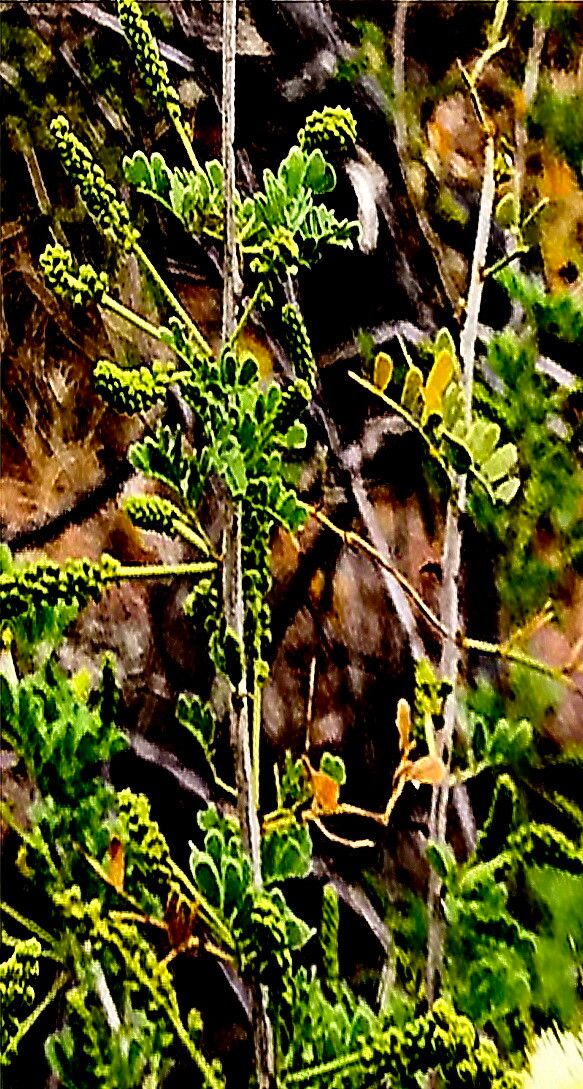
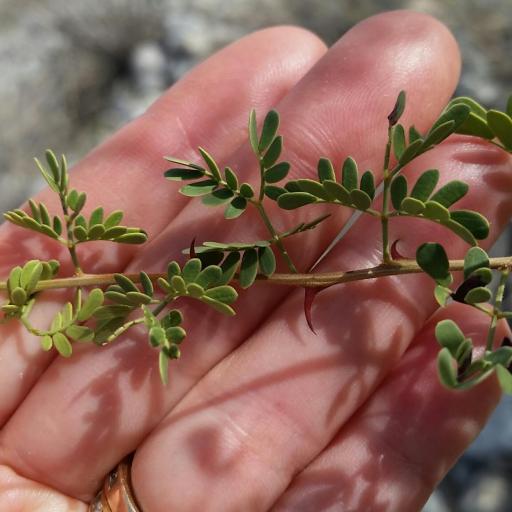
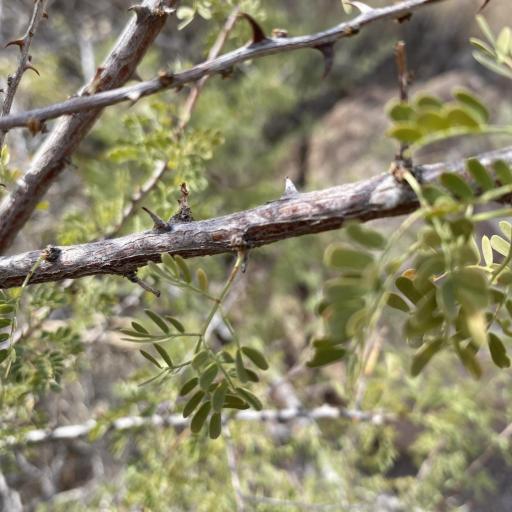
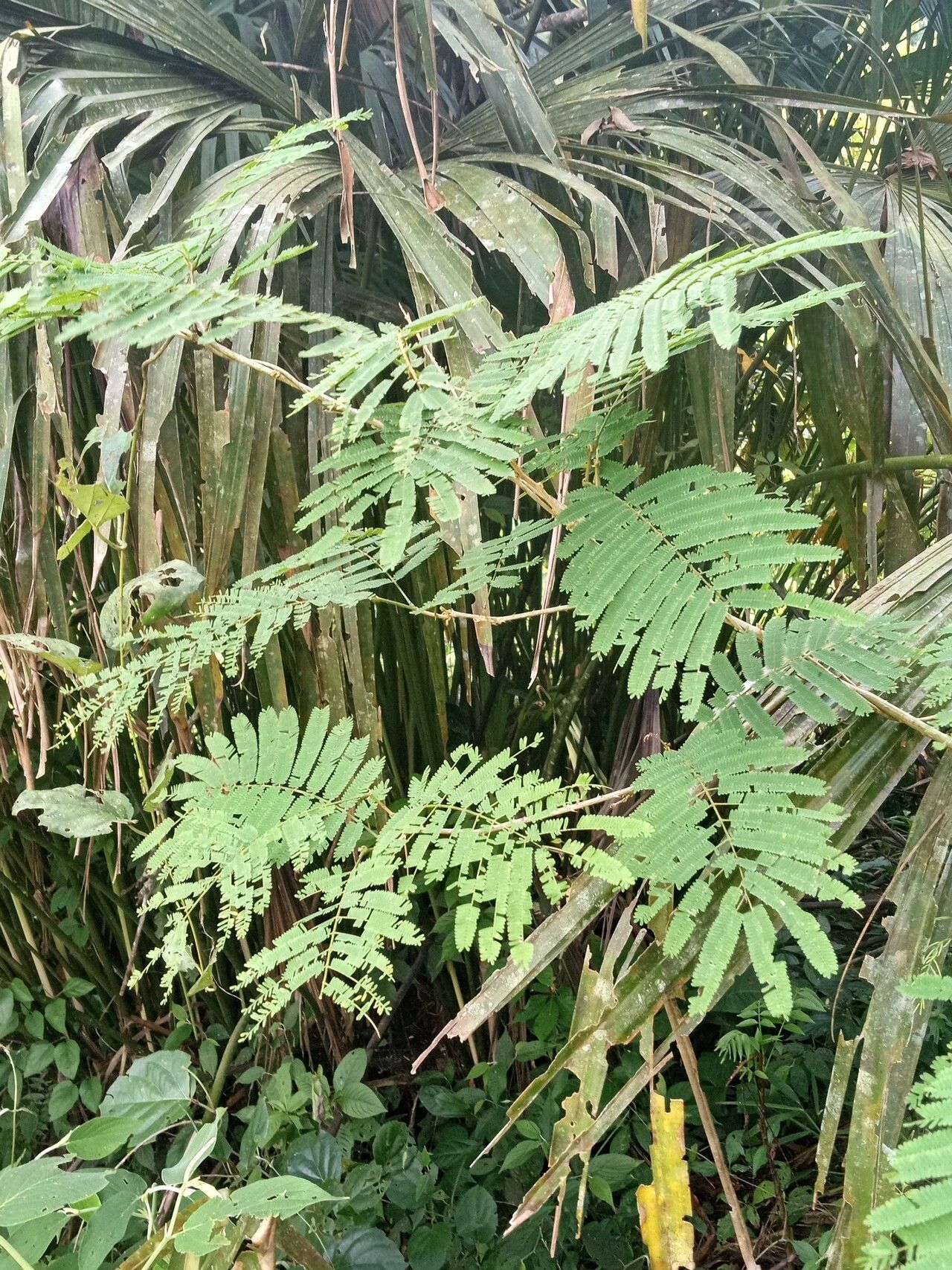
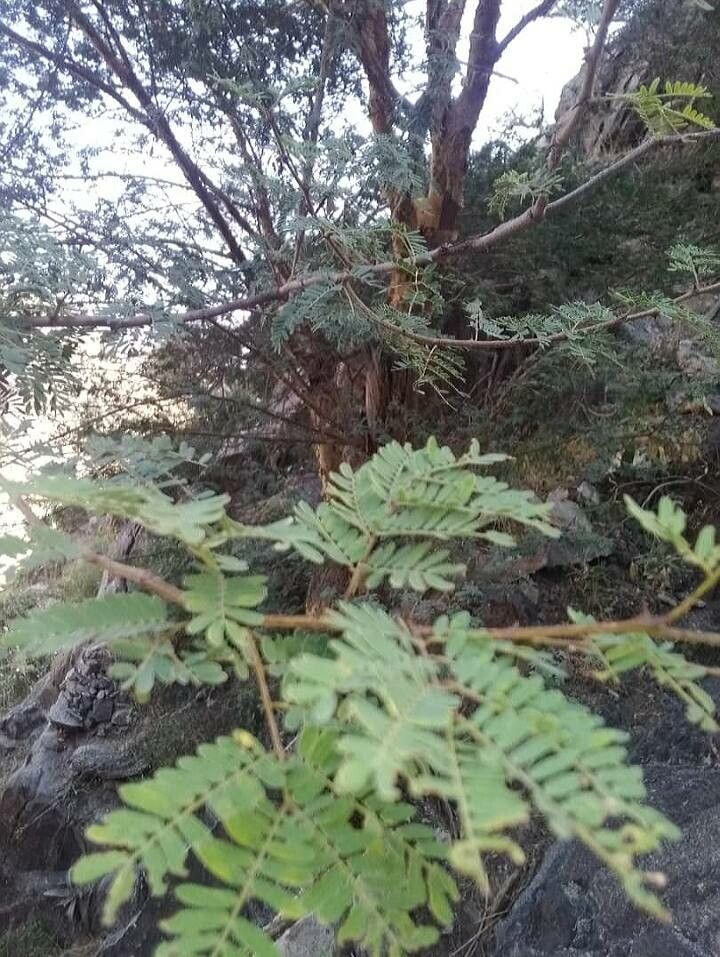
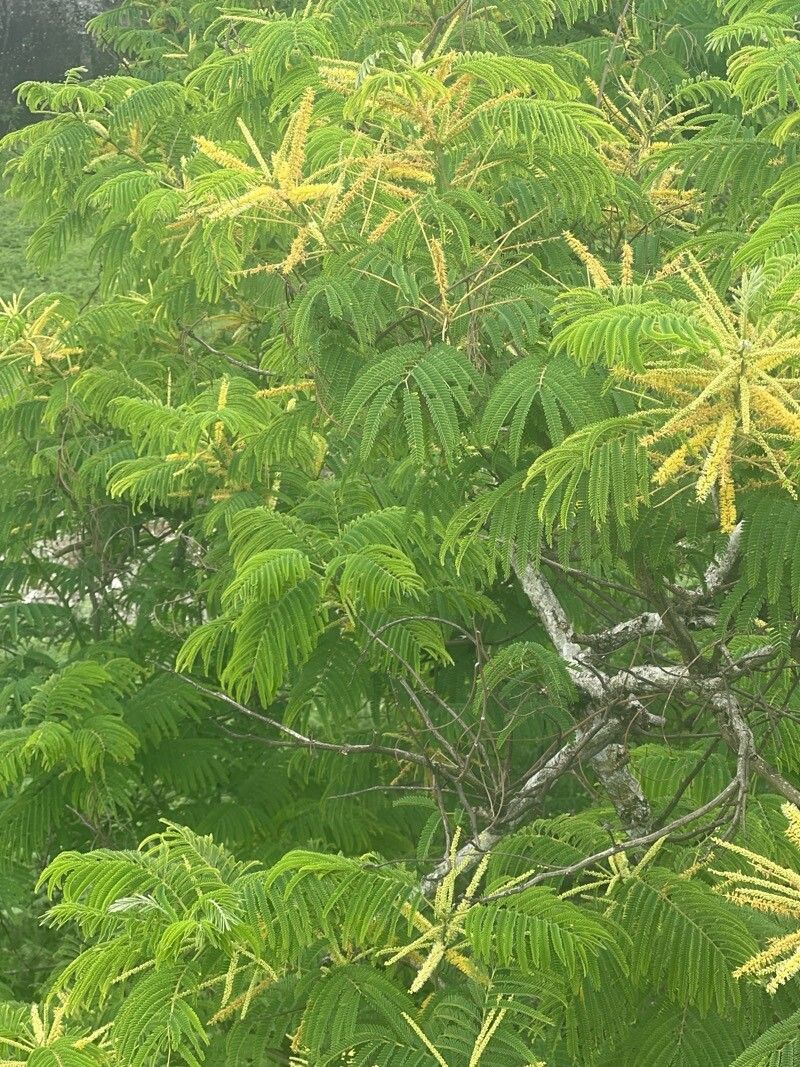
Senegalia greggii, formerly known as Acacia greggii, is a species of tree in the genus Senegalia native to the southwestern United States and northern Mexico, from the extreme south of Utah south through southern Nevada, southeast California, Arizona, New Mexico and western Texas to Baja California, Sinaloa and Nuevo León in Mexico. The population in Utah at 37°10' N is the northernmost naturally occurring Senegalia species anywhere in the world. Common names include catclaw acacia, catclaw mesquite, Gregg's catclaw, paradise flower, wait-a-minute bush, and wait-a-bit tree; these names mostly come from the fact that the tree has numerous hooked prickles with the shape and size of a cat's claw which tend to hook onto passers-by; the hooked person must stop ("wait a minute") to remove the prickles carefully to avoid injury or shredded clothing. (The common name "cat's claw" is also used to refer to several other plant species, including Uncaria tomentosa, a woody vine found in the tropical jungles of South and Central America.) The specific epithet greggii refers to Josiah Gregg, a 19th-century author, explorer, and amateur naturalist of the American Southwest and northern Mexico.
Catclaw acacia is fairly disease-resistant and is generally not susceptible to illnesses. Regarding care, this plant is relatively low-maintenance. When grown outdoors it needs little watering, and larger specimens usually do not require pruning. Smaller plants, however, should be pruned after they have finished blooming. Catclaw acacia is appropriate for anyone with outdoor space, such as a garden or deck, and does not demand extensive gardening experience.
How to keep Senegalia Greggii.
Light
Full sun exposure is essential for the catclaw acacia to achieve optimal health and growth. Native to well-lit habitats, its developmental stages and overall vigor benefit from abundant sunlight. Lack of sufficient light can impede its growth, while excessive sunlight generally does not cause harm.
Temperature
Catclaw acacia is native to environments with temperatures ranging from 68 to 95 °F (20 to 35 ℃). The plant prefers a comfortably warm climate within that span. During seasonal transitions, conditions should be adjusted gradually to avoid shocking catclaw acacia.
Fertilizer
The timing of fertilizing Catclaw acacia is important. Apply fertilizer in early spring and continue monthly until early summer. Fertilizer encourages attractive blooms and supplies energy during both dormant and active growth periods.
Botanical profile.
- Plant Type
- Tree
- Life Cycle
- Perennial
- Genus
- Senegalia
- Family
- Fabaceae
- Hardiness Zone
- 9-10
- Mature Height
- 7.92 m
- Mature Spread
- 4.88 m
- Leaf Color
- Green, Dark Green
- Leaf Type
- Evergreen
- Flower Color
- Yellow
- Flower Size
- 0.51 cm to 0.76 cm
- Bloom Time
- Late spring, Early summer, Mid summer
- Planting Time
- Spring, Summer
- Harvest Time
- Late summer, Early fall, Mid fall
- Native Area
- Mexico
Other names.