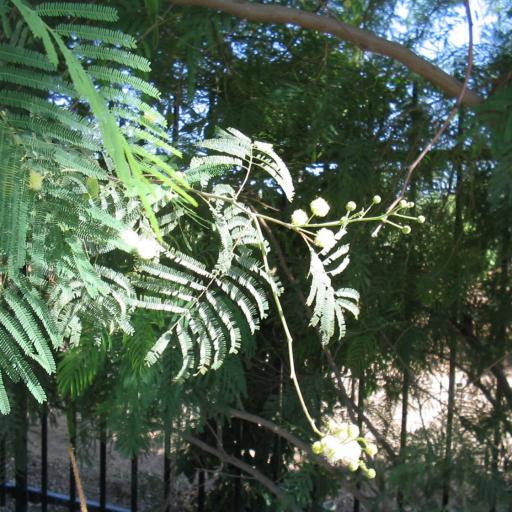
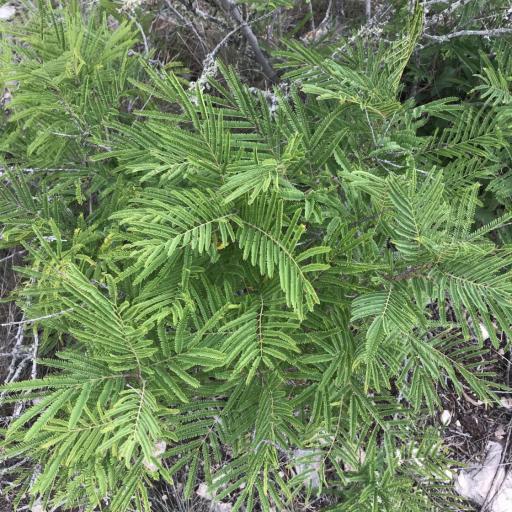
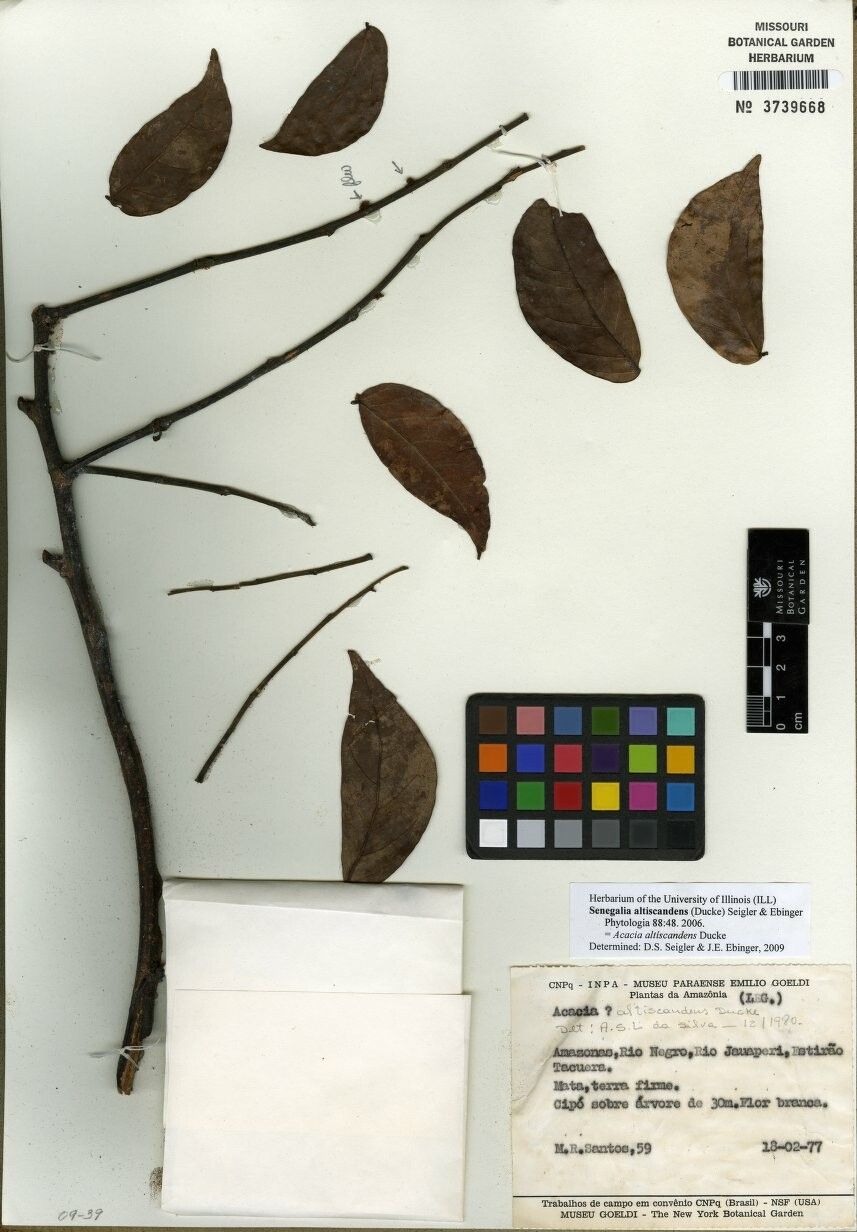
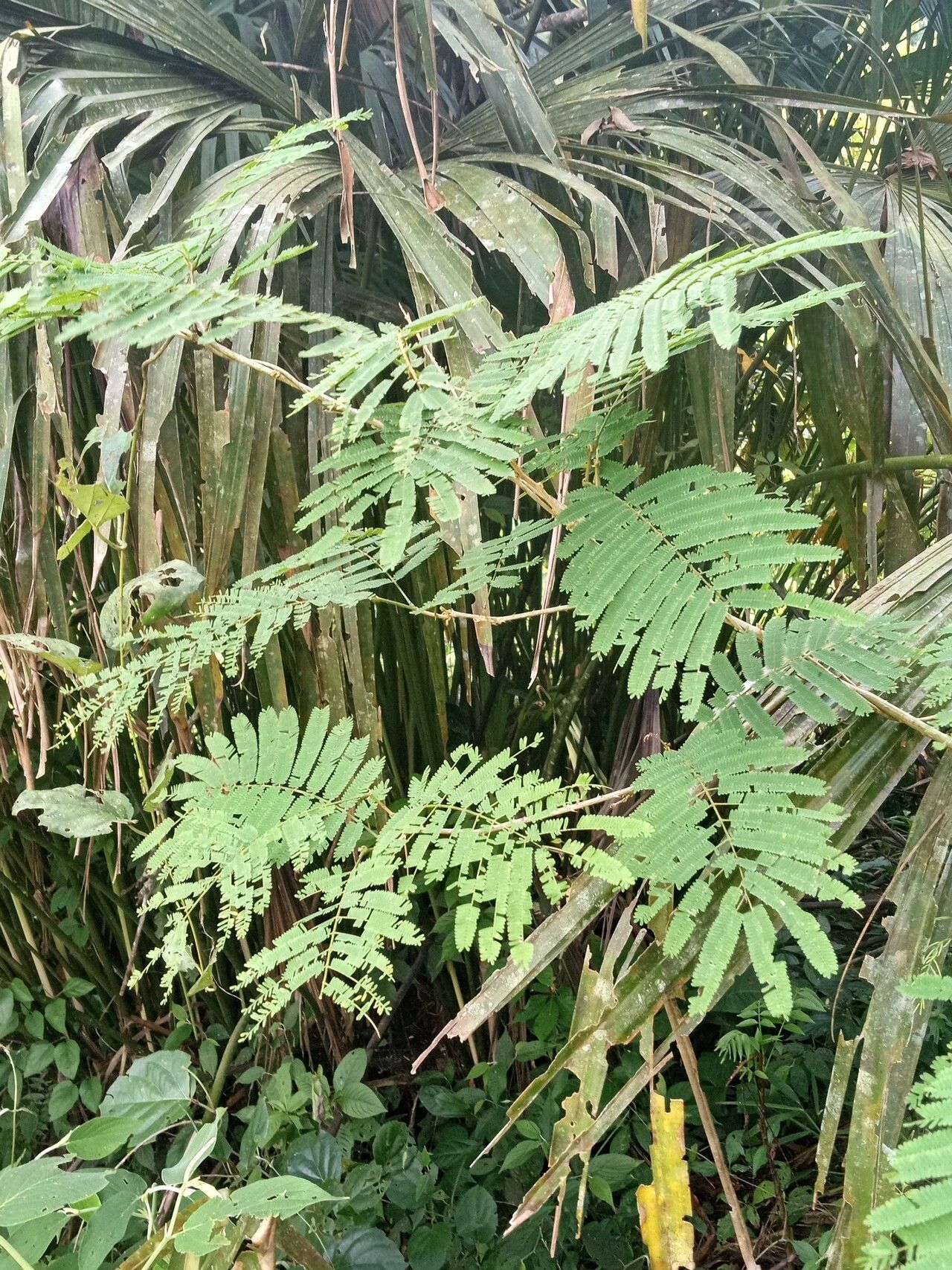
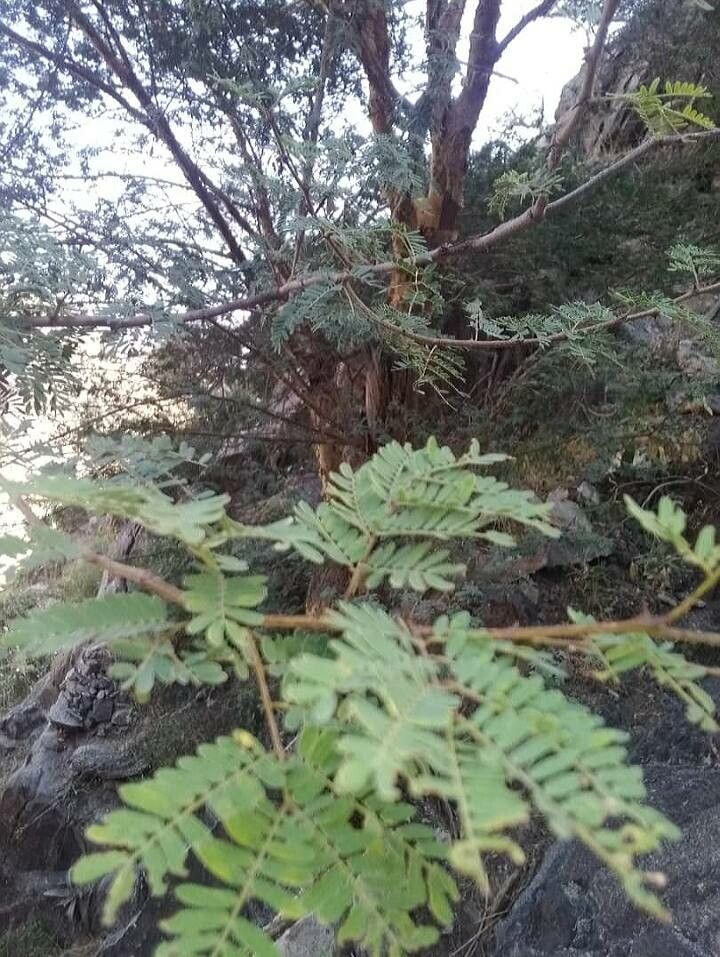
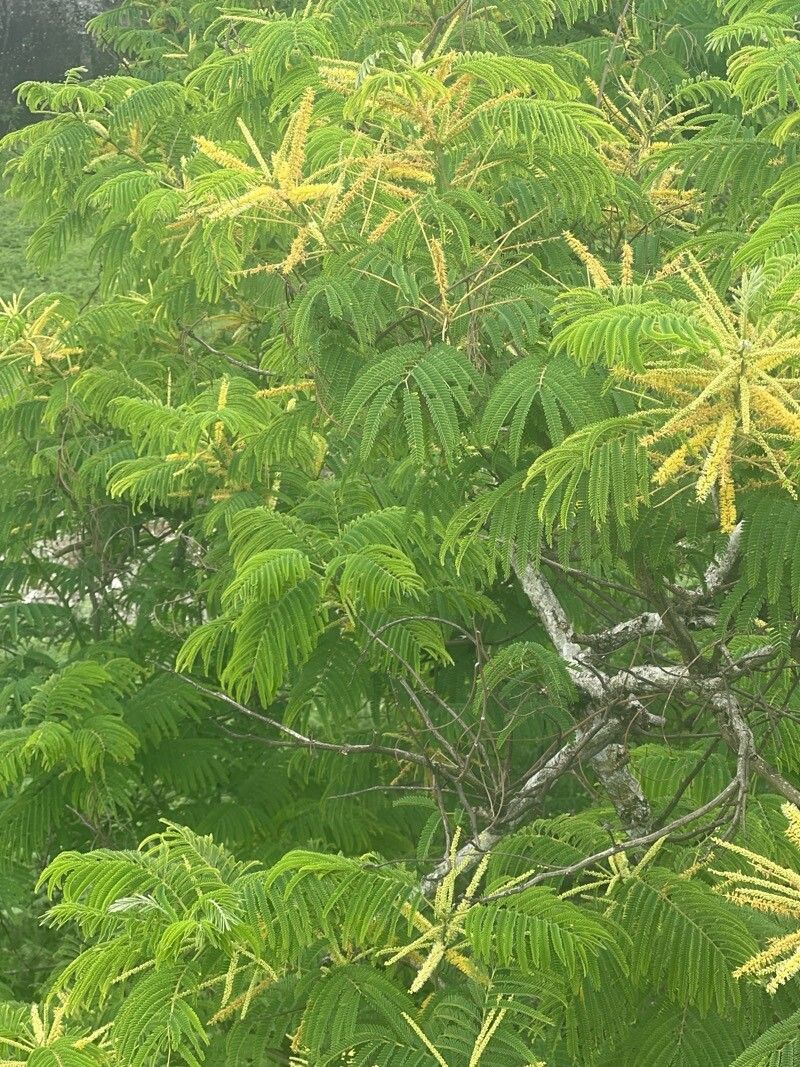
Senegalia berlandieri (Berlandier Acacia, Guajillo Acacia, guajillo, huajillo, huajilla) is a shrub native to the Southwestern United States and northeast Mexico that belongs to the subfamily Mimosoideae (wattles) of Fabaceae (legumes). It grows 1 to 5 metres (3.3 to 16.4 ft) tall, with blossoms that are spherical and white, occurring from February through April. The berlandieri epithet comes from the name of Jean-Louis Berlandier, a French naturalist who studied wildlife native to Texas and Mexico. S. berlandieri contains a wide variety of alkaloids and has been known to cause toxic reactions in domestic animals such as goats.
Guajillo shows strong resistance to disease and is usually not susceptible to illnesses. With respect to care, this plant is fairly low-maintenance. When planted outdoors it needs only light watering, and larger plants typically do not require pruning. Nevertheless, smaller plants should be pruned after they have finished blooming. Guajillot is well suited for anyone with an outdoor area, such as a garden or deck, and does not demand extensive experience in plant care.
How to keep Senegalia Berlandieri.
Light
Guajillo thrives in settings with ample light. Strong illumination supports healthy growth and contributes to its overall well-being. Although it can survive where light is scarce, its peak health and development are associated with substantial light exposure. An overcast environment can impede its growth, while excessive exposure can cause its health to decline.
Water
Guajillo is a drought-tolerant plant that thrives in arid regions, requiring water only once every three weeks. Its preference for dry conditions makes it perfect for outdoor gardening in warm climates. During its dormancy period, the plant's growth cycle further emphasizes its minimal water needs.
Temperature
Guajillo is native to regions that usually have temperatures between 59 and 95 °F (15 to 35 ℃). This plant favors warm conditions, reflecting its natural habitat. If local temperatures fall below this preferred range, adjustments may be required.
Fertilizer
Fertilize your Guajillo in early spring to encourage healthy growth. Regular feeding boosts its overall health, leading to vigorous development, increased resilience to harsh conditions, and improved resistance to pests and diseases. Keep to a consistent fertilization schedule for your Guajillo to preserve vibrant, deeply colored, and lush foliage.
Pruning
Guajillo, a plant characterized by its thorny branches and fragrant flowers, benefits significantly from pruning in early spring. To maintain its health, start by removing any dead or damaged wood. Then, trim back overgrown branches to improve both the plant's shape and air circulation. Regular pruning not only enhances the plant's foliage density and flowering but also helps prevent disease. For the best results, consult regional horticultural guides for pruning techniques specifically suited to your area.
Botanical profile.
- Plant Type
- Shrub
- Life Cycle
- Perennial
- Genus
- Senegalia
- Family
- Fabaceae
- Hardiness Zone
- 8-10
- Mature Height
- 4.88 m
- Mature Spread
- 4.88 m
- Leaf Color
- Green, Gray
- Leaf Type
- Semi-evergreen
- Flower Color
- White, Yellow
- Flower Size
- 0.51 cm to 0.76 cm
- Bloom Time
- Spring
- Planting Time
- Spring, Summer, Autumn
- Harvest Time
- Summer
- Native Area
- Mexico
Other names.