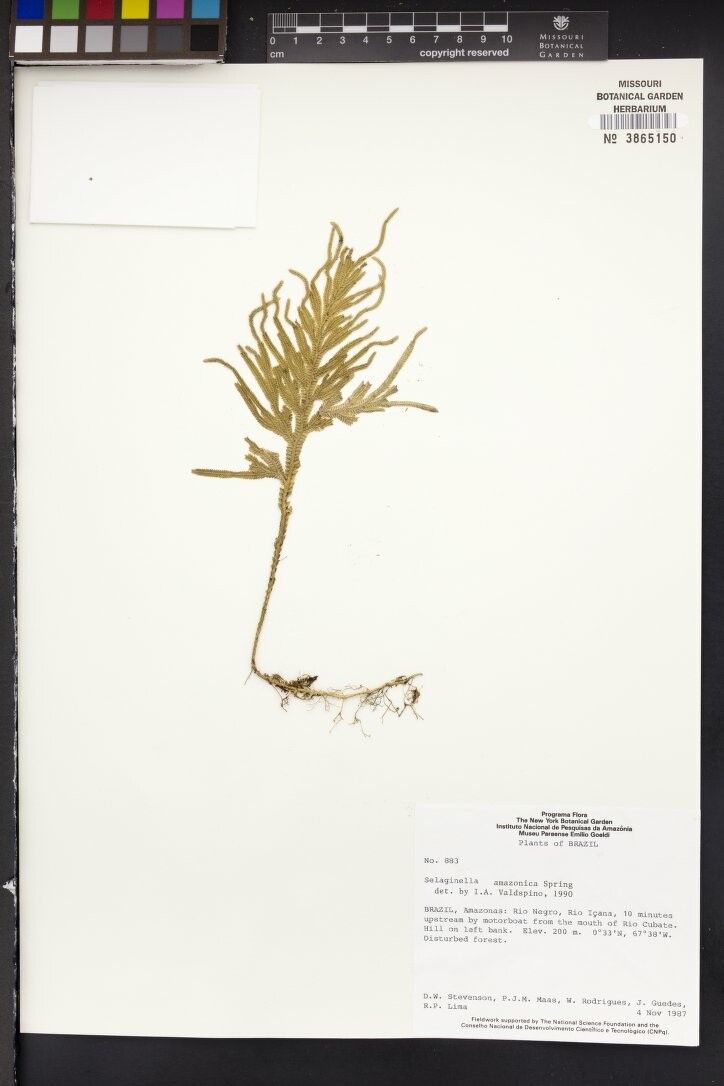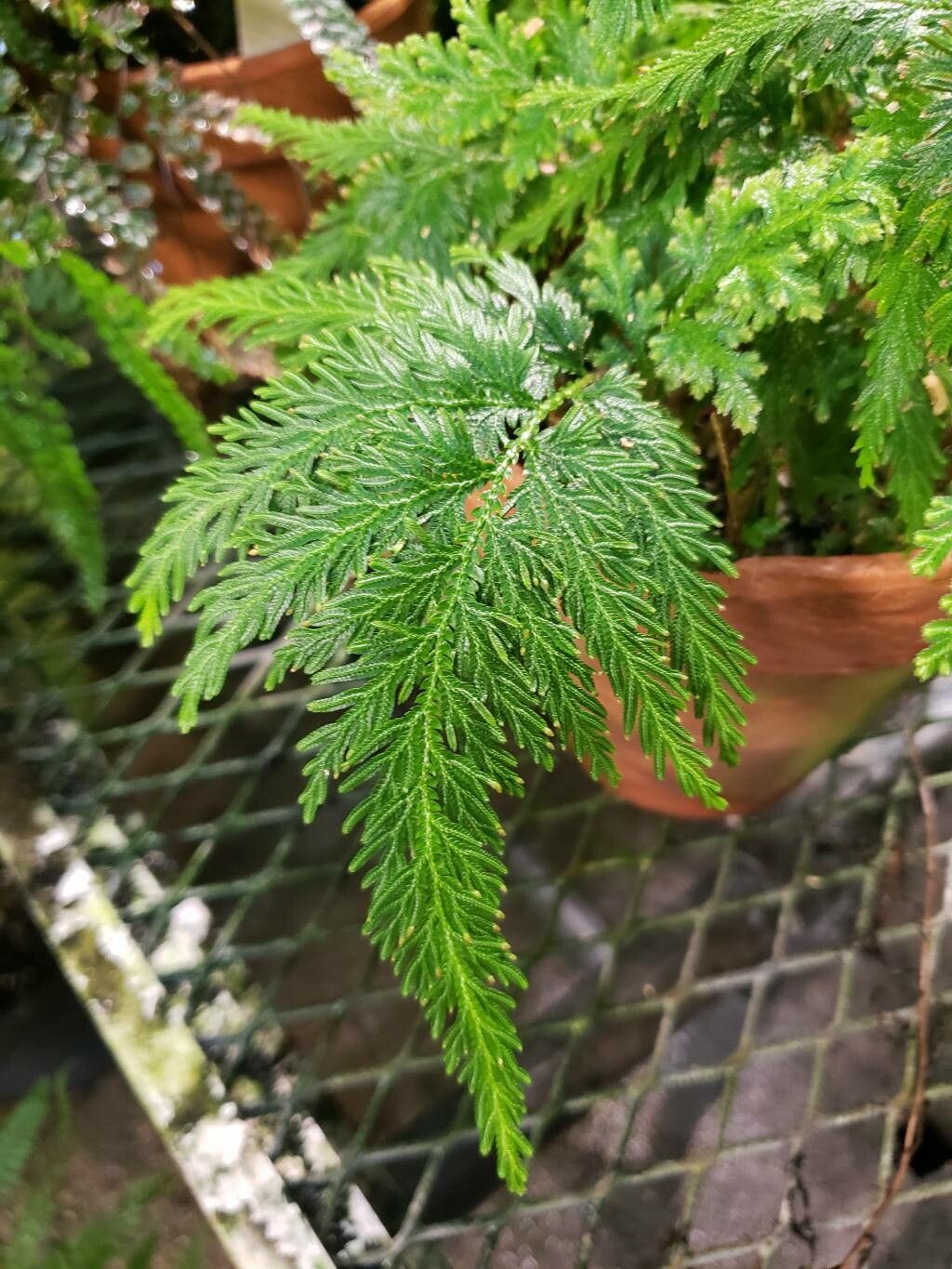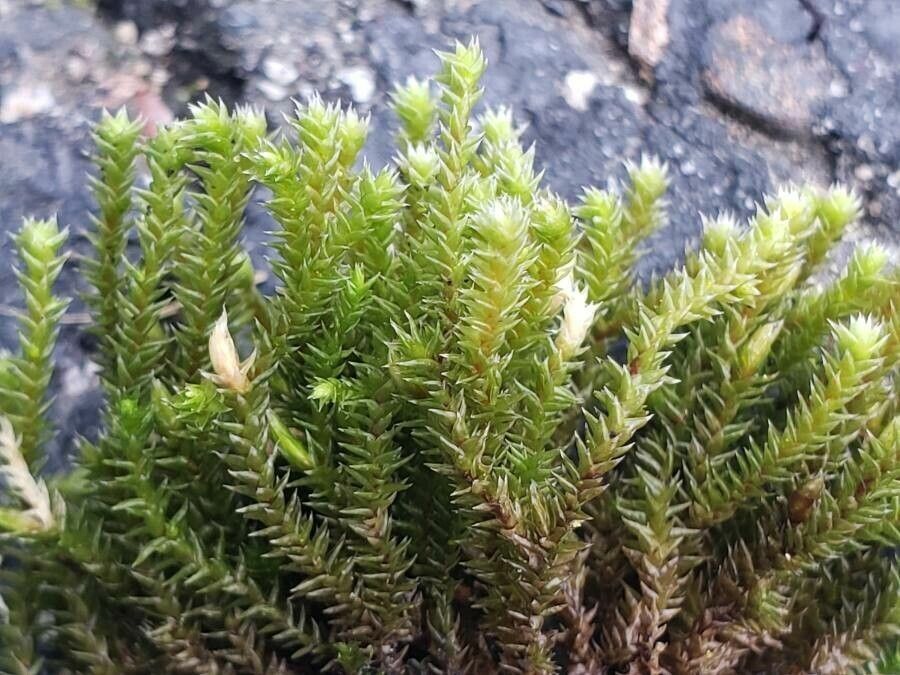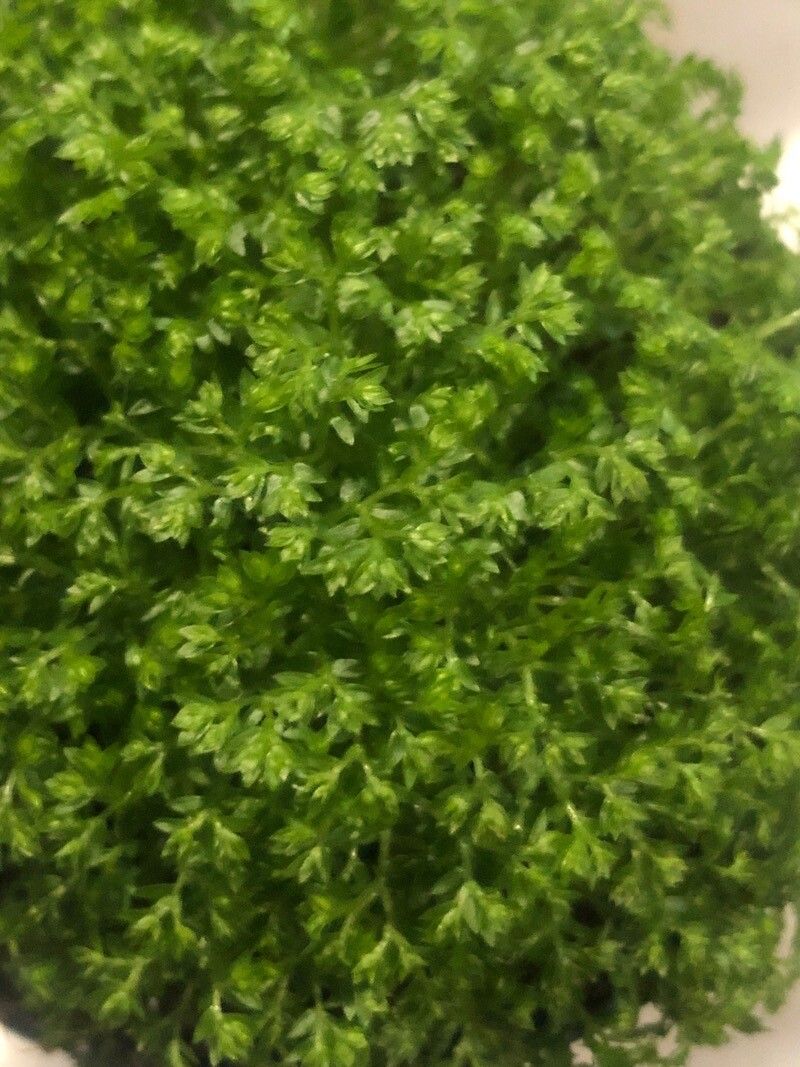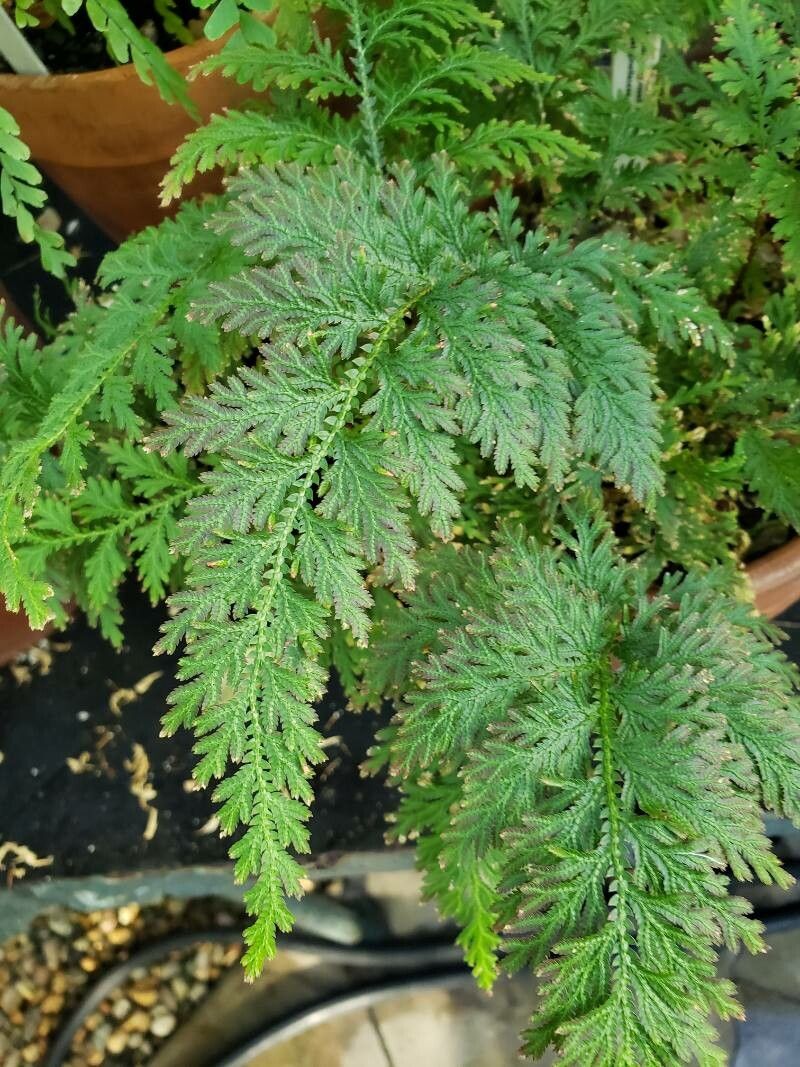
Selaginella moellendorffii is a lycophyte that is an important model organism, especially in comparative genomics. S. moellendorffii is a member of an ancient vascular plant lineage that first appeared in the fossil record some 400 million years ago. They would later form a dominant part of the world's flora during the Carboniferous period. They have a number of unusual and/or "primitive" features, such as rudimentary leaves (microphylls), ubiquitous dichotomous branching, heterospory, and the ligule. As the earliest diverging group of modern vascular plants, they are essential to understanding the evolution of plants as a whole.
Gemmiferous spikemoss is disease-resistant and is generally not prone to illnesses. In terms of care, this plant is fairly low-maintenance. When grown outdoors it needs minimal watering, and larger plants typically do not require pruning. Smaller plants, however, should be trimmed after they have finished blooming. Gemmiferous spikemoss is appropriate for anyone with outdoor space, such as a garden or deck, and does not require a lot of care experience.
How to keep Selaginella Moellendorffii.
Light
Gemmiferous spikemoss grows best in mostly shaded areas where sunlight is heavily diffused. The species tolerates environments lacking full sun exposure. Excessive sunlight can harm its health. Originating in habitats with dappled sunlight, it has adapted to these low-light conditions, improving its growth and survival.
Botanical profile.
- Plant Type
- Moss
- Life Cycle
- Perennial
- Genus
- Selaginella
- Family
- Selaginellaceae
- Hardiness Zone
- 7-11
- Mature Height
- 20 cm to 55 cm
- Mature Spread
- 30 cm
- Leaf Color
- Light Green, Dark Green
- Leaf Type
- Evergreen
- Planting Time
- Spring, Summer, Autumn
- Native Area
- Cambodia, Vietnam, Japan, Philippines, China