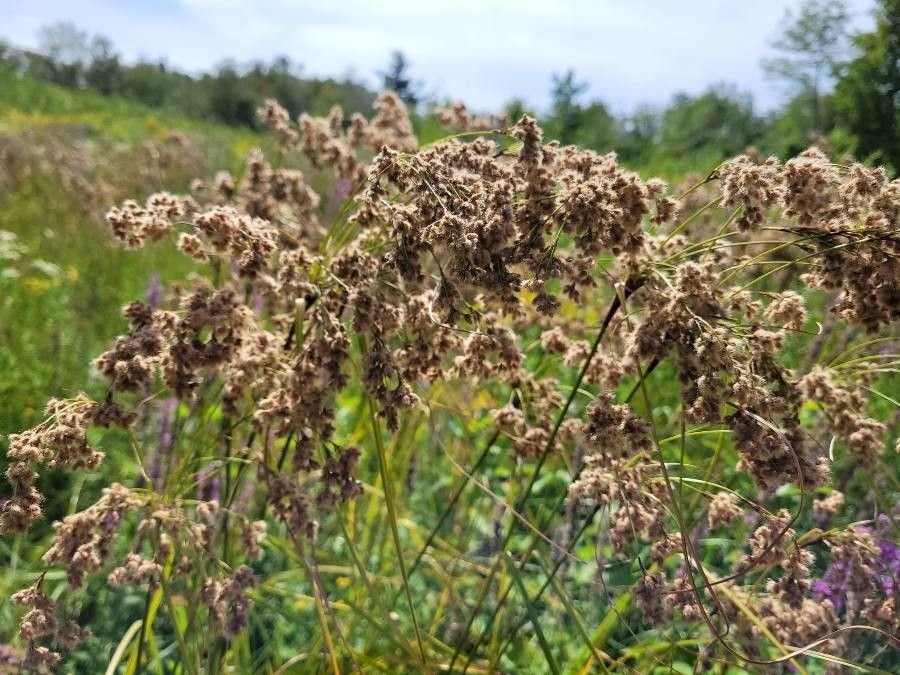
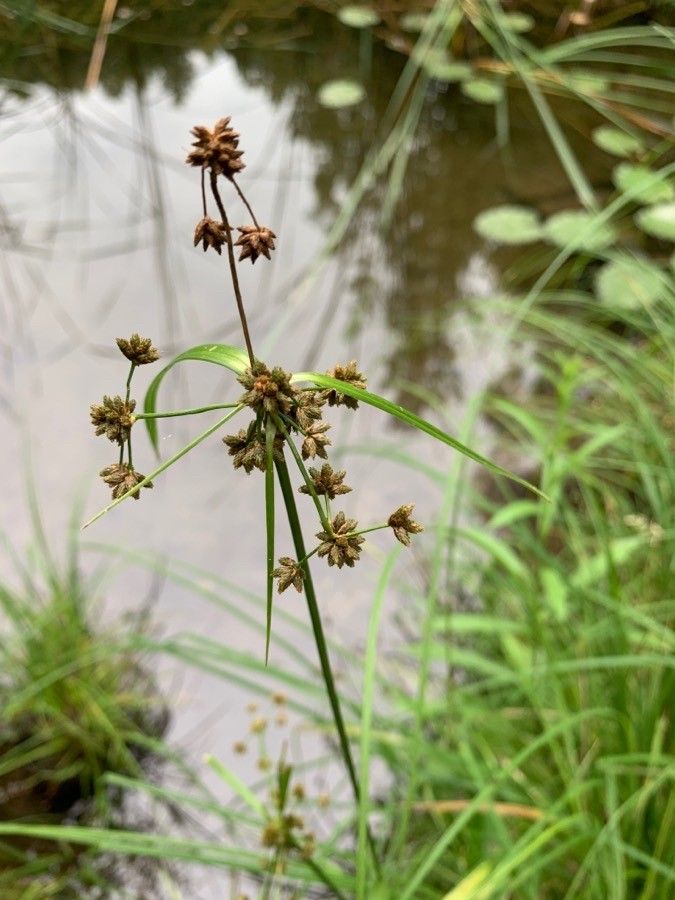
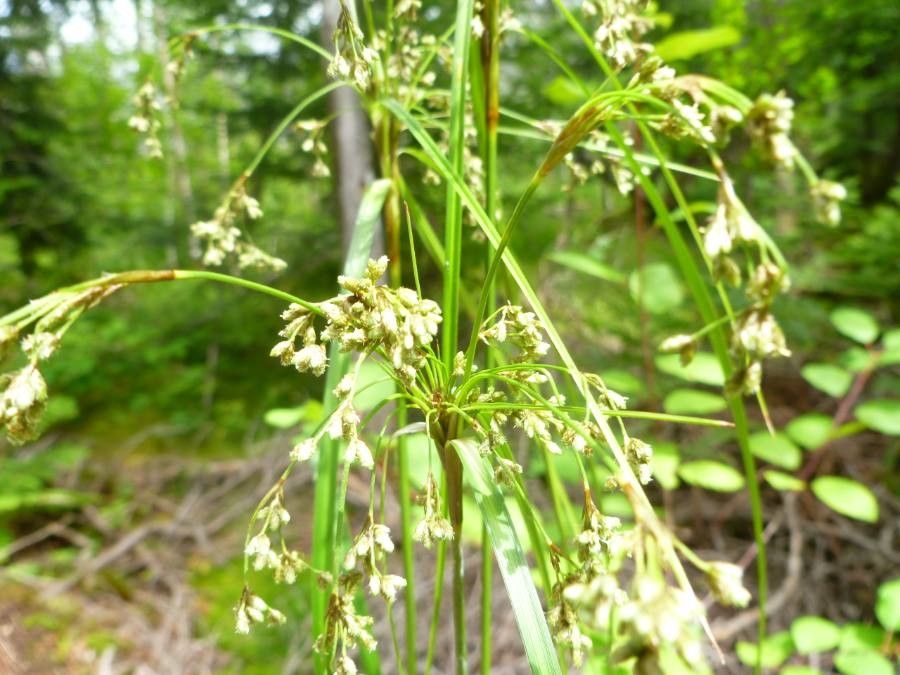
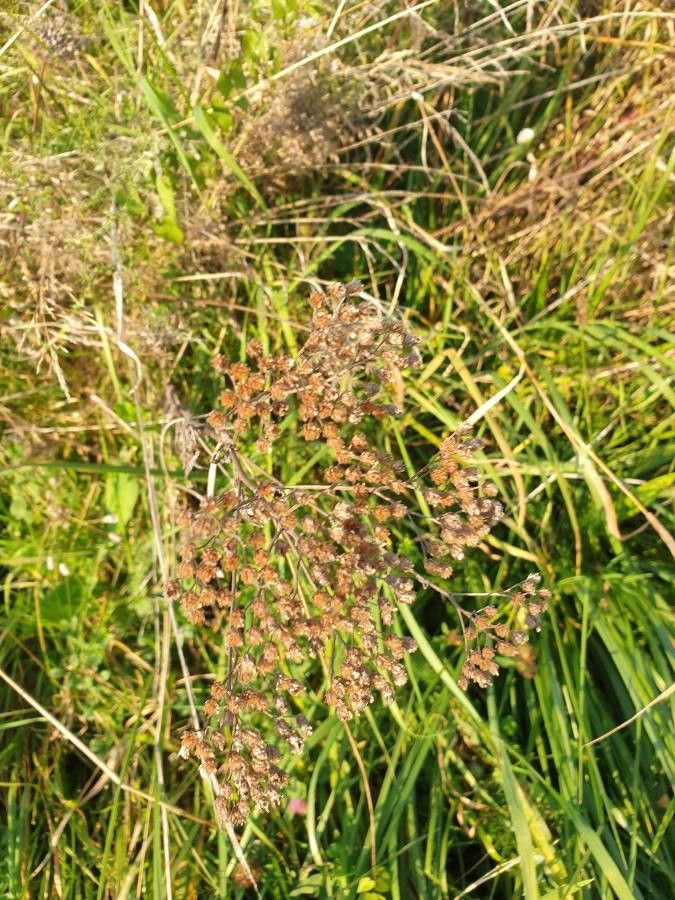
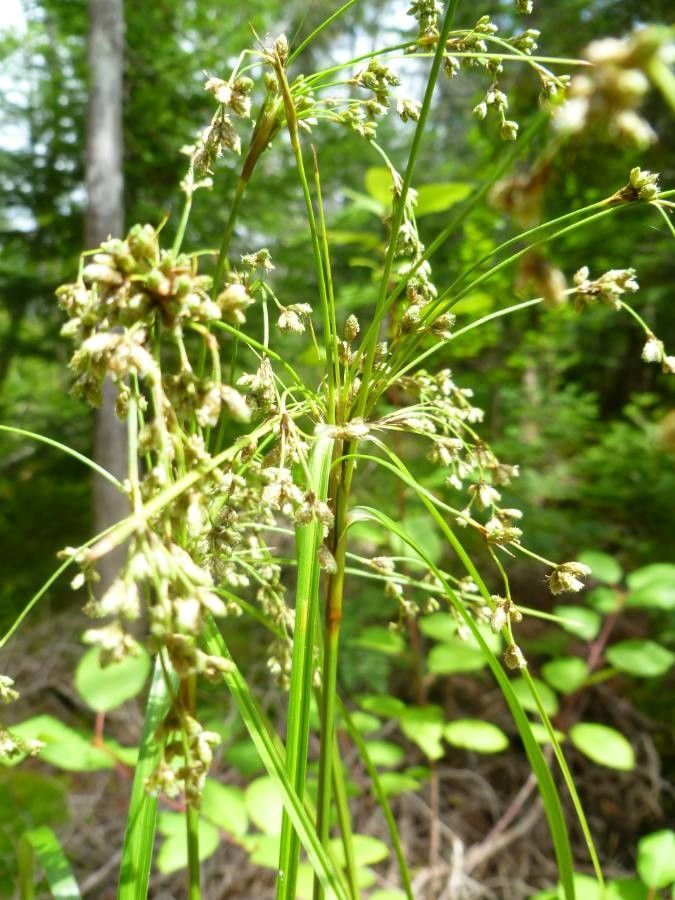
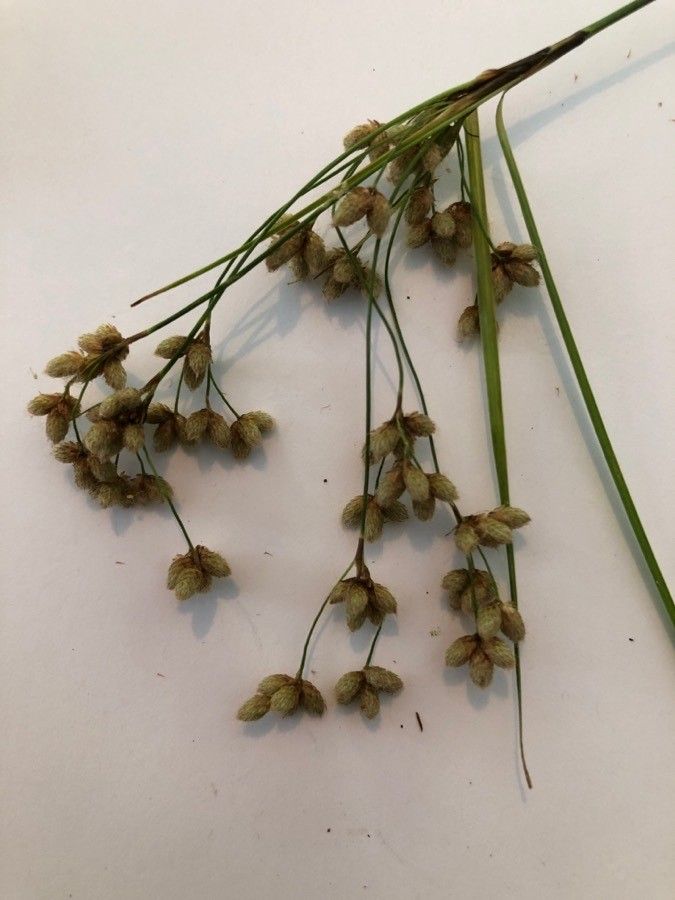
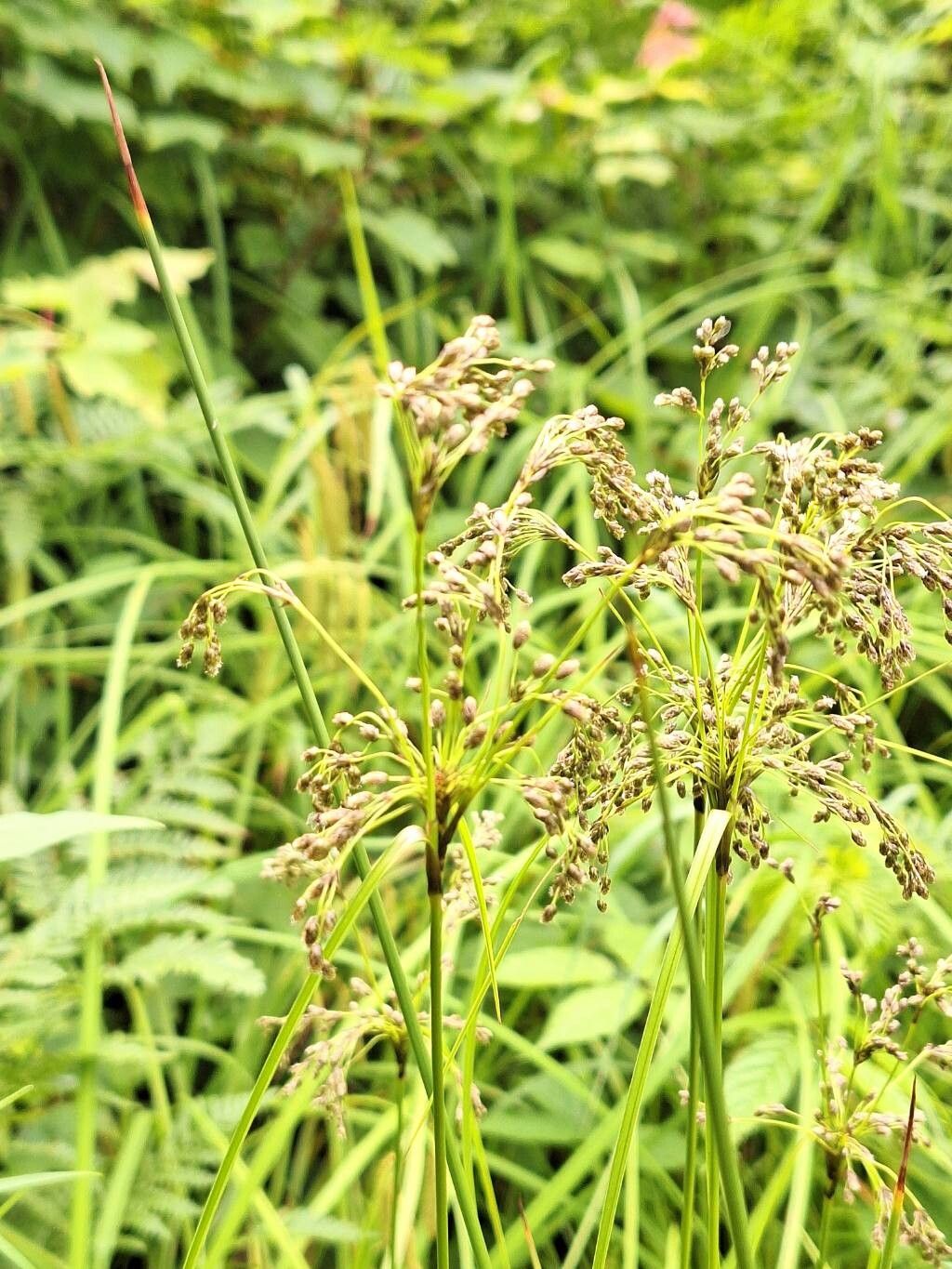
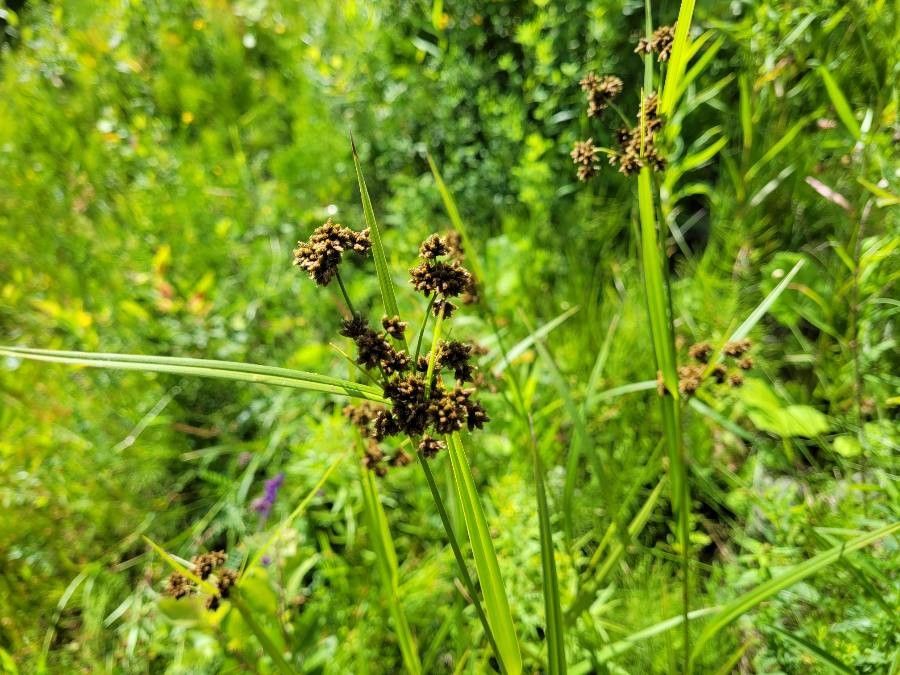
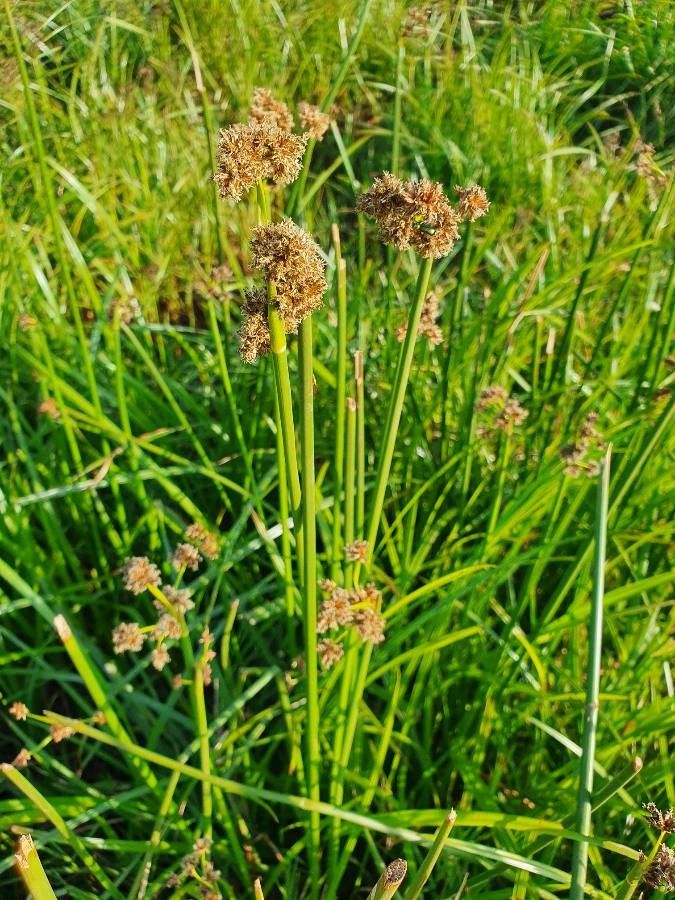
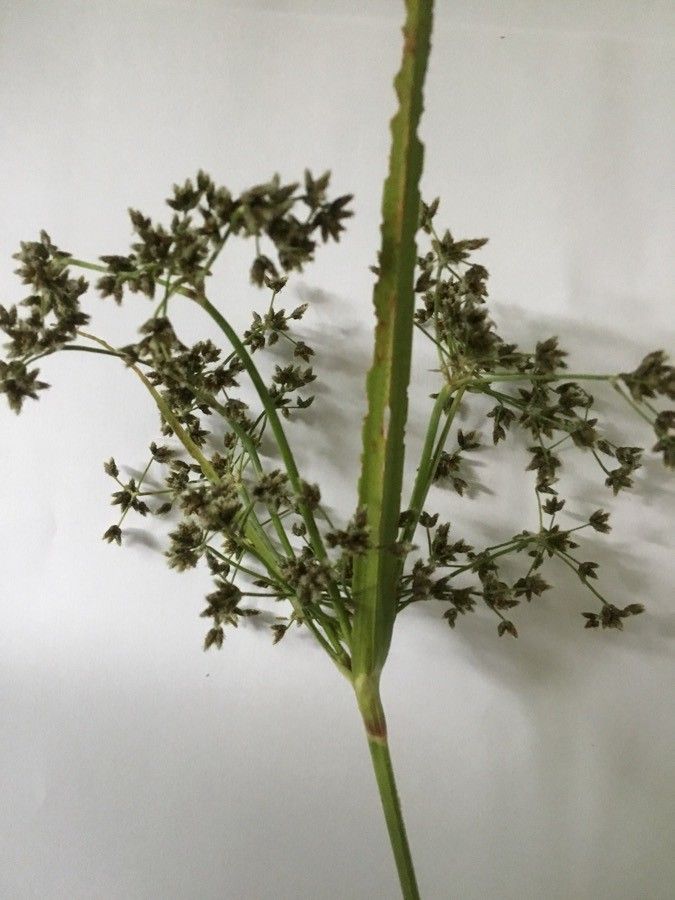
Scirpus cyperinus, commonly known as wool grass or woolly grass, is a perennial plant belonging to the family Cyperaceae. Native to North America, it thrives in wetlands, marshes, and along the edges of ponds and streams.
This plant grows in clumps, with stems that can reach up to 3 feet in height. The stems are triangular and accompanied by long, narrow leaves that display a bluish-green hue, contrasting beautifully with the brownish-red stems.
In late summer or early fall, Scirpus cyperinus produces small brown spikelets at the ends of long stalks. These spikelets eventually give way to small nut-like fruits that contain seeds.
Wool grass plays a crucial role in wetland ecosystems by providing habitat for various species, including birds, insects, amphibians, and reptiles. Additionally, it helps stabilize soil along waterways, thereby reducing erosion.
Beyond its ecological significance, Scirpus cyperinus has historical and cultural value. Native Americans used it for basket weaving, and it has also been a source of fiber for clothing.
Overall, Scirpus cyperinus is an essential wetland species with both ecological importance and cultural significance, making it a fascinating plant worthy of study.
Woolgrass has strong resistance to diseases and typically does not develop them easily. Still, it can be affected by pests and diseases present in its surroundings, although these issues are generally mild. Regarding care, the plant needs a moderate level of maintenance. It should be pruned regularly to preserve a good appearance and healthy growth, and fertilizing can help encourage flowering. Woolgrass is well suited to anyone with an outdoor area, such as a garden or patio, and does not demand extensive care experience. It may, however, need more attention if grown indoors.
How to keep Scirpus Cyperinus.
Light
Woolgrass flourishes when it is fully exposed to sunlight, as this is fundamental to its well-being and growth. That said, it is able to survive with moderate light exposure without significant negative impact. While it is adaptable, inadequate sunlight exposure can hinder its growth and vitality, and an overabundance of light can be destructive.
Water
Woolgrass is a plant that naturally grows in wetlands and prefers soil that remains consistently moist. It thrives in areas with high water availability and can tolerate temporary flooding. For optimal growth, it should be watered weekly. Its strong root system efficiently absorbs water, promoting lush foliage throughout the growing season.
Temperature
Woolgrass thrives well within a wide temperature spectrum, specifically in conditions that range from 50 to 95 °F (10 to 35 ℃). It efficiently acclimatizes to its ideal temperature throughout the various seasons.
Fertilizer
To care for woolgrass, apply a balanced fertilizer once a month during the growing season, which lasts from early spring to summer. Use light doses to avoid over-fertilizing, and refrain from applying fertilizer during the dormant season. After fertilizing, water the woolgrass to help the plant absorb nutrients effectively and maintain its health and vitality.
Pruning
Woolgrass is characterized by its tall, feathery seed heads and lush, green stems. To encourage healthy growth, prune it from early to late spring by cutting the dead stalks down to ground level. Be sure to use clean tools to prevent the spread of disease. Proper pruning not only enhances the plant's appearance but also improves air circulation and reduces pest problems, resulting in a more robust plant.
Botanical profile.
- Plant Type
- Herb
- Life Cycle
- Perennial
- Genus
- Scirpus
- Family
- Cyperaceae
- Hardiness Zone
- 6-9
- Mature Height
- 0.91 m to 1.83 m
- Mature Spread
- 0.61 m to 1.22 m
- Leaf Color
- Green
- Leaf Type
- Deciduous
- Flower Color
- Red, Brown, Yellow, Green, Burgundy
- Flower Size
- 2.54 cm
- Bloom Time
- Summer
- Planting Time
- Spring, Summer
- Harvest Time
- Late summer, Early fall, Mid fall
- Native Area
- Mexico
Other names.
Reader questions.
How should I water my Woolgrass?
When watering Woolgrass, it is best to use filtered water at room temperature. Tap water can be harmful due to potential particles. The Woolgrass prefers warm water. Avoid overhead watering, as it can lead to foliage issues. Instead, water the soil until soaked. This helps the roots spread and gather nutrients.
Why do I have to add fertilizer to my Woolgrass?
Woolgrass is primarily made up of leaves, so fertilization is crucial for maintaining their appearance and function. Proper fertilization ensures that the leaves have a consistent color and healthy texture. Additionally, it helps the plant generate new roots and maintain existing ones, enhancing its ability to absorb soil nutrients in the future. By fertilizing your Woolgrass, you not only keep it healthy now, but also promote long-term nutrient absorption.
What are the sunlight requirements for Woolgrass?
Woolgrass requires full sunlight to thrive, meaning it should receive more than 6 hours of sunlight daily. However, it can also tolerate partial sun, which is about 3-6 hours of sunlight per day. It's essential to observe how sunlight moves through your garden to find spots with the perfect balance of light and shade, ensuring the plants' happiness and health.
What temperature range is ideal for Woolgrass?
Woolgrass is adapted to a broad temperature range and flourishes in environments with temperatures between 50 to 95 °F (10 to 35 °C). It adjusts well to the distinct seasons within this temperature range. While Woolgrass has strong cold resistance and does not usually require special frost protection during winter, it is crucial to provide cold protection if temperatures are expected to drop below -25°C. This protection can be achieved by covering the plant with materials like soil or straw and ensuring the soil remains moist before the first freeze in autumn to prevent drought and water scarcity during winter and early spring.
What can I do if I give my Woolgrass too much or too little water?
Both overwatering and underwatering can harm the health of your Woolgrass, but overwatering is more common. When Woolgrass gets too much water, its stems and leaves can wilt and turn yellow. Overwatering for a long time can also cause diseases like root rot, mold, and mildew, which can kill the plant. Woolgrass is fairly tolerant to drought, so underwatering is less likely. However, if it does happen, the leaves may become brittle and brown. It's important to recognize the signs of overwatering quickly. Some diseases caused by overwatering, like root rot, may not be fixable if you wait too long. If you notice early signs of overwatering, reduce your watering immediately. Check the soil to see if it drains well. If not, replace it with a loose, well-draining potting mix. If you notice signs of underwatering, simply water more regularly until the signs improve.
What is the ideal time to add fertilizer to my Woolgrass?
If you grow Woolgrass outdoors, it will start growing new leaves in early spring. This is a sign that it's time to start fertilizing it. Normally, the plant does well with one round of fertilizer in the spring. But if you want it to grow even more, you can fertilize it multiple times in the spring and early summer. In that case, fertilize it about once a month to once every month and a half.
Can Woolgrass grow with artificial lighting?
Yes, Woolgrass can grow with artificial lighting, especially when natural sunlight is insufficient. This is particularly useful in winter or in less sunny spaces. Indoor plants benefit from adequate artificial lighting, which promotes faster, healthier growth. LED lights are recommended due to their ability to be customized to provide specific wavelengths needed by plants. Full sun plants require 30-50W/sq ft of artificial light, partial sun plants need 20-30W/sq ft, and full shade plants need 10-20W/sq ft. The light source should be placed 12-36 inches above the plant, mimicking natural sunlight as closely as possible. Most plants need 8-12 hours of light per day.
How does Woolgrass respond to low temperatures?
Woolgrass is cold-tolerant and functions best when the temperature stays above 10°C. During the winter, it is vital to keep the temperature above -15°C. If temperatures fall below -25°C, Woolgrass can survive without significant immediate changes, but there may be a noticeable decrease in sprouting or even no sprouting at all come springtime. To counteract this effect, it is recommended to remove any parts of the plant that have failed to sprout in the spring.
How many times should I water my Woolgrass?
If your Woolgrass plant is in a pot, check the soil by sticking your finger in it. If the top two to three inches of soil are dry, it needs water. For Woolgrass planted outdoors in the ground, use the same method. Water when the top few inches of soil have dried out. In spring and early fall, this usually means watering once a week. However, during extremely hot weather, increase watering to two or more times per week. Mature Woolgrass plants are drought-resistant.
When should I not put fertilizer on my Woolgrass?
During the late fall and winter, your Woolgrass goes into a dormant phase, meaning it stops growing. It's not recommended to fertilize it during this time. In the spring and summer, if you choose to fertilize, gradually reduce the amount as summer approaches because the growth rate of your Woolgrass slows down. In general, it's not a good idea to fertilize your Woolgrass when the weather is unseasonably hot or the soil is extremely dry. Fertilizing in those conditions can stress the Woolgrass and cause it to die prematurely.
What are the common symptoms of light deficiency in Woolgrass?
Symptoms of light deficiency in Woolgrass include smaller new leaves compared to older ones, leggy or sparse growth, faster leaf drop, slower or no new growth, lighter-colored new leaves, and symptoms of excessive sunlight such as chlorosis, sunscald, leaf curling, wilting, and leaf scorching. These symptoms indicate either a lack of adequate sunlight or too much exposure, each affecting the plant's health differently.
What should I do if Woolgrass is exposed to high temperatures?
During the summer, it is essential to ensure Woolgrass does not experience temperatures above 35°C. Exposing Woolgrass to temperatures exceeding 38°C can cause the leaves to lighten in color, become prone to curling, susceptible to sunburn, and, in severe cases, the entire plant may wilt and dry up. To mitigate these effects, trim away any sunburned or dried-up parts of the plant. Additionally, moving the plant to a location that provides shade during the midday and afternoon sun, or using a shade cloth, can help. Keeping the soil moist by watering in the morning and evening is also crucial.