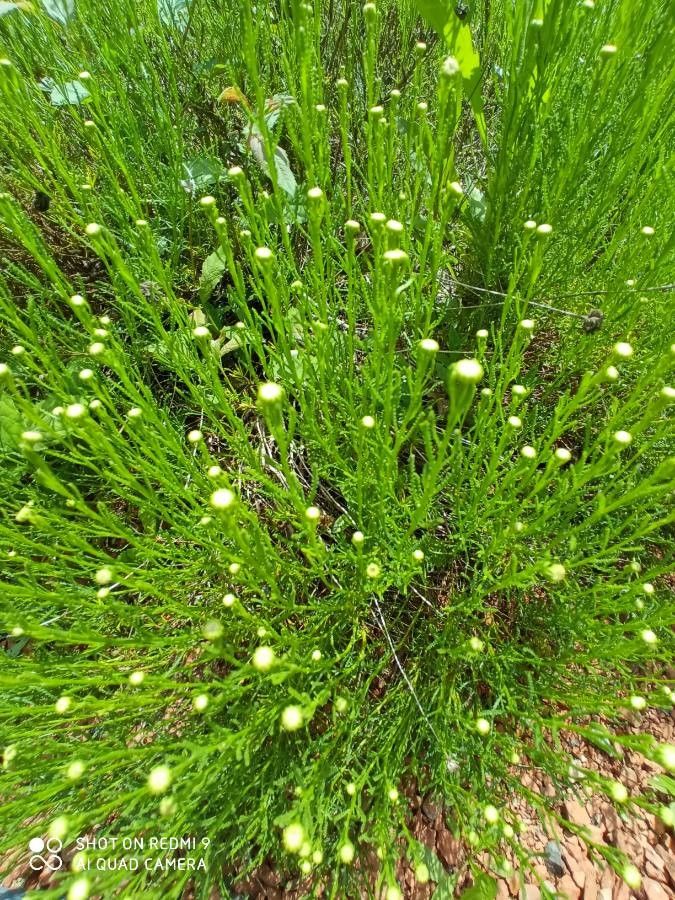
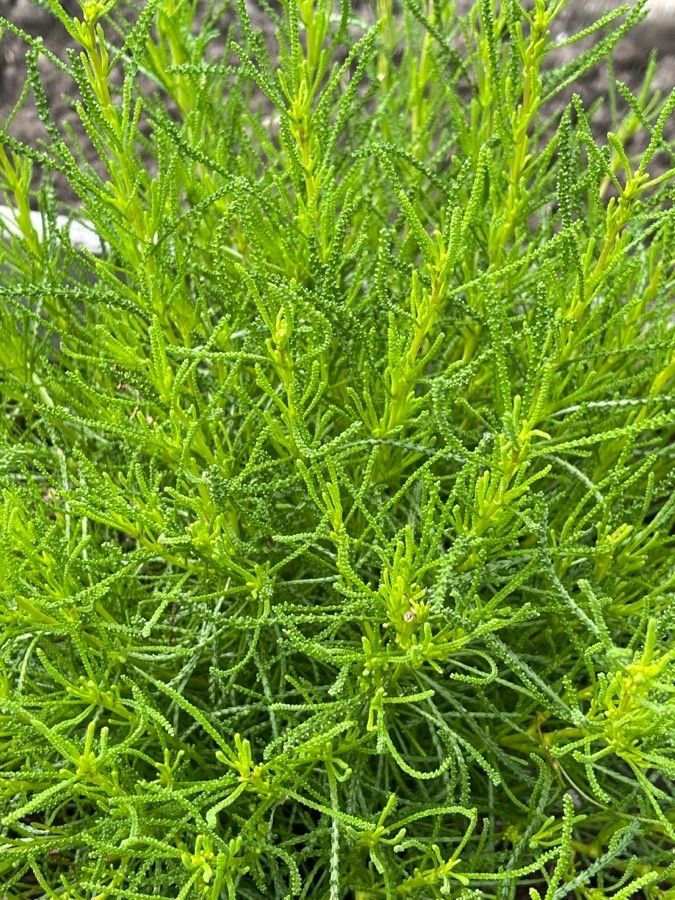
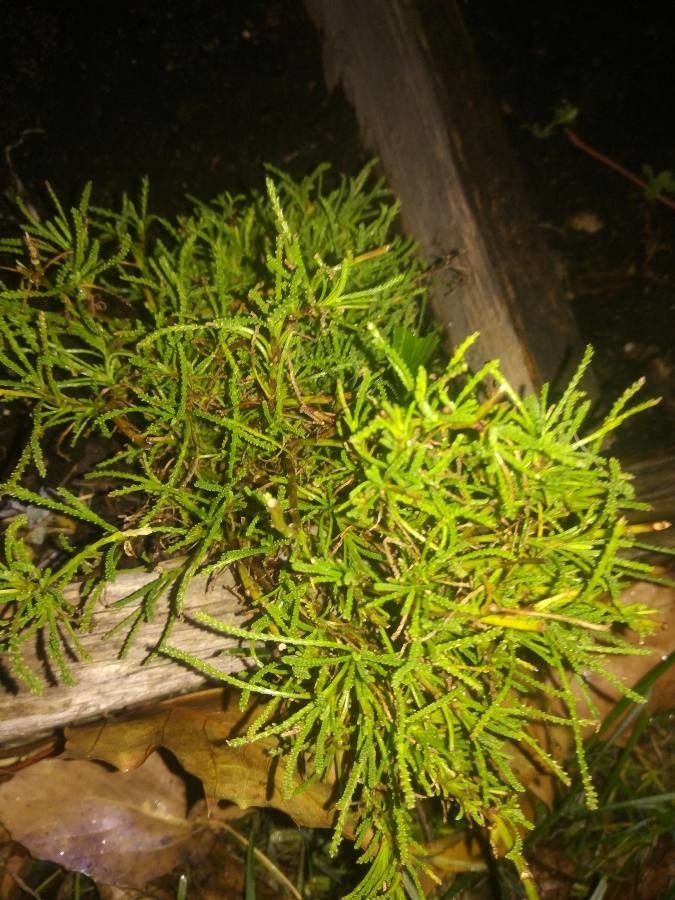
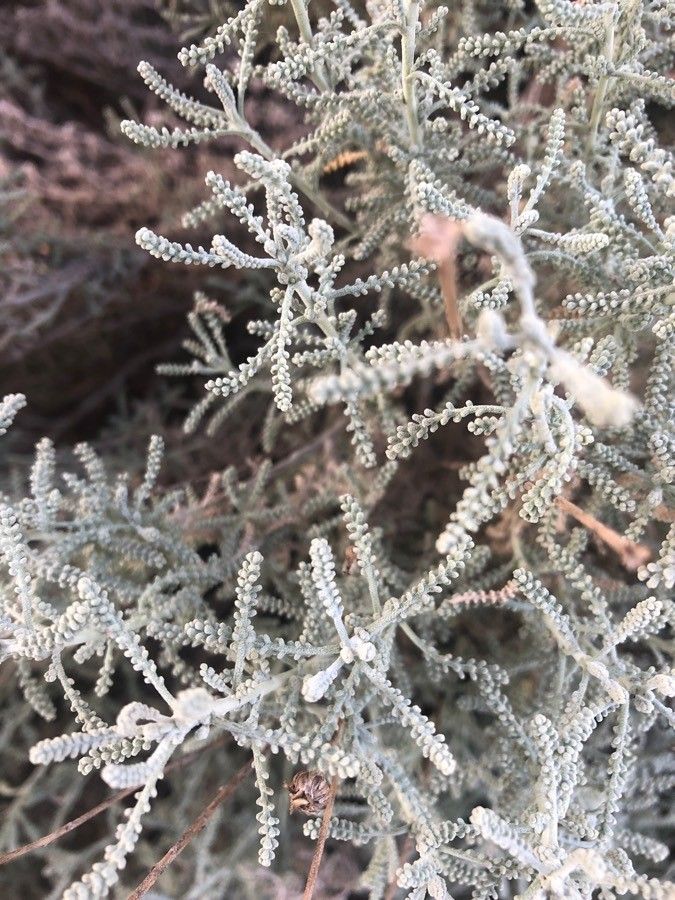
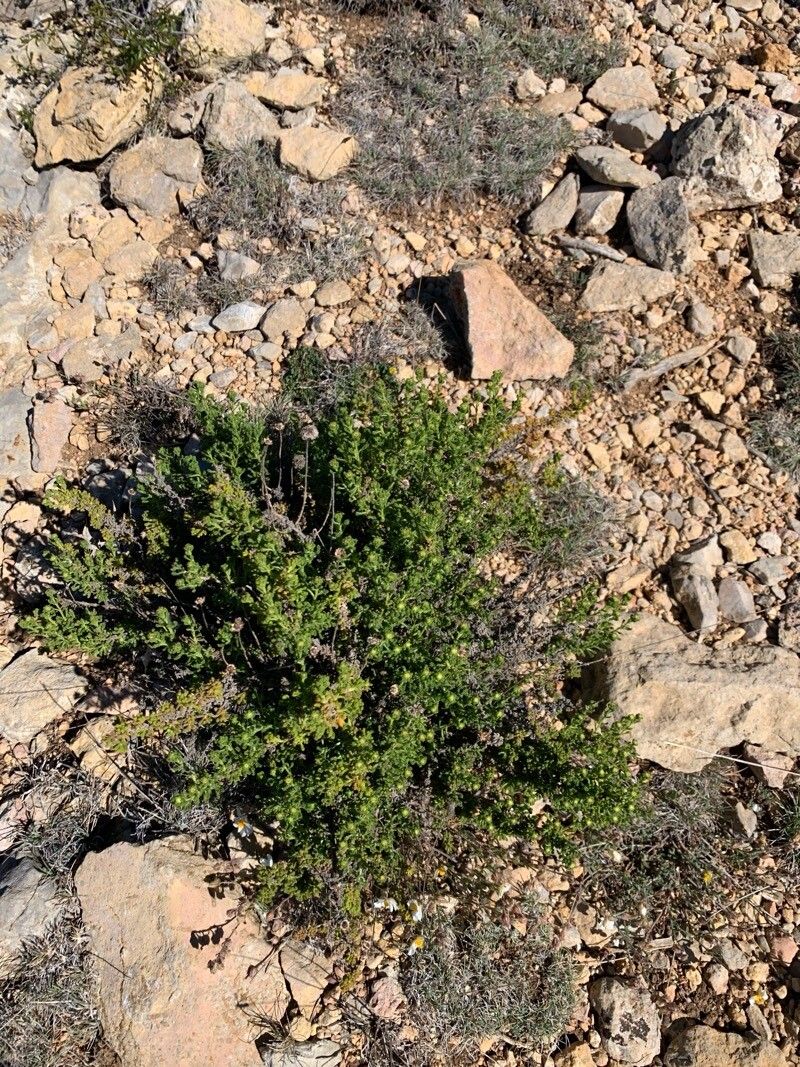
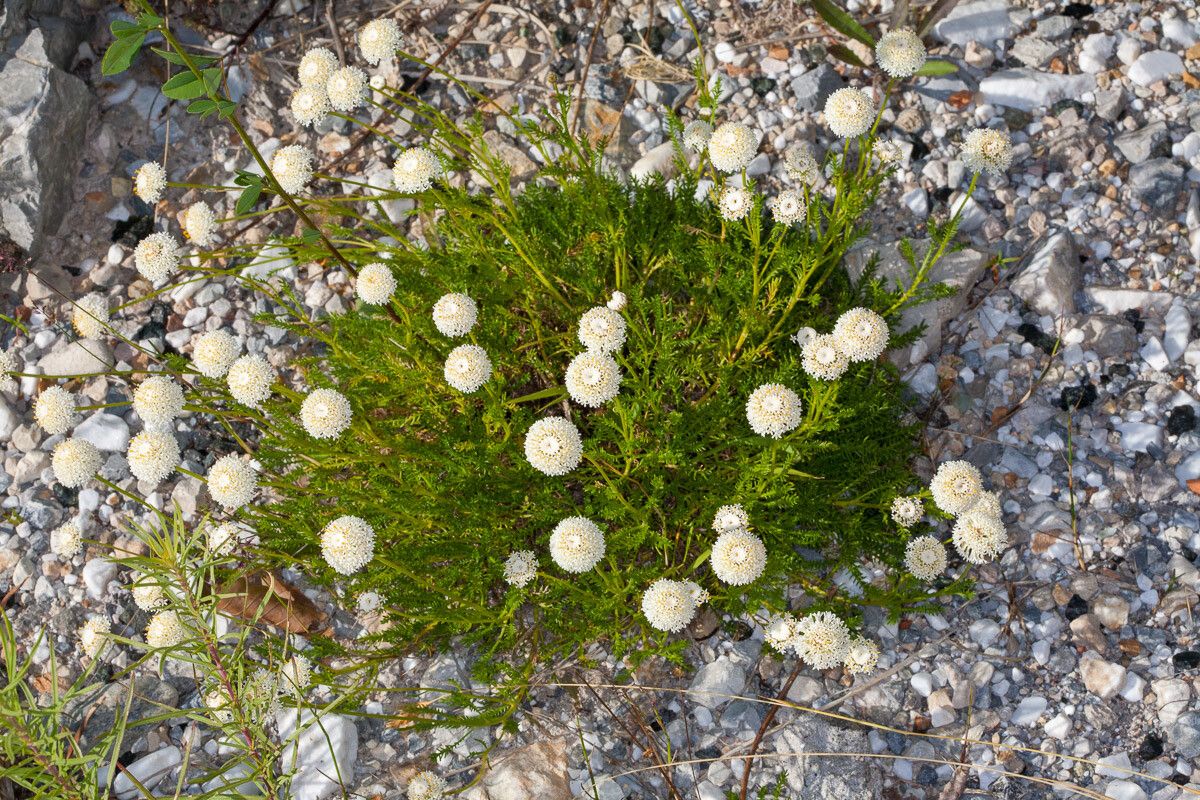
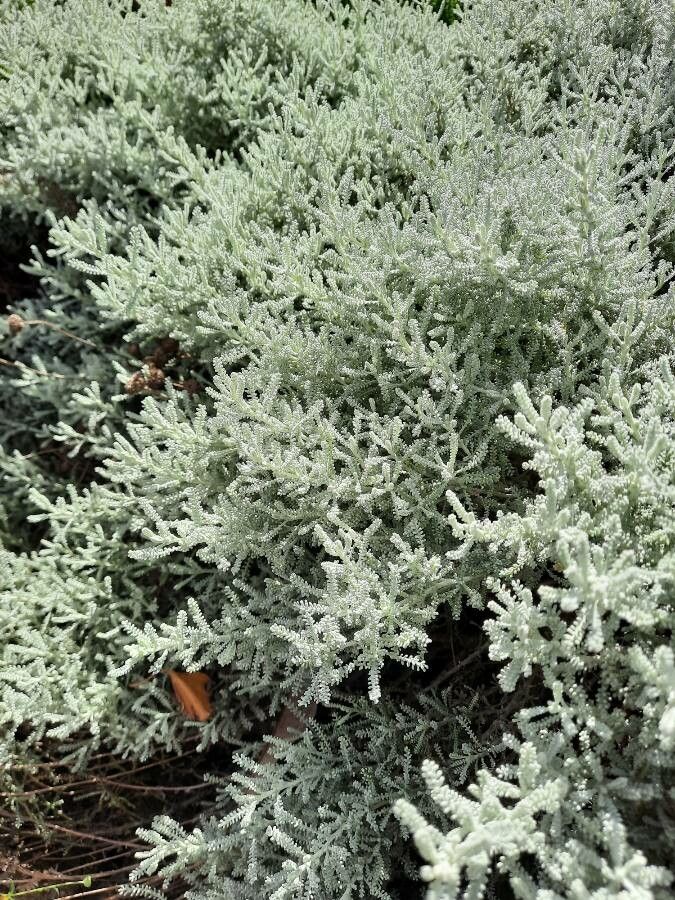
Santolina virens, commonly known as green santolina or green lavender cotton, is a small evergreen shrub that belongs to the Asteraceae family. Native to the Mediterranean region, it thrives in dry and rocky areas. The plant reaches up to 60 cm in height and has a compact, rounded shape with woody stems adorned with small gray-green leaves that release a strong aromatic scent when crushed.
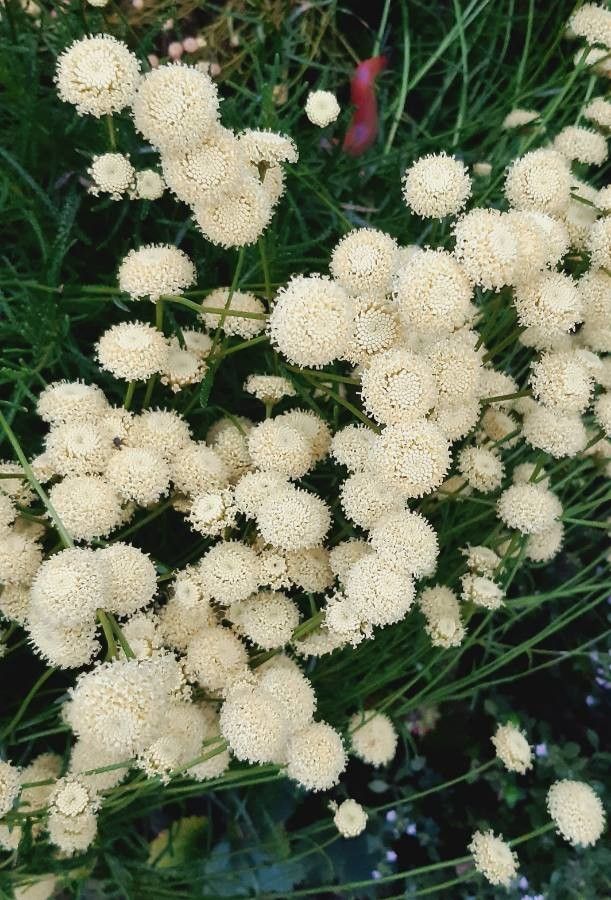
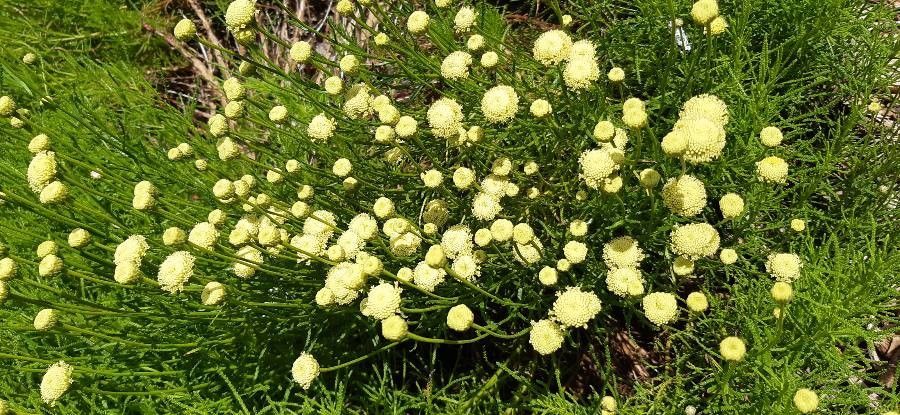
In the summer, Santolina virens produces small yellow, button-like flowers that stand on long stems above the foliage. These flowers attract bees and butterflies, although they are not particularly showy.
This easy-to-grow plant thrives in full sun and well-drained soil. It is drought-tolerant once established but benefits from occasional watering during prolonged dry spells. Pruning can be done after flowering or in early spring to maintain its shape.
Santolina virens has numerous uses, including functioning as an ornamental shrub for borders or rock gardens, thanks to its attractive foliage color and texture. Its dense growth habit makes it suitable for hedging. Additionally, it has medicinal properties and can be used to treat digestive disorders. Dried leaves can repel insects such as moths when placed among clothes or linens.
Overall, Santolina virens is a versatile plant with many aesthetic and functional benefits, making it an excellent addition to any garden setting.
Green santolina is disease-resistant and is generally unlikely to develop illnesses. In terms of care, this plant is fairly low-maintenance. When grown outdoors it needs minimal watering, and larger specimens typically do not require pruning. Smaller plants, however, should be pruned after they have finished blooming. Green santolina is suitable for anyone with outdoor space, such as a garden or deck, and does not demand a lot of care experience.
How to keep Santolina Virens.
Light
Green santolina comes from open habitats, such as sunny meadows and forest edges, which supply abundant light. It does best in full sun but can tolerate partial sun, adapting well to different sunlight conditions.
Water
Green santolina, a plant native to the Mediterranean, thrives in well-drained soils and can withstand drought conditions. It does best with a balance of moisture and dryness, needing weekly watering without becoming over-saturated. As an evergreen, it requires careful management of soil moisture to prevent root rot while maintaining its foliage throughout the year.
Temperature
Green santolina shows strong adaptability to a variety of climate conditions, whether facing scorching summers or frosty winters. Nevertheless, it does have an optimal temperature range for growth. When temperatures get excessively high, the plant can suffer heat and humidity stress that may cause it to die. In areas where temperatures near the lower limit of its cold tolerance, it is important to provide insulation to protect the plant.
Fertilizer
The timing of fertilization is important for Green santolina. Apply fertilizer in early spring and repeat every month through early summer. Fertilizer encourages attractive blooms and supplies energy during both dormant and active growth periods.
Pruning
Green santolina is known for its aromatic leaves and yellow flowers. To maintain its health and appearance, it's best to prune in the winter, from early to late in the season. During pruning, remove any dead branches and shape the plant to encourage compact growth. This practice promotes healthy growth and flowering, prevents the plant from becoming woody, and keeps it robust and appealing.
Botanical profile.
- Plant Type
- Shrub
- Life Cycle
- Perennial
- Genus
- Santolina
- Family
- Asteraceae
- Hardiness Zone
- 7-9
- Mature Height
- 30 cm to 61 cm
- Mature Spread
- 0.61 m to 1.22 m
- Leaf Color
- Green
- Leaf Type
- Evergreen
- Flower Color
- Yellow
- Flower Size
- 2.54 cm
- Bloom Time
- Early summer, Mid summer
- Planting Time
- Spring, Summer, Autumn
- Harvest Time
- Late summer, Early fall
- Native Area
- Spain
Other names.