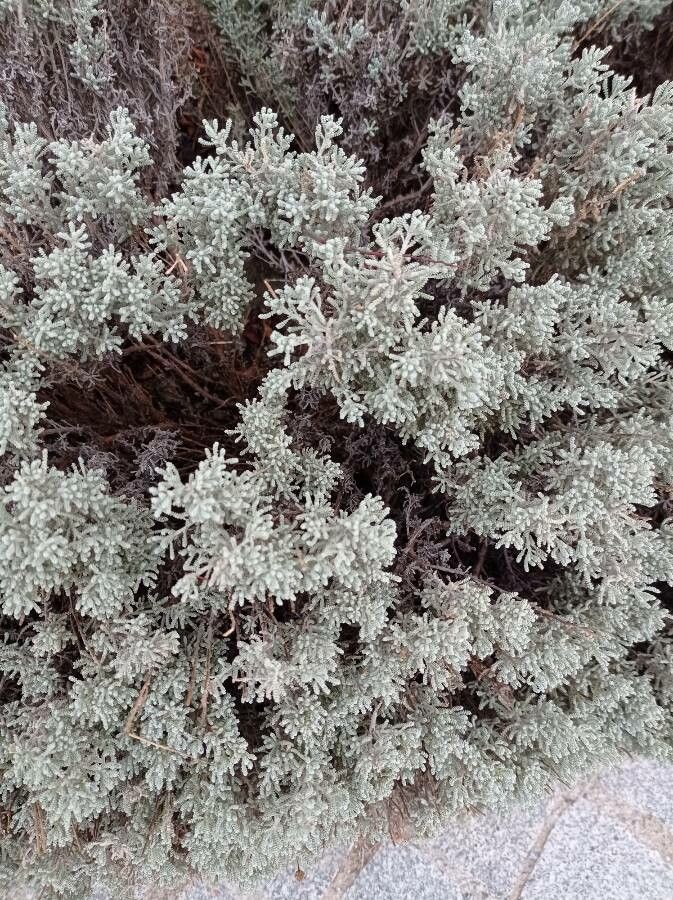
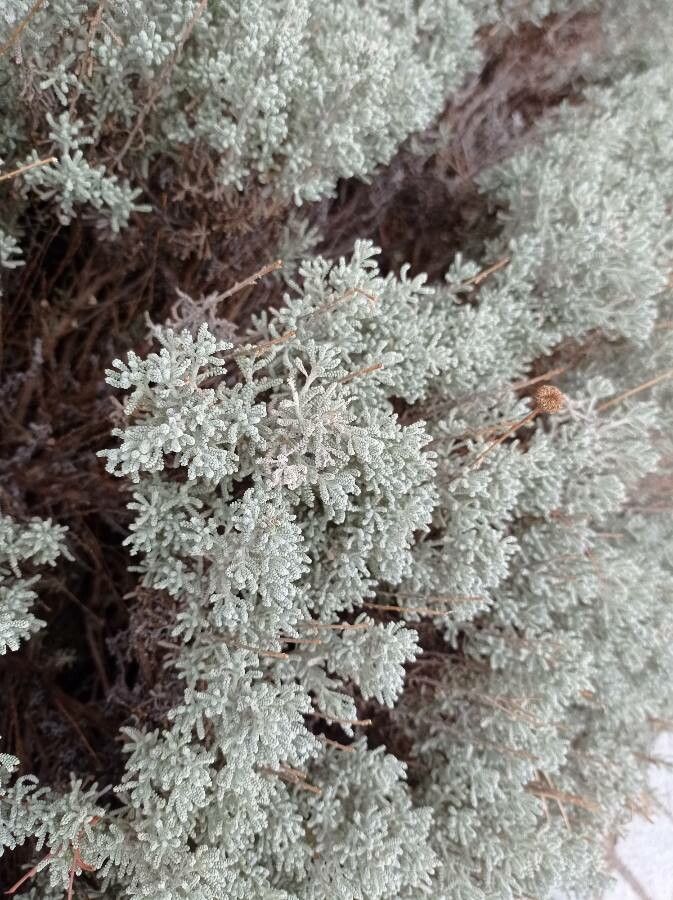
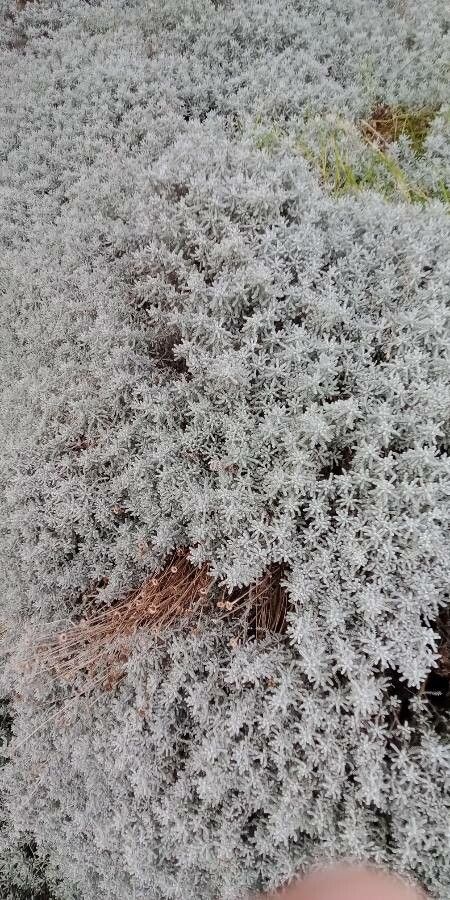
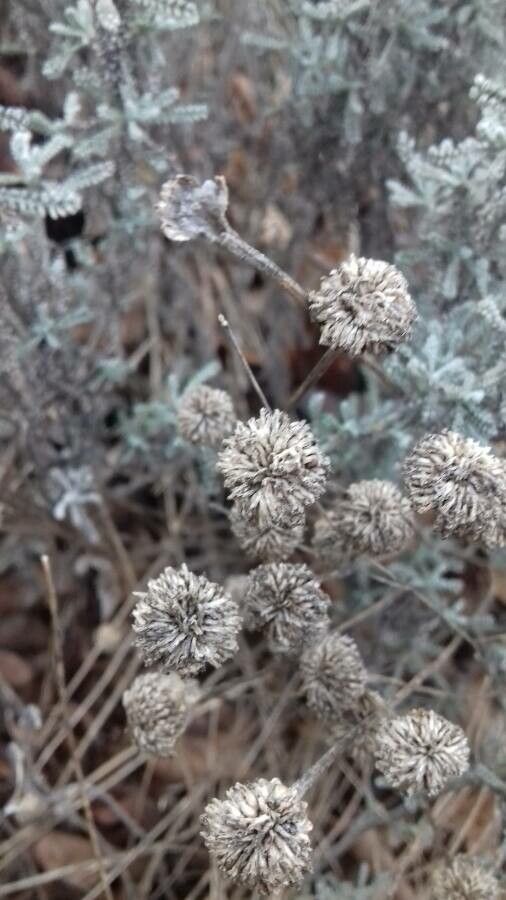
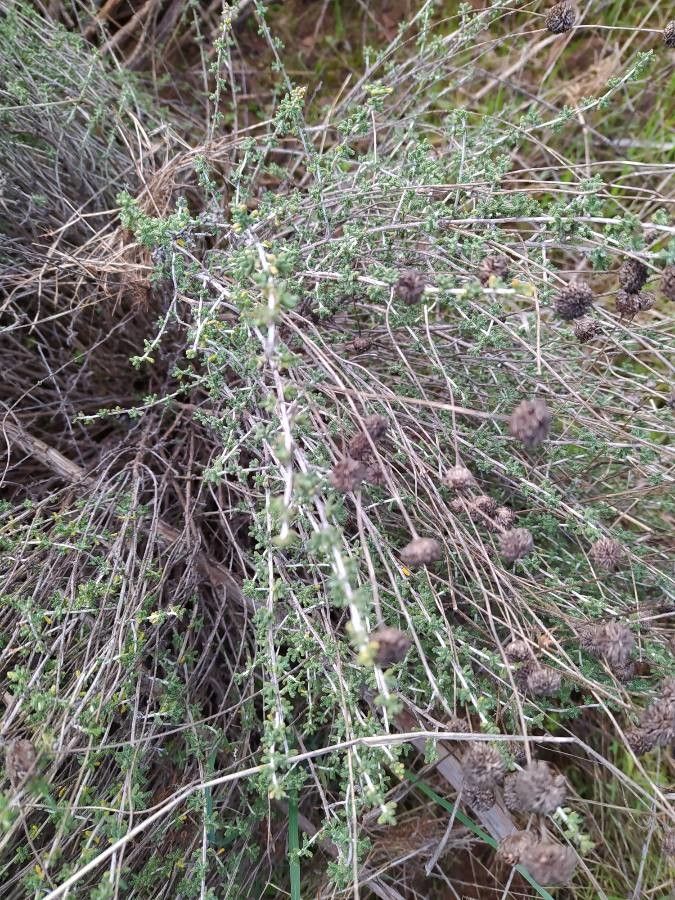
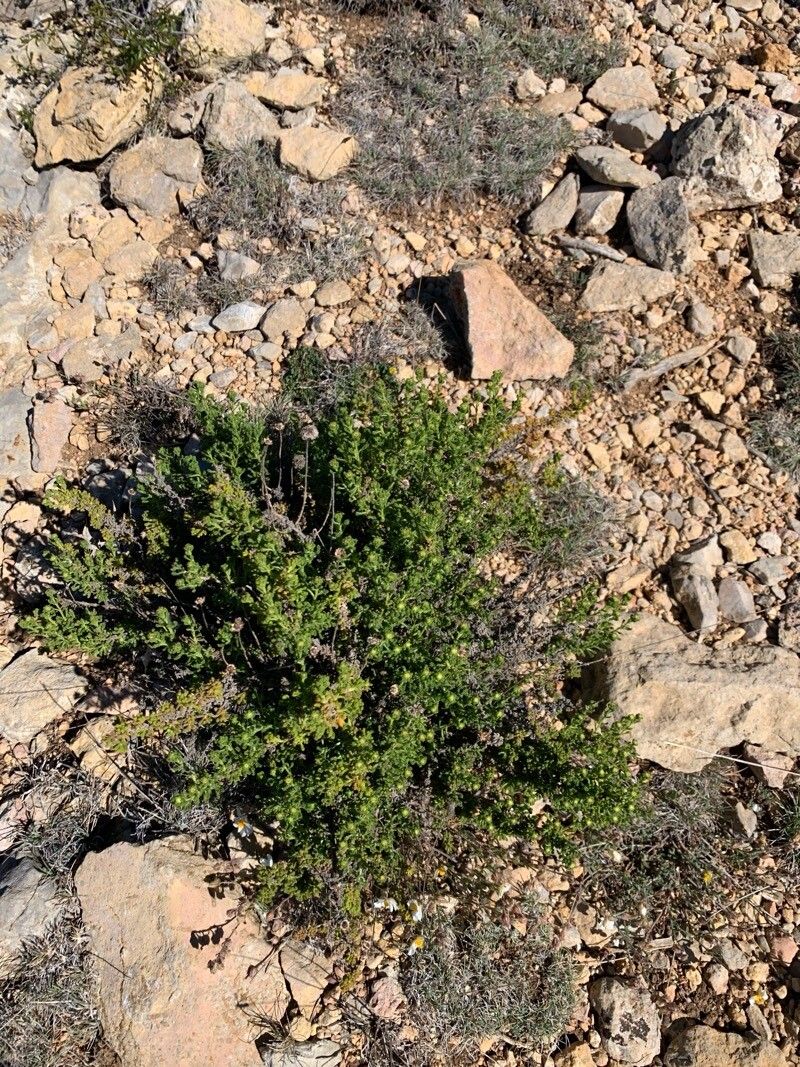
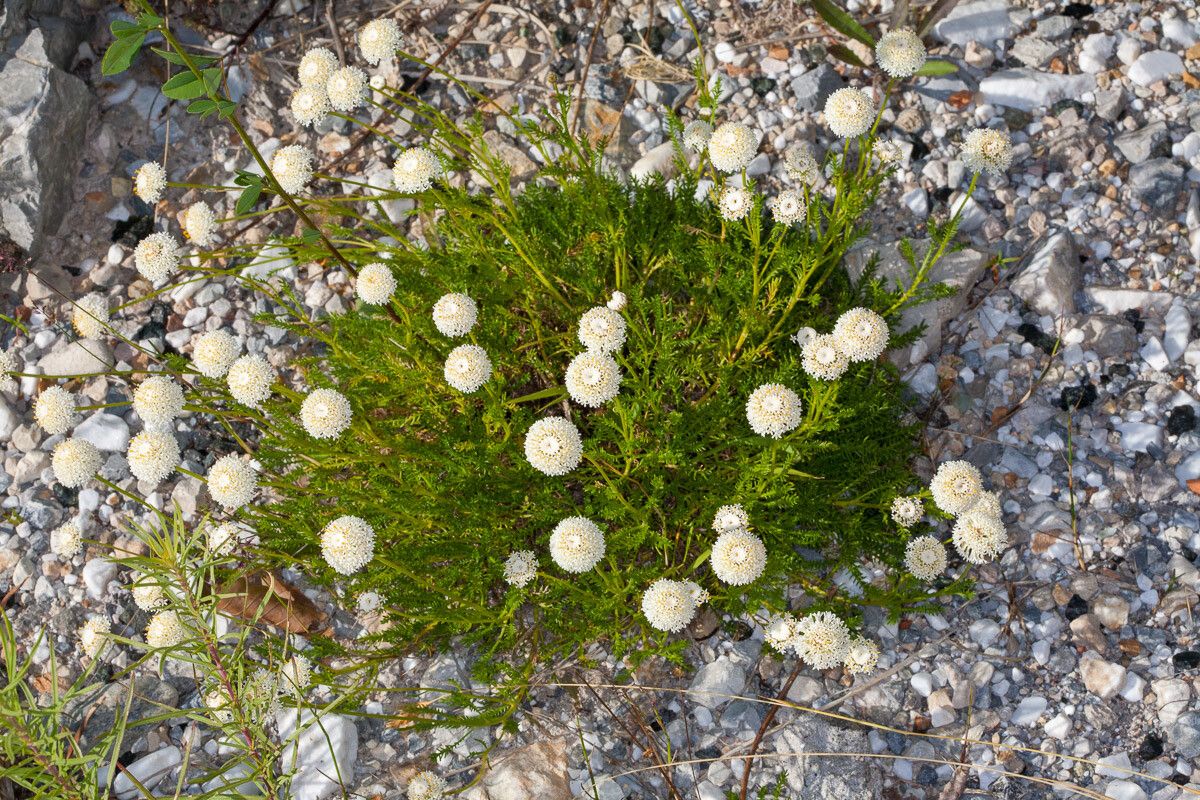
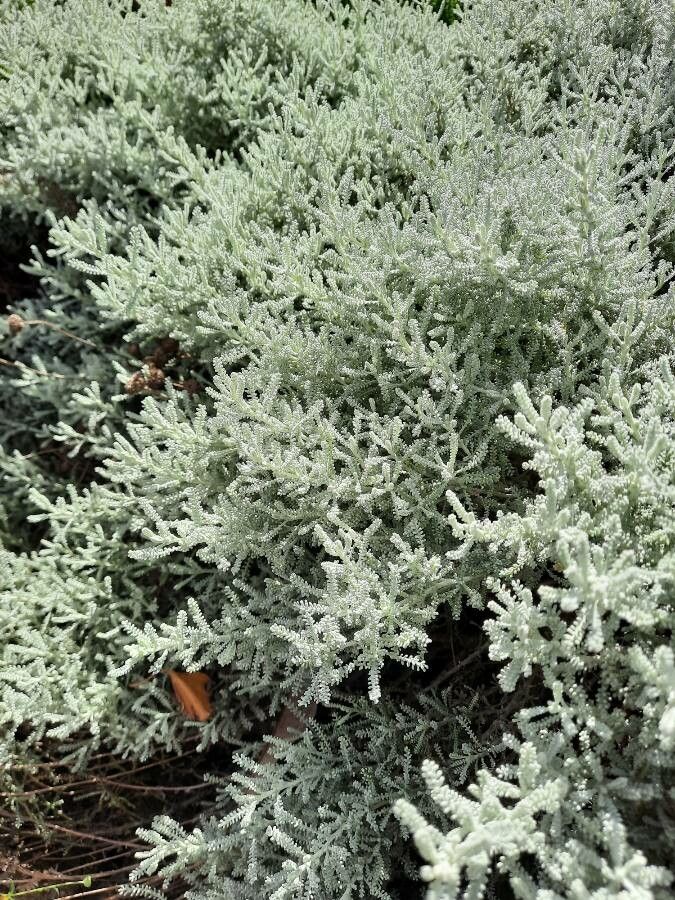
Santolina decumbens, commonly known as creeping lavender cotton, is a low-growing evergreen shrub in the Asteraceae family. Native to the Mediterranean region, it thrives in dry and rocky areas. This plant has a spreading habit and can reach a height of up to 30 cm, extending up to 60 cm across.
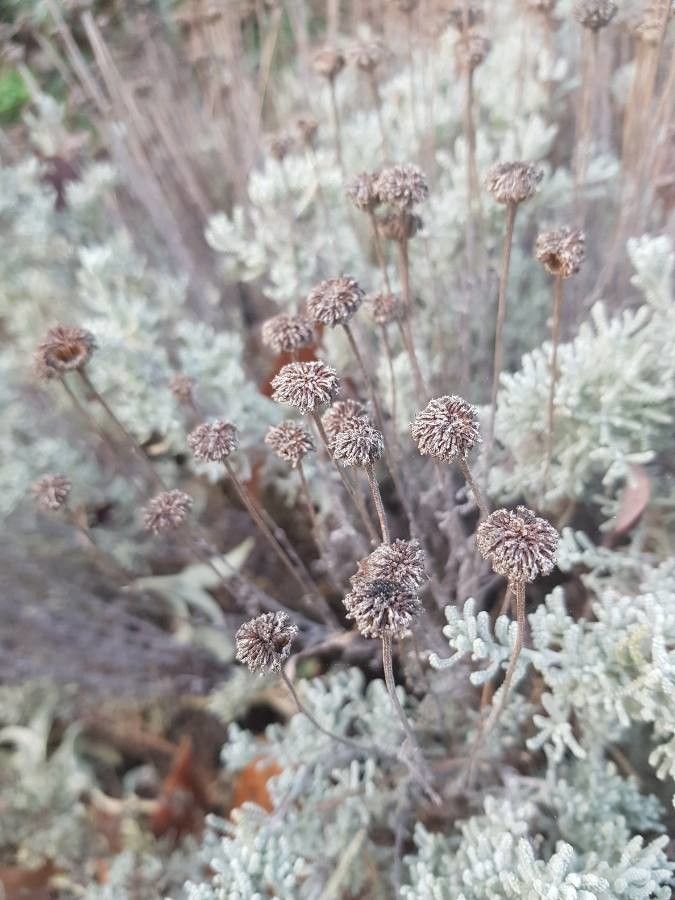
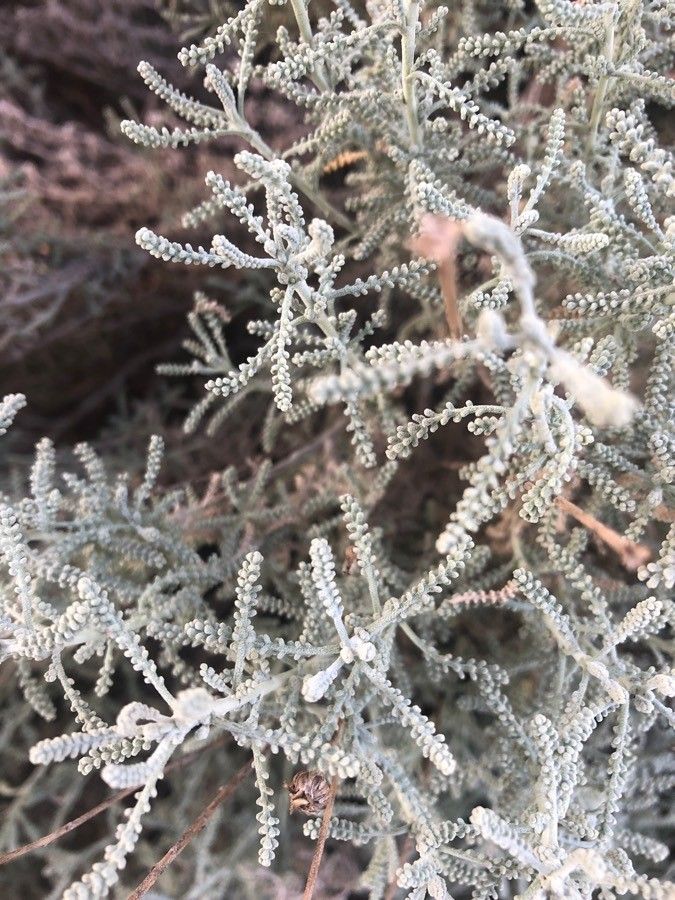
The leaves of Santolina decumbens are small, narrow, and gray-green, emitting a strong aromatic scent when crushed. The plant produces small yellow flowers that bloom from late spring through summer.
Santolina decumbens is often used as an ornamental plant because of its attractive foliage and flowers. It serves well as ground cover or edging for borders and pathways, thanks to its low-growing nature. The plant prefers well-drained soil and full sun exposure but can tolerate some shade.
Beyond its ornamental appeal, Santolina decumbens has traditionally been used for medicinal purposes, such as treating digestive issues, respiratory problems, headaches, and insect bites.
Overall, Santolina decumbens is an attractive, low-maintenance shrub that adds beauty and fragrance to any setting, while also offering some medicinal benefits.
Grey santolina is resistant to disease and generally not susceptible to illnesses. In terms of care, the plant is fairly low-maintenance. Planted outdoors it needs little watering, and larger specimens typically do not require pruning. Smaller plants, however, should be pruned after they finish flowering. Grey santolina is appropriate for anyone with an outdoor area, such as a garden or a deck, and does not need extensive gardening experience.
How to keep Santolina Decumbens.
Light
Grey santolina comes from open habitats, like sunny meadows and forest margins, which supply abundant light. It performs best in Full Sun but can also tolerate Partial Sun, adapting well to a range of light conditions.
Temperature
Grey santolina is very adaptable to different weather conditions, coping with both very hot summers and cold winters. Still, it requires a certain optimal temperature range to grow well. If temperatures become too high, the plant can suffer from heat and humidity stress, which may kill it. In places where temperatures reach the lower edge of its cold tolerance, taking steps to insulate and protect the plant is necessary.
Fertilizer
Timing is crucial when fertilizing Grey santolina. Start fertilizing in early spring and continue once a month until early summer. Fertilizer promotes attractive blooms and supplies energy during both dormant periods and times of active growth.
Botanical profile.
- Plant Type
- Shrub
- Life Cycle
- Perennial
- Genus
- Santolina
- Family
- Asteraceae
- Hardiness Zone
- 6-9
- Mature Height
- 15 cm to 30 cm
- Mature Spread
- 30 cm to 61 cm
- Leaf Color
- Silver, Gray
- Leaf Type
- Evergreen
- Flower Size
- 1.02 cm to 2.03 cm
- Bloom Time
- Early summer, Mid summer
- Planting Time
- Spring, Summer, Autumn
- Harvest Time
- Late summer, Early fall
- Native Area
- Italy, France
Other names.