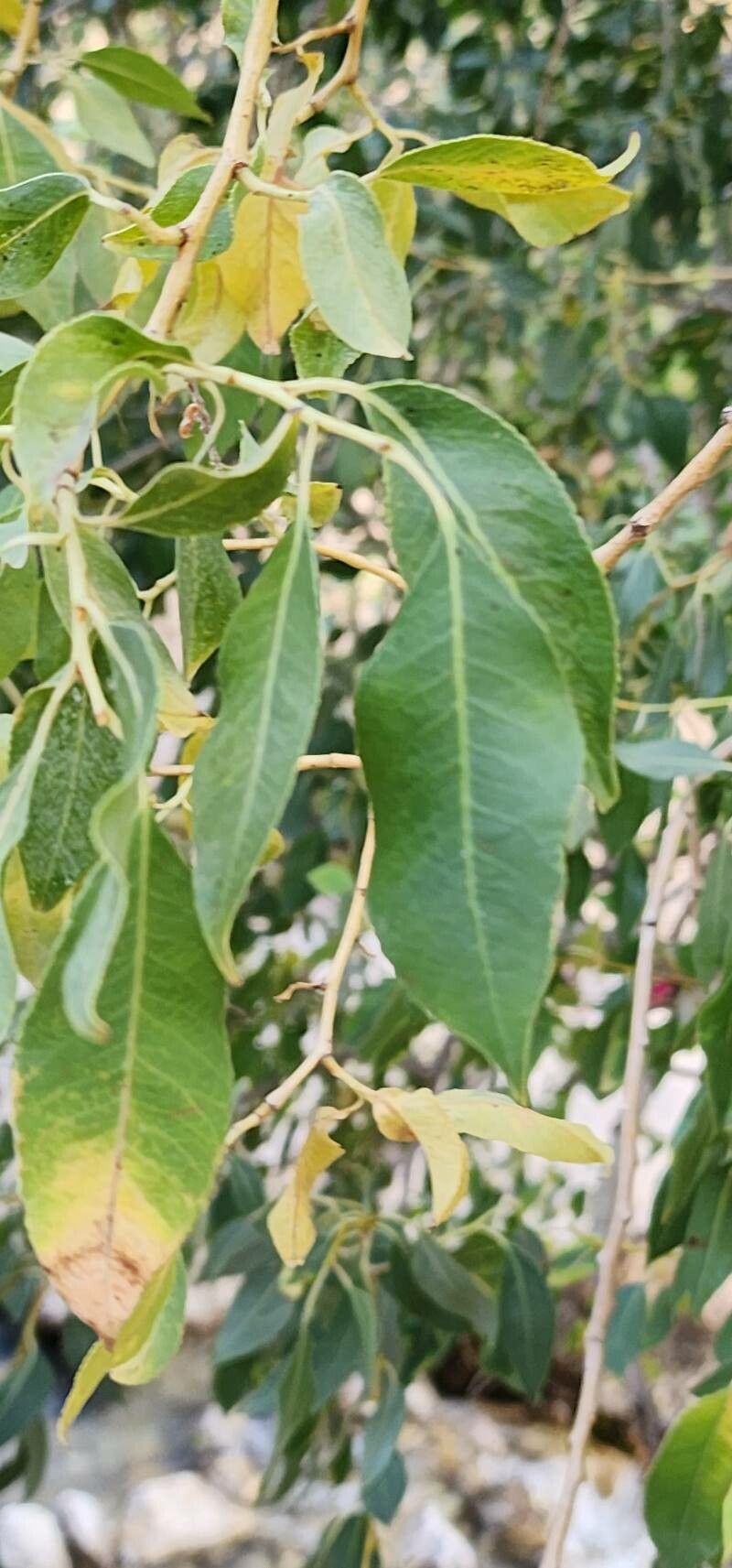
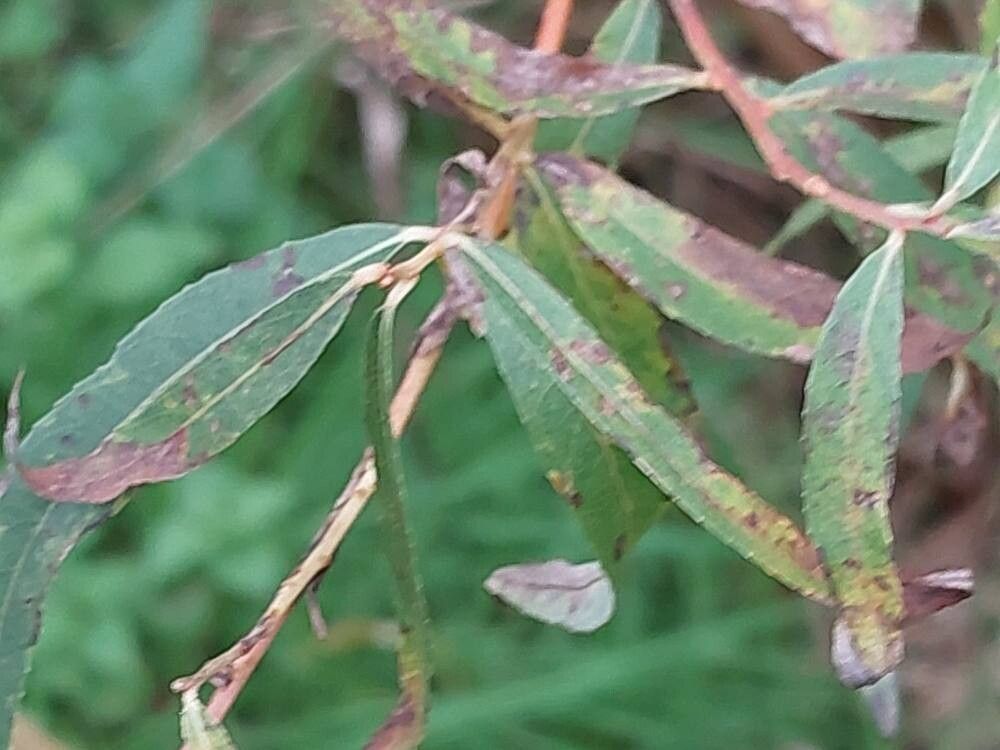
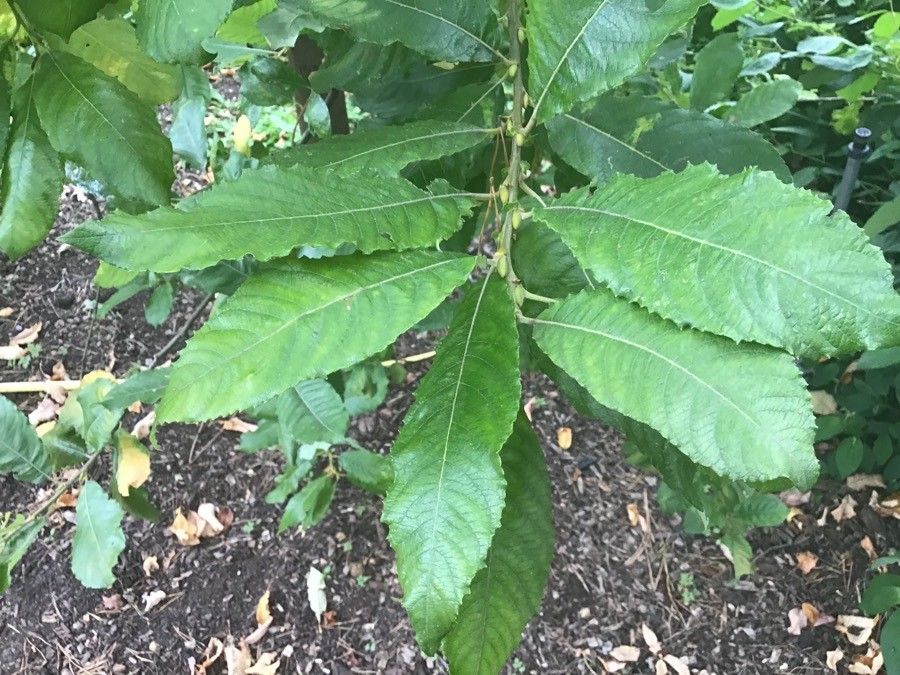
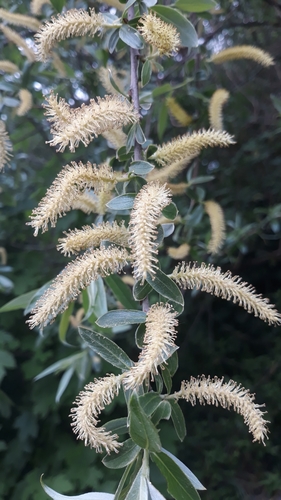
Salix uva-ursi, commonly known as bearberry or kinnikinnick, is a low-growing evergreen shrub that belongs to the Salicaceae family. Native to North America, this plant thrives in various habitats, including rocky slopes, dry sandy soils, and coniferous forests. This shrub features small, leathery leaves that are dark green on the top and pale green on the underside. The leaves are oval-shaped with pointed tips and smooth margins. In late spring or early summer, the plant produces small pink or white flowers, which eventually develop into bright red berries by fall. For centuries, Native Americans have used Salix uva-ursi for medicinal purposes. The plant contains arbutin, which possesses antiseptic properties beneficial for treating urinary tract infections. Additionally, the leaves have been used to make tea believed to aid in digestive problems. Beyond its medicinal applications, Salix uva-ursi is also valued as an ornamental plant due to its attractive foliage and berries. It can be grown in gardens as ground cover or planted along borders. Overall, Salix uva-ursi is a fascinating shrub with both medicinal and ornamental appeal, making it a popular choice among gardeners and herbalists alike.
How to keep Salix Uva Ursi.
Water
The bearberry willow needs regular watering, especially when the plants are seedlings during the summer. Ideally, water them daily by 5 p.m. Once mature, these plants become drought-resistant and can tolerate water-logged conditions well, so excessive drainage is typically not needed. It's important to adjust your watering schedule based on the soil moisture and rainfall conditions.
Fertilizer
In the early stages of growth for bearberry willow, apply a light nitrogen fertilizer four to five times. Once the plant matures, it requires minimal fertilization. If needed, you can use potassic fertilizers. If the leaves are healthy and green, this indicates that the soil is fertile, and no extra fertilization is necessary, especially if nearby lawns are regularly fertilized.
Pruning
Pruning bearberry willow in early spring helps it thrive. This process involves removing dead branches, thinning out crowded areas, and shaping the plant for healthy growth. Pruning during this time aligns with the plant's growth cycle, promoting vigorous new shoots and helping to prevent diseases and pests. It is important to use clean tools to avoid transferring pathogens.
Botanical profile.
- Plant Type
- Shrub
- Genus
- Salix
- Family
- Salicaceae
Other names.
Reader questions.
What are the sunlight requirements for Bearberry willow (Salix uva-ursi)?
Bearberry willow (Salix uva-ursi) thrives in various lighting conditions. For those plants needing 'Full sun,' they require above 6 hours of sunlight daily. Meanwhile, those marked for 'Partial sun' need about 3-6 hours of sunlight each day. It's essential to observe the movement of sunlight through your garden to find spots that offer the right balance of light and shade. This attention to detail ensures your plants will grow happily in their environment.
What is the botanical name of Bearberry willow?
The botanical name of Bearberry willow is Salix uva-ursi.