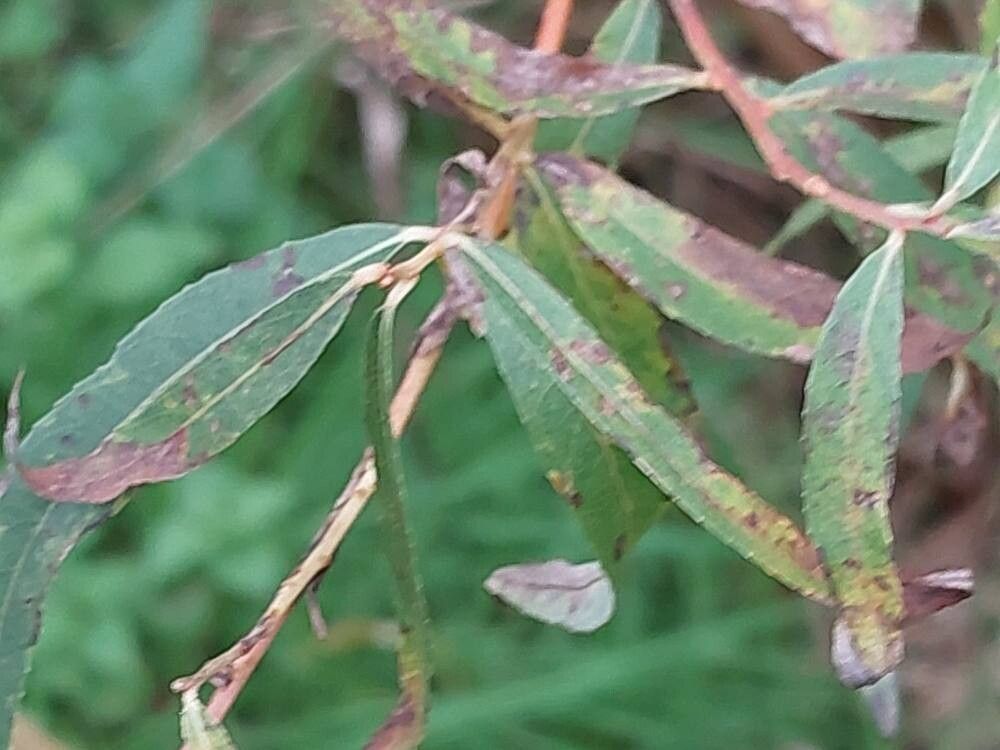
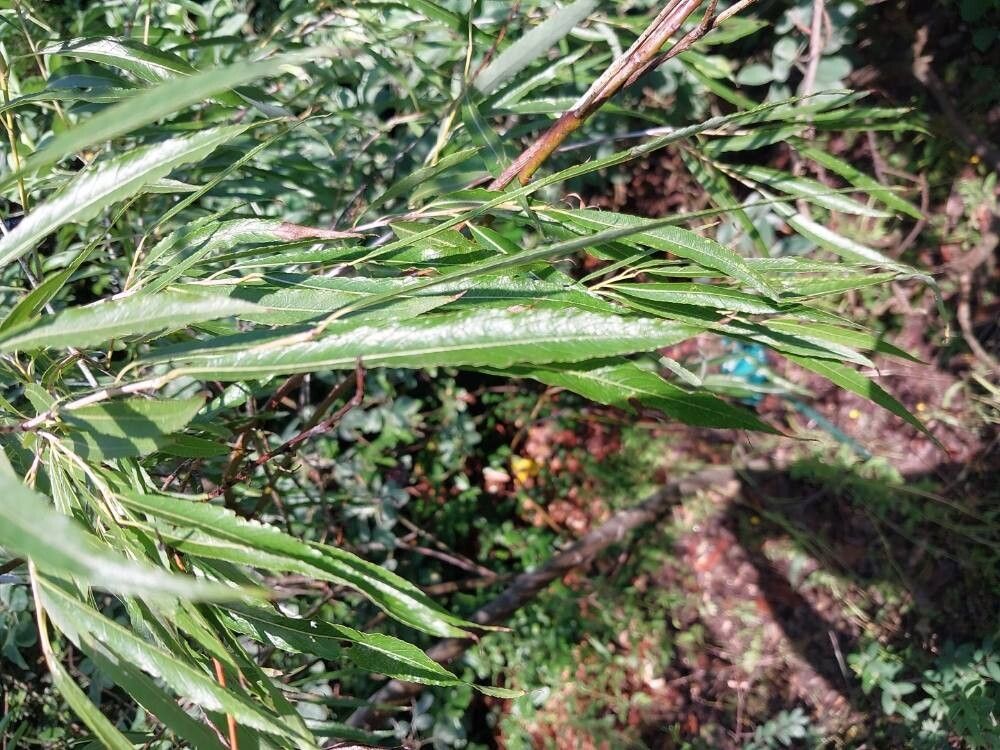
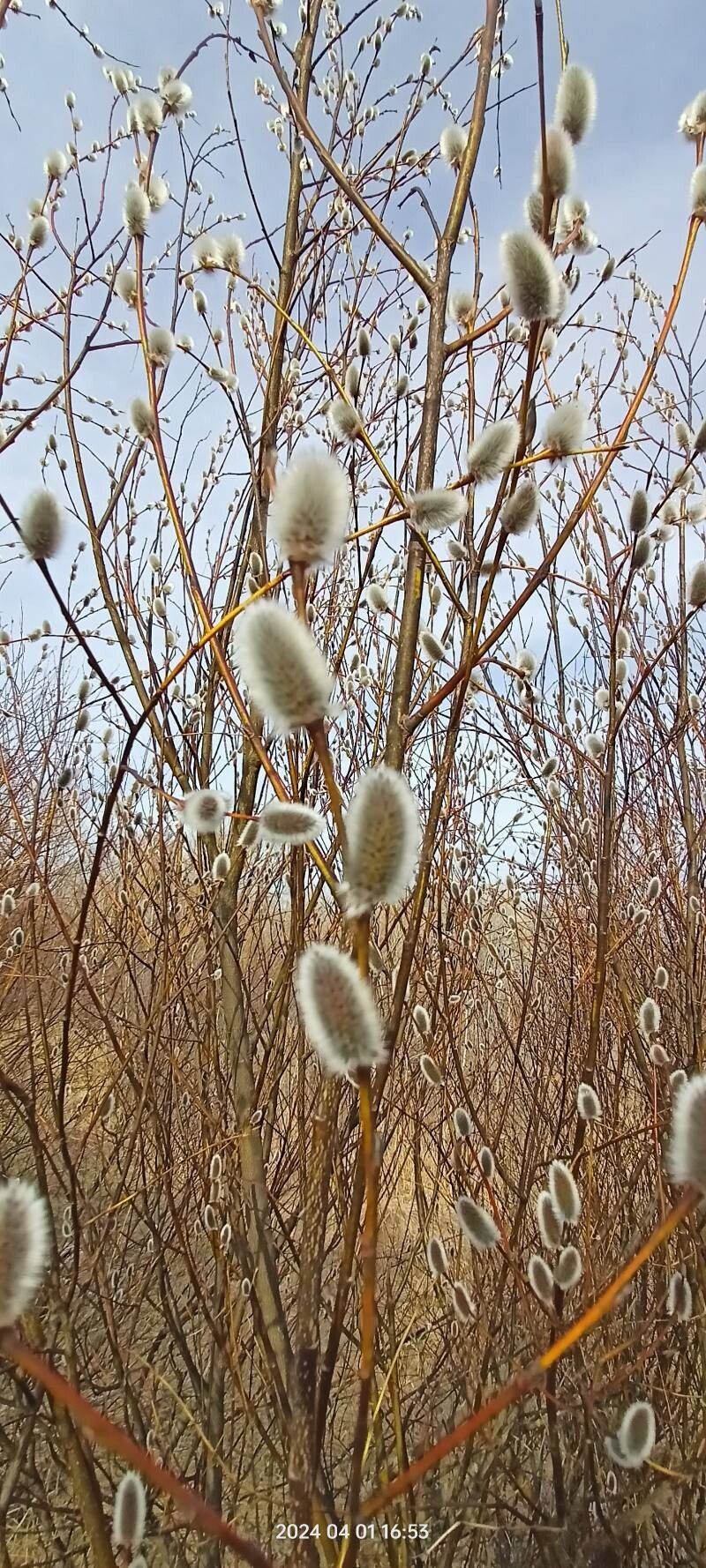
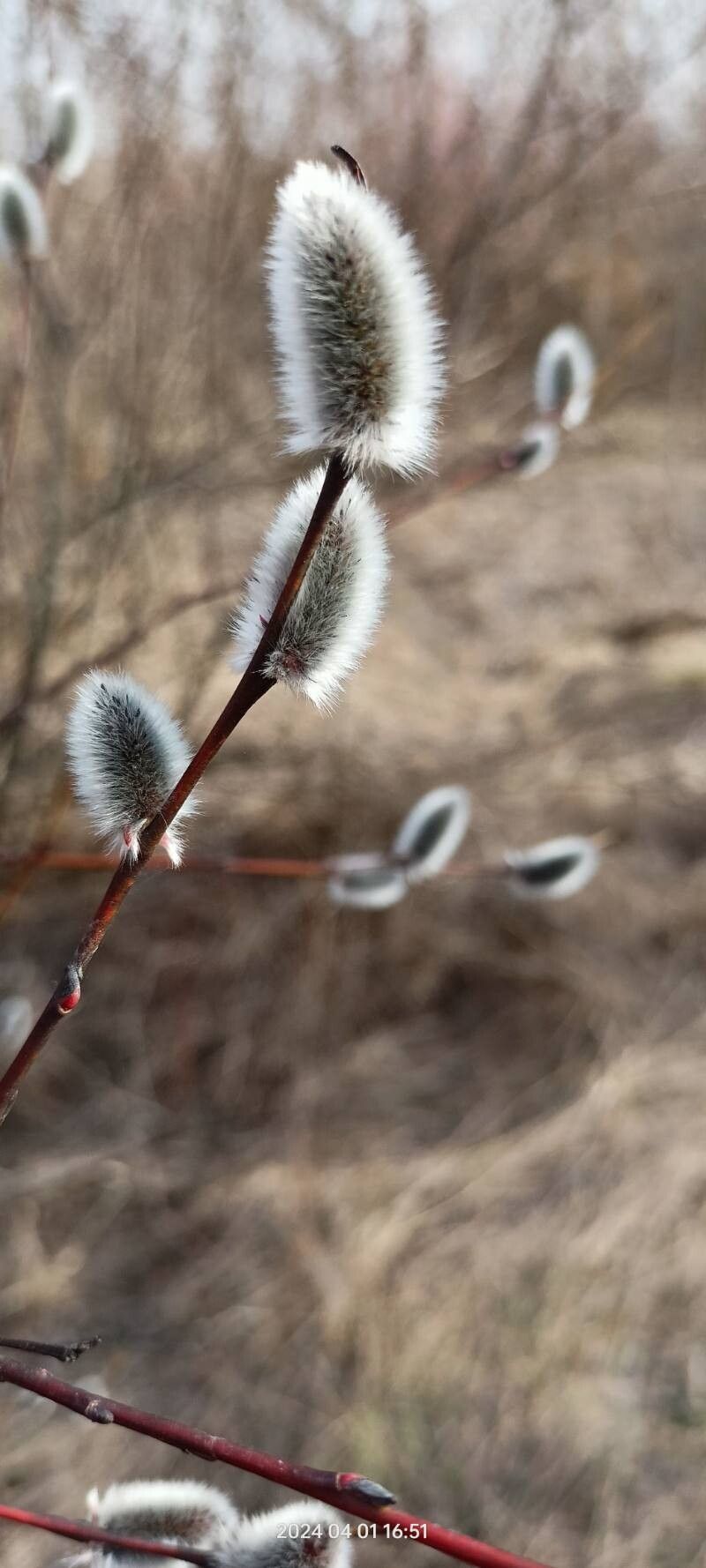
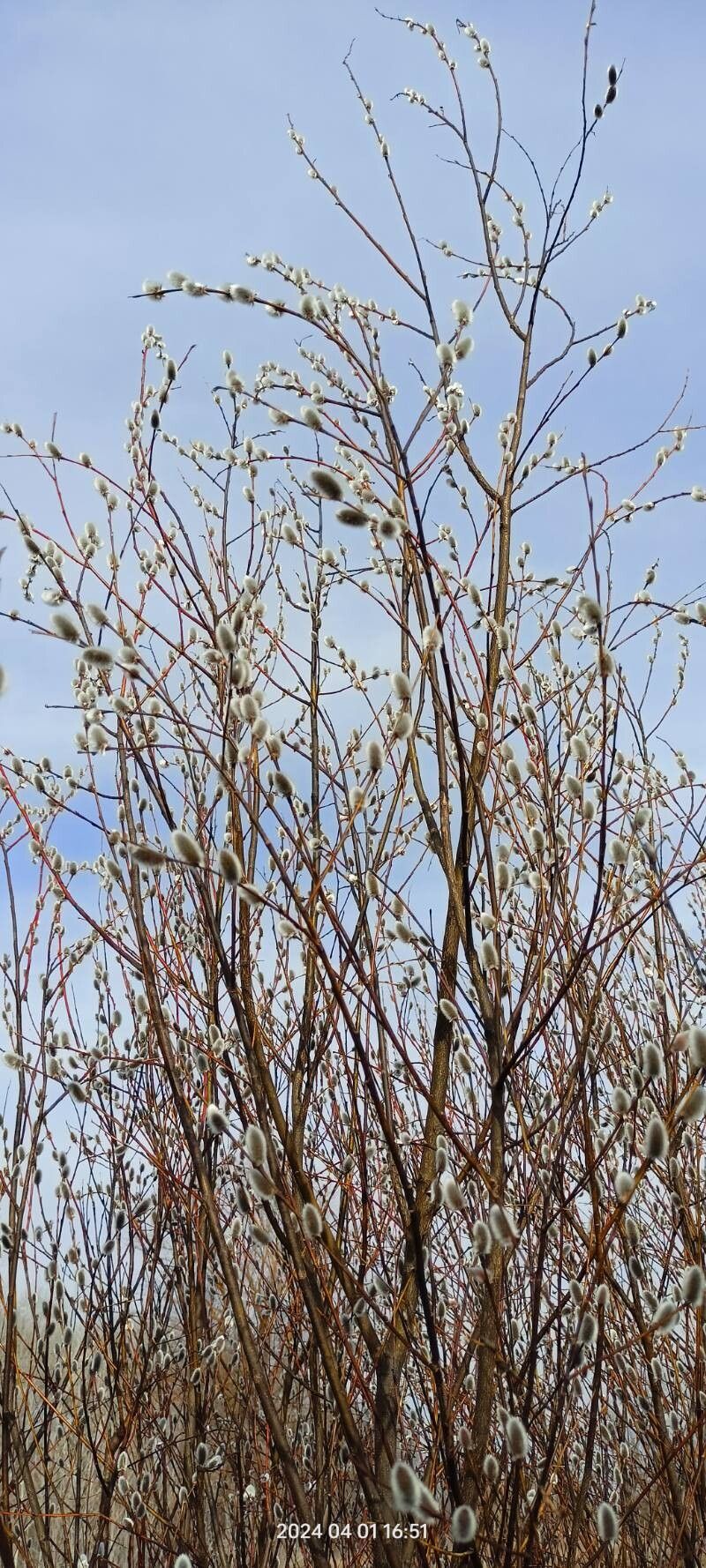
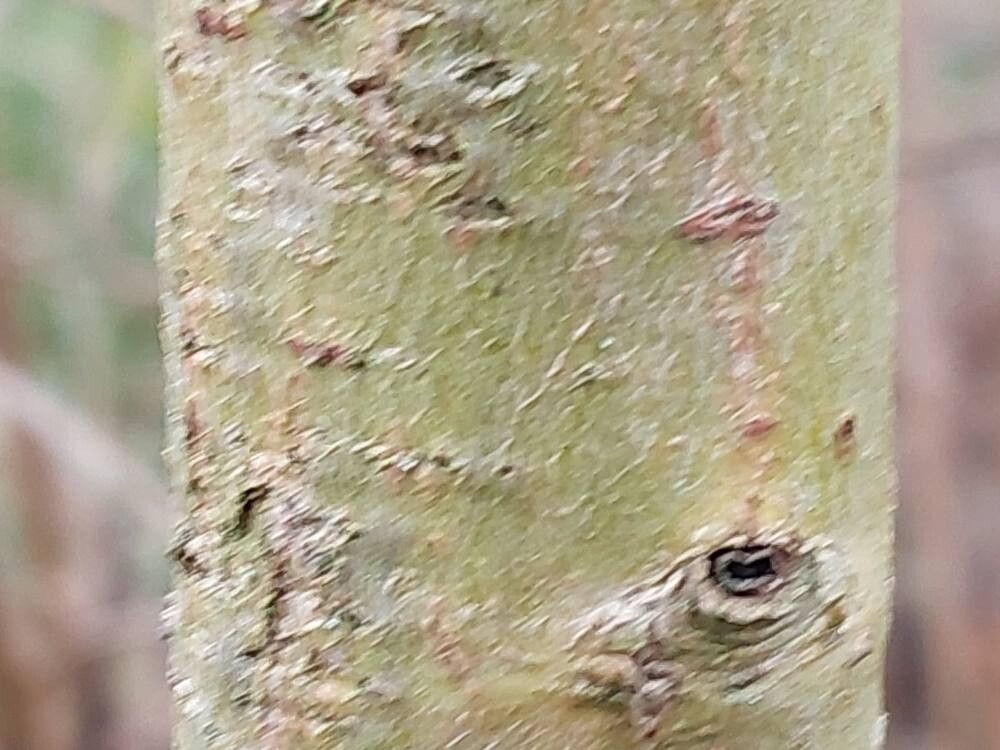
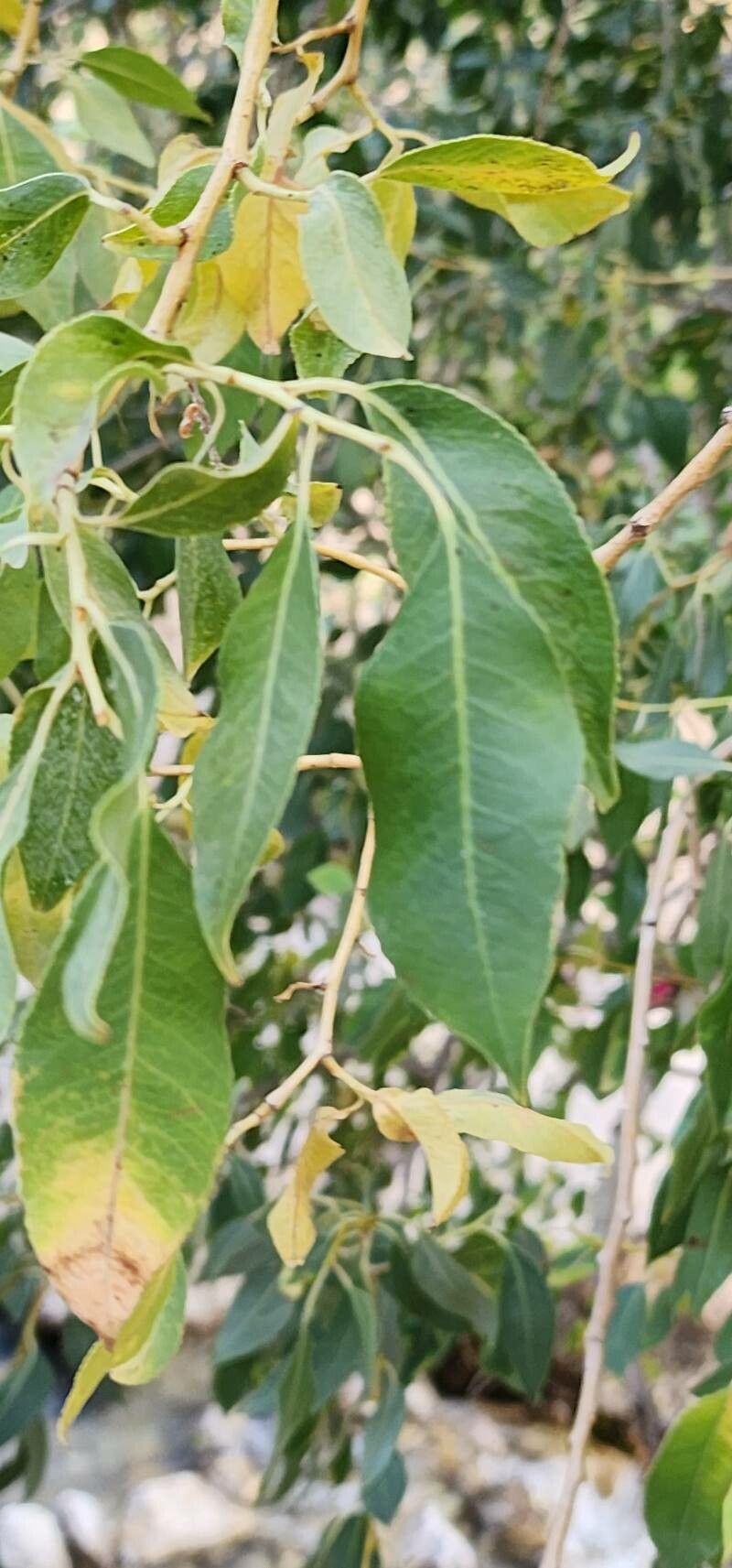
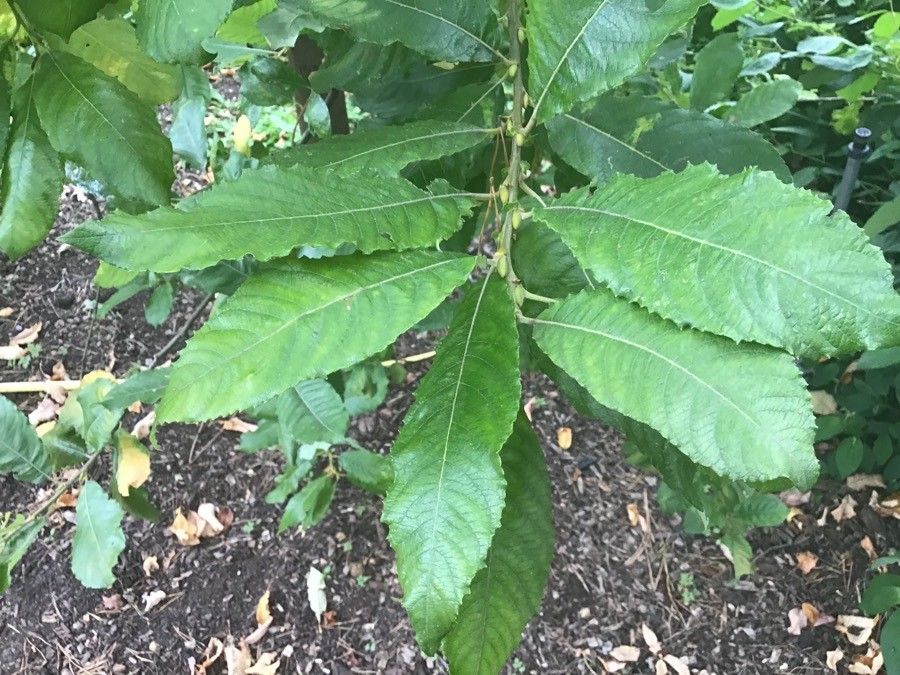
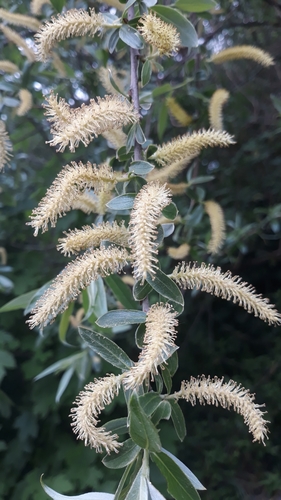
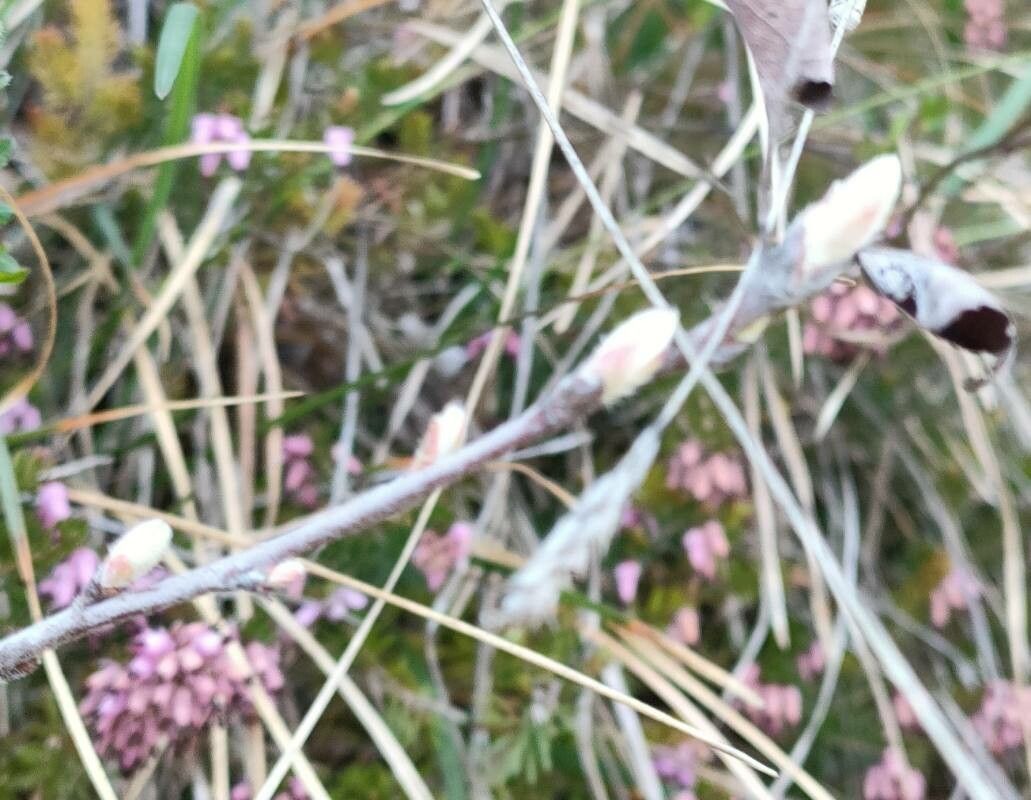
Salix acutifolia, also known as Siberian violet-willow, long-leaved violet willow or sharp-leaf willow, is a species of flowering plant in the family Salicaceae, native to Russia and eastern Asia. It is a spreading, deciduous shrub or tree, growing to 10 m (33 ft) tall by 12 m (39 ft) wide. The young shoots are deep purple with a white bloom. The leaves are narrow, up to 10 cm (4 in) long. The catkins are produced in early spring, before the leaves. Older bark has a fine, netted pattern. Like all willows this species is dioecious. Male catkins are 5 cm (2 in) and silvery, with gold anthers, while female catkins are green and 3 cm (1 in) long.The specific epithet acutifolia means "sharp-leaved".The male clone 'Blue Streak' has gained the Royal Horticultural Society's Award of Garden Merit.
The sharp-leaved willow is disease-resistant and typically not susceptible to illnesses. Regarding care, this plant is fairly low-maintenance. When grown outdoors it needs little watering, and larger specimens usually do not require pruning. Smaller plants, however, should be pruned after they have bloomed. The sharp-leaved willow is suitable for anyone with an outdoor area, such as a garden or deck, and does not need extensive care experience.
How to keep Salix Acutifolia.
Light
Sharp-leaved willow is native to open habitats, such as sunny meadows and forest edges, which provide abundant light. It does best in Full Sun but can also tolerate Partial Sun, adapting well to a range of light conditions.
Water
The sharp-leaved willow is well-suited to environments with sporadic rainfall due to its strong drought tolerance. It thrives with minimal water, requiring deep watering only once every 2-3 weeks, which makes it ideal for outdoor cultivation. As a deciduous species, it effectively balances water retention with seasonal leaf shedding to maintain its health and vitality.
Temperature
Sharp-leaved willow is highly adaptable to different climate conditions, whether in hot summers or cold winters. Nevertheless, it has a preferred temperature range for growth. If temperatures rise too high, the plant is susceptible to heat and humidity stress, which can lead to death. In areas where temperatures approach the lower bound of its cold tolerance, it is necessary to use insulating measures to protect the plant.
Fertilizer
Timing matters when fertilizing the Sharp-leaved willow. Apply fertilizer in early spring and continue once a month through early summer. Fertilizer promotes attractive blooms and supplies energy during both dormant periods and times of active growth.
Pruning
The sharp-leaved willow is a deciduous shrub known for its slender, lance-shaped leaves and striking catkins. To keep it healthy and vibrant, prune the shrub in early spring by removing any dead or damaged branches. This will encourage new growth and improve air circulation. Additionally, thinning out older stems helps to maintain the shrub's shape and vigor. Regular pruning not only prevents disease but also enhances the overall appearance of your garden.
Botanical profile.
- Plant Type
- Tree
- Life Cycle
- Perennial
- Genus
- Salix
- Family
- Salicaceae
- Hardiness Zone
- 4-8
- Mature Height
- 10.06 m
- Mature Spread
- 11.89 m
- Leaf Color
- Green
- Leaf Type
- Deciduous
- Flower Color
- Yellow
- Flower Size
- 2.54 cm
- Bloom Time
- Late winter, Early spring
- Planting Time
- Spring, Summer, Autumn
- Harvest Time
- Mid spring, Late spring
- Native Area
- Russia, Tajikistan, India, Kazakhstan, Pakistan, Ukraine, Belarus
Other names.
Reader questions.
What are the sunlight requirements for Sharp-leaved Willow?
Sharp-leaved Willow thrives in environments that provide ample light, originating from open areas like sunny meadows and forest edges. It requires Full Sun, defined as above 6 hours of sunlight daily, but can also tolerate Partial Sun, about 3-6 hours of sunlight. Monitoring the movement of sunlight through your garden to find the perfect balance of light and shade will ensure the happiness of your plants.
What is the name of the plant being described?
The plant being described is known as Sharp-leaved willow.
How can artificial lighting assist in growing Sharp-leaved Willow indoors?
When natural sunlight is inadequate, especially in winter or less sunny spaces, artificial lighting serves as an essential solution for promoting optimal growth in Sharp-leaved Willow. Opt for LED lights that can offer specific wavelengths needed for your plants. Full sun plants require 30-50W/sq ft of artificial light, partial sun plants need 20-30W/sq ft, and the light source should be placed 12-36 inches above the plant to mimic natural sunlight conditions. Ensure to provide 8-12 hours of artificial light daily to match natural daylight hours for your plant species.
What is the botanical name of the Sharp-leaved willow?
The botanical name of the Sharp-leaved willow is Salix acutifolia.
What are the symptoms of light deficiency in Sharp-leaved Willow?
Light deficiency in Sharp-leaved Willow can lead to several symptoms, including smaller new leaves, leggy or sparse growth, and faster leaf drop due to limited energy resources. Slower or no new growth signals survival mode due to poor light conditions. Lighter-colored new leaves or chlorosis, where leaves lose their green color, indicate a lack of chlorophyll and essential nutrients. Symptoms of excessive sunlight exposure include sunscald, leaf curling, wilting, and leaf scorching, which reduce the plant's overall health.
What solutions exist for Sharp-leaved Willow experiencing light-related issues?
Optimal growth for Sharp-leaved Willow facing light deficiencies involves gradually moving plants to sunnier locations until they receive at least 6 hours of direct sunlight daily. Consider using artificial light for indoor plants. Outdoors, adapt plants gradually to avoid sunburn. Minimize obstructions like tree branches to enhance sunlight penetration. For smaller plants, transplant them during their dormant period to a location with ample sunlight and good drainage to encourage healthy new growth.