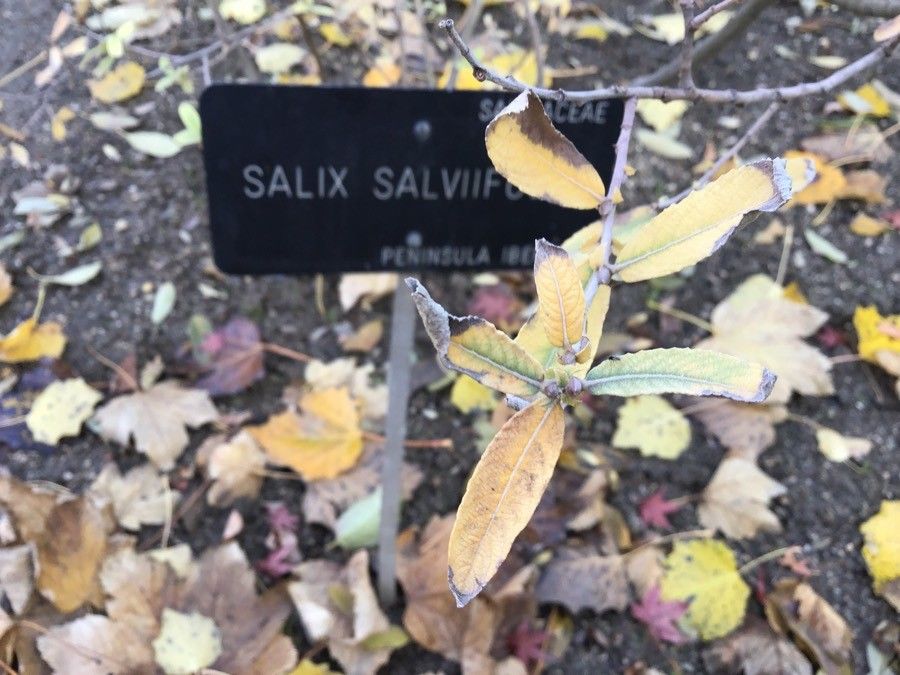
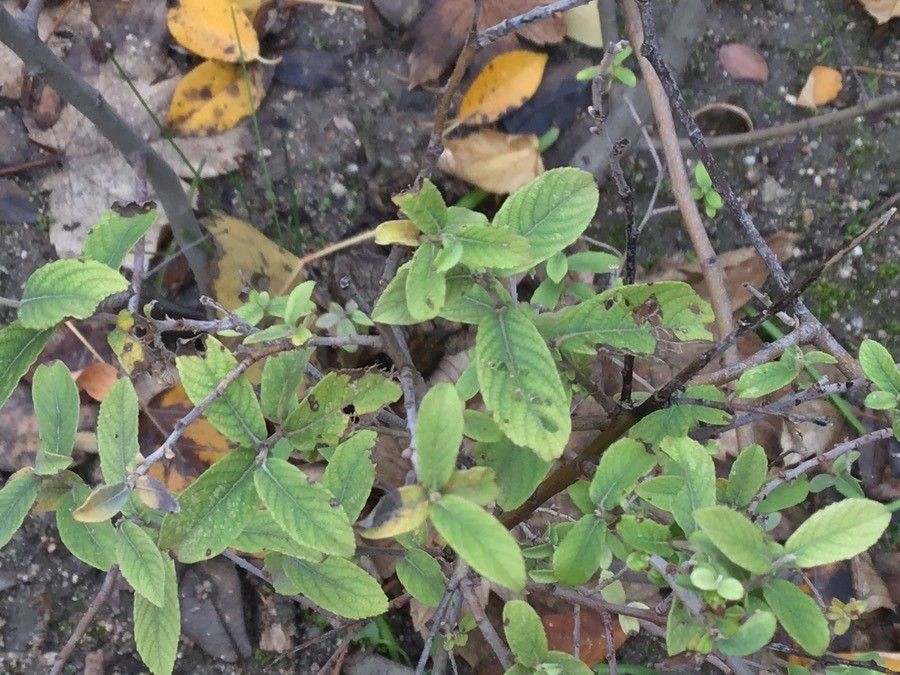
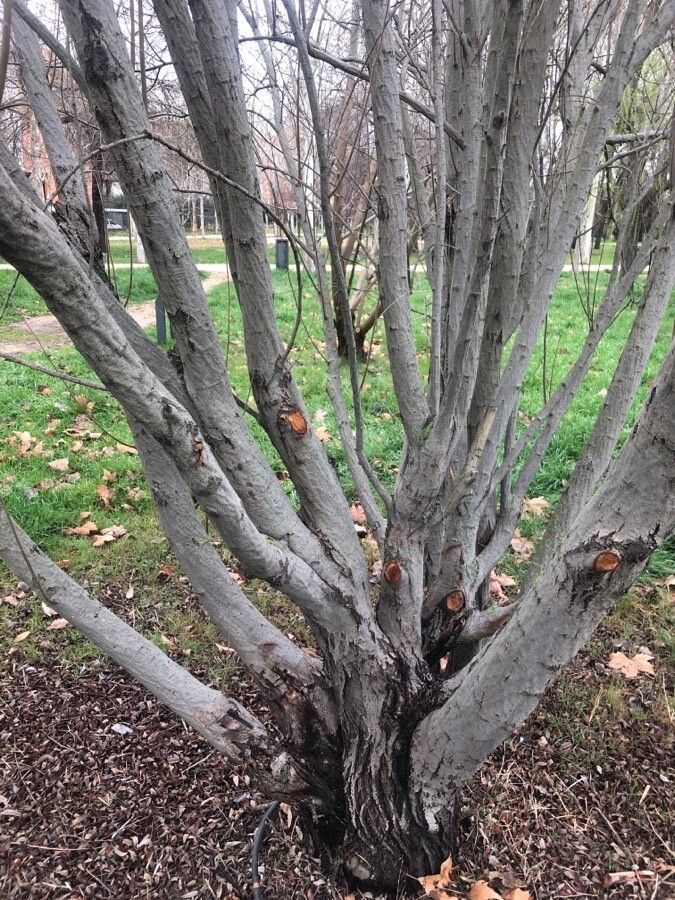
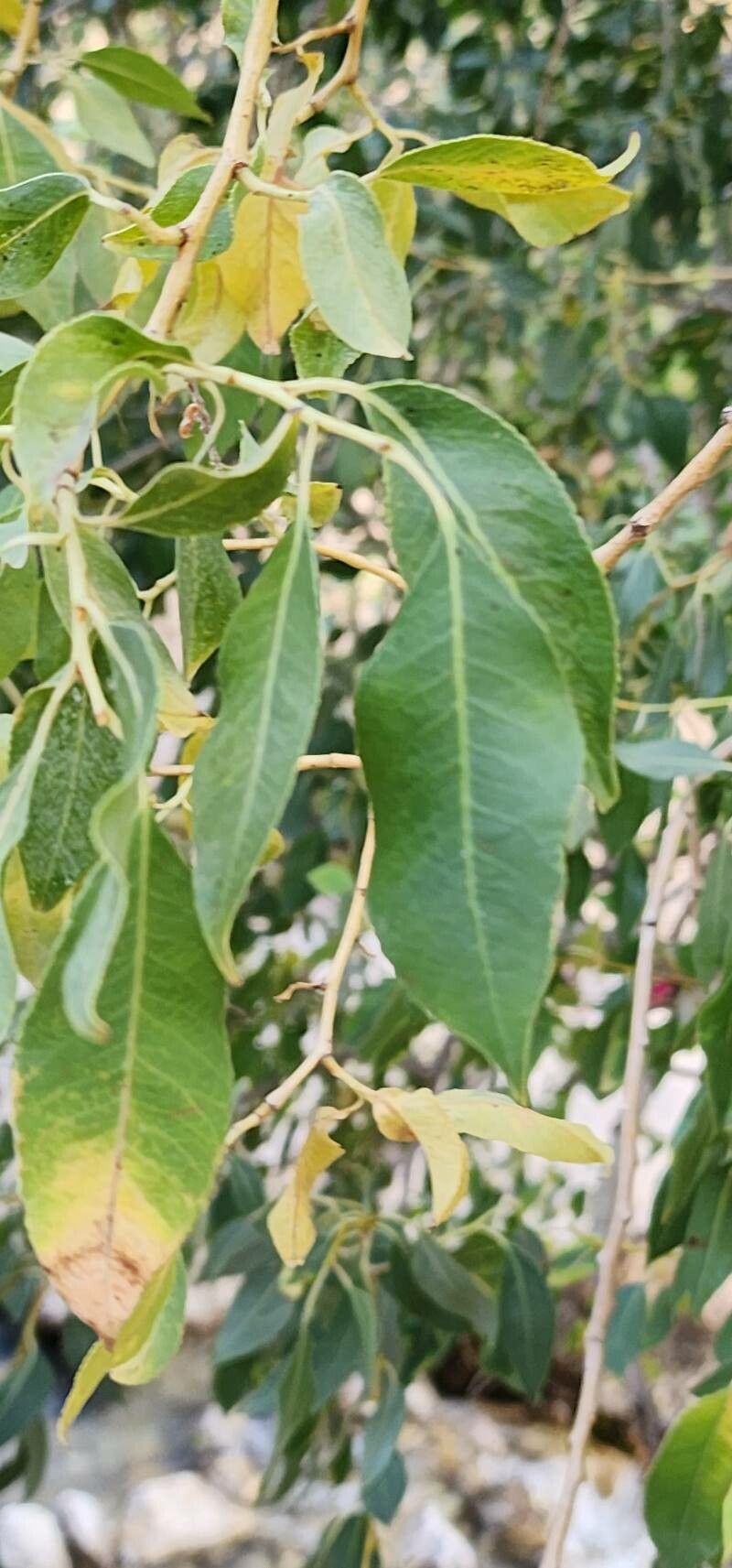
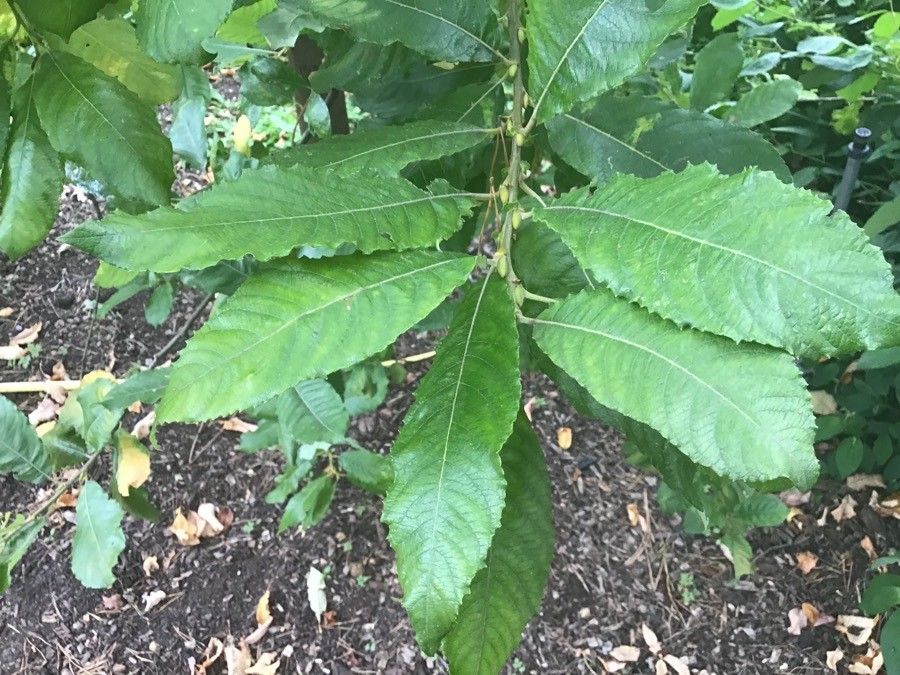
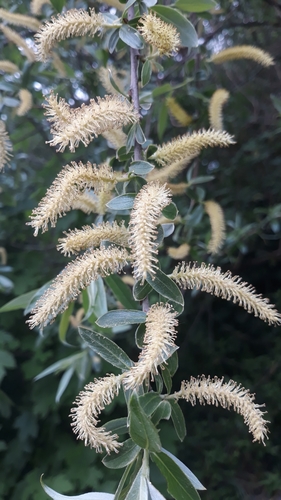
Salix salviifolia, commonly known as the willow-leaved willow, is a deciduous tree belonging to the Salicaceae family. Native to Europe and western Asia, this tree can reach heights of up to 10 meters. It features a slender trunk with smooth gray bark and narrow, lance-shaped leaves that have serrated edges. The leaves are green on the top and have a silvery-white underside, giving them a distinctive appearance.
In early spring, before the leaves appear, Salix salviifolia produces small yellow flowers. These flowers are followed by small capsules containing numerous tiny seeds that are dispersed by the wind.
The tree thrives in moist soils but can tolerate drought conditions once established. It is commonly used for erosion control along riverbanks due to its extensive root system, which helps stabilize the soil.
Furthermore, Salix salviifolia has been used for medicinal purposes for centuries, thanks to its anti-inflammatory properties. Its bark contains salicin, a compound that was later synthesized into aspirin.
Overall, Salix salviifolia is an attractive ornamental plant with ecological benefits and medicinal properties, making it an important species in plant biodiversity conservation efforts worldwide.
The sage-leaved willow is resistant to disease and generally not susceptible to illnesses. With regard to care, this plant is fairly low-maintenance. When grown outdoors it needs only light watering, and larger specimens usually do not require pruning. Smaller plants, however, should be pruned after they finish flowering. Sage-leaved willowt is appropriate for anyone with outdoor space, such as a garden or deck, and does not need much gardening experience.
How to keep Salix Salviifolia.
Light
Sage-leaved willow comes from open habitats, such as sunny meadows and the edges of forests, which provide abundant light. It thrives in Full Sun but can also tolerate Partial Sun, adapting well to a range of sunlight conditions.
Water
The sage-leaved willow needs consistent watering, particularly during the summer months when the plants are young. While mature willows develop some resistance to drought, it's generally recommended to water them daily, around 5 p.m. If there is a lot of rain, you can reduce watering, but dry conditions call for regular daily watering. The deep roots of mature plants can handle water-logging and typically do not require additional drainage.
Temperature
Sage-leaved willow is highly adaptable to a range of climate conditions, whether in hot summers or cold winters. That said, it does have a preferred temperature range for healthy growth. If temperatures become too high, the plant is vulnerable to heat and humidity stress, which can cause it to die. In areas where temperatures approach its lower cold-tolerance limit, providing insulation to protect the plant is important.
Fertilizer
Fertilize your Sage-leaved willow in early spring to encourage healthy growth. Regular feeding improves overall health, leading to vigorous growth, increased tolerance of harsh conditions, and enhanced resistance to pests and diseases. Keep a consistent fertilization schedule for your Sage-leaved willow to maintain foliage that is vibrant, richly colored, and lush.
Pruning
Pruning sage-leaved willow in early spring supports healthy growth by removing damaged branches and thinning out congested areas. This process improves air circulation and light penetration, which in turn encourages a denser growth habit. Regular trimming helps maintain the plant's shape and vigor, making it more resilient against pests and diseases.
Botanical profile.
- Plant Type
- Tree, Shrub
- Life Cycle
- Perennial
- Genus
- Salix
- Family
- Salicaceae
- Hardiness Zone
- 4-8
- Mature Height
- 2.13 m to 3.96 m
- Mature Spread
- 1.52 m to 3.05 m
- Leaf Color
- Gray, Light Gray
- Leaf Type
- Deciduous
- Flower Size
- 2.03 cm to 3.05 cm
- Bloom Time
- Early spring, Mid spring
- Planting Time
- Spring, Autumn
- Harvest Time
- Late spring, Early summer
- Native Area
- Spain, Portugal
Other names.
Reader questions.
What are the sun requirements for Sage-leaved willow (Salix salviifolia)?
The Sage-leaved willow, or Salix salviifolia, thrives under specific sun conditions. For optimal growth, it requires full sun, which means it should receive above 6 hours of sunlight daily. However, it can also tolerate partial sun, about 3-6 hours of sunlight per day. It's essential to watch how sunlight moves through your garden throughout the day. This observation will help you choose spots that offer the perfect balance of light and shade, ensuring your Sage-leaved willow's happiness and health.