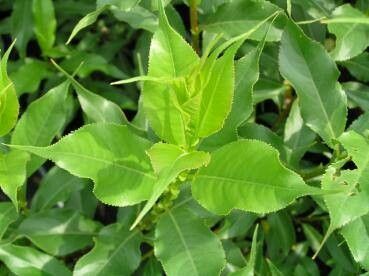
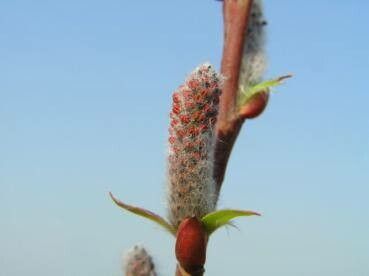
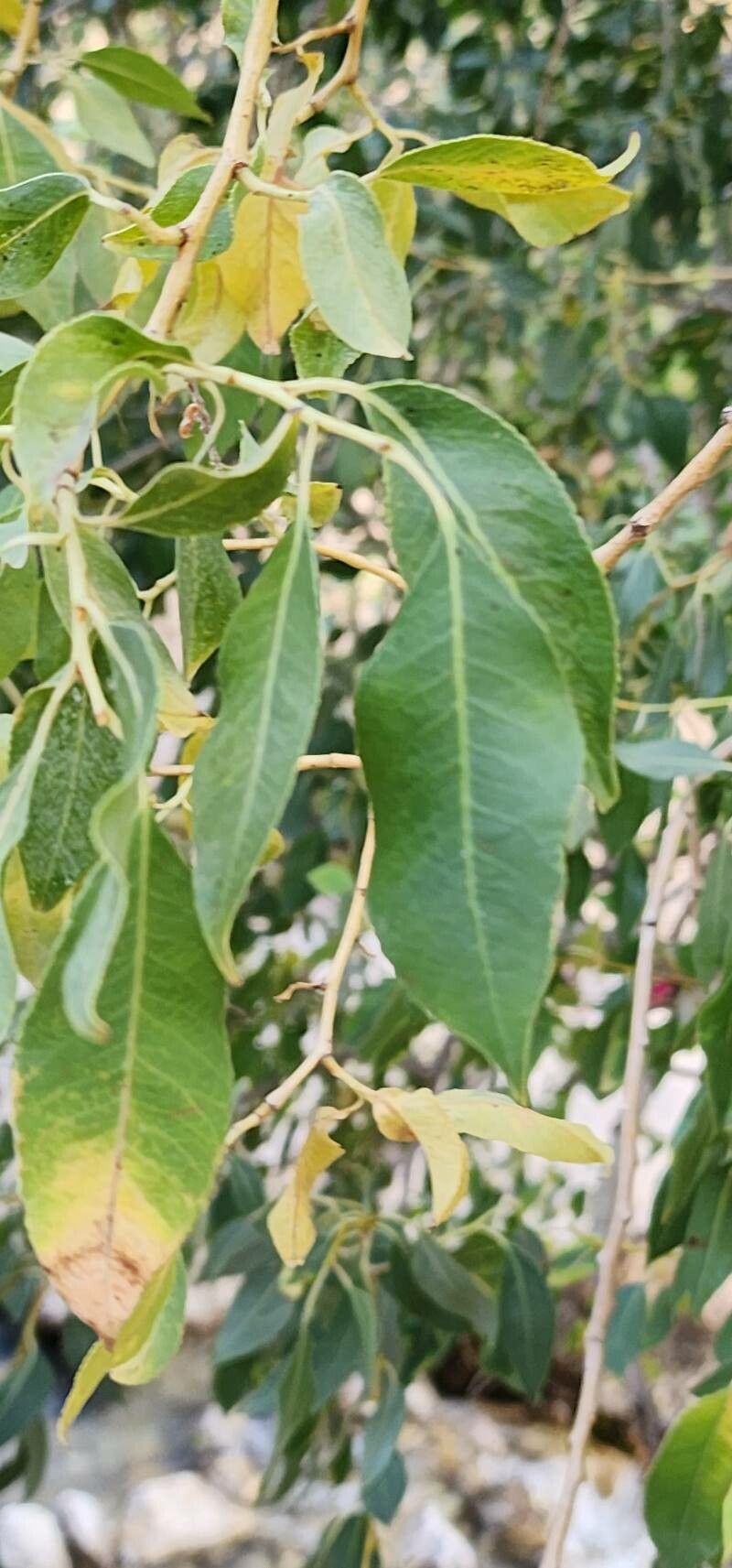
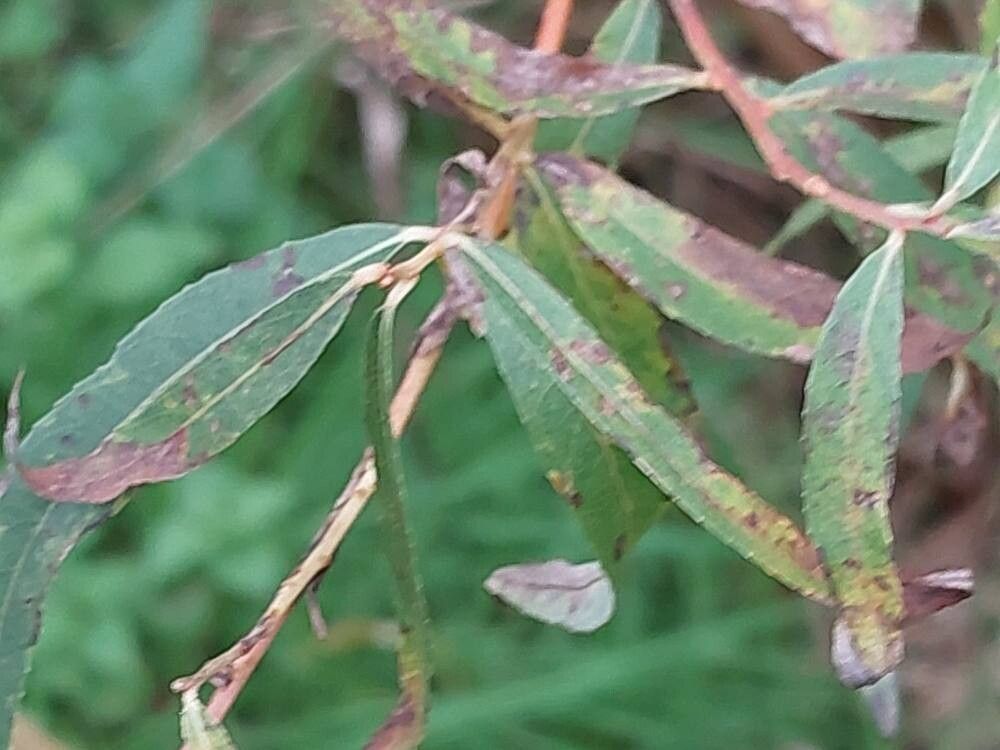
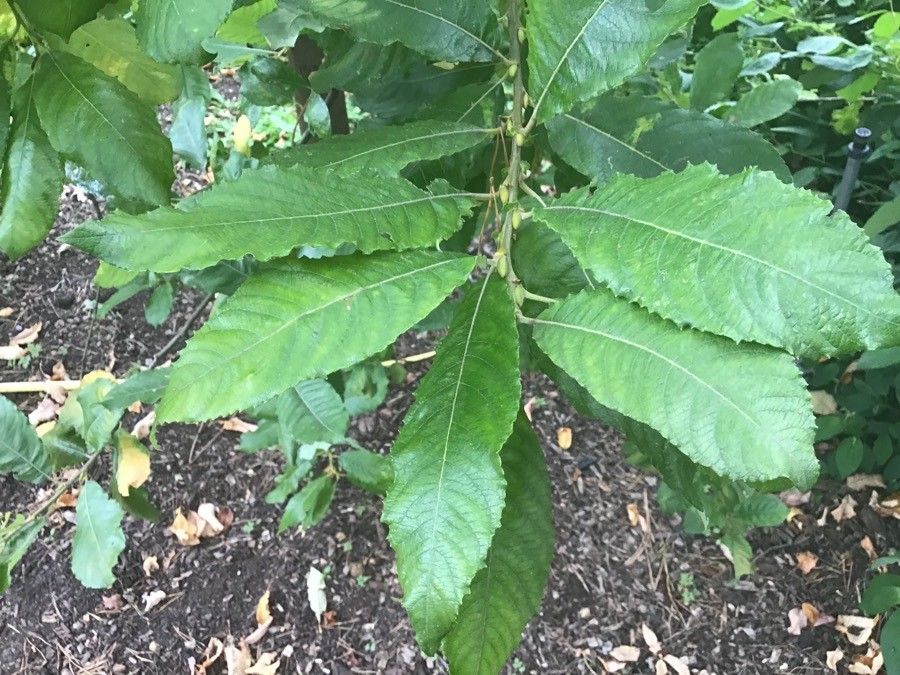
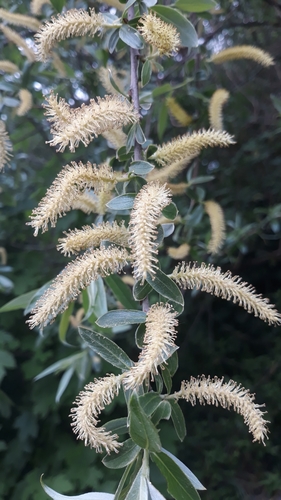
Salix pyrifolia, the balsam willow, is a species of flowering plant in the family Salicaceae, native to Canada, and the north-central to northeastern United States. A shrub, its leaves emit a balsam-like fragrance. It is available from commercial suppliers.
Dark-leaved willow shows strong disease resistance and is generally unlikely to suffer from diseases. Regarding care, this plant is fairly low-maintenance. When grown outdoors it needs minimal watering, and larger specimens usually do not require pruning. Smaller plants, however, should be pruned after they finish blooming. Dark-leaved willowt is suitable for anyone with an outdoor area, such as a garden or deck, and does not demand much care experience.
How to keep Salix Pyrifolia.
Light
Dark-leaved willow naturally occurs in habitats such as forest understories and rocky areas, where it is exposed to natural shade. It prefers partial sun but can adapt to either full sun or full shade, demonstrating its versatile and hardy nature.
Water
The balsam willow needs regular watering, particularly for seedlings, which should be watered daily during the summer. Mature plants are more drought-resistant, and you should water them around 5 PM, depending on how dry the soil is. If it rains frequently, you can reduce watering, but in dry weather, daily watering is beneficial. Additionally, the mature roots of balsam willow are tolerant of waterlogged conditions.
Temperature
Dark-leaved willow shows strong adaptability to a range of climatic conditions, whether facing scorching summers or chilly winters. Still, it has an optimal temperature range for growth. If temperatures become too high, the plant is vulnerable to heat and humidity stress, which can lead to its death. In areas where temperatures near the lower limit of its cold tolerance, it's necessary to use insulation measures to protect the plant.
Fertilizer
Fertilize your Dark-leaved willow in early spring to encourage healthy growth. Regular feeding improves overall health, leading to vigorous growth, greater resilience in harsh conditions, and enhanced resistance to pests and diseases. Keep a consistent fertilization schedule for your Dark-leaved willow to maintain vivid, deeply colored foliage and a lush appearance.
Pruning
The balsam willow is a resilient plant with lance-shaped leaves that thrives when pruned strategically in early spring. To promote its growth and improve airflow, focus on removing dead branches, thinning out dense areas, and maintaining its shape. While regular pruning boosts the plant's vitality, be careful not to over-prune, as this can cause stress.
Botanical profile.
- Plant Type
- Shrub
- Life Cycle
- Perennial
- Genus
- Salix
- Family
- Salicaceae
- Hardiness Zone
- 3-7
- Mature Height
- 2.13 m to 3.96 m
- Mature Spread
- 1.52 m to 3.05 m
- Leaf Color
- Dark Green, Olive Drab
- Leaf Type
- Deciduous
- Flower Color
- Yellow, Green
- Flower Size
- 1.02 cm to 2.03 cm
- Bloom Time
- Early spring, Mid spring
- Planting Time
- Spring, Summer, Autumn
- Harvest Time
- Late spring, Early summer
- Native Area
- Sweden, Austria, Czech Republic, Poland, Croatia, Slovenia, Belarus, Russia, Lithuania, Norway, Germany, Italy, Switzerland, Denmark, Estonia, Finland, Ireland, United Kingdom, Hungary, Latvia, France
Other names.
Reader questions.
What are the sunlight requirements for Balsam Willow (Salix pyrifolia)?
Balsam Willow (Salix pyrifolia) thrives in conditions that match its sunlight requirements precisely. For robust growth, positions that receive full sun, defined as areas getting above 6 hours of sunlight daily, are ideal. However, it can also tolerate partial sun locations, where sunlight is available for about 3-6 hours a day. It's important to observe the movement of sunlight through your garden carefully to find spots that offer an optimal mix of light and shade, ensuring your Balsam Willow's well-being and happiness.