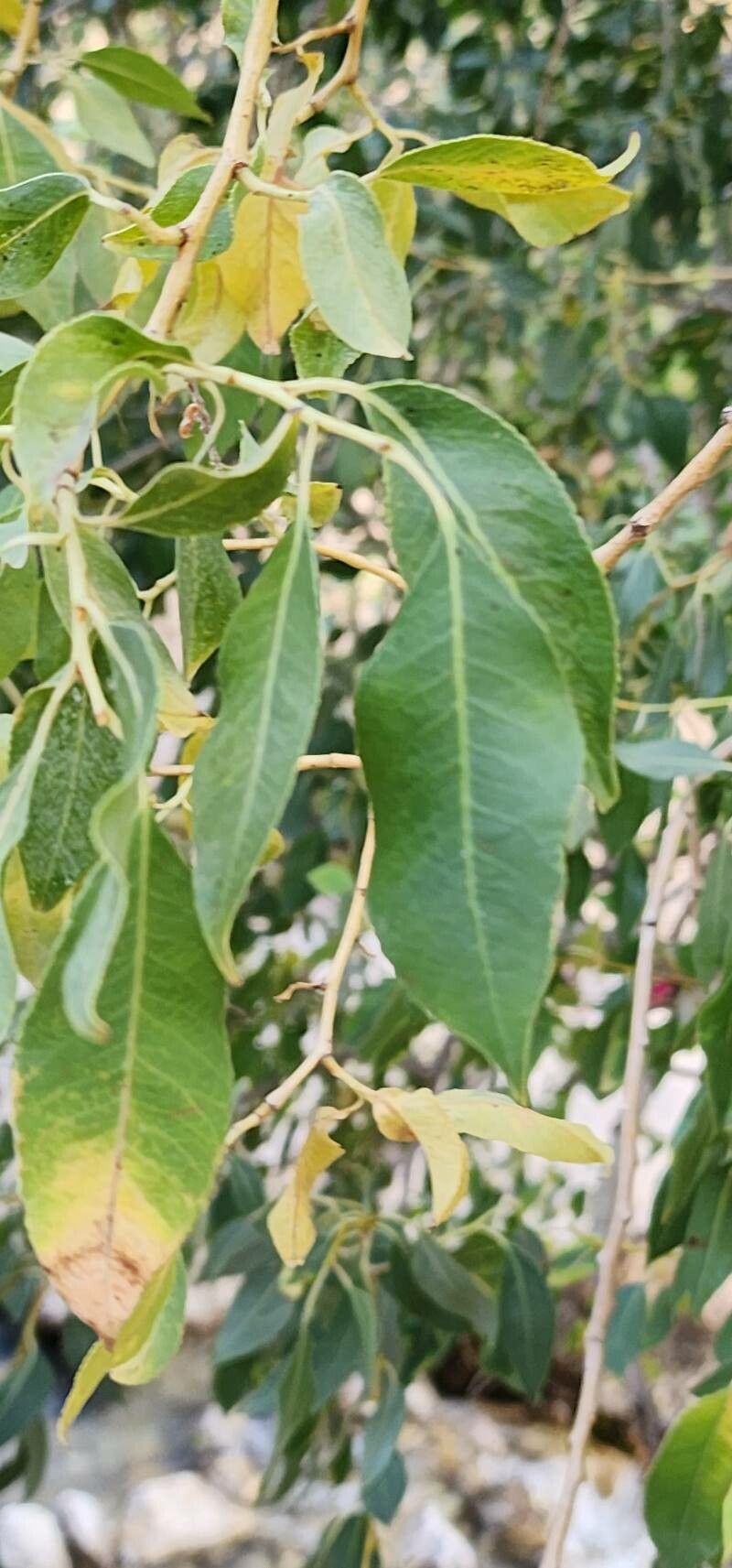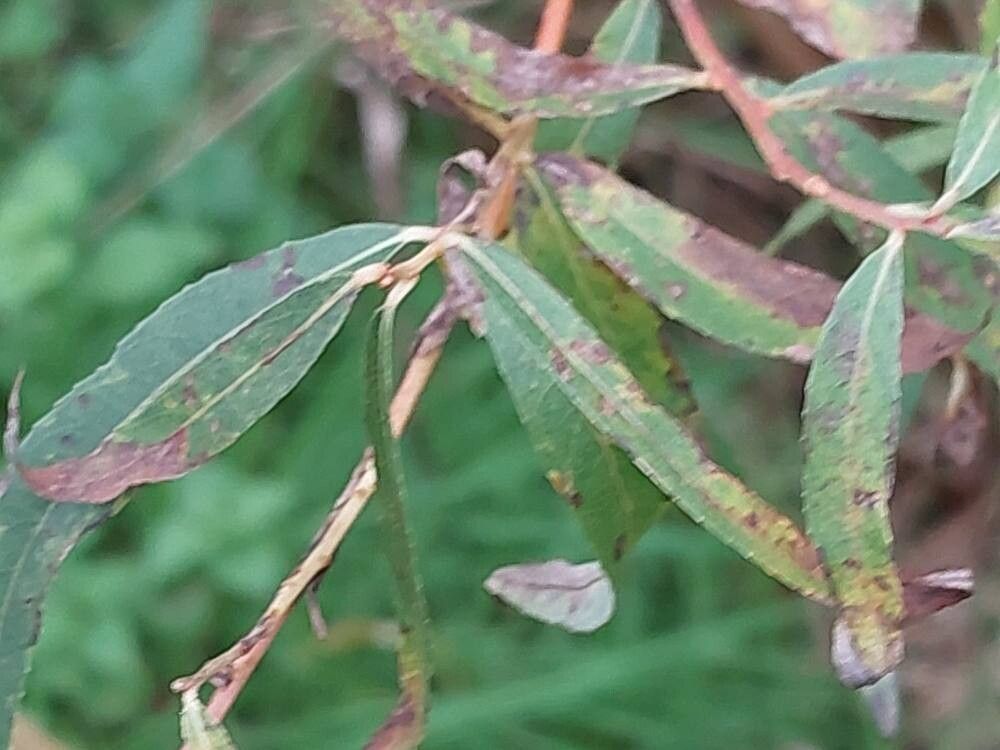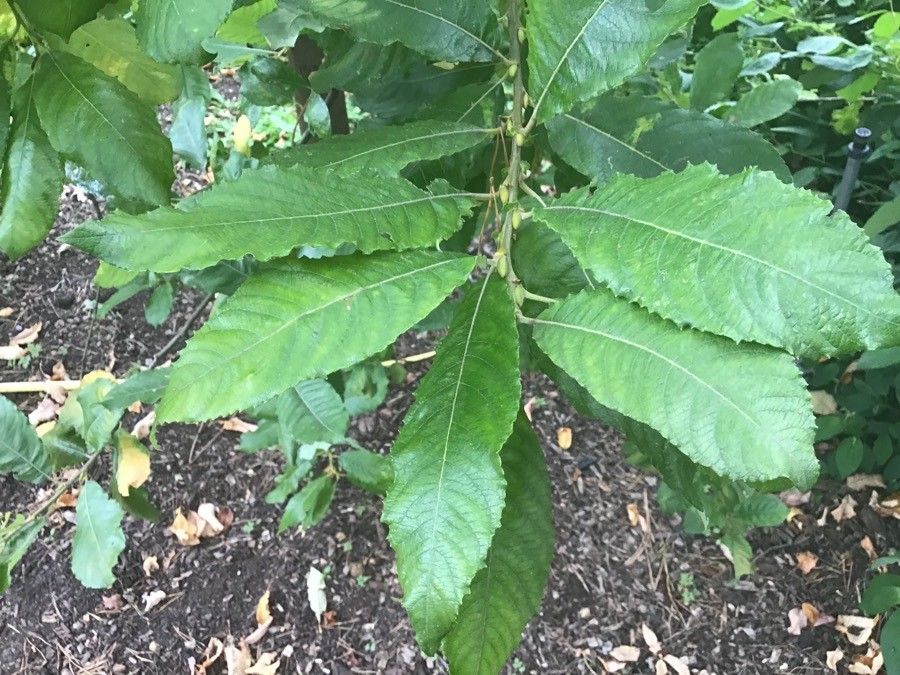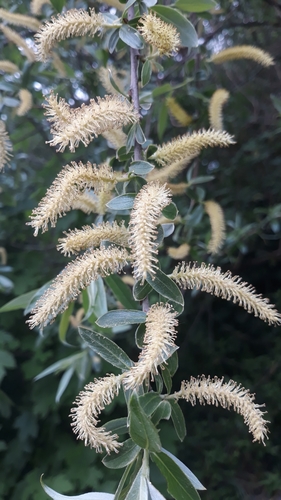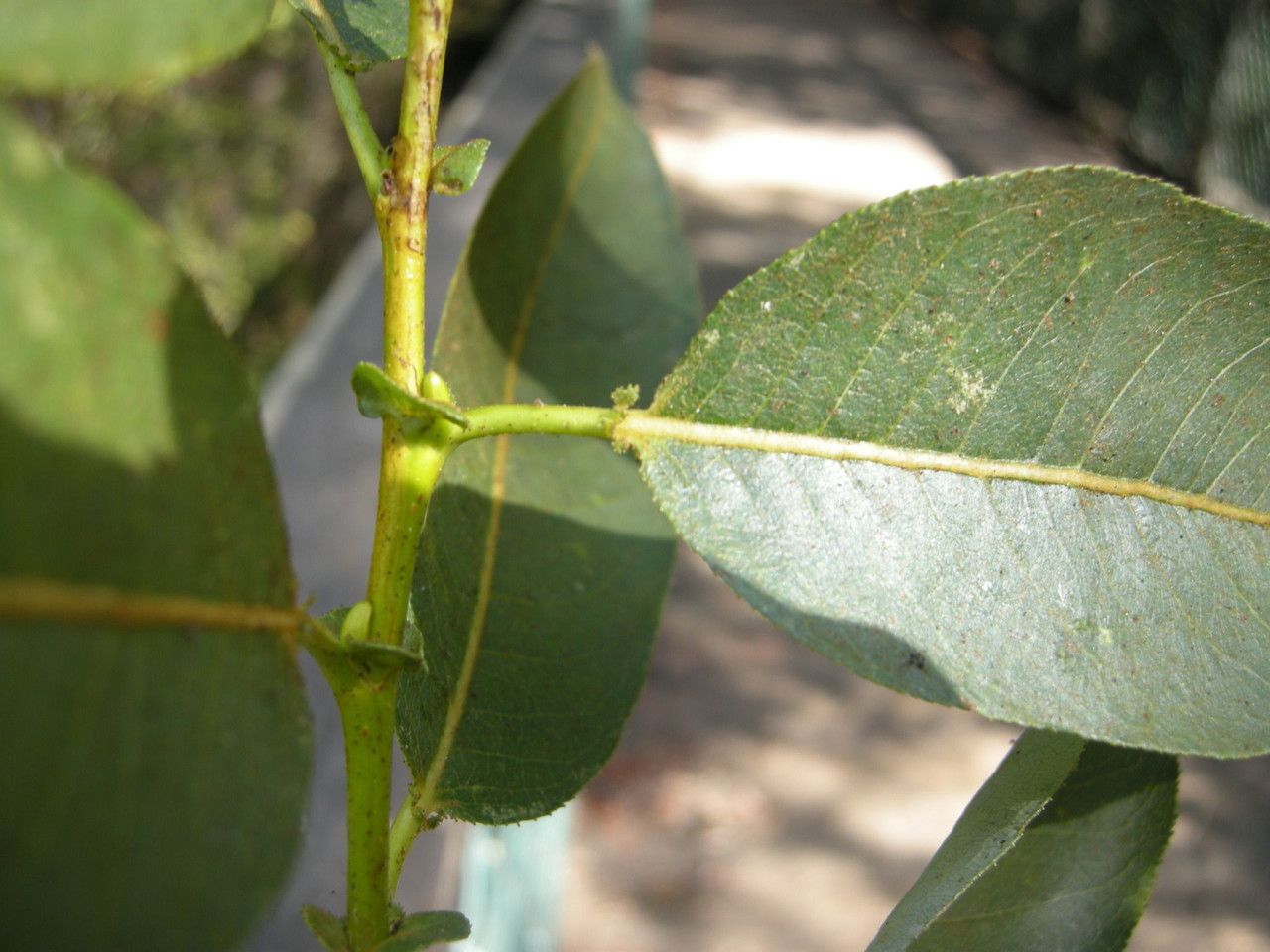
Salix lutea is a species of willow known by the common name yellow willow. It is native to North America, including central Canada and parts of the western and central United States, with the exception of the Great Basin. It can be found in moist and wet habitat types, such as riverbanks, meadows, and gullies. It is a shrub up to 7 m tall, sometimes forming colonial thickets or becoming erect and treelike. The lance-shaped leaves may grow over 11 cm long and may have smooth, lightly serrated, wavy, or gland-studded edges. The inflorescence is a catkin of flowers up to 4 or 5 cm long, stout to slender in shape. This and other willow species are used in revegetation projects in riparian habitat where erosion is a problem. This species reproduces vegetatively by sprouting from pieces of stem, but its primary method of reproduction is sexual, by the dispersal of a large amount of wind-carried seed.
Yellow willow is resistant to disease and is generally unlikely to suffer from illnesses. Regarding care, this plant is fairly low-maintenance. When grown outdoors it needs little watering, and larger specimens usually do not require pruning. Smaller specimens, however, should be trimmed after they finish blooming. Yellow willow is appropriate for anyone with outdoor space, such as a garden or a deck, and does not demand extensive gardening experience.
How to keep Salix Lutea.
Light
Yellow willow is native to open habitats, such as sunny meadows and forest edges, which offer abundant light. It does best in Full Sun but can also tolerate Partial Sun, showing good adaptability to different sunlight conditions.
Water
Yellow willow trees flourish in riparian zones, where they adapt well to changes in water levels. They thrive in moist environments and, once established, they can tolerate moderate drought. For optimal growth, water them every 2-3 weeks. Typically, yellow willows are grown outdoors, where natural rainfall supports their growth, minimizing the need for frequent human intervention.
Temperature
Yellow willow is highly adaptable to a variety of climate conditions, from hot summers to cold winters. Nonetheless, it has an ideal temperature range for growth. If temperatures become too high, the plant is susceptible to heat and humidity stress, which can lead to its death. In areas where temperatures approach its lower cold-tolerance limit, providing insulation to protect the plant is necessary.
Fertilizer
To encourage healthy growth, fertilize your Yellow willow in early spring. Regular feeding improves overall health, producing vigorous growth, greater tolerance of harsh conditions, and enhanced resistance to pests and diseases. Keep to a specific fertilization schedule for your Yellow willow to preserve vivid, deeply colored foliage and a lush appearance.
Pruning
The yellow willow is characterized by its slender, arching branches and vibrant yellow twigs. To keep it healthy and well-shaped, prune it in early spring. At this time, remove any dead wood and thin out overcrowded branches to enhance air circulation. This not only maintains the tree's shape but also promotes healthy growth and helps prevent disease. For the best results, refer to reliable horticultural guides.
Botanical profile.
- Plant Type
- Tree, Shrub
- Life Cycle
- Perennial
- Genus
- Salix
- Family
- Salicaceae
- Hardiness Zone
- 2-7
- Mature Height
- 3.05 m to 6.1 m
- Mature Spread
- 3.05 m to 4.88 m
- Leaf Color
- Light Green, Yellow
- Leaf Type
- Deciduous
- Flower Color
- Yellow
- Flower Size
- 1.02 cm to 2.03 cm
- Bloom Time
- Early spring, Mid spring
- Planting Time
- Spring, Summer
- Harvest Time
- Late spring, Early summer