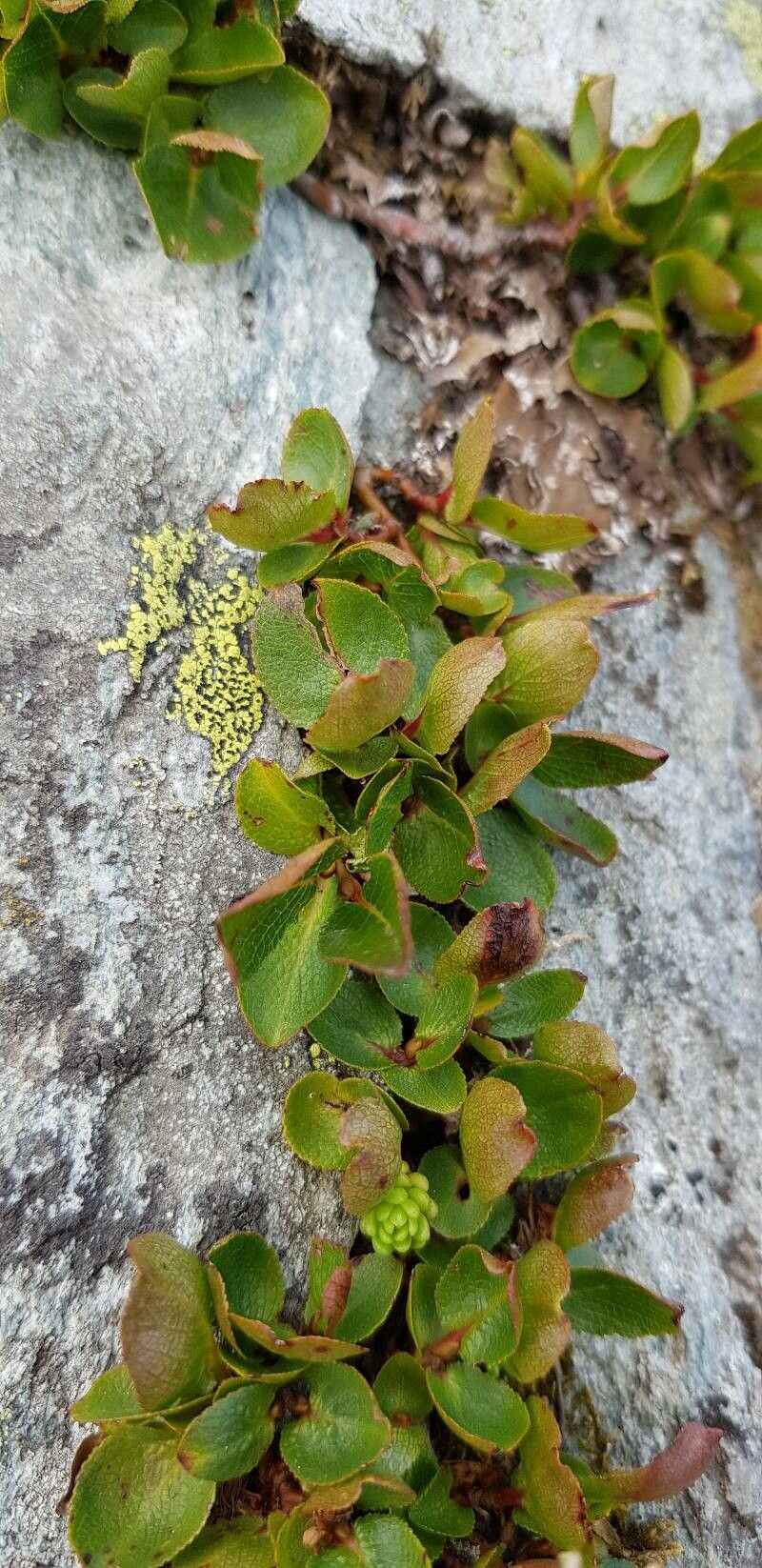
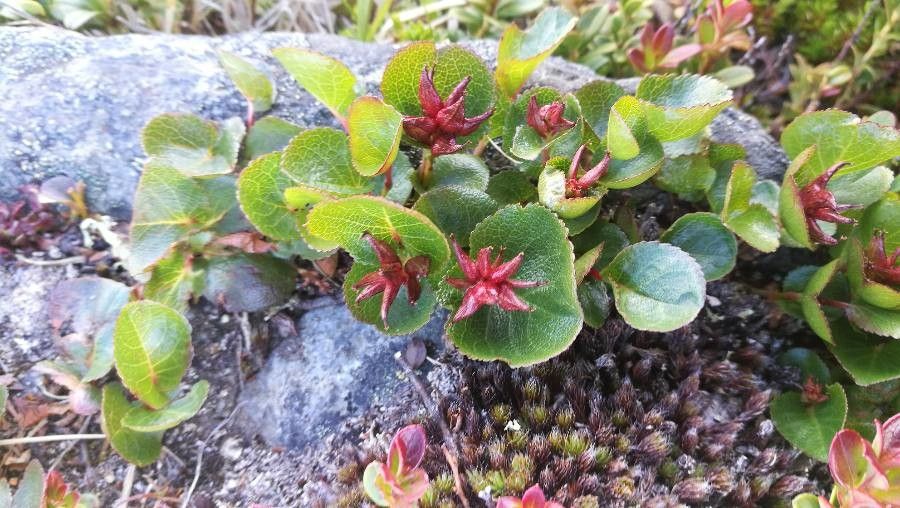
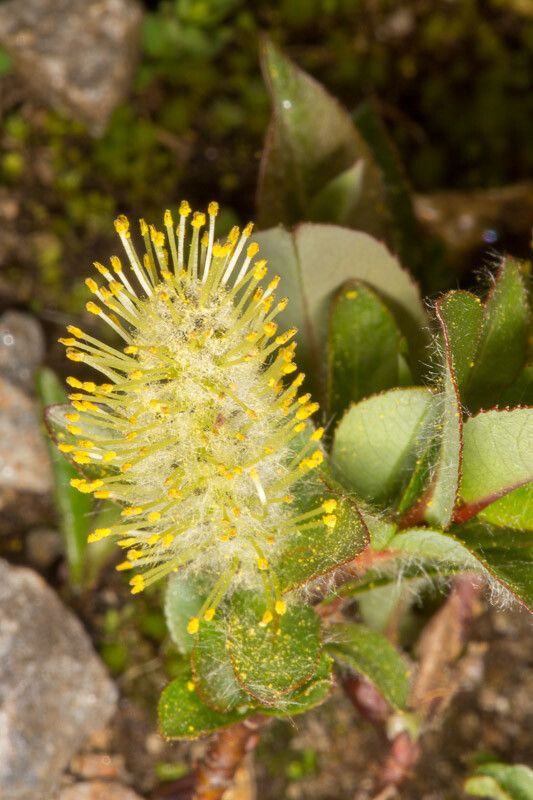
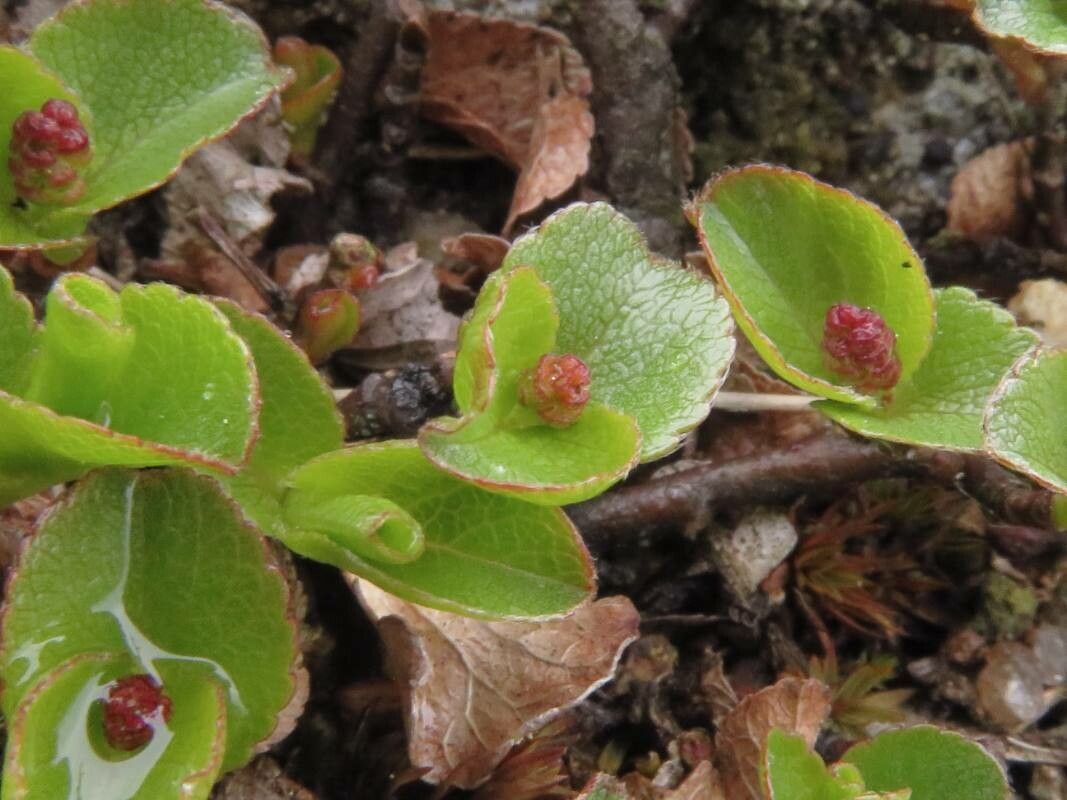
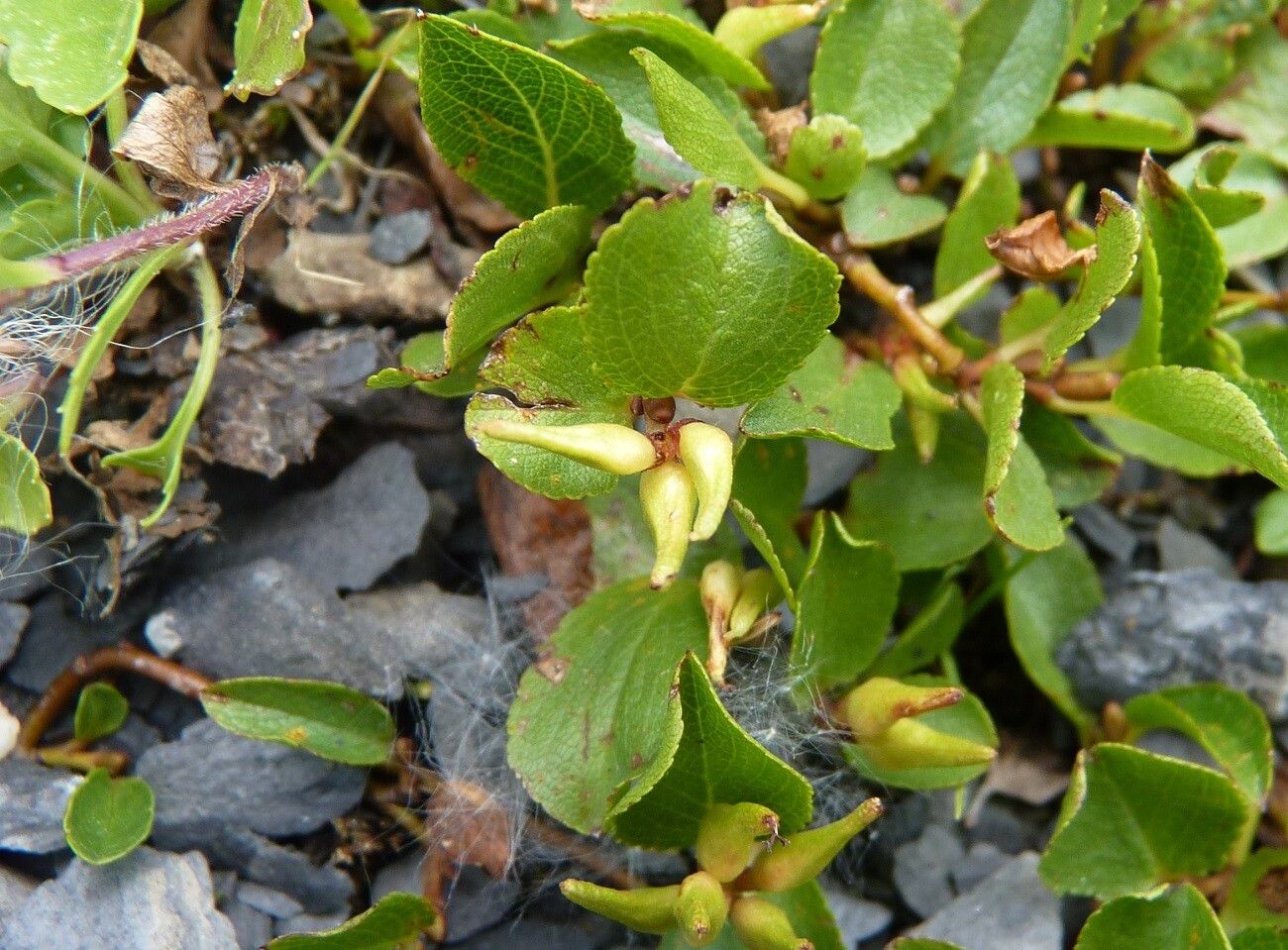
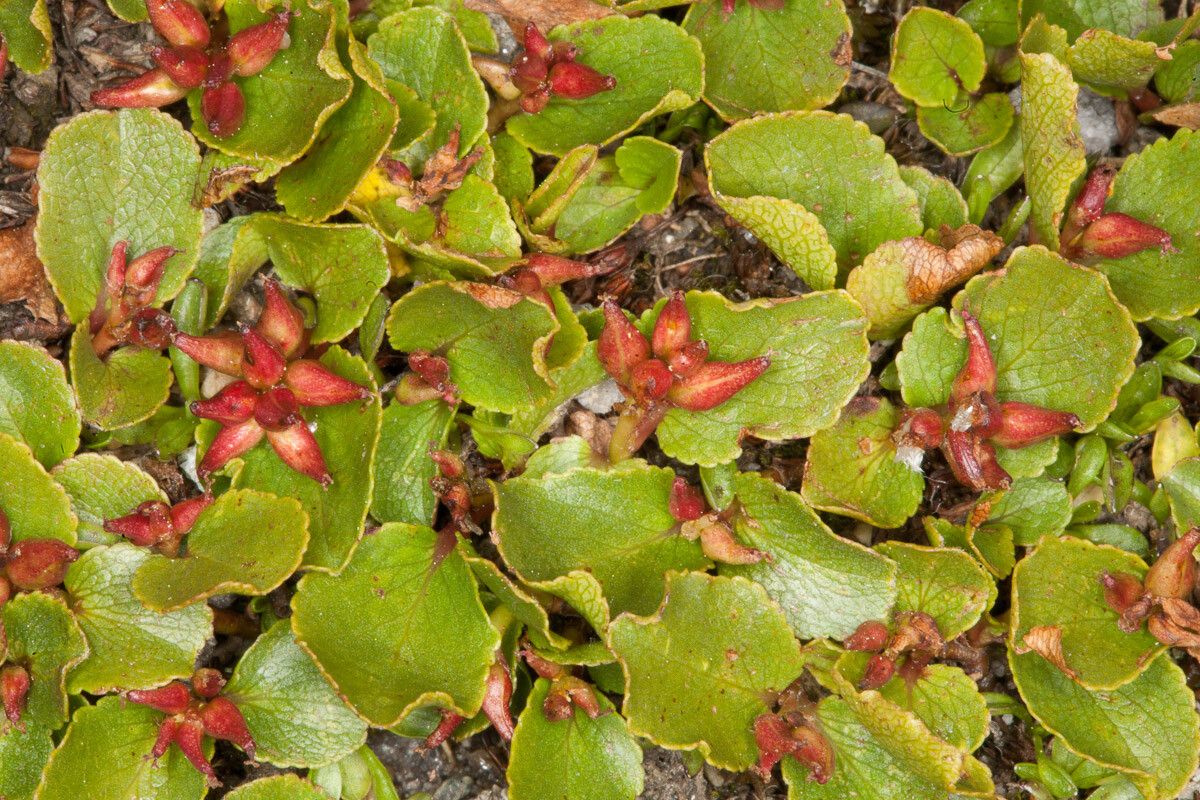
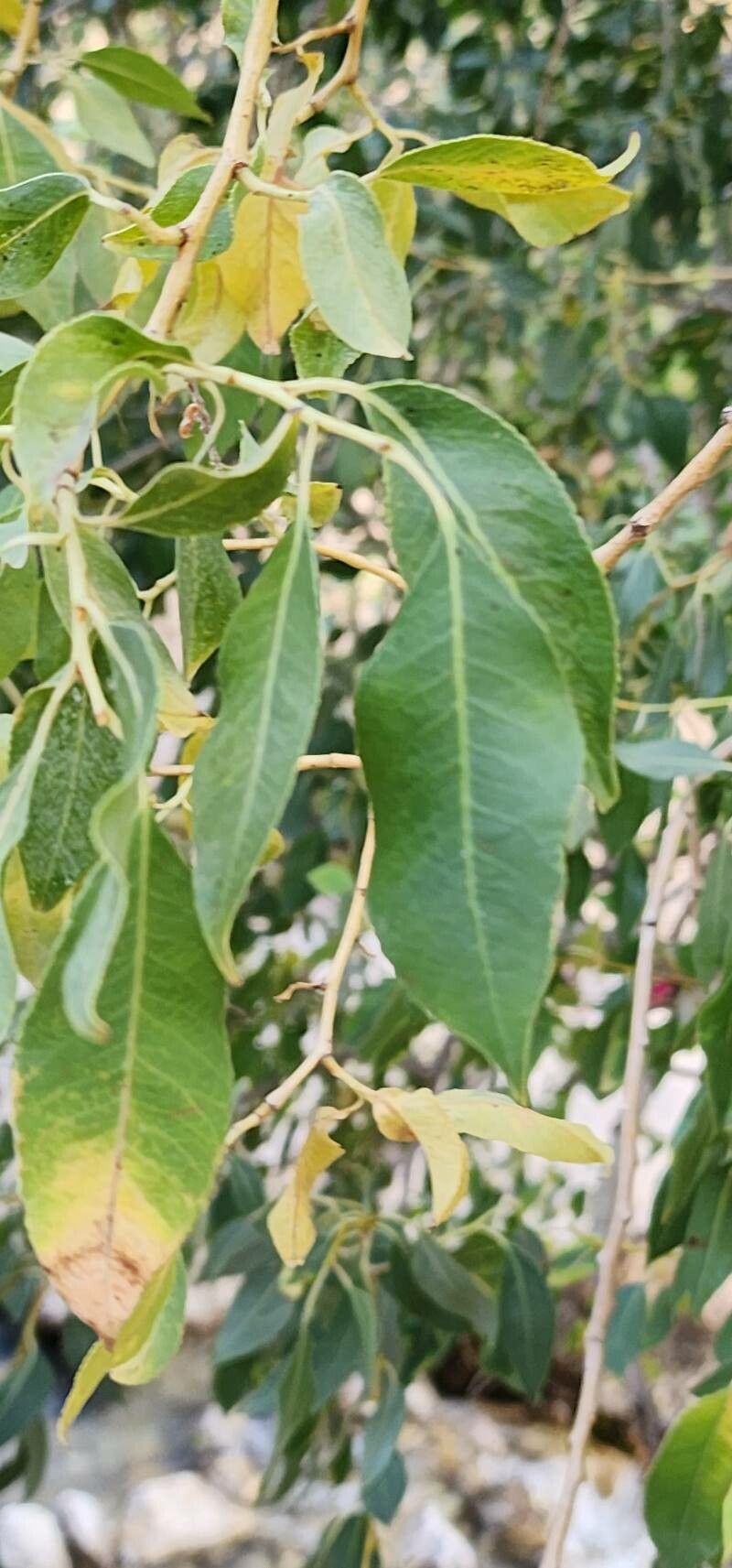
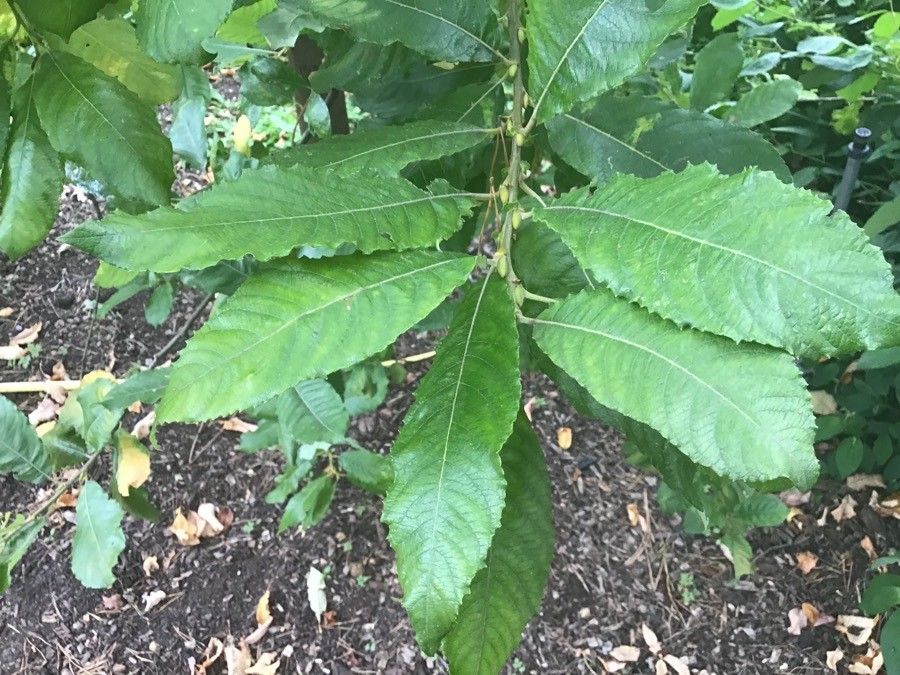
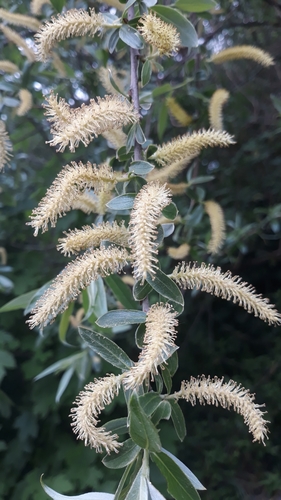
Salix herbacea, commonly known as dwarf willow or creeping willow, is a small shrub that belongs to the Salicaceae family. Native to the Arctic and alpine regions of Europe, Asia, and North America, the plant typically grows up to 10 cm in height. It has a creeping habit, with thin stems that spread out along the ground. Its leaves are small, oval-shaped, and glossy green on top, with a lighter shade underneath. The plant produces male and female flowers on separate plants in early spring, before the leaves appear. Male flowers are yellowish-green catkins, while female flowers are greenish-yellow catkins that develop into small capsules containing numerous tiny seeds. Salix herbacea is well-adapted to harsh environments such as rocky slopes, tundra regions, and high-altitude areas, where it can withstand extreme cold temperatures. It plays an important role in stabilizing soil erosion due to its extensive root system, which helps bind soil particles together. Traditionally, indigenous people have used the plant for medicinal purposes, treating various ailments such as fever, pain relief, and digestive problems, thanks to its anti-inflammatory properties. Overall, Salix herbacea is an important species in Arctic ecosystems, providing ecological services such as habitat for wildlife. It also holds cultural significance among indigenous communities who have relied on it for centuries for various purposes, including as a food source and for medicinal remedies.
Dwarf willow is disease-resistant and is generally unlikely to develop illnesses. Regarding care, this plant is fairly low-maintenance. When grown outdoors it needs only light watering, and larger specimens typically do not require pruning. Smaller plants, however, should be pruned after they finish blooming. Dwarf willow is suitable for anyone with outdoor space, such as a garden or a deck, and does not demand extensive gardening experience.
How to keep Salix Herbacea.
Light
Dwarf willow does best in locations where it receives plentiful sunlight. Its photosynthetic process is activated by a generous amount of light, which encourages vigorous growth. Insufficient exposure can slow its development, while an excessive amount may also stunt growth. This reflects its native environment, where it evolved under fairly abundant sun.
Water
Dwarf willow, which comes from alpine and arctic regions, thrives in consistently moist soil and cool conditions. It needs moderate watering roughly every three weeks. During its active growth periods in spring and summer, its water needs increase. As it prepares for dormancy in the fall, the watering frequency should gradually decrease.
Fertilizer
Fertilize your Dwarf willow in early spring to encourage healthy growth. Regular feeding improves its overall health, leading to vigorous development, increased resilience to harsh conditions, and enhanced resistance to pests and diseases. Keep to a consistent fertilization schedule for your Dwarf willow to preserve vibrant, deeply colored foliage and a lush appearance.
Pruning
The dwarf willow is a low-growing shrub that benefits greatly from pruning in early spring. This helps promote growth and maintain its shape. To improve airflow, remove any dead stems, and trim back vigorous shoots to keep the plant compact. Regular grooming enhances the density of the foliage and supports overall plant health. Always use clean, sharp tools when pruning for the best results.
Botanical profile.
- Plant Type
- Shrub
- Life Cycle
- Perennial
- Genus
- Salix
- Family
- Salicaceae
- Hardiness Zone
- 2-6
- Mature Height
- 1 cm to 6 cm
- Mature Spread
- 5 cm to 20 cm
- Leaf Color
- Green
- Leaf Type
- Deciduous
- Flower Color
- Yellow
- Flower Size
- 0.51 cm to 1.02 cm
- Bloom Time
- Early summer, Mid summer
- Planting Time
- Spring
- Harvest Time
- Late summer, Early fall
- Native Area
- Sweden, Austria, Czech Republic, Slovakia, Bulgaria, Poland, Croatia, Slovenia, Ukraine, Russia, Norway, Germany, Italy, Spain, Switzerland, Denmark, Iceland, Finland, Albania, Ireland, United Kingdom, Romania, France
Other names.
Reader questions.
What is the most effective way to water my Dwarf willow?
To ensure excellent root development, place a garden hose at the base of your plants. Avoid spraying the leaves directly, and keep in mind that outdoor plants in direct sunlight will need more water for their leaves. You can also use bubblers or soaker hoses to moisten the roots of each plant or cover the entire garden. When adding or removing plants, use soaker hoses to push the roots deep into the soil. Make sure to drain any excess water and wait for the soil to dry before watering again. Water at ground level to prevent diseases. On sunny days, it may be beneficial to spray the entire bush with water. Whether your plants are in pots or in the ground, remember that Dwarf willows prefer deep watering rather than light sprinkling.
Why should I put fertilizer on my Dwarf willow?
If you have a Dwarf willow, fertilizing it regularly can improve its overall health. This will help it grow stronger and better withstand difficult growing conditions, as well as fight off diseases and pests. Keeping the foliage intact is important for the attractiveness of the plant, so it's crucial to follow a specific fertilization schedule for your Dwarf willow. This will result in vibrant leaves and a lush appearance.
What are the sunlight requirements for Dwarf Willow?
Dwarf Willow requires full sun, which means it should receive above 6 hours of sunlight daily. However, it can also thrive in partial sun, receiving about 3-6 hours of sunlight. It's important to observe how sunlight moves through your garden to ensure your plant gets a balance of light and shade for optimal growth.
What do I do if I give Dwarf willow too much or too little water?
If you notice that your Dwarf willow is overwatered, it will show signs such as yellowing leaves, leaf drop, and wilting. The plant may appear unhealthy with mushy stems. In these cases, it's important to adjust your watering schedule. On the other hand, wilting could also be a sign of under watering. In this case, the leaves may become crispy and dry. To determine if your plant needs water, check the soil. If it's dry, watering is necessary. However, be careful not to overwater as this can damage the root system. Once the plant recovers, the yellowing leaves will stop. When growing a Dwarf willow indoors, always check the moisture levels and avoid overwatering. Look for signs of black spots, as this may indicate root rot. If root rot is present, consider transferring the plant to a different pot. Remember to prevent root rot by not letting the soil become too soggy. When planting a Dwarf willow outdoors, make sure to check the soil's moisture levels. If it's too dry, the plant may be underwatered and will require adequate watering to recover.
When should I fertilize my Dwarf willow?
To ensure healthy growth, it is recommended to fertilize your Dwarf willow for the first time in late winter or early spring. This will provide the necessary nutrients for the plant to thrive when the weather warms up. In warm climate regions, it can be beneficial to give your Dwarf willow another round of fertilizer in early fall. This will not only contribute nutrients for the following growing season but also enhance the plant's resilience in surviving winter without foliage damage. By fertilizing earlier, the new branches will have ample time to strengthen and withstand the cold winter.
Why is the right amount of sunlight important for Dwarf Willow?
The right amount of sunlight is crucial for Dwarf Willow's growth as it stimulates the photosynthesis process, leading to robust growth. Too little sunlight can impede development, while too much can stunt growth. This requirement mirrors the conditions of its native habitat, which is typically rich in sunlight. Artificial lighting can serve as a vital solution for indoor plants when natural sunlight is insufficient, with LED lights being a popular choice due to their customizable wavelengths. Full sun plants need 30-50W/sq ft of artificial light, partial sun plants need 20-30W/sq ft, and full shade plants require 10-20W/sq ft.
How often should I give water to my Dwarf willow?
The Dwarf willow prefers deep and infrequent watering. If it's in a pot, make sure to soak it with a gallon of water each time, as the limited water storage in pots causes the soil to dry out faster. In colder regions, water every 3 to 5 days, preferably in the morning when the soil is dry. You can check if watering is needed by feeling the top 2-3 inches of soil - if it's dry, it's time to fully water the plant. During hot days, check the moisture daily, as the pot's soil can dry out quickly. If you have a garden, you'll need to irrigate the soil too. In hot climates, water once a week if about 2 to 3 inches of soil are too dry. Be mindful not to overwater if there is already sufficient rainfall to prevent root rot. Adding 3 to 4 inches of mulch outdoors can help conserve water. Sandy soil requires more frequent watering, while clay soil needs less frequent watering to avoid root rot. To keep track, mark the date on a calendar when you water, and pay attention to drooping leaves as a sign that you might be watering a day late.
When is not a good time to fertilize my Dwarf willow tree?
There are a few instances when you should avoid fertilizing your Dwarf willow. The first is during the early and mid-winter months when the plant is dormant and does not require feeding. It is also not recommended to fertilize the plant in late spring and throughout the summer, as the weather tends to be hotter and drier. These conditions can negatively affect the plant's response to fertilization. To avoid any issues, it is best to stick to a fertilization schedule that involves feeding only in early spring and early fall.
What are the symptoms of insufficient light in Dwarf Willow?
Symptoms of insufficient light in Dwarf Willow include small leaves, leggy or sparse growth, faster leaf drop, slower or no new growth, lighter-colored new leaves, and symptoms of overexposure like chlorosis, sunscald, leaf curling, wilting, and leaf scorching. These symptoms indicate either a lack of or too much exposure to sunlight, affecting the plant's ability to photosynthesize and maintain overall health.
How much water does my Dwarf willow need?
The Dwarf willow generally needs about a gallon of water on a regular schedule. For potted plants, water them deeply until you see water dripping from the bottom of the pot. Then, wait for the soil to dry before watering again. You can use a water calculator or moisture meter to track how much water your plant receives in a week. During the flowering period, provide plenty of water, but let the moisture evaporate afterwards to prevent root rot. If the Dwarf willow is planted outdoors and receives adequate rainfall, it may not need additional watering. However, when the Dwarf willow is young or newly planted, make sure it receives 1-2 inches of rain per week. As the Dwarf willow continues to grow, it can rely solely on rainfall. Only during extremely hot weather or prolonged periods without rainfall (2-3 weeks) should you consider giving the Dwarf willow a full watering during the cooler parts of the day to prevent heat damage. Additional watering will be necessary during persistent dry spells.
What kind of fertilizer does my Dwarf willow tree need?
The most important nutrient for a Dwarf willow is usually nitrogen, but that doesn't mean phosphorus and potassium aren't important. Your Dwarf willow actually needs a good amount of all three main nutrients, so a balanced fertilizer like 10-10-10 can be effective. However, a more specific nutrient ratio often results in optimal growth. Fertilizers with a higher nitrogen content, like 10-6-4, tend to work well. You can fertilize with either granular or liquid-based fertilizers.
How can I address sunlight-related issues for Dwarf Willow?
To address sunlight-related issues for Dwarf Willow, gradually move your plant to a sunnier location, aiming for at least 6 hours of direct sunlight daily. Indoor plants may benefit from artificial lighting, kept on for at least 8 hours daily. When moving plants outdoors, do so gradually to avoid sunburn. For plants in the ground, prune any trees or shrubs that block sunlight and consider transplanting to a sunnier location during the plant's dormant period. Remember, parts of the plant affected by insufficient light may not recover, but new growth will be healthy with improved light conditions.