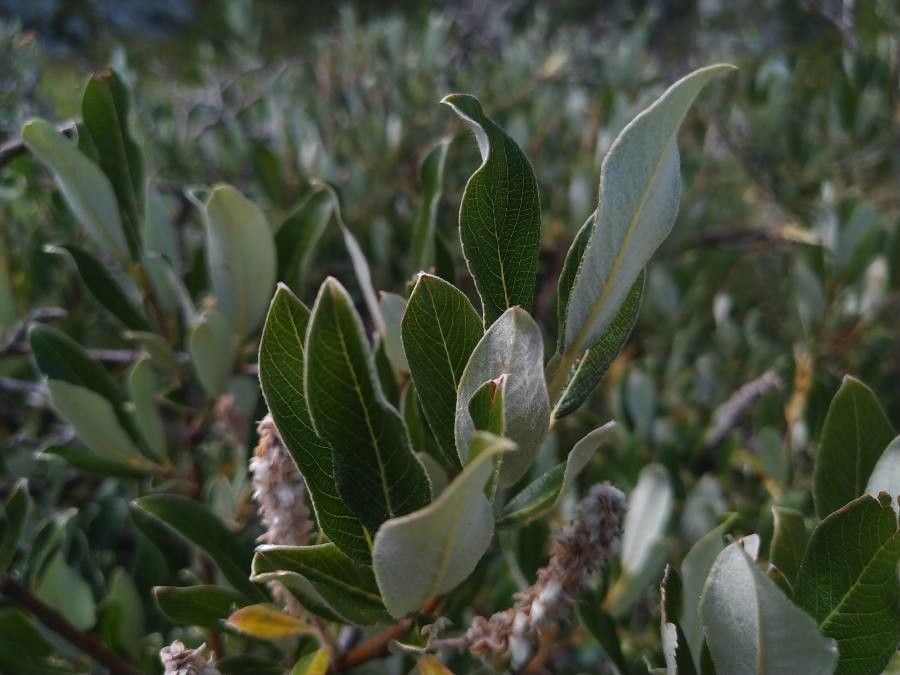
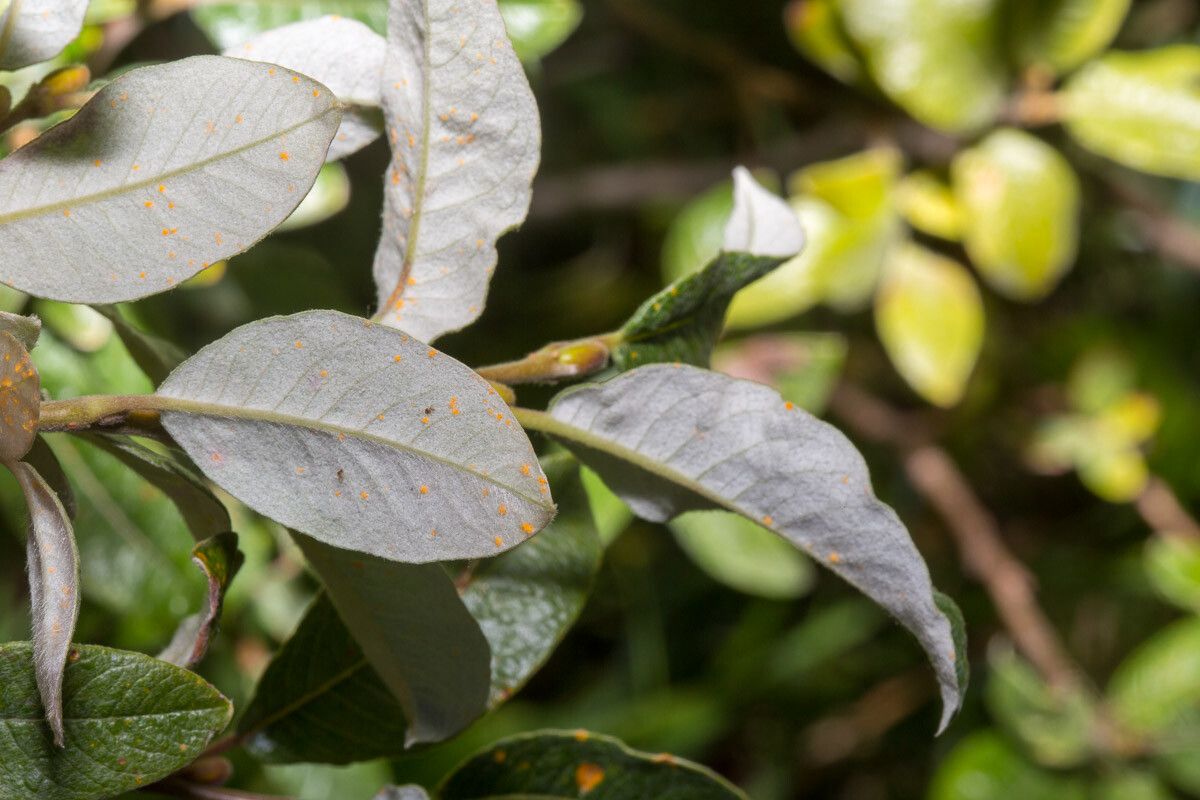
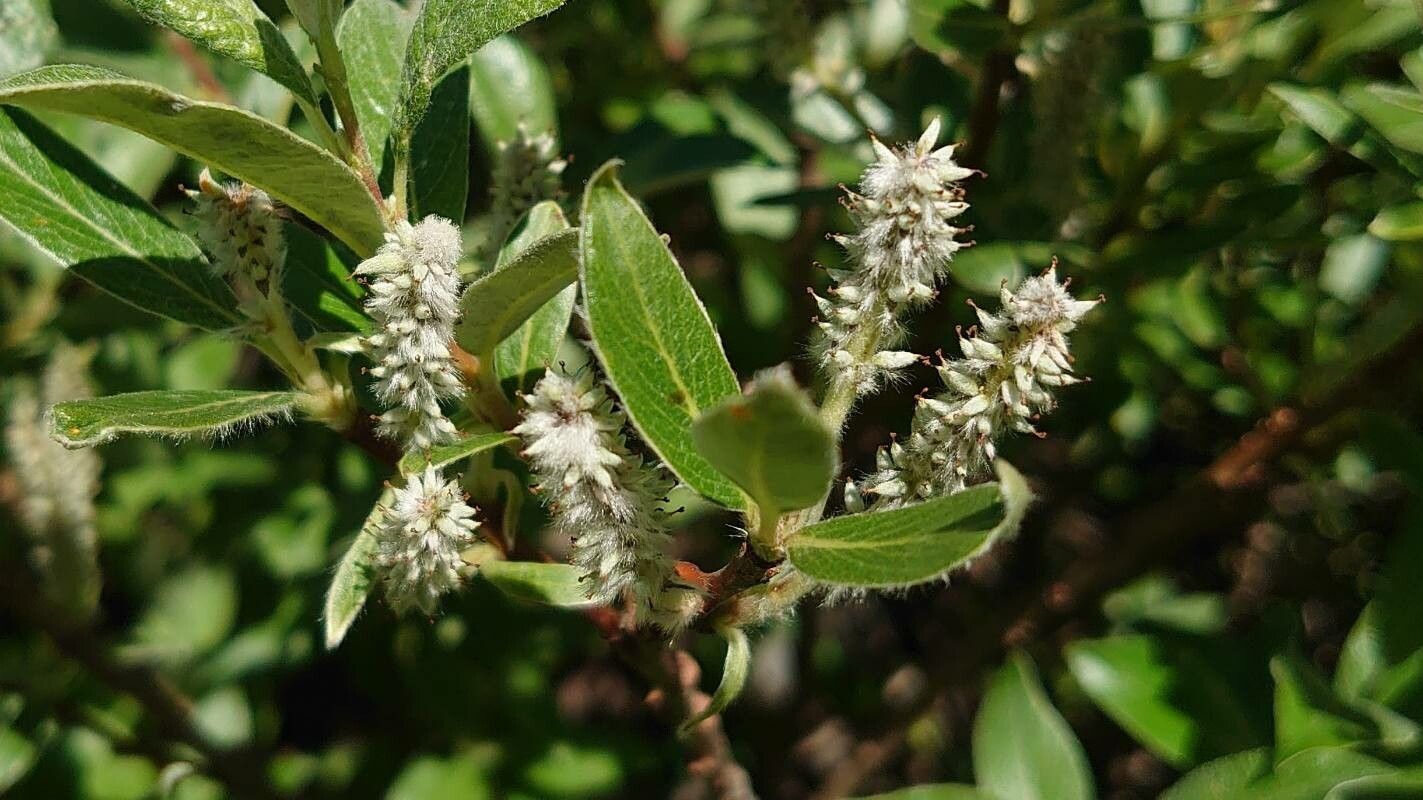
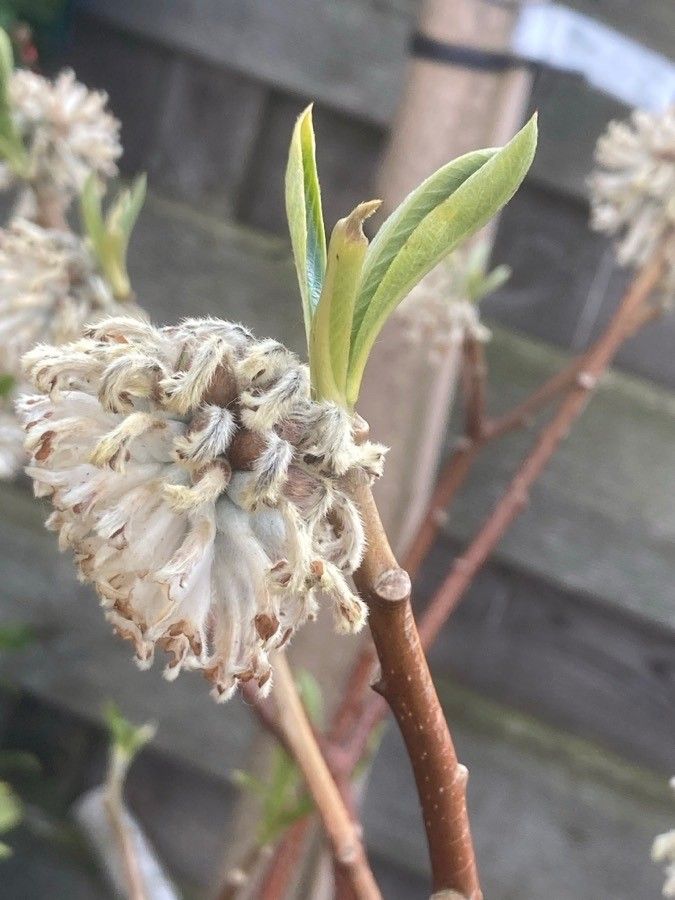
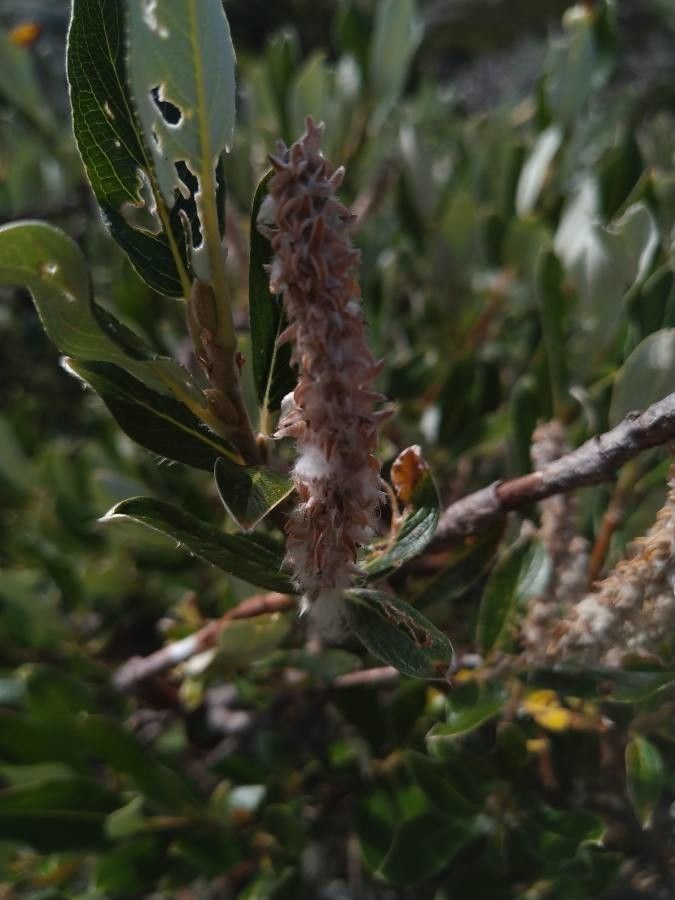
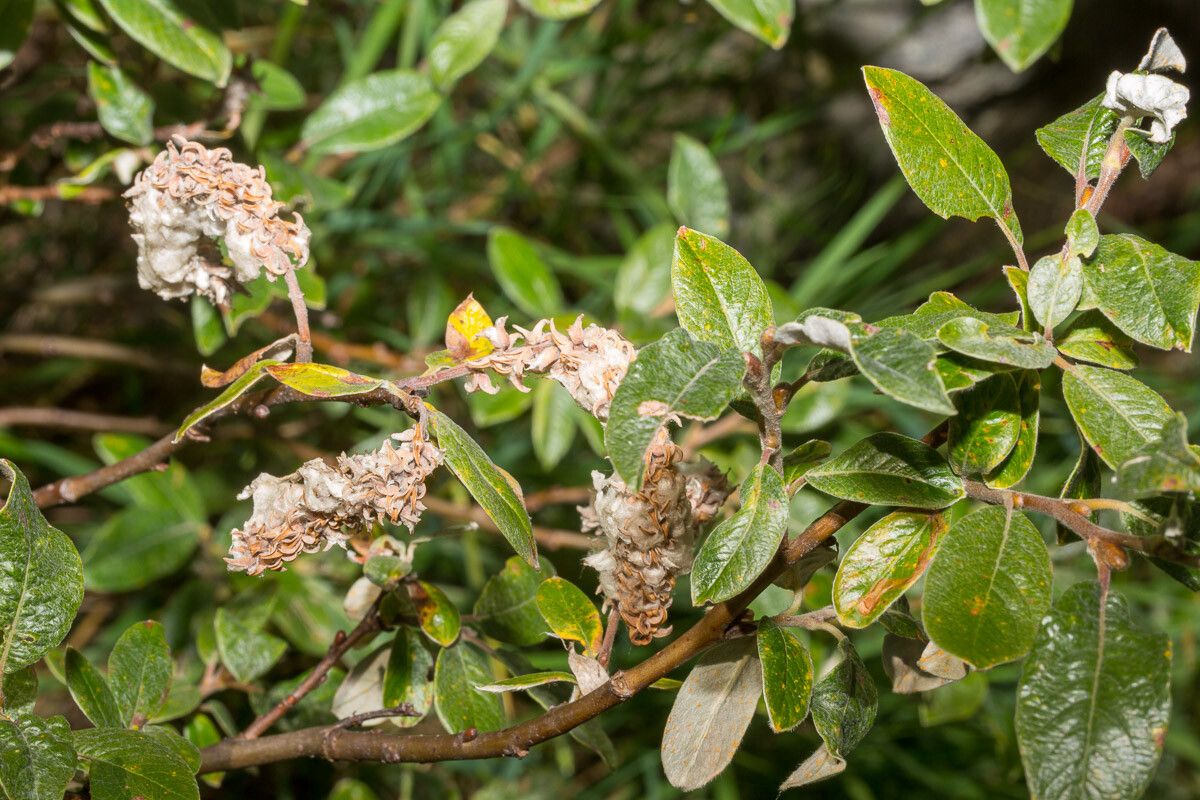
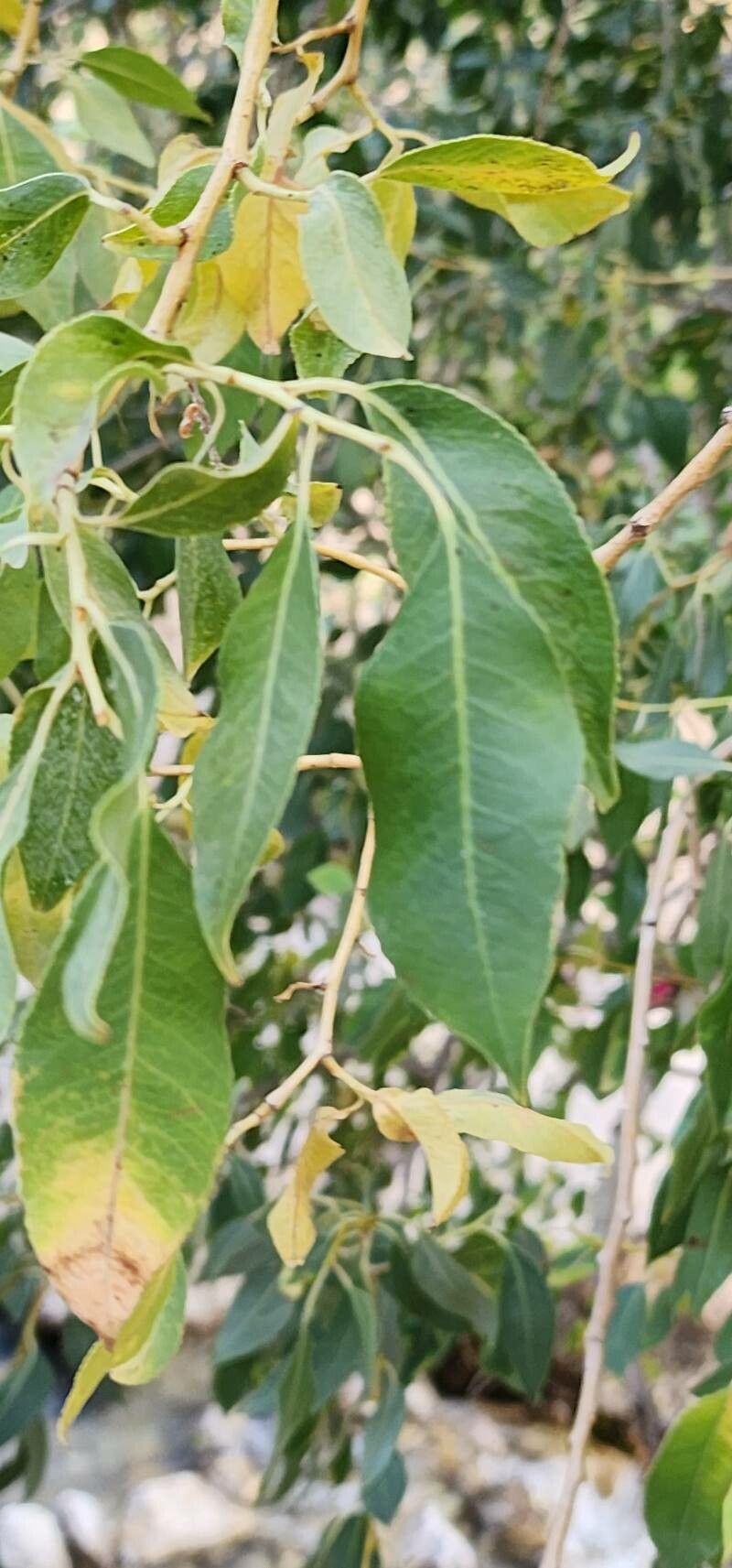
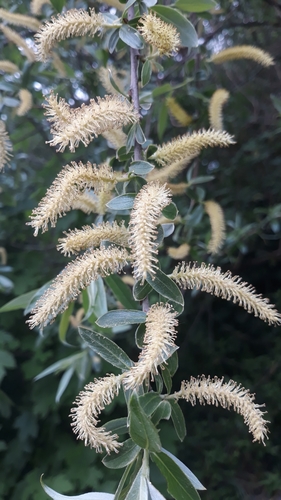
Salix helvetica, the Swiss willow, is a scrubby willow species found in the Alps (from 1700 to 2700 m) and the Tatras portion of the western Carpathians (from 1600 to 2000 m). It is a naturally dwarf, erect shrub, growing to 50 cm (20 in) tall and broad, with silvery undersides on the leaves, and silvery catkins appearing with the leaves. It has gained the Royal Horticultural Society's Award of Garden Merit.
Swiss willow is highly resistant to disease and typically does not suffer from illnesses. In terms of upkeep, this plant is fairly low-maintenance. Planted outdoors it needs only light watering, and larger specimens usually do not need pruning. Smaller ones, however, should be pruned after they have finished blooming. Swiss willowt is suitable for anyone with an outdoor area, such as a garden or a deck, and does not require extensive care experience.
How to keep Salix Helvetica.
Light
Swiss willow grows in open habitats, such as sunny meadows and forest edges, where light is plentiful. It thrives in Full Sun but can also tolerate Partial Sun, adapting well to a range of sunlight conditions.
Water
Swiss willow flourishes in cooler climates with consistent moisture. To maintain healthy, lush foliage, it should be watered twice a week to prevent waterlogging. Ideally grown outdoors, the plant benefits from natural rainfall, especially during its active growing season when it requires the most water.
Fertilizer
Fertilize your Swiss willow in early spring to encourage healthy growth. Regular fertilization boosts overall health, leading to vigorous growth, greater resilience to harsh conditions, and improved resistance to diseases and pests. Maintain a specific fertilization schedule for your Swiss willow to ensure foliage that is vibrant, richly colored, and lush.
Pruning
The Swiss willow has slender branches and silvery leaves. To keep it healthy, prune it in early spring. Remove any damaged wood and thin out crowded areas to improve air circulation and light exposure. Make sure not to remove more than one-third of the plant at a time to minimize stress and encourage healthier growth.
Botanical profile.
- Plant Type
- Tree, Shrub
- Life Cycle
- Perennial
- Genus
- Salix
- Family
- Salicaceae
- Hardiness Zone
- 3-7
- Mature Height
- 61 cm
- Mature Spread
- 40 cm
- Leaf Color
- Green, Gray
- Leaf Type
- Deciduous
- Flower Size
- 1.02 cm to 2.03 cm
- Bloom Time
- Mid spring, Late spring
- Planting Time
- Spring, Summer
- Harvest Time
- Early summer, Mid summer
- Native Area
- Austria, Italy, Switzerland, Slovakia, France
Other names.
Reader questions.
What are the sunlight requirements for Swiss willow?
Swiss willow (Salix helvetica) requires specific conditions in terms of sunlight to thrive. For 'Full sun,' the plant needs to be exposed to more than 6 hours of sunlight daily. If the condition is 'Partial sun,' then about 3-6 hours of sunlight per day is sufficient. It's important to observe the way sunlight moves throughout your garden to find the best spots that offer an ideal balance of light and shade. This careful placement ensures your Swiss willow remains healthy and happy.