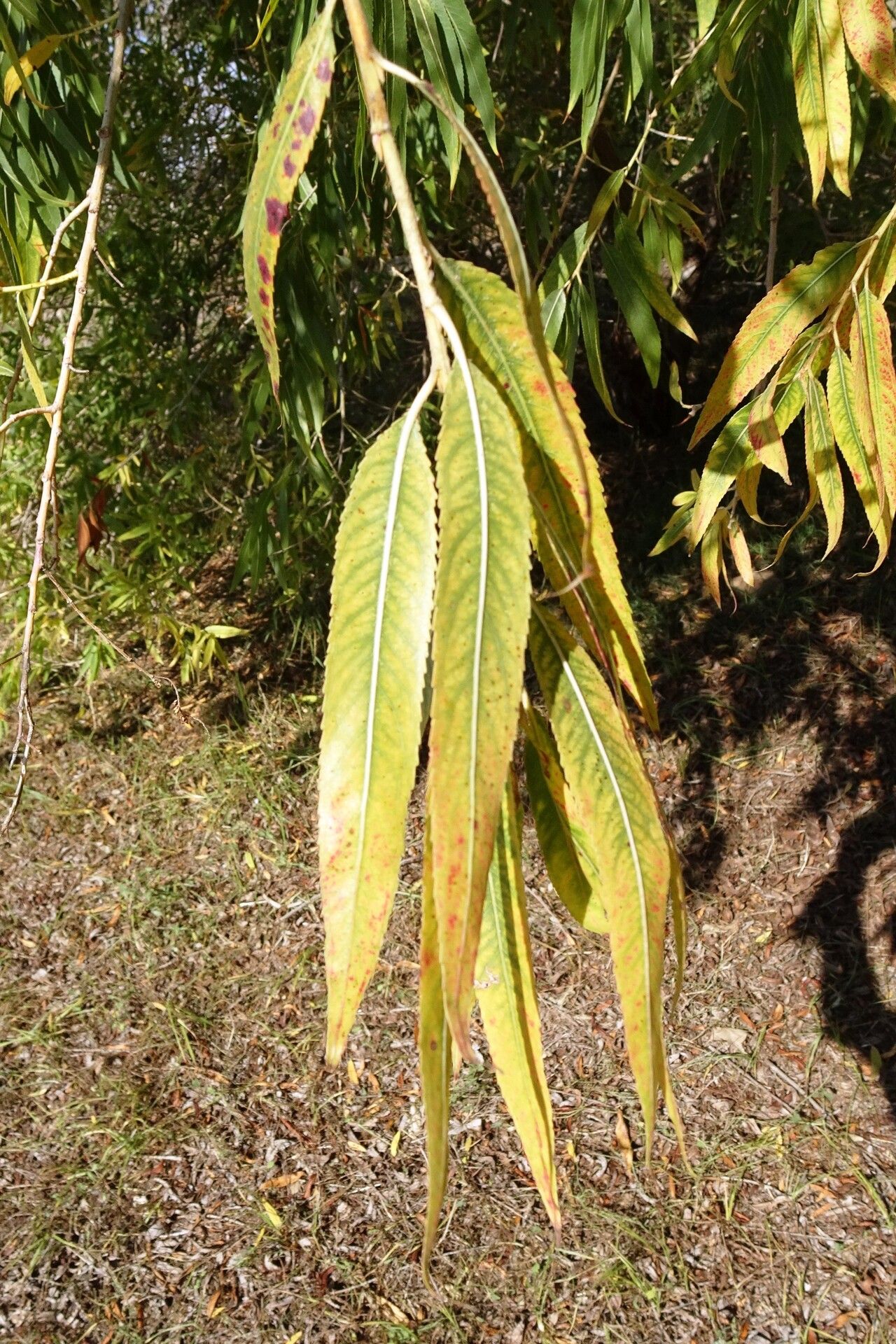
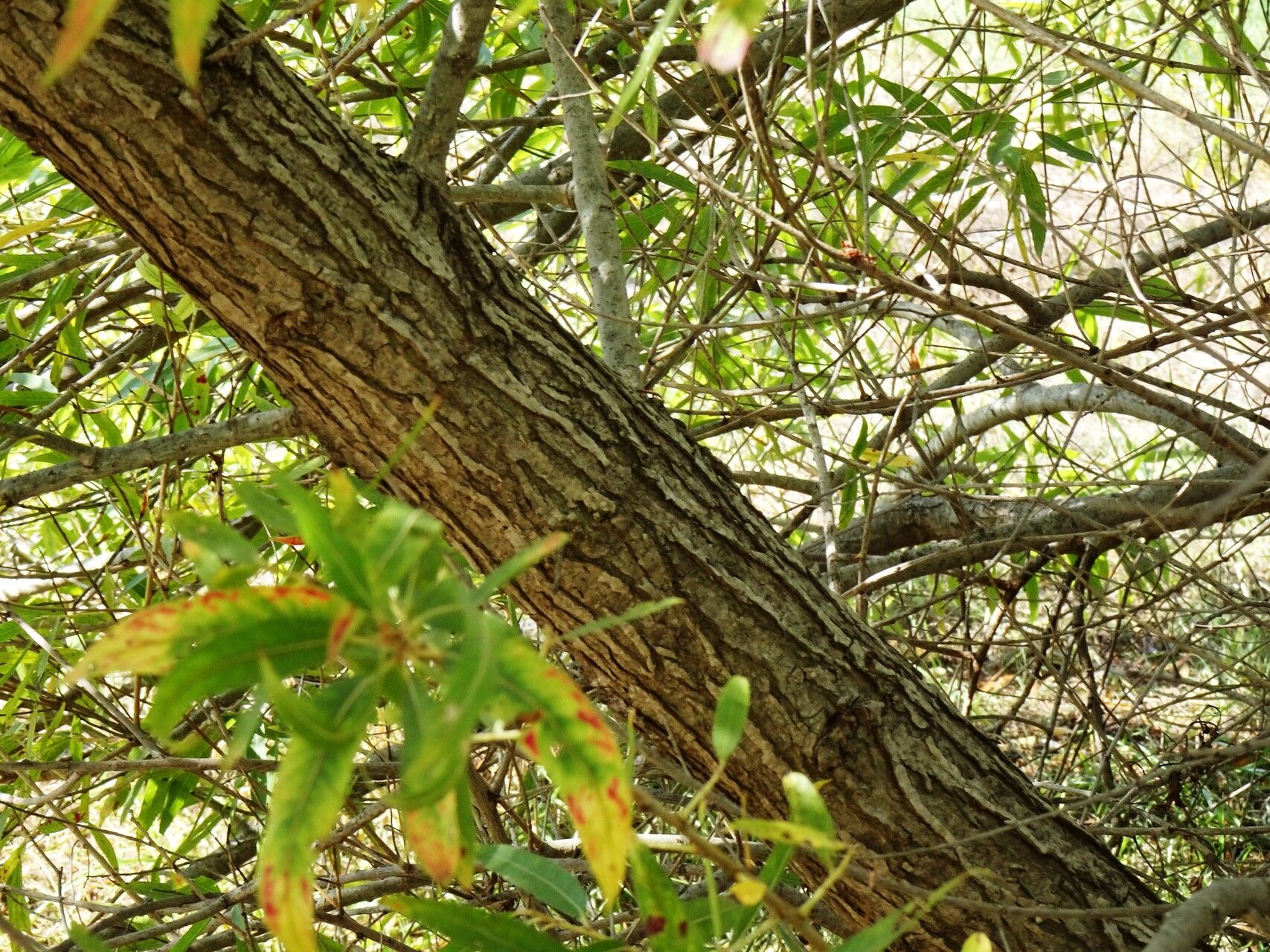
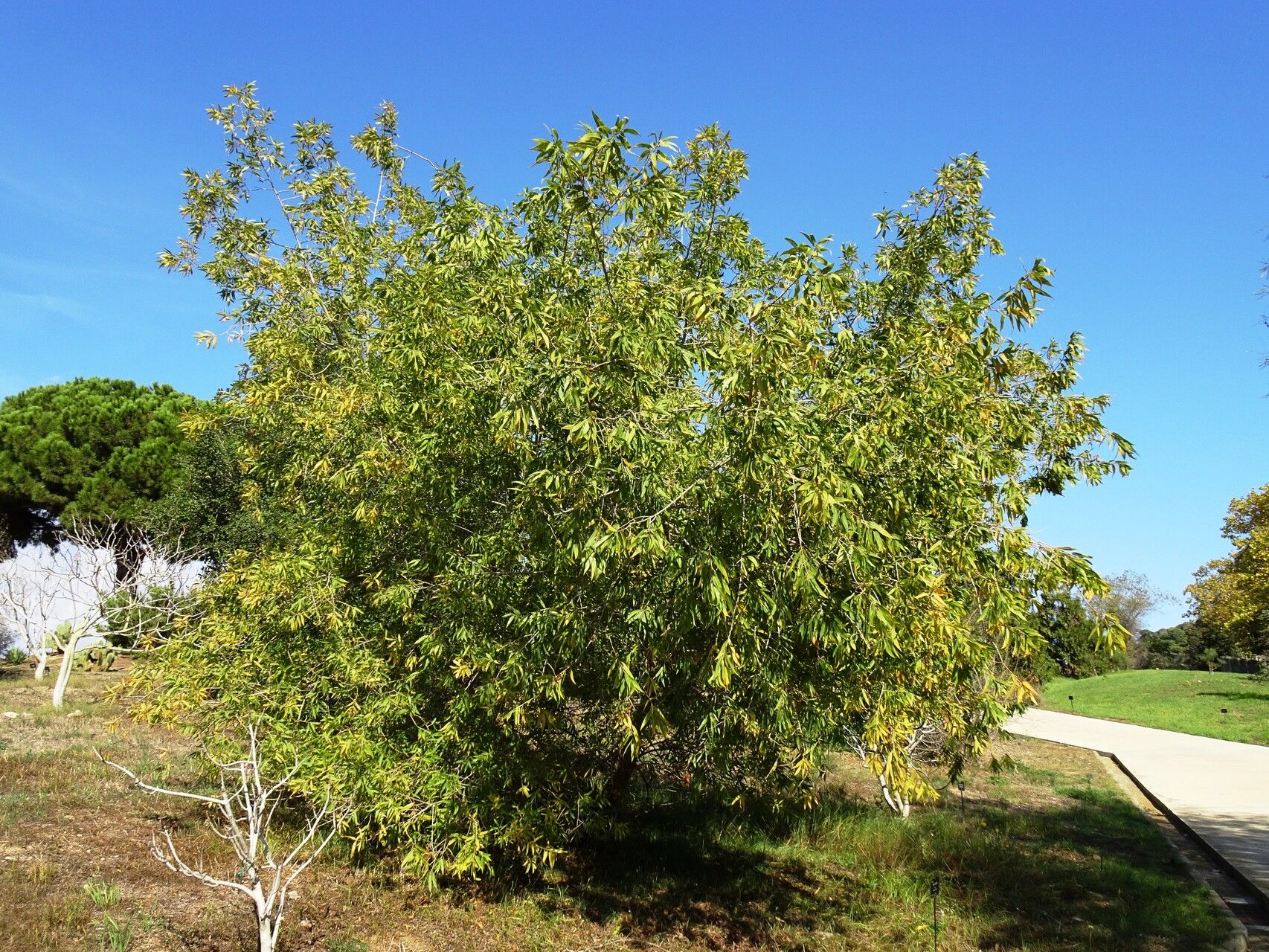
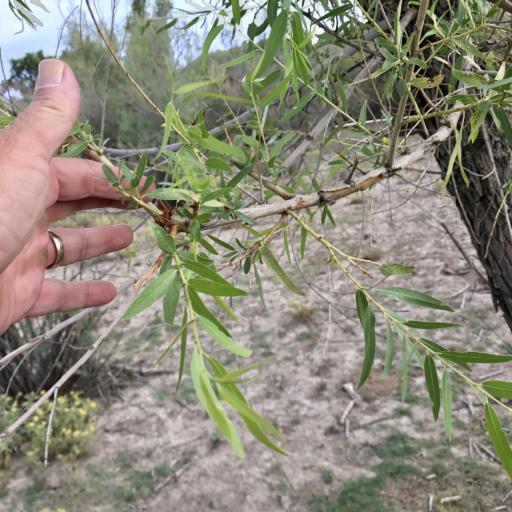
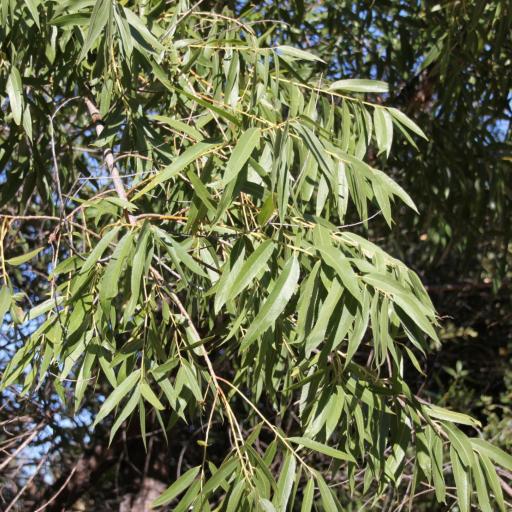
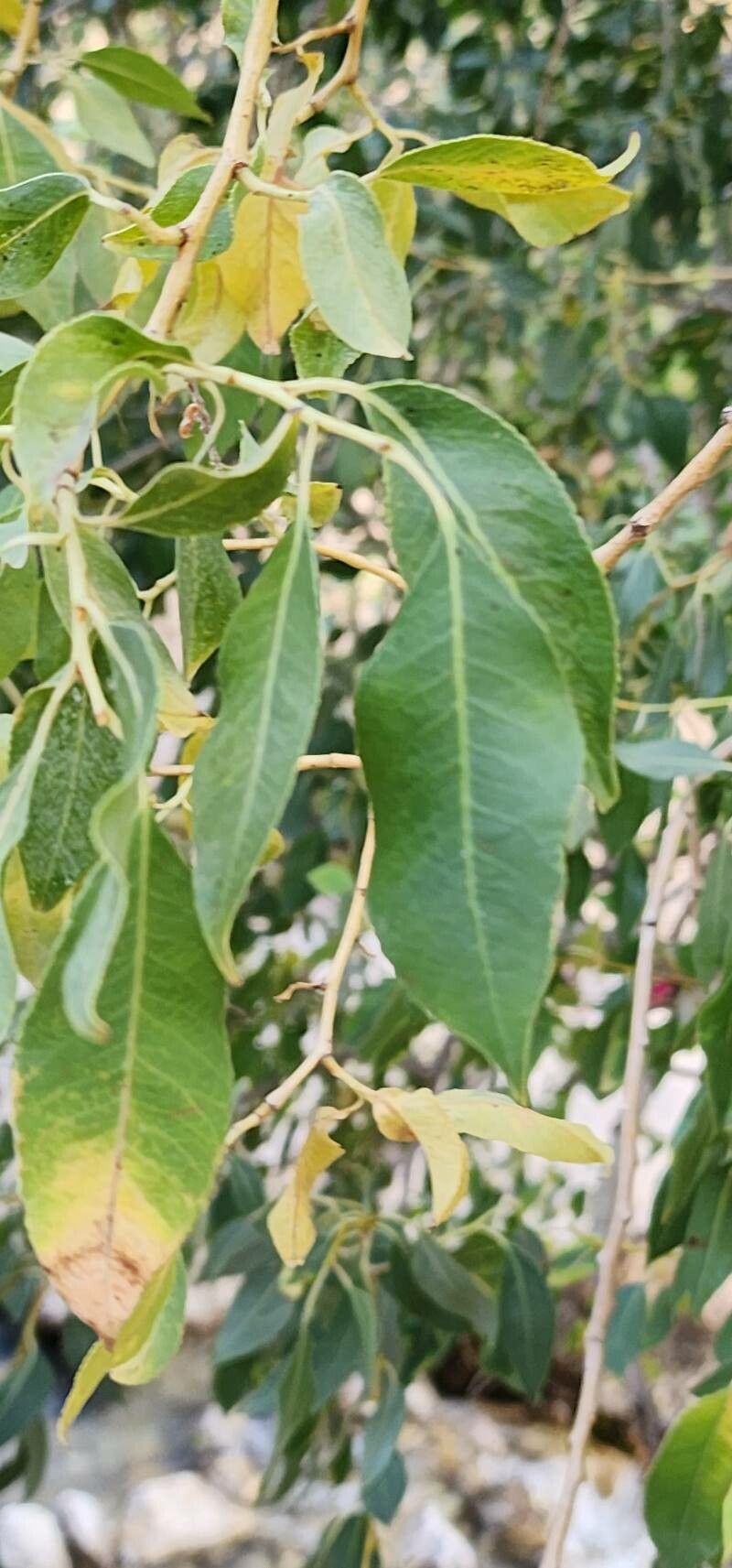
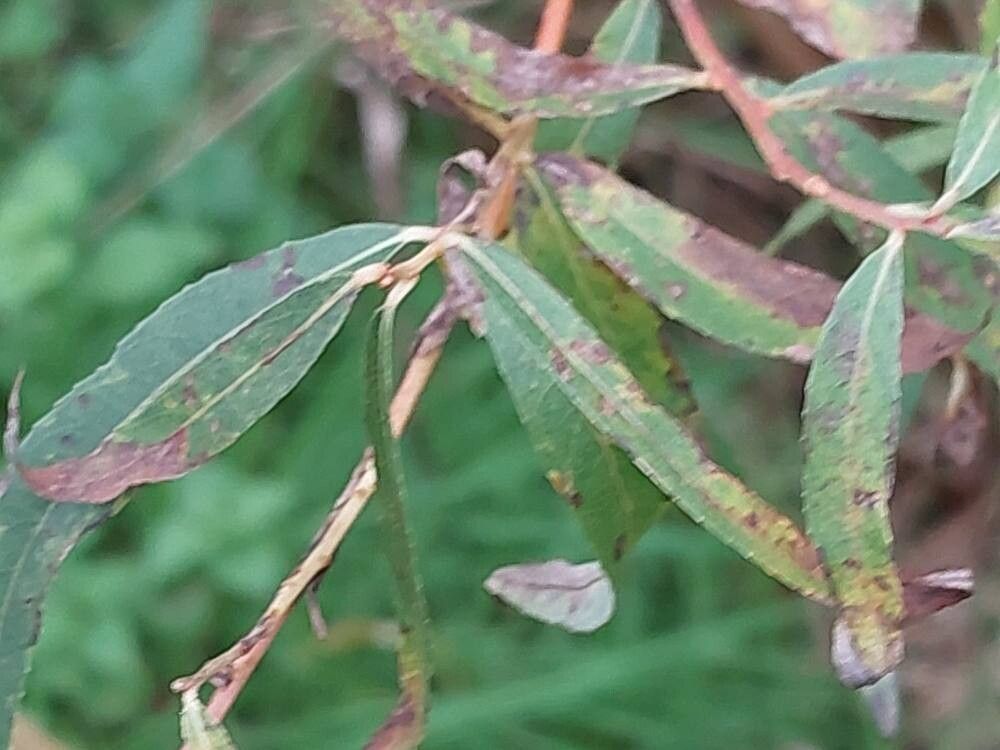
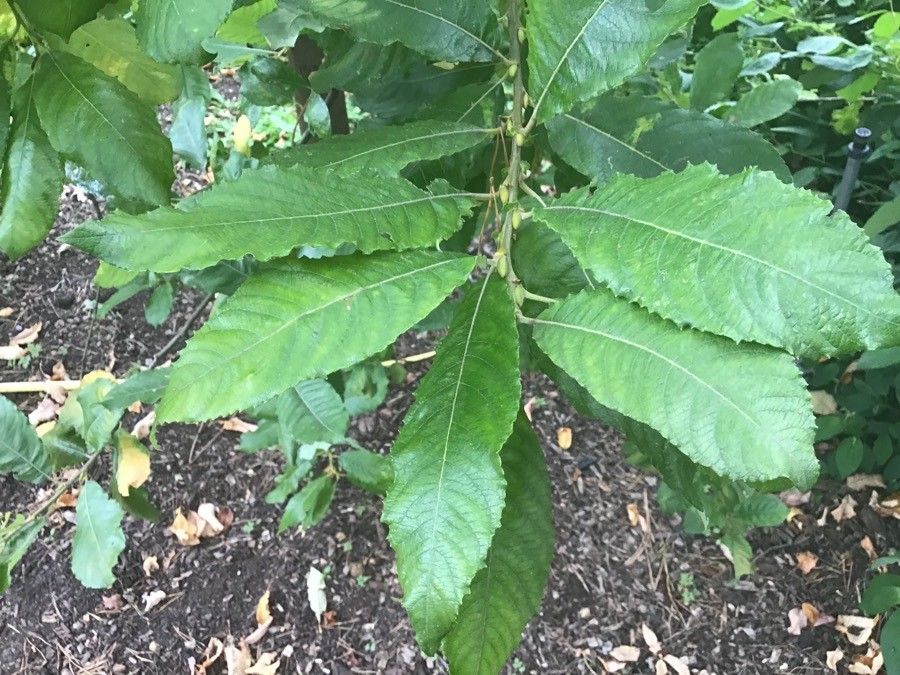
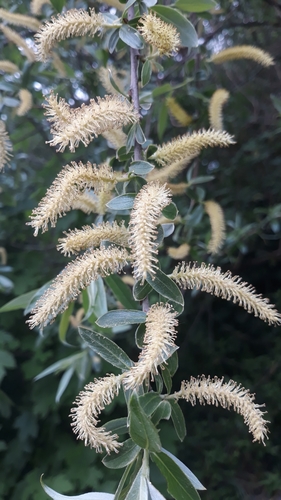
Salix gooddingii is a species of willow known by the common name Goodding's willow, or Goodding's black willow. It was named for its collector, Leslie Newton Goodding. Salix gooddingii is native to the southwestern United States and northern Mexico, where it grows in moist and wet habitat in many types of habitat from mountains to desert. It is a common riparian species. It is a tree growing to 3 to 30 m (9.8 to 98.4 ft) tall, with thick, furrowed, shreddy bark and many thin branches. The leaves are up to 13 cm long, generally lance-shaped, and finely serrated along the edges. The young leaves are coated in hairs. The inflorescence is a catkin of flowers up to 8 cm long.
Goodding's willow shows strong resistance to disease and is usually not vulnerable to illnesses. With regard to upkeep, this plant is fairly low-maintenance. Planted outdoors it needs only light watering, and larger specimens typically do not require pruning; smaller ones, however, should be pruned after they have finished blooming. Goodding's willowt is appropriate for anyone with an outdoor area, such as a garden or deck, and does not demand extensive experience in plant care.
How to keep Salix Gooddingii.
Light
goodding's willow favors abundant light for healthy growth, reflecting its dependence on photosynthesis. Because it comes from environments with frequent sunshine, goodding's willow tolerates sun-drenched conditions. Nevertheless, if denied sufficient light, goodding's willow may exhibit stunted growth. Excessive sunlight can also scorch the plant, negatively affecting its condition.
Water
Goodding's willow thrives in riparian zones, where it prefers moist environments. It has a moderate tolerance for drought. To keep the plant healthy without over-watering, it is best to water it every 2 to 3 weeks. This species is resilient through seasonal changes, adapting well to varying levels of water availability during both growth and dormancy periods.
Temperature
Goodding's willow is native to warm habitats and flourishes at temperatures between 59 and 95 °F (15 and 35 ℃). To ensure healthy growth, monitor temperatures closely, particularly during abrupt seasonal changes.
Fertilizer
Apply fertilizer to your Goodding's willow in early spring to encourage healthy growth. Regular feeding improves its overall health, leading to vigorous growth, better tolerance of harsh conditions, and increased resistance to diseases and pests. Keep a specific fertilization schedule for your Goodding's willow to maintain lush foliage with rich color and a vibrant appearance.
Pruning
Goodding's willow benefits from pruning in early spring to remove dead or diseased branches, which enhances both its health and air circulation. To maintain the tree's natural shape, it's best to avoid heavy pruning. Consistent care encourages growth and vibrant foliage while reducing the risk of fungal infections, ensuring the plant remains healthy overall.
Botanical profile.
- Plant Type
- Tree
- Life Cycle
- Perennial
- Genus
- Salix
- Family
- Salicaceae
- Hardiness Zone
- 8-10
- Mature Height
- 3.05 m to 29.87 m
- Mature Spread
- 4.57 m to 7.62 m
- Leaf Color
- Green, Blue
- Leaf Type
- Deciduous
- Flower Color
- Yellow, Green
- Flower Size
- 7.62 cm
- Bloom Time
- Early spring, Mid spring
- Planting Time
- Spring, Summer, Autumn, Winter
- Harvest Time
- Mid spring, Late spring
- Native Area
- Mexico
Other names.