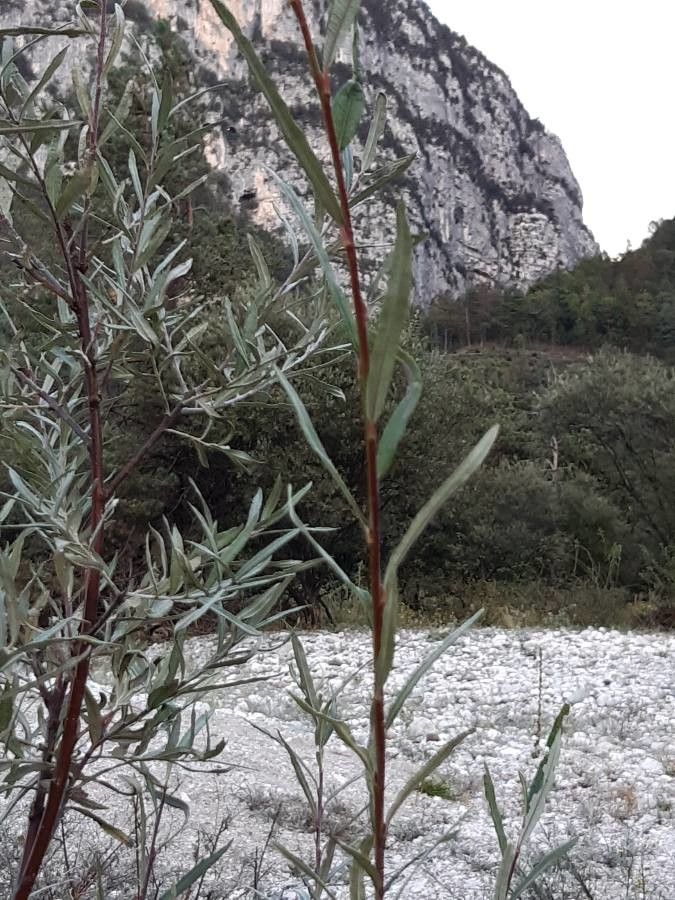
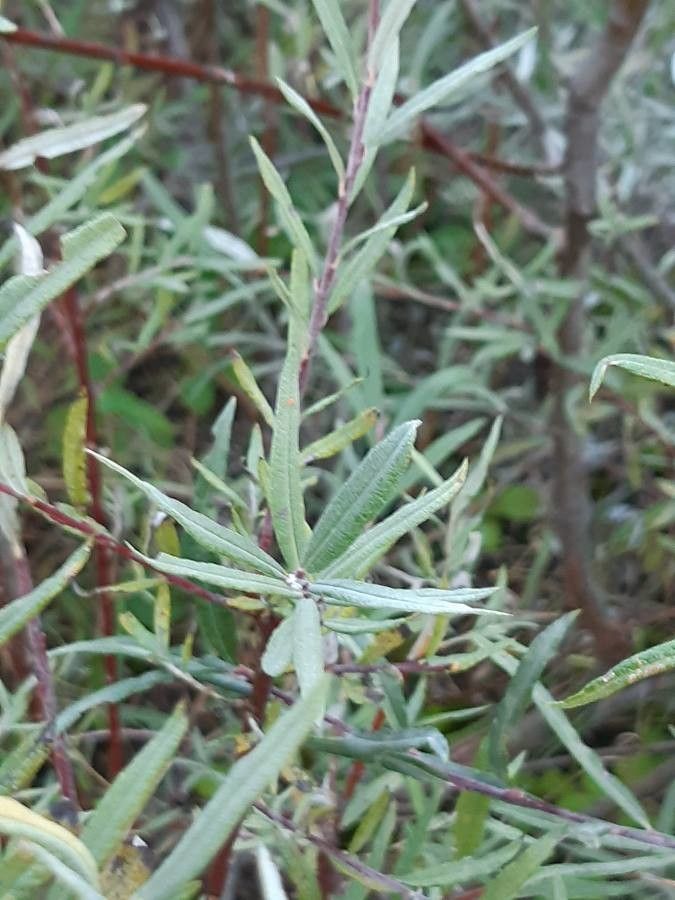
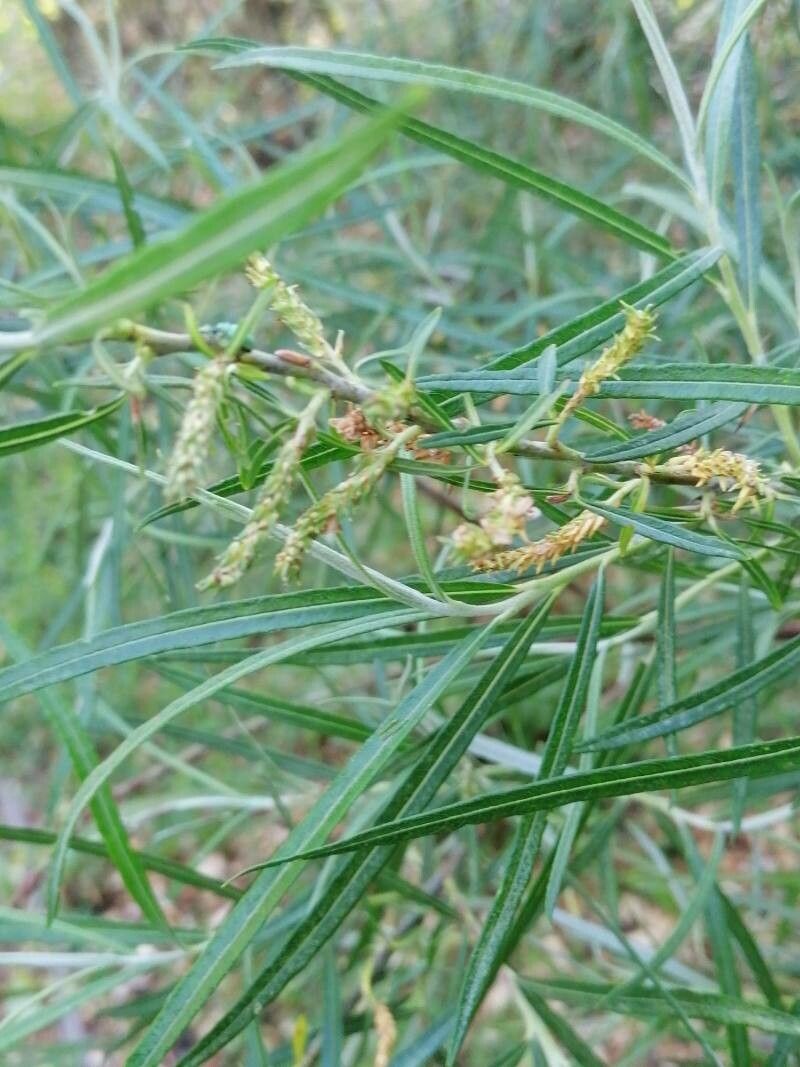
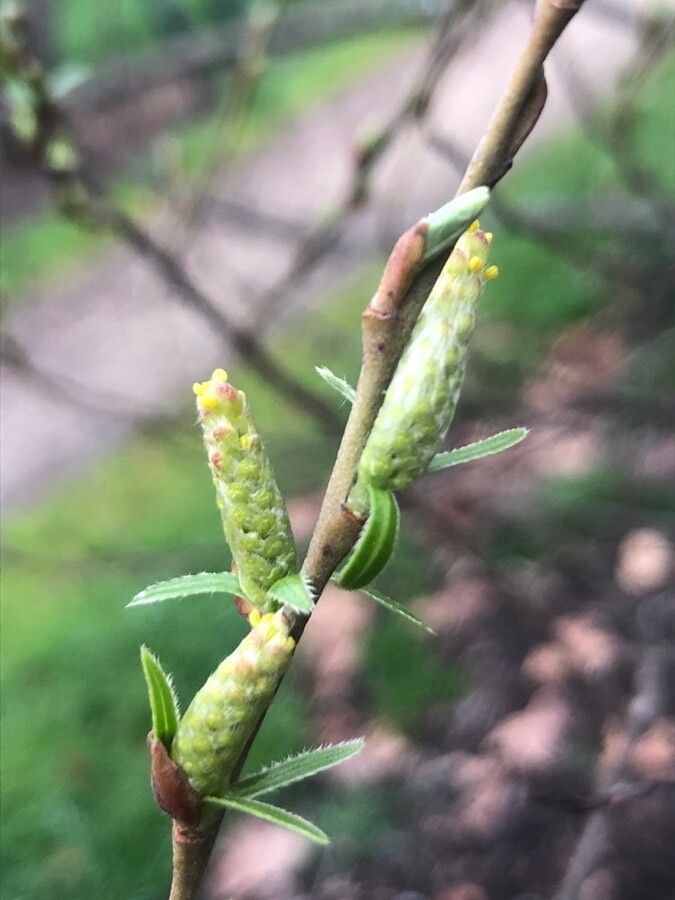
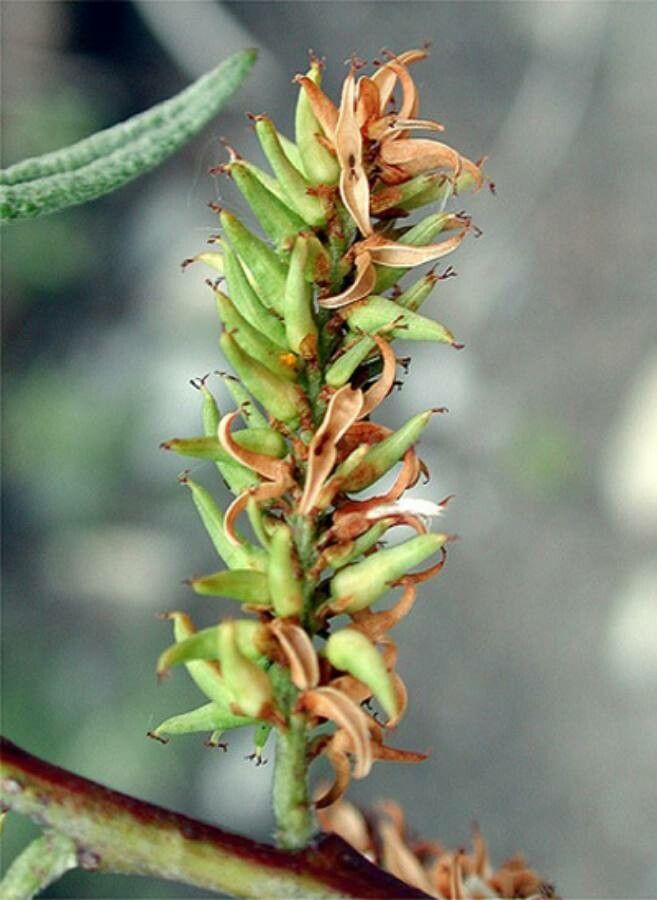
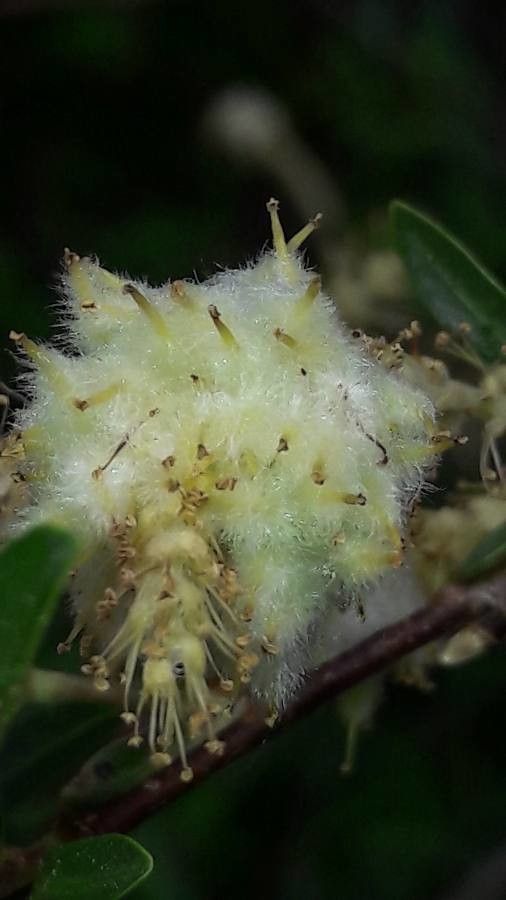
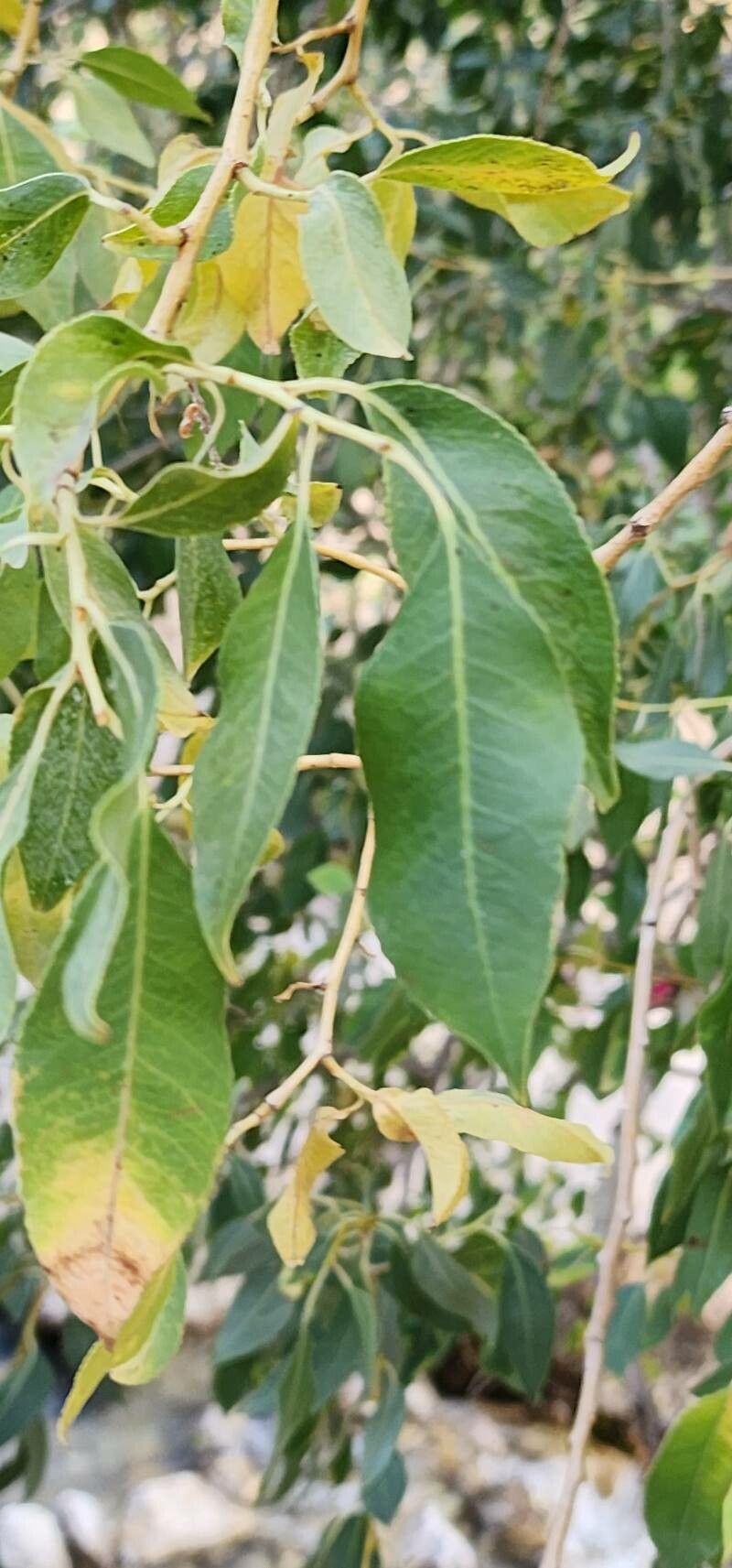
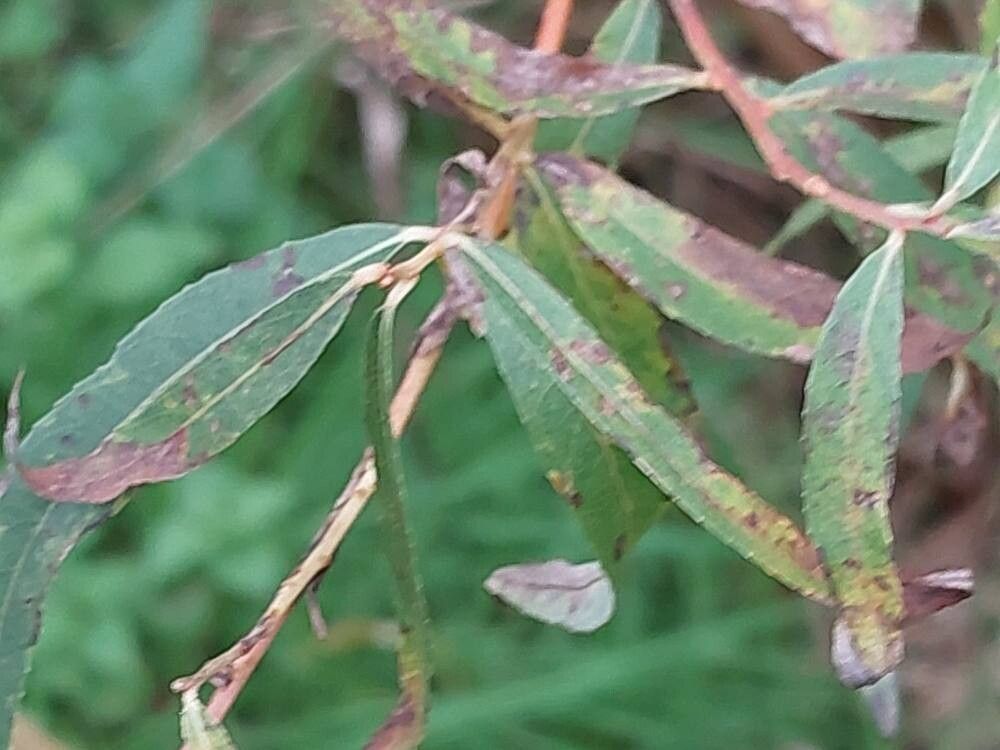
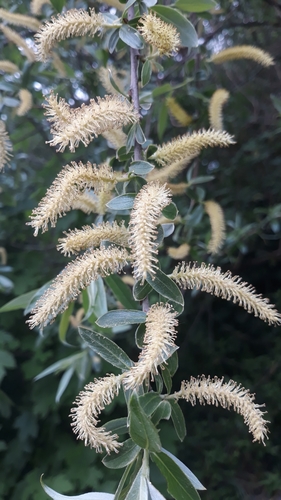
Salix eleagnos, commonly known as the rosemary willow or olive willow, is a deciduous shrub or small tree belonging to the Salicaceae family. Native to Europe and western Asia, it can grow up to 10 meters tall. The plant features a slender trunk with smooth gray bark and narrow, lance-shaped leaves that are green on top and silvery-white underneath, measuring up to 10 cm in length. The rosemary willow blooms in early spring before its leaves emerge, producing small yellowish-green flowers on catkins that can grow up to 5 cm long. It thrives in moist soils near streams or rivers but can also tolerate drier conditions. Salix eleagnos serves multiple purposes. It is used for erosion control along riverbanks and as an ornamental plant in landscaping due to its attractive foliage and growth habit. Additionally, it provides habitat for wildlife, with birds often using it as nesting sites. Medicinally, Salix eleagnos is noteworthy; its bark contains salicin, which is similar to aspirin and used in traditional medicine as an anti-inflammatory agent. Herbalists also use it to treat feverish conditions, such as malaria. Overall, Salix eleagnos is a versatile plant with both ornamental and medicinal applications, making it an important species within its family.
How to keep Salix Eleagnos.
Humidity
This plant needs special care because it loves high humidity levels of 60-80% or more. The best way to achieve this is by placing a humidifier near the plant. Daily misting is also essential! Make sure the room has good ventilation.
Botanical profile.
- Genus
- Salix
- Family
- Salicaceae
Other names.