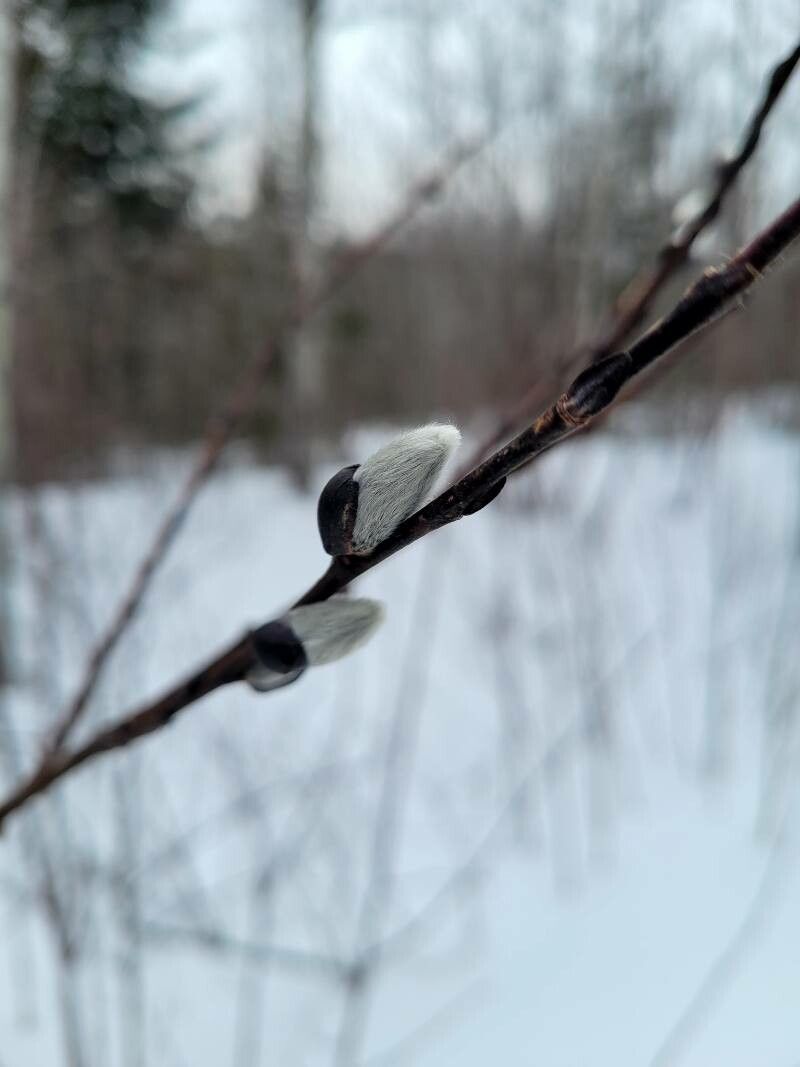
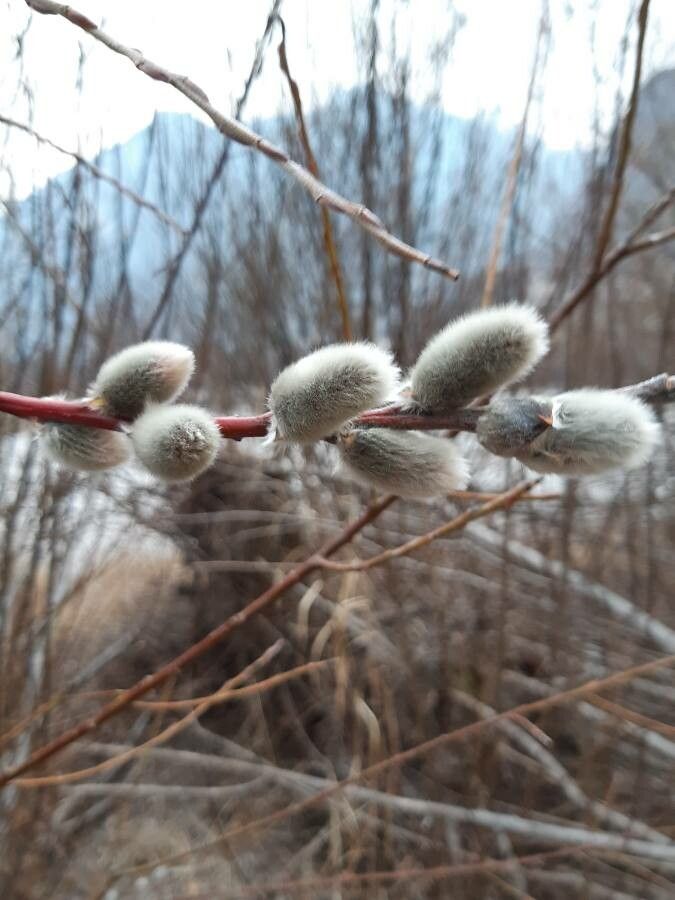
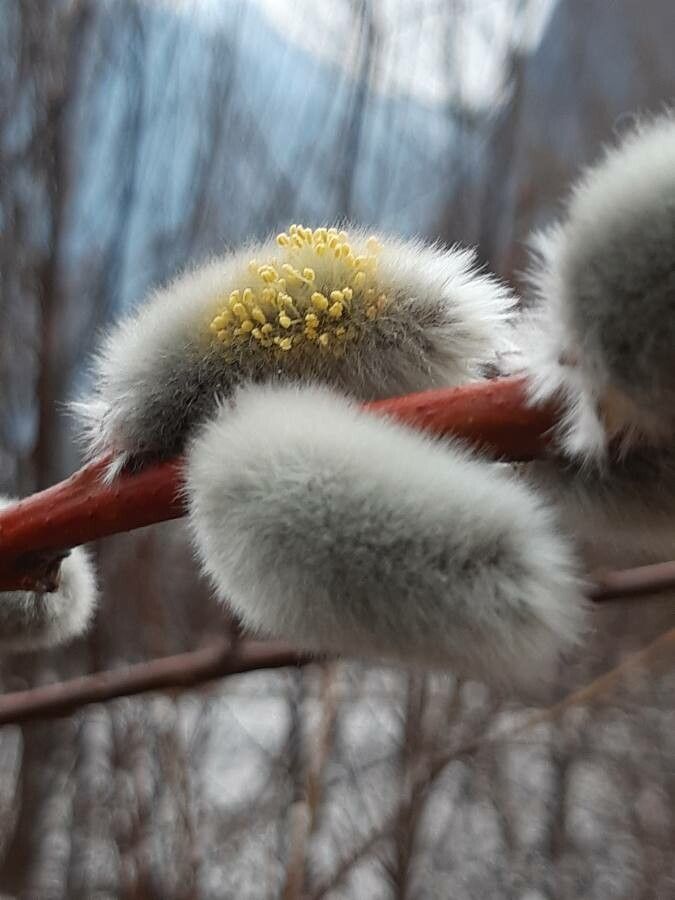
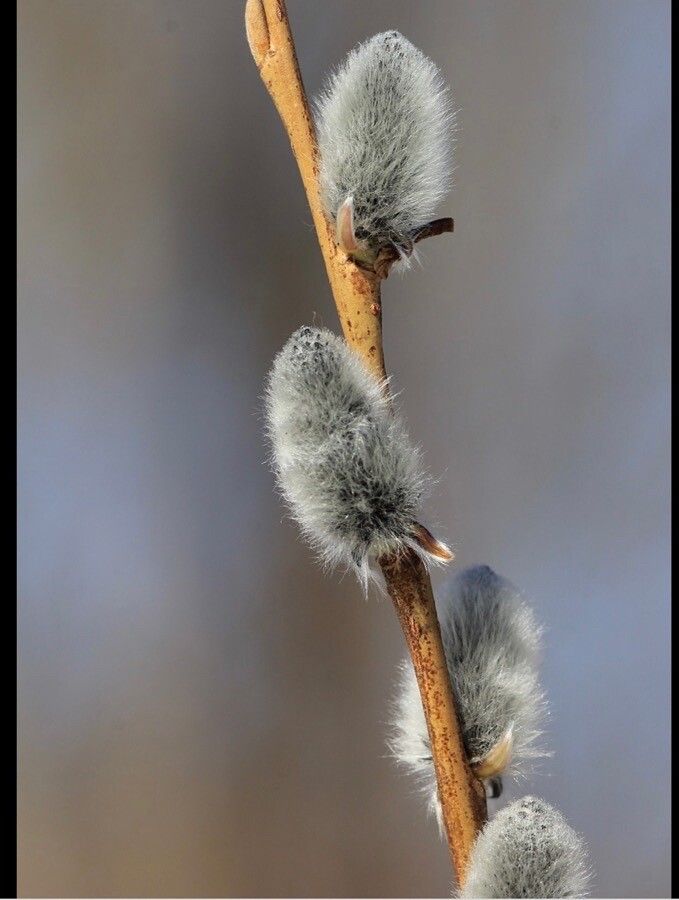
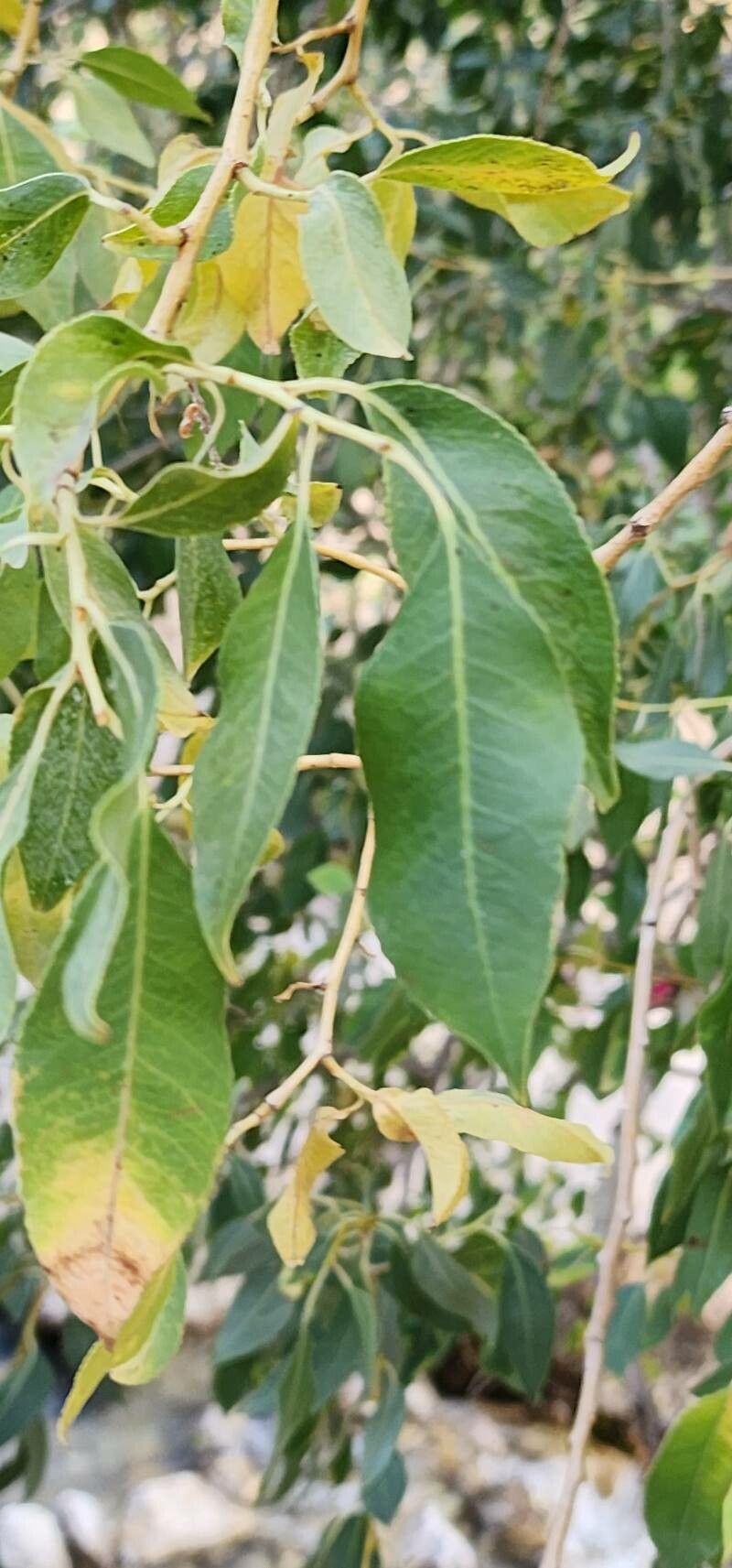
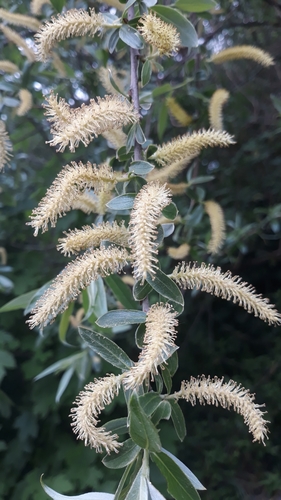
Salix discolor, the American pussy willow or glaucous willow, is a species of willow native to North America, one of two species commonly called pussy willow. It is native to the vast reaches of Alaska as well as the northern forests and wetlands of Canada (British Columbia east to Newfoundland), and is also found in the northern portions of the contiguous United States (Idaho east to Maine, and south to Maryland).It is a weak-wooded deciduous shrub or small tree growing to 6 m (20 ft) tall, with brown shoots. The leaves are oval, 3–14 cm long and 1–3.5 cm broad, green above and downy grey-white beneath. The flowers are soft silky silvery catkins, borne in early spring before the new leaves appear, with the male and female catkins on different plants (dioecious); the male catkins mature yellow at pollen release. The fruit is a small capsule 7–12 mm long containing numerous minute seeds embedded in cottony down.
Pussy willow is resistant to disease and is generally not susceptible to illnesses. In terms of care, the plant is fairly low maintenance. When grown outdoors it needs only minimal watering, and larger specimens typically do not require pruning. Smaller plants, however, should be pruned after they finish blooming. Pussy willow is appropriate for anyone with outdoor space, like a garden or deck, and does not demand extensive care experience.
How to keep Salix Discolor.
Light
Pussy willow requires a plentiful amount of sunlight each day for optimal growth, although it can tolerate locations with a moderate amount of sun. Native to open areas, this plant has evolved over time to thrive in those environments. Too much or too little sunlight can negatively affect its health and growth.
Water
Pussy willow thrives in moist environments and benefits from consistent watering about once every 1-2 weeks. Native to wetlands, this plant is well-suited for outdoor cultivation, where natural rainfall can meet its water requirements during the growing season. It is resilient enough to handle soggy soils.
Temperature
Pussy willow does best in damp habitats and is native to cool places like wetlands and stream banks. For optimal growth it prefers temperatures between 41 and 90 ℉ (5 to 32 ℃). In colder months it's advisable to keep conditions above freezing, while during hot summers occasional misting may be needed to prevent wilting.
Fertilizer
Fertilize your Pussy willow in early spring to encourage healthy growth. Consistent feeding improves its overall health, producing vigorous growth, greater toughness in adverse conditions, and increased resistance to pests and diseases. Keep a defined fertilization schedule for your Pussy willow to maintain foliage that is vibrant, richly colored, and lush in appearance.
Pruning
Pussy willow showcases beautiful catkins and benefits from pruning in late spring, after it has finished flowering. To improve air circulation, remove any dead branches and thin out crowded areas. When pruning, make your cuts just above the buds to encourage growth, which will enhance the plant's vitality and ornamental appeal. Regular maintenance is crucial for maintaining the plant's optimal health.
Pot & Repot
When repotting Pussy willow, select a pot 1–2 inches (2.5–5.1 cm) larger with good drainage. Use a well-draining potting mix. Repot in spring or fall, making sure the root ball sits slightly lower than the rim of the flower pot. Water thoroughly after repotting and place in a warm spot with indirect sunlight.
Toxicity
Pussy willows are toxic and should be kept out of reach of children and pets. The plant contains salicin, a substance that turns into salicylic acid when metabolized. This toxin is particularly toxic to cats when ingested.
Further reading →
The toxicity and danger assessments provided are for reference only. We do not assure their accuracy, so it's crucial not to depend on them. Seek professional advice when necessary for accurate guidance.
Botanical profile.
- Plant Type
- Shrub
- Life Cycle
- Perennial
- Genus
- Salix
- Family
- Salicaceae
- Hardiness Zone
- 4-8
- Mature Height
- 3.05 m to 6.1 m
- Mature Spread
- 2.44 m to 3.66 m
- Leaf Color
- Green, Silver
- Leaf Type
- Deciduous
- Flower Color
- Yellow
- Flower Size
- 2.54 cm
- Bloom Time
- Early spring, Mid spring
- Planting Time
- Winter
- Harvest Time
- Late spring, Early summer, Mid summer
- Native Area
- North America wetlands
Other names.
Reader questions.
What's the best way to water my Pussy willow plant?
To promote excellent root development, place a garden hose at the base of the plant instead of directly spraying the leaves. If the plant is outdoors and exposed to direct sunlight, remember that the leaves will require more watering. Using bubblers can help moisten the roots of each plant, and soaker hoses can cover the entire garden or bed when adding or removing plants to ensure deep root penetration. After watering, ensure any excess water is drained and allow the soil to dry before watering again. Watering at ground level is recommended to prevent diseases. On a sunny day, it may be beneficial to spray the entire bush with water. Whether the plant is potted or in-ground, it is important to remember that Pussy willow prefers deep watering rather than light sprinkling.
Why should I put fertilizer on my Pussy willow?
No matter what kind of Pussy willow you have, regular fertilization is important for a healthy plant. When you provide the right nutrients, your Pussy willow will grow stronger and be better able to handle tough growing conditions, as well as fight off diseases and pests. Keeping the foliage intact is crucial for the plant's attractiveness, so it's essential to follow a fertilization schedule tailored to your specific Pussy willow. This will encourage the development of vibrant and lush leaves.
What are the sunlight requirements for pussy willow plants?
Pussy willow plants thrive best when they receive a generous amount of sunlight daily, although they can also tolerate moderate sunlight conditions. Native to open areas, these plants have adapted to perform well in environments with plenty of light. Ensuring the right amount of sunlight is crucial, as both excessive and insufficient sunlight can negatively impact their health and growth. To accommodate indoor plants, artificial lighting can be used to supplement natural sunlight, especially during winter or in less sunny locations. For optimal growth under artificial light, the right type of light (such as LED lights), the correct distance (12-36 inches above the plant), and the appropriate duration (8-12 hours per day) should be considered, with the intensity adjusted based on the plant's natural sunlight requirements.
What are the ideal growing conditions for Pussy Willow?
Pussy willow thrives best in moist environments native to cooler temperature regions such as wetlands and stream banks. It prefers temperatures ranging from 41 to 90°F (5 to 32°C) for optimal growth. To ensure a healthy plant, during the cold months, it's advisable to keep the temperature above freezing. In contrast, hot summer temperatures may necessitate occasional misting to prevent wilting. Pussy willow has a strong resistance to cold; therefore, special frost protection measures usually aren't necessary. However, if winter temperatures are expected to plummet below -30°C, it's important to provide cold protection by wrapping the trunk and branches with non-woven fabric or cloth. Additionally, watering the plant abundantly before the first freeze in autumn ensures the soil remains moist and enters a frozen state, which helps prevent drought and water scarcity during winter and early spring.
What do I do if I give too much water or too little water to Pussy willow?
If a Pussy willow is overwatered, it may exhibit yellowing, wilting, and dropping leaves. The plant may also look unhealthy with mushy stems. In such cases, it's advisable to adjust your watering schedule. Wilting can also be a sign of underwatering, with leaves becoming dry and crispy. When the soil is dry and regular watering doesn't suffice, give the plant a thorough watering. However, even after recovery, the plant may still have dry and yellow leaves due to root damage. For indoor Pussy willows, always check the soil moisture levels and avoid overwatering. If black spots appear, let the soil dry by abstaining from watering for a few days. Overwatering can lead to root rot, so if you notice discolored and slimy roots, consider transferring the plant to a different pot and preventing excessive soil saturation. When planting Pussy willows outdoors, make sure to check the soil moisture by digging a bit deeper. If the soil is too dry, it may indicate underwatering, requiring adequate watering for plant recovery.
When should I fertilize my Pussy willow for best results?
To ensure healthy growth, fertilize your Pussy willow first in late winter or early spring. This provides essential nutrients for when the weather warms up. Additionally, if you live in a warm climate, consider giving it another fertilizer feeding in early fall. This not only adds more nutrients for the next growing season but also helps the Pussy willow endure winter without foliage damage. By fertilizing earlier, the new branches have enough time to grow and withstand the cold winter.
What are the common symptoms of incorrect sunlight exposure in pussy willow plants?
Pussy willows exposed to inappropriate sunlight conditions may exhibit various symptoms. Insufficient light can lead to smaller new leaves, leggy or sparse growth, faster leaf drop, slower or no new growth, and lighter-colored or irregularly patterned leaves. Excessive sunlight can cause chlorosis (yellowing of leaves), sunscald (pale or necrotic spots on leaves or stems), leaf curling, wilting, and leaf scorching (brown, dry edges on leaves). These symptoms indicate either a lack of vital nutrients due to poor light exposure or damage from overexposure, affecting the plant's ability to photosynthesize and maintain health.
What should I do if my Pussy Willow is exposed to temperatures below -25°C?
Pussy willow is notably cold-tolerant and performs best when the temperature stays above 5°C. During winter, it's vital to maintain the temperature above -25°C. Should the temperature drop below -30°C, the branches may not show immediate damage during winter, but they can become brittle and dry come spring, potentially not producing new shoots. In such cases, it's advisable to prune away any dead branches that have failed to produce new leaves during the spring to promote healthier growth.
How often should I water my Pussy willow plant?
The Pussy willow plant prefers to be watered deeply but less often. This is especially important to keep in mind when they are planted in pots, as the soil can dry out quickly. In colder regions, watering is necessary every 3 to 5 days. It's best to water in the morning when the soil is dry, whether the plant is indoors or outdoors. You can check if watering is needed by feeling the soil: if the top 2-3 inches are dry, it's time to give the plant a good watering. On hot days, it's a good idea to check the moisture daily, as the pot's soil can dry out quickly. If you have a garden, you'll also need to irrigate the soil. In hotter climates, watering once a week is often sufficient. Only water when you notice that about 2 to 3 inches of soil have become too dry. Take into consideration the amount of rainwater the plant receives to avoid overwatering and root rot. If there is already plenty of rainfall, you may not need to water the plants additionally. Pussy willow typically grows in the spring and fall. When growing them outdoors, adding mulch about 3 to 4 inches deep can help conserve water. Sandy soil drains faster, requiring more frequent watering, while clay soil retains water better and needs watering less often. Keeping track of when you water and monitoring the leaves for drooping can help you maintain a consistent watering schedule.
When is it not a good idea to add fertilizer to my Pussy willow plant?
There are specific times during the year when you should avoid fertilizing your Pussy willow. Firstly, during the early and mid-winter months, when the plant is in a dormant state and does not require any feeding. Secondly, it is not recommended to fertilize the plant during late spring and throughout the summer. During this period, the weather is usually hotter and drier, which can have a negative impact on the plant if it is fertilized. To prevent any issues, it is advisable to stick to a fertilization schedule that involves feeding only in early spring and early fall.
How can I manage and improve sunlight exposure for my pussy willow plants?
To optimize sunlight exposure for pussy willow plants, consider following a few key strategies. Indoors, gradually move your plants to a sunnier location each week until they receive at least 6 hours of direct sunlight per day, and use artificial lights if necessary to supplement natural light, ensuring lights are on for at least 8 hours daily. Outdoors, also move your plants gradually to avoid sunburn, aiming to increase their light exposure without sudden changes. When dealing with ground-planted pussy willows, reduce obstructions by pruning nearby trees and consider transplanting smaller plants to sunnier locations during their dormant periods for better sunlight access and healthier growth. It's important to note that parts of the plant that have already been damaged by insufficient sunlight may not recover, but new growth should be healthy with improved light conditions.
How do I care for my Pussy Willow during hot temperatures?
In summer, it's crucial to ensure that the Pussy willow's environment does not exceed 32°C. Exposure to temperatures above 35°C can cause the plant's leaves to lighten in color, the tips to become dry and withered, and increase the susceptibility to sunburn. Should this occur, trim away any sunburned and dried parts of the plant. It might be necessary to move the plant to a location that offers shade during the midday and afternoon sun, or to use a shade cloth. Also, watering the plant in the morning and evening helps keep the soil moist and supports its overall health during hotter periods.