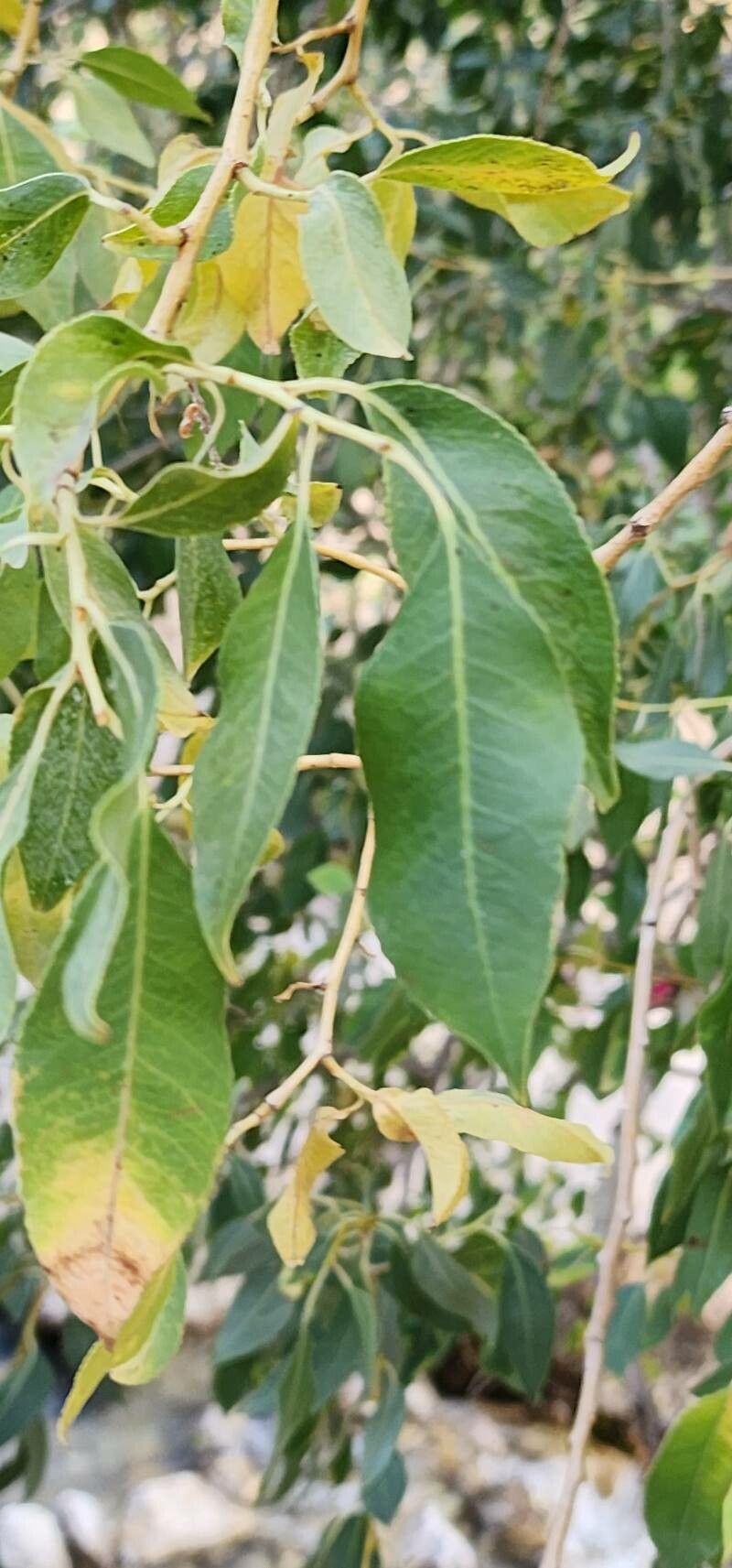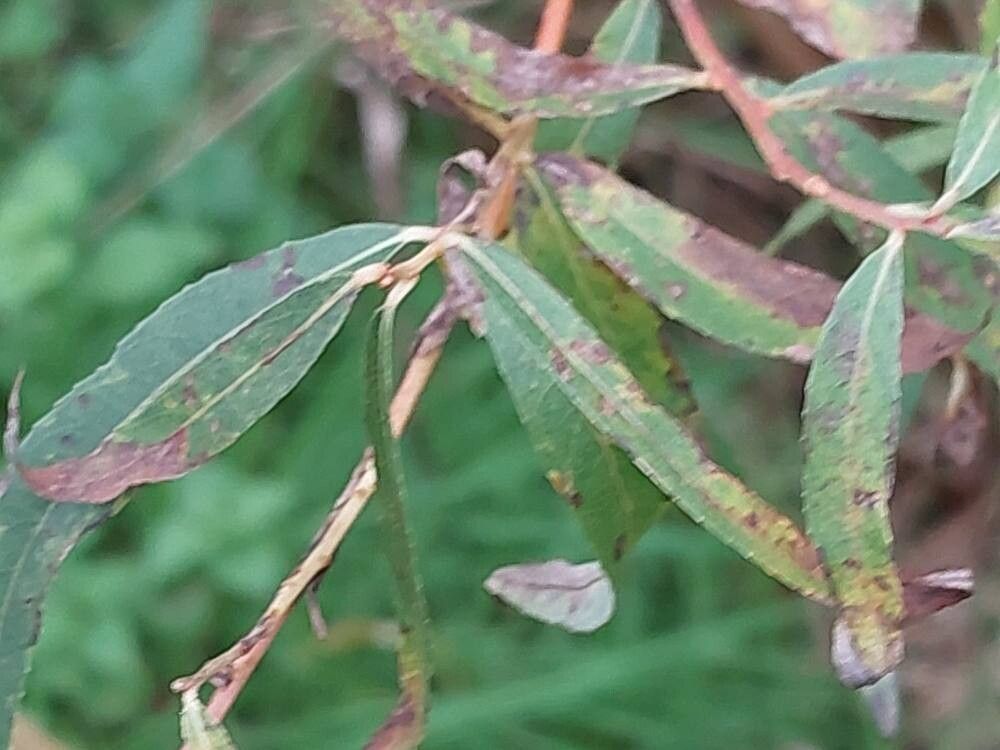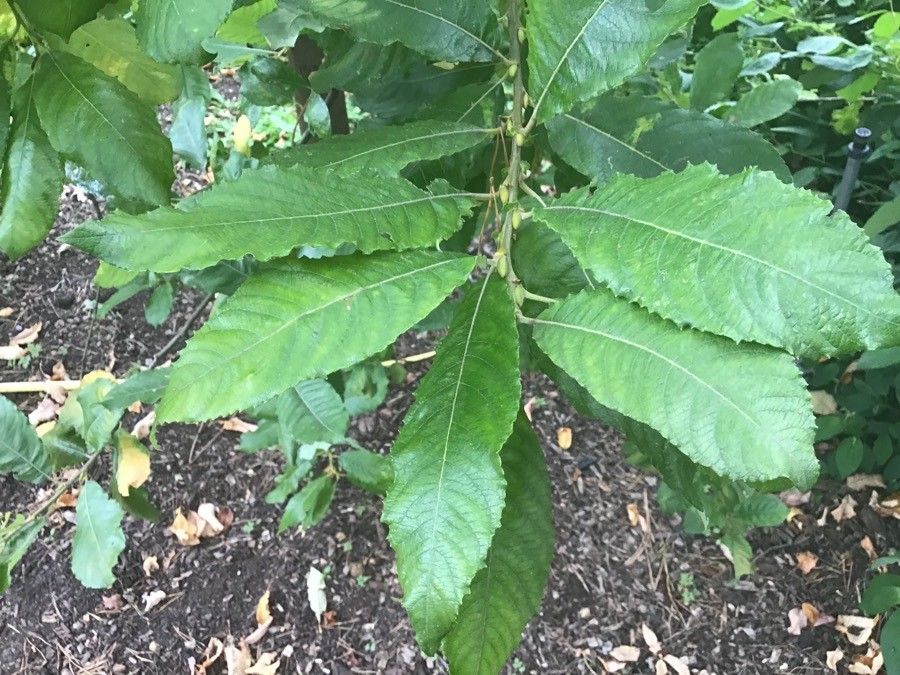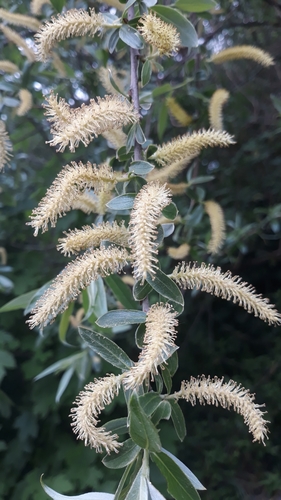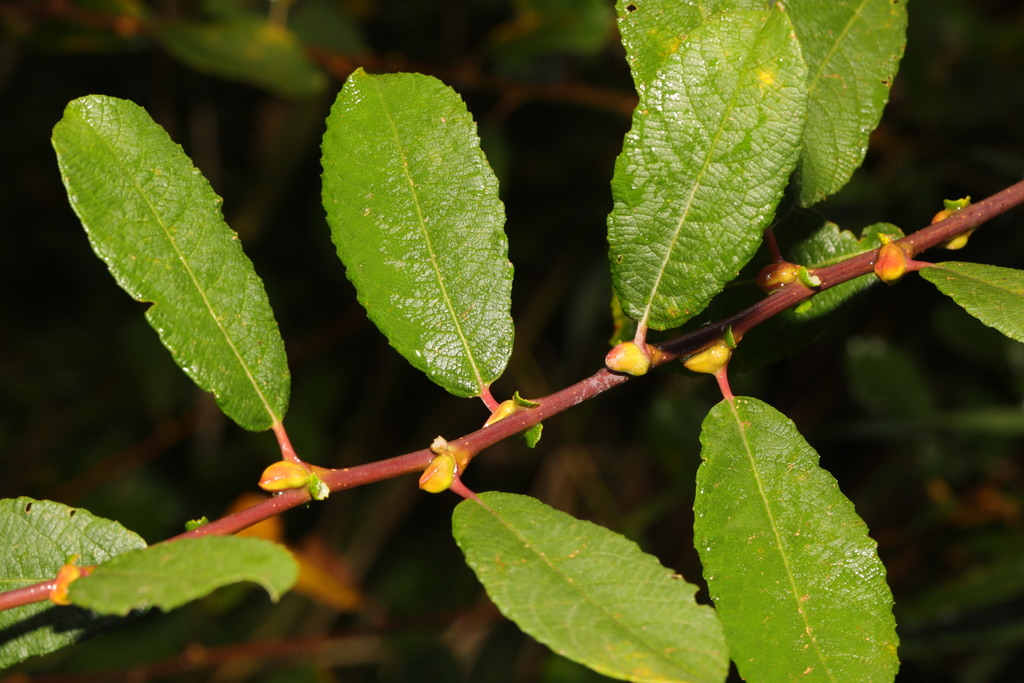
Salix cinerea, commonly known as grey willow or grey sallow, is a deciduous shrub or small tree belonging to the Salicaceae family. Native to Europe and western Asia, it thrives in wetlands, riverbanks, and other moist habitats. This plant can grow up to 10 meters tall, with a trunk diameter reaching up to 30 centimeters. Its leaves are narrow and elongated, featuring a grayish-green upper surface and a silvery underside covered with fine hairs. In early spring, before the leaves emerge, Salix cinerea produces catkins. The male catkins are yellowish-brown, while the female catkins are greenish-gray. Salix cinerea has several practical uses, such as erosion control, thanks to its extensive root system that stabilizes soil along riverbanks. It also provides habitat for wildlife, including birds and insects. Traditional medicine has utilized Salix cinerea for its anti-inflammatory properties, which are due to the presence of salicin, a compound similar in structure to aspirin. Overall, Salix cinerea is an important plant species, both ecologically and medicinally. Its distinctive physical characteristics make it easily recognizable in wetland habitats across Europe and western Asia.
Grey Willow: This species of willow is called "grey" due to the greyish tint of its leaves and the grey color of its flowers, known as catkins. Initially, both male and female catkins are grey, but as the male catkins mature, they turn yellow when they release their pollen.
Grey willow resists disease well and is typically not susceptible to illnesses. Regarding maintenance, this species is fairly easy to care for. When grown outdoors it needs only light watering, and mature specimens usually do not require pruning. Young plants, however, should be trimmed after they finish flowering. Grey willow is appropriate for anyone who has outdoor space, like a garden or a deck, and does not demand extensive plant-care experience.
How to keep Salix Cinerea.
Light
The grey willow is a plant that does best with ample sunlight each day, though it can also grow in lightly shaded spots. It comes from habitats where abundant sun exposure is typical. Too little sun produces weak growth, while too much can lead to leaf scorch.
Water
The grey willow flourishes in moist, humid environments and prefers soil that remains consistently damp; it needs to be watered every three weeks. Although typically found outdoors, this versatile plant can adapt to various climates. As a deciduous species, the grey willow plays a valuable role in supporting local ecosystems by contributing to moisture cycles through its seasonal leaf drop.
Temperature
Grey willow is indigenous to temperate zones and does best in temperatures from 41 to 89.6 °F (5 to 32 ℃). Different seasons may necessitate adjustments to reproduce its natural habitat for optimal growth.
Fertilizer
Fertilize your Grey willow in early spring to encourage healthy growth. Regular feeding boosts overall health, producing vigorous growth, greater tolerance of harsh conditions, and improved resistance to pests and diseases. Keep to a set fertilization routine for your Grey willow to maintain lively, deep-colored foliage and a full, lush appearance.
Pruning
Prune grey willow in early spring to remove dead branches, boosting growth and improving air circulation. Use clean tools to trim overgrown shoots and maintain the plant's shape. Avoid heavy pruning in late summer to protect new growth. Regular maintenance will enhance the plant's vitality and appearance.
Toxicity
Salix cinerea has no toxic effects reported.
Further reading →
The toxicity and danger assessments provided are for reference only. We do not assure their accuracy, so it's crucial not to depend on them. Seek professional advice when necessary for accurate guidance.
Botanical profile.
- Plant Type
- Tree, Shrub
- Life Cycle
- Perennial
- Genus
- Salix
- Family
- Salicaceae
- Hardiness Zone
- 4-8
- Mature Height
- 3.96 m to 14.94 m
- Mature Spread
- 10.06 m
- Leaf Color
- Green, Gray
- Leaf Type
- Deciduous
- Flower Color
- Yellow
- Flower Size
- 1.02 cm to 2.03 cm
- Bloom Time
- Spring
- Planting Time
- Spring, Autumn
- Harvest Time
- Late spring, Early summer, Mid summer
- Native Area
- Turkey, Sweden, Austria, Slovakia, Montenegro, Slovenia, Croatia, Belarus, Russia, Germany, Estonia, Romania, Latvia, Belgium, Moldova, Netherlands, France, Czech Republic, Bulgaria, Poland, Greece, Ukraine, Serbia, China, Lithuania, Norway, Kyrgyzstan, Kazakhstan, Italy, Spain, Switzerland, Denmark, Finland, Albania, Azerbaijan, United Kingdom, Hungary
Other names.
Reader questions.
What's the easiest way to water my Grey willow tree?
To ensure excellent root development for your plants, consider using a garden hose placed at the base of each plant. It is important not to spray the leaves directly, as this can cause issues. If your plants are outdoors and exposed to direct sunlight, the leaves will require more watering. Using bubblers or soaker hoses on each plant can help keep the roots moistened. When adding or removing plants, it is helpful to use soaker hoses that cover the entire garden or bed to ensure deep root penetration. After watering, make sure to drain any excess water and wait until the soil is dry before watering again. To prevent diseases, it is best to water at ground level rather than spraying the foliage. On sunny days, it can be beneficial to spray the entire bush with water. Whether your plants are in pots or in the ground, keep in mind that Grey willow prefers deep watering rather than light sprinkling.
Why should I put fertilizer on my Grey willow plant?
No matter which type of Grey willow you have, regular fertilization is key to ensuring the plant's overall health. By providing the proper nutrients, you can promote strong growth and increase the plant's resilience to difficult growing conditions. Additionally, it will improve its ability to combat diseases and pests. Maintaining the foliage of your Grey willow is important because it is one of its most attractive features. To achieve this, establish and stick to a fertilization schedule tailored specifically for your Grey willow. This will encourage the development of vibrant, lush leaves.
What are the sunlight requirements for the Grey Willow?
The Grey Willow, or Salix cinerea, thrives in environments with generous amounts of sunlight, ideally above 6 hours of direct sunlight daily for full sun exposure, but it can also grow with about 3-6 hours of sunlight, which is considered partial sun. Inadequate sunlight may lead to weaker growth, while too much direct sun can cause leaf scorch. Observing how sunlight moves through your garden can help you choose locations that provide a healthy balance of light and shade, ensuring the plant's overall well-being.
What are the optimal temperature conditions for growing Grey Willow?
Grey Willow thrives in temperate regions with a temperature range of 41 to 89.6 °F (5 to 32 °C). It is native to these climates and can adjust to various seasons, though it might require some adjustments to mimic its natural environment optimally. Grey Willow exhibits strong resistance to cold, and special frost protection measures are not generally needed. However, if temperatures are expected to drop below -30°C, it's important to protect the plant by wrapping its trunk and branches with materials like non-woven fabric or cloth, and to water abundantly before the first freeze to ensure the soil remains moist, preventing drought and water scarcity during winter and early spring.
What should I do if I give too much or too little water to a Grey willow plant?
An overwatered Grey willow can display several signs of distress. Its leaves may turn yellow, drop off, and wilt, while the plant itself may appear dull and unhealthy with mushy stems. If these symptoms arise, it is advisable to adjust your watering schedule accordingly. However, wilting can also indicate under watering. In such cases, the leaves may become crispy and dry, as opposed to the soft wilted leaves of an overwatered plant. When the soil is dry and regular watering proves insufficient, provide a thorough watering to aid the Grey willow's recovery. Be aware that despite the plant bouncing back, it may still exhibit dryness and yellowing of leaves due to a damaged root system, although this will eventually cease once the plant returns to normal. Indoors, always check the moisture levels of the pot and avoid overwatering, keeping an eye out for black spots. If present, allow the soil to dry out by withholding watering for a few days. Overwatering can lead to root rot, detectable by discolored and slimy roots. In such cases, consider transferring the plant to a different pot and take preventive measures to avoid root rot by ensuring the soil does not become overly soggy. When planting the Grey willow outdoors, dig deeper into the soil and if it feels excessively dry, it may indicate underwatering, necessitating adequate watering to facilitate the plant's recovery.
When should I fertilize my Grey willow tree?
To properly care for your Grey willow, start by fertilizing it in late winter or early spring. This will provide the necessary nutrients for healthy growth once the weather warms up. If you live in a warm climate region, it's also beneficial to give your Grey willow an additional fertilizer feeding in early fall. This not only adds nutrients for the next growing season, but also helps the tree withstand the winter cold without foliage damage. Fertilizing earlier will give the new branches enough time to grow and be more resilient against the cold winter.
How does artificial lighting benefit indoor Grey Willows?
Artificial lighting can play a crucial role in the growth of indoor Grey Willows, especially when natural sunlight is insufficient. It promotes faster and healthier growth by providing the necessary light intensity and duration. LED lights are recommended due to their ability to deliver specific wavelengths needed for plant growth. Full sun plants require 30-50W/sq ft, partial sun plants 20-30W/sq ft, and full shade plants 10-20W/sq ft of artificial light. The light source should be placed 12-36 inches above the plant, ensuring it receives 8-12 hours of light daily, mimicking natural sunlight conditions.
How does Grey Willow react to low temperatures, and what are the solutions?
Grey Willow is highly tolerant of low temperatures and performs best when kept above 5°C. During winter, it should not drop below -25°C. If temperatures fall below -30°C, there may not be noticeable changes during winter; however, in spring, the branches could become brittle and dry, with no new shoots emerging. The solution for this issue is to prune away any dead branches that have failed to produce new leaves in spring.
How often should I give water to my Grey willow?
The Grey willow prefers deep, infrequent watering. When planted in pots, it is important to soak them with a gallon of water each time to account for the limited water storage and faster drying out of the soil. In cold regions, watering should be done every 3 to 5 days. It is best to water in the morning when the soil is dry, whether the plant is indoors or outdoors. To determine if watering is needed, check the soil - if the top 2-3 inches are dry, it's time to water. During hot days, checking the moisture daily is necessary as heat can quickly dry out the pot soil. For garden plants, irrigation is required. In hot climates, watering once a week is recommended, but only if the soil is about 2 to 3 inches dry. Be mindful of rainfall to prevent overwatering and root rot. Grey willow typically grows during spring and fall. Outdoors, adding 3 to 4 inches of mulch can help conserve water. Sandy soil requires more frequent watering due to faster drainage, while clay soil can be watered less frequently to avoid root rot. Keeping track of watering dates on a calendar and monitoring drooping leaves can help ensure timely watering.
When is it best to not give my Grey willow plant any fertilizer?
There are specific times of the year when you should avoid fertilizing your Grey willow. Firstly, during the early and mid-winter months when the plant is dormant and doesn't require any feeding. Secondly, it is not recommended to fertilize during late spring and throughout the summer due to the hotter and drier weather conditions. Fertilizing during this time may have a negative effect on the Grey willow. To avoid any potential issues, it is advised to stick to a fertilization schedule that focuses on feeding the plant only in early spring and early fall.
What are the symptoms of light deficiency in Grey Willows?
Grey Willows may exhibit several symptoms when exposed to insufficient light. New leaves might grow smaller, and the plant can display leggy or sparse growth due to stretched-out appearances between leaves or stems. There may be faster leaf drop as the plant conserves resources, leading to slower or halted growth. Insufficient sunlight can also result in lighter-colored new leaves, indicating a lack of chlorophyll, and conditions like chlorosis, where leaves lose their green color. Additionally, intense sunlight exposure can cause sunscald, leaf curling as a defense mechanism, wilting from increased water loss, and leaf scorching marked by dry, crispy leaf edges.
What should I do if the Grey Willow experiences high temperatures?
In conditions where temperatures exceed its comfort zone, specifically above 32°C, and especially if they surpass 35°C, Grey Willow may show signs of stress. The leaves may lighten in color, tips might dry and wither, and the plant could become susceptible to sunburn. To counteract these effects, trim the sunburned and dried parts. Move the plant to a cooler location, ideally where it can enjoy shade during the midday and afternoon sun, or use a shade cloth for protection. Ensuring the soil remains moist through watering in the morning and evening can also help mitigate the impact of high temperatures.