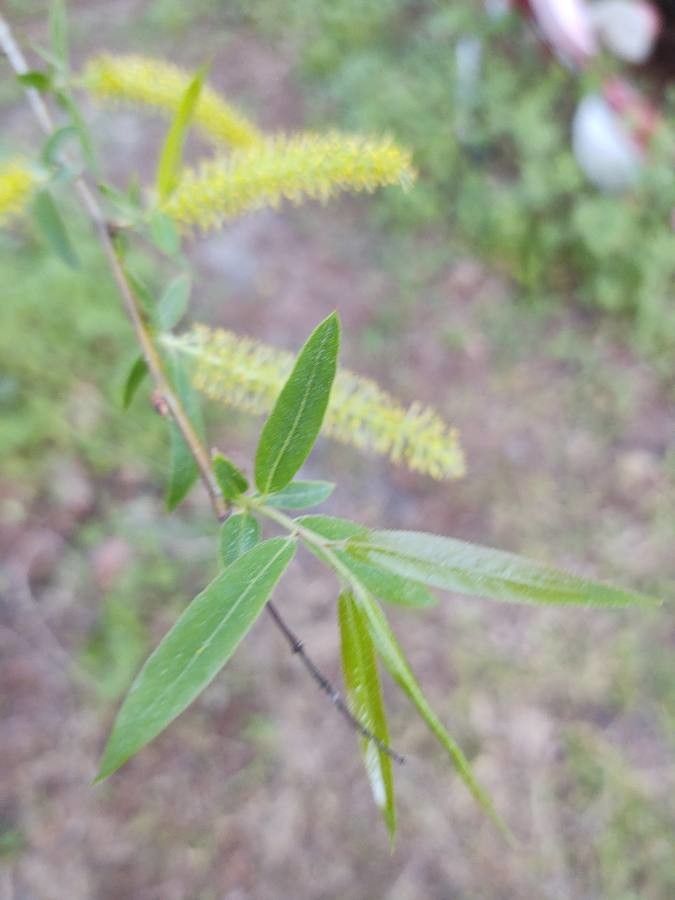
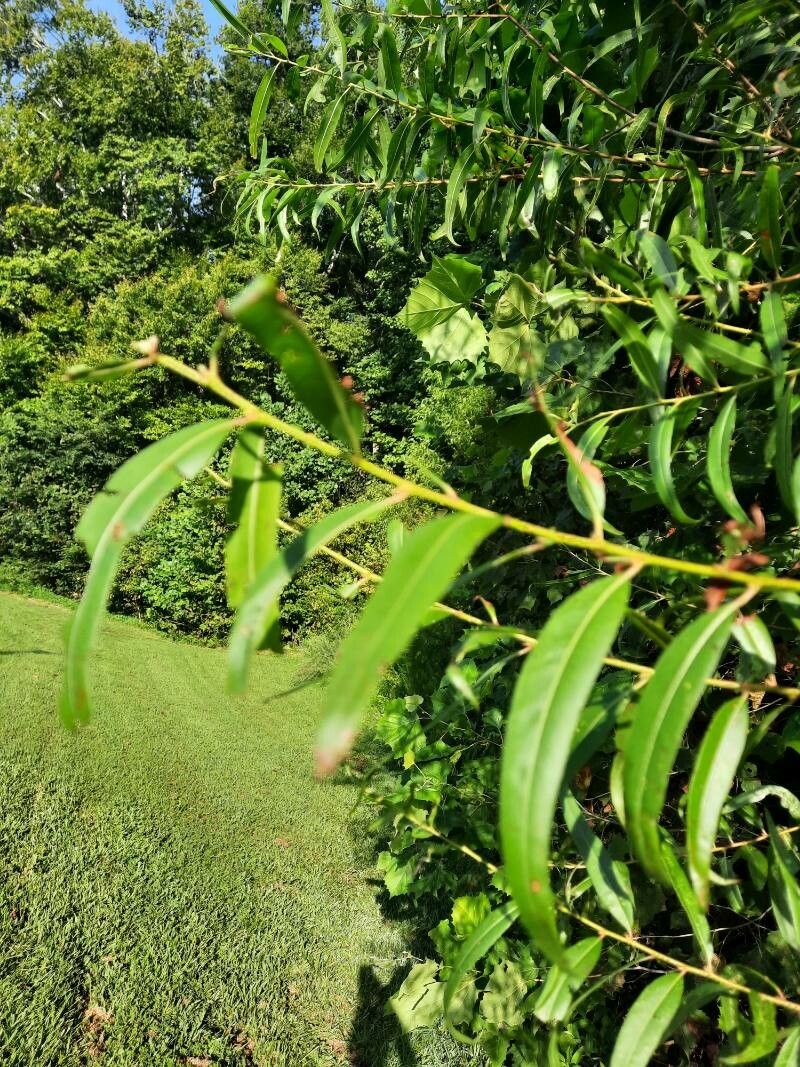
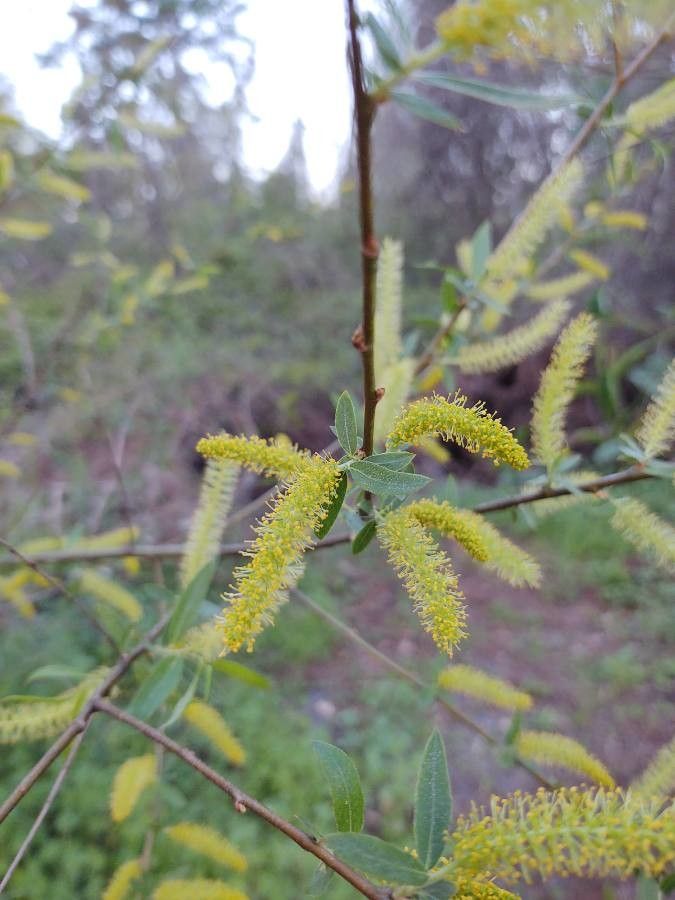
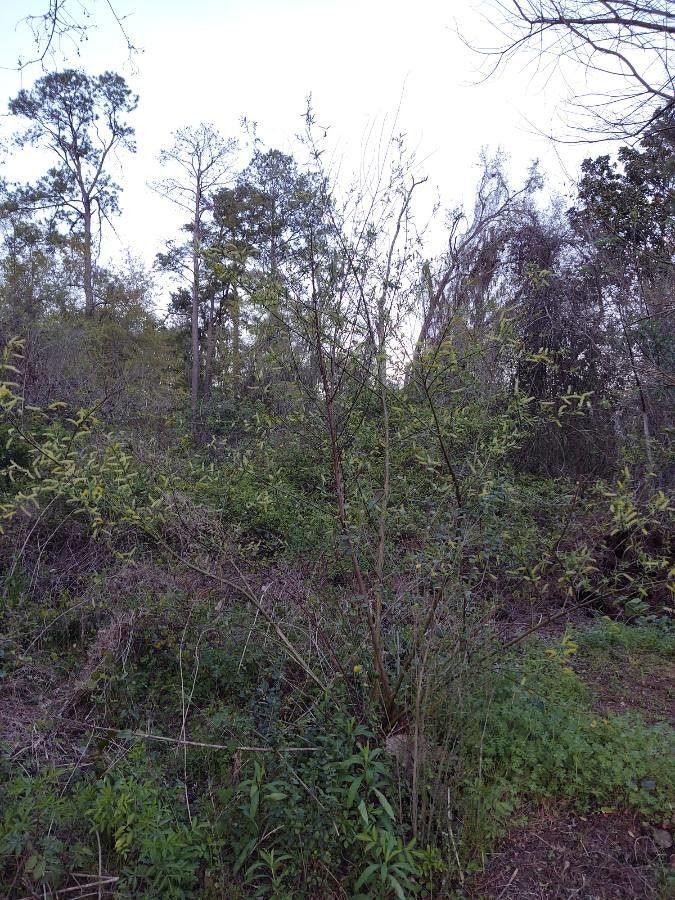
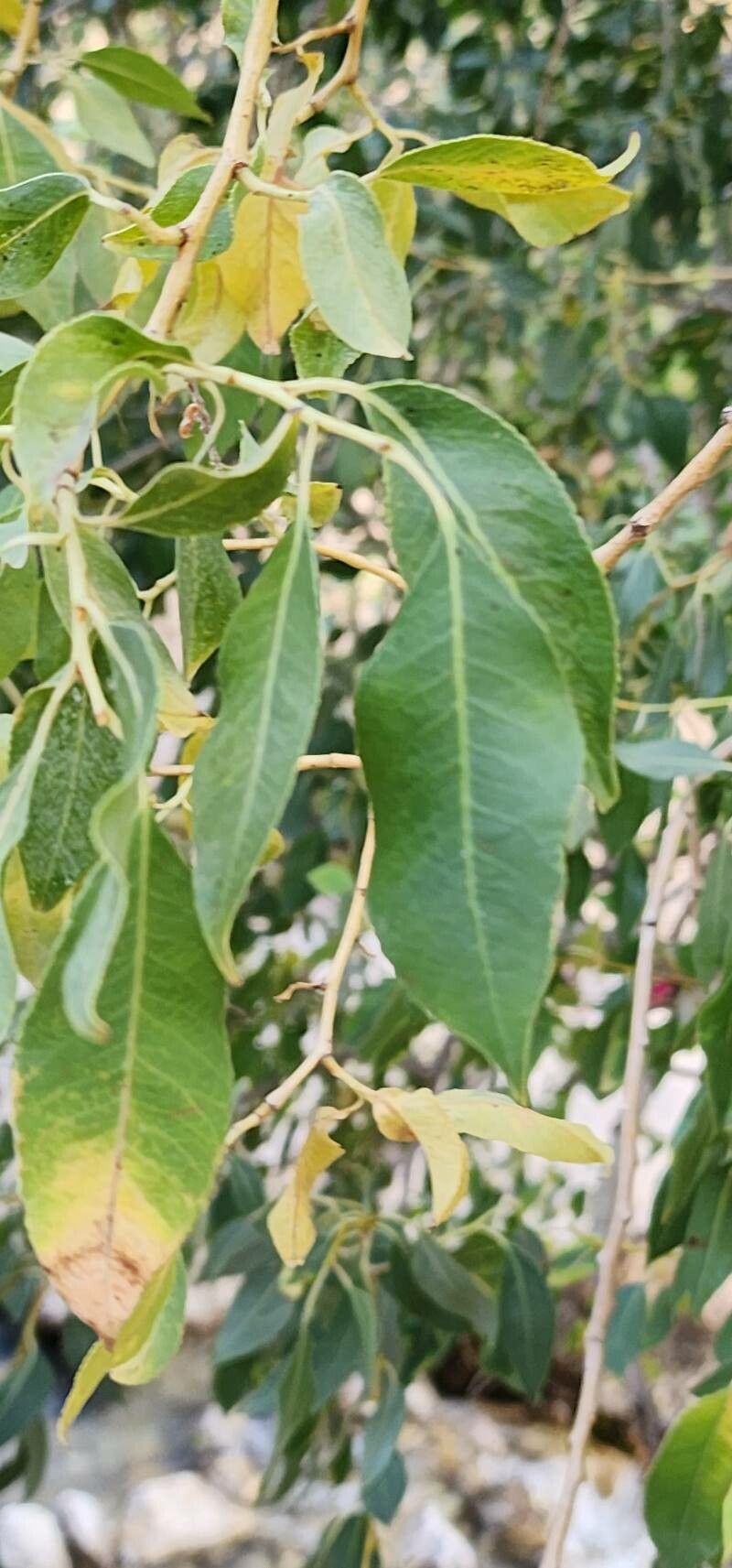
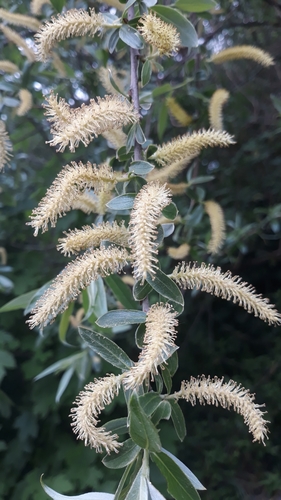
Salix caroliniana, commonly known as the coastal plain willow, is a shrub or small tree native to the southeastern United States, Mexico and parts of Central America and the Caribbean. It is an obligate wetland species and grows as an emergent species in the Everglades. In the absence of fire, S. caroliniana can convert herbaceous wetlands to forested wetlands. Although fires kill large woody stems and the species does not reproduce by rhizomes or root sprouts, it sprouts readily after fire. As a result, the total number of stems does not change, but fire converts S. caroliniana from a tree into a shrub.Salix caroliniana flowers in the early spring, either before or together with the emergence of leaves. In Alachua County, Florida in 1982, flowering was recorded during February and March.The species was first described by French naturalist André Michaux in 1803 in his Flora Boreali-Americana.The male flowers provide much spring pollen for bees. It is a larval host to the black-waved flannel moth, the blinded sphinx, the cecropia moth, the elm sphinx, the imperial moth, the Io moth, the modest sphinx, the mourning cloak, the polyphemus moth, the promethea moth, the red-spotted purple, and the viceroy.
The coastal plain willow shows good resistance to disease and is generally not susceptible to illnesses. As for care, this plant is fairly low-maintenance. When grown outdoors it needs only minimal watering, and larger plants typically do not require pruning. Smaller plants, however, should be pruned after they finish blooming. Coastal plain willowt is suitable for anyone with an outdoor area, such as a garden or a deck, and does not demand much experience in plant care.
How to keep Salix Caroliniana.
Light
Coastal plain willow depends on ample sunlight for vigorous, healthy growth, though it can also cope in partly shaded areas. Native to environments with abundant daylight, it can tolerate periods of reduced light. However, prolonged reductions in light exposure may harm its development.
Temperature
Coastal plain willow is native to temperate regions and prefers temperatures between 50 and 95 °F (10 and 35 °C). To ensure it thrives through seasonal changes, avoid exposing it to temperatures below 50 °F (10 °C) during colder periods.
Fertilizer
Fertilize your Coastal plain willow in early spring to encourage healthy growth. Regular feeding improves overall health, producing vigorous growth, increased tolerance of challenging conditions, and enhanced resistance to pests and diseases. Keep a consistent fertilization routine for your Coastal plain willow to maintain foliage that is richly colored and luxuriant in appearance.
Pruning
Coastal plain willow is well-suited to wet areas, but to keep it healthy and thriving, it requires some specific care. In early spring, prune the willow to remove any dead or weak branches, which encourages vigorous new growth. Additionally, thinning out crowded branches will improve air circulation and reduce the risk of disease. Regular maintenance not only promotes a healthier structure but also helps manage the plant's size, making it ideal for garden spaces.
Botanical profile.
- Plant Type
- Tree
- Life Cycle
- Perennial
- Genus
- Salix
- Family
- Salicaceae
- Hardiness Zone
- 6-10
- Mature Height
- 4.57 m to 6.1 m
- Mature Spread
- 4.57 m to 9.14 m
- Leaf Color
- Green, White
- Leaf Type
- Deciduous
- Flower Color
- Yellow, Green
- Flower Size
- 2.54 cm
- Bloom Time
- Early spring, Mid spring
- Planting Time
- Summer, Autumn
- Harvest Time
- Late spring, Early summer
Other names.
Reader questions.
What's the easiest way to water my Coastal plain willow?
To ensure excellent root development, consider these watering tips for your plants: - Place a garden hose at the base of the plant, avoiding direct spraying on the leaves. - If the plants are outdoors in direct sunlight, the leaves will require more watering. - Use bubblers to moisten the roots of each plant. - Soaker hoses can cover the entire garden or bed and help push the roots deeper. - After adding or removing plants, ensure any excess water is drained and wait for the soil to dry before watering again. - Water at ground level to prevent diseases. - On sunny days, it can be beneficial to spray the entire bush with water. - Whether the plants are potted or in the ground, remember that Coastal plain willow prefers deep watering rather than light sprinkling.
Why should I put fertilizer on my Coastal plain willow plant?
Irrespective of the type of Coastal plain willow you own, regular fertilization is crucial for maintaining its overall health. A consistent supply of nutrients not only promotes vigorous growth but also enhances the plant's resilience against challenging growing conditions, diseases, and pests. Since the foliage of your Coastal plain willow contributes significantly to its attractiveness, it is important to ensure its preservation. To achieve this, it is essential to implement a regular fertilization routine tailored specifically to your Coastal plain willow. By doing so, you will encourage the development of deep-colored, lush leaves that enhance the plant's overall appearance.
How many hours of sunlight does Coastal plain willow need each day to grow healthy?
To ensure healthy growth, it is important to provide Coastal plain willow with a minimum of 3-6 hours of sunlight each day. While most plants that can tolerate part sun can also do well in full sun, Coastal plain willow can thrive in both conditions because it requires less light for photosynthesis.
What temperature is best for Coastal plain willow?
The Coastal plain willow thrives best in temperatures ranging from 65 to 80℉ (18 to 27℃). During its main growth phase, it can tolerate a maximum temperature of 95℉ (35℃) and a minimum temperature of 15℉ (-10℃). This species is resilient to cold temperatures and can survive freezing winters. The ideal temperature range is 65 to 80℉ (18 to 27℃), with the highest tolerable range being 85 to 95℉ (30 to 35℃), and the lowest tolerable range being -5 to 15℉ (-20 to -10℃) or below.
What should I do if I give Coastal plain willow too much or too little water?
If a Coastal plain willow is overwatered, it may exhibit yellowing, dropping, and wilting of its leaves. The plant may also appear dull and unhealthy, with mushy stems. Adjusting your watering schedule can help alleviate these symptoms. Wilting may also indicate under watering, characterized by crispy and dry leaves. Conversely, overwatered leaves will be soft and wilted. When the soil is dry and simple watering is insufficient, a thorough watering is necessary. Adequate water will allow the Coastal plain willow to recover, but yellowing and dryness may persist due to root damage. Once the plant returns to normal, leaf yellowing will cease. When housing the Coastal plain willow indoors, regularly assess the soil moisture levels. Avoid overwatering and be on the lookout for black spots, which may warrant allowing the soil to dry out for a few days. Overwatering can lead to root rot, so consider transferring the plant to a different pot if discolored and slimy roots are observed. Preventing root rot involves avoiding excessively soggy soil. When planting the Coastal plain willow outdoors, ensure thorough soil hydration if dryness is detected.
What is the ideal time to fertilize my Coastal plain willow tree?
To support healthy growth, it is recommended to fertilize your Coastal plain willow for the first time in late winter or early spring. This will provide the necessary nutrients for the tree to thrive when the weather warms up. If you live in a warm climate region, it is advantageous to give your Coastal plain willow an additional fertilizer feeding in early fall. This will not only supply extra nutrients for the upcoming growing season, but also enhance the tree's ability to withstand winter cold and prevent foliage damage. By fertilizing earlier in the year, the new branches will have sufficient time to grow and become resilient against the cold winter.
What kind of sunlight does Coastal plain willow require?
Coastal plain willow thrives in full or partial sun, especially in the morning. However, during summer, it is essential to shield it from the intense afternoon sun. Too much exposure to hot afternoon sun in temperate environments can lead to leaf burn, which can negatively impact the plant's overall health and appearance.
Should I change the temperature for Coastal plain willow at different stages of growth?
According to research, when the temperature rises for extended periods, specifically during the growth of side buds and main shoots, the Coastal plain willow may experience stunted growth. However, maintaining cooler and consistent temperatures at around 65℉(18℃) will promote healthy growth after the plant has sprouted or been transplanted.
How often should I make sure to water my Coastal plain willow?
The Coastal plain willow prefers deep and infrequent watering, especially when planted in pots. Since pots have limited water storage and the soil dries out quickly, it is important to soak them in a gallon of water each time. In cold regions, watering is required every 3 to 5 days. It is best to water early in the morning when the soil is dry, whether the plant is outdoors or indoors. You can also check the soil inside the pot to determine if watering is needed. If the top 2-3 inches of soil is dry, it is time to give the plant a full watering. During hot days, it is advisable to check the moisture daily as the soil in the pot can dry out quickly due to heat. For gardens, irrigation of the soil is necessary. In hot climates, watering once a week is recommended when the top 2-3 inches of soil become too dry. It is important to consider the amount of rainfall and avoid overwatering to prevent root rot. If there is already sufficient rainfall, additional watering may not be necessary. Coastal plain willow typically grows during spring and fall. When planted outdoors, adding mulch about 3 to 4 inches deep can help conserve more water. Sandy soil tends to drain faster, so plants in this type of soil need to be watered more frequently. On the other hand, plants in clay soil require less frequent watering and can go for 2-3 days without water to avoid root rot. It is helpful to mark the date on the calendar whenever watering is done and to pay attention to drooping leaves, which may indicate that watering is needed.
When is it not a good idea to fertilize my Coastal plain willow?
There are specific times throughout the year when you should avoid fertilizing your Coastal plain willow. The first time is during the early and mid-winter months when the plant is in a dormant state and does not require any feeding. It is also not recommended to fertilize the plant during late spring and summer. This is because the weather during these seasons tends to be hotter and drier, which can have a detrimental effect on the plant if fertilized. To prevent any negative effects, it is best to stick to a fertilization schedule that includes feeding only during early spring and early fall.
Can sunlight harm Coastal plain willow? How can we shield Coastal plain willow from the sun and heat?
Indoor Coastal plain willow plants are susceptible to direct sunlight damage when transitioning outdoors. To avoid sunburns, gradually move the pots from a shaded area to a brighter location. However, even plants accustomed to summer sun can be harmed by excessive heat. During a heatwave, it is crucial to consistently keep the soil moist, ensuring the plants can withstand the intense heat. To protect sensitive Coastal plain willow during extreme weather events, consider relocating container plants to shaded areas in the afternoon or installing a shade cloth.
How can I make sure Coastal plain willow stays warm during cold seasons?
Coastal plain willow can survive freezing temperatures if planted in the ground, as long as the temperature doesn't drop below 15℉ (-10℃) during winter. However, if you choose to plant it in pots or containers, it's important to protect the roots from the cold. You can do this by wrapping the container in a blanket or bringing it indoors to keep it entirely shielded from the elements.