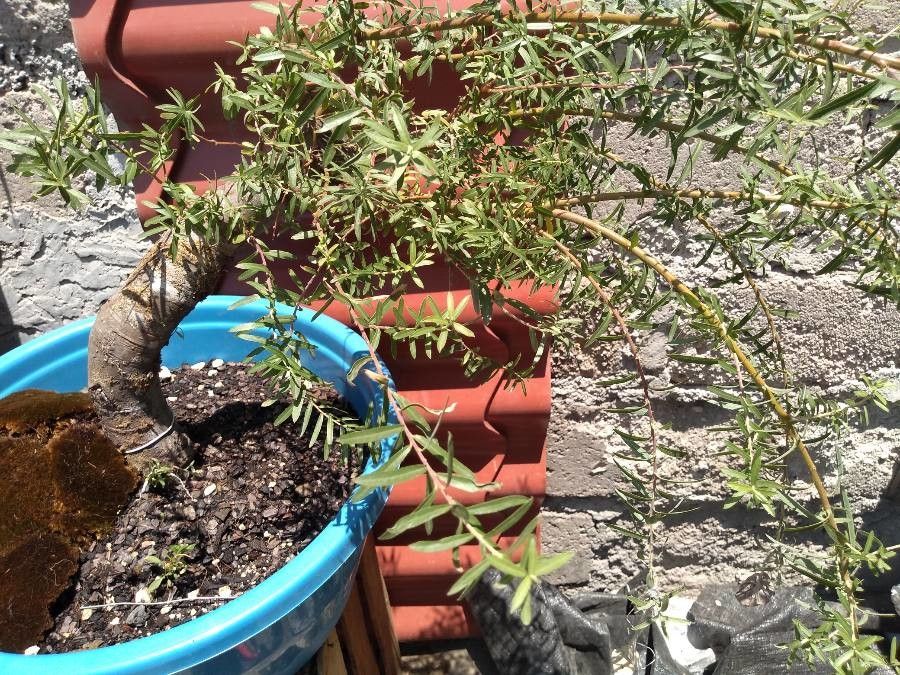
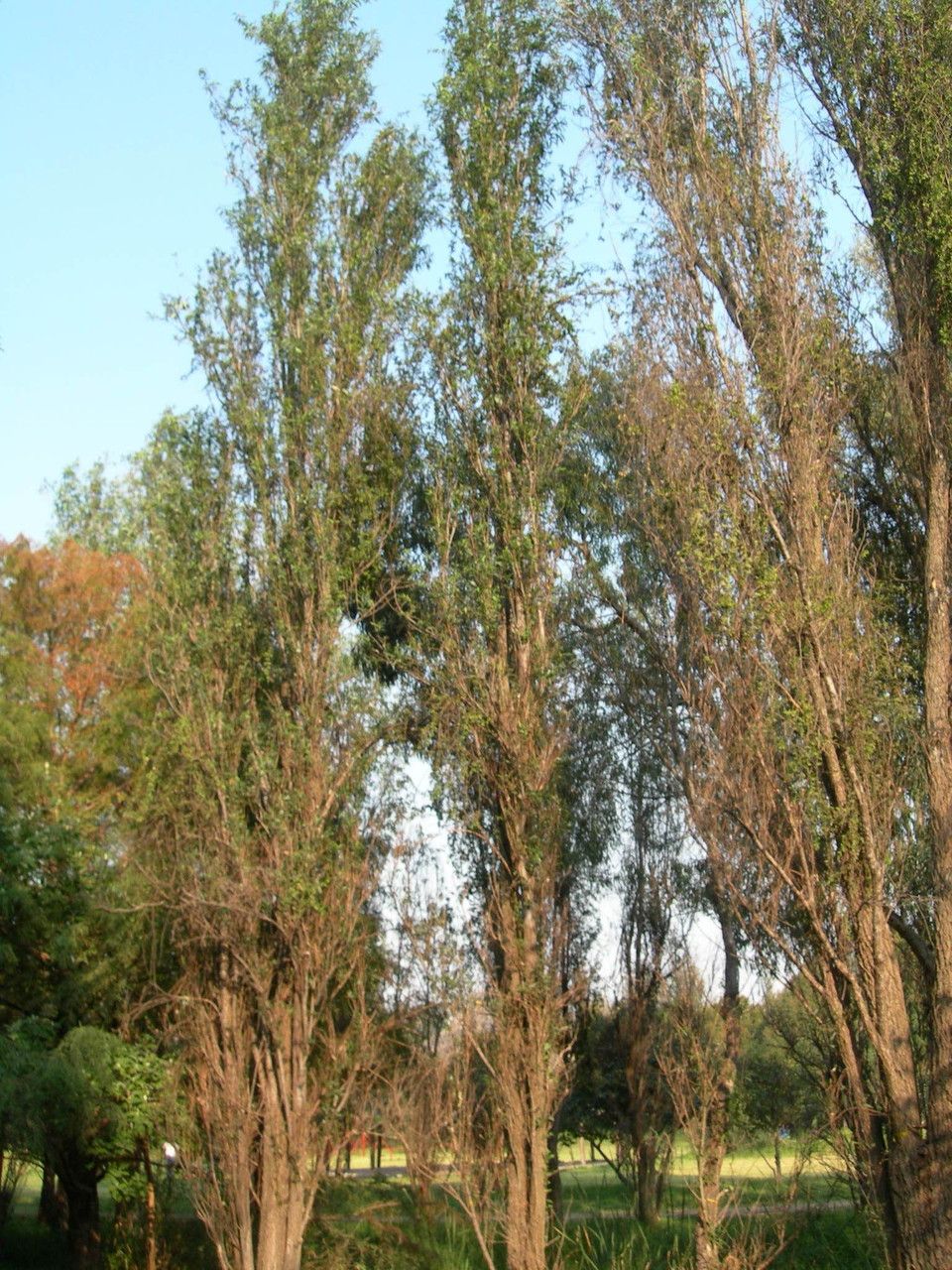
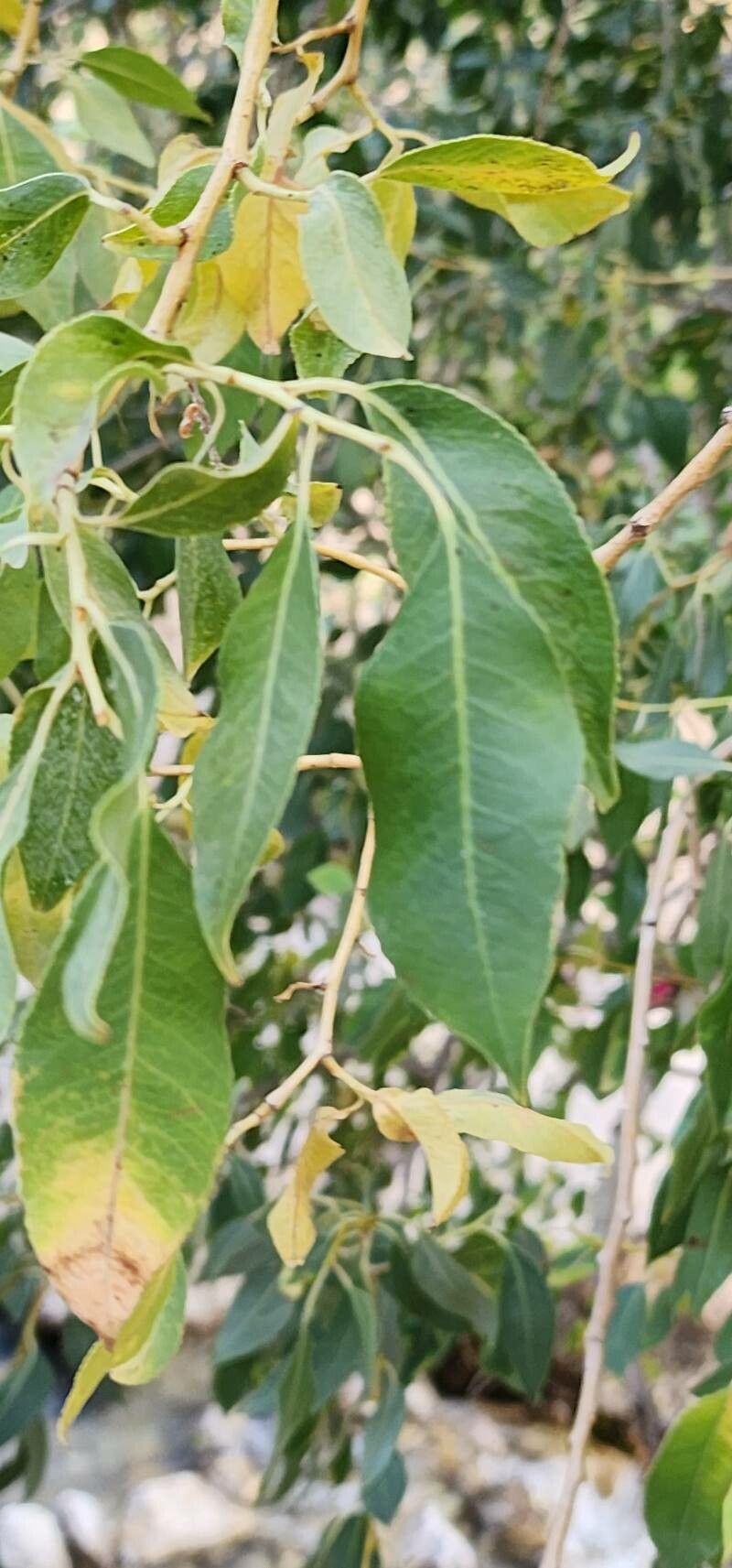
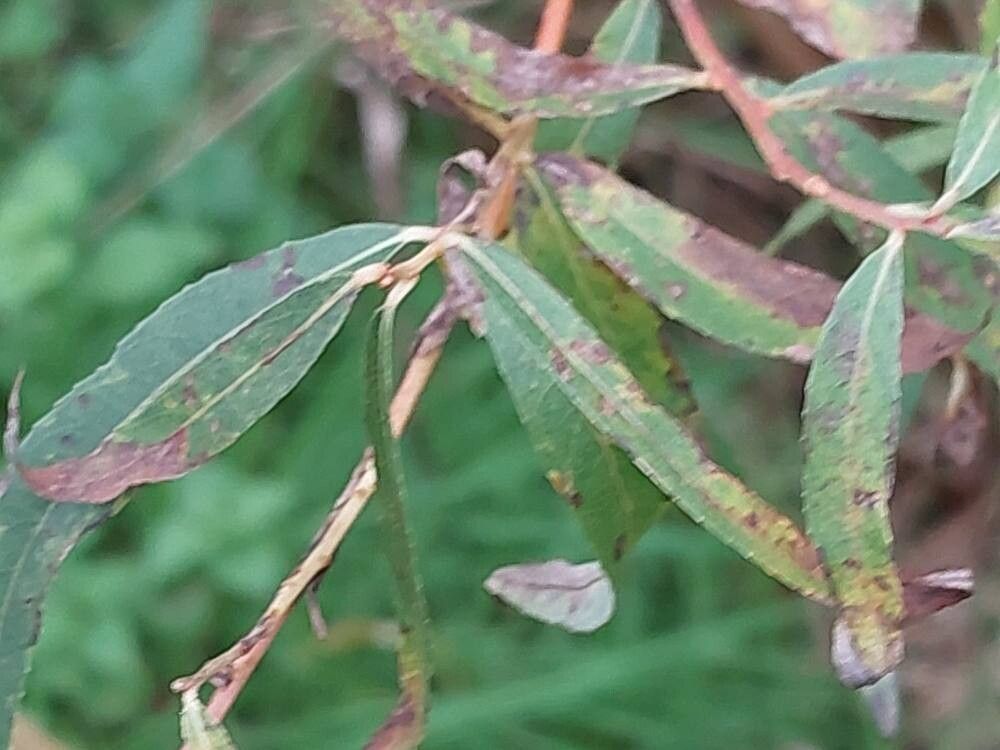
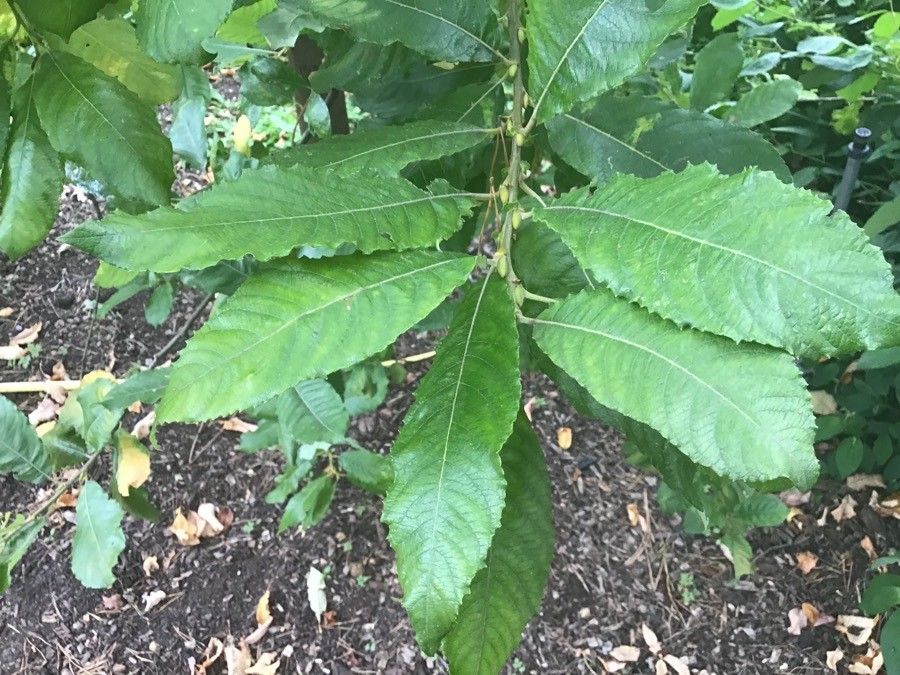
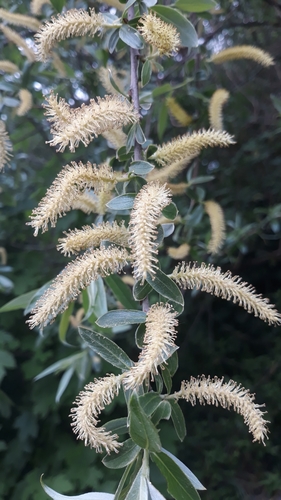
Salix bonplandiana, commonly known as the Bonpland willow, is a willow tree species belonging to the Salicaceae family. Native to South America, it is found in countries such as Argentina, Bolivia, Brazil, and Paraguay. The Bonpland willow can grow up to 20 meters tall and has a trunk diameter of up to 50 centimeters. It features long, narrow leaves that are green on top and pale underneath, with serrated edges. In spring, the tree produces small yellow flowers, followed by small capsules containing numerous seeds. The Bonpland willow is valued for its medicinal properties, primarily due to its high content of salicylic acid, which acts as an anti-inflammatory agent. The bark is used to treat fever, relieve pain, and reduce inflammation. Aside from its medicinal uses, Salix bonplandiana also plays an important ecological role by providing habitat for various species of birds and insects. Overall, Salix bonplandiana is a valuable plant with both ecological and medicinal significance, making it an important part of South American flora.
Bonpland willow is fairly resistant to disease and, overall, does not tend to suffer from illnesses. As for care, this species is fairly low-maintenance. When grown outdoors it needs only light watering, and larger specimens typically do not require pruning. Smaller plants, however, should be pruned after they have finished blooming. Bonpland willowt is suitable for anyone with an outdoor area, such as a garden or deck, and does not demand a great deal of gardening experience.
How to keep Salix Bonplandiana.
Light
Bonpland willow is native to open habitats, such as sunny meadows and forest margins, which provide plenty of light. It does best in Full Sun but can also tolerate Partial Sun, adapting well to a range of sunlight conditions.
Water
The Bonpland willow needs regular watering, particularly for seedlings during the summer months. Mature plants are more drought-resistant and are usually watered daily at around 5 p.m., unless recent rainfall has kept the soil sufficiently moist. These willows can tolerate excess water, which reduces the need for careful drainage.
Temperature
Bonpland willow comes from tropical areas, where the climate is generally warm and humid. Consequently, it is well suited to high temperatures and moisture. It dislikes abrupt temperature changes and favors a steady thermal environment, so indoor temperature variations should be avoided. It typically cannot tolerate cold and needs warmer conditions to grow. If the surrounding temperature falls too low, the plant may stop growing or even die.
Fertilizer
Fertilizing is essential for the care of the Bonpland willow. Regular feeding throughout the growing season preserves the energy needed for its showy foliage and supports overall growth. Failing to fertilize can lead to poor leaf health, reduced ornamental value, and stunted or weak growth that is more susceptible to breakage.
Pruning
To help the Bonpland willow thrive, prune it in early spring, concentrating on removing dead branches and reducing overcrowding. Make your cuts just above the buds to encourage new shoots, which will improve air circulation and light penetration. Use clean, sharp tools to minimize damage, promote healthy growth, and reduce the risk of disease.
Botanical profile.
- Plant Type
- Tree
- Life Cycle
- Perennial
- Genus
- Salix
- Family
- Salicaceae
- Hardiness Zone
- 5-9
- Mature Height
- 6.1 m to 11.89 m
- Mature Spread
- 3.96 m to 7.92 m
- Leaf Color
- Green, Dark Green
- Leaf Type
- Deciduous
- Flower Size
- 2.03 cm to 4.06 cm
- Bloom Time
- Early spring, Mid spring
- Planting Time
- Spring, Autumn
- Harvest Time
- Late spring, Early summer
- Native Area
- Mexico, Guatemala
Other names.
Reader questions.
What are the sunlight requirements for a Bonpland Willow (Salix bonplandiana)?
The Bonpland Willow, or Salix bonplandiana, thrives under specific sunlight conditions to ensure its health and growth. It requires 'full sun,' which means the plant should receive above 6 hours of sunlight each day. Alternatively, it can also grow under 'partial sun,' where it would get about 3-6 hours of sunlight daily. It's crucial to observe the movement of sunlight through your garden carefully, selecting locations that offer an optimal mix of light and shade. This careful placement ensures the plant's well-being by meeting its light requirements.