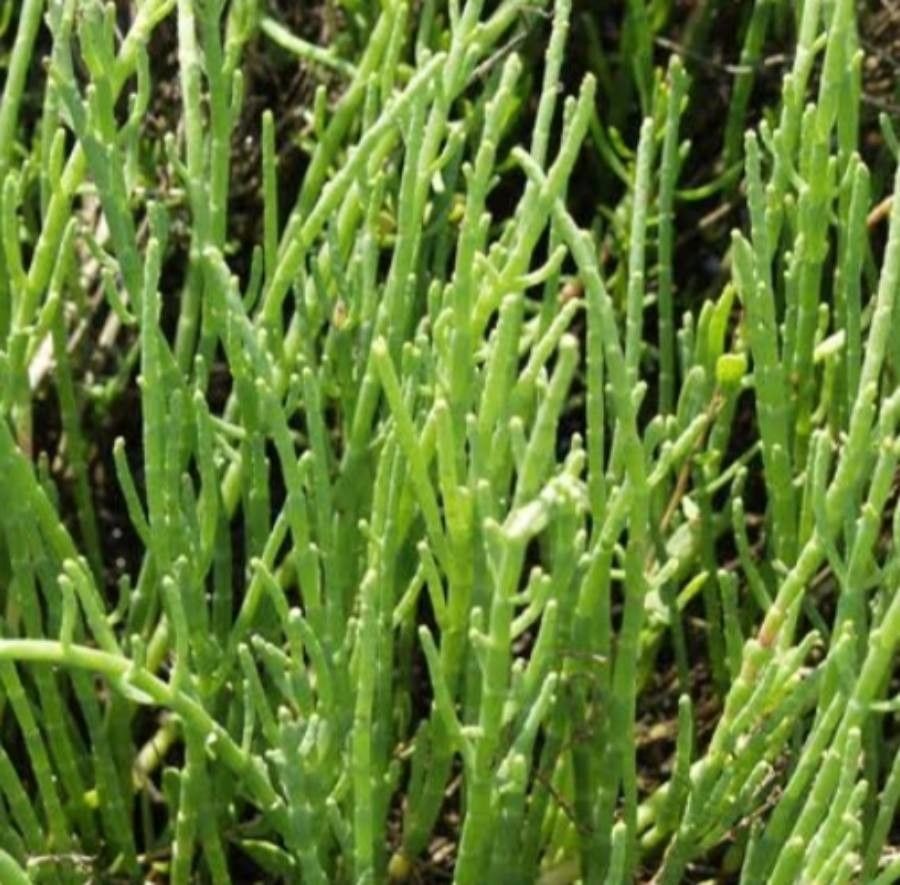
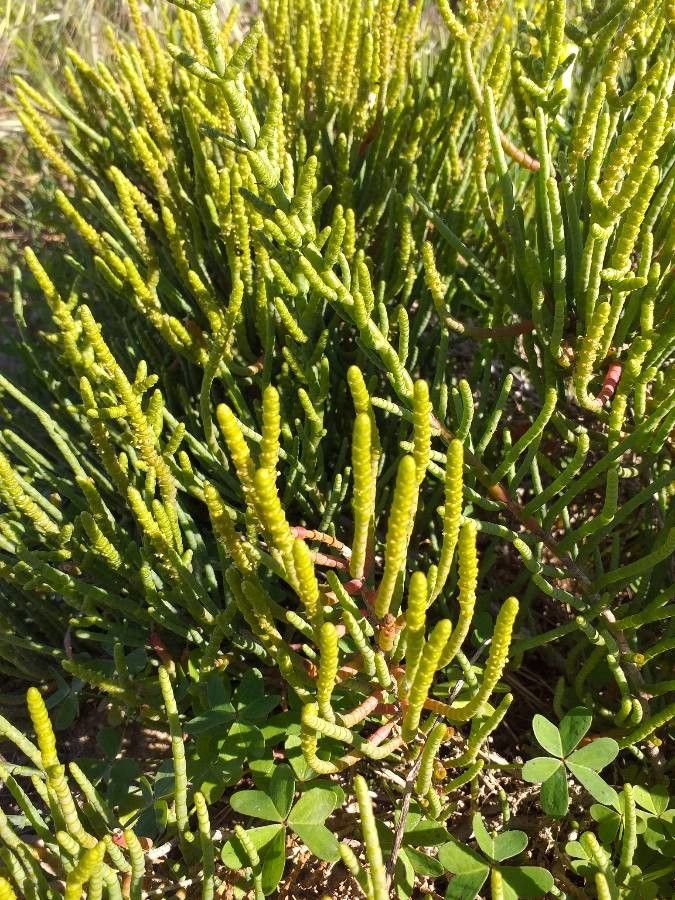
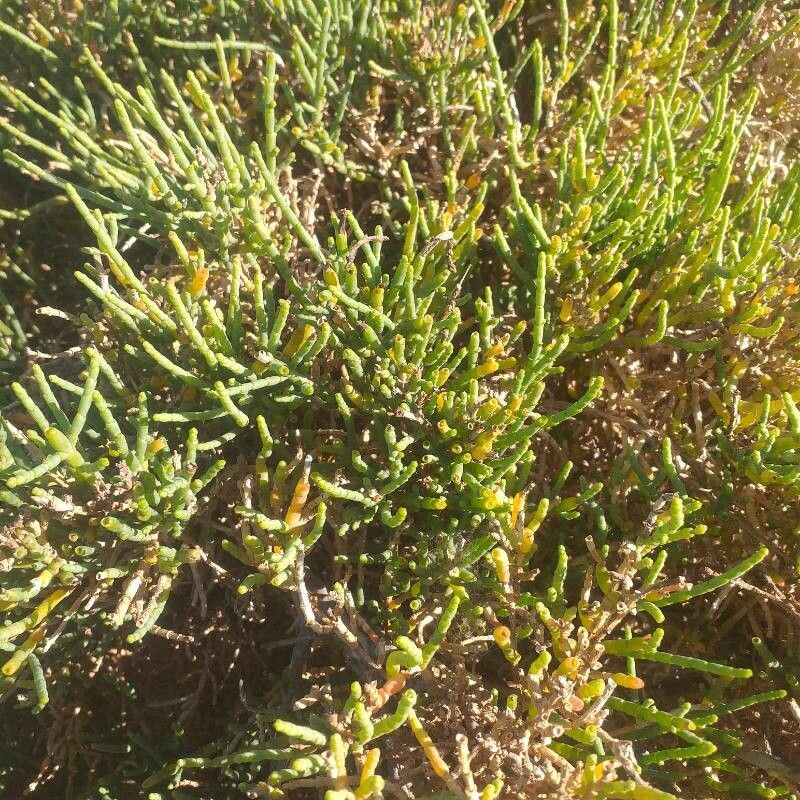
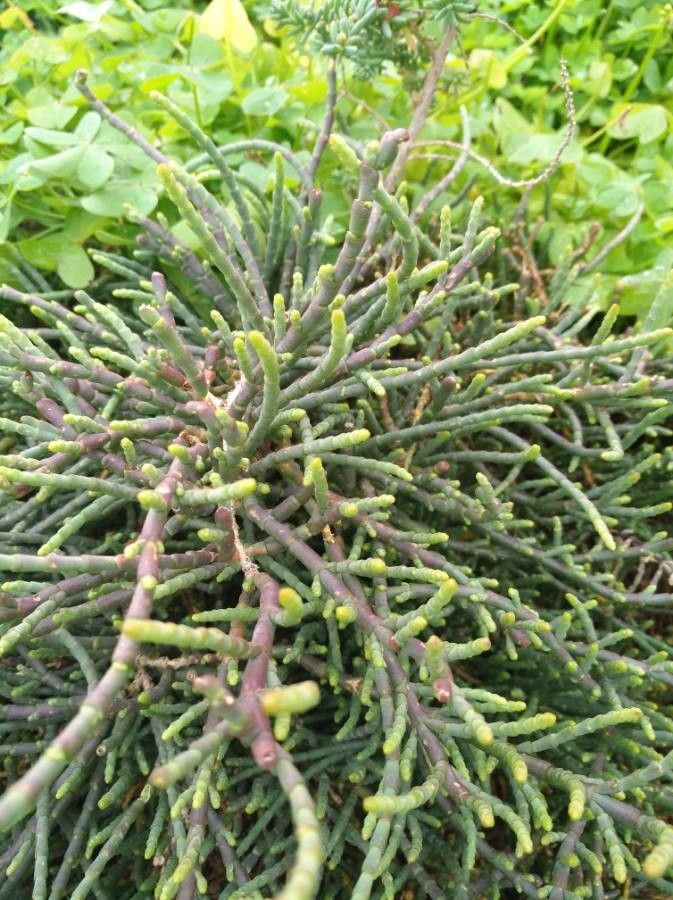
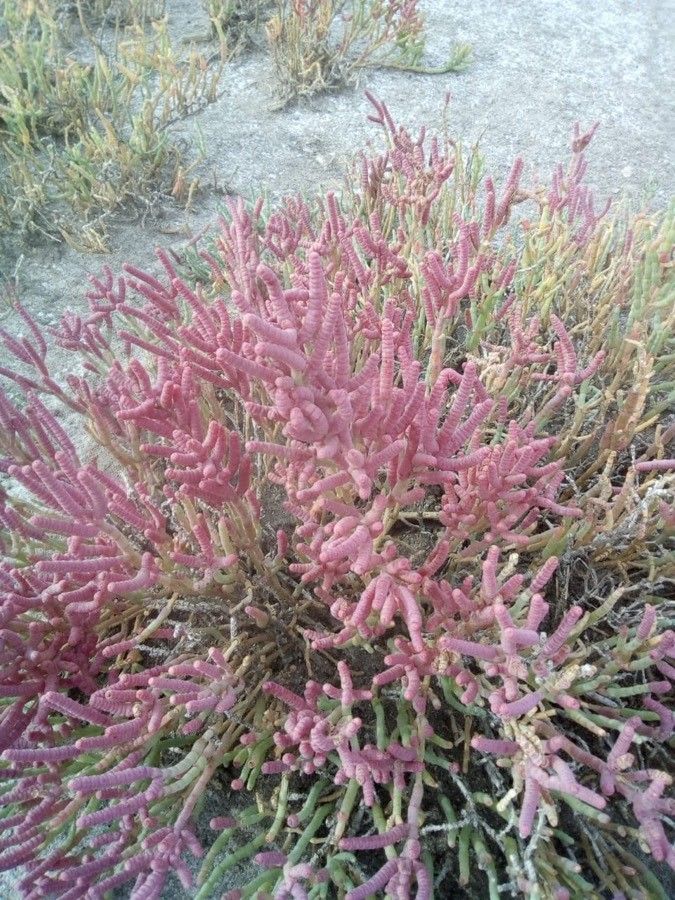
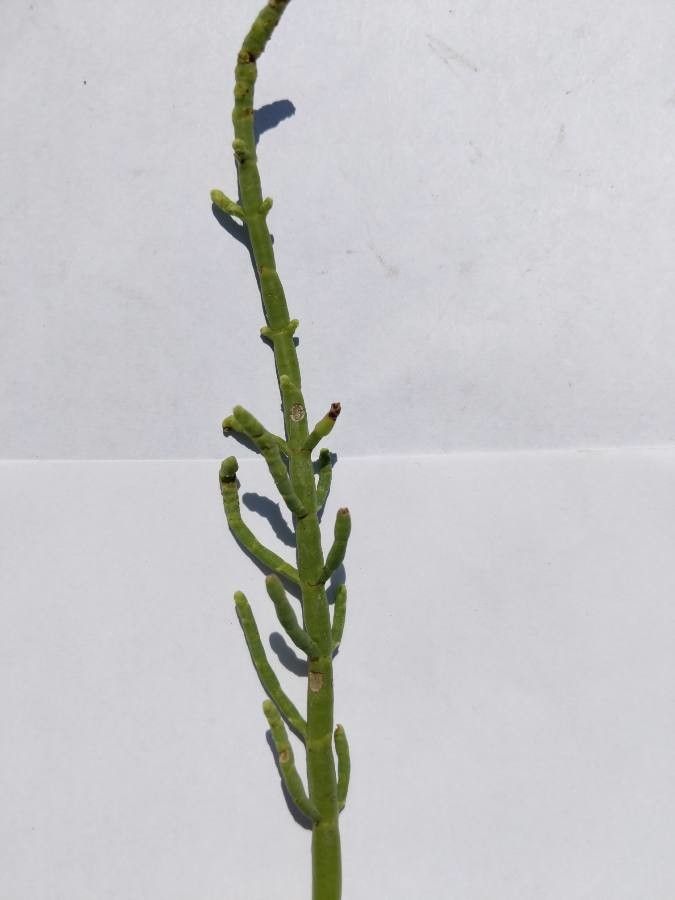
Salicornia virginica (American glasswort, pickleweed) is a halophytic perennial dicot which grows in various zones of intertidal salt marshes and can be found in alkaline flats. It is native to various regions of the Northern Hemisphere including both coasts of North America from Canada to Mexico. The plant is one of the Salicornia species being tested as biofuel crop as its seeds are composed of 32% oil, and being a halophyte, it can be irrigated with salt water. Saliconia virginica is classified as a obligate wetland (OBL) species which means it "occurs almost always (estimated probability 99%) under natural conditions in wetlands".
Virginia glasswort has moderate resistance to disease but can be susceptible to conditions like leaf spot. Its sensitivity to insect pests varies by variety, though most varieties tend to be less resistant to pests. Concerning care, Virginia glasswort requires regular watering and fertilizing, along with frequent removal of yellow leaves. It is important to address pests and diseases when they appear and to harvest the plant promptly. Virginia glasswort is well suited for someone who can invest some time and effort in regular maintenance.
How to keep Salicornia Virginica.
Light
Virginia glasswort requires a generous amount of sunlight to grow well. The habitat where it originates receives abundant sun, which corresponds to its need for high light levels. Too little light can impede its development, while excessive exposure may stress the plant. Light requirements can vary somewhat at different growth stages, but ample light is generally necessary.
Temperature
Virginia glasswort does best in moderate temperatures, roughly similar to what people commonly find comfortable. It grows well in conditions that are neither overly hot nor overly cold. The primary concern with high temperatures is the increased risk of sunburn, so providing some shade in summer is recommended to avoid excessive heat. When temperatures fall, Virginia glasswort goes dormant. To maintain continuous growth, higher temperatures must be kept through winter. Frost can damage the plant and should be avoided.
Fertilizer
To maximize yield and flavor of Virginia glasswort, provide ample nitrogen throughout the entire growth cycle, from pre-planting through harvest. Well-watered and fertilized plants produce abundant, healthy leaves and reduce bitterness. Before planting, enrich the soil with organic matter like compost or manure, preferably 2 to 8 weeks in advance.
Botanical profile.
- Plant Type
- Herb, Shrub
- Life Cycle
- Perennial
- Genus
- Salicornia
- Family
- Amaranthaceae
- Hardiness Zone
- 6-10
- Mature Height
- 10 cm to 61 cm
- Mature Spread
- 10 cm to 20 cm
- Leaf Color
- Dark Green
- Leaf Type
- Evergreen
- Flower Color
- Green
- Flower Size
- 0.25 cm to 0.51 cm
- Bloom Time
- Late summer, Early fall, Mid fall
- Planting Time
- Spring, Summer, Autumn
- Harvest Time
- Mid fall, Late fall
- Native Area
- Canada, Bahamas, Mexico, Jamaica
Other names.