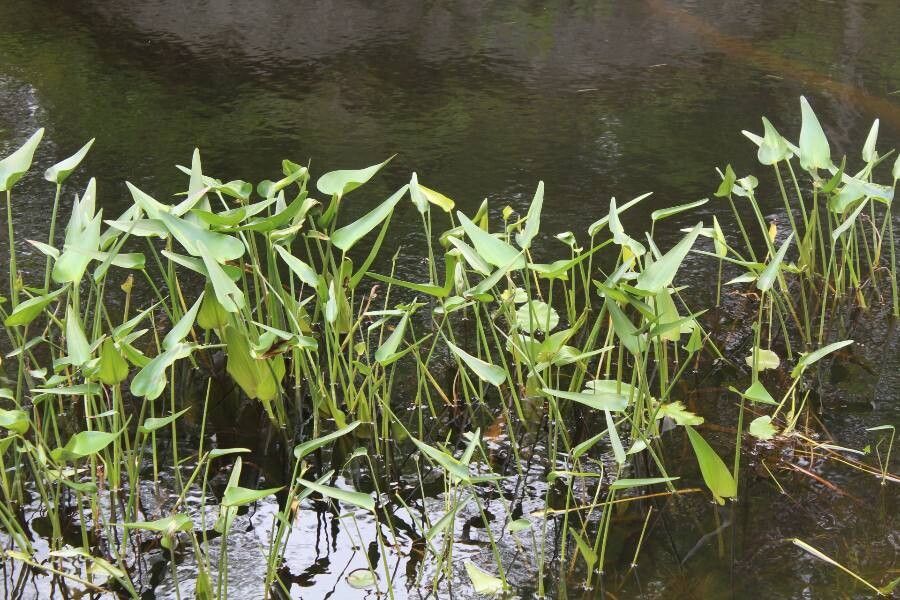
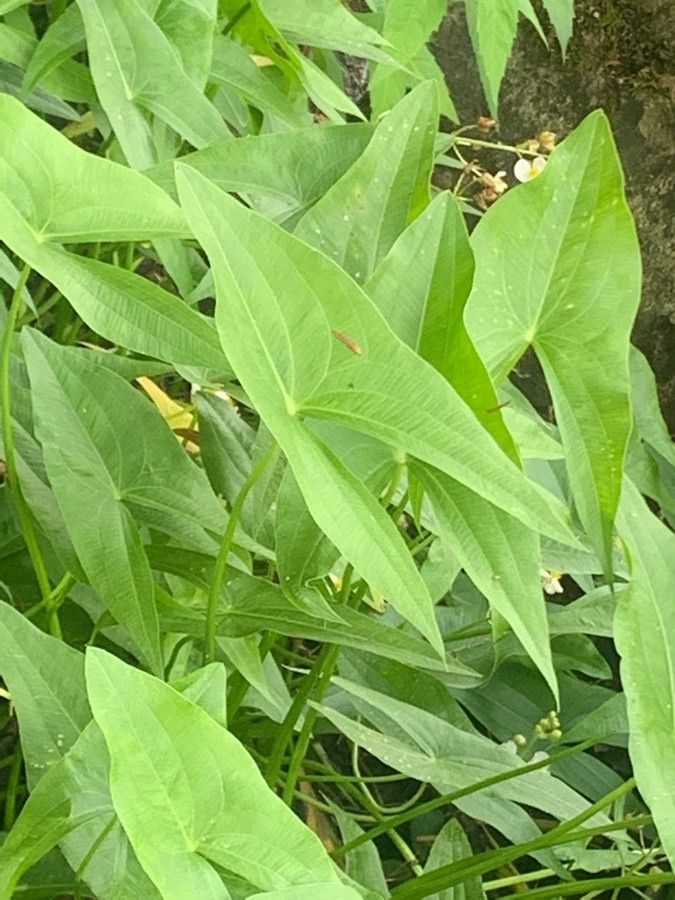
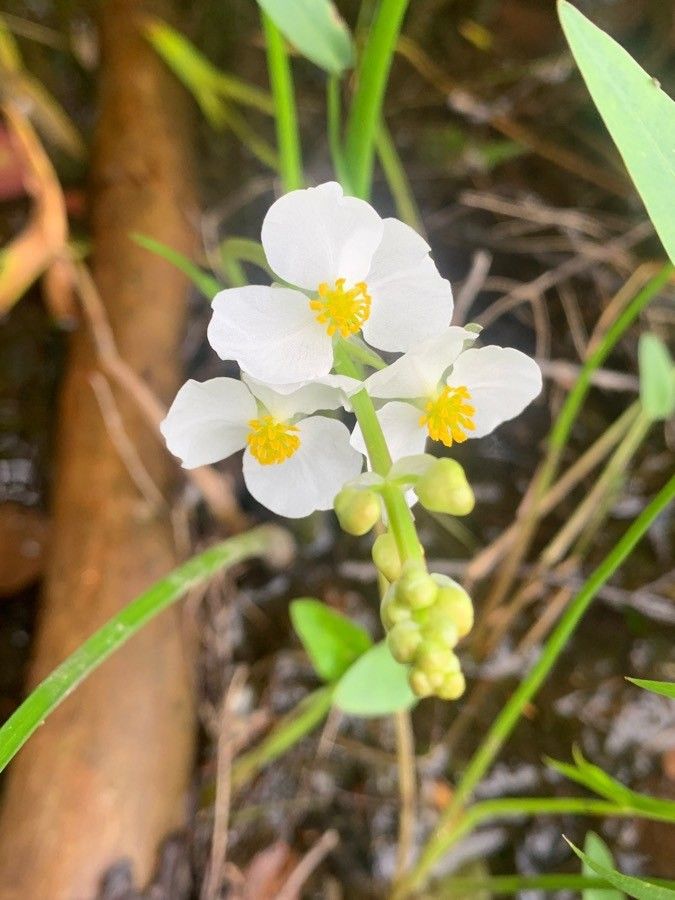
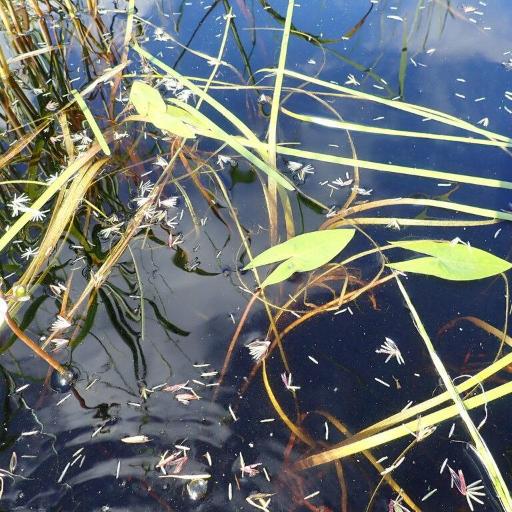
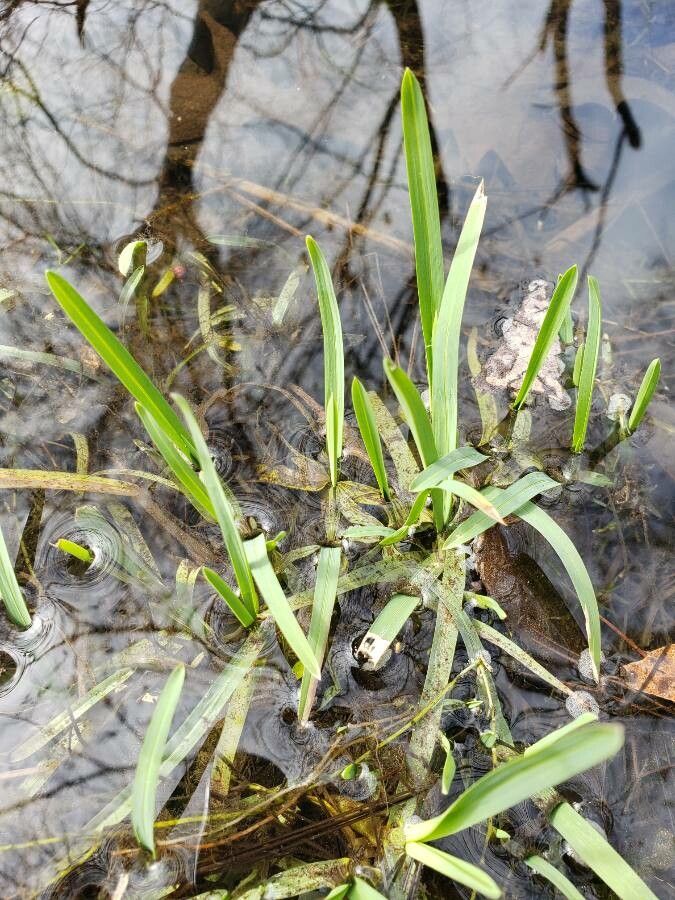
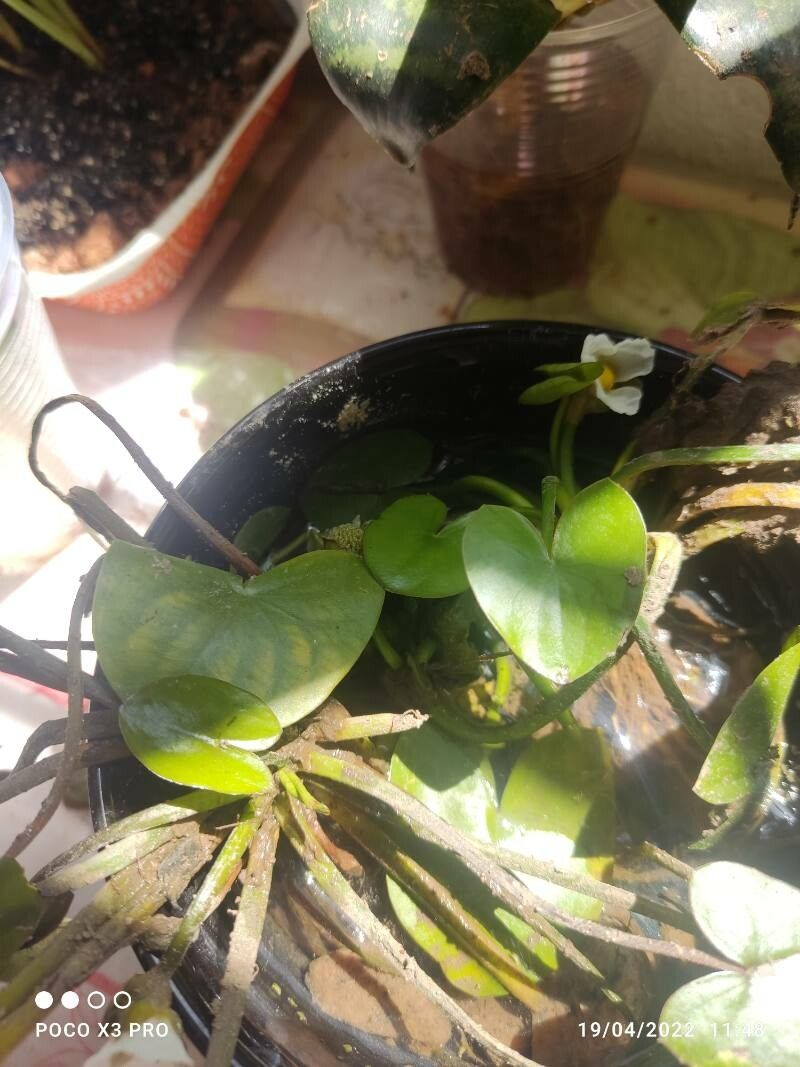
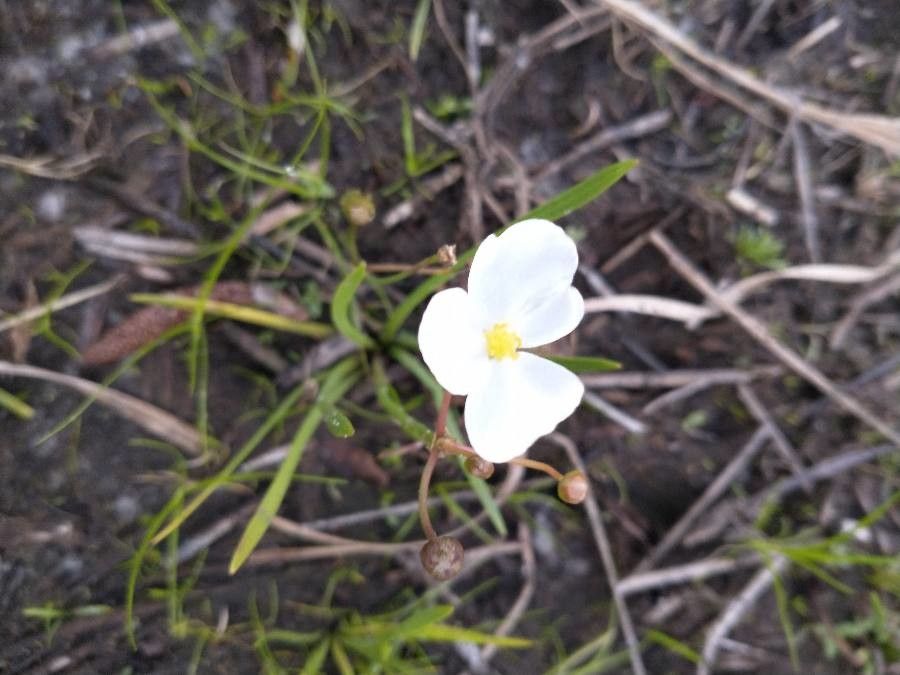
Sagittaria rigida, the sessilefruit arrowhead or Canadian arrowhead, is an aquatic plant species native to Canada and to the United States and also naturalized in Great Britain. It grows in shallow waters along the edges of ponds and streams. What is really interesting is that it has narrow oval leaves rather than the iconic arrowhead shaped leaves of species like the Sagittaria latifolia. it has sessile female flowers, which is were it gets its name from. Its flowers are very similar to other plants in the Sagittaria family, with three white petals. It grows "potato" like tubers which can be eaten. Gathering any tubers from the Sagittaria family can be dangerous if gathered from polluted water.
Sessile fruit arrowhead has strong resistance to disease and is typically not likely to get sick. That said, it can be vulnerable to pests and diseases present in its environment. Such infections tend to be mild. Regarding care, this plant needs a moderate amount of attention. It should be pruned regularly to preserve a neat appearance and support healthy growth. Applying fertilizer can also encourage blooming. Sessile fruit arrowhead is appropriate for anyone with outdoor space, like a garden or patio, and does not demand extensive gardening experience. It may need extra care when kept indoors.
How to keep Sagittaria Rigida.
Light
Sessile fruit arrowhead is native to habitats with plentiful sunlight, such as the shallow margins of ponds and lakes. It prefers full sun, although it can also tolerate partial sun.
Temperature
Sessile fruit arrowhead can tolerate a wide range of temperatures, though its distribution may still be constrained by different combinations of moisture and heat. It performs best in warm summer climates with adequate rainfall or watering. Extended periods of cloudy, rainy weather or prolonged high temperatures can raise the chance of the plant dying. In winter, suitable protection from cold can increase its survival rate.
Pruning
The sessile fruit arrowhead is characterized by its arrowhead-shaped leaves and fruit that is directly attached to the stem. To encourage growth and improve airflow, prune any dead or damaged parts from early to late spring. This will enhance light access and prevent overcrowding, thereby reducing the risk of disease. It is important to use sterilized tools to maintain the plant's health.
Botanical profile.
- Plant Type
- Herb
- Life Cycle
- Perennial
- Genus
- Sagittaria
- Family
- Alismataceae
- Hardiness Zone
- 3-9
- Mature Height
- 15 cm to 76 cm
- Mature Spread
- 20 cm to 30 cm
- Leaf Color
- Dark Green
- Leaf Type
- Deciduous
- Flower Color
- White
- Flower Size
- 1.52 cm to 2.03 cm
- Bloom Time
- Summer
- Planting Time
- Spring, Summer
- Harvest Time
- Late summer, Early fall, Mid fall
Other names.