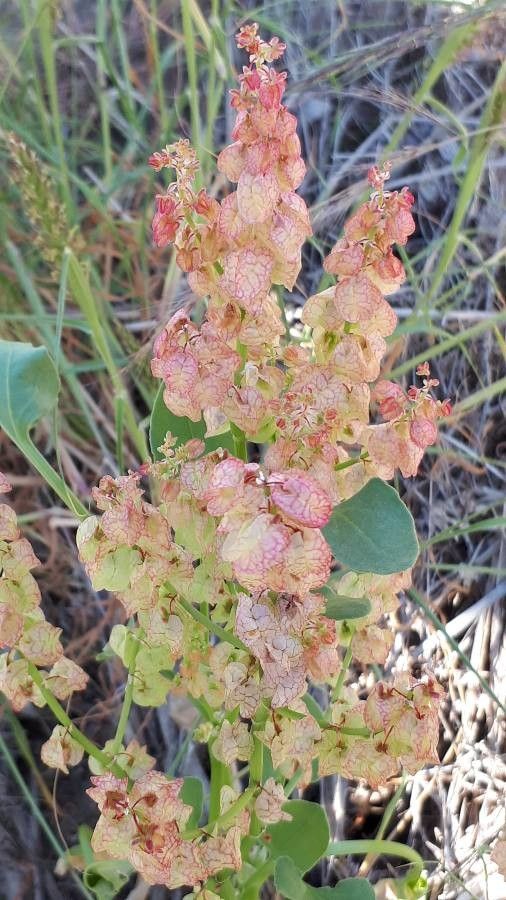
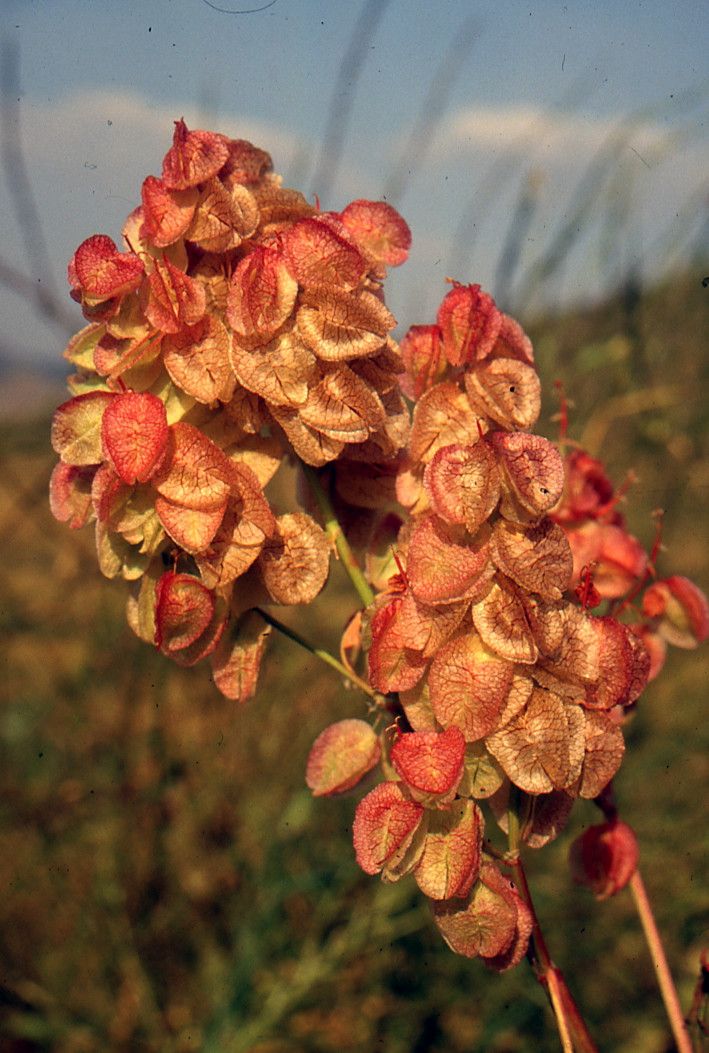
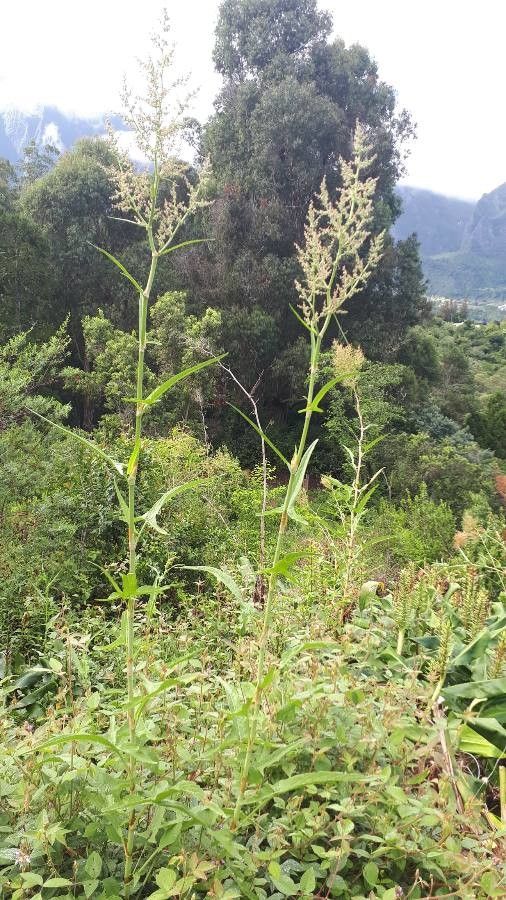
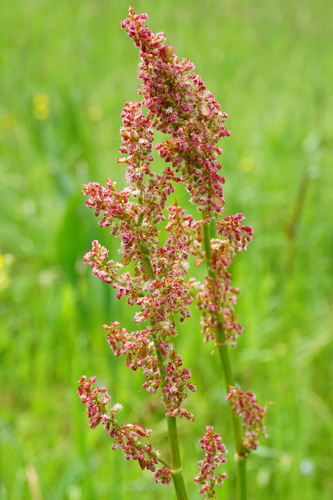
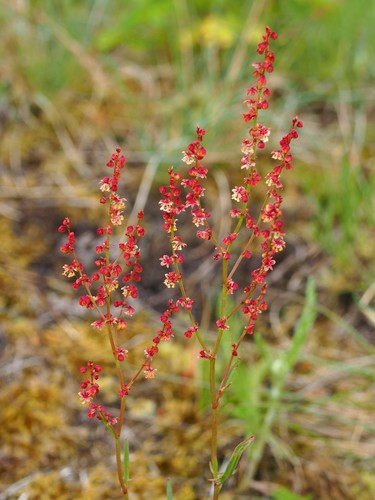
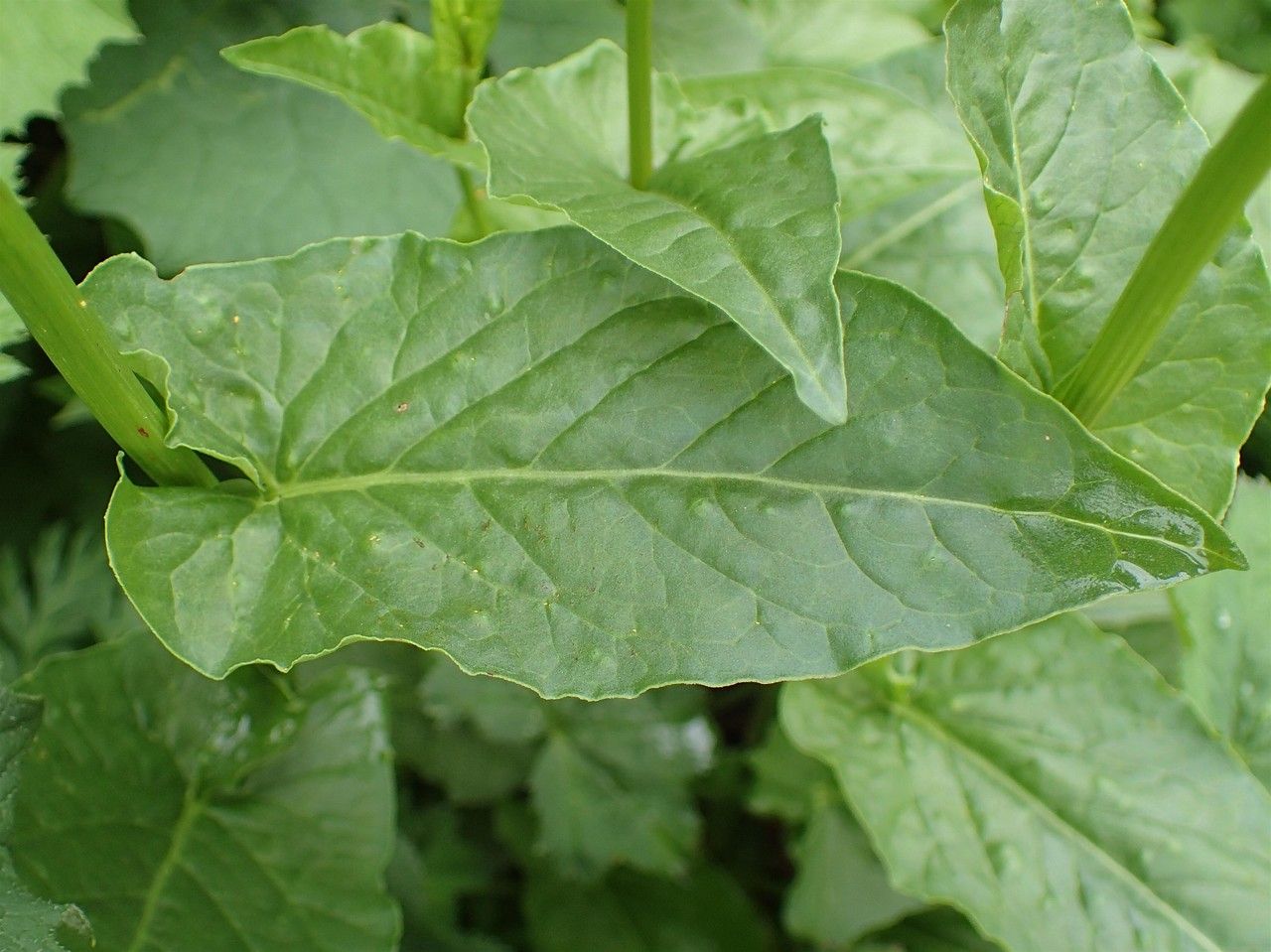
Rumex vesicarius, commonly known as Bladder Dock or African Dock, is a perennial herbaceous plant belonging to the Polygonaceae family. Native to the Mediterranean region, it thrives in diverse habitats such as sandy and rocky areas, fields, and roadsides.
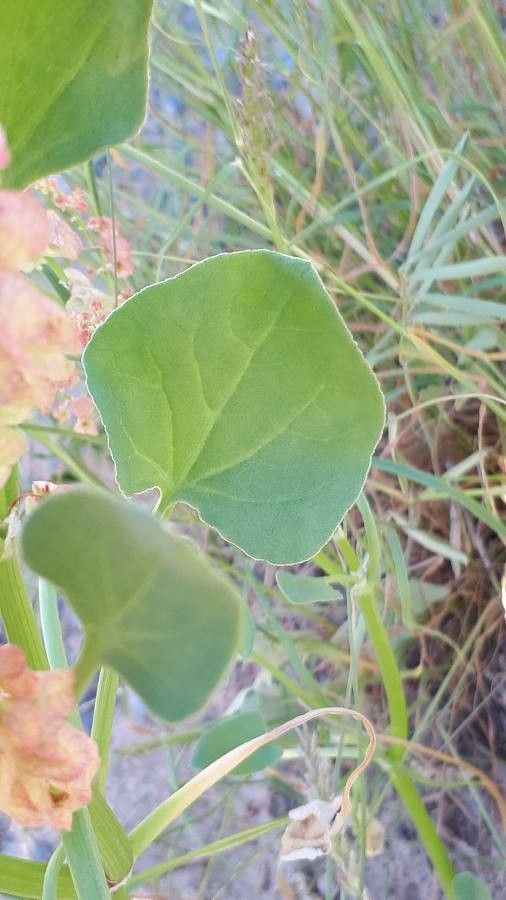
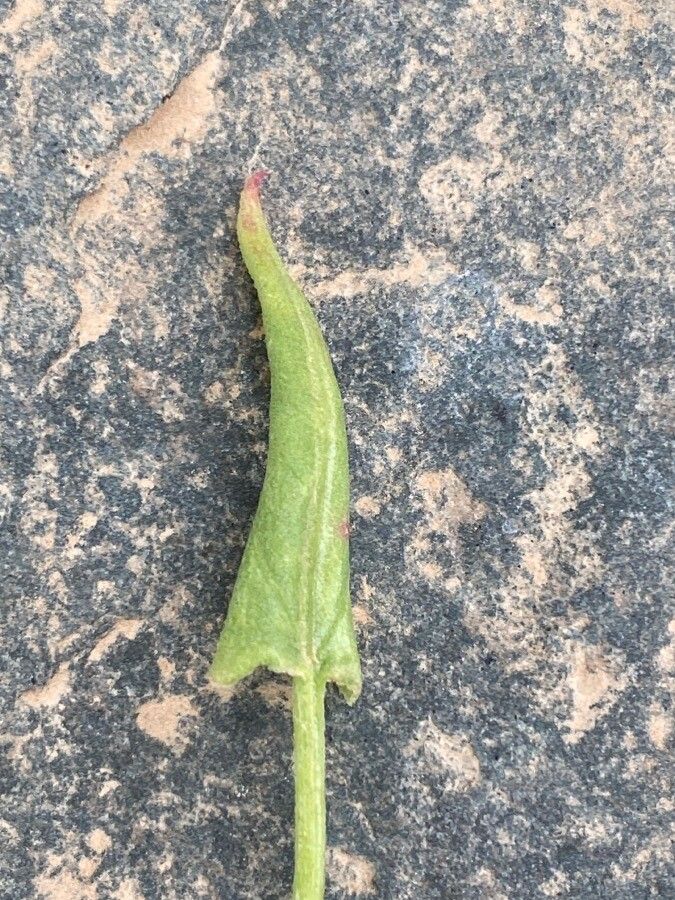
The plant features a deep taproot system that enables it to survive in arid conditions. It can grow up to 60 cm tall and has long lanceolate leaves that are green on top and pale underneath. The leaves have a sour taste due to the presence of oxalic acid.
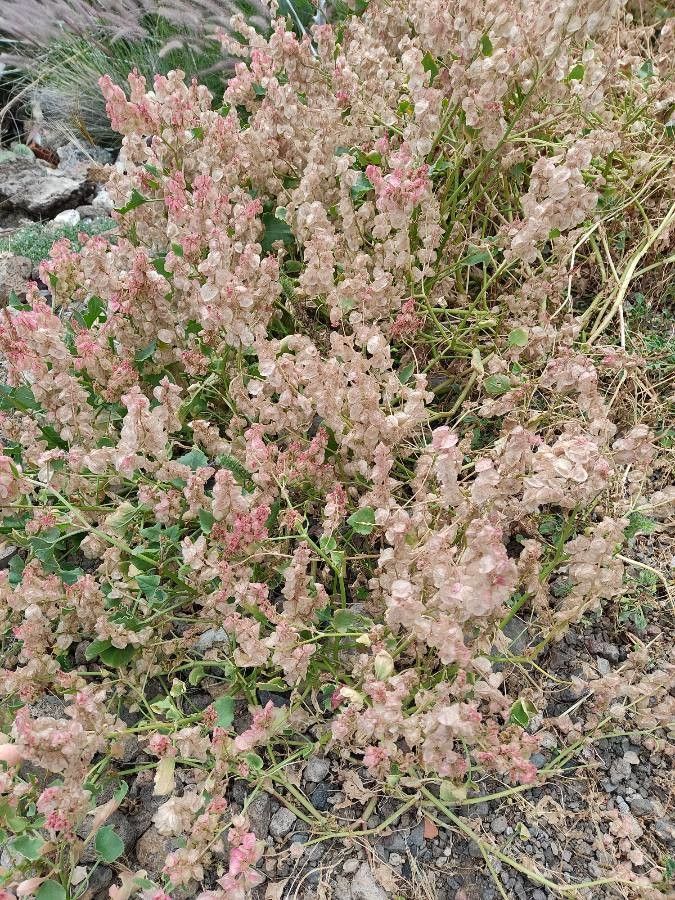
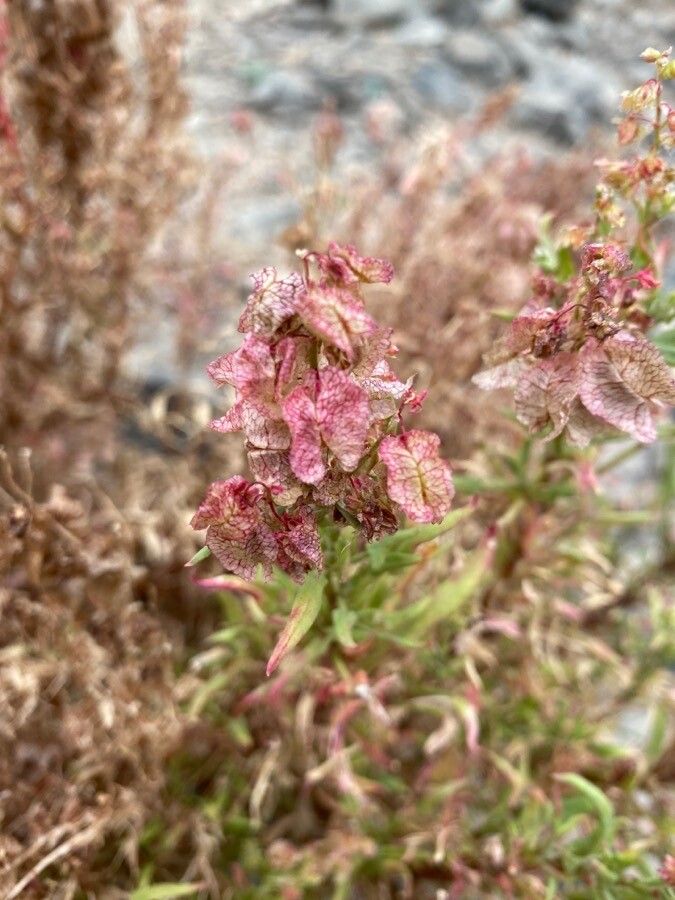
Rumex vesicarius blooms from May until September, producing small, greenish-red flowers arranged on long spikes.
This plant has been used for medicinal purposes for centuries, primarily because of its diuretic properties that help treat urinary tract infections. Additionally, its anti-inflammatory properties make it useful for treating skin conditions such as eczema.
Rumex vesicarius is also valuable as livestock fodder given its high nutritional value. While its seeds are edible, they should be consumed in moderation due to their high oxalic acid content, which can lead to kidney stones if ingested excessively.
In summary, Rumex vesicarius is a notable plant with various medicinal and agricultural applications, contributing significantly to ecosystems around the world.
Bladder dock has moderate resistance to disease but can be susceptible to problems like leaf spot. Its vulnerability to insect pests varies by variety, though most varieties have relatively low pest resistance. For care, bladder dock needs regular watering and fertilizing, and yellow leaves should be pruned frequently. It is important to control pests and diseases when they appear and to harvest the plant at the proper time. Bladder dock is appropriate for people who can devote some time and energy to regular care.
How to keep Rumex Vesicarius.
Light
The bladder dock prefers spots that get plentiful sunlight throughout the day, though it can manage with a modest amount of sun. Its native habitat supplies abundant light that supports its healthy growth. Excessive exposure, however, can be harmful.
Water
Bladder dock, native to arid environments, is highly drought-tolerant and thrives with just weekly watering. Its capacity to store water makes it an excellent choice for xeriscaping and low-water gardens, making it particularly well-suited for drier climates.
Temperature
Native to temperate climates, bladder dock thrives best at temperatures between 68 and 100.4 °F (20 and 38 ℃). If temperatures fluctuate considerably, occasional seasonal adjustments will be necessary to achieve optimal growth.
Fertilizer
For maximum yield, Bladder dock does best with regular applications of a balanced fertilizer, especially one high in nitrogen. Apply fertilizer before planting, at planting, and again when seedlings are 2 inches tall. Adding compost or manure also offers a steady supply of nutrients. Inadequate soil nutrients cause underdeveloped leaves and stems, poor flavor, thin stems, and can lead to a bitter taste.
Pruning
Bladder dock is a plant characterized by its fleshy, triangular leaves. It benefits most from pruning done between early and late spring. To encourage healthy growth, it's important to remove any dead foliage while being careful not to over-prune, as the plant is sensitive to excessive cutting. Consistent pruning enhances air circulation, lowers the risk of disease, and promotes strong, vigorous development.
Botanical profile.
- Plant Type
- Herb
- Life Cycle
- Annual
- Genus
- Rumex
- Family
- Polygonaceae
- Hardiness Zone
- 5-12
- Mature Height
- 61 cm
- Mature Spread
- 49 cm
- Leaf Color
- Light Green, Pale Green
- Leaf Type
- Semi-evergreen
- Flower Color
- Yellow, Pink, Green, Purple, Red
- Flower Size
- 0.20 cm to 0.25 cm
- Bloom Time
- Mid spring, Late spring, Early summer
- Planting Time
- Spring, Summer
- Harvest Time
- Summer
- Native Area
- Nepal, Saudi Arabia, Libya, Somalia, Egypt, India, Djibouti, Tunisia, United Arab Emirates, Sudan, Mauritania, Eritrea, Pakistan, Bangladesh, Greece, Morocco, Yemen, Niger, Chad, Afghanistan, Iraq, Syria, Indonesia, Myanmar, Israel, Oman, Iran, Ethiopia, Kuwait, Algeria, Qatar
Other names.
Reader questions.
How should I water my Bladder dock plant?
Bladder dock can be watered with various tools such as a garden hose, a watering can, or any other common watering tool. It is not too particular about the type of water it receives, as it can thrive with rainwater, tap water, or filtered water. It is generally recommended to avoid watering this plant from above to prevent damage to the leaves and flowers, as well as the risk of disease. A drip irrigation system is often the best method for watering Bladder dock, as it ensures even and direct application of water to the soil. For container-grown Bladder dock, the same watering approach can be used by using a cup, watering can, or tap water to water the soil directly.
What are the sunlight requirements for Bladder dock?
Bladder dock thrives in full sun, requiring over 6 hours of sunlight daily, but it can also grow in partial sun, which means about 3-6 hours of sunlight. It's essential to observe how sunlight moves through your garden to ensure the plants receive the perfect balance of light and shade for their growth. An excessive exposure to sunlight, however, may be detrimental to the plant.
What are the ideal growing temperatures for Bladder Dock?
Bladder Dock thrives in temperate climates, flourishing best within a temperature range of 68 to 100.4 °F (20 to 38 °C). Seasonal adjustments may be necessary for optimal growth if significant temperature fluctuations occur. This plant is well-suited to cold environments and generally does not require special frost protection measures during winter. However, for regions where winter temperatures might drop below -25°C, providing some form of cold protection, such as covering the plant with soil or straw, is advisable. To prepare for winter, it's recommended to water the plant abundantly before the first freeze, ensuring the soil is moist as it enters a frozen state, which helps prevent drought and water scarcity during the colder seasons.
What should I do if I give my Bladder dock plant too much or too little water?
To remedy underwatering Bladder dock, simply increase the frequency of watering when you notice the plant lacks moisture. Overwatering, on the other hand, can have severe consequences if not caught early. It can cause diseases that lead to the decline and death of the plant. To prevent this, choose a proper location for growth with ample sunlight to dry the soil and good drainage to prevent waterlogging. If your potted Bladder dock is overwatered, consider transferring it to a new pot with better soil drainage and sufficient drainage holes. Ensure the use of loose soil and an efficiently draining pot when repotting the plant.
How does artificial lighting benefit indoor plants like Bladder dock?
Indoor plants, including Bladder dock, require adequate lighting for optimal growth. When natural sunlight is insufficient, especially during winter or in less sunny spaces, artificial lights provide a crucial solution. LED lights are popular for indoor plant lighting as they can be customized to supply specific wavelengths needed by plants. The general guidance is 30-50W/sq ft for full sun plants, 20-30W/sq ft for partial sun plants, and 10-20W/sq ft for full shade plants. Position the light source 12-36 inches above the plant, mimicking natural sunlight conditions, and ensure it's on for 8-12 hours per day to simulate natural daylight duration effectively.
How does Bladder Dock react to low and high temperatures, and what are the recommended solutions?
Bladder Dock shows remarkable tolerance to both low and high temperatures, performing best when the thermometer reads above 20°C and is kept below 38°C during the summer. When winter temperatures drop below -25°C, the plant might not show any noticeable changes at the time but could experience decreased sprouting or fail to sprout at all come spring. The solution in spring is to remove any parts of the plant that have failed to sprout. On the flip side, when summer temperatures exceed 43°C, Bladder Dock's leaves may become lighter, prone to curling, suffer from sunburn, and in severe cases, the plant may wilt and dry out completely. To address heat stress, trim away sunburned and dried-up parts, relocate the plant to a less exposed location, or use a shade cloth to protect it from the midday and afternoon sun. Ensuring the plant is watered in the morning and evening will help keep the soil moist and assist in cooling the plant.
How often should I water my Bladder dock plant?
Bladder dock requires regular watering throughout the growing season. In the beginning of spring, aim to water the plant once per week. As the season progresses and the weather gets warmer, you may need to increase watering to two to three times per week. However, be cautious not to exceed this rate as it can harm the Bladder dock. It is important to keep the soil moist but not overly wet, regardless of how often you water. When it comes to watering Bladder dock in a pot, you will need to water more frequently. Soils in pots tend to heat up and dry out faster than ground soil. As a result, plan to water a container-grown Bladder dock a few times per week in most cases, as opposed to just once per week for an in-ground plant.
What are the symptoms of light deficiency in Bladder dock when grown indoors?
Bladder dock exhibits several symptoms when exposed to inadequate light, including smaller new leaves, leggy or sparse growth, faster leaf drop, slower or no new growth, and lighter-colored new leaves. These symptoms indicate that the plant is not receiving enough sunlight to maintain healthy growth and perform photosynthesis efficiently.
How much water does my bladder dock require?
Determining the appropriate amount of water for your Bladder dock can be done in a few different ways. One method is to gauge the moisture of the soil by feeling it. In this case, it is recommended to water until the top six inches of soil feel moist. Another approach is to use a specific measurement, such as providing around two gallons of water per week, taking into account factors like heat and how quickly the soil dries. However, following set guidelines like these can lead to overwatering if your plant needs less water. When growing Bladder dock in a container, you should assess the moisture of the soil by checking all the layers and moistening them if dry. This can be done by sticking your finger in the soil or watering until you notice a slight trickle of excess water coming out of the drainage holes.
What are some solutions to address light deficiency in Bladder dock?
To combat light deficiency in Bladder dock, gradually move the plants to sunnier locations, ensuring they receive at least 6 hours of direct sunlight daily. For indoor plants, consider using artificial light, like desk lamps or professional grow lights, for at least 8 hours daily. Outdoors, you should shift your plants gradually to better-lit spots to prevent sunburn. Always consider the impact of your environment and possible obstructions like trees, and think about pruning or transplanting to areas with better sunlight and drainage.
How can I know if I'm giving enough water to my Bladder dock?
Avoiding overwatering your Bladder dock can be challenging because of its deep root system that requires moist soil weekly. However, Bladder dock is highly prone to root rot and browning when overwatered. Underwatering is less of a concern as these plants can survive without additional watering for a while. Nevertheless, if not watered for an extended period, the plant may start to wilt and display dry leaves.
What happens to Bladder dock when it's exposed to too much sunlight?
When exposed to excessive sunlight, Bladder dock may experience symptoms like chlorosis (leaves turning yellow due to chlorophyll breakdown), sunscald (damage from intense sunlight exposure), leaf curling as a defense mechanism to minimize surface area, wilting due to increased water loss, and leaf scorching characterized by brown, dry edges on leaves. These symptoms reflect the plant's struggle with overexposure to sunlight and its effects on photosynthesis and overall health.