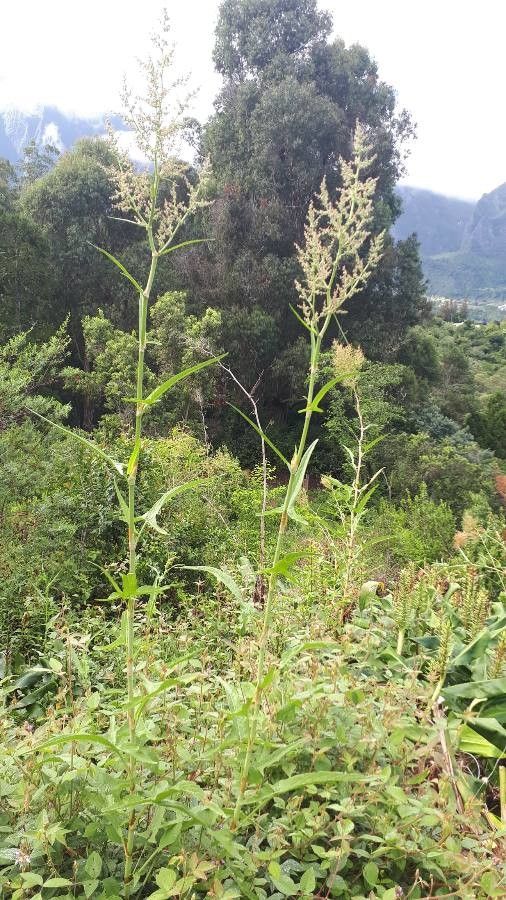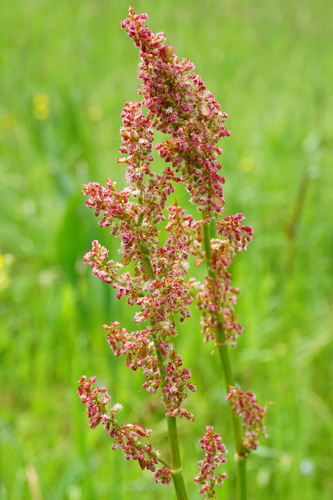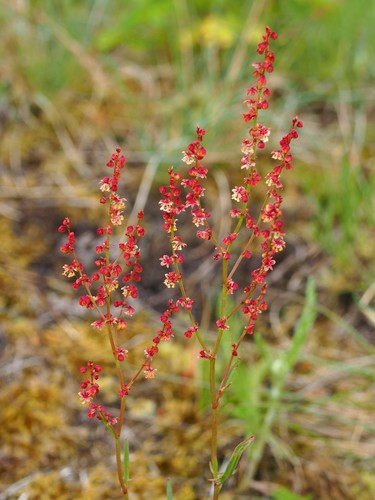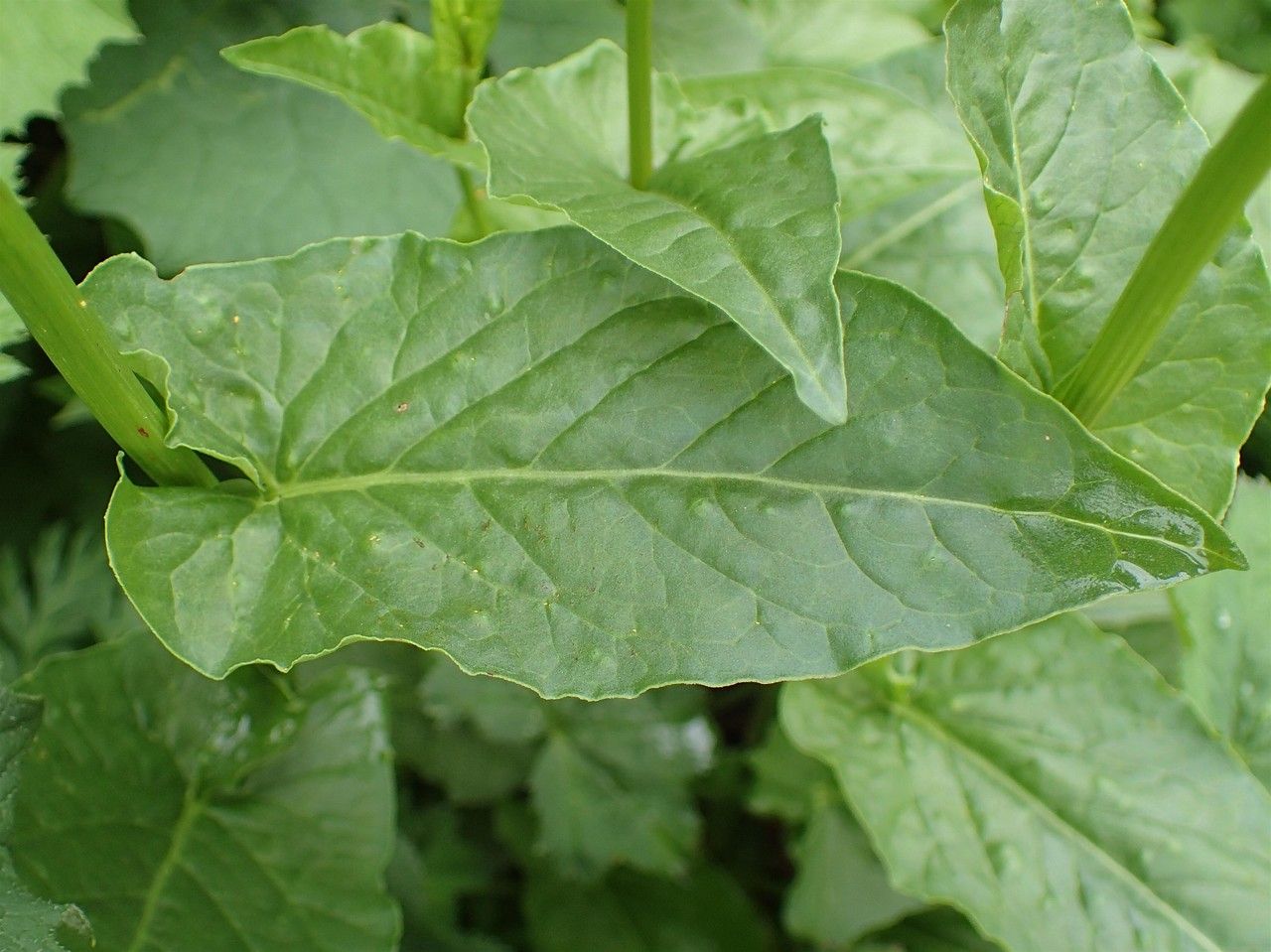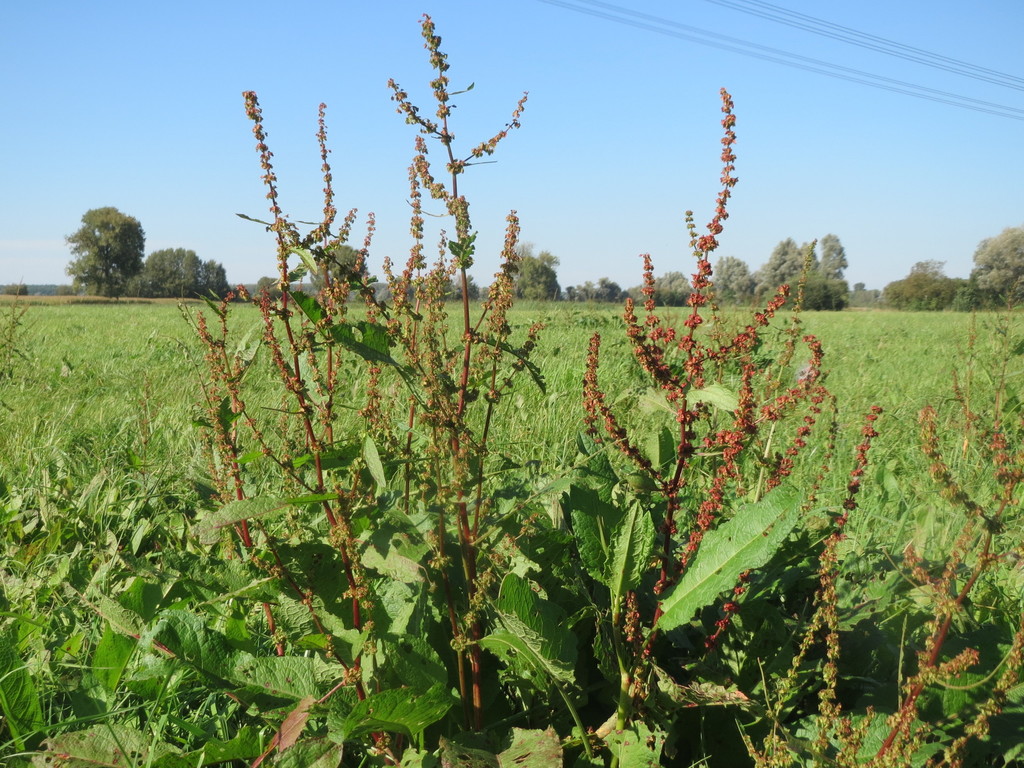
Rumex obtusifolius, commonly known as bitter dock or broad-leaved dock, is a perennial herbaceous plant belonging to the family Polygonaceae. Native to Europe and Asia, it has been introduced and naturalized in many parts of the world.
The plant can reach up to 1 meter in height and features large, broad leaves with a slightly reddish tint. These leaves are oblong or oval-shaped with rounded tips and can grow up to 30 cm long.
Bitter dock produces small greenish flowers that bloom from June through September. The flowers are arranged in clusters on tall spikes that rise above the foliage.
Bitter dock grows wild in the United Kingdom and is often found near stinging nettles, also known as Urtica dioica. Stinging nettles have long needles that inject histamine into the skin, causing a painful, itchy irritation. Historically, people in the UK would soothe this irritation by squeezing the underside of bitter dock leaves onto their skin, using it as a natural remedy. FUN FACT · FROM THE LIBRARY
The plant prefers moist soils but can tolerate a wide range of soil types, including sandy, clay, and loamy soils. It thrives in full sun or partial shade.
Bitter dock has been used for medicinal purposes for centuries due to its high content of vitamins A and C, as well as minerals such as iron, calcium, potassium, and magnesium. It is also used in culinary applications, with its young leaves added raw to salads, while older leaves may be cooked like spinach.
However, bitter dock should be consumed with caution due to its high oxalic acid content, which can cause kidney stones if consumed excessively over time.
Overall, Rumex obtusifolius is an interesting herbaceous perennial plant known for both its medicinal properties and culinary uses. However, it can become an invasive species when introduced into new areas outside its native range.
Bitter dock is a plant known for its bitter rootstocks. The term "dock" is commonly used to refer to grass weeds, and plants with "dock" in their name are typically grass weeds. Rumex obtusifolius, commonly referred to as bitter dock, is classified as a harmful weed.
Bitter dock has strong resistance to disease and typically does not suffer from illnesses. Still, it can be affected by pests and diseases present in its environment. Those infections are generally mild. Carewise, this plant needs moderate upkeep. It should be pruned on a regular basis to keep a neat appearance and support healthy growth. Fertilizing can also encourage it to flower. Bitter dock is appropriate for people who have outdoor areas like a garden or patio and does not demand extensive care experience. It may need greater attention when grown indoors.
How to keep Rumex Obtusifolius.
Light
Bitter dock grows best in places that receive plenty of sun throughout the day, although it can tolerate areas where sunlight is not consistent. This hardy plant originated in environments with abundant sunlight. Too much sun or too little can impede its healthy growth.
Water
Bitter dock thrives in moderately moist environments and prefers soil that stays consistently damp, but not waterlogged. Watering it weekly helps maintain this balance. As an herbaceous perennial, bitter dock is best grown outdoors, where it can benefit from natural rainfall throughout the year.
Temperature
Bitter dock needs a native growth environment with seasonal temperature variation from 5 to 35 ℃ (41 to 95 ℉). Its preferred temperatures lie within that same range, and it does best in full sun with moderate watering and well-draining soil. During winter months, protect it from frost by bringing it indoors or mulching heavily.
Fertilizer
Usually one fertilizer application in spring is enough for Bitter dock, but additional feedings can maximize growth. Feed every one to one-and-a-half months. Fertilization improves leaf appearance and function, promoting even color and a healthy texture. It also encourages root development and nutrient uptake for long-term plant health.
Botanical profile.
- Plant Type
- Herb
- Life Cycle
- Perennial
- Genus
- Rumex
- Family
- Polygonaceae
- Hardiness Zone
- 4-10
- Mature Height
- 0.4 m to 1.52 m
- Mature Spread
- 30 cm
- Leaf Color
- Green
- Leaf Type
- Evergreen, Deciduous
- Flower Color
- Green, Red, Orange
- Flower Size
- 0.76 cm
- Bloom Time
- Late spring, Early summer, Mid summer
- Planting Time
- Spring, Autumn
- Harvest Time
- Mid summer
- Native Area
- Turkey, Sweden, Croatia, Slovenia, Yemen, Belarus, Estonia, Romania, Latvia, Belgium, Moldova, Portugal, Tunisia, Greece, North Macedonia, Serbia, Lithuania, Norway, Finland, Israel, Bosnia and Herzegovina, Iran, Algeria
Other names.
Reader questions.
When should I water my bitter dock?
To determine the optimal watering time for bitter dock, evaluate the soil's moisture content; it should be slightly damp to the touch but not waterlogged. Key indicators include soil dryness (check if the top 1-2 inches of soil are dry), leaf color change or drooping, and signs of slow growth or wilting. If the soil feels dry at a depth of 1-2 inches, it's time to water the plant. Observing the plant's health, such as changes in leaf color to a less vibrant green or evidence of drooping, can also guide your watering schedule. Furthermore, stunted growth or early leaf fall signals a need for water. It's crucial to avoid over-watering to prevent root rot, characterized by blackened roots and an unpleasant smell. Conversely, underwatering results in wilting and reduced growth.
What are the sunlight requirements for Bitter Dock?
Bitter Dock thrives best in areas that receive a lot of sun throughout the day but can also endure locations where sun exposure is not constant. The plant needs full sun, defined as above 6 hours of sunlight daily, or partial sun, which is about 3-6 hours of sunlight. It is important to watch how sunlight moves through your garden to choose spots that offer the right balance of light and shade, ensuring the plants' well-being.
What are the ideal growth conditions for Bitter Dock?
Bitter Dock thrives in its native environment that includes seasonal temperature variations from 5 to 35°C (41 to 95°F). It prefers full sun exposure and grows best with moderate watering and well-draining soil. The plant is cold-resistant and typically does not require special frost protection measures. However, in regions where winter temperatures are expected to drop below the plant's cold tolerance limit, covering it with soil or straw can provide necessary cold protection. To prepare for winter, watering the plant abundantly before the first freeze is recommended to keep the soil moist, helping to prevent drought and water scarcity during the colder months.
How should I water my bitter dock?
Watering bitter dock effectively involves maintaining moist soil without causing waterlogging. The use of a bottom-watering technique, where the plant pot is placed in a tray filled with water, allows the roots to absorb moisture from below. This method minimizes risks of fungal diseases by keeping moisture away from the foliage. A watering can with a fine-spouted nozzle is recommended for precise watering at the soil level without wetting the leaves. Employing a moisture meter can help in monitoring soil moisture to prevent over-watering. Additionally, focusing watering at the base of the plant rather than on the foliage helps prevent diseases and ensures the roots receive sufficient moisture. Regular watering should keep the soil consistently moist but not soggy, with adjustments based on the soil's moisture content.
How can artificial lighting benefit indoor Bitter Dock plants?
Indoor Bitter Dock plants require adequate lighting to grow optimally. When natural sunlight is insufficient, artificial lights can offer a vital solution. LED lights are a popular choice because they can be customized to provide the specific wavelengths of light that plants need. For full sun plants, 30-50W/sq ft of artificial light is recommended, partial sun plants require 20-30W/sq ft, and full shade plants need 10-20W/sq ft. The light source should be placed 12-36 inches above the plant and kept on for 8-12 hours per day to mimic natural daylight hours.
How does Bitter Dock react to low temperatures, and what measures should be taken?
Bitter Dock is cold-tolerant and performs best when temperatures are kept above its minimum suitable growth temperature. If winter temperatures are expected to fall below its growth limit, the plant might not show immediate damage, but there could be a reduction or absence of sprouting in spring. To mitigate this issue, any parts of the plant that have failed to sprout by spring should be removed. This helps in managing the plant's health and ensuring growth recovery.
How much water does bitter dock really need?
The water requirement for bitter dock varies, determined by factors such as pot size, root depth, and overall plant size. It's generally advised to water thoroughly, moistening the soil to at least a 6-inch depth. Since bitter dock has a deep taproot that allows it to access moisture from deeper soil levels, it doesn’t require frequent watering. Monitor the soil's moisture to determine when to water, ensuring to avoid waterlogged conditions which can lead to root rot. Signs that bitter dock is receiving adequate water include green, healthy leaves and a robust, upright growth habit. Conversely, wilting, yellowing foliage, or signs of root rot indicate inappropriate watering. Striking a balance between sufficient hydration and letting the soil dry slightly between waterings is key to the plant's health.
What are the symptoms of inadequate light in Bitter Dock?
Symptoms of light deficiency in Bitter Dock include small leaves due to new leaves growing smaller in size, leggy or sparse growth with longer spaces between leaves or stems, faster leaf drop as plants shed older leaves early to conserve resources, slower or no new growth as plants enter survival mode, and lighter-colored new leaves indicating a lack of chlorophyll. Chlorosis, sunscald, leaf curling, wilting, and leaf scorching are also symptoms that can occur with either insufficient sunlight or overexposure.
How should Bitter Dock be cared for in high temperatures?
During the summer, Bitter Dock should ideally be maintained below its maximum suitable growth temperature. If temperatures exceed its tolerable maximum, the plant may exhibit signs of stress, such as lighter leaf color, leaf curling, susceptibility to sunburn, and in severe cases, wilting and drying out. To protect the plant in such conditions, trim away the sunburned and dried parts. Relocating the plant to a shaded area or using a shade cloth can prevent further damage. Additionally, watering the plant in the morning and evening helps keep the soil moist, providing relief from the heat.
What kind of water is best for bitter dock?
Bitter dock thrives with water that's free from harmful contaminants. Distilled water is ideal due to its purity, followed by rainwater, which is natural and chemical-free. Filtered water is also suitable, providing it removes harmful substances. Although tap water can be used, it often contains chlorine, which bitter dock is sensitive to, potentially causing leaf burn. To mitigate chlorine's adverse effects, let tap water sit for 24 hours before use to allow chlorine to evaporate, or use a carbon filter to remove contaminants. The water's temperature should be moderate, around 68-72°F (20-22°C), to avoid shocking the plant. Extreme water temperatures can harm bitter dock, so it's best to use water at room temperature.
What solutions are available for Bitter Dock suffering from inadequate sunlight?
For Bitter Dock plants suffering from inadequate sunlight, gradually moving them to a sunnier location can help. Plants should receive at least 6 hours of direct sunlight daily, with south-facing windows being ideal for indoor plants. Artificial light can also be used, keeping lamps on for at least 8 hours daily. Outdoors, avoid sudden changes in light intensity to prevent sunburn. Minimizing obstructions, such as by pruning trees that block sunlight, and transplanting to a location with ample sunlight and good drainage during the plant's dormant period can also aid in recovery. Note that parts of the plant damaged by insufficient sunlight may not recover, but new growth will be healthy.
How do bitter dock's watering needs change with the seasons?
Seasonal changes impact bitter dock's watering requirements. In spring, the plant enters an active growth phase; it's crucial to maintain consistent soil moisture. Summer may bring a dormant state, necessitating reduced watering to let the soil dry slightly more between sessions. As autumn approaches, water less frequently as growth slows and the plant prepares for dormancy. Winter requires minimal watering, with emphasis on preventing the soil from becoming overly dry while avoiding waterlogging. The key across all seasons is monitoring soil moisture and adjusting watering to match the plant's varying needs during its growth and dormancy cycles.