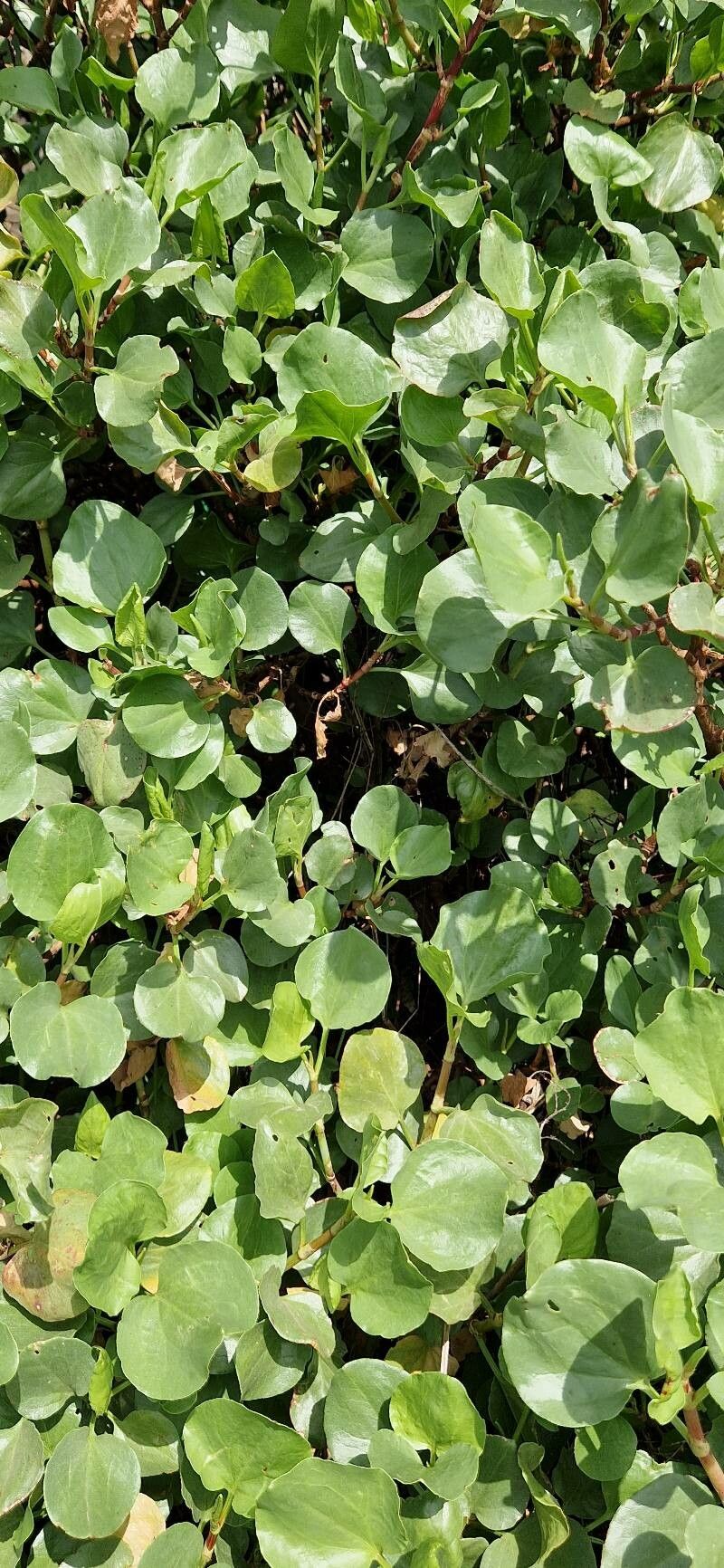
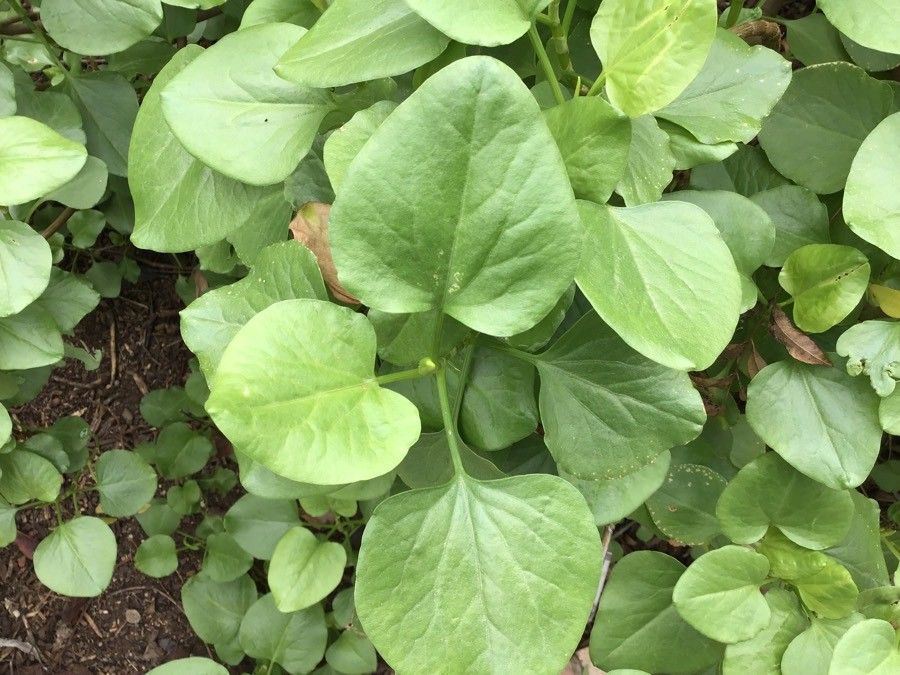
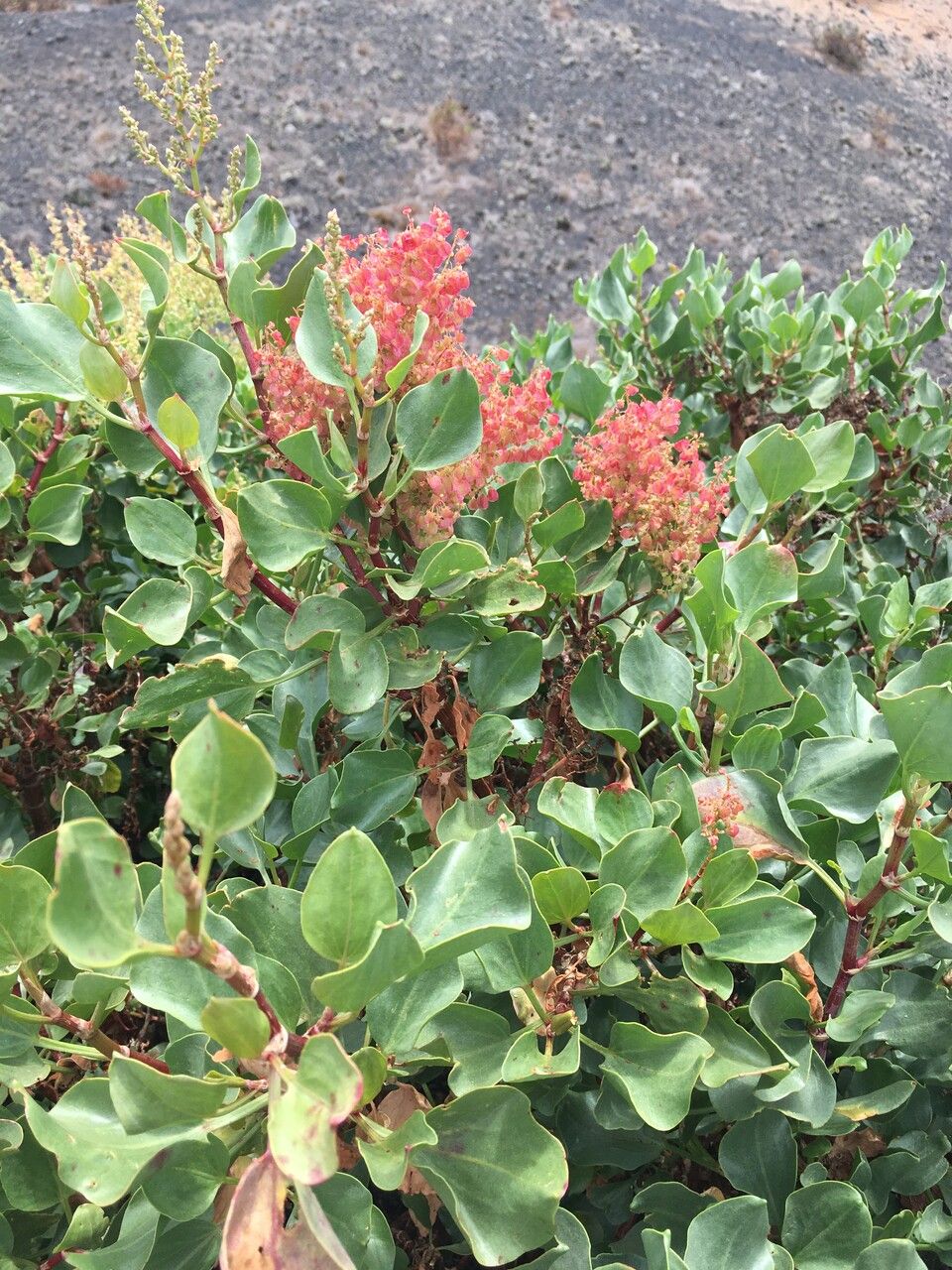
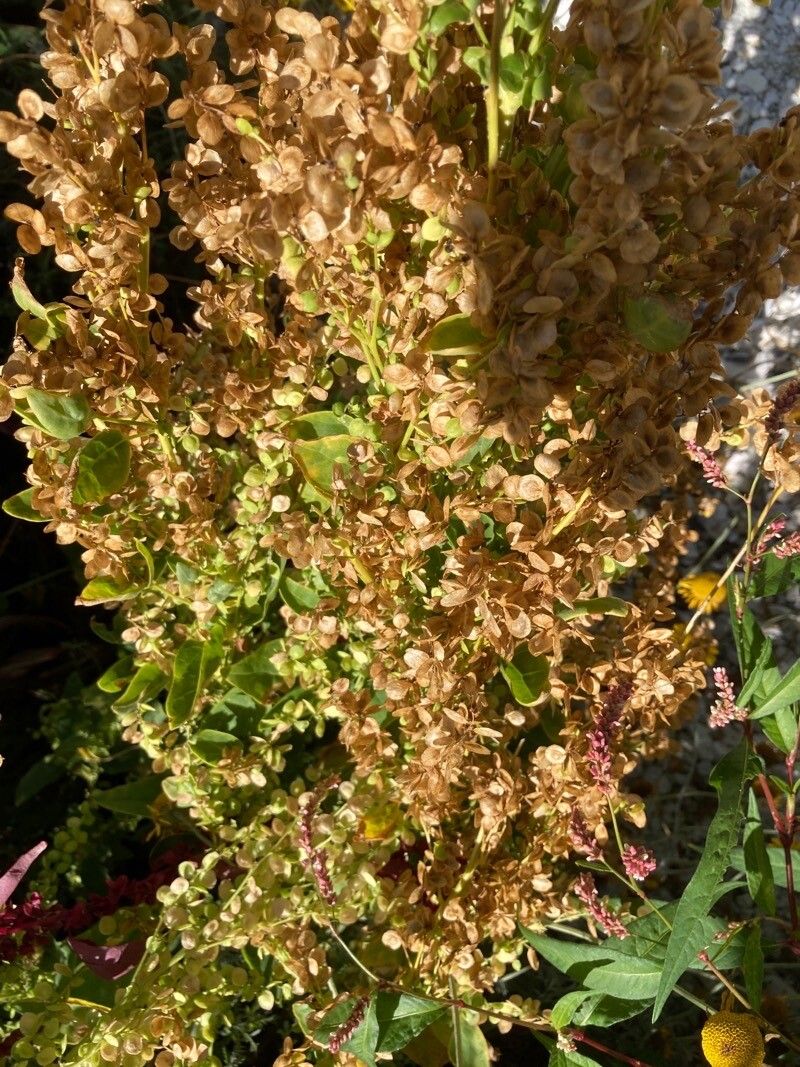
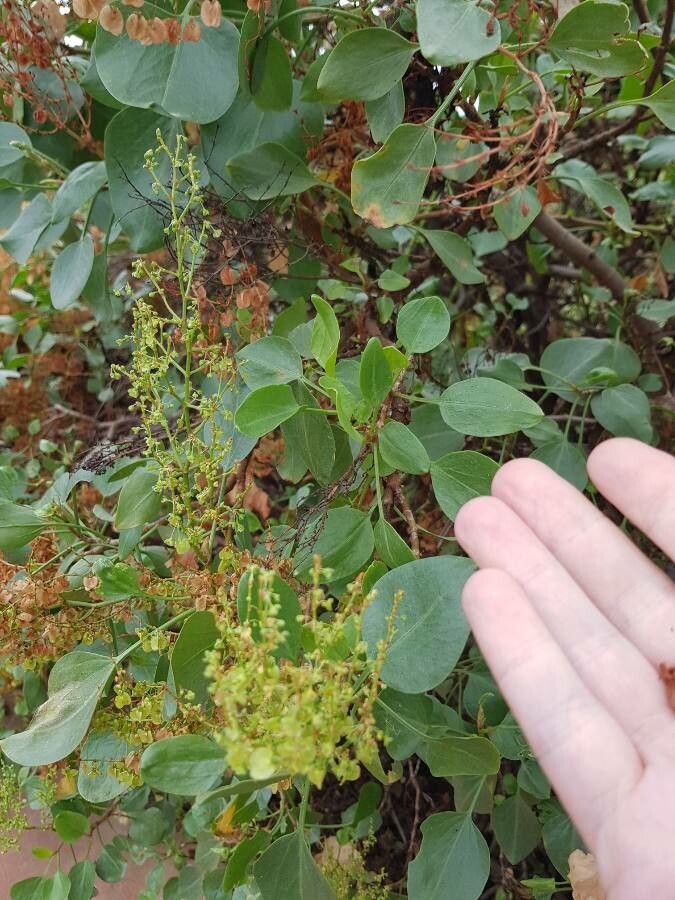
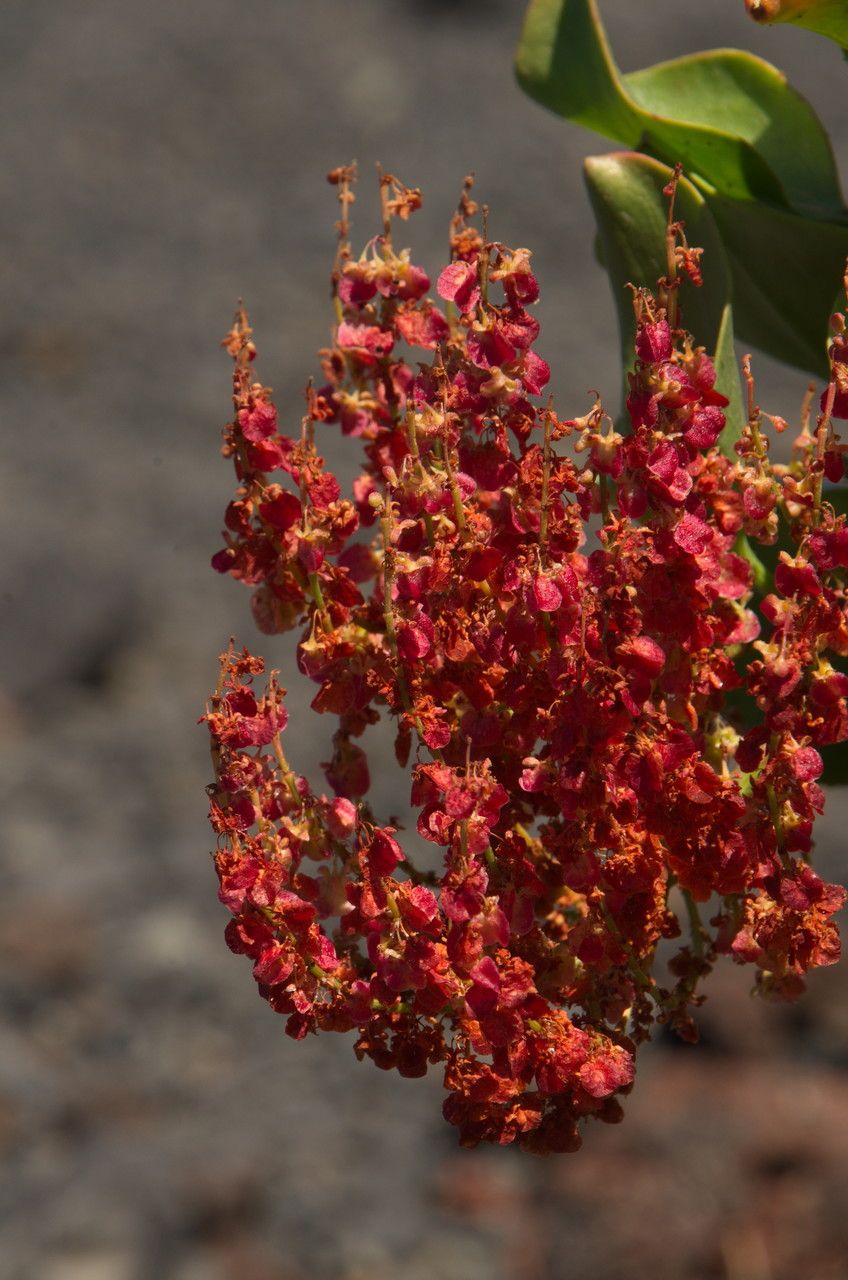
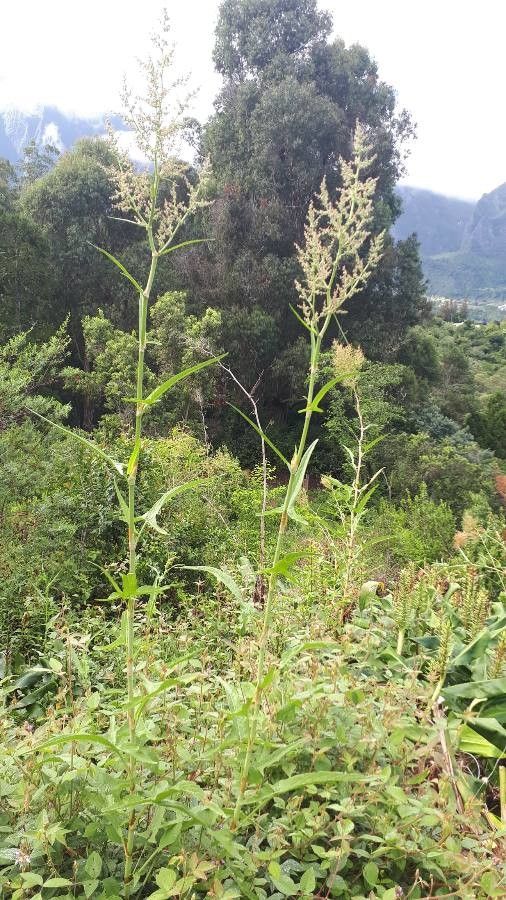
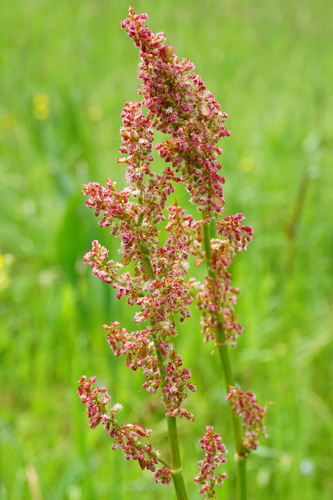
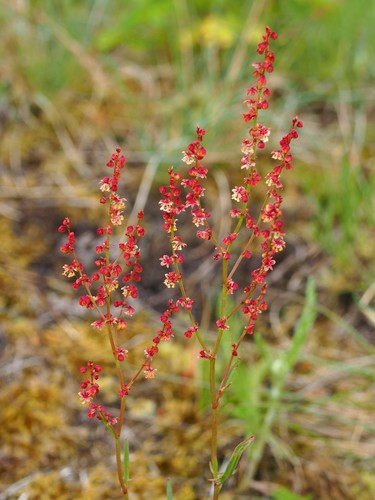
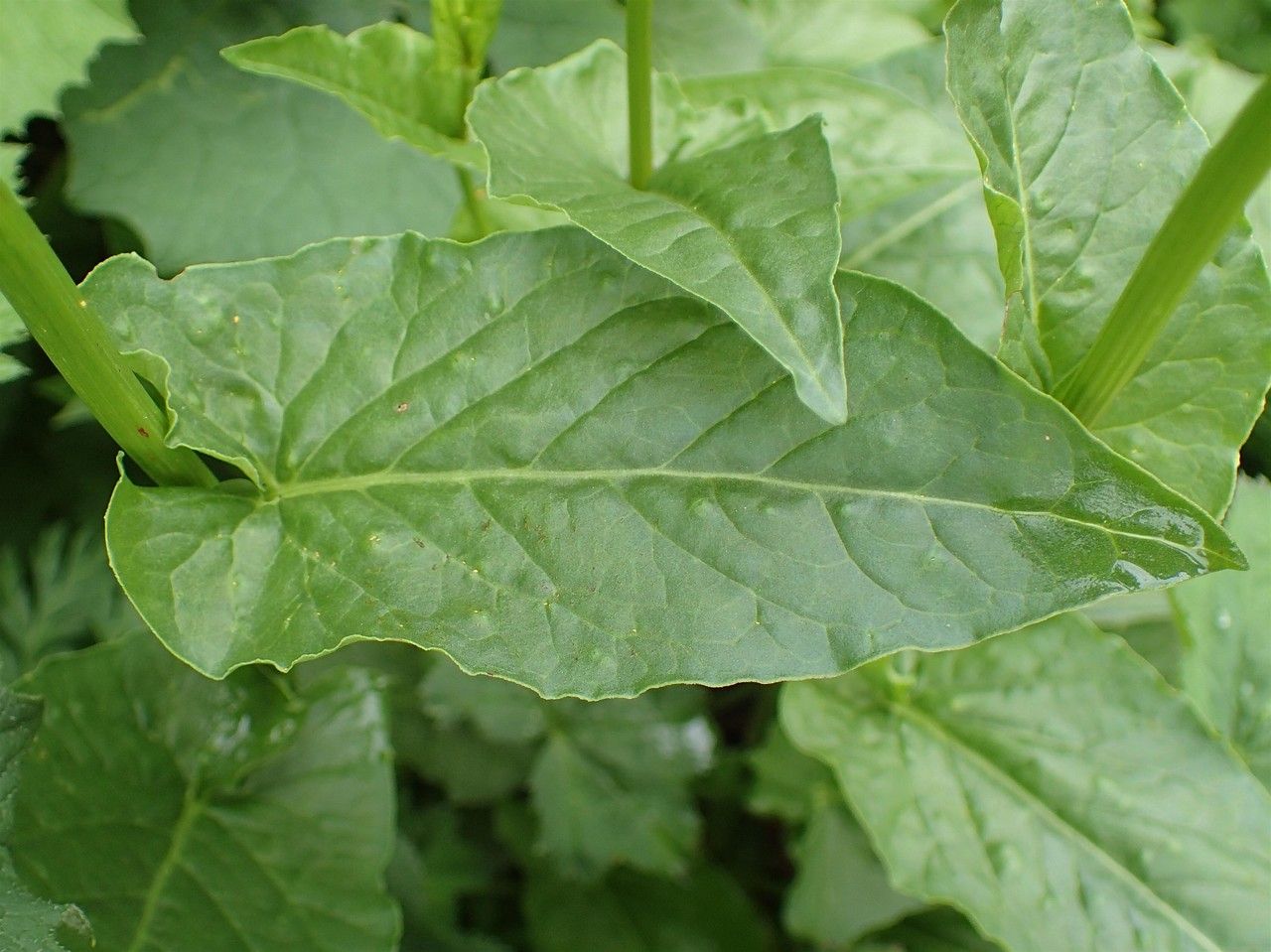
Rumex lunaria, commonly known as the moon-leaved sorrel or lunar dock, is a perennial herbaceous plant belonging to the Polygonaceae family. Native to Europe and western Asia, it has also been introduced to North America. The plant can grow up to 60 cm tall and features a basal rosette of large, heart-shaped leaves that are green on top with a silvery-white underside. Although these leaves are edible, they have a sour taste due to the presence of oxalic acid. From May through August, the moon-leaved sorrel produces small greenish flowers clustered on tall stems. These flowers are followed by small, triangular seeds that turn reddish-brown upon maturing. The plant thrives in moist soils with full sun or partial shade but is hardy enough to tolerate dry conditions once established. It is typically found along roadsides, in meadows, waste areas, and other disturbed sites. Historically, Rumex lunaria has been used for medicinal purposes due to its high content of vitamins A and C, as well as its diuretic properties which can aid in treating urinary tract infections. However, it should be consumed in moderation because of its high oxalic acid content, which can lead to kidney stones if ingested excessively. Overall, Rumex lunaria is a fascinating herbaceous perennial with unique silver-white foliage, adding an attractive element to gardens. It works well when planted among other perennials or used as ground cover under trees, especially in shaded conditions where other plants might struggle.
Canary islands sorrel shows strong resistance to diseases and typically does not suffer from them. Still, it can be vulnerable to any pests and diseases present in its environment. When infections do occur, they are generally mild. Regarding maintenance, this plant is moderately demanding. It should be pruned on a regular basis to preserve an attractive appearance and healthy development. Applying fertilizer can also encourage more flowering. Canary islands sorrel is appropriate for anyone who has outdoor space, such as a garden or a patio, and it does not require extensive gardening experience. If grown indoors, it may need a higher level of care.
How to keep Rumex Lunaria.
Light
Canary islands sorrel is a sun-loving perennial herbaceous plant native to open habitats, frequently found in meadows and grasslands. It prefers full sun but can also tolerate partial sun.
Temperature
Canary islands sorrel shows strong adaptability to temperature, able to endure higher heat and broad temperature swings. In hot weather, care should be taken with watering and suitable shading should be provided to avoid sunburn. On the other hand, Canary islands sorrel is not very tolerant of low temperatures; it can handle some cold but overly cold conditions may cause frost damage.
Fertilizer
Usually one spring application of fertilizer is enough for Canary islands sorrel, though repeated feedings can boost growth to its fullest. Apply fertilizer about every month to six weeks. Fertilizing improves the leaves’ appearance and performance, helping maintain even color and a healthy texture. It also promotes root development and increases nutrient uptake for the plant’s long-term health.
Botanical profile.
- Plant Type
- Herb
- Life Cycle
- Perennial
- Genus
- Rumex
- Family
- Polygonaceae
- Hardiness Zone
- 9-11
- Mature Height
- 0.91 m to 2.13 m
- Mature Spread
- 0.91 m to 1.52 m
- Leaf Color
- Green, Dark Green
- Leaf Type
- Deciduous
- Flower Color
- Green
- Flower Size
- 0.20 cm to 0.25 cm
- Bloom Time
- Mid spring, Late spring, Early summer
- Planting Time
- Spring, Autumn
- Harvest Time
- Summer
Other names.