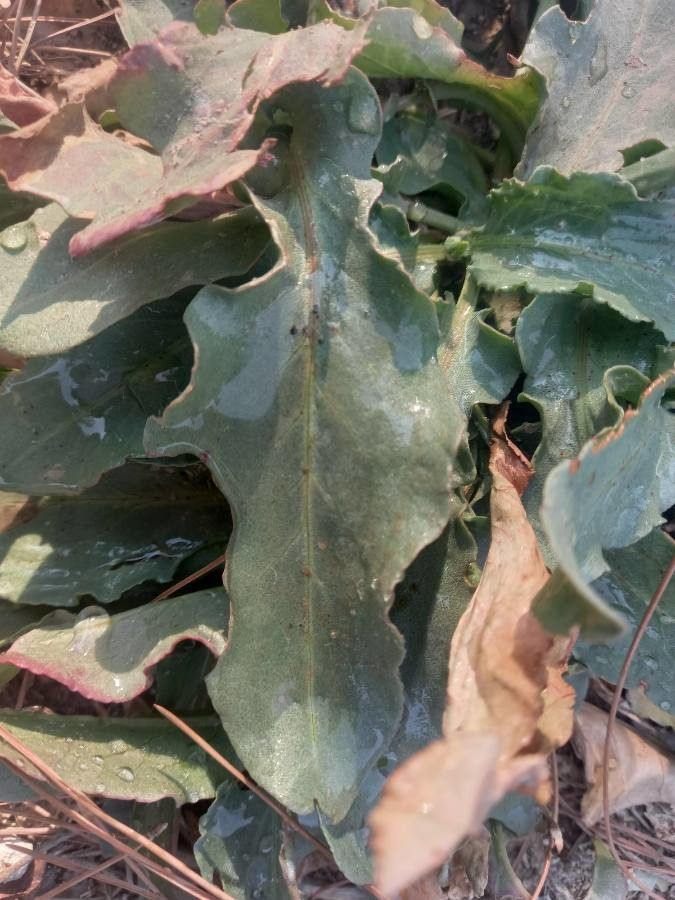
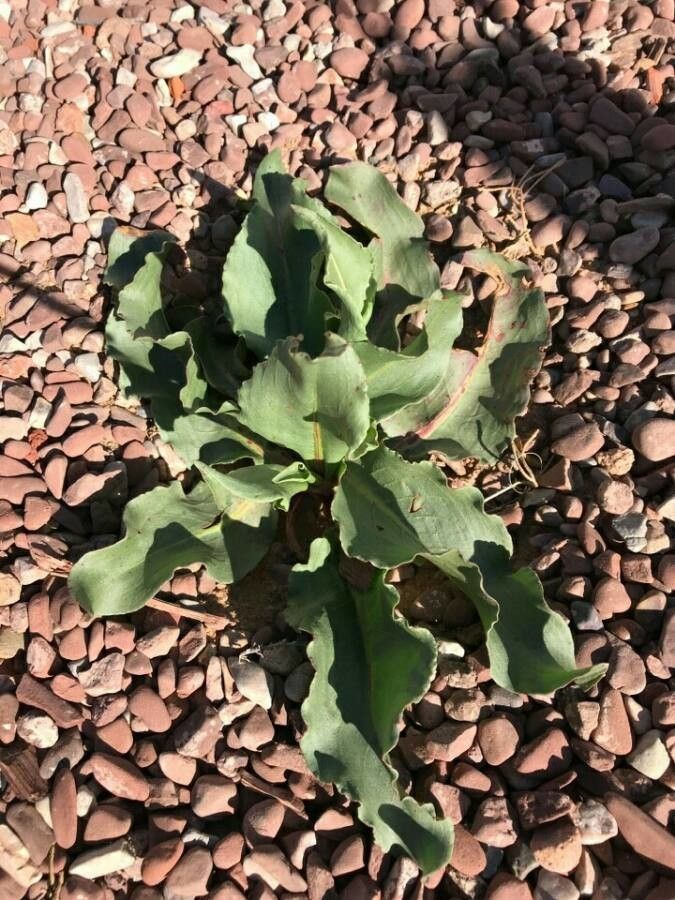
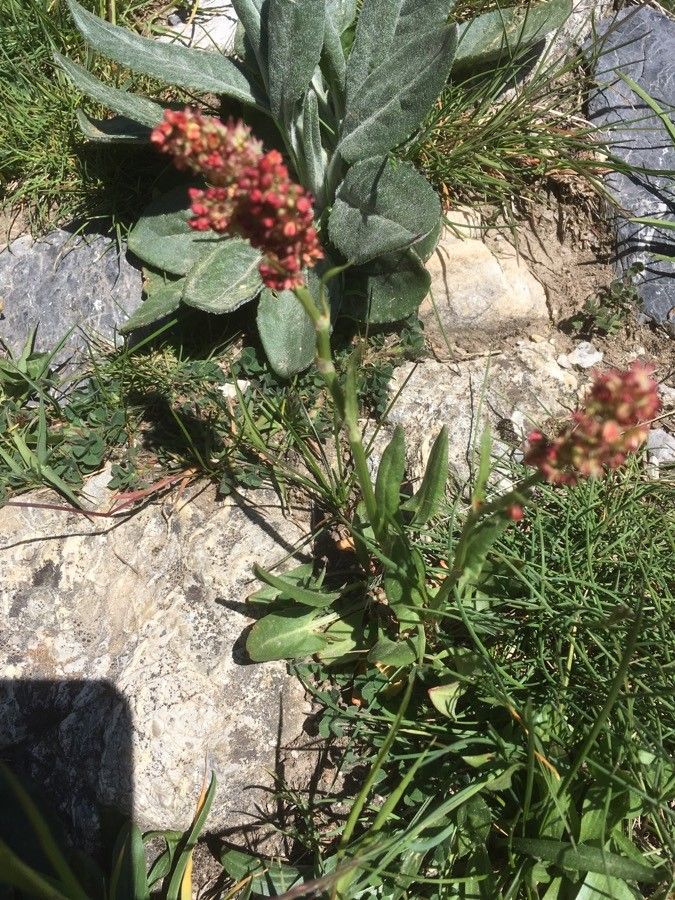
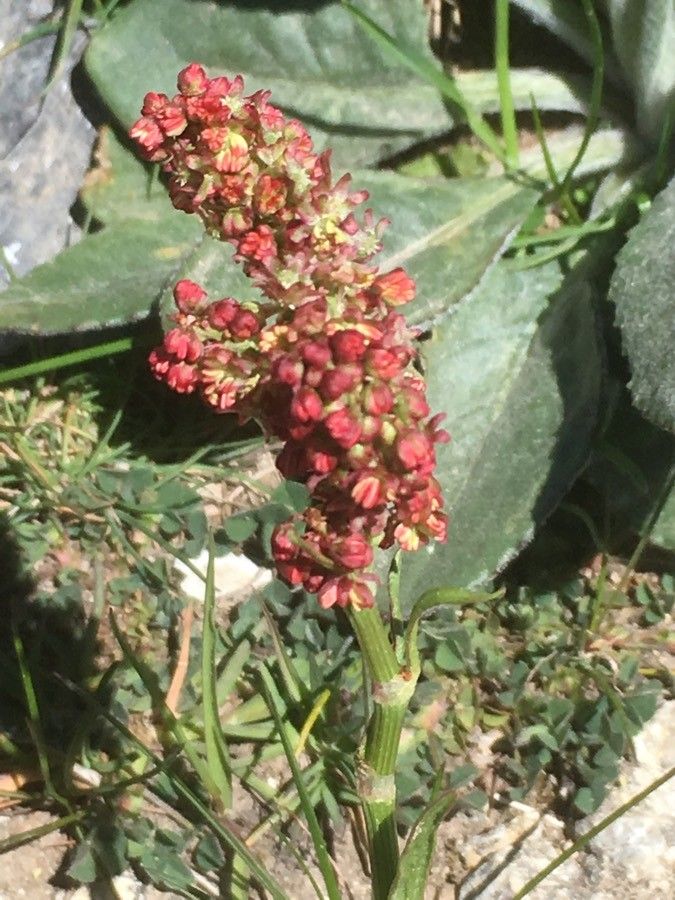
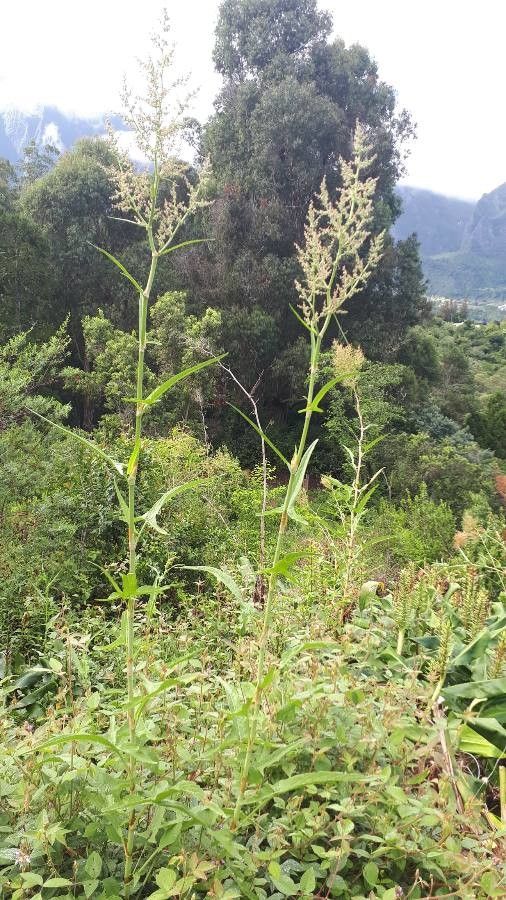
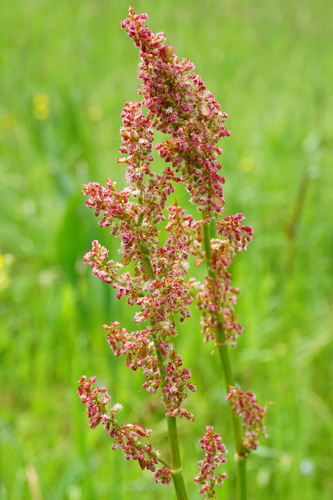
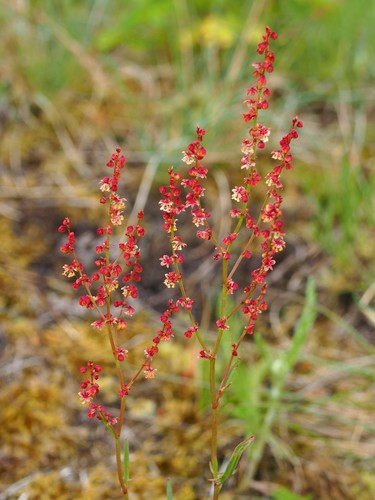
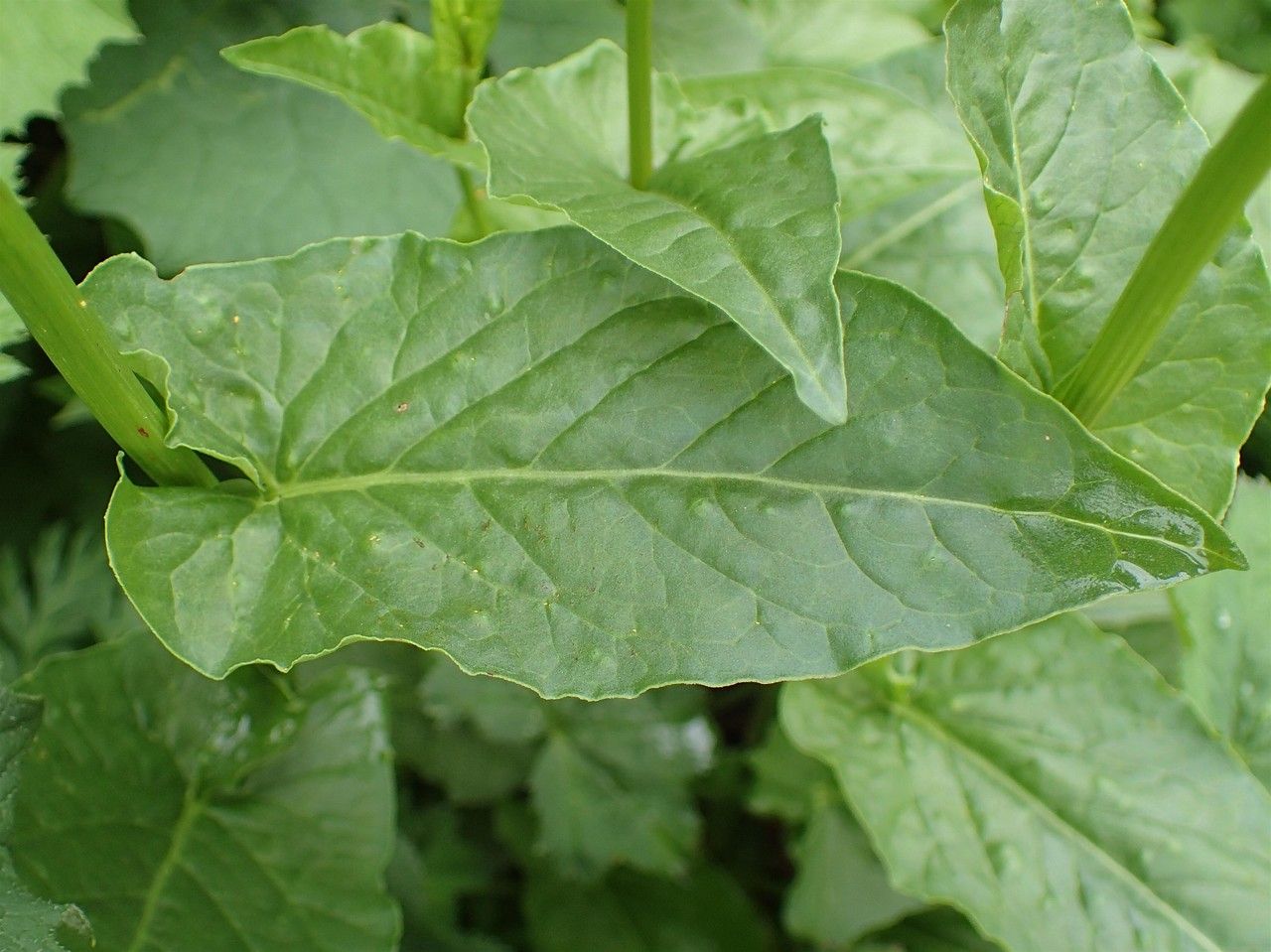
Rumex hymenosepalus, commonly known as canaigre or wild rhubarb, is a perennial plant belonging to the family Polygonaceae. Native to the southwestern United States and northern Mexico, it thrives in arid regions such as deserts, grasslands, and rocky slopes. This plant features a deep taproot, which enables it to survive in harsh environments with minimal water. It can grow up to 1 meter tall and has large leaves, green on the top and reddish-brown underneath. The flowers are small and greenish-red in color. For centuries, Native Americans have utilized Rumex hymenosepalus for its medicinal properties. The root contains high levels of tannins, which have been employed as a natural dye for textiles and as an ingredient in traditional medicines. In recent years, there has been renewed interest in canaigre due to its potential as an alternative crop for sustainable agriculture. Its deep root system is ideal for soil conservation, and its high tannin content makes it resistant to pests and diseases. Overall, Rumex hymenosepalus is a hardy plant with both historical uses and current potential in the realm of sustainable agriculture, making it an intriguing subject for researchers.
Canaigre dock has strong resistance to disease and is generally not prone to illnesses. Still, it can be vulnerable to pests and diseases found in its environment. These problems are typically not serious. Regarding care, this plant needs a moderate level of maintenance. It should be pruned regularly to preserve a good appearance and promote healthy growth. Applying fertilizer can also encourage flowering. Canaigre dock is appropriate for anyone with outdoor space, such as a garden or patio, and does not demand extensive care experience. It may, however, need more attention when grown indoors.
How to keep Rumex Hymenosepalus.
Light
Canaigre dock grows best in places with plenty of light; exposure to direct, unfiltered sunlight is crucial for its healthy development. Coming from habitats with unrestricted brightness, it can still tolerate fairly reduced sun exposure. Both excessive and insufficient light can hinder its growth.
Water
Canaigre dock is well-suited to arid environments, thriving in dry conditions with very little watering required—once a week is enough. It is usually grown outdoors, making use of natural rainfall, and can survive periods of dormancy by efficiently storing water during its active growth phase. This ability ensures its survival through dry spells.
Humidity
This plant needs special care because it loves high humidity levels of 60-80% or more. The best way to achieve this is by placing a humidifier near the plant. Daily misting is also essential! Make sure the room has good ventilation.
Temperature
Canaigre dock hails from environments with temperate conditions and usually performs best at temperatures between 50 and 77 °F (10 to 25 ℃). Because temperatures change with the seasons, it's recommended to replicate its native conditions whenever possible.
Fertilizer
One spring application of fertilizer is generally adequate for Canaigre dock, although repeated feedings can increase growth. Apply fertilizer every month to month and a half. Fertilization improves the appearance and function of the leaves, encouraging even color and a healthy texture. It also promotes root development and nutrient uptake for lasting plant health.
Pruning
Canaigre dock is a perennial plant with fleshy, tuberous roots and a rosette of basal leaves. To promote new growth and improve its appearance, prune the plant from early to late spring. This will also help remove damaged foliage and enhance air circulation. Make sure to use clean tools for effective cutting, which will improve the plant's vigor and overall look.
Botanical profile.
- Plant Type
- Herb
- Life Cycle
- Perennial
- Genus
- Rumex
- Family
- Polygonaceae
- Hardiness Zone
- 6
- Mature Height
- 91 cm
- Mature Spread
- 30 cm to 61 cm
- Leaf Color
- Green, Dark Green
- Leaf Type
- Deciduous
- Flower Color
- Pink, Red, Brown
- Flower Size
- 0.25 cm to 0.51 cm
- Bloom Time
- Mid spring, Late spring
- Planting Time
- Spring, Summer, Autumn
- Harvest Time
- Early summer, Mid summer
- Native Area
- Mexico
Other names.
Reader questions.
How should I water my Canaigre dock?
To properly water the Canaigre dock, follow these steps: 1. Use filtered water at room temperature for this plant. Tap water may contain harmful particles. 2. Make sure the water is not too cold as the Canaigre dock is accustomed to warmer environments. 3. Avoid overhead watering as it can lead to foliage problems. 4. Instead, apply filtered room temperature water directly to the soil until it is fully soaked. 5. Soaking the soil benefits the plant by keeping the roots moist and aiding nutrient absorption.
What are the sunlight requirements for Canaigre Dock?
Canaigre Dock thrives in conditions where it can receive abundant light. For healthy growth, exposure to full sun, which means above 6 hours of sunlight, is crucial, although it can also tolerate partial sun, about 3-6 hours of sunlight. It's important to observe how sunlight moves through your garden and select locations that provide a perfect balance of light and shade to ensure the well-being of your plants.
What is the ideal temperature range for growing Canaigre dock?
Canaigre dock, also known by its botanical name Rumex hymenosepalus, thrives best in moderate temperature ecosystems, particularly in a range between 50 to 77 °F (10 to 25 °C). To ensure optimal growth, it's recommended to simulate this natural temperature environment as much as possible throughout the year.
What should I do if I give my Canaigre dock too much water or not enough water?
Overwatering is a common issue that can harm your Canaigre dock. If this plant receives too much water, its stems and leaves will wilt and turn yellow. Overwatering for a long time can also cause diseases like root rot, mold, and mildew, which can kill the plant. Underwatering is less common, but still possible. When it happens, the leaves of your Canaigre dock will become brittle and brown. It's important to notice the signs of overwatering early and take action promptly. Diseases like root rot may not be fixable if you wait too long. If you see early signs of overwatering, reduce your watering schedule and check the soil drainage. Replace poorly draining soil with a loose, well-draining potting mix. On the other hand, if your Canaigre dock lacks water, simply increase the watering frequency until the signs disappear.
Can Canaigre Dock grow under artificial lighting?
Yes, Canaigre Dock can grow under artificial lighting, especially when natural sunlight is insufficient, like during winter or in spaces that do not receive enough sunlight. Artificial lights, such as LED lights, can be customized to offer the specific wavelengths needed by the plant. Full sun plants require 30-50W/sq ft, partial sun plants 20-30W/sq ft, and full shade plants 10-20W/sq ft of artificial light. The light source should be placed 12-36 inches above the plant, mimicking natural sunlight conditions for 8-12 hours per day.
Does Canaigre dock require frost protection measures during winter?
Canaigre dock is highly cold-tolerant and does not need additional frost protection measures during the winter months. However, it is advisable to water the plant generously before the first freeze in autumn. This ensures the soil stays moist when it enters a frozen state, helping to prevent drought and water scarcity for the plant during the winter and early spring.
How often do I need to water my Canaigre plant?
If your Canaigre dock plant is in a pot, the most accurate way to determine if it needs water is to check the soil with your finger. If the top two to three inches of soil feel dry, it's time to water it. In case you're growing your Canaigre dock outdoors in the ground, you can use a similar method. Once you find that the top few inches of soil have become dry, it's a sign to add water. Typically, you'll need to water this plant about once a week during the spring and early fall. However, during extremely hot weather, you may need to increase watering to about twice a week or more. It's important to note that mature, well-established Canaigre dock plants can withstand drought quite well.
What are the symptoms of insufficient or excessive light exposure in Canaigre Dock?
Symptoms of insufficient light in Canaigre Dock include smaller new leaves, leggy or sparse growth, faster leaf drop, slower or no new growth, and lighter-colored new leaves. Excessive sunlight can cause chlorosis, sunscald, leaf curling, wilting, and leaf scorching, indicating damage to the plant’s ability to photosynthesize and maintain overall health.
What should be done if the winter temperature drops below -25°C?
While Canaigre dock is extremely cold-tolerant, winter temperatures should be maintained above -25°C. If temperatures do drop below this threshold, you may not notice any immediate changes during winter, but there could be a decrease in sprouting or no sprouting at all come springtime. If this happens, it is suggested to remove any parts of the plant that have failed to sprout in the spring.
How much water does my Canaigre dock require?
When it's time to water your Canaigre dock, don't be afraid to give it a good amount of water. Make sure the first two to three inches of soil are dry before watering thoroughly. It's important to soak the soil completely, adding enough water so that it drains out of the pot's drainage holes. If you don't see excess water draining, you may not have watered enough, but be careful not to let water accumulate in the soil, as it can harm the plant. If water is not draining well, it could be due to poorly draining soil, which is not good for the plant's health. If the plant is outdoors, about 1 inch of rain per week should be enough.
How to ensure Canaigre Dock receives optimal light?
To ensure Canaigre Dock receives optimal light, gradually move indoor plants to a sunnier location until they achieve at least 6 hours of direct sunlight daily, utilizing a south-facing window and keeping curtains open during the day. Artificial lighting, such as desk or ceiling lamps or professional grow lights, can supplement light for large or immovable plants. Outdoors, gradually acclimate plants to sunlight to prevent sunburn. If sunlight is obstructed, consider pruning trees or relocating plants to sunnier areas. Remember, parts of the plant that suffered from insufficient light may not recover, but new growth should be healthy after adjusting light exposure.
How can Canaigre dock be protected against high temperatures?
Canaigre dock is not tolerant to high temperatures. Growth stops and the plant becomes more susceptible to rot when temperatures exceed 25°C. To protect it, you can trim away sunburned and dried-up parts, move the plant to a shaded location away from midday and afternoon sun, or use a shade cloth. Watering the plant in the morning and evening can also help keep the soil moist and temperature regulated.