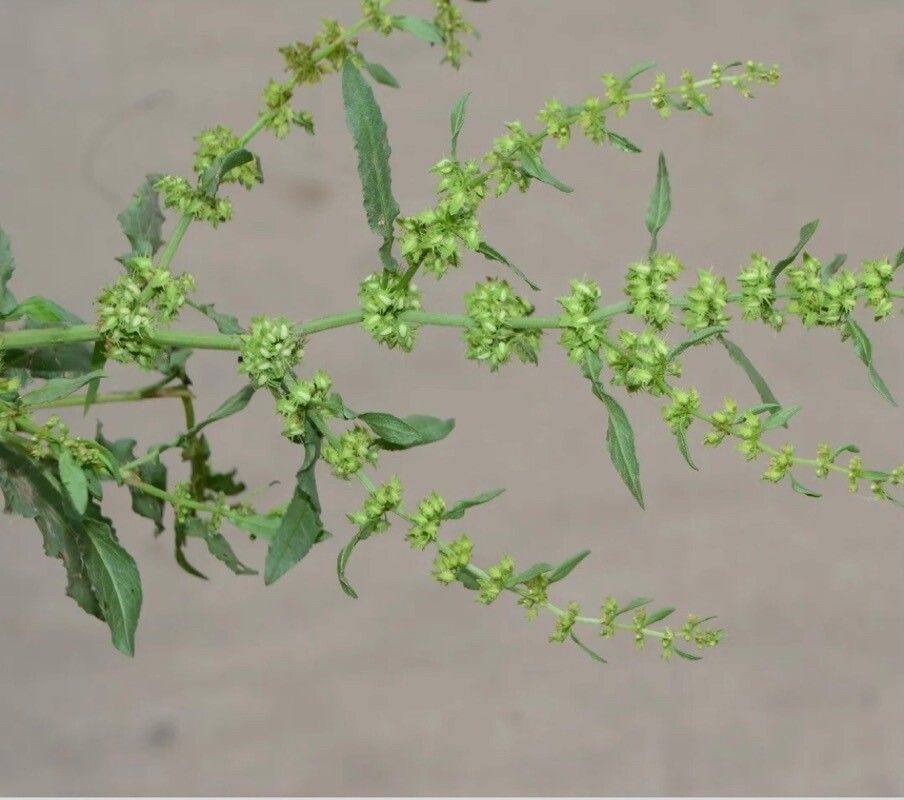
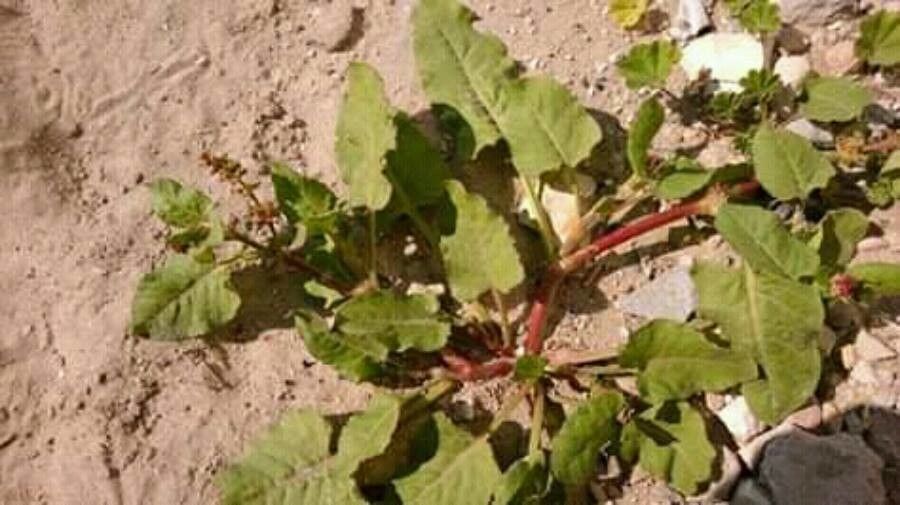
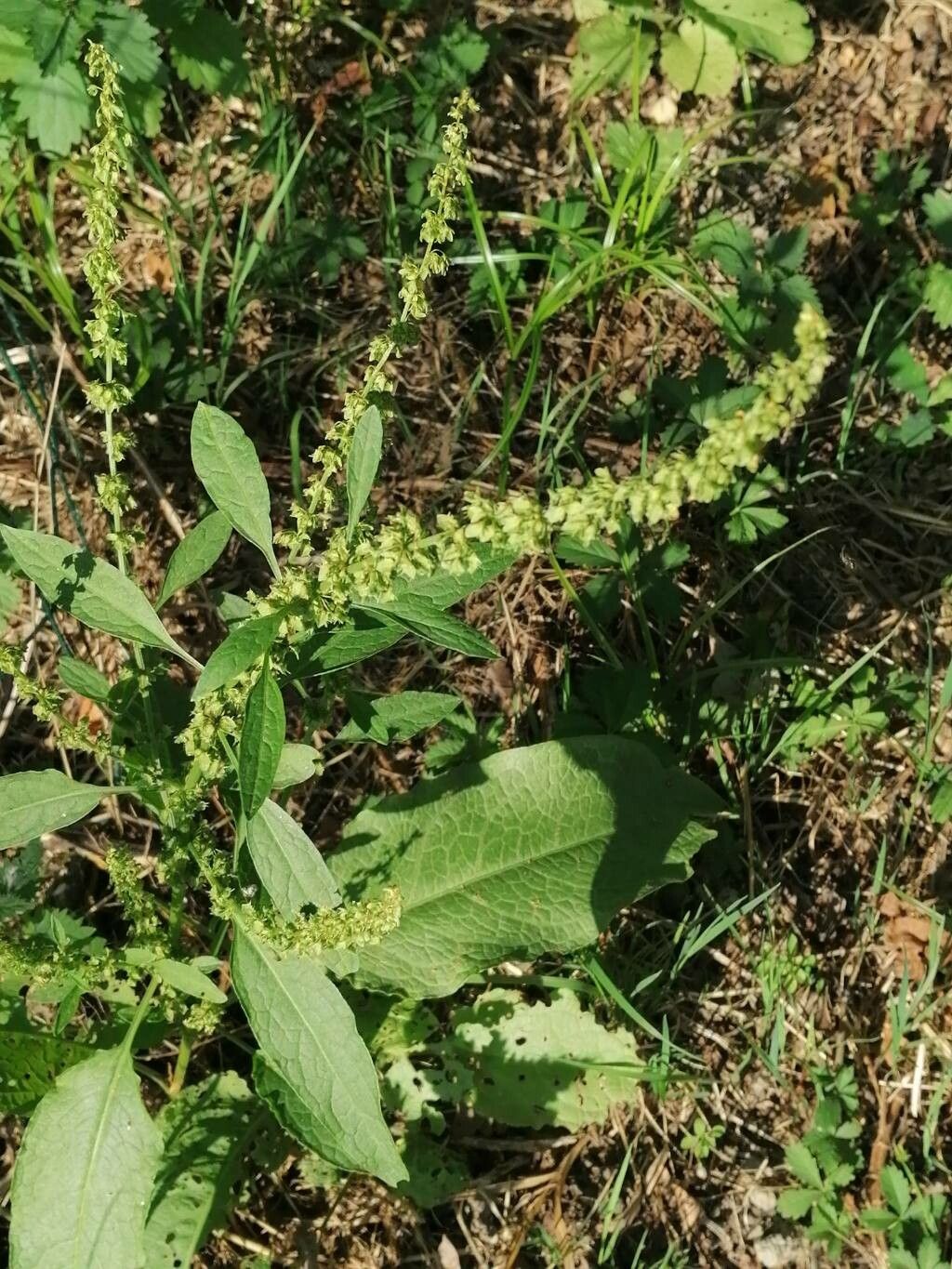
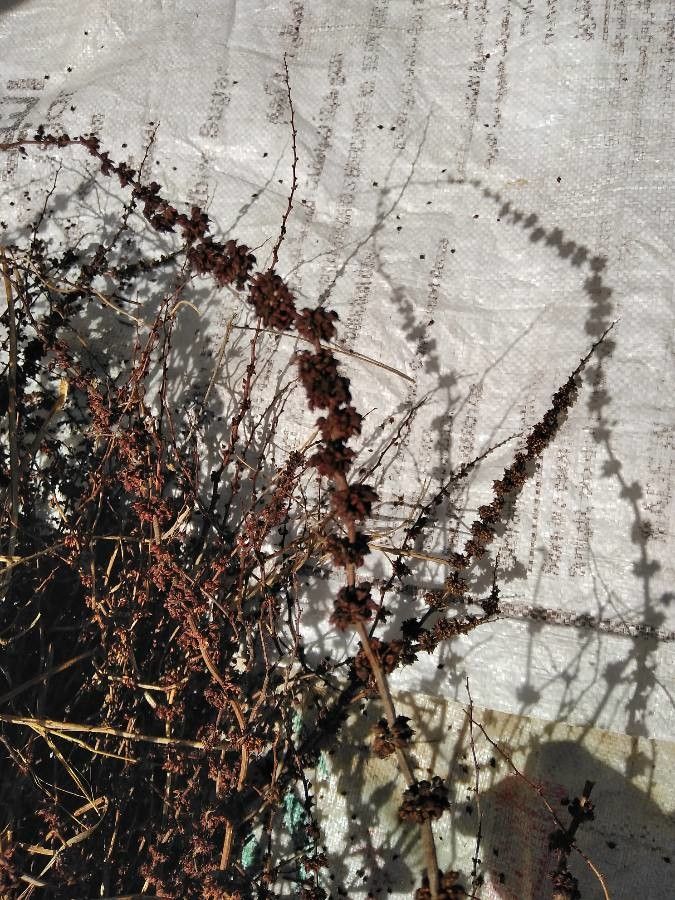
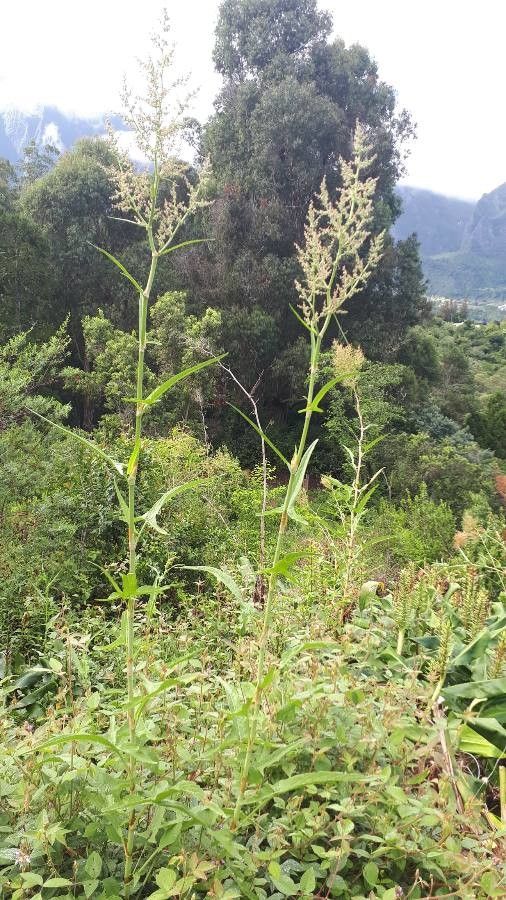
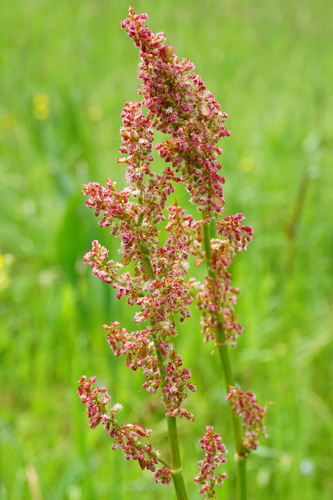
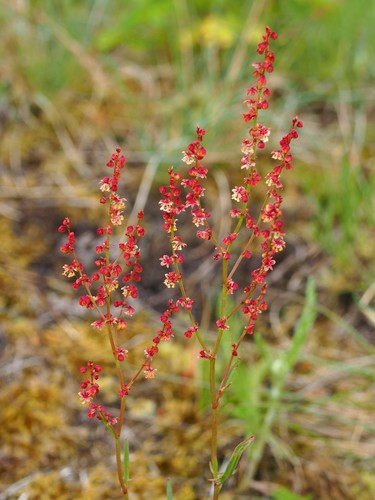
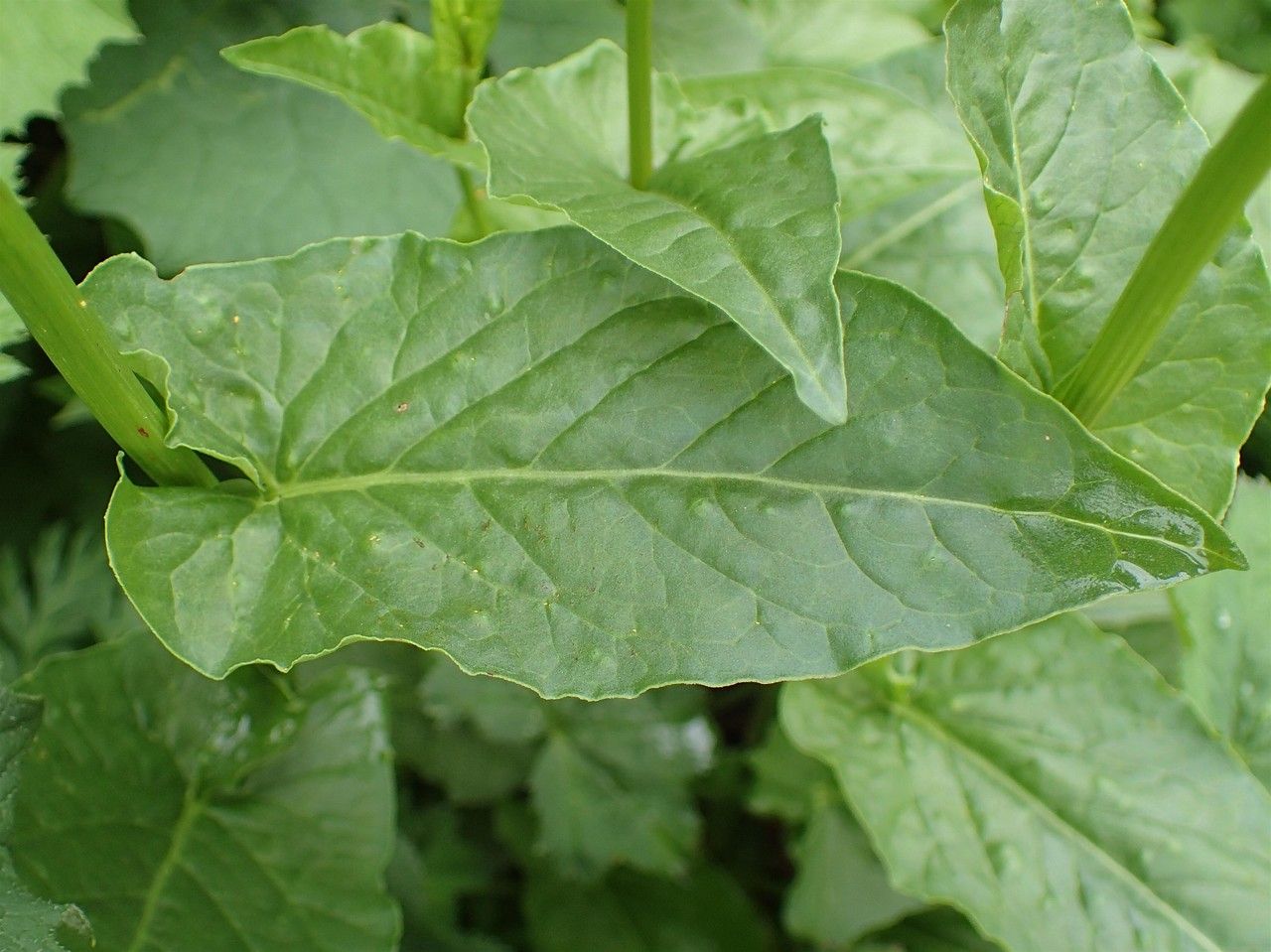
Rumex dentatus is a species of flowering plant in the knotweed family known by the common names toothed dock and Aegean dock. It is native to parts of Eurasia and North Africa, and it is widely known elsewhere as an introduced species. It grows in disturbed habitat, often in moist areas, such as lakeshores and the edges of cultivated fields. It is an annual or biennial herb producing a slender, erect stem up to 70 or 80 centimeters in maximum height. The leaves are lance-shaped to oval with slightly wavy edges, growing to a maximum length around 12 centimeters. The inflorescence is an interrupted series of clusters of flowers, with 10 to 20 flowers per cluster and each flower hanging on a pedicel. Each flower has usually six tepals, the 3 inner of which are edged with spinelike teeth and have tubercles at their centers. This plant has allelopathic activity.
Aegean dock has moderate resistance to disease but can be susceptible to issues like leaf spot. Its susceptibility to insect pests varies by variety, though most varieties tend to be more vulnerable to pests. For care, Aegean dock needs regular watering and fertilizing, and frequent removal of yellow leaves. Pests and diseases should be managed as they arise, and the plant should be harvested promptly. Aegean dock is appropriate for people who can spare some time and effort for regular maintenance.
How to keep Rumex Dentatus.
Light
Aegean dock performs best in locations with plentiful sunlight, although it tolerates moderate light fairly well. Coming from habitats with abundant sun exposure, it generally grows well under such conditions. Both insufficient and excessive sunlight can impede its growth and may harm its vitality.
Water
The Aegean dock thrives with consistent hydration that mimics the steady rainfall of its natural habitat. It prefers moderate moisture levels but can tolerate brief periods of mild drought. To keep the plant healthy, weekly watering is essential. This regular watering promotes robust foliage and resilience during its active growing season outdoors.
Temperature
Moderate temperatures—about what people usually find comfortable—are best for Aegean dock. It does well in conditions that are not excessively hot or cold. The primary problem with high heat is the potential for sunburn, so providing some shade in summer is recommended to prevent overheating. When temperatures fall, Aegean dock goes dormant; to keep it growing year-round you must keep winter temperatures higher. Frost can harm the plant and should be avoided.
Fertilizer
Aegean dock produces nitrogen naturally through its root system, lessening the need for extra fertilizers. It prefers well-draining soils, and additional fertilization may be unnecessary depending on soil composition. However, low potassium or phosphorus can impede successful growth, while nitrogen deficiency does not cause problems.
Pruning
The Aegean dock is adaptable to a variety of environments and features broad, serrated leaves. To promote healthy growth and disease prevention, it's best to prune it lightly from early to late spring. When trimming, cut just above the nodes to encourage new shoots. For the best results in growth and health, be sure to follow local care guidelines.
Botanical profile.
- Plant Type
- Herb
- Life Cycle
- Annual, Biennial
- Genus
- Rumex
- Family
- Polygonaceae
- Hardiness Zone
- 3-8
- Mature Height
- 61 cm
- Mature Spread
- 61 cm
- Leaf Color
- Green, Dark Green
- Leaf Type
- Deciduous
- Flower Color
- Yellow, Green
- Flower Size
- 2.54 cm
- Bloom Time
- Late spring, Early summer, Mid summer
- Planting Time
- Spring, Summer
- Harvest Time
- Mid summer, Late summer, Early fall
- Native Area
- Nepal, Saudi Arabia, Libya, Egypt, Turkey, India, Tunisia, Cyprus, Bulgaria, Pakistan, Laos, Bangladesh, Greece, Yemen, Ukraine, China, Uzbekistan, Russia, Afghanistan, Iraq, Kazakhstan, Vietnam, Myanmar, Japan, Israel, Oman, Iran, Albania, Romania, Turkmenistan
Other names.
Reader questions.
What are the sunlight requirements for plants?
Plants require specific amounts of sunlight to thrive, categorized under full sun and partial sun conditions. Full sun refers to areas receiving above 6 hours of direct sunlight daily, whereas partial sun implies about 3-6 hours of sunlight. It's crucial to observe how sunlight moves through your garden to select the ideal spots for your plants, balancing light and shade to ensure their well-being.
What are the ideal growing conditions for Aegean dock?
Aegean dock thrives in moderate temperatures that most people find comfortable, benefiting from conditions that are neither too hot nor too cold. High temperatures pose a risk of sunburn, making it advisable to provide some shade during the summer months to avoid excessive heat. In contrast, Aegean dock enters a dormant state when temperatures drop. To encourage continuous growth, especially through winter, keeping temperatures above 20°C is beneficial. It's crucial to ensure the plant is protected from frost, which can damage it, by keeping it above the freezing point and considering indoor protection or a temporary greenhouse when temperatures approach -5°C (25°F).
How does the Aegean dock perform under different lighting conditions?
The Aegean dock, originating from sun-rich habitats, flourishes in environments with abundant sunlight, yet it can tolerate moderate lighting conditions fairly well. Both a deficiency and an excess of sunlight can hinder the plant's growth, affecting its health. When natural light is insufficient, especially during winter or in less sunny locations, supplemental artificial lighting can provide a solution, promoting healthier growth. For optimal growth under artificial lighting, LED lights are recommended for their ability to offer specific wavelengths needed by plants, with full sun plants requiring 30-50W/sq ft, partial sun plants 20-30W/sq ft, and full shade plants 10-20W/sq ft of artificial light.
How does Aegean dock respond to low temperatures, and what remedies are suggested?
Aegean dock has a moderate tolerance for low temperatures and performs best within a range of 20°C to 35°C. It's vital to keep the plant above 0°C during the winter to avoid frost damage. Exposure to temperatures below -35°C can darken the leaves and lead to severe symptoms such as water-soaked necrosis, wilting, drooping, and eventual browning of the leaves. The recommended solutions include trimming frost-damaged parts, moving the plant to a warmer indoor setting, or establishing a makeshift greenhouse for protection. A south-facing window is ideal for indoor placement to ensure ample sunlight, supplemented with artificial lighting if necessary.
What are the symptoms of inadequate lighting for Aegean dock?
When Aegean dock is grown indoors or under insufficient light, it may exhibit symptoms such as small leaves, leggy or sparse growth, faster leaf drop, slower or no new growth, lighter-colored or chlorotic leaves, sunscald, leaf curling, wilting, and leaf scorching. These symptoms indicate a light deficiency, affecting the plant's ability to photosynthesize and maintain healthy growth.
What should be done if Aegean dock is exposed to high temperatures?
During summer, it's essential to keep Aegean dock in conditions below 35°C to prevent the plant from experiencing slowed growth, lighter leaf color, and an increased risk of sunburn as temperatures rise above 38°C. To mitigate these effects, trim away any sunburned or dried parts of the plant, reposition it to a shady area away from the intense afternoon sun, and water the plant thoroughly in the mornings and evenings to maintain soil moisture.
How can I ensure my Aegean dock receives enough light?
To ensure your Aegean dock receives sufficient light, gradually acclimate it to a sunnier spot, achieving at least 6 hours of direct sunlight daily. For indoors, utilize a south-facing window or supplement with artificial grow lights for adequate light exposure. Outdoors, avoid sudden changes in light intensity to prevent sunburn. Minimize obstructions like overhanging branches and consider transplanting smaller plants to sunnier locations with good drainage. This gradual adaptation to more sunlight promotes healthy growth, with new growth appearing robust after the adjustment.