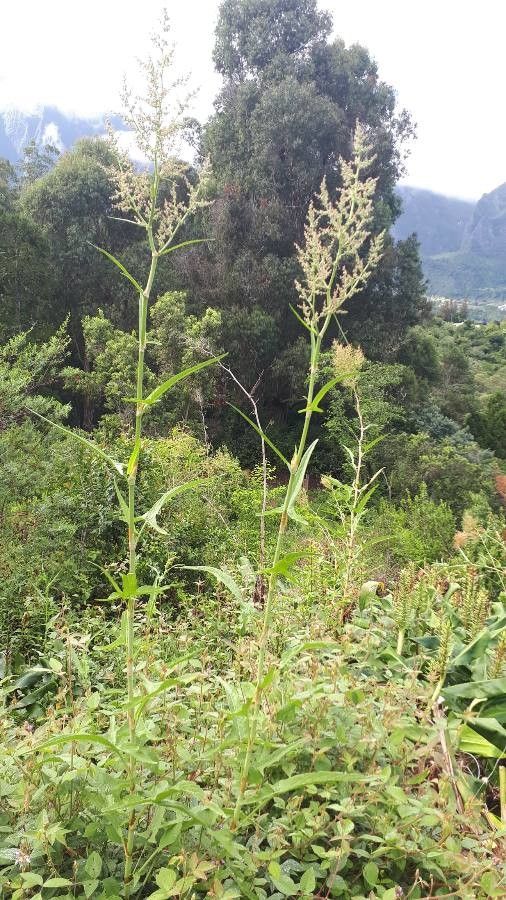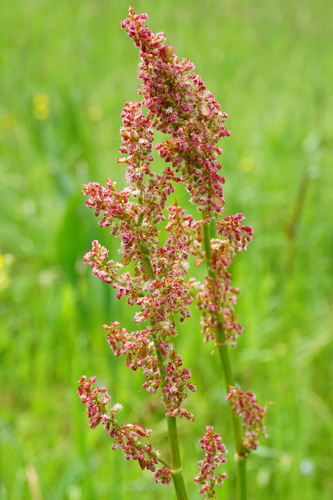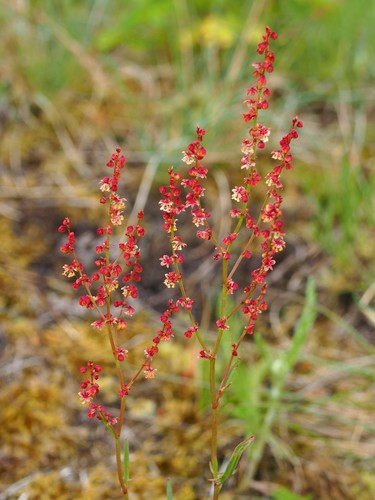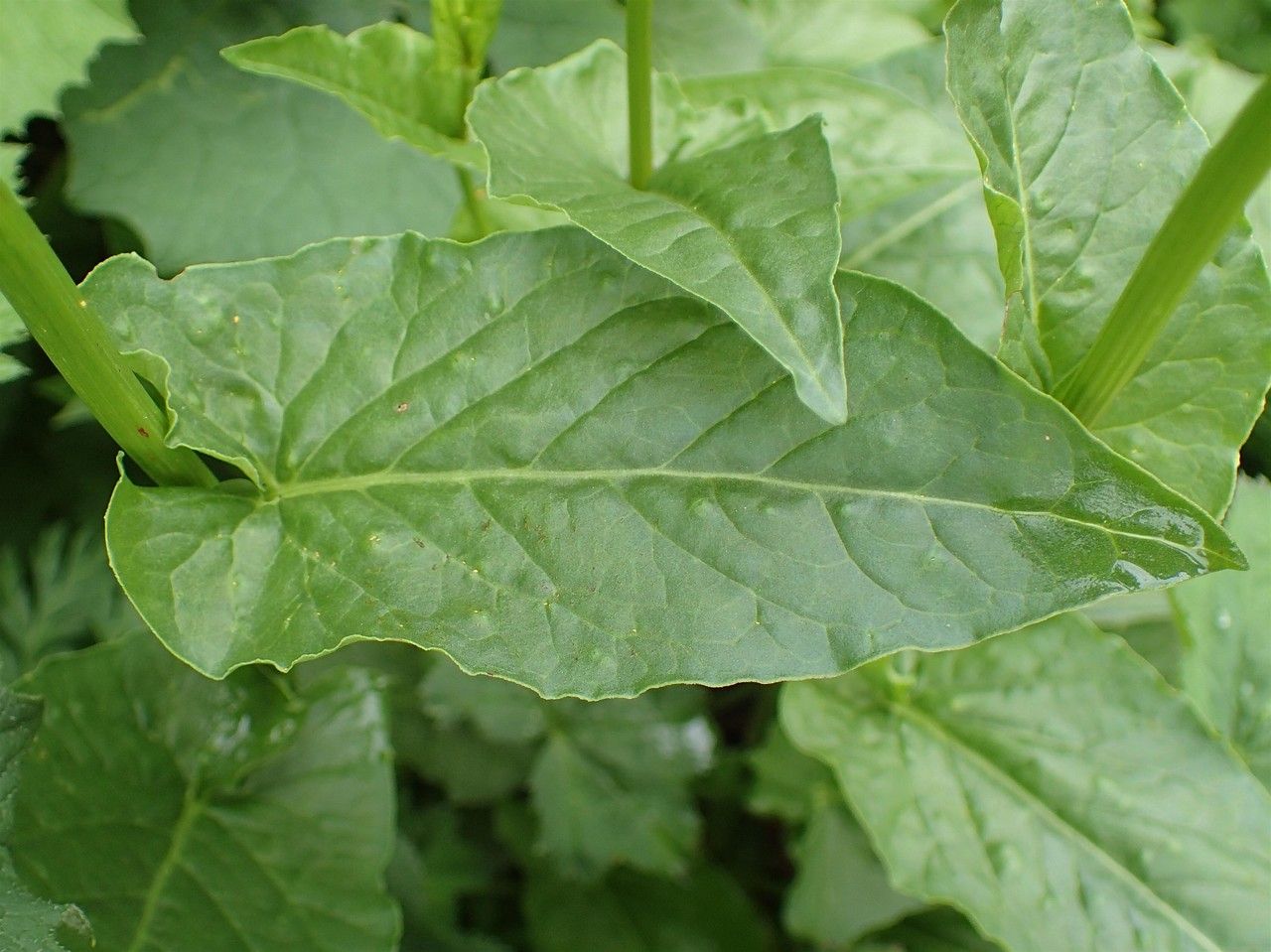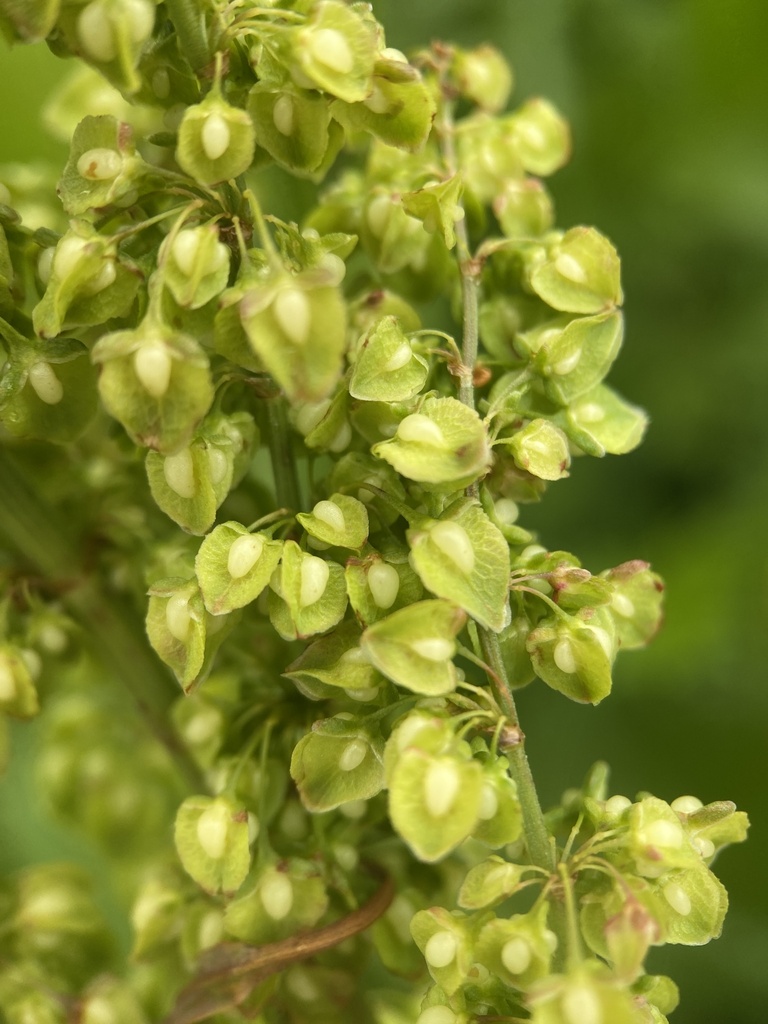
Rumex crispus, commonly known as curly dock, is a perennial herbaceous plant belonging to the family Polygonaceae. Native to Europe and Asia, it has now spread worldwide. The plant can grow up to 1 meter tall and features a deep taproot system that can extend up to 1.5 meters in length. The leaves of Rumex crispus are long, narrow, and have wavy edges, which give it the name "curly dock." Initially green, the leaves turn reddish-brown as they mature. The plant produces small greenish flowers that bloom from June through September. Rumex crispus has been used for medicinal purposes for centuries due to its high content of vitamins A and C, iron, calcium, potassium, magnesium, and other minerals. It is believed to have diuretic properties, which can help treat urinary tract infections. The roots of Rumex crispus have been used as a natural remedy for constipation, owing to their laxative properties. Additionally, they are thought to help with skin conditions such as eczema when applied topically. Despite its medicinal benefits, Rumex crispus can be considered an invasive weed in some areas due to its ability to spread rapidly through seed dispersal or by root fragments breaking off during cultivation or soil disturbance. Overall, Rumex crispus is an interesting herbaceous perennial plant with many potential health benefits when used properly under medical supervision or guidance from an experienced herbalist or naturopathic doctor.
Curly dock is named for the distinctive curly and wavy edges of its leaves. The species name, "crispus," means "curly," emphasizing this characteristic feature. The term "dock" typically refers to the firm part of an animal's tail; however, it can also denote a type of unwelcome grass weed. Since this plant is a kind of grass weed, it has been given the name "curly dock."
Curly dock has strong resistance to disease and generally does not suffer from illnesses. Still, it can be vulnerable to pests and diseases present in its environment. Such problems are typically mild. Regarding care, the plant demands moderate maintenance. It should be pruned regularly to keep a neat appearance and support healthy growth. Fertilizing can also encourage flowering. Curly dock is appropriate for anyone with outdoor space, like a garden or patio, and does not require extensive gardening experience. It may need more attention if grown indoors.
How to keep Rumex Crispus.
Light
Curly dock does best in sites that receive unobstructed sun all day, though it also prospers with moderate sunlight. It originated in environments characterized by intense sunlight. The healthiest growth occurs under those conditions. Too little light results in poor growth, while too much can cause singeing.
Water
Curly dock grows well in a range of moisture conditions, but it prefers well-drained soil with moderate moisture. It is a resilient plant and can tolerate brief periods of dryness. For best results, water it consistently, ideally once a week. It's also best to place curly dock outdoors so it can benefit from natural rainfall during its active growing season.
Humidity
This plant needs special care because it loves high humidity levels of 60-80% or more. The best way to achieve this is by placing a humidifier near the plant. Daily misting is also essential! Make sure the room has good ventilation.
Temperature
Curly dock is a temperate-region plant with a favored temperature range of 41 to 89 ℉ (5 to 32 ℃). It naturally occurs in climates featuring mild to warm summers and cool to cold winters. In summer it prefers temperatures between 68 and 86 ℉ (20 to 30 ℃), while in winter it can tolerate lows of 23 ℉ (-5 ℃). To cope with seasonal changes, curly dock requires periodic watering and pruning to encourage healthy growth and prevent frost damage.
Fertilizer
Applying fertilizer once in spring is typically adequate for Curly dock, though multiple feedings can maximize growth. Feed once every one to one and a half months. Fertilization improves the leaves' appearance and function, maintaining consistent color and a healthy texture. It also encourages root growth and nutrient uptake, supporting long-term plant health.
Botanical profile.
- Plant Type
- Herb
- Life Cycle
- Perennial
- Genus
- Rumex
- Family
- Polygonaceae
- Hardiness Zone
- 4-8
- Mature Height
- 30 cm
- Mature Spread
- 61 cm
- Leaf Color
- Green
- Leaf Type
- Deciduous
- Flower Color
- Green, Yellow, Red
- Flower Size
- 0.25 cm
- Bloom Time
- Late spring, Early summer, Mid summer
- Planting Time
- Spring, Summer
- Harvest Time
- Early summer, Mid summer
- Native Area
- Libya, Egypt, Turkey, Sweden, Austria, Morocco, Belarus, Uzbekistan, Russia, Iraq, Germany, Romania, Belgium, Netherlands, Portugal, Saudi Arabia, France, Tunisia, Cyprus, Bulgaria, Poland, Greece, Ukraine, China, Norway, Afghanistan, Italy, Kazakhstan, Spain, Switzerland, Denmark, Myanmar, Mongolia, Israel, Finland, Iran, Albania, Ireland, United Kingdom, Hungary, Algeria, Thailand
Other names.
Reader questions.
When Should I Water My Curly Dock?
Watering your curly dock is essential for its health, growth, and resistance against diseases. Check the soil moisture by inserting a finger up to the second knuckle; if dry, it's time to water. Wilting, droopy leaves, curling, yellowing, or a change in leaf color to dull or yellow suggest the need for watering. Also, check the soil dryness at root level with a trowel; dry soil indicates a need for water. Remember, during pre-flowering and in high temperatures or direct sunlight, your curly dock will need more frequent watering. Avoid over-watering, as it can lead to root diseases, and similarly, avoid under-watering to prevent wilting or even death of the plant.
What are the sunlight requirements for Curly Dock?
Curly Dock demands specific sunlight conditions for optimal growth. It flourishes with full sun exposure, defined as receiving more than 6 hours of sunlight daily. However, it also adapts well to partial sun, requiring about 3-6 hours of sunlight. It’s crucial to observe the movement of sunlight through your garden, selecting areas that offer a healthy balance of light and shade. This strategic placement ensures your plant's happiness and promotes its best growth.
What are the essential care requirements for curly dock?
Curly dock, known botanically as Rumex crispus, thrives in temperate climates, favoring mild to warm summers and cool to cold winters. Ideally, it grows in temperatures ranging from 41 to 89°F (5 to 32°C), preferring 68 to 86°F (20 to 30°C) during summer months and can withstand winter temperatures as low as 23°F (-5°C). Adequate periodic watering and pruning are crucial for its health, especially to prevent frost damage. Despite its strong cold resistance, if temperatures are expected to drop severely, it's advisable to cover the plant with soil or straw and water it abundantly before the first freeze in autumn to keep the soil moist.
How Should I Water My Curly Dock?
Curly dock, or Rumex crispus, benefits from bottom-watering, where you allow the plant to absorb water from the bottom up by placing the pot in a tray of water. This minimizes the risk of fungal diseases by avoiding wet foliage. Use a watering can with a narrow spout to target water directly to the soil's surface, ensuring water reaches the roots without excessive moisture on the leaves.
How does Curly Dock react to different sunlight exposures?
Curly Dock originated in environments with abundant sunlight, showing the healthiest growth under such conditions. It thrives in areas that receive unobstructed sunlight throughout the day but can also prosper with moderate sun exposure. The plant's growth could be compromised if it doesn't receive enough light, while too much sun can damage it. To compensate for insufficient natural sunlight, especially during winter or in darker spaces, artificial lighting can be an excellent alternative. Properly configured artificial lighting, mimicking the natural sunlight conditions, supports faster and healthier plant development.
How does low temperature affect curly dock and what are the solutions?
Curly dock exhibits a high tolerance to cold temperatures, thriving best when kept above a certain minimum temperature threshold. During winter, it's essential to ensure the temperature does not fall below this minimum to avoid adverse effects. Though curly dock may not show noticeable changes through winter, exposure to temperatures below the critical limit can lead to decreased sprouting or possibly no sprouting in spring. To address this, it's advised to remove parts of the plant that have failed to sprout in spring, fostering new growth and health of the plant.
How Much Water Does Curly Dock Really Need?
Curly dock prefers consistently moist soil without being waterlogged. The amount of water needed depends on several factors including pot size, root depth, and the plant's size. Utilize pots with good drainage and water generously, ensuring water reaches the deep roots. Observe your plant for signs such as wilted or droopy appearance due to under-watering, and yellowing leaves or root rot from over-watering. Maintaining a balance is key, allowing the soil to remain moist but not soggy.
What symptoms indicate inappropriate light exposure for Curly Dock?
Inappropriate light exposure can trigger various symptoms in Curly Dock. Insufficient light may result in smaller new leaves, leggy or sparse growth, faster leaf dropping, slow or halted growth, and paler new leaves. Too much sunlight can lead to chlorosis, where leaves turn yellow due to chlorophyll breakdown, sunscald with pale or necrotic areas on leaves, leaf curling as a protective measure against too much light, wilting due to water loss, and leaf scorching characterized by dry, crispy leaf edges. Recognizing these symptoms early helps in taking corrective actions to ensure the plant’s health.
What should be done if curly dock is exposed to high temperatures?
Curly dock should be kept below a maximum temperature threshold during summer to prevent stress and damage. Exposure to temperatures above this limit can cause the leaves to lighten in color, curl, become susceptible to sunburn, and in severe cases, lead to the wilting and drying out of the entire plant. To mitigate such issues, removing sunburned and dried parts is recommended. Furthermore, moving the plant to a shaded area or providing shade with a cloth during peak sun hours can protect it. Ensuring the soil remains moist through morning and evening watering can also alleviate stress from high temperatures.
What Kind of Water is Best for Curly Dock?
Distilled water is ideal for curly dock as it's free from minerals and contaminants that could harm the plant. Rainwater is another great option, while filtered water is acceptable if it removes harmful elements. Tap water is least preferred due to potential chlorine and fluoride content, which can stress the plant. To make tap water safer, let it sit out for 24 hours for chlorine to evaporate or use a filter. Room temperature water is best to avoid shocking the plant.
How can one address the light conditions for Curly Dock to promote healthy growth?
Adjusting light conditions for Curly Dock involves several strategies. Indoors, gradually move your plant to sunnier spots, aiming for at least 6 hours of direct sunlight daily, utilizing south-facing windows for maximum light. Consider artificial lighting for larger plants or those that cannot be moved easily, keeping lights on for about 8 hours a day. Outdoors, adapt your plant to increased sunlight gently to prevent sunburn. Removing obstacles that cast shade and, if necessary, transplanting to a sunnier location can significantly improve sunlight exposure. While damaged parts may not recover, new growth should be healthy post-adjustment. It’s essential to minimize sudden light intensity changes to protect the plant.
How Do Curly Dock's Watering Needs Change with the Seasons?
In spring, maintain adequately moist soil to support new growth. Summer's peak growth phase might require more frequent watering due to faster evaporation. In autumn, as growth slows, water only when the soil is dry to the touch to prevent root disease. During winter's dormancy, reduce watering significantly, only moistening the soil when it becomes very dry. Adapt your watering routine according to these seasonal needs to keep your curly dock healthy.