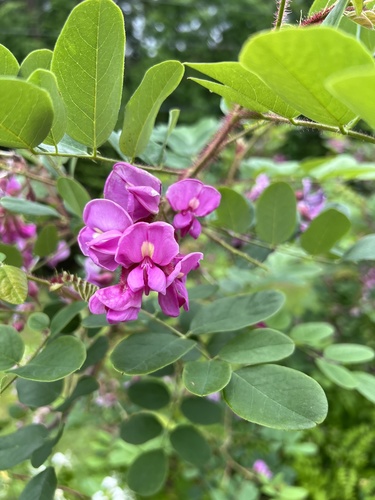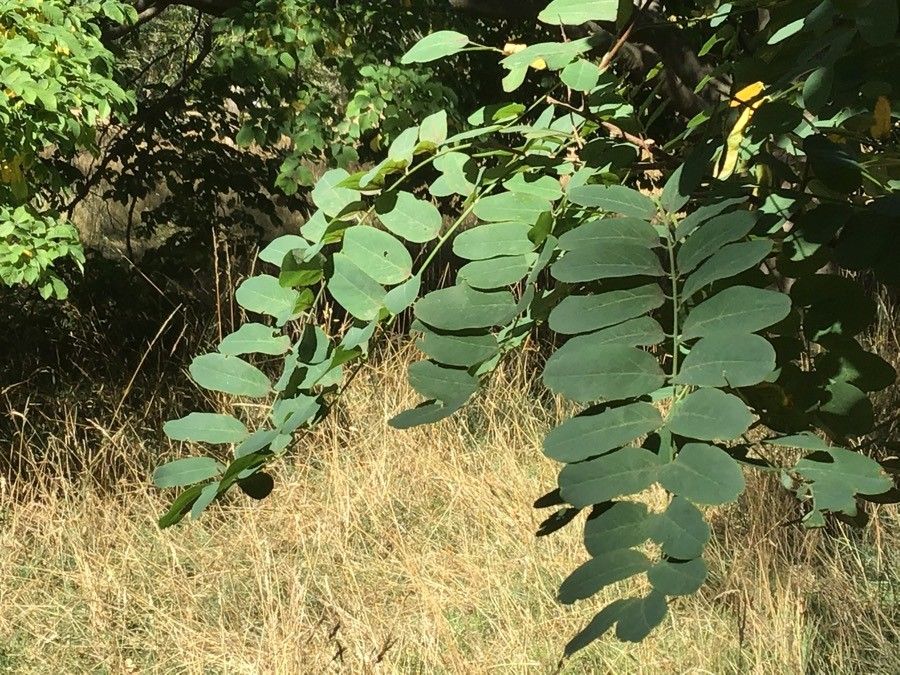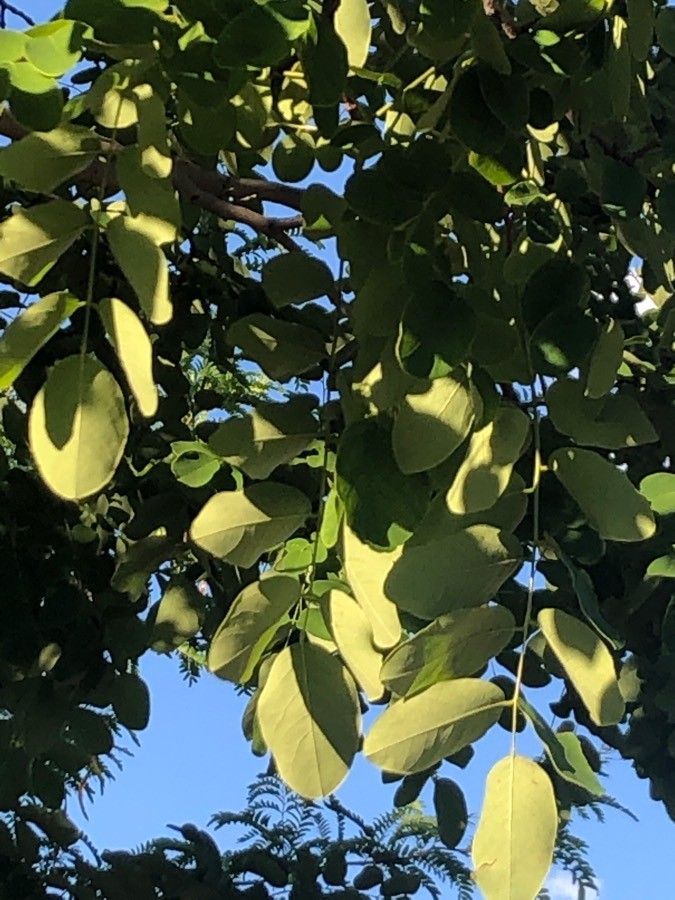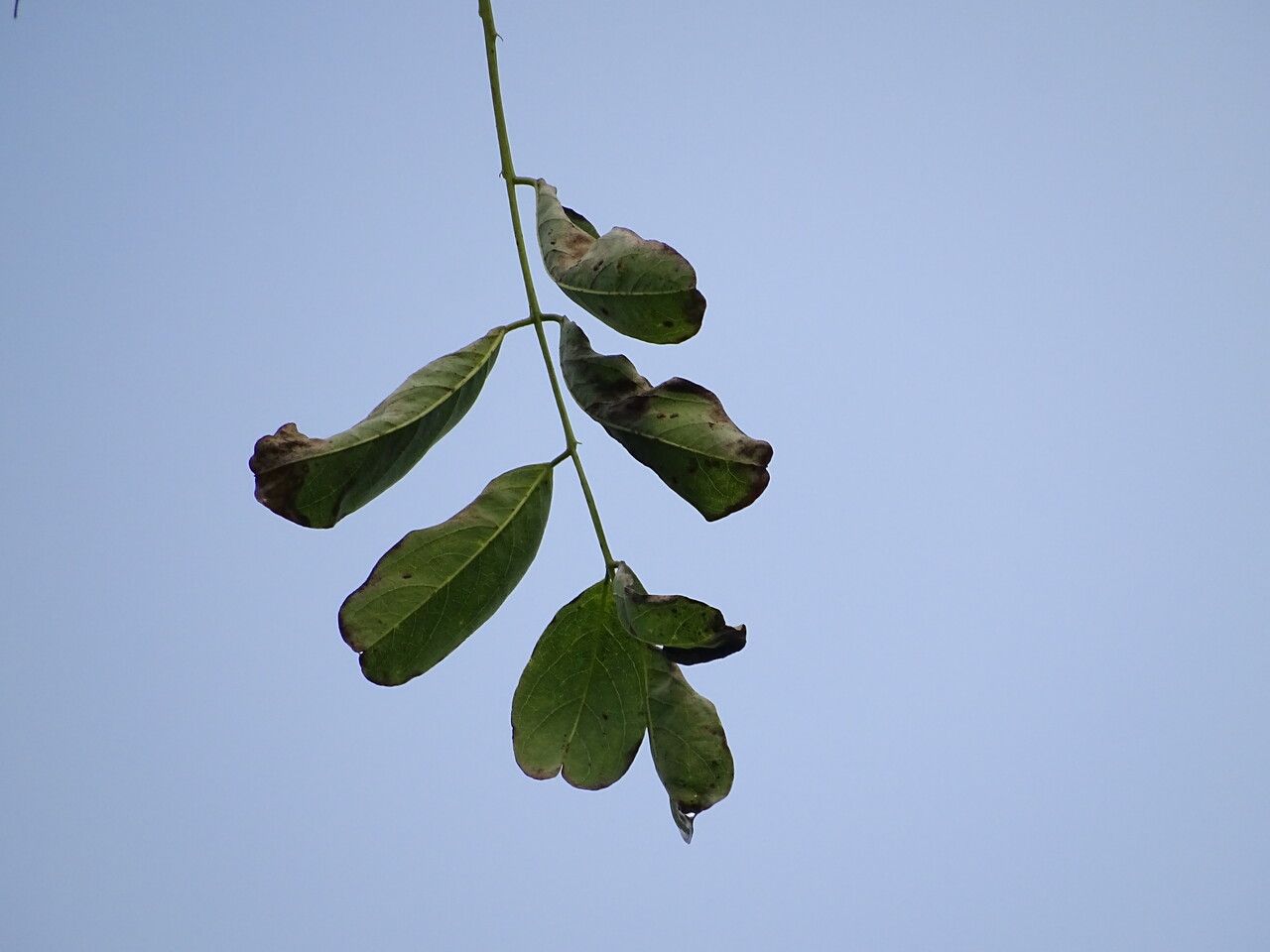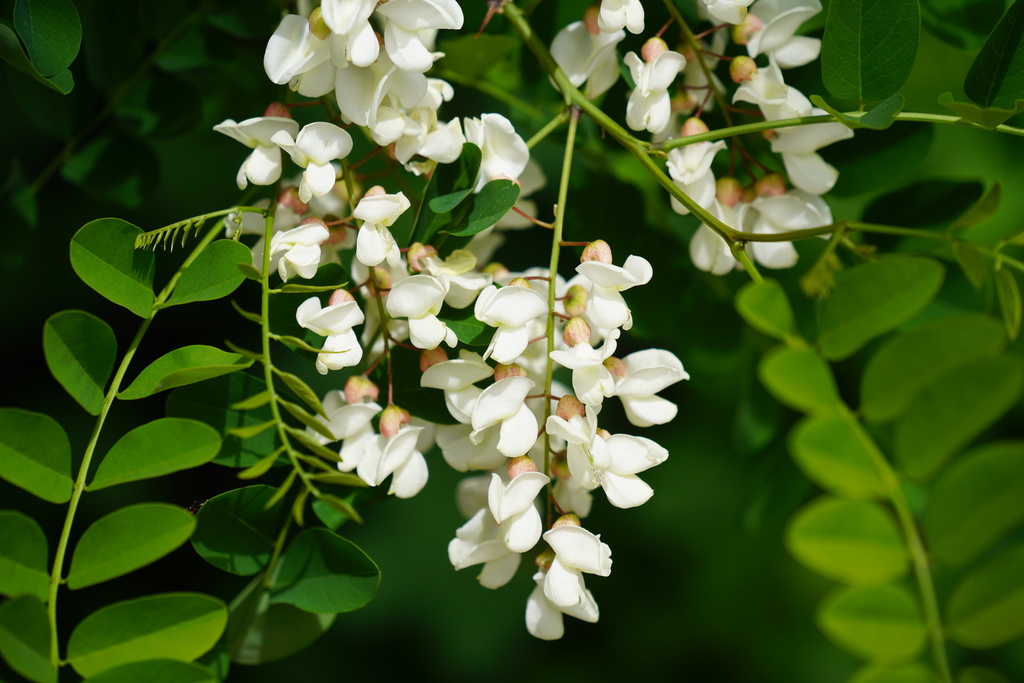
Robinia pseudoacacia, commonly known as black locust, is a deciduous tree native to North America. It's cherished for both its ornamental beauty and its wood, which is renowned for its strength and durability. The tree can attain a height of up to 25 meters and can spread out to 12 meters wide. Its leaves are pinnately compound, featuring five to seven dark green leaflets that turn yellow in autumn.
In late spring or early summer, the black locust produces fragrant white flowers that attract bees and other pollinators. These flowers eventually give way to long seed pods, each containing several seeds.
The wood of the black locust is highly resistant to decay, making it perfect for outdoor construction projects such as fence posts, railroad ties, and decking. Historically, its strength also made it a popular choice for shipbuilding.
However, despite its many benefits, the black locust can become invasive if not properly managed. Its capability to spread rapidly through root suckers can make it difficult to control once established.
In summary, Robinia pseudoacacia is a versatile tree with many valuable uses but requires careful management when planted outside its native range.
Black locust is fairly resistant to diseases and typically does not suffer from them. Regarding care, this species is fairly low-maintenance. Planted outdoors, it needs only light watering, and mature specimens usually do not require pruning. Smaller plants, however, should be trimmed after they finish blooming. Black locust is appropriate for anyone who has an outdoor area, like a garden or deck, and it does not demand extensive caregiving experience.
How to keep Robinia Pseudoacacia.
Light
Black locust does best in locations that receive sun for most of the day but can tolerate sites where light is filtered for some hours. Excessive sun can be harmful, causing scorching, while inadequate light can limit growth and lead to leaf drop. Native to areas with largely clear skies, its tolerance changes with different stages of development.
Water
Black locust trees come from deciduous woodlands and thrive in moist, well-drained soil. They should be watered every one to two weeks. Because they are deciduous, these trees shed their leaves during dry seasons to conserve moisture and improve their drought tolerance.
Temperature
The black locust requires a Native growth environment, in terms of temperature, that ranges from -18 to 34 ℉ (-28 to 1 ℃). However, its preferred temperature range is 32 to 100 ℉ (0 to 38 ℃). Across seasons, the Black locust can adjust to temperatures between 20 and 100 ℉ (-7 to 38 ℃).
Fertilizer
To encourage healthy development, fertilize your Black locust in early spring. Regular feeding improves overall health, leading to vigorous growth, better tolerance of harsh conditions, and increased resistance to pests and disease. Stick to a specific fertilization schedule for your Black locust to keep foliage vivid with deep color and a full, lush appearance.
Pruning
The Black Locust is a deciduous tree known for its fragrant white flowers and thorny branches. To maintain its health and appearance, it is best to prune the tree in early spring. During pruning, focus on removing any dead or crossing branches to improve air circulation and light penetration. Regular pruning also helps to minimize suckers and reduce the risk of pest infestations, ultimately promoting the tree's structural integrity and giving it an attractive shape.
Botanical profile.
- Plant Type
- Tree
- Life Cycle
- Perennial
- Genus
- Robinia
- Family
- Fabaceae
- Hardiness Zone
- 3-11
- Mature Height
- 10.06 m to 29.87 m
- Mature Spread
- 6.1 m to 14.94 m
- Leaf Color
- Green, Blue, Yellow
- Leaf Type
- Deciduous
- Flower Color
- White
- Flower Size
- 1.52 cm to 1.78 cm
- Bloom Time
- Late spring, Early summer
- Planting Time
- Spring, Autumn
- Harvest Time
- Mid summer
- Native Area
- North America
Other names.
Reader questions.
When should I water my Black Locust?
Watering Black Locust (Robinia pseudoacacia) is vital for its health and growth. The soil's dryness is a primary indicator; if the first inch of soil is dry, it's time to water. Well-drained soils are preferred, so be cautious of overwatering to avoid root decay. Signs such as yellowing or dull leaves, leaf curling, wilting, and stunted growth signal the need for water. However, it's crucial not to overwater, as this can cause root rot or make the plant susceptible to disease. Once these signs appear, water the plant ensuring the water reaches the root zone to promote a healthy growth.
When is it best not to add fertilizer to my Black locust?
You should avoid fertilizing your Black locust tree at certain times of the year. One of these times is during the early and mid-winter months when the tree is dormant and doesn't need any nutrients. Another time to avoid fertilizing is in late spring and throughout the summer when the weather is hot and dry. Fertilizing during these periods can have a negative effect on the tree. To prevent any problems, it is recommended to fertilize your Black locust in early spring and early fall.
What are the sunlight requirements for black locust plants?
Black locust plants thrive best in locations that receive ample sunlight for most of the day but can also tolerate some filtered light. The plant requires more than 6 hours of sunlight to qualify as being in 'full sun', while 3 to 6 hours of sunlight is considered 'partial sun'. It is essential to observe the movement of sunlight in your garden to choose the optimal sunny or partially shaded spots for your plants, ensuring their well-being and growth. In areas with predominant clear skies, black locust shows resilience, though it's susceptible to issues from both overexposure, which can lead to scorching, and underexposure, resulting in stunted growth and leaf drop.
What are the essential temperature requirements for growing Black Locust (Robinia pseudoacacia)?
The Black Locust tree thrives in a native growth environment that can accommodate temperatures ranging from -18 to 34°F (-28 to 1°C), although its preferred temperature range is slightly narrower, from 32 to 100°F (0 to 38°C). Throughout different seasons, the Black Locust can adjust to varying temperatures from 20 to 100°F (-7 to 38°C). Due to its strong cold resistance, special frost protection measures are not usually required. However, if winter temperatures are expected to drop below its lowest tolerance limit, it's important to provide cold protection by wrapping the trunk and branches with non-woven fabric or cloth and watering the plant abundantly before the first freeze to keep the soil moist, which helps prevent drought and water scarcity during winter and early spring.
How should I water my Black Locust?
Watering Black Locust effectively involves deep and infrequent waterings, allowing the soil to dry out slightly between sessions. Use a watering can with a fine rosette spout to avoid soil disturbance and ensure gentle watering. A moisture meter can help determine the best watering times by measuring soil moisture levels. Focus on watering the base and root zone, steering clear of the foliage to prevent fungal diseases. Avoid over-watering and standing water to escape root rot, watering early in the morning or late afternoon to reduce evaporation and allow the foliage to dry before evening.
What kind of fertilizer should I use for my Black locust?
Black locust trees primarily require nitrogen as their most important nutrient, although phosphorus and potassium should not be disregarded. A balanced fertilizer, like a 10-10-10, can be suitable for your Black locust as it provides all three essential nutrients in decent quantities. Nevertheless, a more nuanced nutrient ratio can often promote the best growth for Black locusts, usually favoring slightly higher nitrogen levels. For instance, a ratio of 10-6-4 tends to be effective. Both granular and liquid-based fertilizers can be utilized during the fertilization process.
How can artificial lighting benefit indoor black locust plants?
Indoor black locust plants can greatly benefit from artificial lighting, especially in scenarios where natural sunlight is inadequate, such as during winter or in less sunny areas. Adequate lighting fosters optimal growth, and for this, LED lights are highly recommended due to their ability to be tailored to the specific light wavelengths needed by plants. For full sun plants, 30-50W per square foot is ideal; partial sun plants require 20-30W per square foot, and full shade plants need 10-20W per square foot. The artificial light should be placed 12-36 inches above the plant to mimic the sun's natural light, and the duration should replicate the natural daylight hours, typically 8-12 hours daily, for the particular plant species.
How does low temperature affect Black Locust and what are the solutions?
Black Locust is quite cold-tolerant, thriving best above its suitable minimum growth temperature and needing to be kept above its tolerable minimum growth temperature during winter. If the temperature falls below its growth temperature limit, there might not be noticeable immediate effects, but come spring, the branches could turn brittle and dry, failing to produce new shoots. The solution is to prune away any dead branches that have not produced new leaves in spring.
How much water does Black Locust really need?
Black Locust requires moderate amounts of water. It has a medium-sized root system, generally extending 1-3 feet deep. A mature plant in a 4-gallon container should receive about 3-4 liters per watering session. Signs of well-hydrated plants include healthy, green, turgid leaves. Conversely, over-watered plants may exhibit yellow leaves, root rot, and mold, while under-watered ones will show wilting leaves. It's crucial to balance, checking soil moisture before watering and periodically deep watering to promote robust root development.
Why should I put fertilizer on my Black locust tree?
To ensure the overall health of your Black locust plant, it is recommended to regularly fertilize it regardless of its type. This will provide the necessary nutrients for robust growth and enhance its resilience against challenging growing conditions, as well as improve its ability to fight off diseases and pests. Since the foliage is one of the most appealing aspects of your Black locust, it is important to prioritize its preservation. This can be achieved by following a consistent fertilization schedule that is tailored to the needs of your specific Black locust. By doing so, you can expect to see vibrant and lush leaves with deep, rich colors.
What are common symptoms of improper lighting in black locust plants?
Black locust plants may show various signs of distress if the lighting conditions are not optimal. Symptoms of light deficiency include smaller new leaves, leggy or sparse growth, faster leaf drop, halted growth, and paler new leaves. On the other hand, excessive sunlight exposure can cause chlorosis (yellowing leaves due to chlorophyll breakdown), sunscald (damaged plant tissue from intense sunlight), leaf curling (a defense mechanism against extreme sunlight), wilting (loss of turgor pressure from excessive transpiration), and leaf scorching (brown, dry edges on leaves). These issues signal a need to adjust the plant's light exposure.
What should be done if Black Locust experiences high temperature?
During summer, it's important to ensure that Black Locust is kept below its suitable maximum growth temperature. When temperatures exceed its tolerable maximum growth temperature, the plant's leaves may lighten in color, the tips may dry and wither, and it becomes more susceptible to sunburn. To mitigate these effects, trim away the sunburned and dried-up parts of the plant. It is also beneficial to move the plant to a location that offers shade during the midday and afternoon sun, or use a shade cloth to protect it. Additionally, watering the plant in the morning and evening helps keep the soil moist and supports plant health.