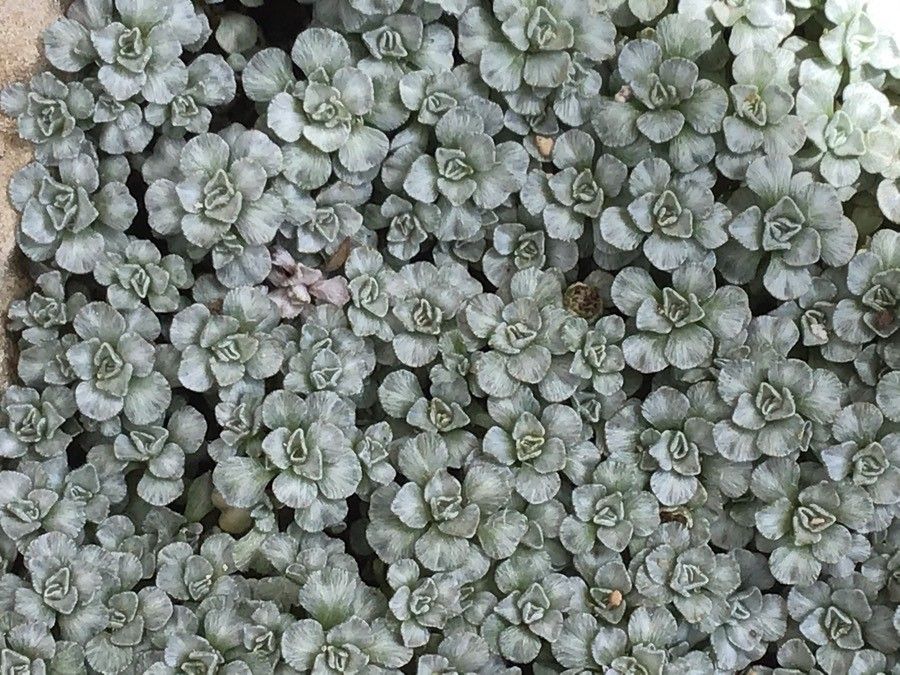
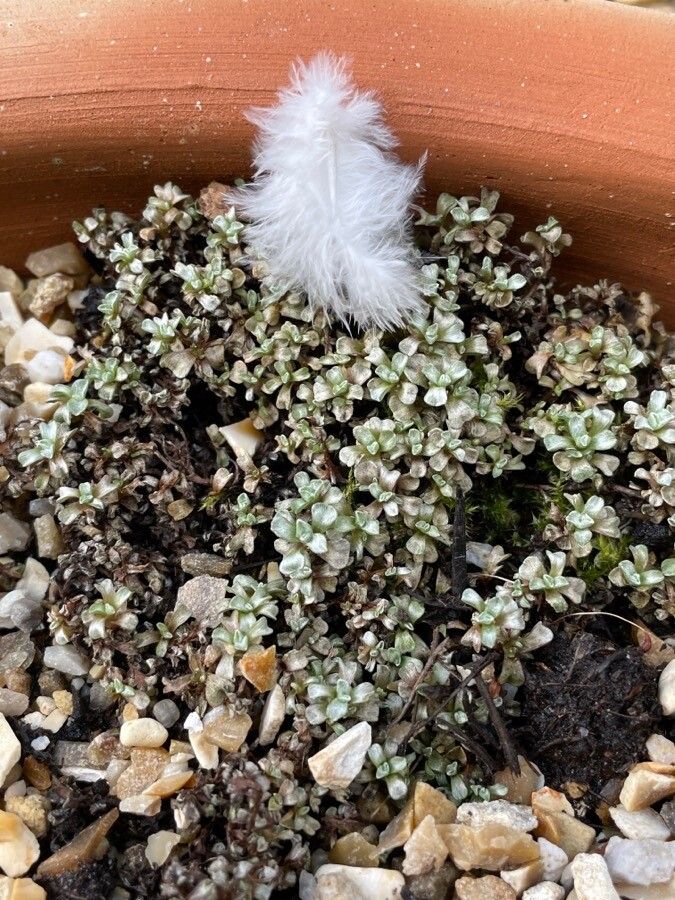
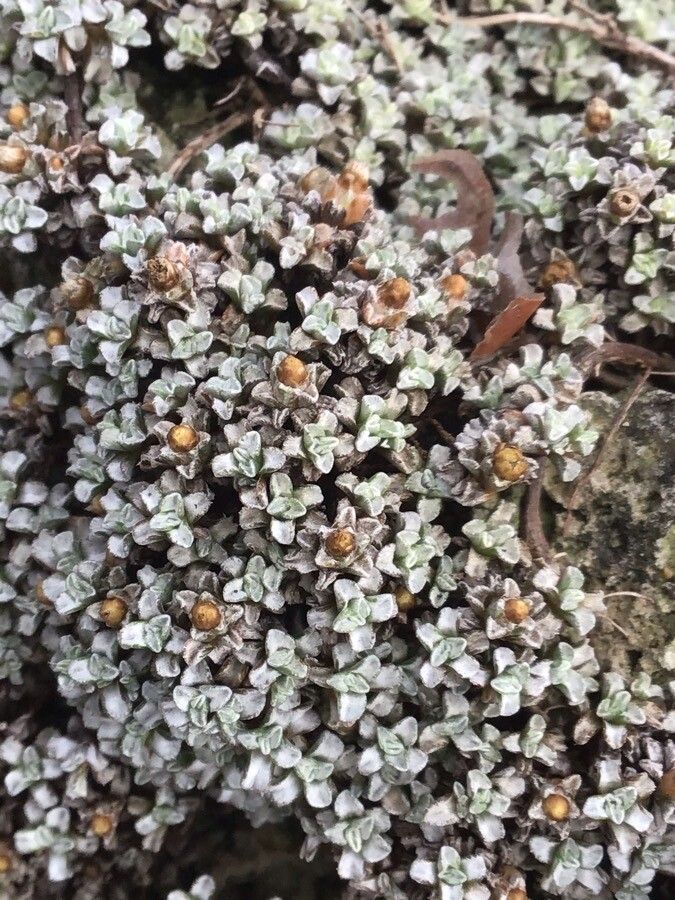
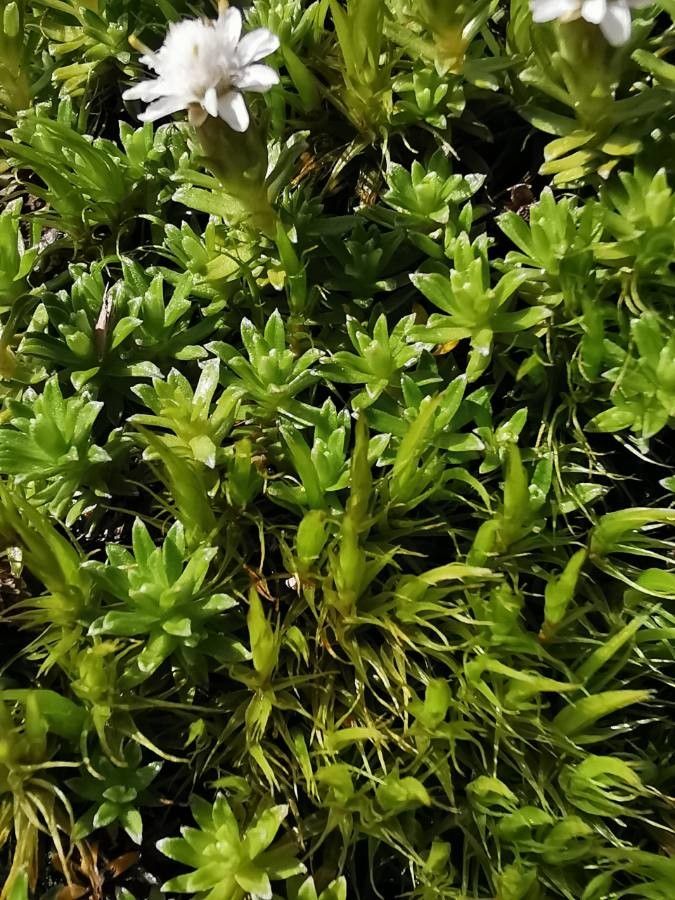
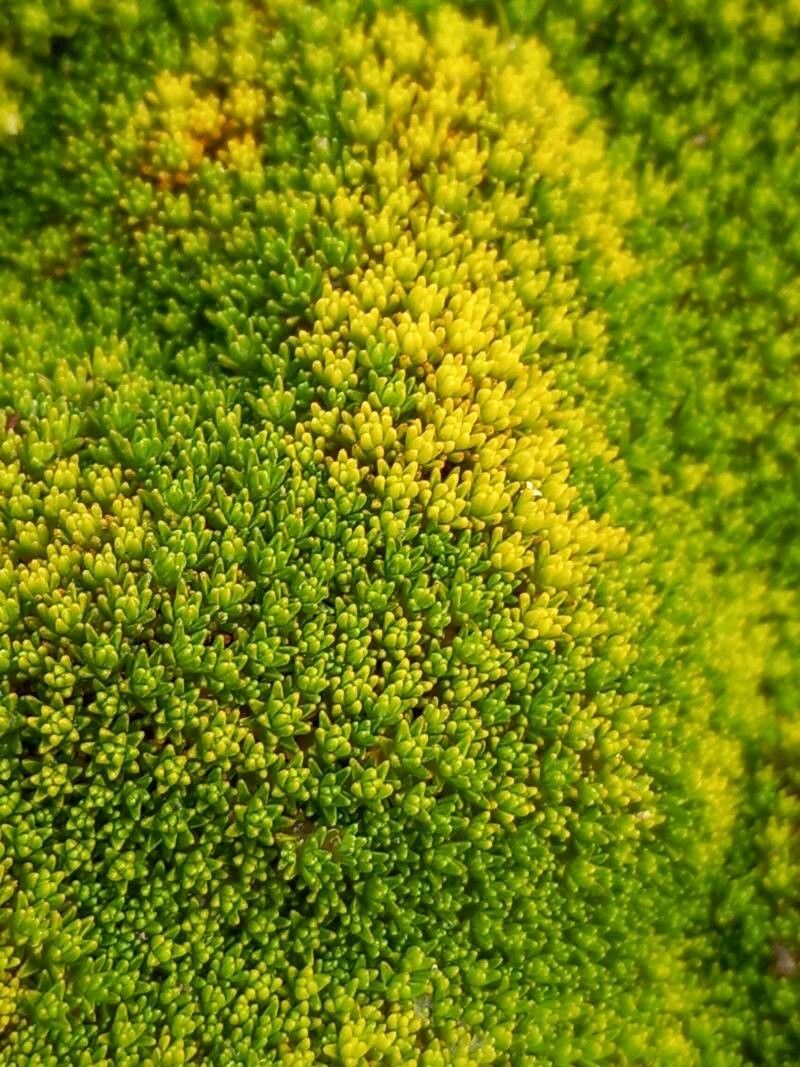
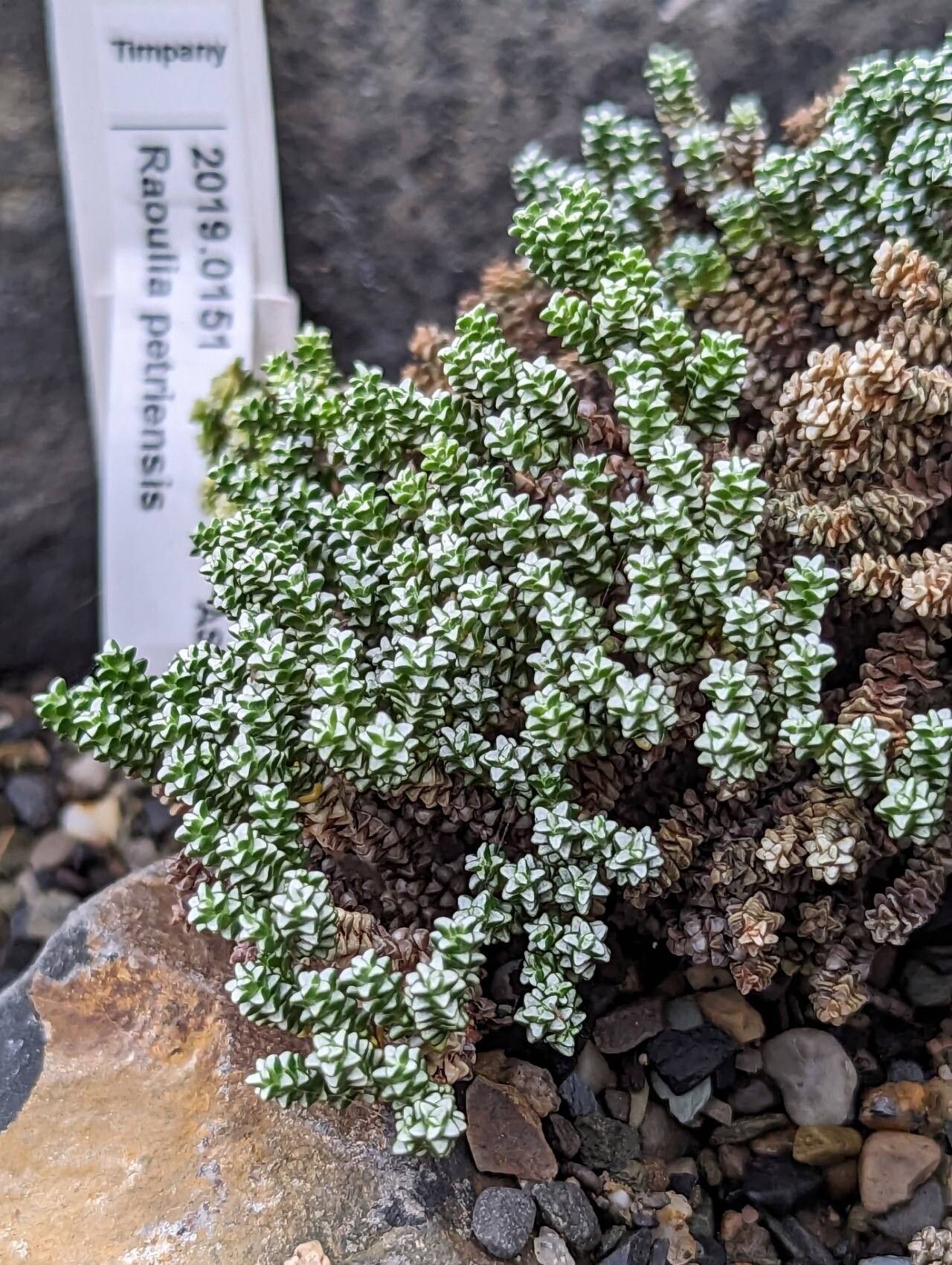
Raoulia hookeri, commonly known as Hooker's Raoulia, is a small, cushion-forming plant native to New Zealand. It belongs to the Asteraceae family. This plant has a distinctive appearance, with its leaves densely packed together in a cushion-like formation that can grow up to 30 cm in diameter. The leaves are small and covered with fine hairs, which help protect the plant from harsh weather conditions.
During the summer months, Raoulia hookeri produces tiny yellow flowers that are barely visible among its dense foliage. These flowers are pollinated by insects such as bees and butterflies.
Raoulia hookeri thrives in well-drained soil and full sun exposure but can also tolerate partial shade. It grows best in alpine or subalpine environments, where temperatures remain cool throughout the year.
The plant has several medicinal properties and has been traditionally used by the Maori people to treat various ailments such as stomach problems, wounds, fever, and coughs, among others.
Overall, Raoulia hookeri is a fascinating alpine species with unique characteristics, making it an attractive addition to rock gardens or alpine gardens for those who appreciate rare plants from around the world.
Scabweed mat daisy is fairly disease-resistant and usually not prone to illnesses. Nonetheless, it can be affected by pests and diseases present in its surroundings. Such infections are generally mild. Regarding care, this plant needs moderate maintenance. Regular pruning is necessary to keep a good appearance and healthy growth. Fertilizing can also encourage flowering. Scabweed mat daisy is appropriate for anyone with outdoor space, like a garden or patio, and does not require extensive care experience. It may need extra attention when grown indoors.
How to keep Raoulia Hookeri.
Light
Scabweed mat daisy is a sun-loving, perennial herbaceous plant that originates in open habitats and often thrives in meadows and grasslands. It prefers full sun but can also tolerate partial sun.
Fertilizer
Typically one fertilizer application in spring is enough for Scabweed mat daisy, but repeated feedings can maximize growth. Fertilize about once every month to a month and a half. Feeding improves leaf appearance and function, helping maintain even color and a healthy texture. It also encourages root growth and nutrient uptake for long-term plant health.
Pruning
To promote healthy growth and enhance its ornamental appeal, it is beneficial to prune the scabweed mat daisy in early spring. This involves trimming overgrown stems and removing any damaged foliage. Such pruning encourages denser growth, improves airflow, and helps prevent diseases. Regular light pruning keeps the plant compact and vigorous.
Pot & Repot
When repotting Scabweed mat daisy, select a pot 1-2 inches (2.5–5.1 cm) larger with ample drainage. Use a well-draining potting mix. Repot in spring or fall, making sure the root ball sits slightly lower than the rim of the flower pot. Water thoroughly after repotting and place in a warm spot with indirect sunlight.
Botanical profile.
- Plant Type
- Herb
- Life Cycle
- Perennial
- Genus
- Raoulia
- Family
- Asteraceae
- Hardiness Zone
- 7-9
- Mature Height
- 2 cm to 5 cm
- Mature Spread
- 10 cm to 30 cm
- Leaf Color
- Silver, Gray
- Leaf Type
- Evergreen
- Flower Color
- White
- Flower Size
- 0.51 cm to 0.76 cm
- Bloom Time
- Mid spring, Late spring
- Planting Time
- Summer, Autumn
- Harvest Time
- Early summer, Mid summer
- Native Area
- New Zealand
Other names.