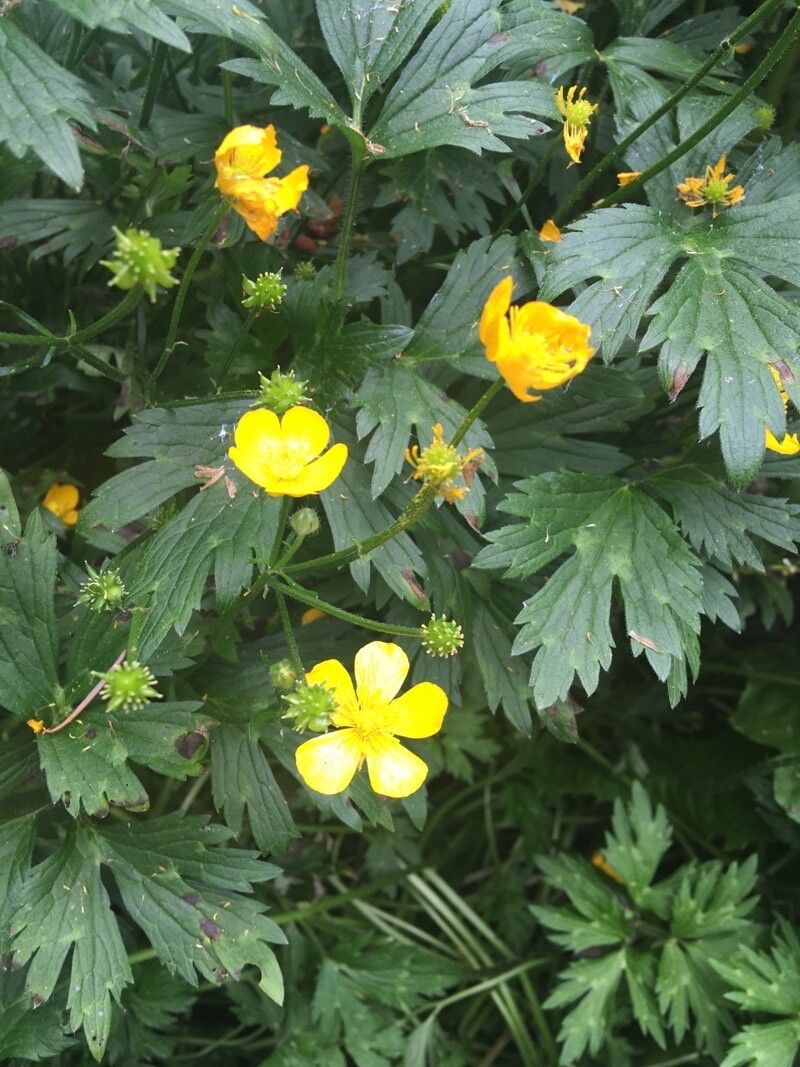
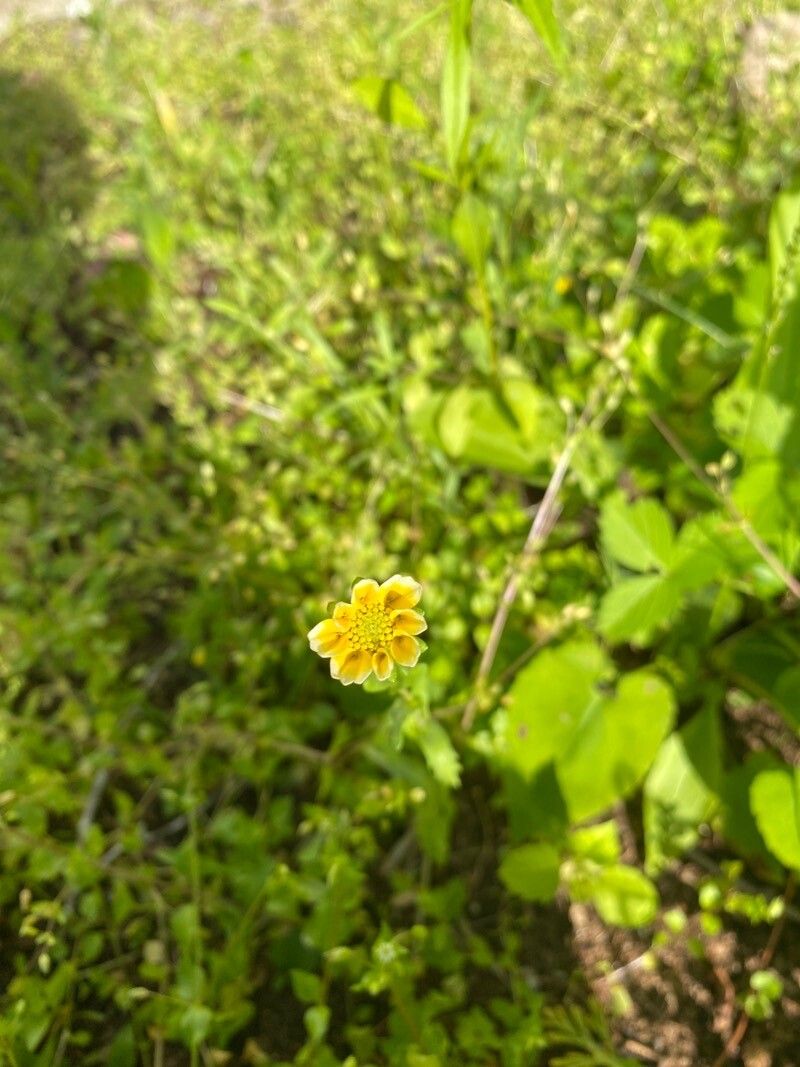
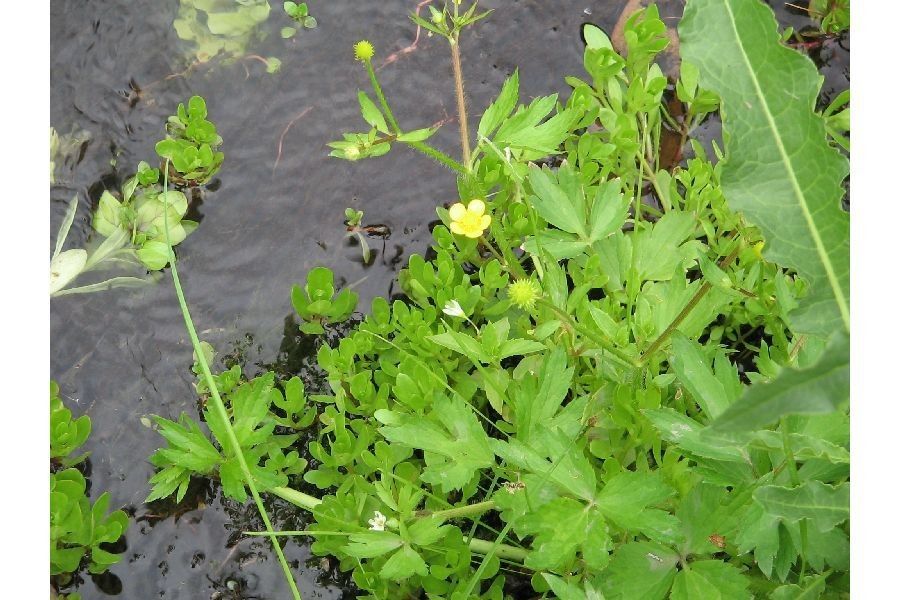
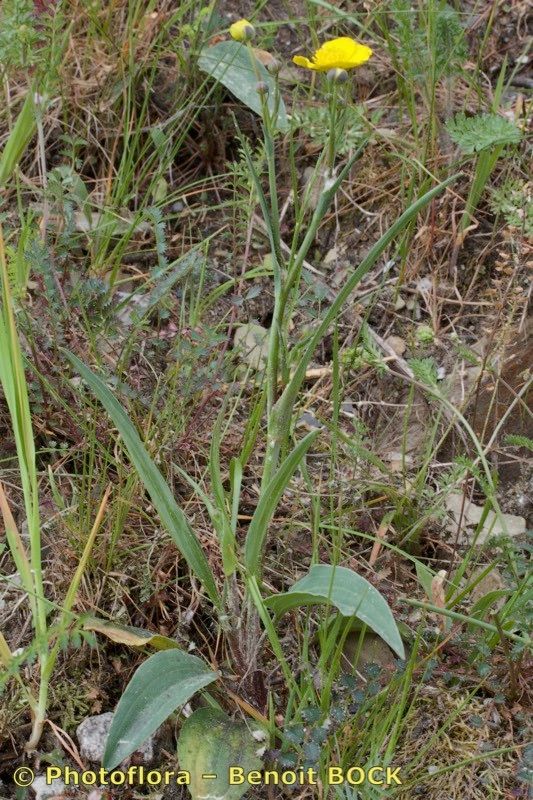
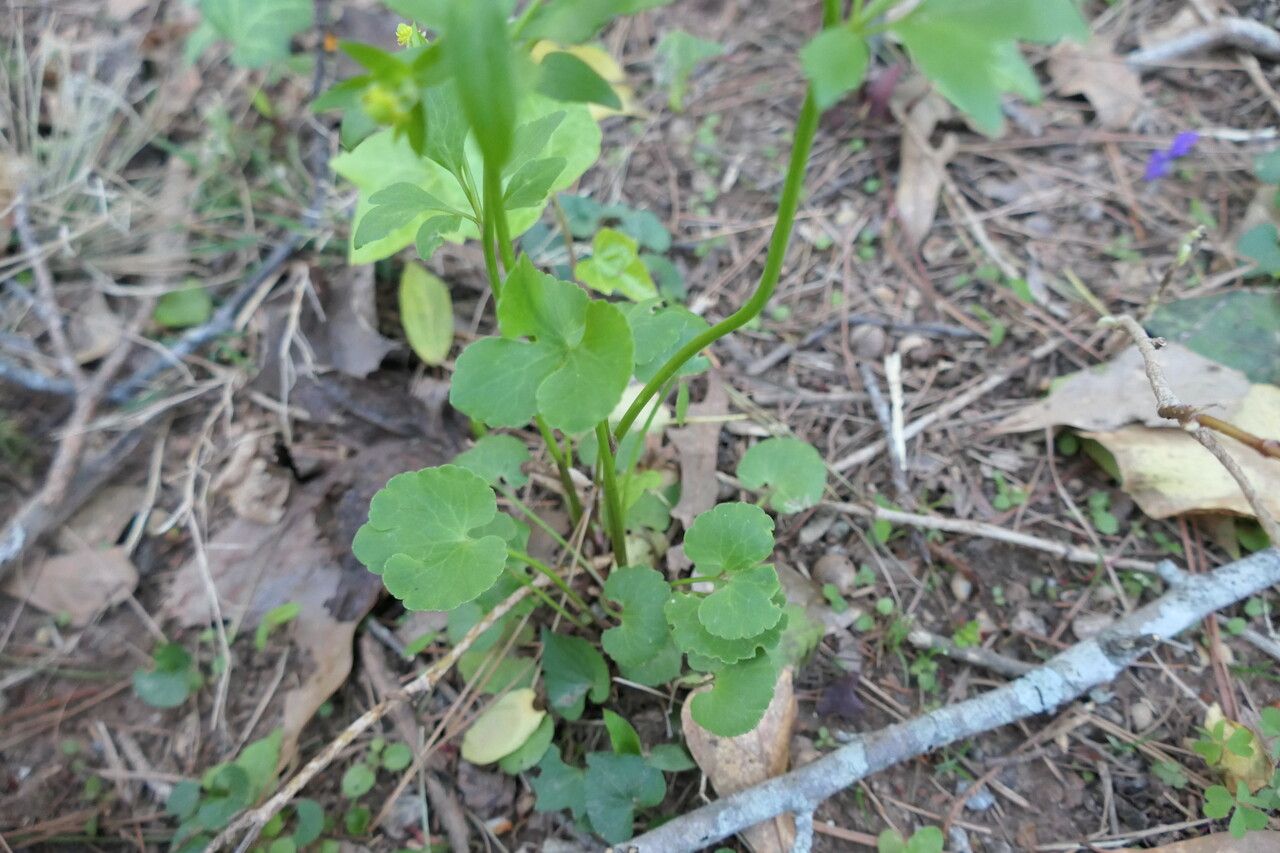
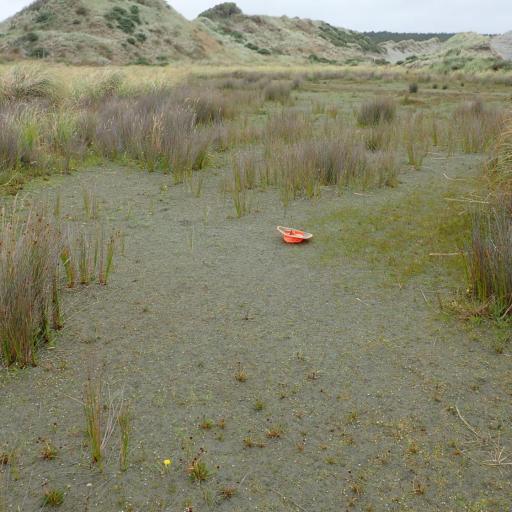
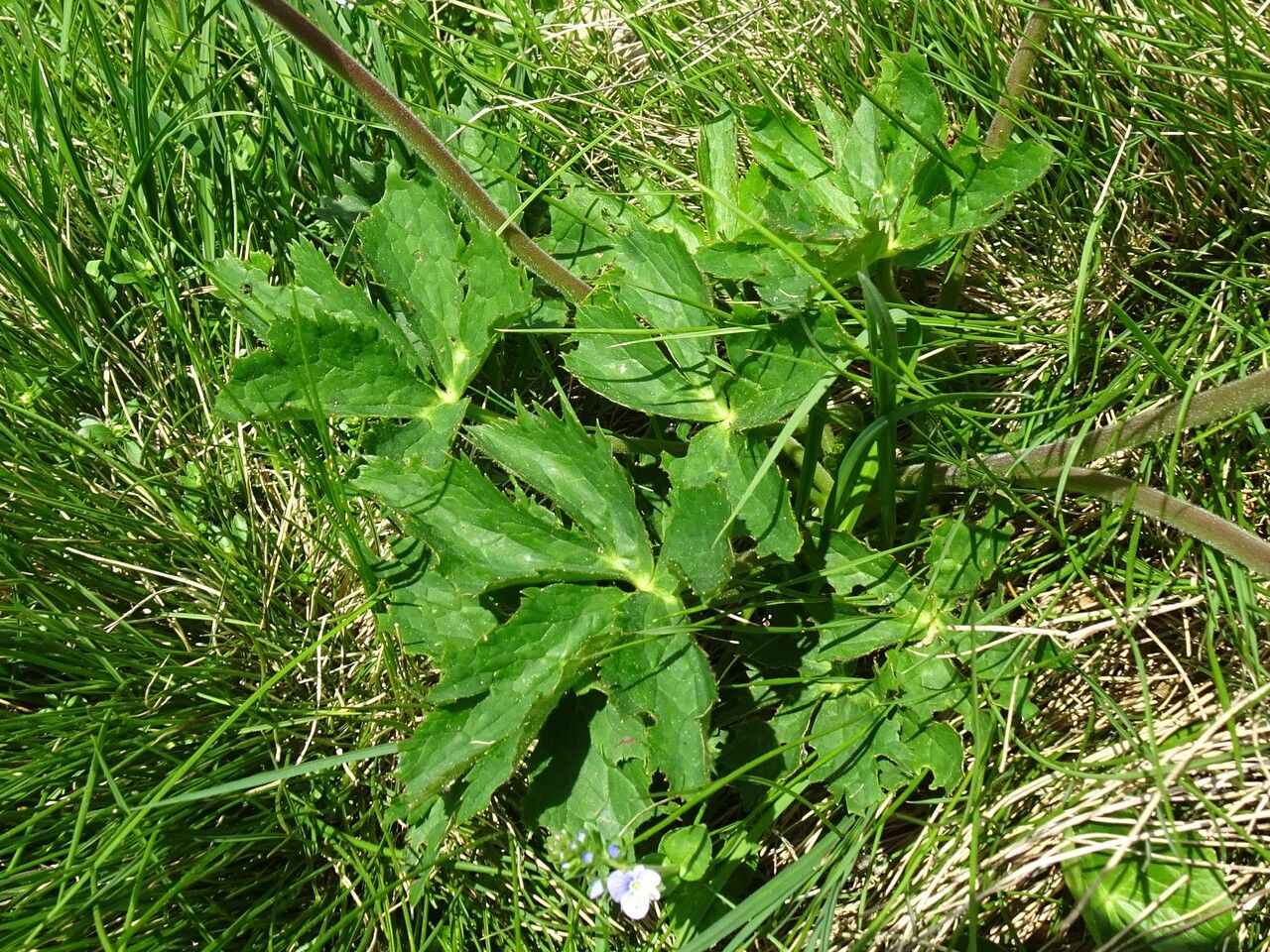
Ranunculus macounii is a species of buttercup known by the common name Macoun's buttercup. It is native to much of North America, from Alaska and northwestern Canada to Newfoundland and Labrador, and the contiguous United States except for the northeast and southeastern areas. It grows in many types of moist habitat, including marshes and wet areas woodlands and scrub. It is generally semi-aquatic, growing in or next to shallow water, or in muddy places. It is a perennial herb producing prostrate, spreading stems that root at nodes that come in contact with moist substrate, or growing erect and branching. The stems are generally hairy, but populations of hairless specimens are known. The leaves are mostly divided into three lobed, toothed leaflets which are borne on long, hairy petioles. The flowers each have five shiny yellow petals under a centimeter long around a center of many stamens and pistils. The fruit is an achene borne in a spherical cluster of 20 or more.
Macoun's buttercup is fairly disease-resistant and generally not prone to illnesses. However, it can be vulnerable to pests and diseases present in its environment, though such infections are usually mild. For care, this plant requires moderate maintenance. It benefits from regular pruning to maintain a neat appearance and healthy growth. Fertilizing can also help encourage flowering. Macoun's buttercup is appropriate for anyone with outdoor space, such as a garden or patio, and does not demand extensive care experience. It may need more attention when grown indoors.
How to keep Ranunculus Macounii.
Light
Macoun's buttercup is a sun-loving, perennial herbaceous plant native to open habitats and often found thriving in meadows and grasslands. It prefers full sun but can also tolerate partial sun.
Water
Macoun's buttercup thrives in moist environments and prefers well-hydrated soil that is not waterlogged. For optimal growth, the plant should be watered weekly. Although it is moderately drought-tolerant, it performs best when moisture levels are kept even. In temperate outdoor settings, it benefits from natural rainwater.
Fertilizer
Usually one application of fertilizer in spring is adequate for Macoun's buttercup, though several feedings can optimize growth. Feed once every month to a month and a half. Fertilization improves the appearance and function of the leaves, helping maintain uniform color and a healthy texture. It also promotes root development and nutrient uptake for the plant's long-term health.
Pruning
Macoun's buttercup is a herbaceous perennial known for its bright yellow flowers. To encourage new growth, prune the plant from early to late spring by removing dead stems. To ensure continuous blooming, trim any faded flowers. Always make clean cuts and use sterilized tools to prevent infections. This practice also enhances air circulation and reduces the risk of disease.
Botanical profile.
- Plant Type
- Herb
- Life Cycle
- Perennial
- Genus
- Ranunculus
- Family
- Ranunculaceae
- Hardiness Zone
- 3-11
- Mature Height
- 30 cm to 61 cm
- Leaf Type
- Deciduous
Other names.
Reader questions.
What are the sunlight requirements for Macoun's buttercup?
Macoun's buttercup, botanically known as Ranunculus macounii, thrives in locations that receive full sun, which is defined as more than 6 hours of sunlight daily. It's important to observe the way sunlight moves through your garden to identify spots that offer an ideal balance of light and shade, contributing to the well-being of your plants. Finding the right spot ensures your Macoun's buttercup will grow happily in its environment.
What is Macoun's buttercup?
Macoun's buttercup, scientifically known as Ranunculus macounii, is a plant species. Unfortunately, there's no additional information provided regarding its essentials or symptoms related to this plant.