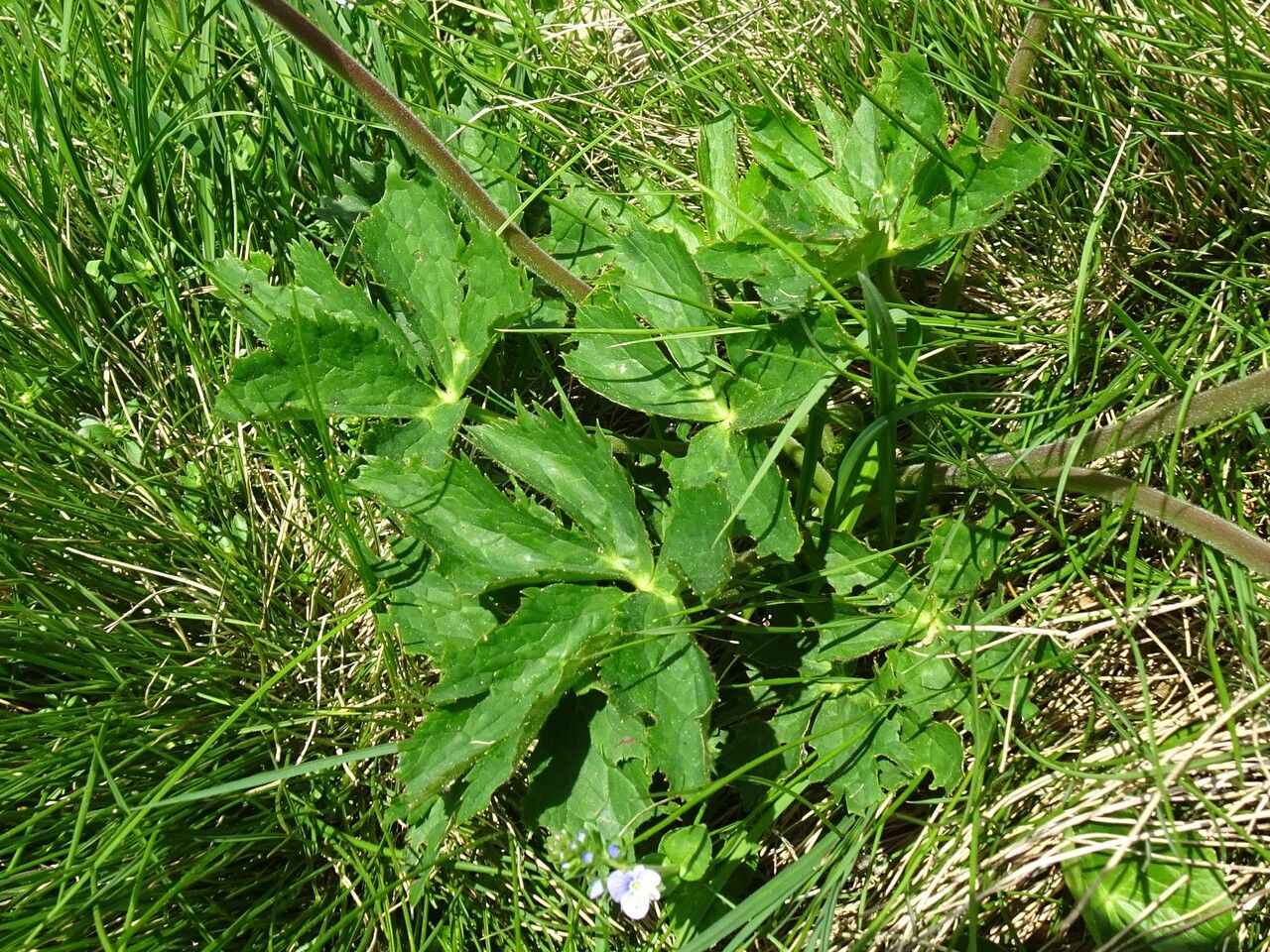
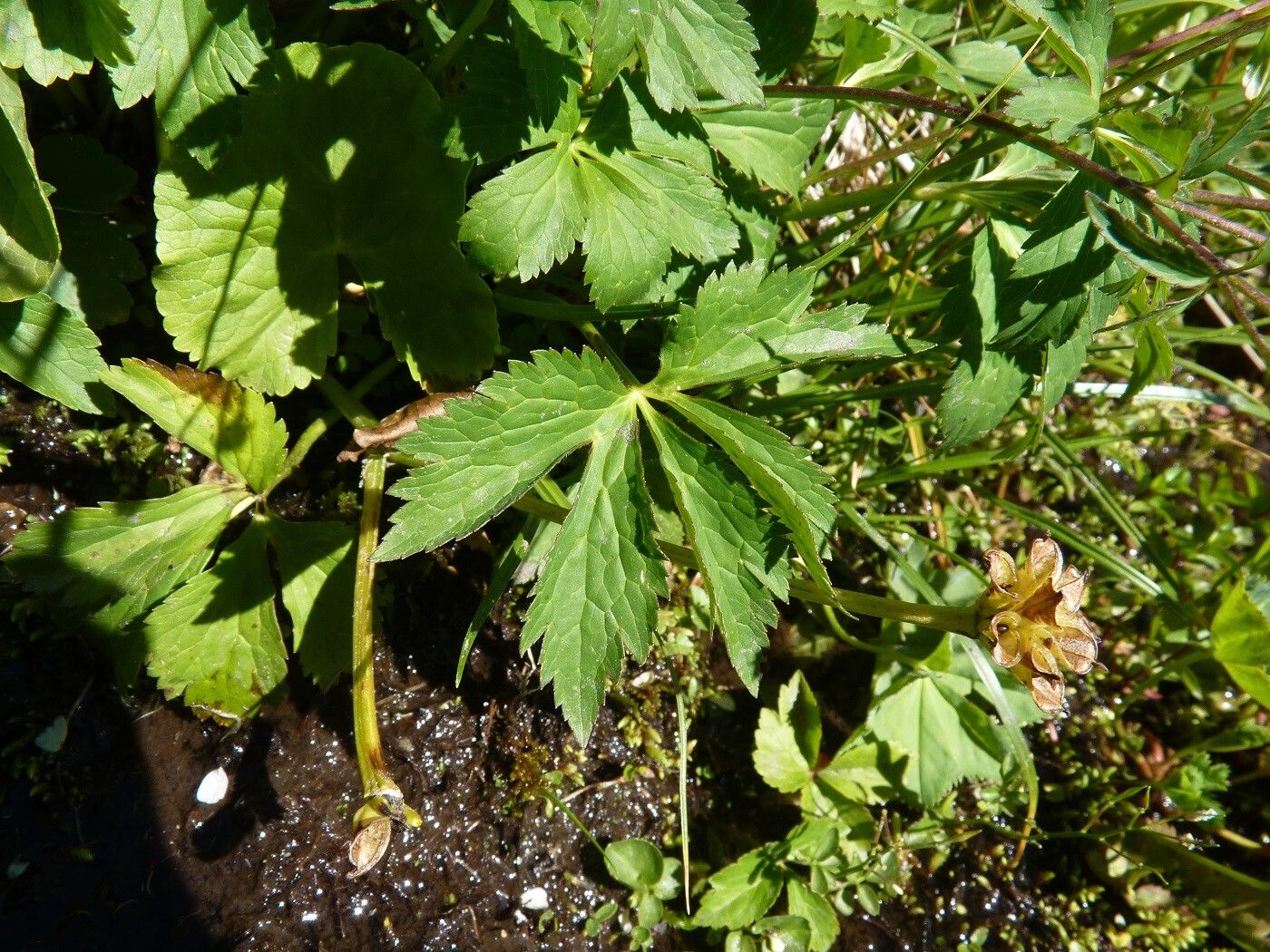
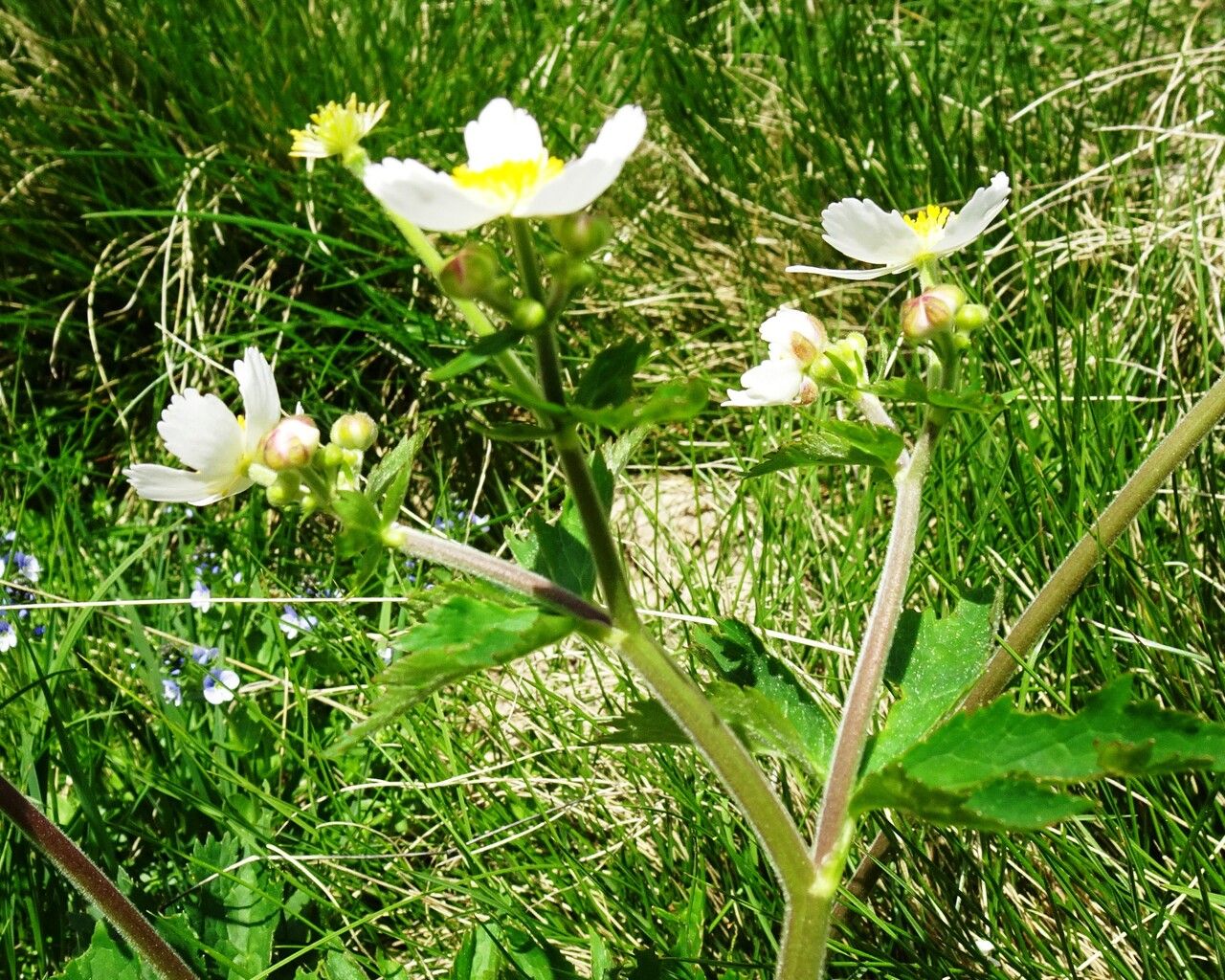
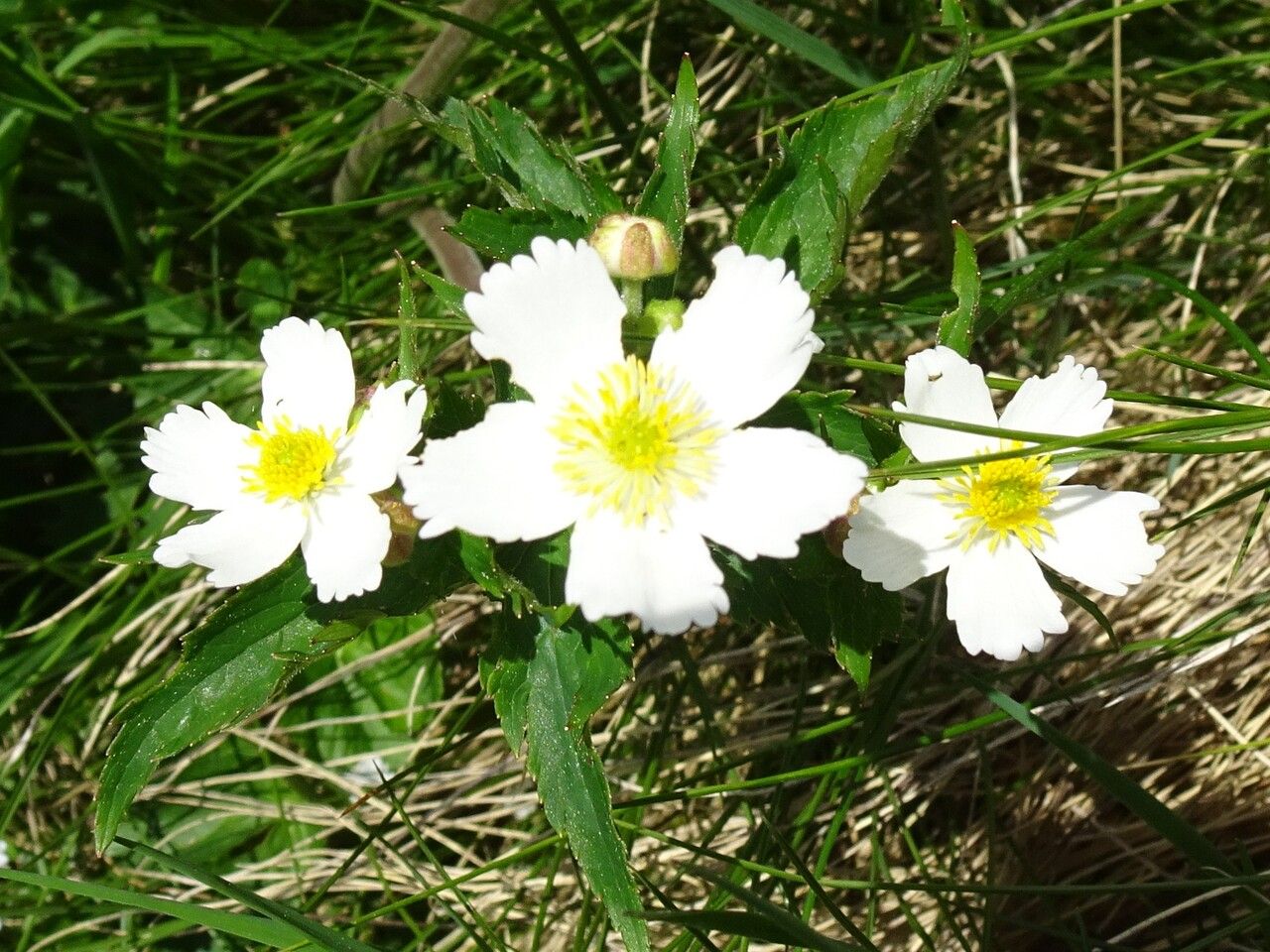
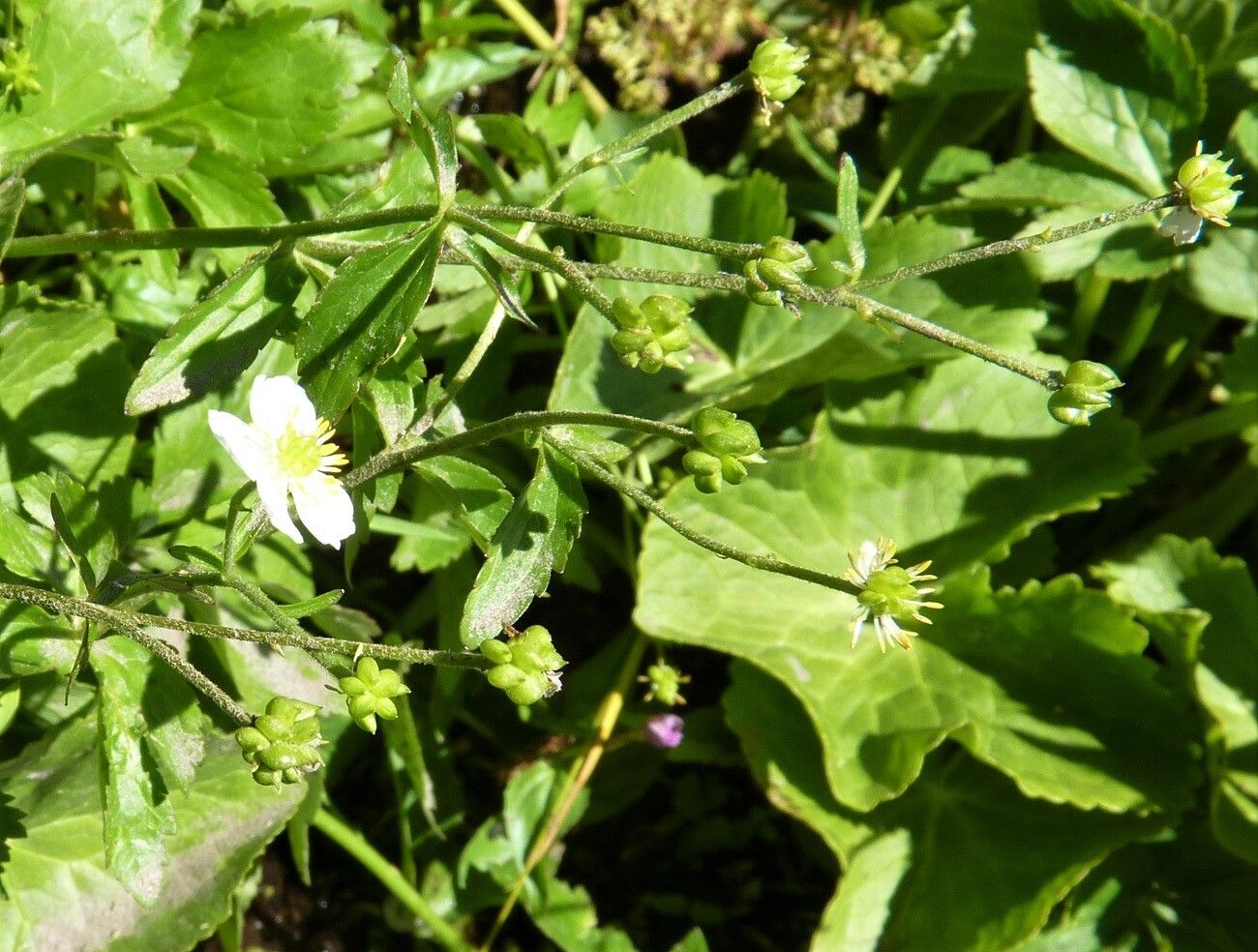
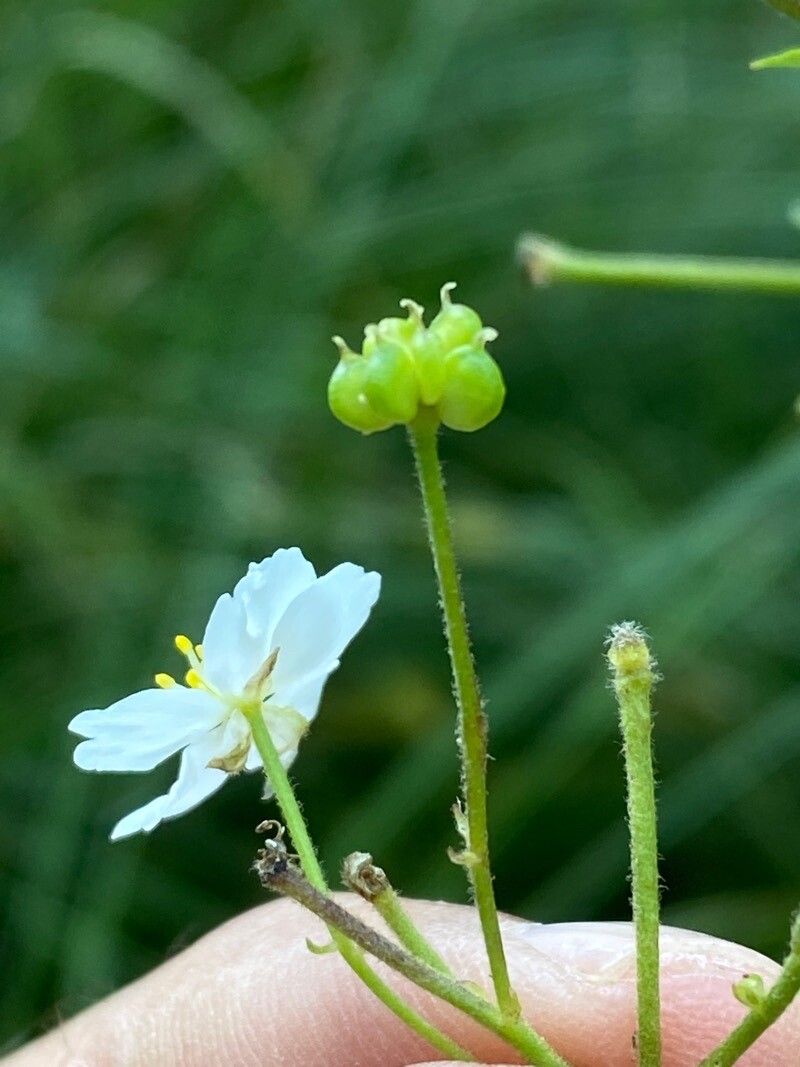
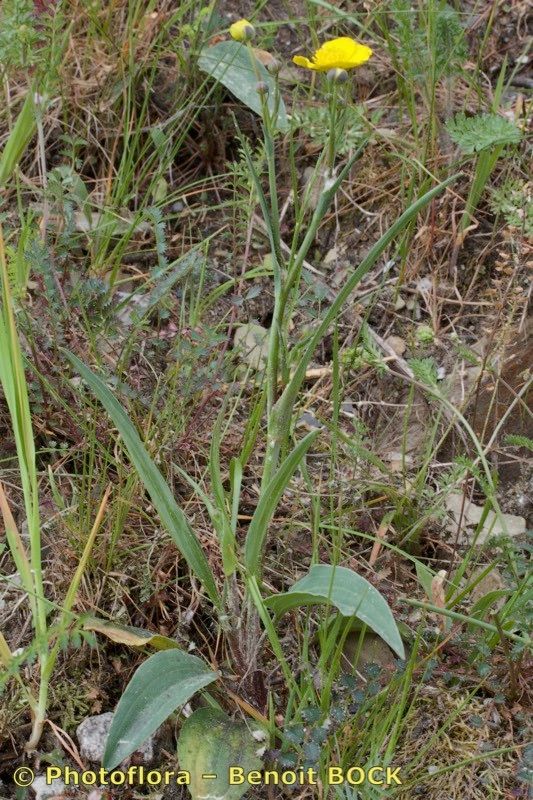
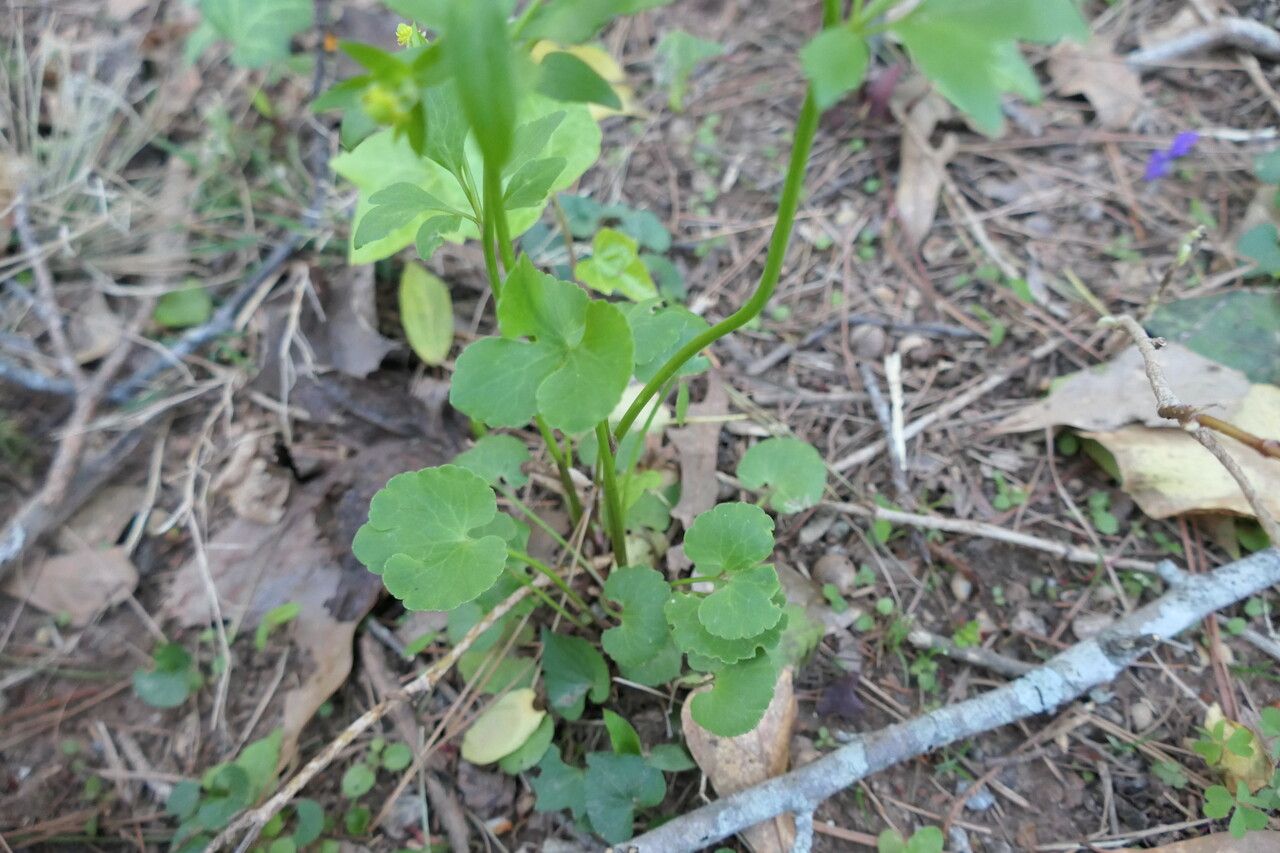
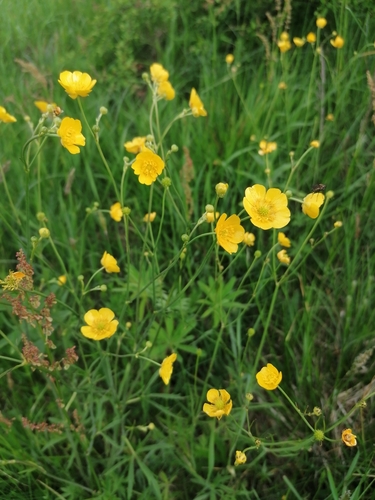
Ranunculus aconitifolius, commonly known as the aconite-leaved buttercup, is a herbaceous perennial plant in the Ranunculaceae family. It is native to Europe and western Asia, thriving in meadows, woodlands, and along riverbanks. The plant can grow up to 60 cm tall, featuring deeply divided leaves that resemble those of the Aconitum species. Its bright yellow flowers, each with five petals and a diameter of up to 3 cm, bloom from late spring through early summer. Ranunculus aconitifolius prefers moist soil conditions but can tolerate some drought once established. While it can grow in partial shade, it thrives best in full sun exposure. In traditional medicine, the plant has been used for its anti-inflammatory properties. However, it is important to note that all parts of the plant are toxic if ingested, due to its high concentration of protoanemonin. Overall, Ranunculus aconitifolius is an attractive addition to any garden or landscape, thanks to its bright yellow flowers and unique foliage. However, it should be handled with care due to its toxic nature.
Botanical profile.
- Plant Type
- Herb
- Life Cycle
- Perennial
- Genus
- Ranunculus
- Family
- Ranunculaceae
- Hardiness Zone
- 5-9
- Mature Height
- 61 cm
- Mature Spread
- 40 cm
- Leaf Color
- Green
- Leaf Type
- Deciduous
- Flower Color
- White
- Flower Size
- 2.03 cm to 3.05 cm
- Bloom Time
- Mid spring, Late spring, Early summer
- Planting Time
- Spring, Summer, Autumn
- Harvest Time
- Summer
- Native Area
- Germany, Austria, Italy, Spain, Switzerland, Czech Republic, Montenegro, Croatia, Slovenia, Ukraine, France
Other names.