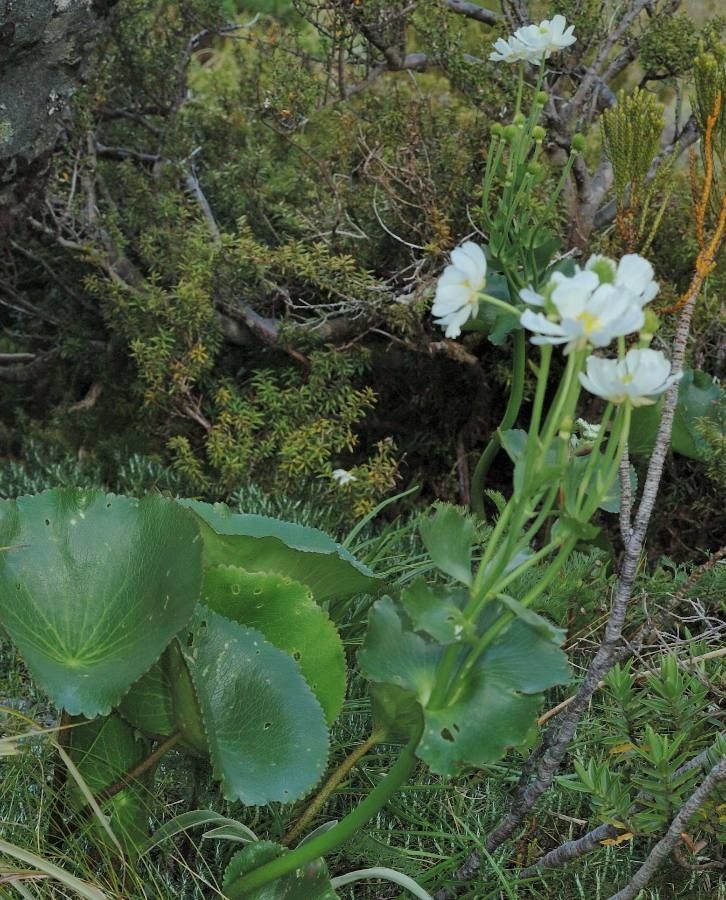
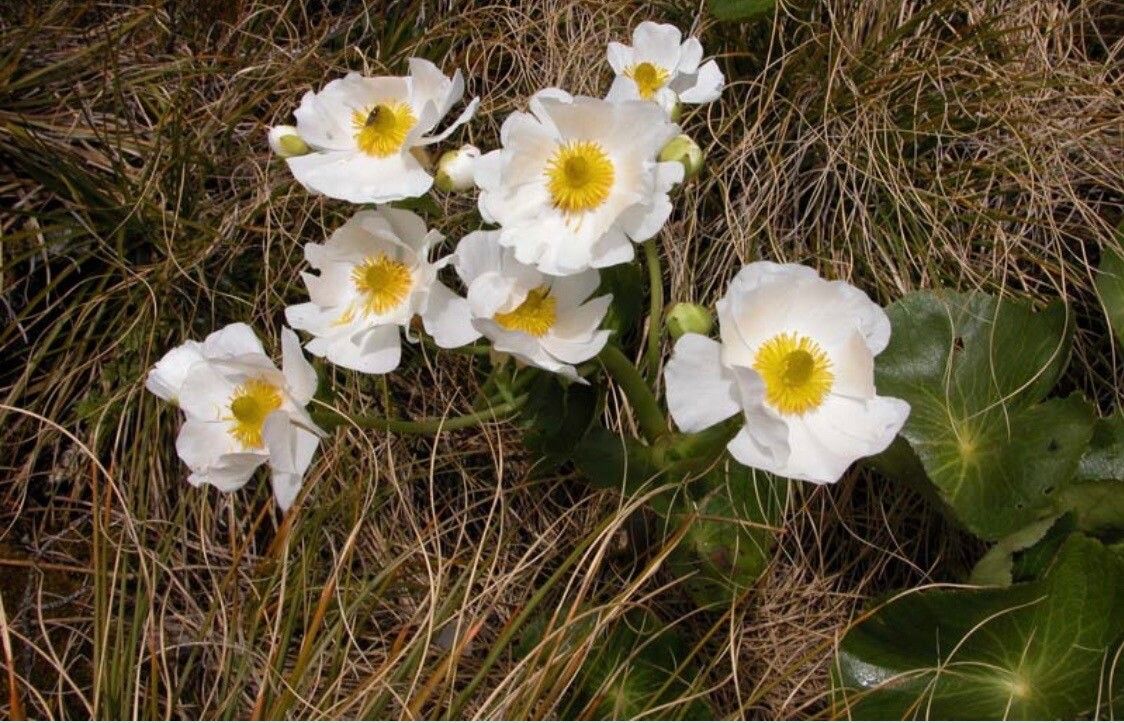
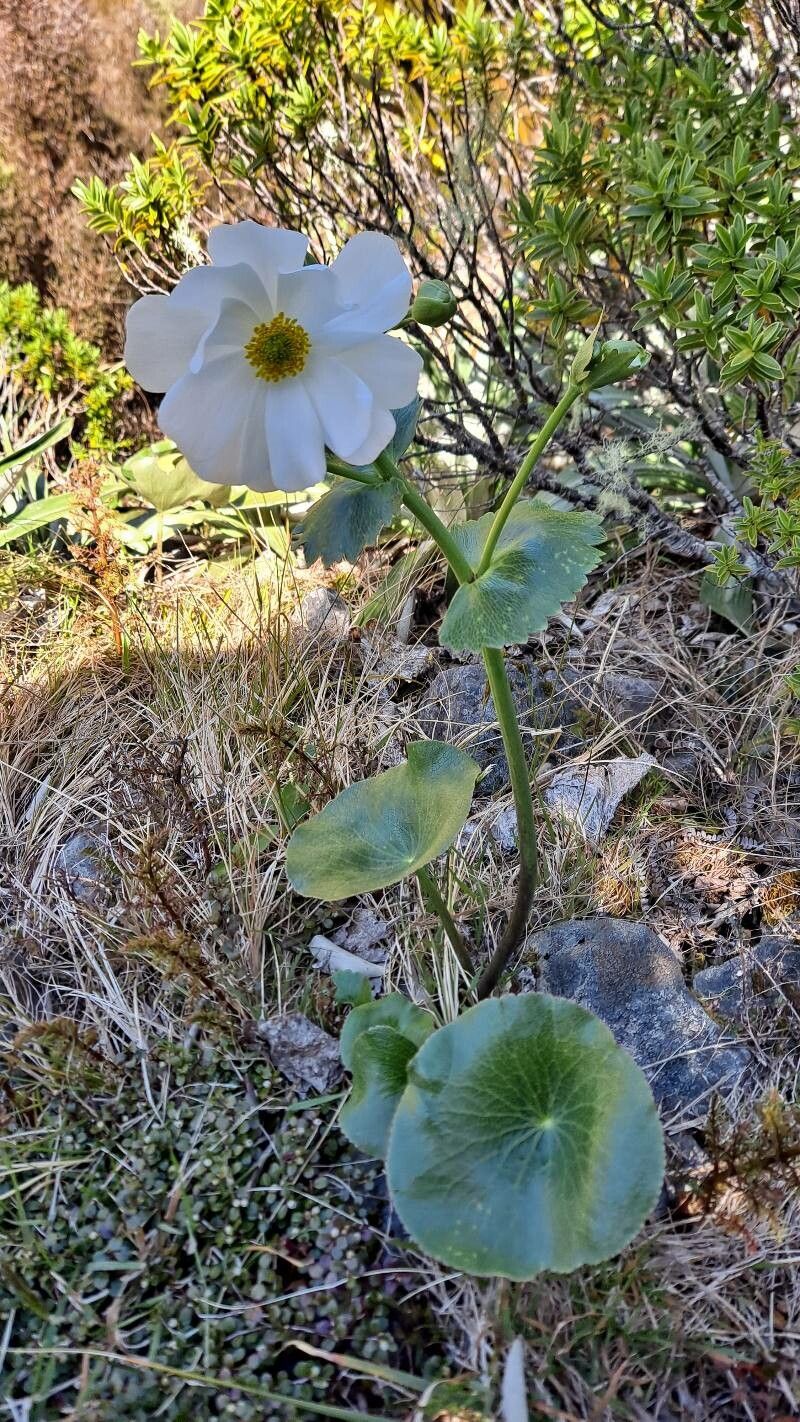
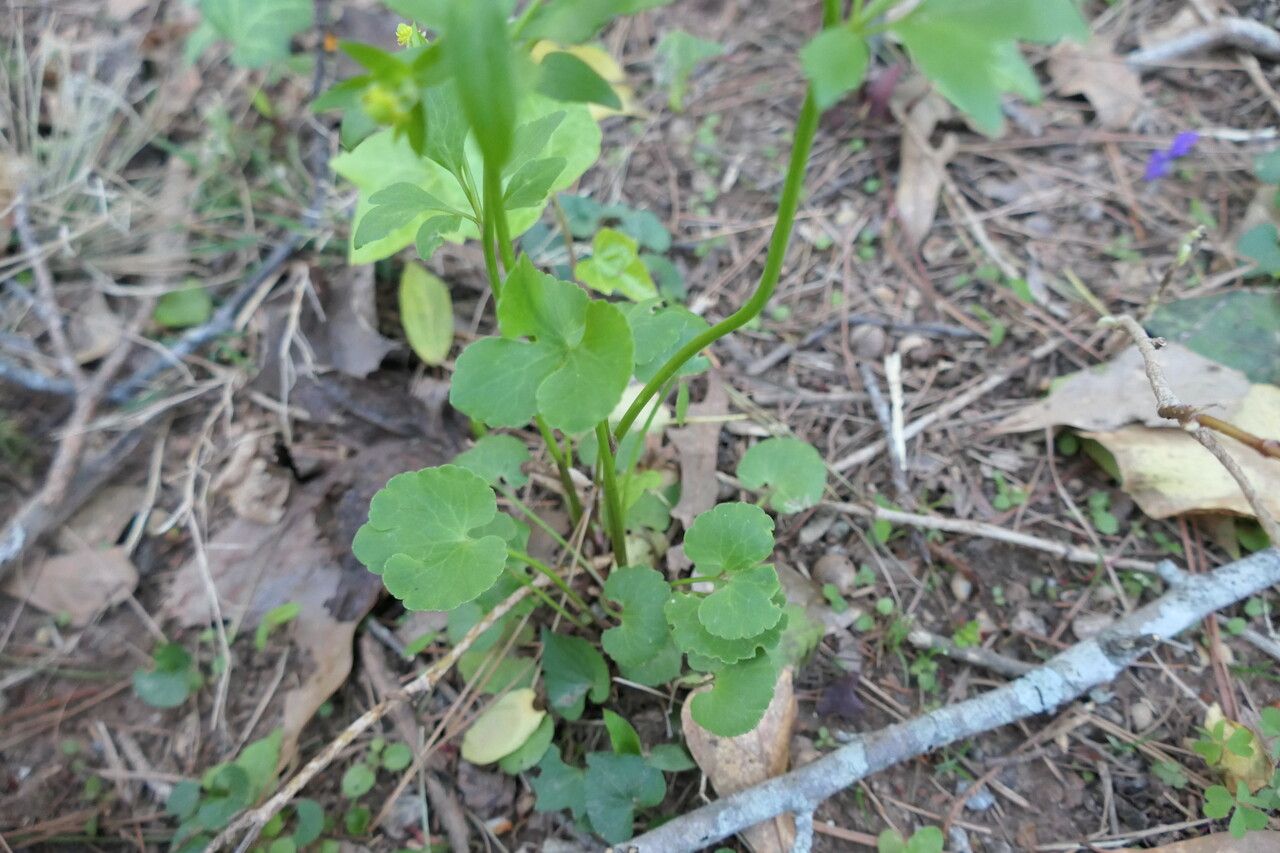
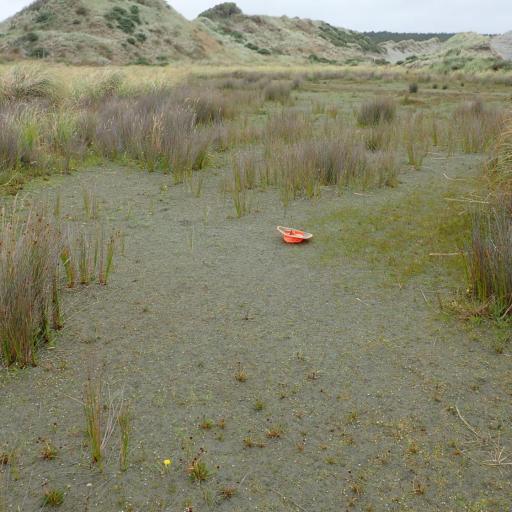
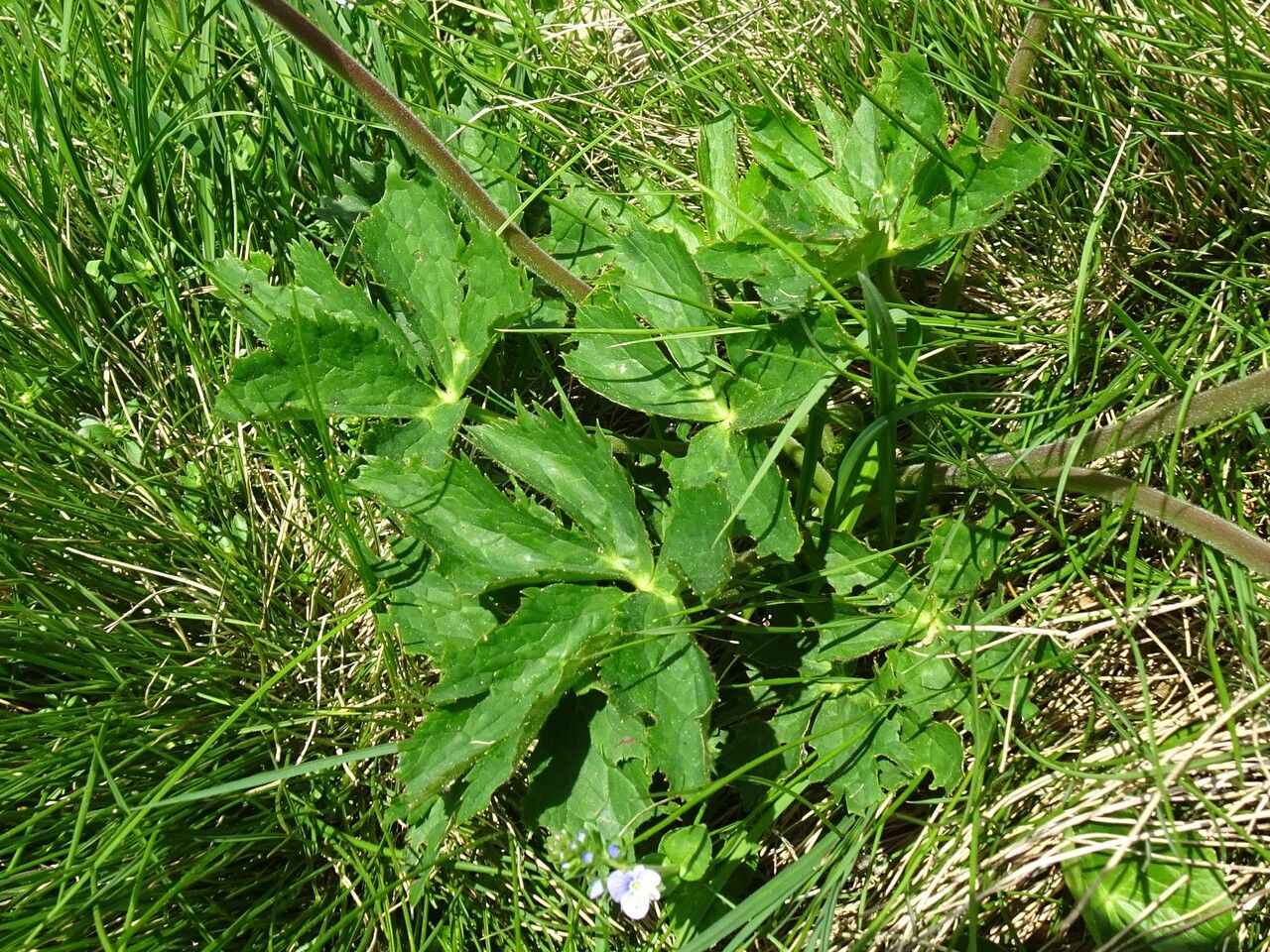
Ranunculus lyallii (Mountain buttercup, Mount Cook buttercup, or, although not a lily, Mount Cook lily), is a species of Ranunculus (buttercup), endemic to New Zealand, where it occurs in the South Island and on Stewart Island at altitudes of 700–1,500 m. R. lyallii is the largest species in the genus Ranunculus, growing over a meter in height.The species was discovered by David Lyall, (1817–1895), a noted Scottish botanist and doctor. Contemporary botanist Sir Joseph Hooker, (1817–1911), noted in his Flora Antarctica:
Among his many important botanical discoveries in this survey was that of the monarch of all buttercups, the gigantic white-flowered Ranunculus lyallii, the only known species with peltate leaves, the 'water-lily' of the New Zealand shepherds.--Joseph Dalton Hooker (1895) 33 Journal of Botany, p. 209. It is a herbaceous perennial plant growing to 60–100 cm tall (the largest species of buttercup), with a stout rhizome. The leaves are glossy dark green, peltate, 15–40 cm diameter. The flowers are 5–8 cm diameter, with 10–20 white petals and numerous yellow stamens; flowering is from late spring to early summer.Notable sites for the species include Aoraki/Mount Cook National Park and in other alpine areas of including the area around Arthur's Pass. The flower (termed Mount Cook lily in this usage) was the logo of Mount Cook Airline until replaced by Air New Zealand's koru symbol. Other companies connected with the airline used the same logo until the Mount Cook Group was disbanded in 1989. The iconic flower has featured on New Zealand Post stamps as early as 1936 and repeatedly in later decades as part of sets relating to conservation and scenery.
Mount cook lily is fairly disease-resistant and typically not prone to illnesses. However, it can be affected by pests and diseases present in its surroundings. These infections are typically not serious. Regarding care, the plant needs moderate maintenance. It should be pruned regularly to keep a neat appearance and support healthy growth. Fertilizing can also help encourage flowering. Mount cook lily is suitable for anyone with an outdoor area, such as a garden or patio, and does not demand extensive care experience. It may need more attention if grown indoors.
How to keep Ranunculus Lyallii.
Light
Mount cook lily is a sun-loving, perennial herbaceous plant native to open habitats, frequently flourishing in meadows and grasslands. It prefers full sun but can also tolerate partial sun.
Water
The Mount Cook lily flourishes in moist environments and thrives when it receives consistent moisture. It benefits from being watered twice a week. Although it can withstand short periods of dryness, higher humidity levels—like those found in its native cloud forest conditions—boost its foliage and flowering potential, making it particularly suitable for indoor settings.
Fertilizer
For Mount cook lily, the primary time to fertilize is in early spring when the flowers are forming. The appropriate fertilizer promotes better blooms and helps Mount cook lily produce attractive flowers. Fertilizing in early spring ensures quality flowers throughout the season and supplies energy for dormant growth phases.
Pruning
The Mount Cook lily has large, glossy leaves and beautiful white flowers. To encourage bushier growth and remove dead foliage, prune the plant from early to late spring. This practice also improves air circulation, reducing the risk of disease. Always use clean, sharp tools to prevent infections, and ensure that pruning aligns with the plant's growth cycle.
Botanical profile.
- Plant Type
- Herb
- Life Cycle
- Perennial
- Genus
- Ranunculus
- Family
- Ranunculaceae
- Hardiness Zone
- 7-9
- Mature Height
- 61 cm to 91 cm
- Mature Spread
- 30 cm to 49 cm
- Leaf Color
- Dark Green
- Leaf Type
- Semi-evergreen
- Flower Color
- White
- Flower Size
- 5.08 cm to 7.62 cm
- Bloom Time
- Early spring, Mid spring
- Planting Time
- Spring, Summer
- Harvest Time
- Late spring, Early summer
- Native Area
- New Zealand
Other names.
Reader questions.
What are the sunlight requirements for the Mount Cook Lily (Ranunculus lyallii)?
The Mount Cook Lily, known botanically as Ranunculus lyallii, thrives in conditions where it can receive an adequate amount of sunlight. Specifically, it requires full sun exposure, which amounts to more than 6 hours of sunlight daily, to flourish. However, it can also tolerate partial sun conditions, entailing about 3-6 hours of sunlight per day. When planning where to plant your Mount Cook Lily, it's crucial to observe the movement of sunlight through your garden carefully. By selecting spots that offer a balance of light and shade, you can ensure the health and happiness of your plants. Keeping in mind the ideal sunlight requirements will significantly influence the success and growth of your Ranunculus lyallii.