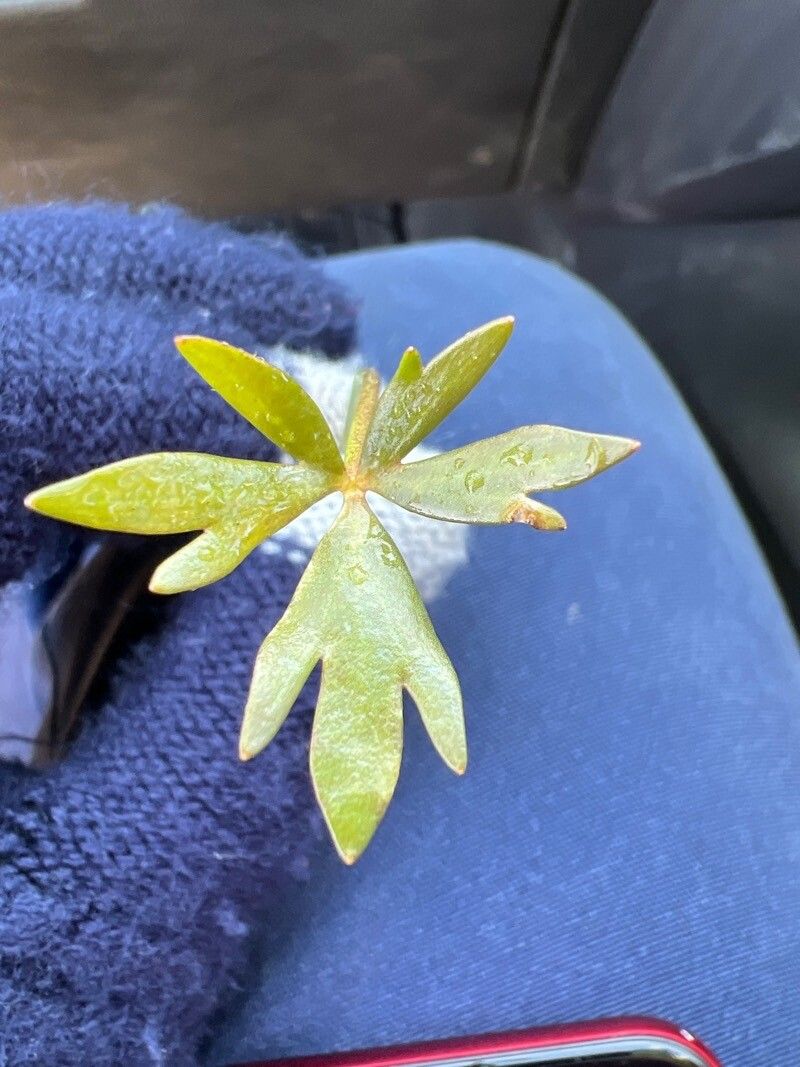
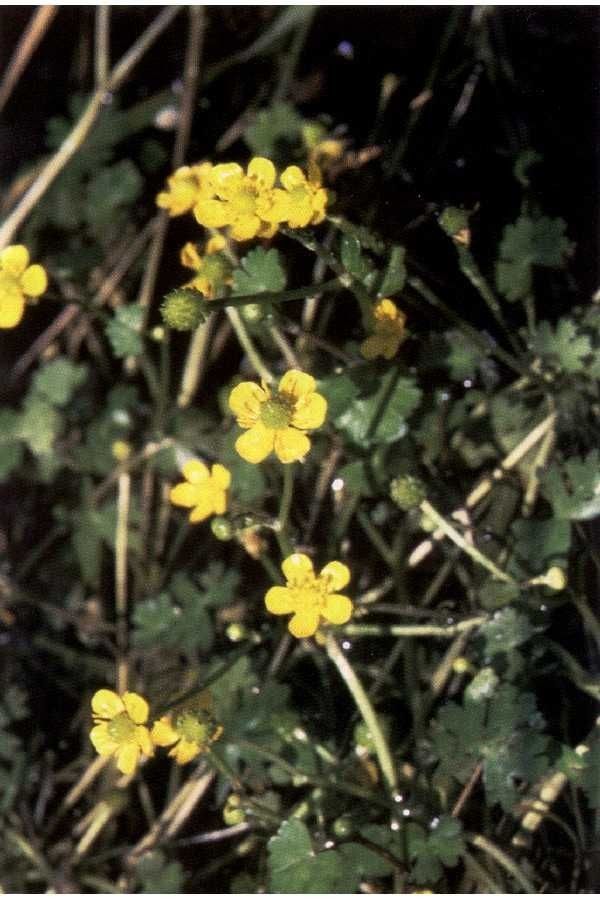
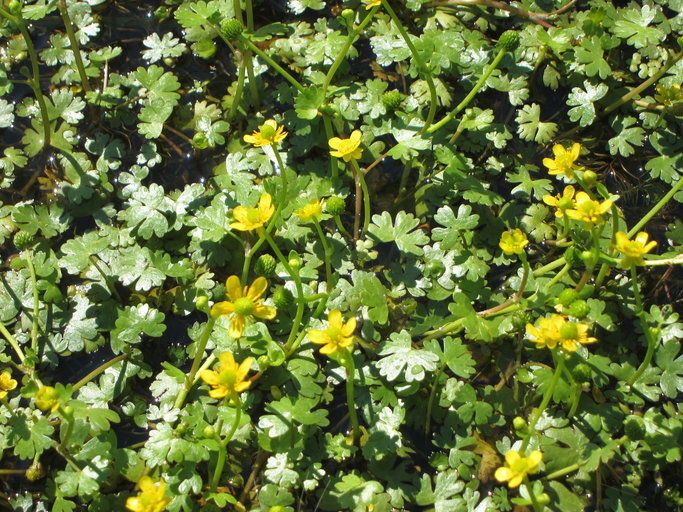
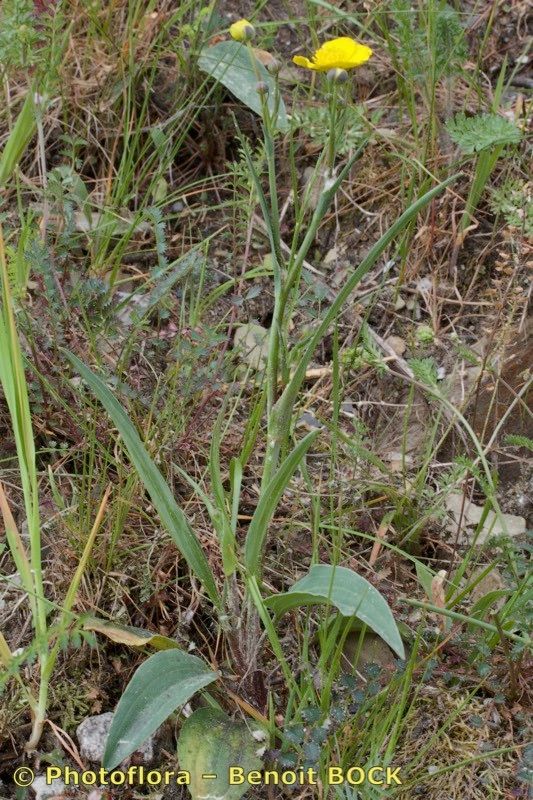
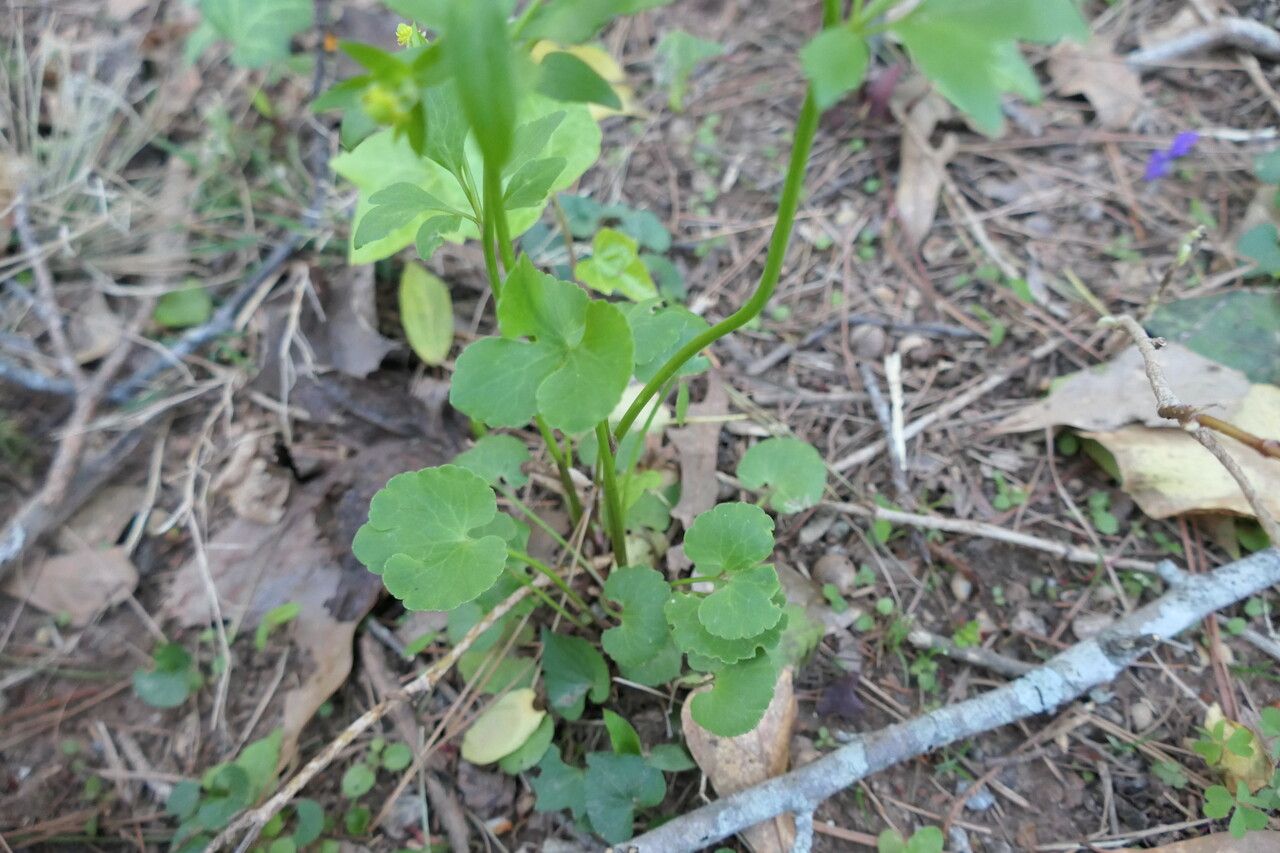
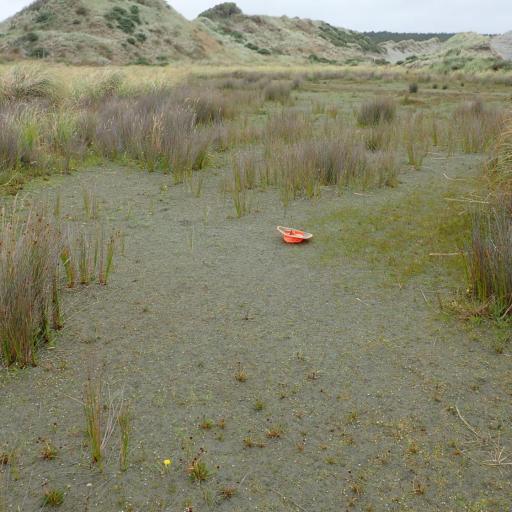
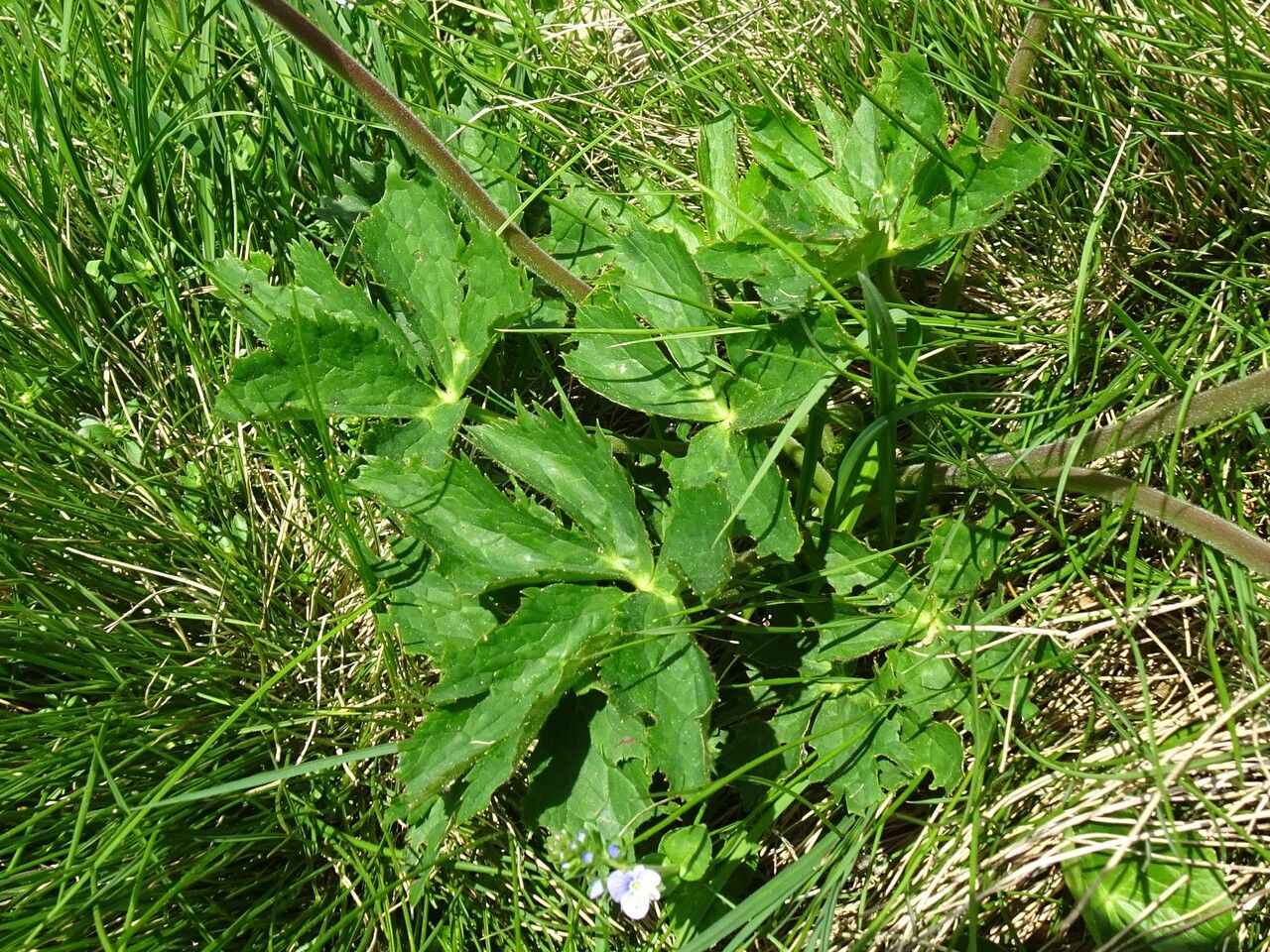
Ranunculus gmelinii, Gmelin's buttercup or small yellow water-crowfoot, is a species of flowering plant in the buttercup family, Ranunculaceae. It is native to northern North America, where it occurs across Canada and the northern and higher-elevation regions of the United States. It is also present in Eurasia.This species is a perennial herb growing prostrate stems on moist ground or floating stems in shallow water. It is hairy to hairless. The leaf blades are round or kidney-shaped and are divided into three parts that may be subdivided. The yellow petals are 4 to 14 millimeters long. Ranunculus gmelinii occurs in wetland habitats and on shorelines.The plant is not a threatened species, but it becomes rare in the habitat on the edges of its range; it is protected as a threatened plant in the state of Maine, and var. hookeri is a state-listed endangered plant in Wisconsin. It is listed as an endangered species in Newfoundland and Labrador.This species was named in honor of Johann Georg Gmelin (1709-1755).
Gmelin's buttercup exhibits good disease resistance and is generally not prone to illnesses. However, it can be vulnerable to pests and diseases present in its surroundings. These problems are typically not severe. As for care, this plant requires medium maintenance. It should be pruned regularly to maintain an attractive appearance and healthy growth. Fertilizing can also help encourage flowering. Gmelin's buttercup is suitable for anyone with outdoor space, such as a garden or patio, and does not demand extensive care experience. It may need more attention when grown indoors.
How to keep Ranunculus Gmelinii.
Light
Gmelin's buttercup comes from habitats with mottled light, such as the understory of tropical forests or rocky areas that provide natural shade. It prefers partial sun but can also tolerate complete shade.
Water
Gmelin's buttercup thrives in consistently moist environments and does well in soggy soils. To keep it healthy, it needs moderate watering, usually about once a week. This plant is typically grown outdoors, where it benefits from natural rainfall during its growing season, mirroring the climate of its native habitat.
Temperature
Gmelin's buttercup is a plant that flourishes in its native temperate habitats where temperatures range from 68 to 95 °F (20 to 35 ℃). Its temperature needs imply making gentle adjustments to reproduce these conditions across seasons when necessary.
Fertilizer
Proper fertilization is essential for the health and appearance of Gmelin's buttercup. Apply fertilizer during the summer, repeating the application monthly throughout the season. Nutrients support growth and help maintain the plant's parts. Fertilizing improves Gmelin's buttercup's flower display, ensuring the best blooms.
Pruning
To promote healthy growth and improve airflow, it's best to prune Gmelin's buttercup from early to late spring. Focus on removing dead or damaged stems during this time. Pruning at this stage supports the plant's growth, enhances flowering, and helps maintain its shape. This care is essential for keeping the plant healthy and preventing overcrowding.
Botanical profile.
- Plant Type
- Herb
- Life Cycle
- Perennial
- Genus
- Ranunculus
- Family
- Ranunculaceae
- Hardiness Zone
- 10
- Mature Height
- 3 cm to 8 cm
- Mature Spread
- 20 cm to 61 cm
- Leaf Color
- Dark Green, Light Green
- Leaf Type
- Semi-evergreen
- Flower Color
- Yellow
- Flower Size
- 1.02 cm to 1.52 cm
- Bloom Time
- Mid spring, Late spring, Early summer
- Planting Time
- Spring
- Harvest Time
- Summer
- Native Area
- Russia, Kazakhstan, Mongolia, Koppen, China
Other names.
Reader questions.
What are the sunlight requirements for Gmelin's buttercup?
Gmelin's buttercup (Ranunculus gmelinii) thrives in locations that receive full sun, which is defined as receiving more than 6 hours of sunlight daily. It's important to observe how sunlight moves through your garden throughout the day. Choosing the right spots that offer a perfect balance of light and shade will ensure the happiness and health of your Gmelin's buttercup.
What is the ideal temperature range for Gmelin's buttercup?
Gmelin's buttercup thrives in its native temperate environments, preferring temperatures that range between 68 to 95°F (20 to 35°C). To support its growth, it's essential to mimic these conditions across different seasons if necessary. The plant is extremely fond of heat, so any exposure to cold can be harmful. During winter, maintaining temperatures above 20°C is beneficial, while temperatures near 5°C or lower can damage the plant.
How should Gmelin's buttercup be cared for in autumn and winter?
In the autumn, it's recommended to bring Gmelin's buttercup indoors if it was grown outside. Placing it near a bright window will ensure it still gets enough light, but keep it away from direct heat sources like heaters to avoid damaging the plant. Maintaining indoor temperatures above 20°C during winter is crucial to prevent harm to the plant and ensure its continued growth.
What symptoms indicate Gmelin's buttercup is experiencing low temperatures, and what are the solutions?
Symptoms of low temperature stress in Gmelin's buttercup include leaves lightening in color when temperatures fall below 1°C, turning brown or black after frost damage, and showing signs of wilting and drooping. To remedy this, trim off the frost-damaged parts and move the plant to a warm environment indoors. Placing it near a south-facing window ensures ample sunlight, and avoiding proximity to heaters or air conditioners helps prevent air dryness.
How does high temperature affect Gmelin's buttercup, and what steps should be taken?
Gmelin's buttercup should ideally be kept below 35°C during summer. Temperatures exceeding 41°C can cause the leaves to lighten and increase susceptibility to sunburn. To manage high-temperature stress, trim away any sunburned or dried-up parts of the plant. Moving it to a shaded spot, especially from the midday and afternoon sun, and watering the plant in the morning and evening to maintain soil moisture are efficient ways to mitigate the damage caused by excessive heat.