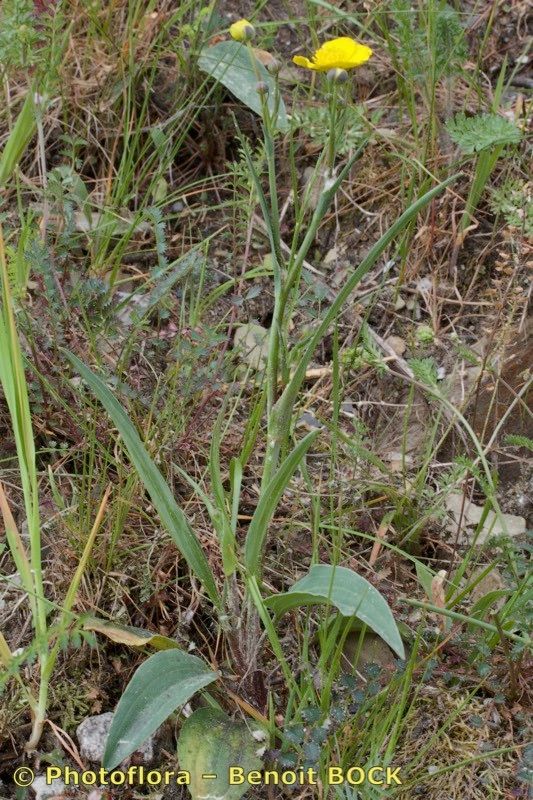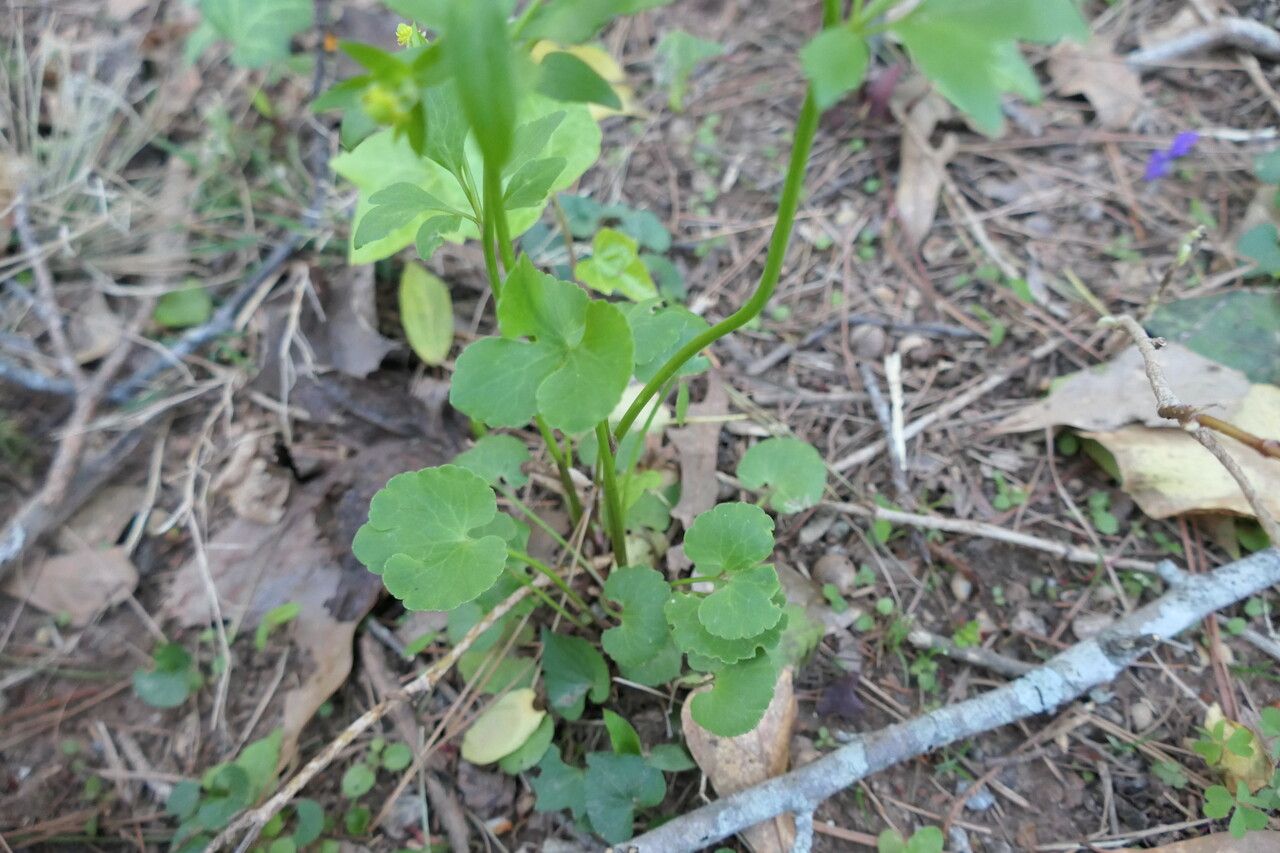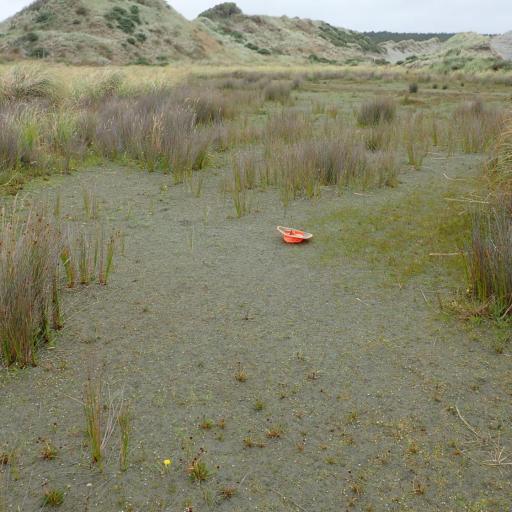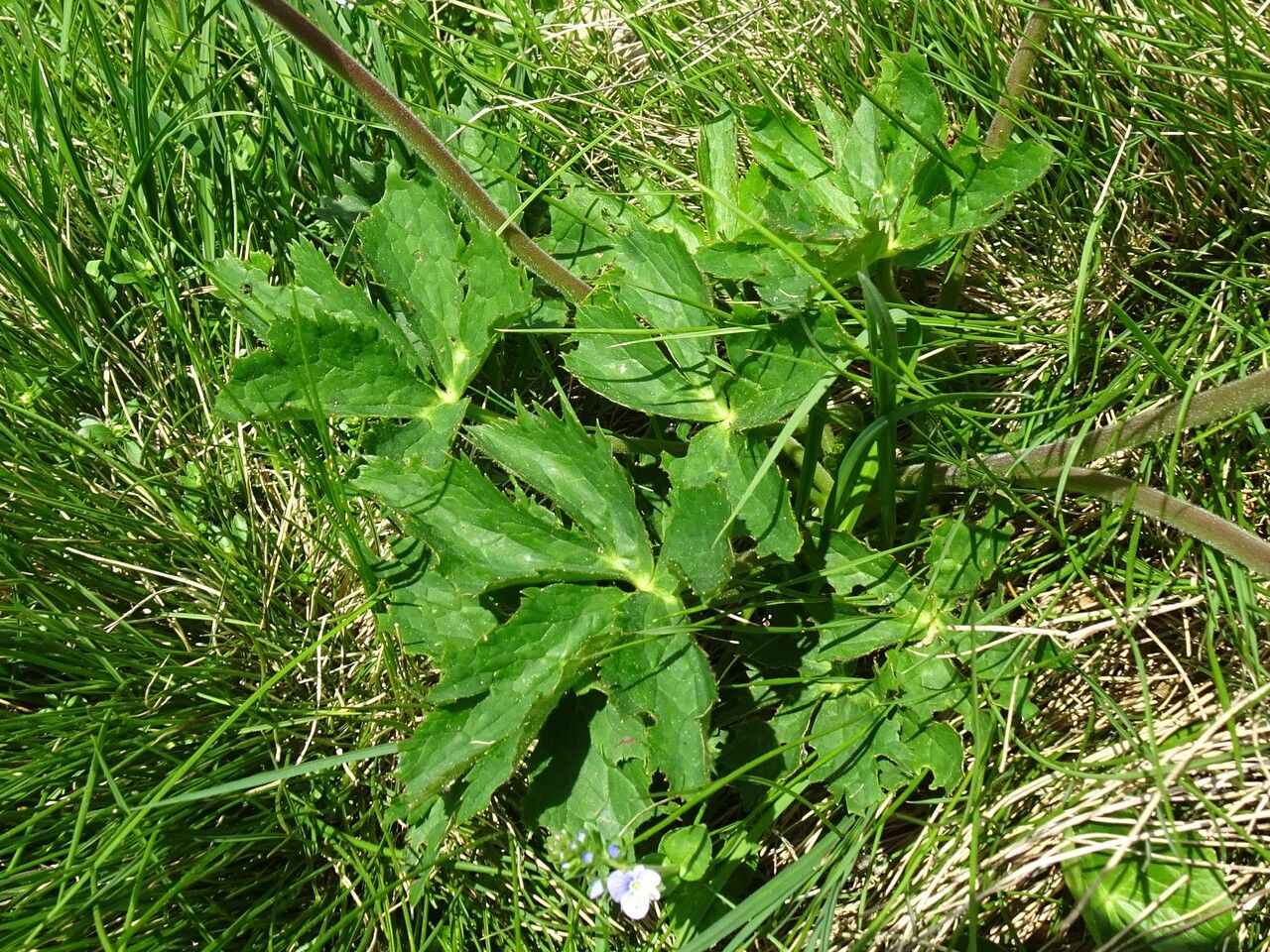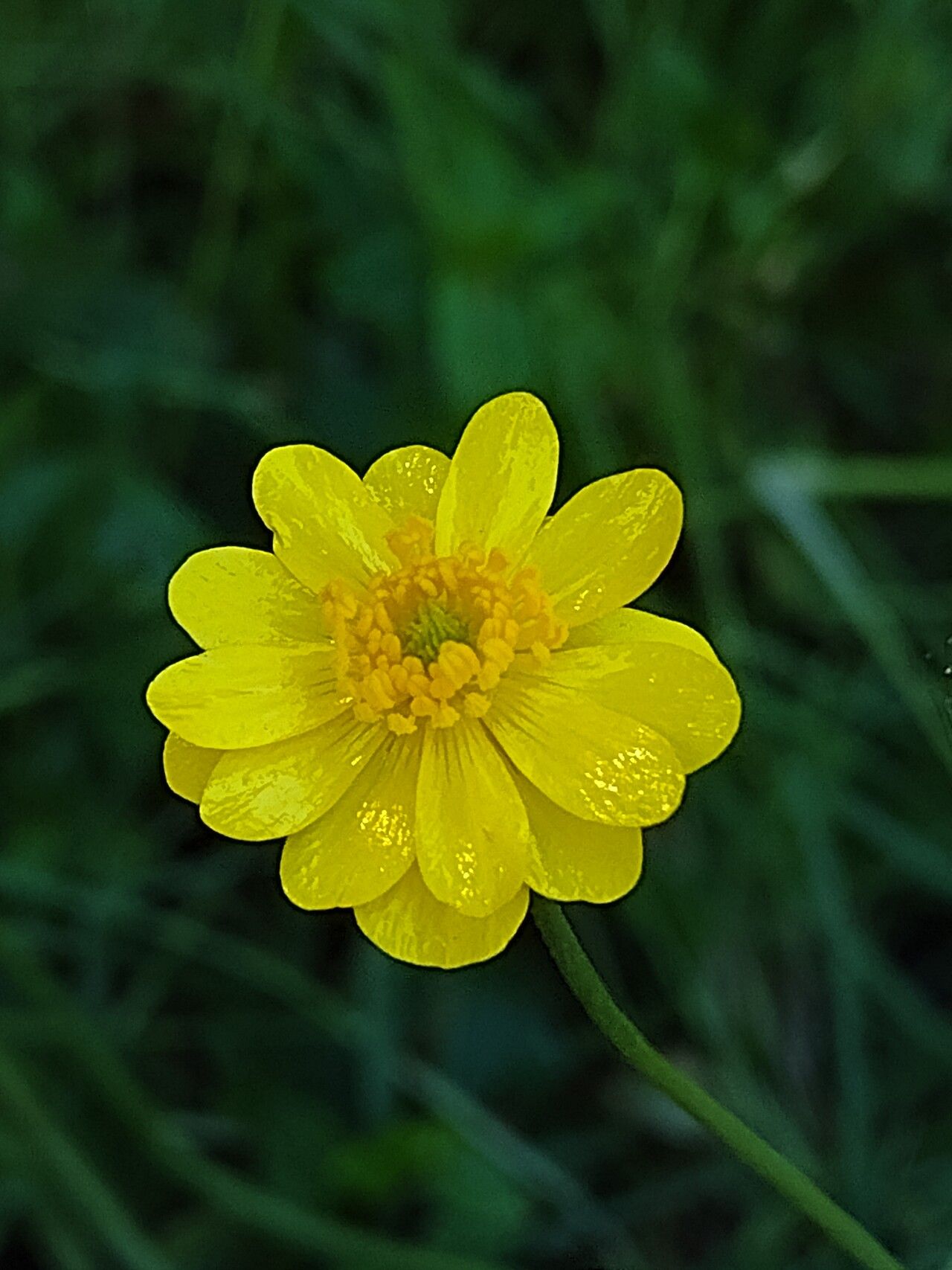
Ranunculus canus is a species of buttercup known by the common name Sacramento Valley buttercup. It is endemic to California, where it grows in the Central Valley and adjacent mountain foothills, and the Transverse Ranges just south. It grows in grassland and meadows in woodland and forest habitat. This plant can be very similar in appearance to the California buttercup (Ranunculus californicus), and may be difficult to distinguish from it. It is variable in form. In general the plant is a perennial herb producing erect, usually hairy stems up to 65 centimeters tall. The hairy leaves are each made up of three leaflets, leaves occurring lower on the plant with wider leaflets which may be notched to lobed, and upper leaves with narrow, toothed leaflets. The flower has up to 23 shiny yellow petals and many yellow stamens and pistils at the center. The fruit is an achene, borne in a spherical cluster of 11 or more.
California buttercup has strong resistance to disease and is typically not vulnerable to illnesses. Still, it can be affected by pests and diseases present in its environment. Such infections tend to be mild. Regarding care, this plant needs a moderate level of attention. It should be pruned on a regular basis to preserve a neat appearance and encourage healthy growth. Applying fertilizer can also support better flowering. California buttercup is appropriate for anyone with an outdoor area, like a garden or patio, and does not demand extensive horticultural experience. It may need more attentive care if kept indoors.
How to keep Ranunculus Canus.
Light
The California buttercup prefers locations with plenty of light for best growth but can also tolerate areas with moderate sunlight. Native to sunny habitats, it prospers when given abundant light. However, too much sun can cause wilting, and too little light can stunt its growth.
Temperature
California buttercup is indigenous to areas with moderate temperatures, typically between 50 and 95°F (10 to 35℃). It grows most successfully in mild spring and autumn seasons. To recreate these conditions in your garden, keep days relatively warm and nights cooler.
Fertilizer
Early spring, when the California buttercup is coming out of dormancy and starting active growth, is the best time to fertilize it. Fertilizing supplies essential nutrients for healthy development. Although the California buttercup has relatively low fertilizer requirements, applying fertilizer annually can improve its survival and encourage better, longer-lasting flowers.
Pruning
The Sacramento Valley Buttercup is known for its bright yellow blooms and flourishes in well-drained soil. To shape the plant and encourage more flowers, prune it in early spring by removing any dead stems. Be sure to use clean tools to prevent damage and to improve air circulation, which helps deter pests and promotes overall plant health.
Botanical profile.
- Plant Type
- Herb
- Life Cycle
- Perennial
- Genus
- Ranunculus
- Family
- Ranunculaceae
- Hardiness Zone
- 6-9
- Mature Height
- 61 cm to 91 cm
- Mature Spread
- 49 cm to 91 cm
- Leaf Color
- Green, Dark Green
- Leaf Type
- Deciduous
- Flower Color
- Yellow, Gold
- Flower Size
- 1.02 cm to 2.03 cm
- Bloom Time
- Spring
- Planting Time
- Spring, Summer, Autumn
- Harvest Time
- Late spring, Early summer, Mid summer
- Native Area
- Mexico
Other names.
Reader questions.
What are the sunlight requirements for Sacramento Valley Buttercup?
The Sacramento Valley Buttercup, known botanically as Ranunculus canus, requires full sun to thrive. This means it needs to receive more than 6 hours of sunlight daily. It's important to observe how sunlight moves through your garden throughout the day. Choosing spots that provide an optimal balance between light and shade will ensure your plants grow happily and healthily.
What is the Sacramento Valley Buttercup?
The Sacramento Valley buttercup, scientifically known as Ranunculus canus, is a plant species belonging to the genus Ranunculus. Unfortunately, the provided information does not include details about its characteristics, habitat, or other essential knowledge about this plant.