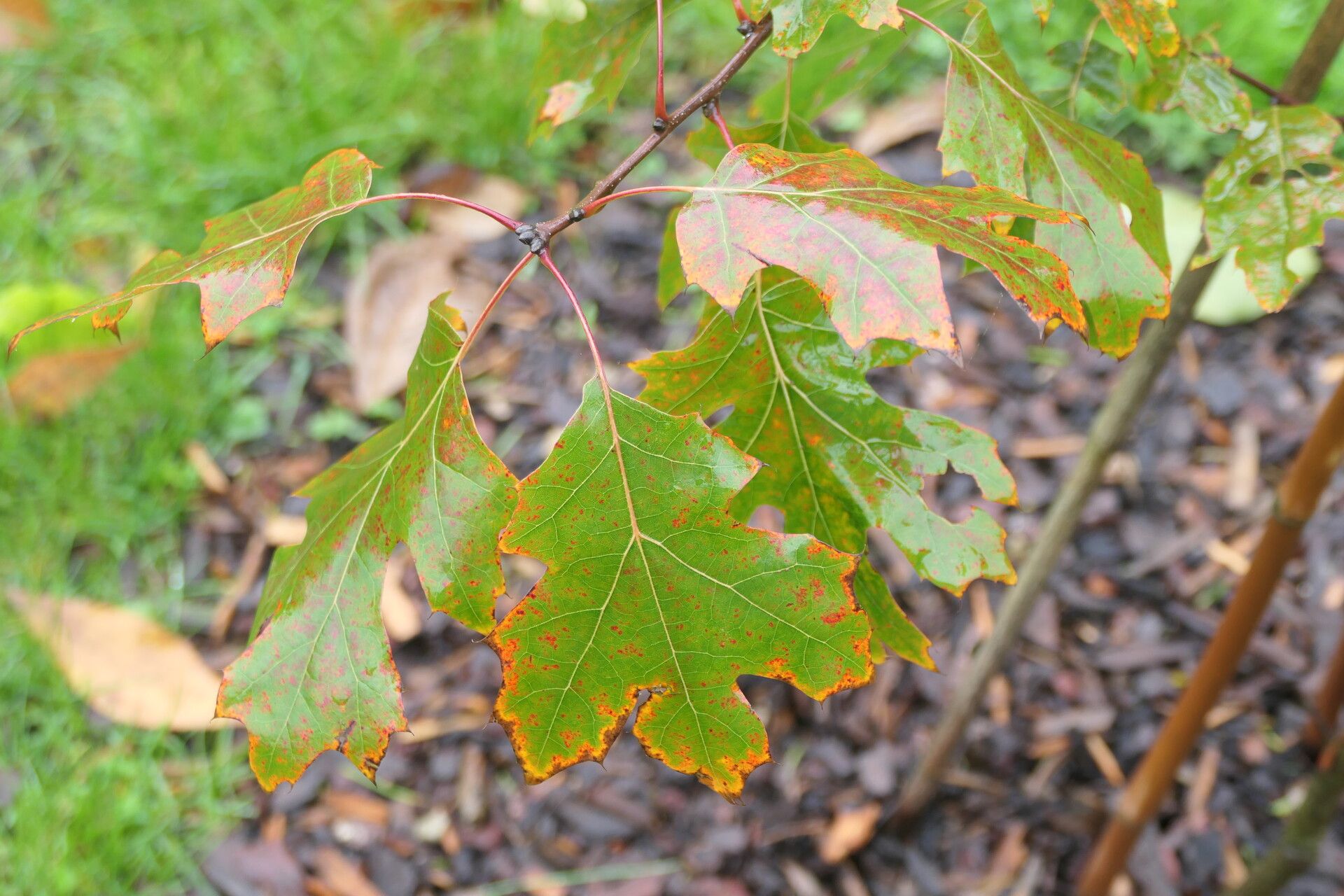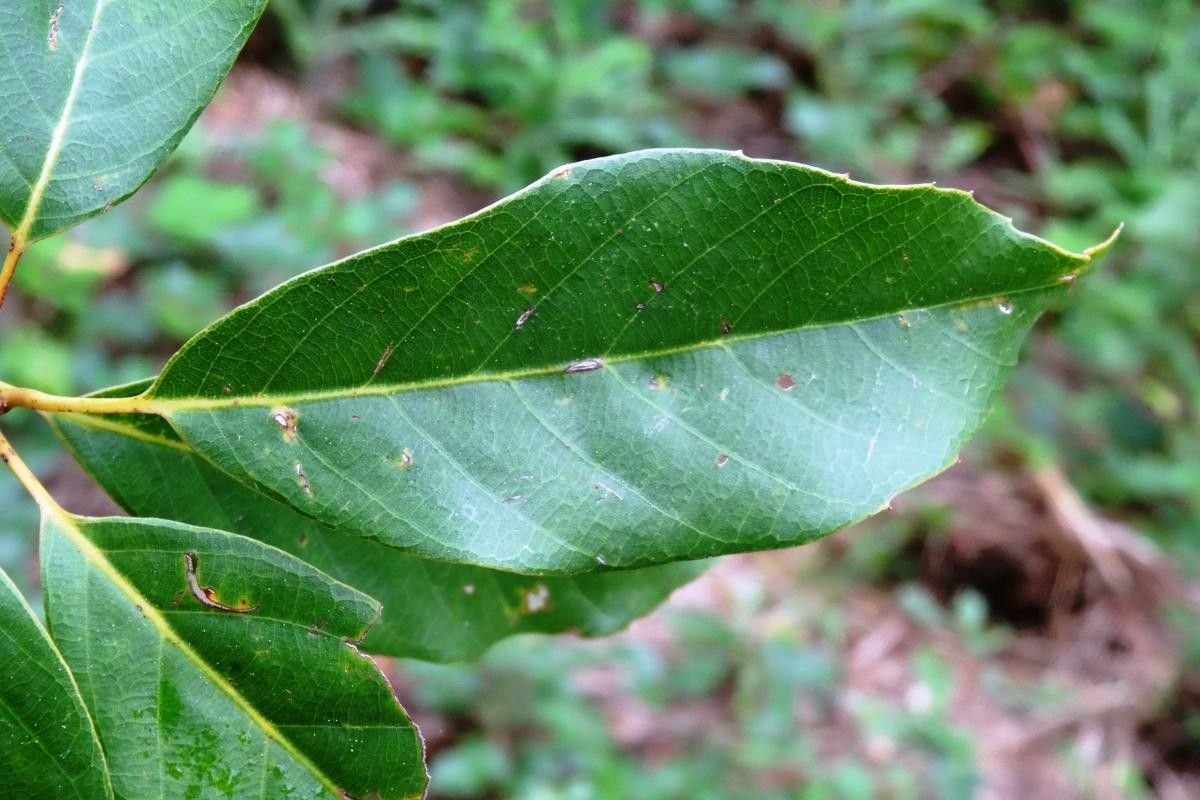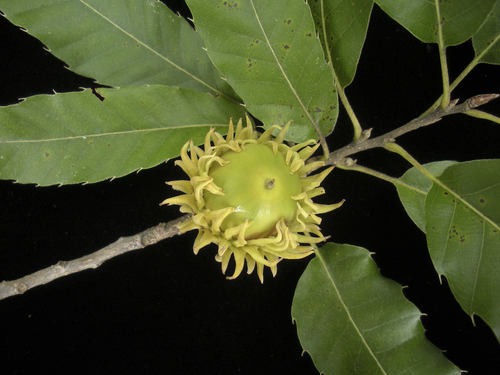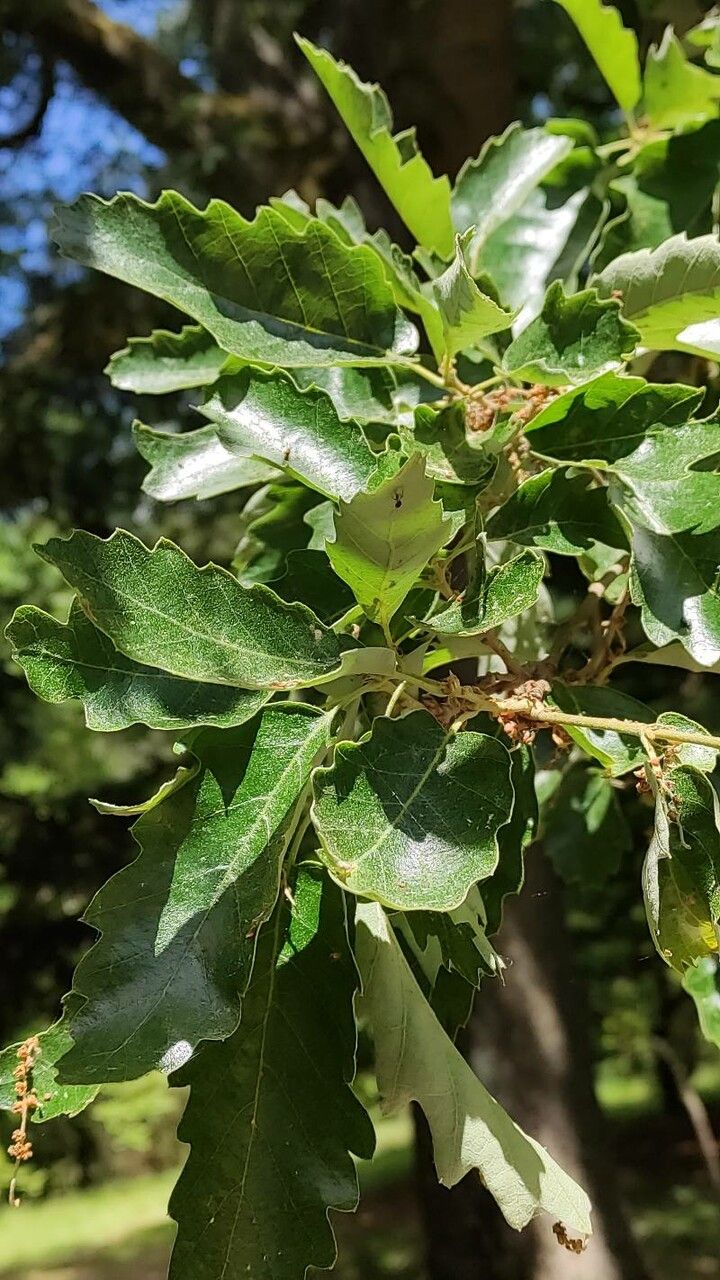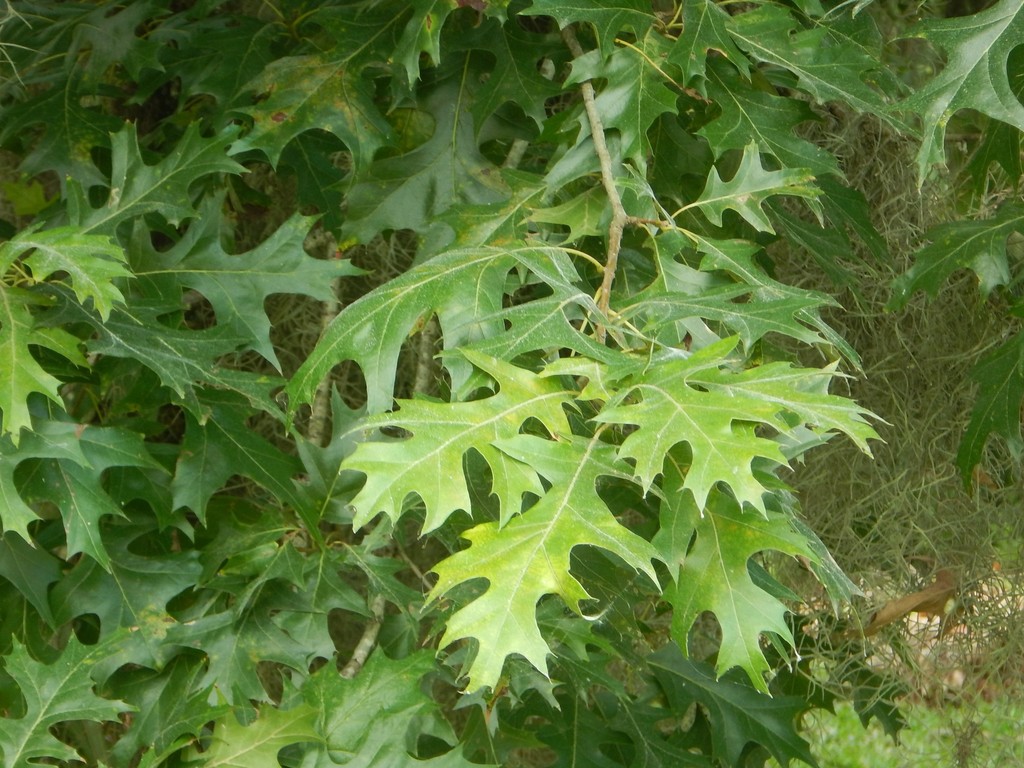
Quercus texana, commonly known as Nuttall's oak, is a fast-growing, large deciduous oak tree.
It is a tree growing up to 25 meters (83 feet) tall, with dark brown bark. It has leaves with sharp pointed lobes somewhat similar to those of the Georgia oak (Q. georgiana) and pin oak (Q. palustris). It is fast-growing and usually has a pleasing red color in autumn, much more reliably so than the pin oak. This species was for years erroneously called Quercus nuttallii, but it is now known as Q. texana; this has created much confusion with Texas red oak, which was known as Q. texana but is now known as Q. buckleyi.It is native to the south-central United States primarily in the lower Mississippi River Valley in Louisiana, Arkansas, Mississippi, Alabama, and western Tennessee. There are additional populations in eastern Texas, southeastern Oklahoma, southeastern Missouri, far western Kentucky, and the southernmost tip of Illinois.It is still relatively obscure in the horticultural industry but is slowly gaining popularity due to its fast growth rate, ease of transplanting, good fall colors and ability to grow in wet soils. It is known for its ability to rapidly recover its gas exchange after flooding.
Texas red oak possesses strong resistance to disease and is generally not susceptible to illnesses. With respect to care, this plant is fairly low maintenance. When grown outdoors it needs minimal watering, and larger specimens typically do not require pruning. Smaller plants, however, should be pruned after they have finished blooming. Texas red oak is suitable for anyone with outdoor space, like a garden or deck, and does not require extensive plant care experience.
How to keep Quercus Texana.
Light
Texas red oak performs best when it receives a substantial amount of sunlight daily, which supports its healthy growth. A lack of sunlight can impede its ideal development. Its requirement for sunlight stays the same from its early growth phase through maturity. The sun-drenched native environment of the species illustrates this need for light. Both excessive and insufficient light can negatively affect its vegetation cycle.
Water
Nuttall's oak needs moderate watering every 1 to 2 weeks and has an average tolerance for drought. Being a deciduous tree, it sheds its leaves to conserve water, which allows it to thrive in various climates with balanced rainfall.
Temperature
Texas red oak is a species that thrives in areas with moderate temperatures. Native to regions where temperatures range from 50 to 95 °F (10 to 35 ℃), the plant prefers that interval. Seasonal adjustments may be necessary if temperatures stray from this range.
Fertilizer
Fertilize your Texas red oak in early spring to encourage healthy growth. Regular feeding boosts the tree’s overall health, leading to vigorous growth, improved tolerance of harsh conditions, and increased resistance to pests and diseases. Follow a consistent fertilization schedule for your Texas red oak to keep its foliage vibrant, richly colored, and lush in appearance.
Pruning
Pruning a Nuttall's oak in early spring, before new growth begins, can significantly enhance its structure and health. Start by removing dead or crossing branches, and thin out the canopy to improve light and air circulation, which helps reduce the risk of disease. Conducting this work early in the season minimizes sap bleeding and encourages strong development, making the tree a resilient addition to the landscape.
Botanical profile.
- Plant Type
- Tree
- Life Cycle
- Perennial
- Genus
- Quercus
- Family
- Fagaceae
- Hardiness Zone
- 6-9
- Mature Height
- 12.19 m to 15.24 m
- Mature Spread
- 6.1 m to 10.36 m
- Leaf Color
- Green, Red, Orange
- Leaf Type
- Evergreen, Deciduous
- Flower Color
- Yellow, Green
- Flower Size
- 0.20 cm
- Bloom Time
- Mid spring, Late spring
- Planting Time
- Spring, Autumn
- Harvest Time
- Mid summer, Late summer, Early fall
Other names.
Reader questions.
What are the sunlight requirements for Nuttall's oak (Quercus texana)?
Nuttall's oak (Quercus texana) thrives in conditions where it can receive full sun, which is defined as more than 6 hours of direct sunlight per day. However, it can also adapt to partial sun environments, where the sunlight exposure ranges from about 3 to 6 hours per day. When selecting a planting spot for your Nuttall's oak, it's important to observe the movement of sunlight through your garden. Identifying areas that offer the right balance of light and shade is crucial for ensuring the health and happiness of your plant. Keep in mind the provided warning to watch how sunlight gracefully moves through your garden, allowing you to choose the best spots that meet these requirements.