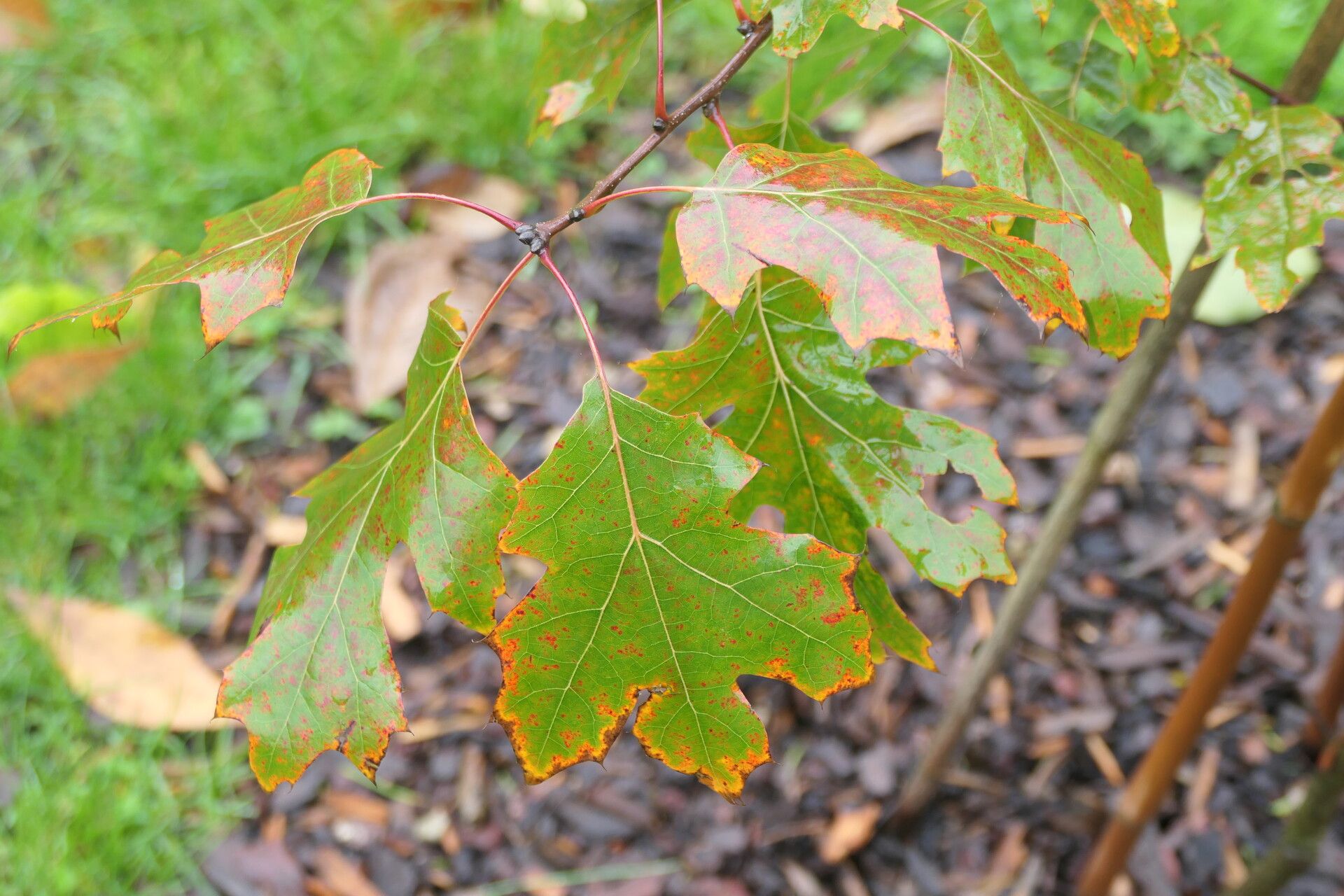
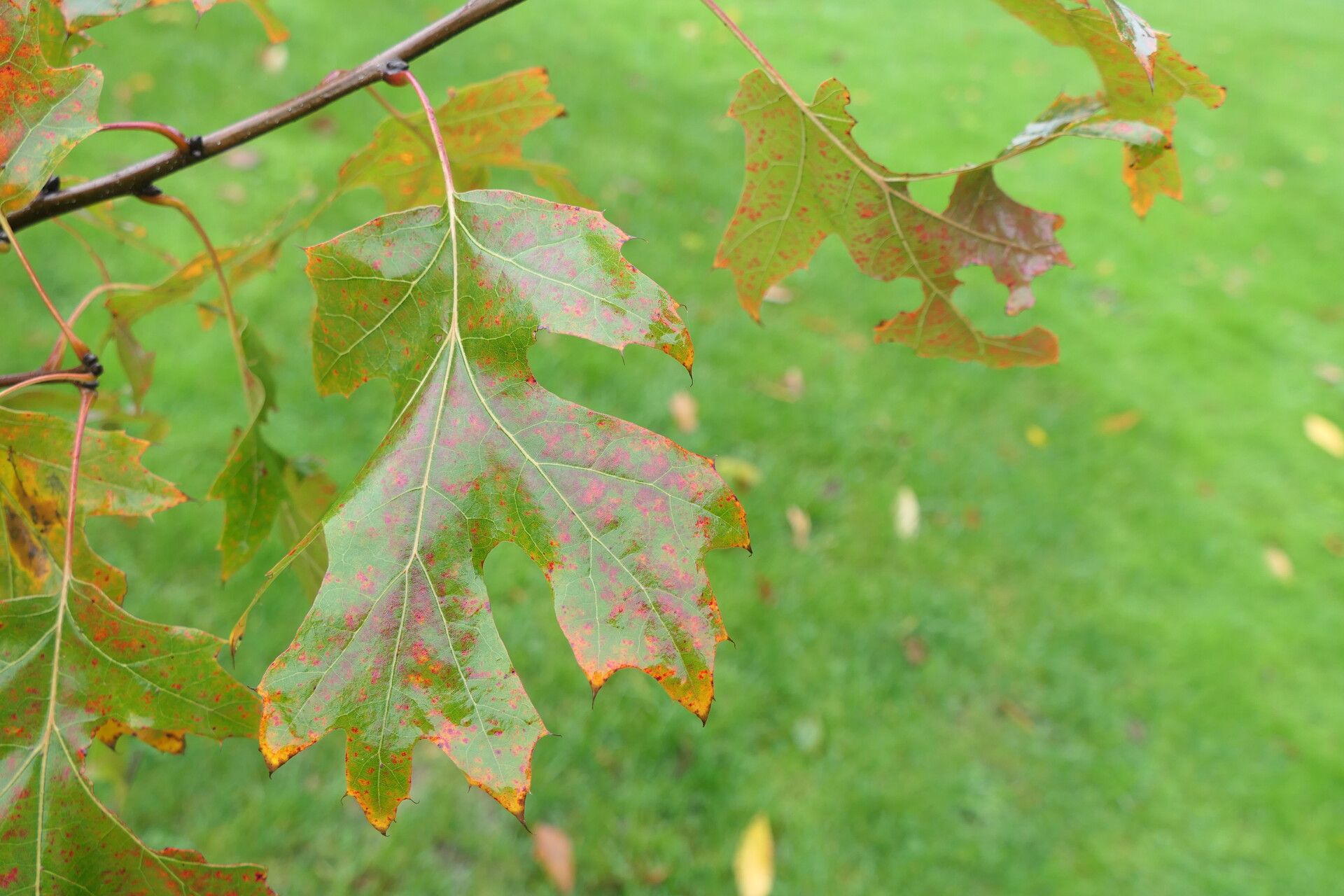
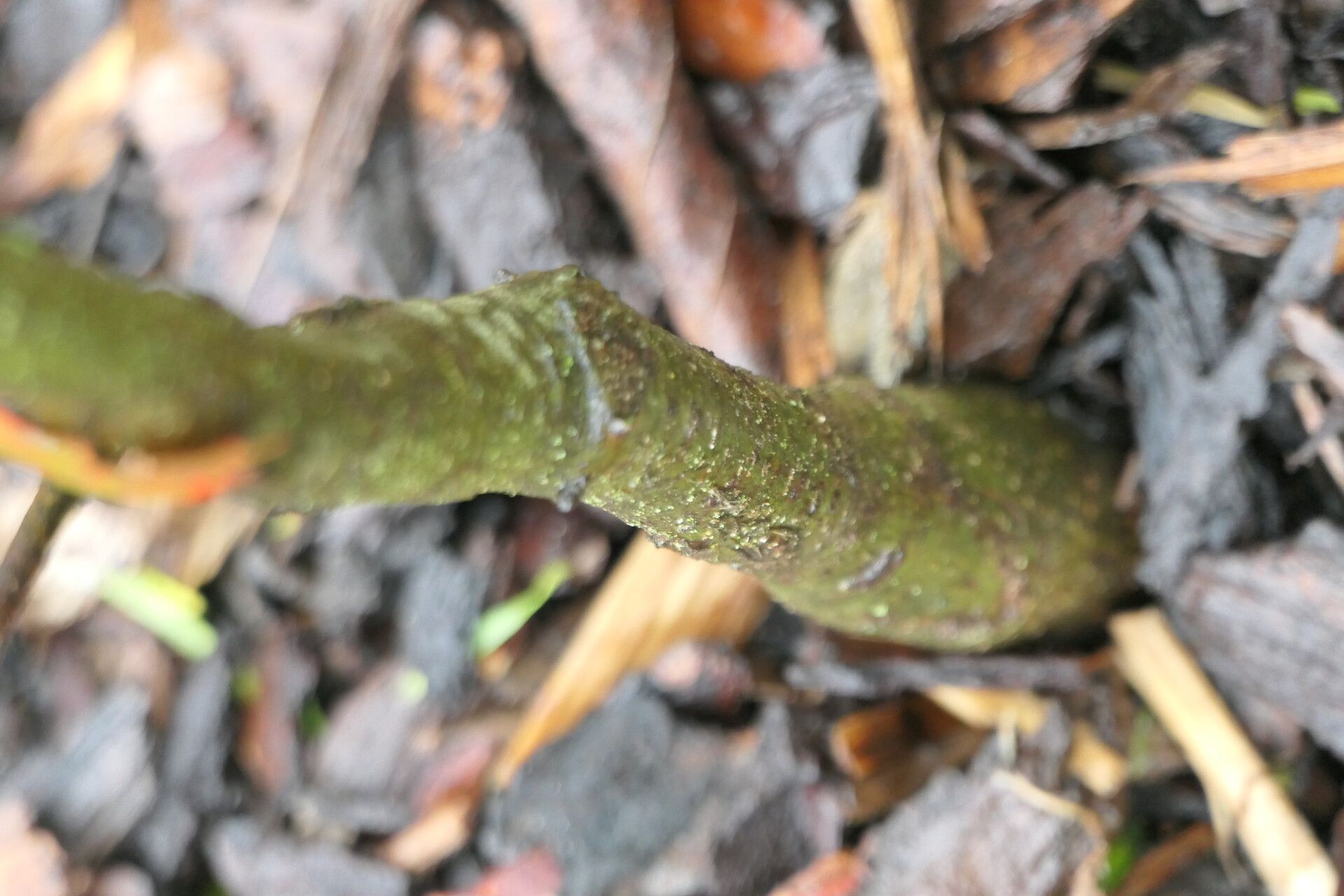
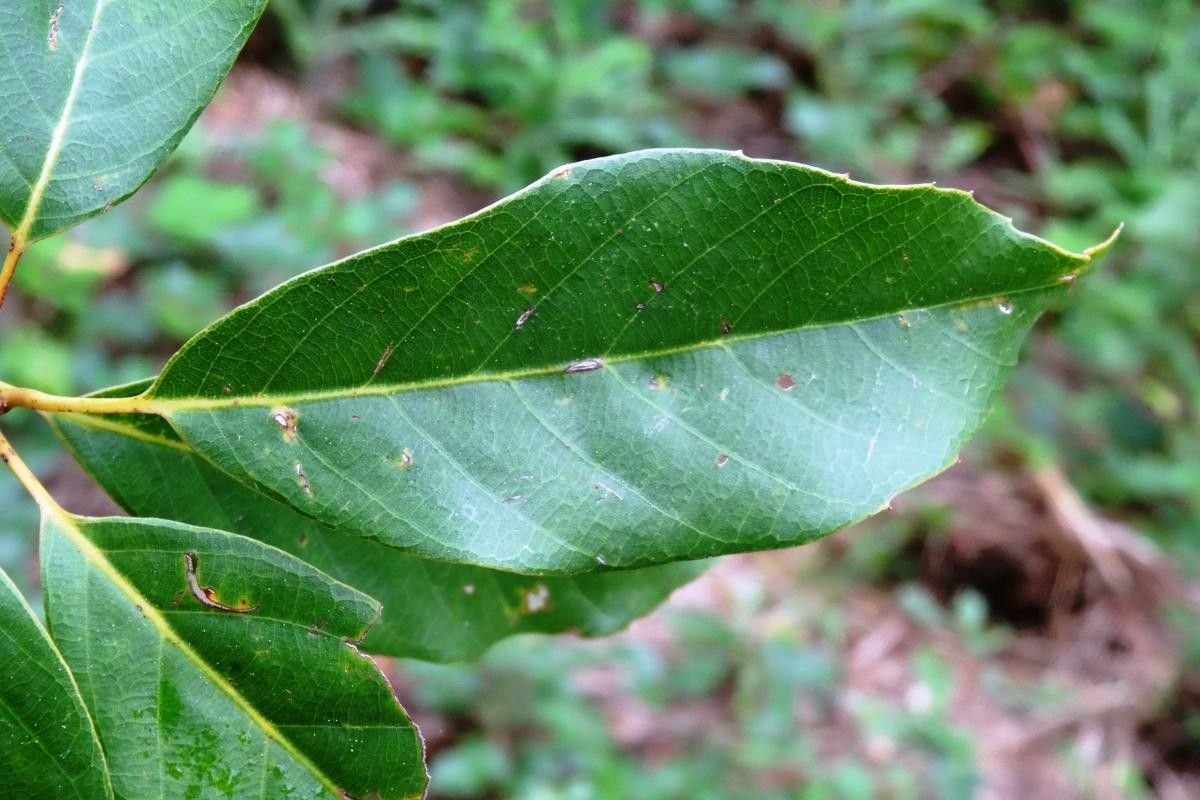
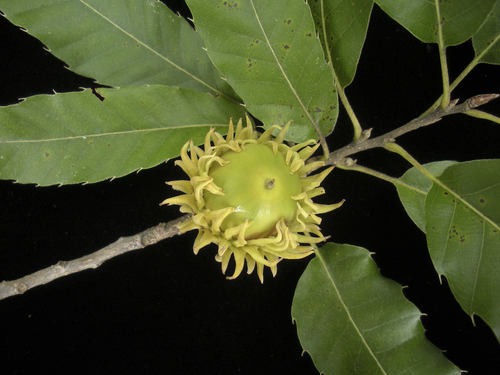
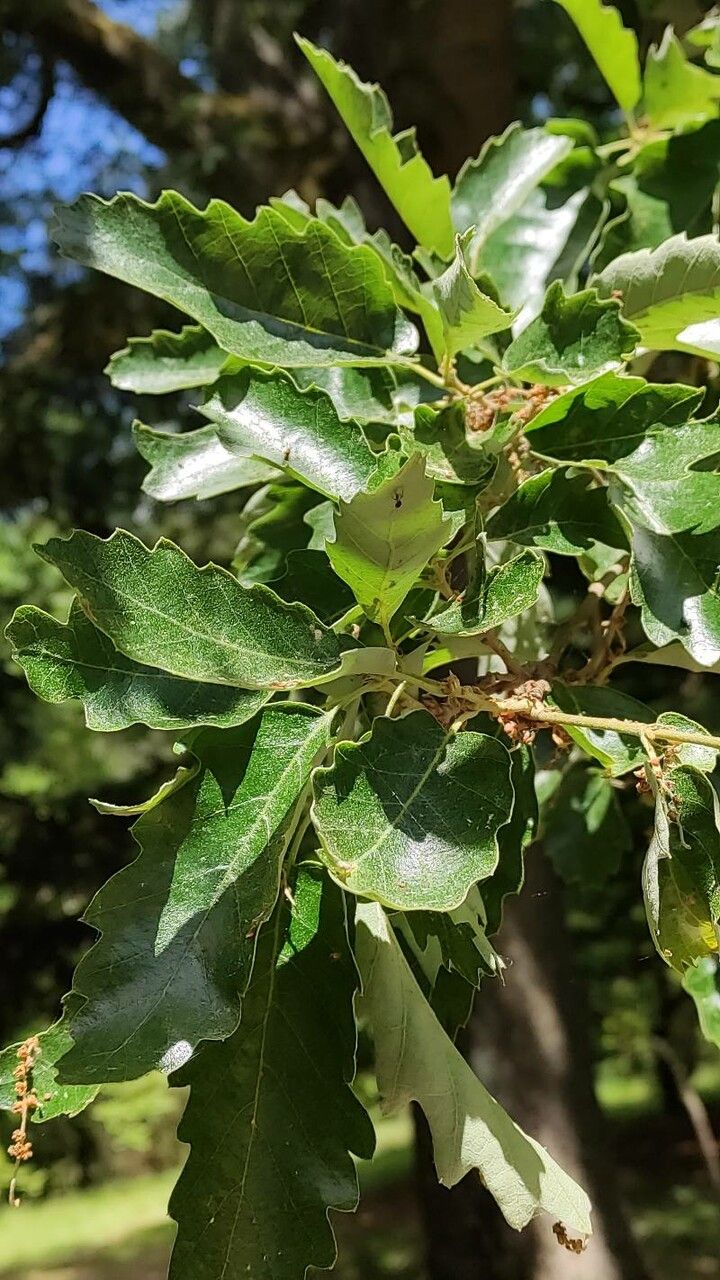
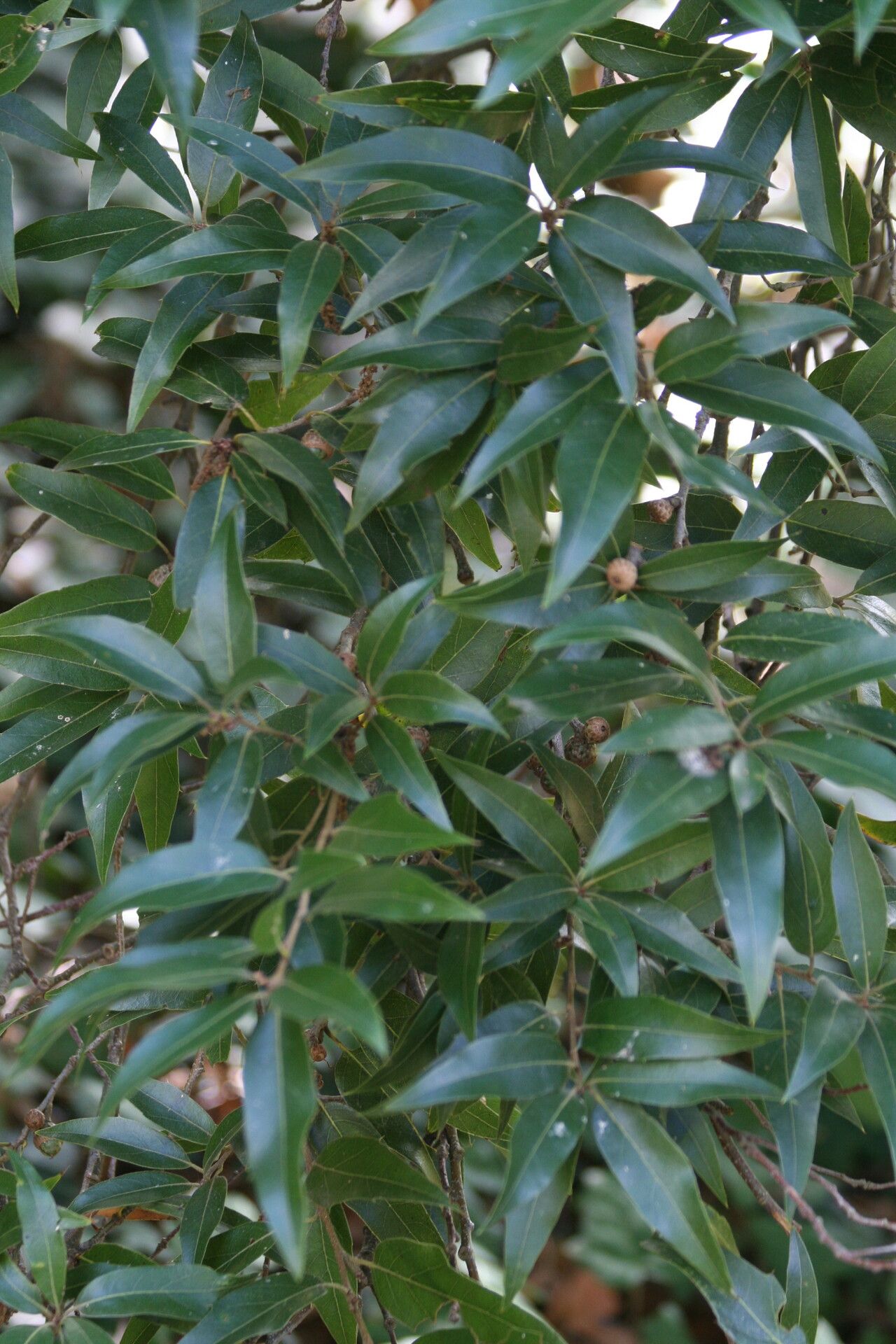
Quercus acerifolia is a rare North American species of oak in the red oak section of Quercus. The species was first described in 1927 from samples collected by E.J. Palmer in the Ozark Mountains. The initial documentation classified the species as Quercus shumardii var. acerifolia. The species was first perceived as a variant of Shumard oak due to its similar foliage and ranges. Over two decades later, the tree was re-evaluated by botanists Nick Alan Stoynoff and William J. Hess, who determined that it was a distinct species. Their case for reclassification was presented in the paper, "A New Status for Quercus shumardii var. acerifolia (Fagaceae)," published in the journal Sida in 1990. The reclassification was based on the tree's unique ecological and morphological characteristics including leaf shape, acorn size, and ecological niche. The species was renamed Quercus acerifolia, due to its leaf shape which resembles that of a maple tree.
Northern red oak is fairly disease-resistant and is usually not vulnerable to illnesses. As for care, this plant is fairly low-maintenance. When grown outdoors it needs little watering, and larger plants typically do not have to be pruned. Smaller plants, however, should be pruned after they finish blooming. Northern red oakt is appropriate for anyone who has an outdoor area like a garden or deck and does not need much prior care experience.
How to keep Quercus Acerifolia.
Light
Northern red oak performs best in places with plentiful sunlight throughout the day but can also tolerate more intermittent or dappled light. Excessive sun exposure can cause leaf scorch, while insufficient light will impede its growth. Its native origin reflects this requirement for abundant sunlight.
Temperature
Native to North America, the northern red oak grows well in temperatures from 41 to 95 °F (5 to 35 °C). It favors a moderate climate and can adapt to seasonal changes. In summer it does best in cooler locations, while in winter it prefers warmer conditions.
Fertilizer
To encourage healthy growth, fertilize your Northern red oak in early spring. Consistent fertilization improves overall health, producing vigorous growth, greater tolerance of difficult conditions, and enhanced resistance to pests and diseases. Stick to a defined fertilization routine for your Northern red oak to maintain foliage that is vibrant, richly colored, and luxuriant in appearance.
Botanical profile.
- Plant Type
- Tree
- Life Cycle
- Perennial
- Genus
- Quercus
- Family
- Fagaceae
- Hardiness Zone
- 5-9
- Mature Height
- 14.94 m to 28.04 m
- Mature Spread
- 14.94 m to 21.03 m
- Leaf Color
- Green, Red, Brown, Yellow
- Leaf Type
- Deciduous
- Flower Color
- Yellow, Green
- Flower Size
- 2.54 cm
- Bloom Time
- Mid spring, Late spring
- Planting Time
- Spring, Summer, Autumn, Winter
- Harvest Time
- Mid summer, Late summer
Other names.