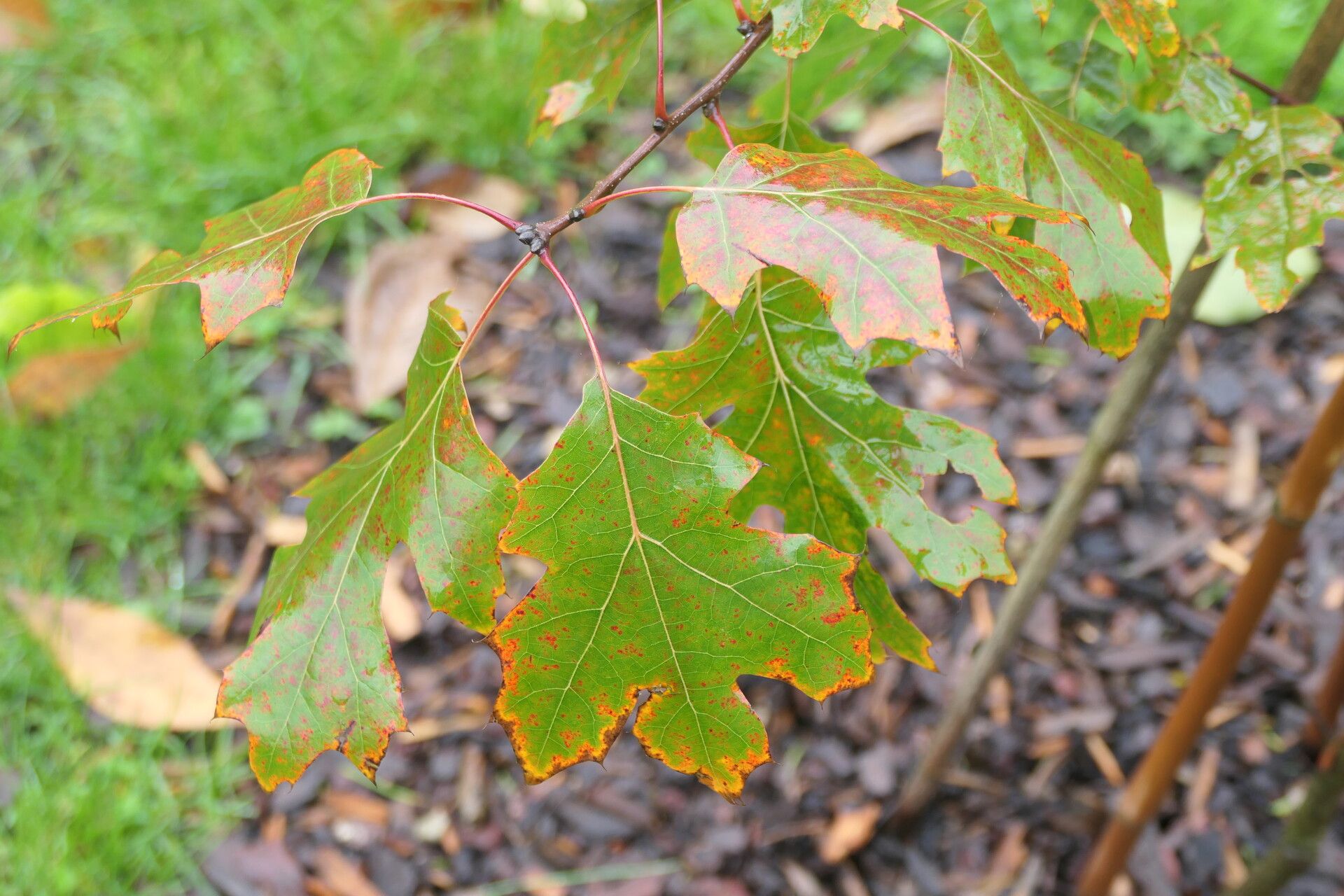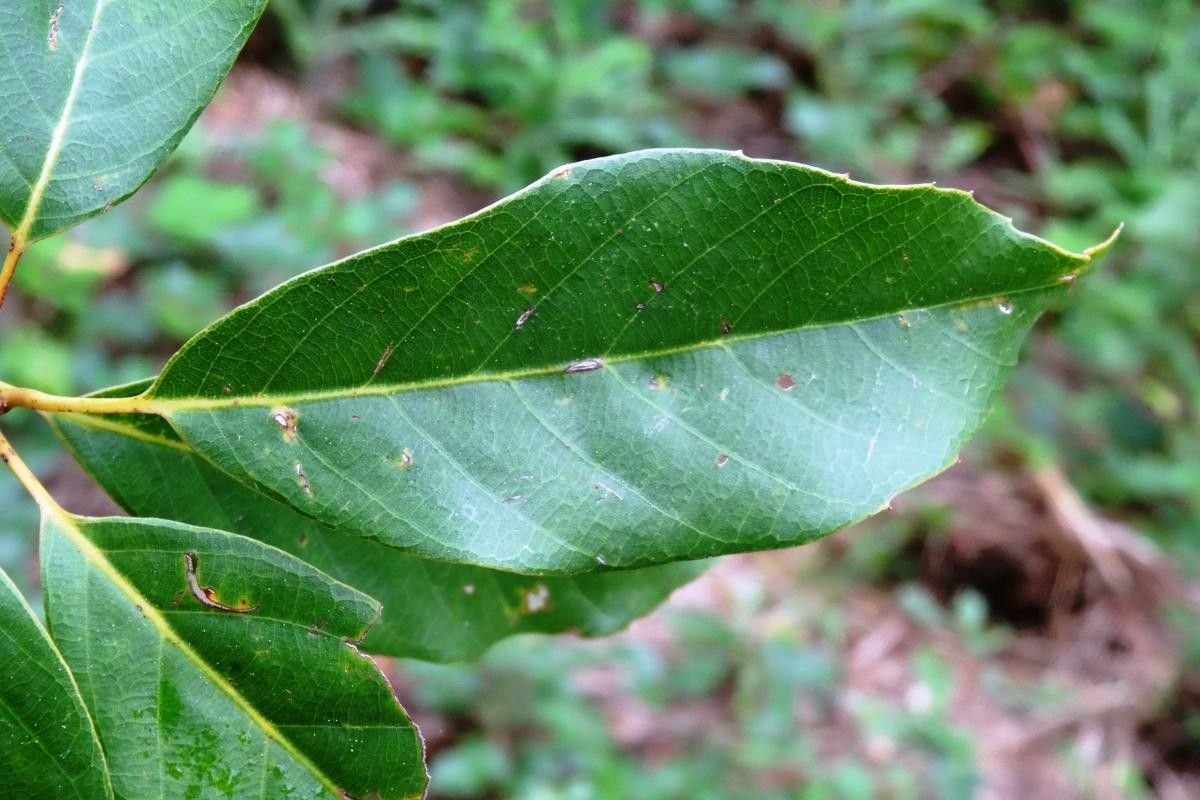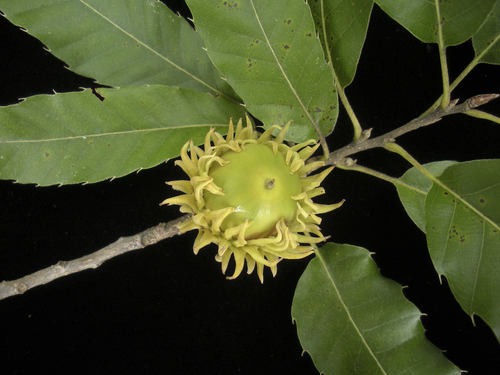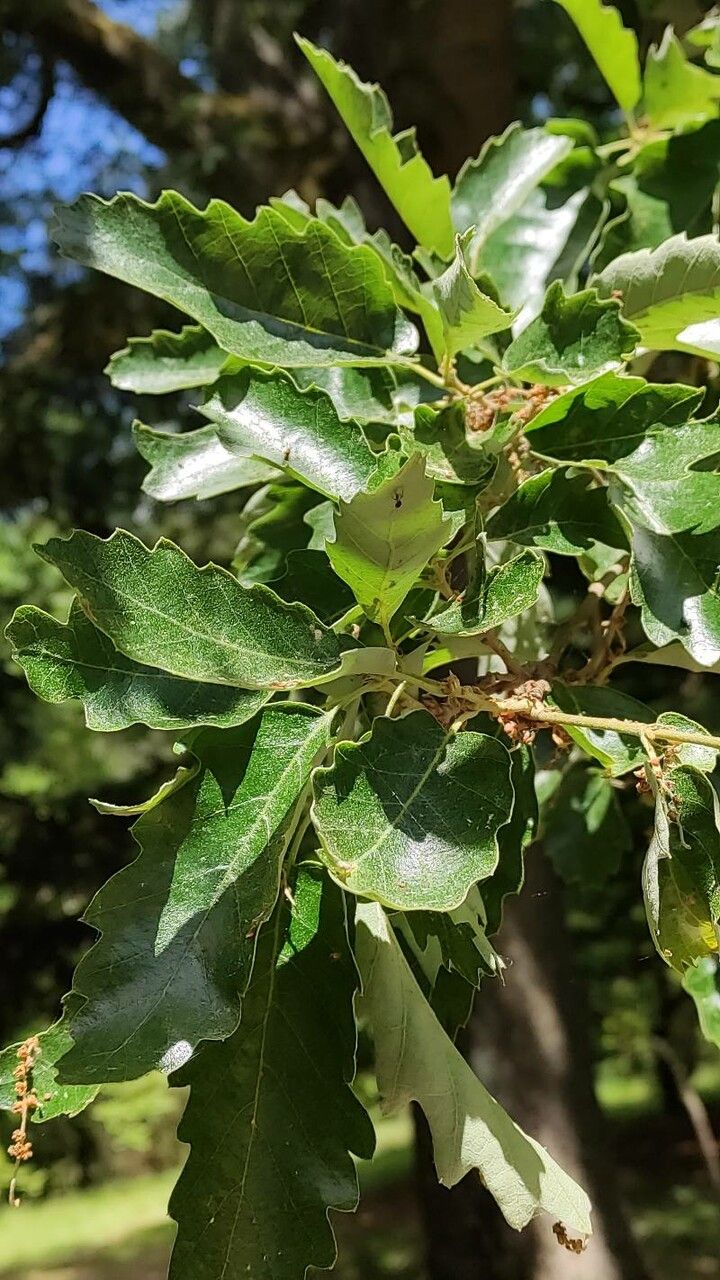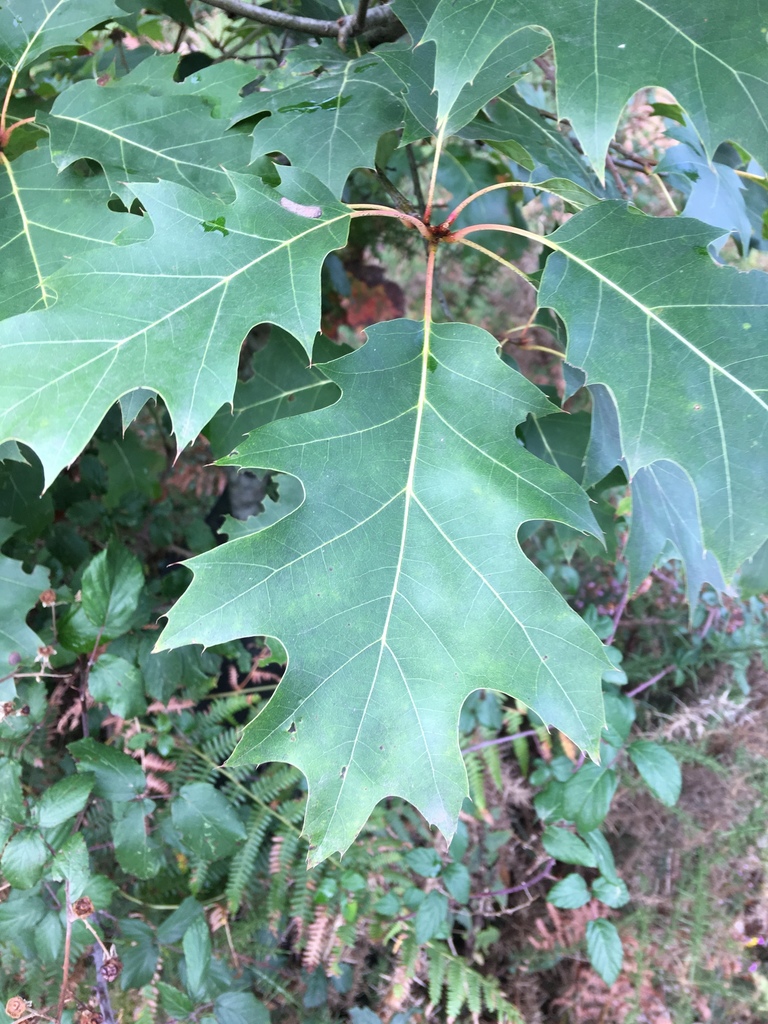
Quercus rubra, commonly known as the Northern Red Oak, is a deciduous tree native to North America. As a member of the Fagaceae family, it can reach heights of up to 100 feet with a spread of 50-80 feet. The tree features an oval-shaped crown and dark green leaves that turn red in the autumn before falling.
The Northern Red Oak is renowned for its strong and durable wood, making it a popular choice for furniture, flooring, and construction materials. Its acorns are an important food source for wildlife, including squirrels and deer.
This species thrives in well-drained soils, preferring full sun or partial shade. While it can adapt to various soil types, it does not perform well in wet or compacted soils. Additionally, the Northern Red Oak is resistant to many pests and diseases.
In a mountain village in Shaanxi province, China, stands a 500-year-old northern red oak. This remarkable tree is nationally recognized and protected as an ancient treasure. Its unusual appearance is marked by many distinct shapes and curious knots at the junctions of its branches. Some parts of the tree resemble five human heads, while others bear a likeness to a gently smiling arhat. FUN FACT · FROM THE LIBRARY
Overall, Quercus rubra is a beautiful and valuable tree, providing numerous benefits to both wildlife and humans.
Northern Red Oak: On a late autumn evening, you might find it difficult to discern whether the brilliant red hue in the landscape comes from the setting sun or this magnificent tree. Its crimson leaves seem to mimic the sun's warmth, lighting up hearts and bringing warmth to the surroundings. The bark is also red like the leaves, and it darkens with age. This tree is called the Northern Red Oak, distinguishing it from Quercus falcata, known as the Southern Red Oak.
Northern red oak is fairly disease-resistant and is usually not vulnerable to illnesses. As for care, this plant is fairly low-maintenance. When grown outdoors it needs little watering, and larger plants typically do not have to be pruned. Smaller plants, however, should be pruned after they finish blooming. Northern red oakt is appropriate for anyone who has an outdoor area like a garden or deck and does not need much prior care experience.
How to keep Quercus Rubra.
Light
Northern red oak performs best in places with plentiful sunlight throughout the day but can also tolerate more intermittent or dappled light. Excessive sun exposure can cause leaf scorch, while insufficient light will impede its growth. Its native origin reflects this requirement for abundant sunlight.
Water
The northern red oak, which originates from well-drained forests, thrives in moderate climates where soil moisture is consistently maintained. To support its health, it's best to water this tree every one to two weeks. Typically grown outdoors, this impressive deciduous tree responds to seasonal rainfall by shedding its leaves in cooler temperatures and during periods of low water availability.
Humidity
This plant will thrive in moderate humidity, which is probably the level in your home. However, misting it a few times a week can be very beneficial. Make sure the room has good ventilation.
Temperature
Native to North America, the northern red oak grows well in temperatures from 41 to 95 °F (5 to 35 °C). It favors a moderate climate and can adapt to seasonal changes. In summer it does best in cooler locations, while in winter it prefers warmer conditions.
Fertilizer
To encourage healthy growth, fertilize your Northern red oak in early spring. Consistent fertilization improves overall health, producing vigorous growth, greater tolerance of difficult conditions, and enhanced resistance to pests and diseases. Stick to a defined fertilization routine for your Northern red oak to maintain foliage that is vibrant, richly colored, and luxuriant in appearance.
Pruning
Pruning northern red oak trees in early spring is beneficial for their health and appearance. Focus on removing branches that are dead, diseased, or crossing. This practice improves air circulation, encourages growth, and helps maintain a strong tree structure. Make sure to cut near the branch collar for better healing, resulting in a healthier and more attractive tree.
Botanical profile.
- Plant Type
- Tree
- Life Cycle
- Perennial
- Genus
- Quercus
- Family
- Fagaceae
- Hardiness Zone
- 5-9
- Mature Height
- 14.94 m to 28.04 m
- Mature Spread
- 14.94 m to 21.03 m
- Leaf Color
- Green, Red, Brown, Yellow
- Leaf Type
- Deciduous
- Flower Color
- Yellow, Green
- Flower Size
- 2.54 cm
- Bloom Time
- Mid spring, Late spring
- Planting Time
- Spring, Summer, Autumn, Winter
- Harvest Time
- Mid summer, Late summer
Other names.
Reader questions.
When Should I Water My Northern Red Oak?
Watering your northern red oak is essential for its health and growth, and it's important to water it when the plant shows certain signs. Check the soil's moisture at a depth of 3-4 inches; if it feels dry, the tree needs water. Observe the leaves; if they turn lighter green or yellow, or if they wilt or curl at the edges, these are indications of inadequate water. Slower growth or the presence of undersized leaves also suggest a need for more water. It's crucial, however, to avoid overwatering or underwatering, as both can lead to issues such as root rot or stunt growth. Observing your plant and understanding its needs based on soil type, plant size, age, and the current climate are key to determining the right watering schedule.
Why should I put fertilizer on my Northern red oak?
Regular fertilization is important for all types of Northern red oak trees. It improves overall health, promotes vigorous growth, and helps the tree withstand tough conditions and fight off diseases and pests. Keeping the foliage intact is crucial for the tree's attractiveness, so it's necessary to follow a specific fertilization schedule tailored to the Northern red oak. This will encourage the development of vibrant, lush leaves with a deep color.
What are the sunlight requirements for Northern red oak?
Northern red oak thrives best in full sun conditions, requiring more than 6 hours of sunlight daily, but it can also adapt to partial sun, getting about 3-6 hours of sunlight. It's crucial to observe how sunlight moves through your garden to ensure the plants are positioned in spots offering an optimal balance of light and shade. This balance is critical for the plant’s happiness and growth. Overexposure to sunlight can lead to leaf scorch, while not enough light may stunt the tree's growth.
What is the native region of the northern red oak, and what are its temperature preferences?
The northern red oak, botanically known as Quercus rubra, is native to North America. It thrives in a moderate climate with temperatures ranging from 41 to 95 °F (5 to 35 °C). This species is adaptable to seasonal changes, preferring cooler environments during the summer and warmer conditions in winter. It possesses a strong cold resistance, negating the need for special frost protection measures in most scenarios.
How Should I Water My Northern Red Oak?
Watering your northern red oak effectively involves several techniques focused on meeting the needs of this deciduous hardwood tree, especially in its sapling stage. Direct water to the tree's base or its 'drip line' to simulate rainfall and encourage deep root growth. A soaker hose can be an effective tool, especially when covered with mulch to minimize evaporation. If you're unsure about the soil's moisture levels, using a moisture meter can help you water more accurately. Aim to water around the tree canopy's edge and avoid the trunk and leaves to prevent diseases. Young saplings benefit from precision watering with a long-spout watering can, focusing on the soil near the plant without soaking the leaves or trunk.
When should I put fertilizer on my Northern red oak to make it grow better?
To ensure healthy growth, fertilize your Northern red oak for the first time in late winter or early spring. This provides the tree with essential nutrients as it prepares for warmer weather. In regions with a warm climate, it is beneficial to fertilize again in early fall. This not only adds nutrients for the next growing season but also helps the tree withstand winter conditions without foliage damage. Fertilizing earlier in the fall allows new branches to develop and become stronger to withstand the cold winter.
How can I use artificial lighting for my Northern red oak if it's not getting enough sunlight?
If your Northern red oak isn't receiving sufficient natural sunlight, especially in winter or less sunny spaces, artificial lighting can compensate to promote healthier growth. LED lights are recommended because they can be adjusted to provide specific wavelengths needed by plants. The intensity of artificial light required varies by plant type; full sun plants need 30-50W/sq ft, partial sun plants need 20-30W/sq ft, and full shade plants require 10-20W/sq ft. The light source should be placed 12-36 inches above the plant to mimic natural sunlight and be kept on for 8-12 hours a day to simulate natural day length.
How do I protect a northern red oak during unusually cold winters?
To protect a northern red oak during extremely cold winters where temperatures are expected to drop significantly, it is advisable to wrap the trunk and branches with insulating materials such as non-woven fabric or cloth. Additionally, watering the plant abundantly before the first autumn freeze to ensure the soil remains moist can help prevent water scarcity and drought stress during the winter and early spring months.
How Much Water Does Northern Red Oak Really Need?
The water requirement for a northern red oak varies based on several factors, including the tree's size, root depth, and whether it is planted in the ground or a container. Aim to keep the soil moderately moist, ensuring water reaches deep roots for a healthy growth. Over-watering can lead to root rot, while under-watering may cause drought stress, leaf drop, or stunting. The tree's leaves can indicate if it's receiving the proper amount of water; green, firm leaves suggest adequate hydration. However, during high humidity, northern red oaks will need less water due to reduced evaporation.
When is it not a good idea to add fertilizer to my Northern red oak?
There are certain times of the year when you should avoid fertilizing your Northern red oak. Firstly, during the early and mid-winter months, when the tree is dormant and does not require feeding. Secondly, it is not recommended to fertilize during late spring and all of summer. These months tend to be hotter and drier, which can result in a negative reaction from the tree when fertilized. To prevent any issues, it is advised to stick to a fertilization schedule that only includes feeding in the early spring and early fall.
What symptoms indicate my Northern red oak isn't getting enough light?
Symptoms of insufficient light for a Northern red oak include smaller new leaves, leggy or sparse growth, faster leaf drop, slowed or halted new growth, lighter-colored new leaves, chlorosis (yellowing leaves), sunscald on leaves or stems, leaf curling as a defense mechanism against extreme sunlight, wilting from excessive water loss through transpiration, and leaf scorching characterized by brown, dry edges or patches on leaves. These symptoms demonstrate the plant's struggle with inadequate lighting conditions.
What are the key symptoms and solutions for a northern red oak experiencing low temperatures?
For a northern red oak, low temperatures below its cold tolerance threshold can lead to brittleness and dryness in the branches during spring, with a noticeable lack of new shoots. To address this, pruning away any dead branches that have failed to produce new leaves in the spring will help maintain the tree's health and vigor.