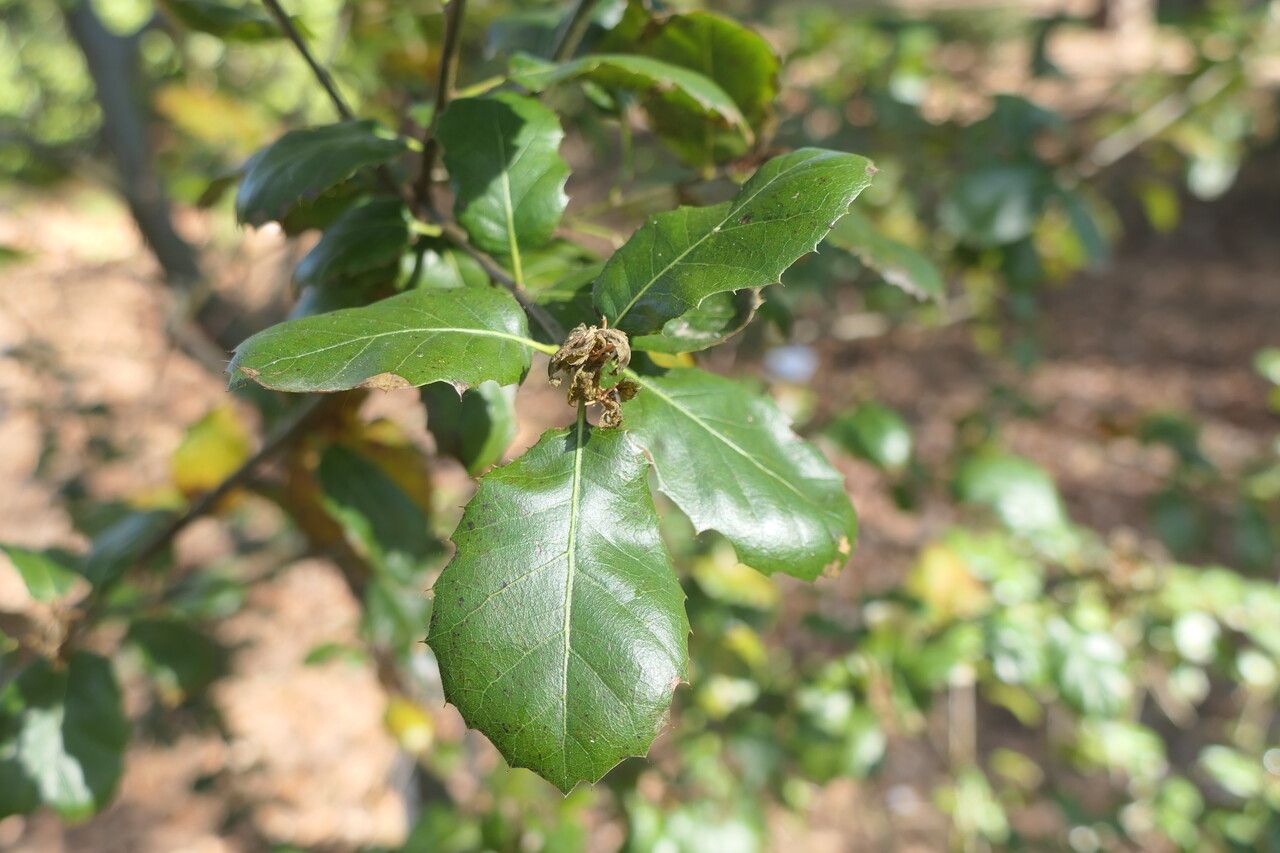
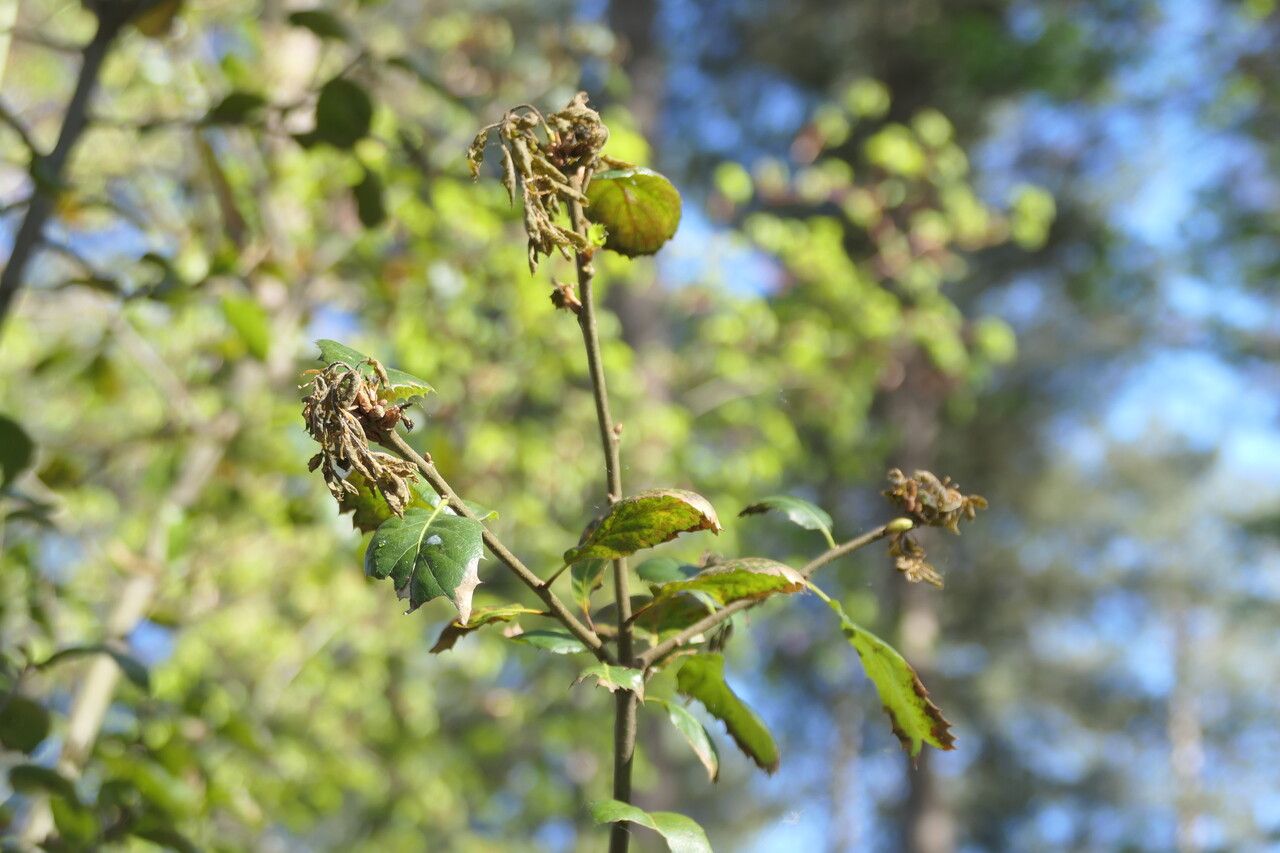
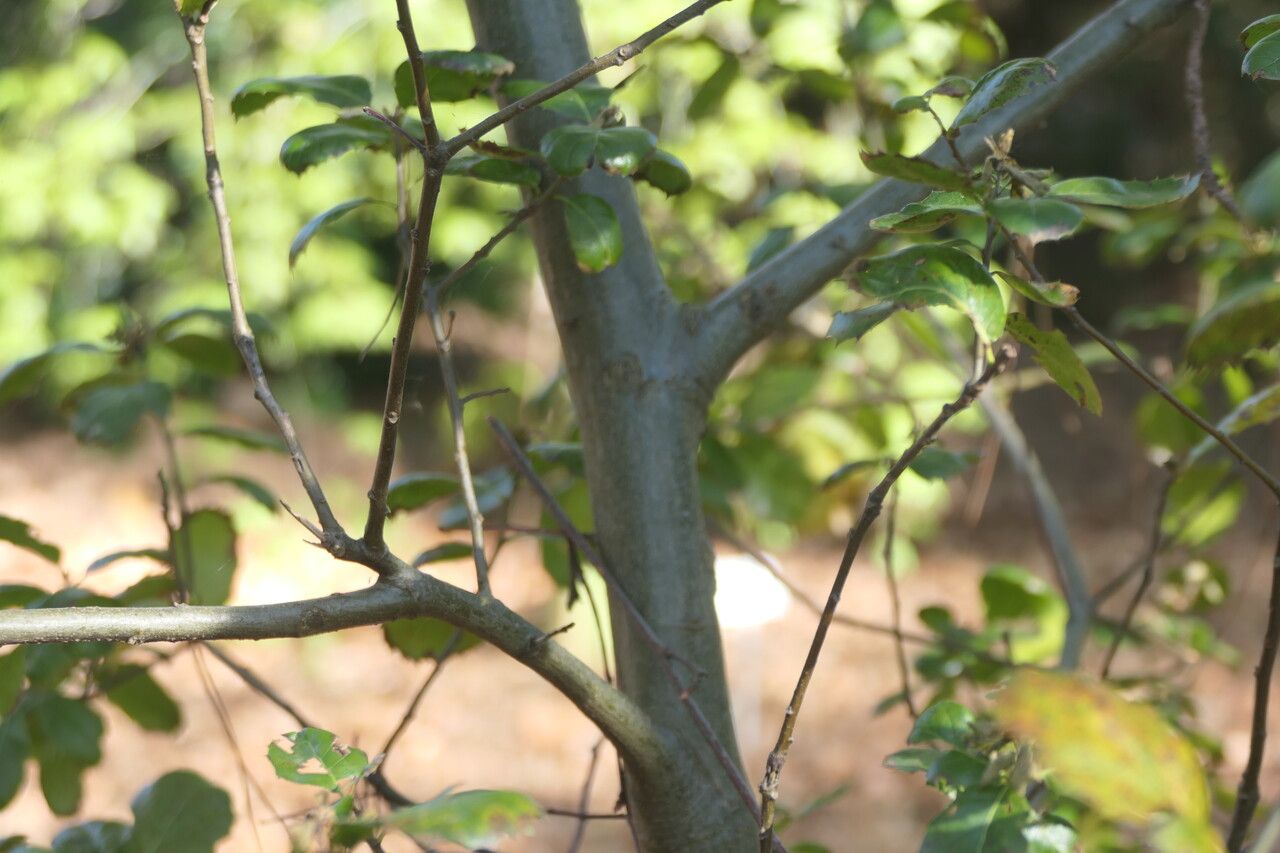
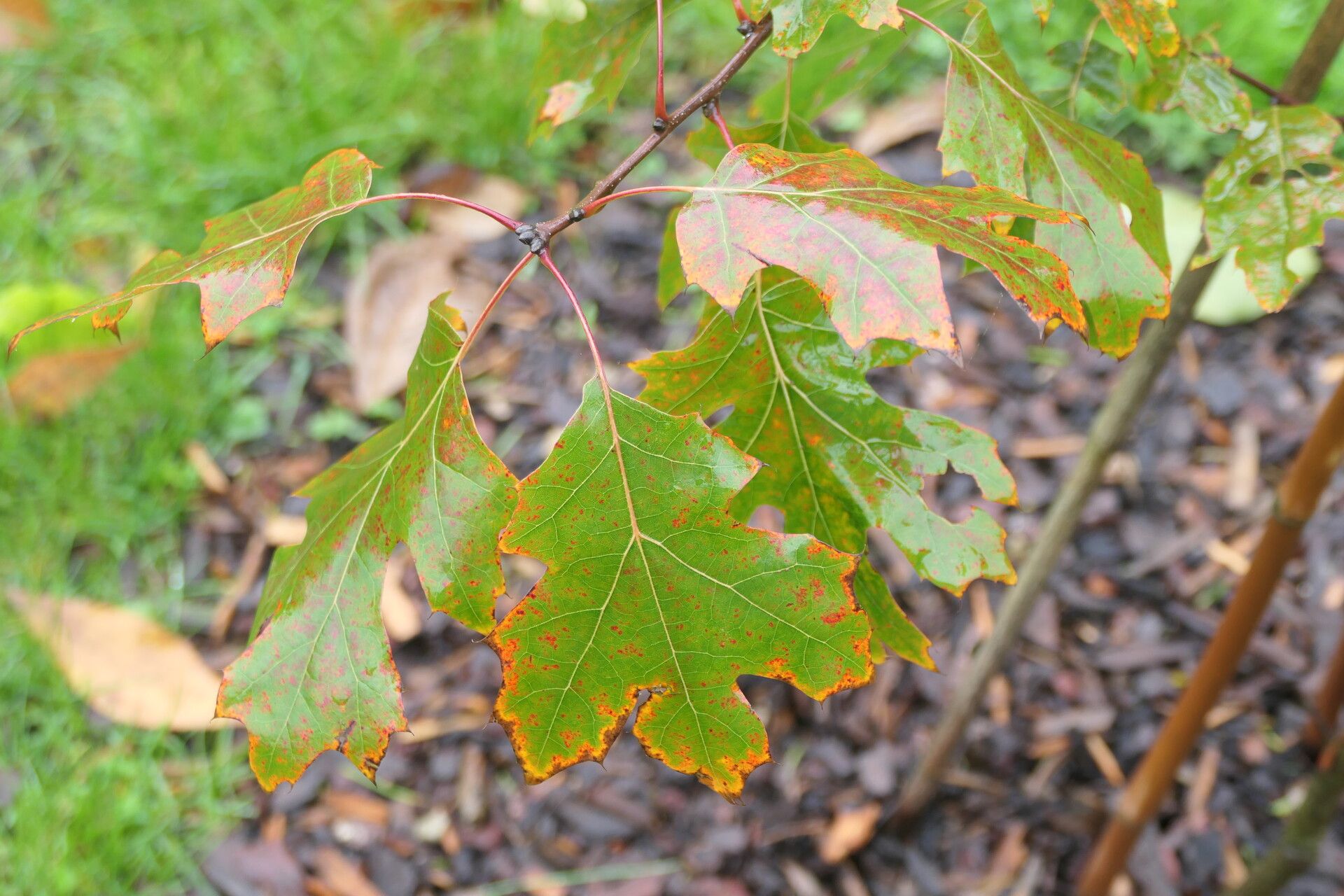
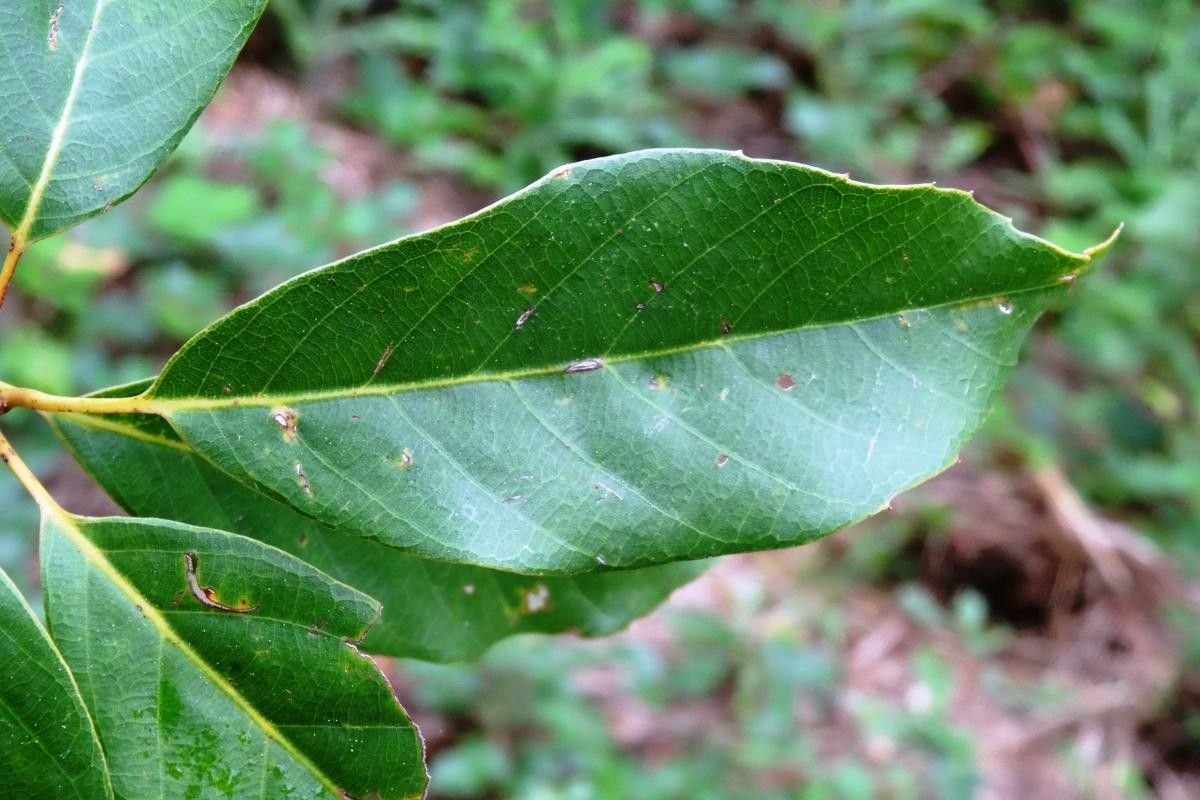
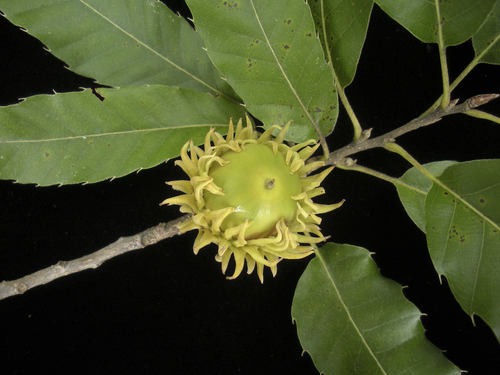
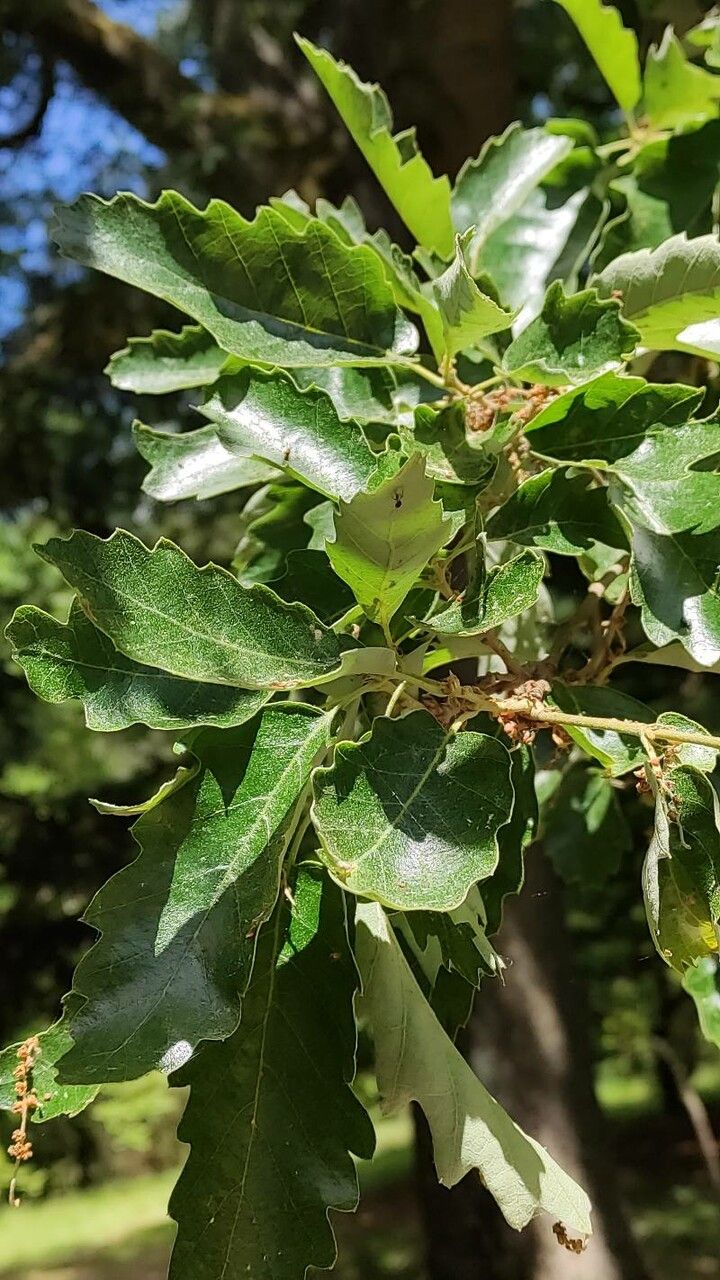
Quercus parvula, the Santa Cruz Island oak, is an evergreen red oak (Series Agrifoliae, Section Lobatae) found on north-facing Santa Cruz Island slopes and in the California Coast Ranges from Santa Barbara County north to Mendocino County. It was taxonomically combined with Quercus wislizeni until resurrected as a separate species by Kevin Nixon in 1980. The type locality of Q. parvula var. shrevei (originally described by C.H. Muller as Q. shrevei) is Palo Colorado Canyon in Monterey County. Three varieties of Q. parvula are currently recognized: Q. parvula differs morphologically from its close relative Q. wislizeni in the following ways: Leaf blades are larger, > (2)4 cm long rather than < 4(6) cm Leaf blades are thinner, generally < 0.26 mm near the apex rather than usually > 0.26 mm Current year twigs are 5-sided rather than ± roundish in cross section Leaf petioles and current year twigs are glabrous to sparsely hairy rather than moderately to very hairy Nut tips are blunt rather than more sharply pointed Abaxial golden glandular uniseriate leaf blade trichomes are missing or sparse rather than moderate to dense Abaxial multiradiate leaf blade trichomes are missing or sparse on the midvein rather than occasional to common Secondary leaf blade veins are raised abaxially rather than ± not raisedQ. parvula and Q. wislizeni never produce newly emerging leaves with a velvety coating of red bulbous trichomes on the abaxial (upper) surface. This separates them from Q. kelloggii and both varieties of Q. agrifolia which produce such leaves.
Coast oak is resistant to disease and is generally not prone to illnesses. Regarding care, this plant is fairly low-maintenance. When grown outdoors it needs only light watering, and larger specimens typically do not require pruning. Smaller plants, however, should be pruned after they finish blooming. Coast oak is appropriate for anyone with an outdoor area, such as a garden or deck, and does not demand much care experience.
How to keep Quercus Parvula.
Light
Coast oak is native to open habitats, such as sunny meadows and forest margins, which offer plenty of light. It prospers in Full Sun but can tolerate Partial Sun, adjusting well to different sunlight levels.
Water
To care for coast oak, keep the soil moist and well-drained. Make sure the soil stays humid a few inches below the surface, but avoid overwatering or flooding the top layer. During the summer, reduce the amount of watering because coast oak is well-adapted to withstand dry periods. This approach will help maintain the tree’s health.
Temperature
Coast oak is highly adaptable to a range of climate conditions, whether in hot summers or cold winters. Nonetheless, it has an optimal temperature range for growth. When temperatures become excessively high, the plant is susceptible to heat and humidity stress, which can lead to its death. In areas where temperatures near the lower limit of its cold tolerance, it is important to use insulation measures to protect the plant.
Fertilizer
Fertilize your Coast oak in early spring to encourage healthy growth. Regular applications boost the tree’s overall health, producing robust growth, greater tolerance of harsh conditions, and increased resistance to diseases and pests. Keep a consistent fertilization schedule for your Coast oak to preserve vibrant, deeply colored foliage and a lush appearance.
Pruning
The coast oak is characterized by its sturdy structure and glossy leaves. To maintain its vigor and appearance, it is best to prune in early spring. This helps to remove dead wood, improve air circulation, and shape the plant. Techniques such as thinning and selective cutting can enhance the tree's health and resilience, promoting robust growth and increasing its visual appeal throughout the season.
Botanical profile.
- Plant Type
- Tree
- Life Cycle
- Perennial
- Genus
- Quercus
- Family
- Fagaceae
- Hardiness Zone
- 7-10
- Mature Height
- 10.06 m to 20.12 m
- Mature Spread
- 7.92 m to 14.94 m
- Leaf Color
- Dark Green, Olive Drab
- Leaf Type
- Evergreen, Semi-evergreen
- Flower Size
- 0.51 cm to 0.76 cm
- Bloom Time
- Mid spring, Late spring
- Planting Time
- Spring, Summer, Autumn
- Harvest Time
- Late summer, Early fall, Mid fall
Other names.
Reader questions.
What are the sunlight requirements for a Coast oak (Quercus parvula)?
Coast oak, or Quercus parvula, thrives in conditions where it can receive specific amounts of sunlight throughout the day. For optimal growth, it requires 'full sun,' meaning it needs to be in direct sunlight for over 6 hours daily. Alternatively, it can also grow well in 'partial sun' conditions, which entail receiving about 3-6 hours of sunlight daily. It's important to observe the way sunlight moves through your garden, ensuring you select locations that provide your Coast oak with a perfect balance of light and shade to ensure its health and happiness.
What is the botanical name of Coast oak?
The botanical name of Coast oak is Quercus parvula.