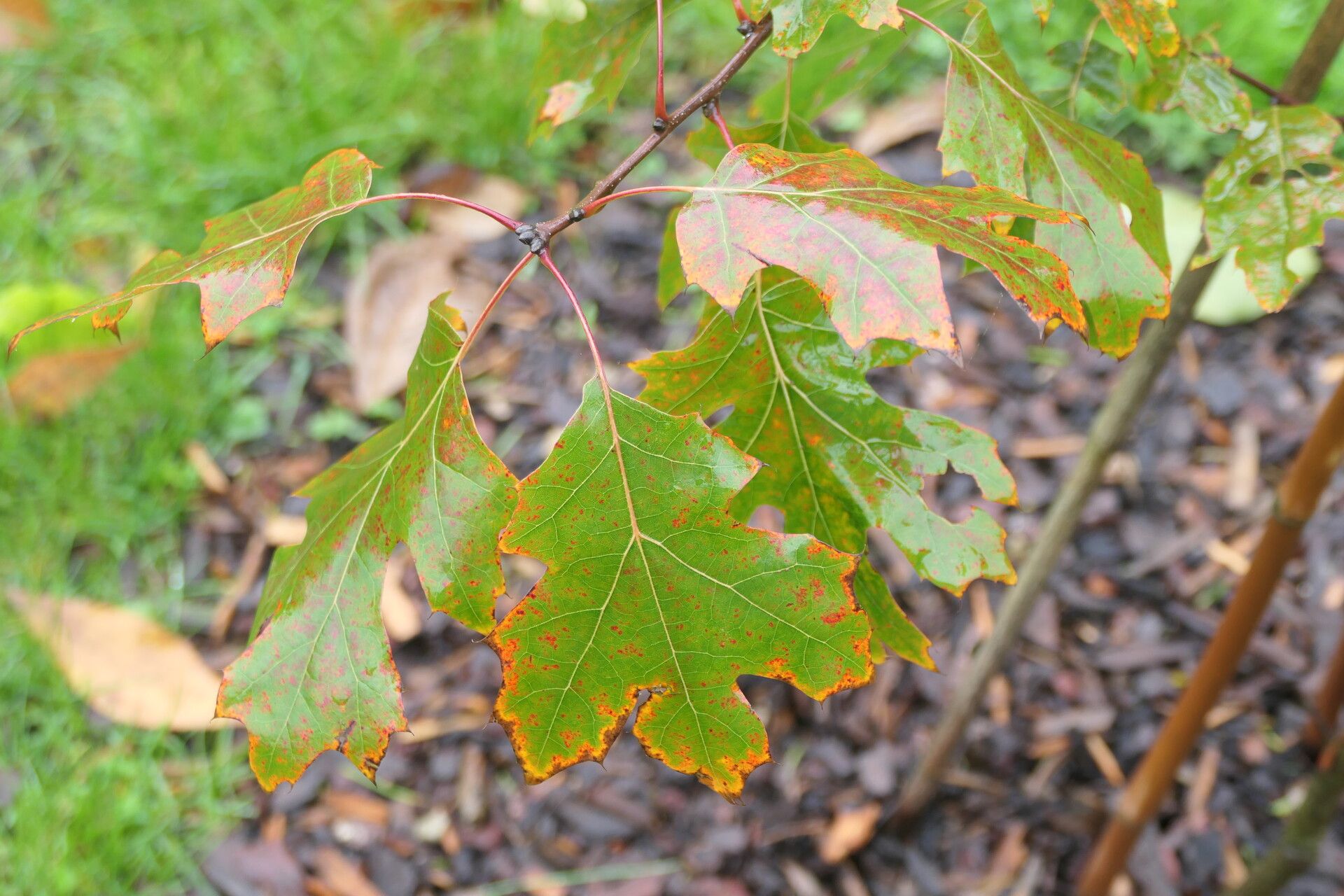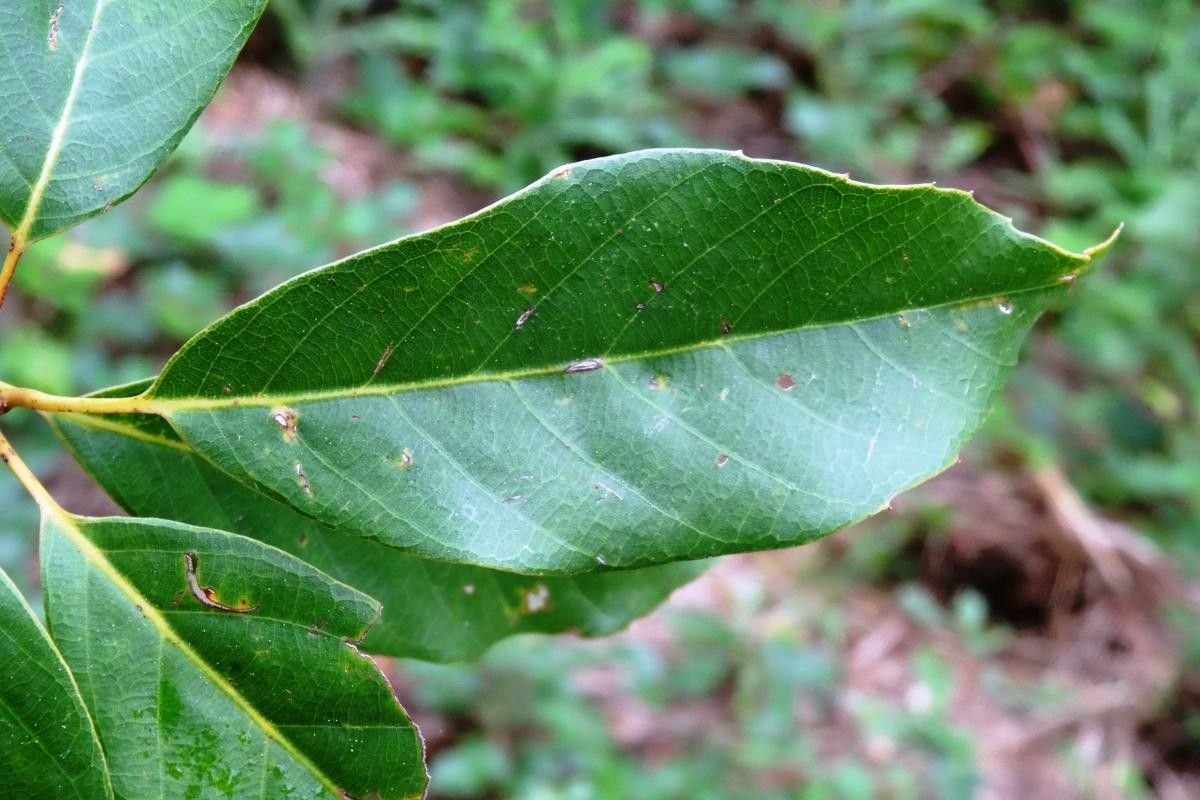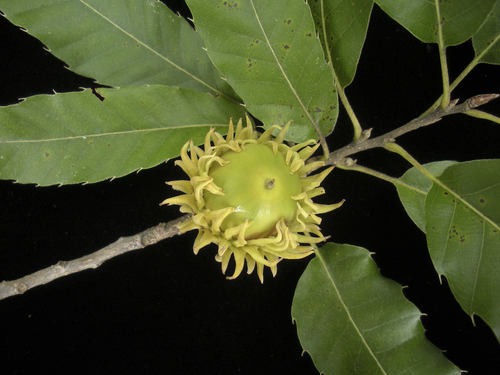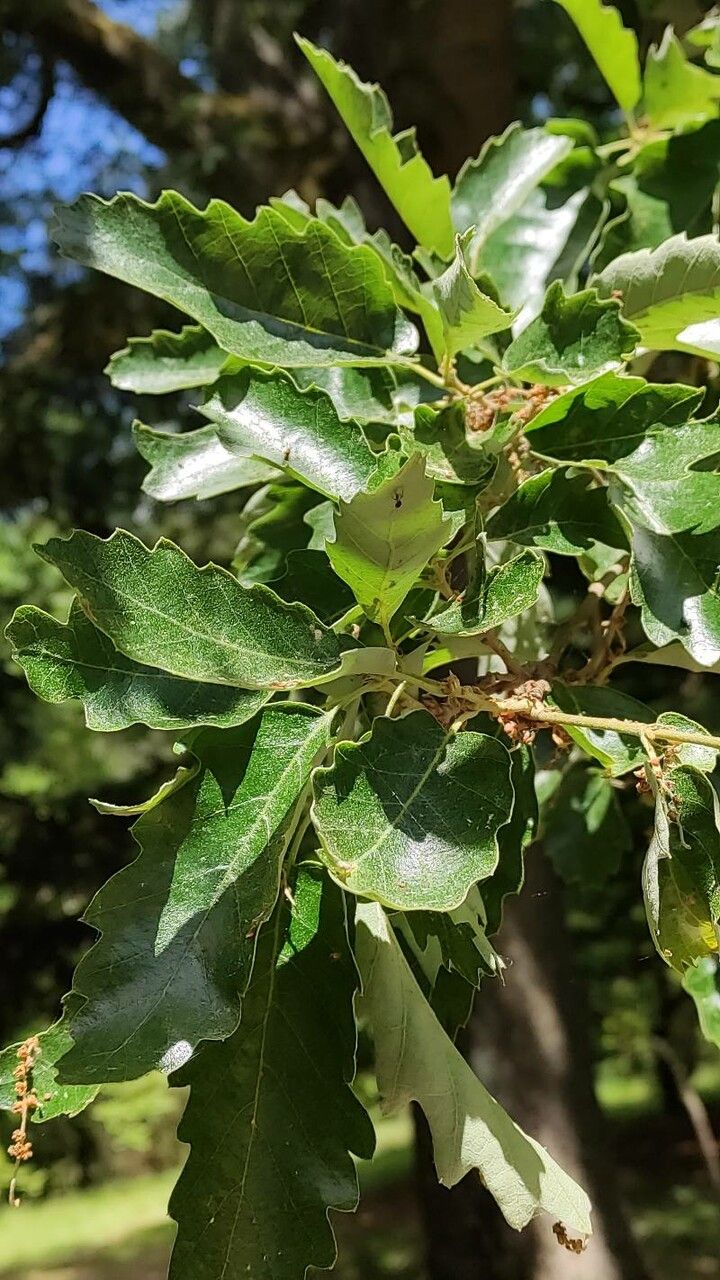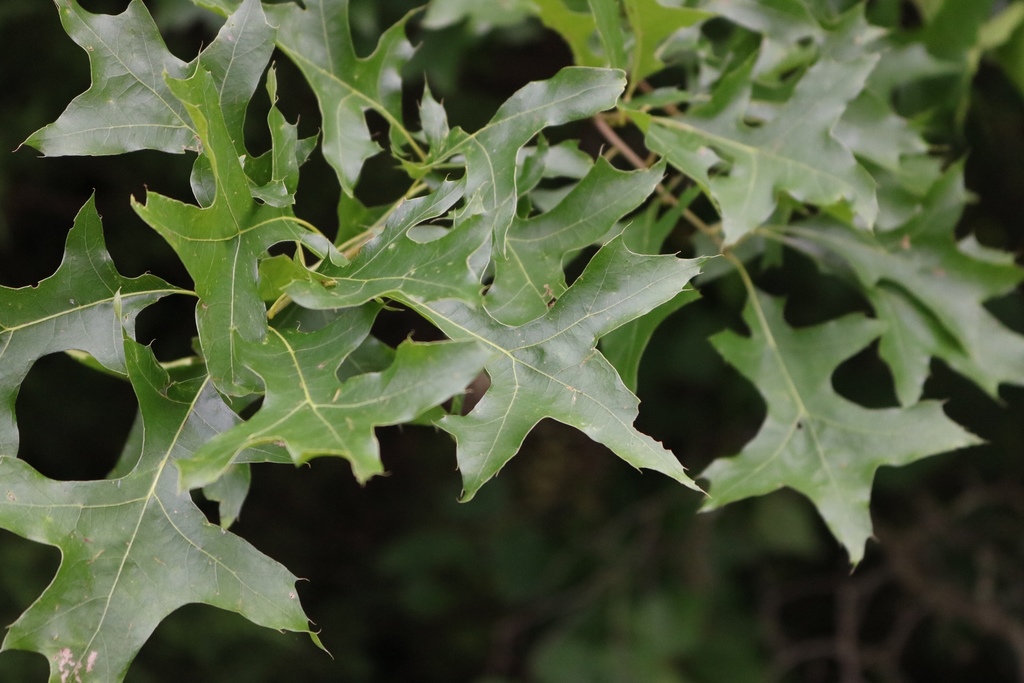
Quercus palustris, commonly known as the pin oak, is a deciduous tree native to North America. It belongs to the Fagaceae family and can reach up to 70 feet in height with a spread of 40-50 feet. The pin oak is characterized by its distinctive pyramidal shape, with branches that grow downward and leaves that turn a brilliant red in autumn.
The leaves of Quercus palustris are deeply lobed with pointed tips. They are glossy green in the summer but change to red or brown in the fall before dropping off during the tree's winter dormancy. The tree produces acorns, which serve as an important food source for wildlife such as squirrels, deer, and birds.
Pin oaks prefer moist soil conditions but can tolerate some drought once established. They thrive in full sun or partial shade and are commonly used as ornamental trees due to their attractive shape and vibrant autumn color.
Beyond their aesthetic appeal, Quercus palustris trees have several practical uses. They provide shade for outdoor spaces and serve as windbreaks on farms or along highways.
Overall, Quercus palustris is an essential tree species native to North America, offering both aesthetic beauty and practical benefits for humans and wildlife alike.
Pin oak is disease-resistant and generally not prone to illness. Regarding care, this plant is relatively low-maintenance. When grown outdoors it needs minimal watering, and larger plants typically do not require pruning. Smaller plants, however, should be pruned after they have finished blooming. Pin oak is suitable for anyone with an outdoor area, such as a garden or deck, and does not require extensive plant-care experience.
How to keep Quercus Palustris.
Light
Pin oak does best with ample light, though it can also grow in dimmer conditions. Coming from sunny habitats, it may show stunted growth if kept too dark. On the other hand, excessive light can cause stress and potentially injure the tree.
Water
Pin oak, which naturally grows in wetlands, thrives in consistently moist soil but can tolerate drought conditions once it is well-established. To maintain the right level of moisture, you should water the tree every one to two weeks, being careful not to overwater. Meeting its watering requirements is especially important during the growing season to ensure optimal foliage development.
Temperature
The pin oak grows best in its native environment when temperatures are between 14 and 22 ℃ (57 and 72 ℉). It can, however, endure temperatures from 5 to 35 ℃ (41 to 95 ℉). In winter the plant favors cooler conditions, while in summer it prefers more moderate temperatures. To keep it healthy, avoid exposing it to excessive heat and sunlight during hot periods.
Fertilizer
To encourage healthy growth, apply fertilizer to your Pin oak in early spring. Regular feeding boosts overall health, leading to robust growth, improved tolerance of harsh conditions, and increased resistance to pests and diseases. Stick to a specific fertilization schedule for your Pin oak to maintain vibrant foliage with rich color and a full, lush appearance.
Pruning
The pin oak boasts a pyramidal shape and vibrant fall colors. To maintain its health and shape, it's important to prune it regularly in early spring. Focus on removing dead or crossing branches and thinning the crown. This practice helps prevent diseases, promotes vigorous growth, and enhances the tree's resilience and appearance.
Botanical profile.
- Plant Type
- Tree
- Life Cycle
- Perennial
- Genus
- Quercus
- Family
- Fagaceae
- Hardiness Zone
- 5-9
- Mature Height
- 24.99 m
- Mature Spread
- 11.89 m to 14.94 m
- Leaf Color
- Green, Red, Brown
- Leaf Type
- Deciduous
- Flower Color
- Yellow, Green
- Flower Size
- 5.08 cm to 7.62 cm
- Bloom Time
- Mid spring, Late spring
- Planting Time
- Spring, Summer, Autumn, Winter
- Harvest Time
- Mid summer, Late summer, Early fall
Other names.
Reader questions.
When should I water my Pin Oak?
Determining the right time to water your Pin Oak requires paying attention to the soil and leaf conditions. If the soil feels dry 2 inches below the surface, it's time to water. Look for signs in the leaves as well; wilting, yellowing, or dropping leaves can indicate the need for water. During the growth season, typically spring and summer, the pin oak will need more consistent watering. Be mindful of the risks of both over and under-watering, as they can lead to root rot, fungal diseases, dehydration, and even the death of the plant.
Why should I put fertilizer on my Pin oak?
No matter which type of Pin oak you have, fertilizing it regularly will improve its overall health. Providing proper nutrients enables it to grow stronger, withstand tough conditions, and be more resistant to diseases and pests. The foliage of your Pin oak is a key feature, so it's important to preserve it. To enhance its appearance, establish and stick to a fertilization schedule tailored to your Pin oak. This will result in vibrant, lush leaves.
What are the sunlight requirements for Pin Oak?
Pin Oak requires full sun exposure, which means the plant should receive more than 6 hours of direct sunlight daily. It can also adapt to partial sun conditions, where it would get approximately 3-6 hours of sunlight. Observing how sunlight moves through your garden can help you find the perfect balance of light and shade for your Pin Oak, ensuring its health and happiness.
What is the ideal temperature range for the growth of pin oak?
The pin oak plant, also known by its botanical name Quercus palustris, thrives best in its native environment when the temperature ranges from 14°C to 22°C (57°F to 72°F). Although it prefers these moderate temperatures, it is quite adaptable and can tolerate a wider range from 5°C to 35°C (41°F to 95°F). During winter, the plant does well in colder temperatures, and in summer, it benefits from moderately warm conditions. It's crucial to protect the plant from excessive heat and direct sunlight in hot seasons to maintain its health.
How should I water my Pin Oak?
Watering techniques for Pin Oak vary depending on the plant's stage of growth. Young saplings benefit from slow and deep watering using a soaker hose, ensuring the moisture fully saturates the root ball. Mature trees should be watered at the base, using a garden hose placed about 10 inches from the trunk, as sprinkler watering doesn't reach the deeper roots and may promote leaf disease. Use equipment like moisture meters to gauge when the tree requires water, focusing on keeping the root area moist while avoiding direct foliage watering to prevent disease. Ensure the soil is well-draining to prevent waterlogged conditions.
When should I fertilize my Pin oak tree?
To ensure the healthy growth of your Pin oak, it is recommended to fertilize it during late winter or early spring. This provides the tree with essential nutrients to thrive once the weather warms up. In warm climate regions, it is beneficial to fertilize your Pin oak again in early fall. This not only supplies additional nutrients for the tree to utilize in the next growing season, but also helps it withstand the winter cold without foliage damage. Fertilizing earlier in the fall allows enough time for new branches to grow and be prepared for the cold winter.
How does Pin Oak react to different light settings, and what are the lighting essentials?
Pin Oak thrives under generous natural light but can grow in muted light conditions as well. Originating from sun-rich environments, it might show signs of stress or hindered growth if not provided with sufficient light. In contrast, excessive direct light can lead to stress and potential damage. For indoor plants, artificial lighting such as LED lights are recommended to supplement natural sunlight, especially in locations with less sunlight. The amount of artificial light needed varies based on the plant's sunlight requirements: full sun plants need 30-50W/sq ft, partial sun plants need 20-30W/sq ft, and full shade plants need 10-20W/sq ft. The light source should be placed 12-36 inches above the plant and kept on for 8-12 hours per day to mimic natural sunlight conditions.
How can pin oak be protected during extremely cold winters?
Pin oak displays strong resistance to cold; hence, special measures to protect it from frost are often unnecessary. However, in instances where winter temperatures are expected to plummet below the plant's tolerance limit, it's advisable to provide additional protection. This can involve wrapping the trunk and branches with insulating materials such as non-woven fabric or cloth. To further prepare the pin oak for winter, a thorough watering before the first freeze of autumn is recommended. This ensures the soil is moist and freezes in that state, effectively preventing drought and water scarcity for the plant during the cold months and into early spring.
How much water does Pin Oak really need?
The water needs of your Pin Oak can vary based on several factors including pot or ground size, and the plant's size and age. Typically, Pin Oaks require moderate to high amounts of water, with young trees needing more frequent watering until they are established. Mature trees, with their extensive root systems, are better at reaching deeper soil moisture. Signs of optimal watering include vigorous growth and lush greenery; yellow or brown leaves may indicate underwatering, while overwatering could lead to root rot. A thorough soaking is necessary to reach the deep roots, especially for potted Pin Oaks.
When is it not a good idea to fertilize my Pin oak?
There are specific times of the year when you should avoid fertilizing your Pin oak. First, during the early and mid-winter months when the tree is dormant, there is no need for feeding. Additionally, it is not recommended to fertilize the tree during late spring and summer when the weather is hotter and drier. These conditions can have a negative impact on the tree if it is fertilized. To prevent any issues, it is best to follow a fertilization schedule that involves feeding only in early spring and early fall.
What symptoms indicate a Pin Oak is receiving improper light?
Pin Oak displays several symptoms when the lighting is not optimal. These include smaller new leaves, leggy or sparse growth, faster leaf drop, slowed or halted growth, and lighter-colored new leaves. Excessive sunlight can cause chlorosis (yellowing leaves), sunscald, leaf curling, wilt, and leaf scorching, all of which indicate the plant is under stress from too much light. These symptoms highlight the plant's struggle to adapt to its lighting conditions, necessitating adjustments.
What are the symptoms of pin oak being exposed to unsuitable temperatures?
Pin oak shows various symptoms when exposed to temperatures beyond its tolerance levels. In low temperatures, particularly below the critical growth limit, the branches might become brittle and dry by spring, with the failure to produce new shoots. Conversely, high temperatures can lead to the leaves lightening in color, tips drying and withering, and increased susceptibility to sunburn. These symptoms indicate the plant's distress and suggest the need for respective solutions to mitigate the damage.