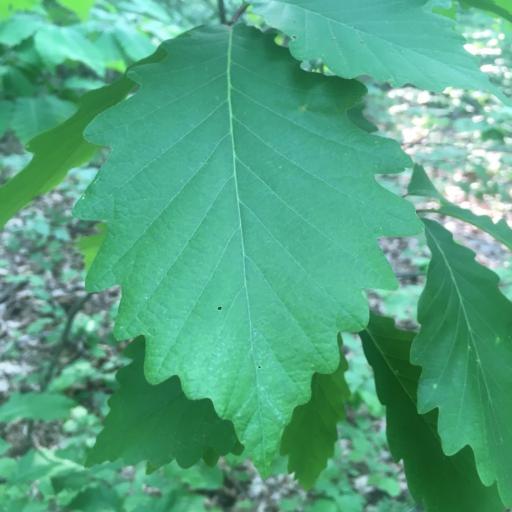
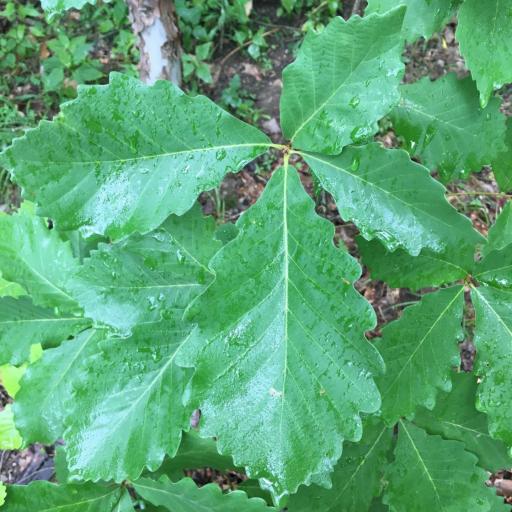
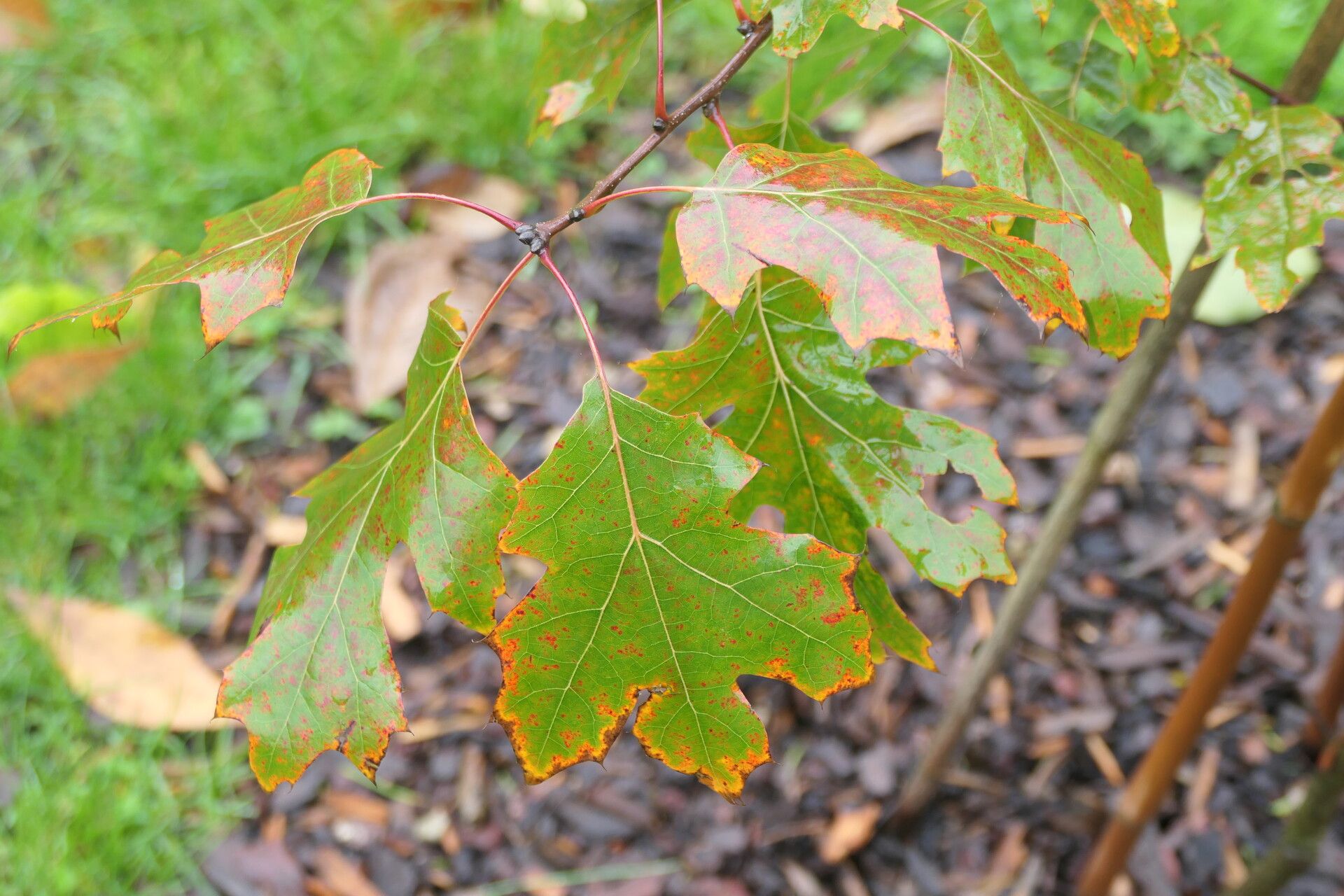
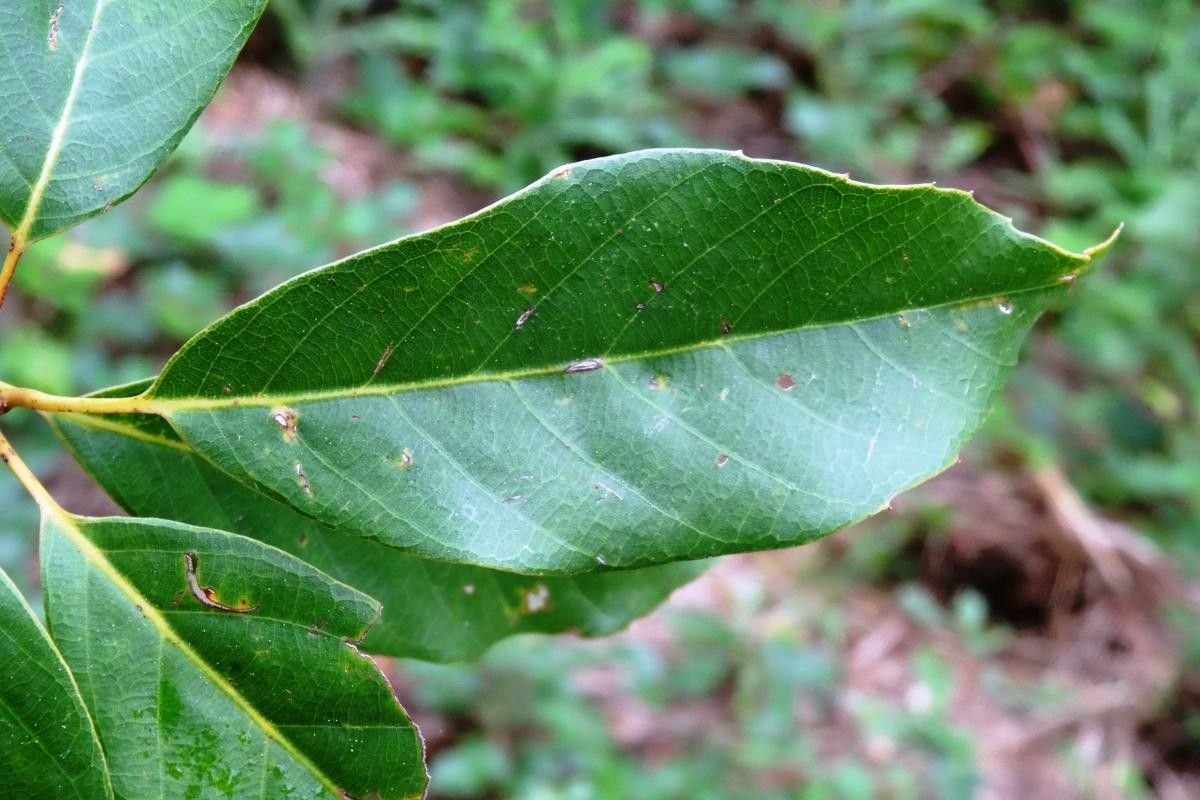
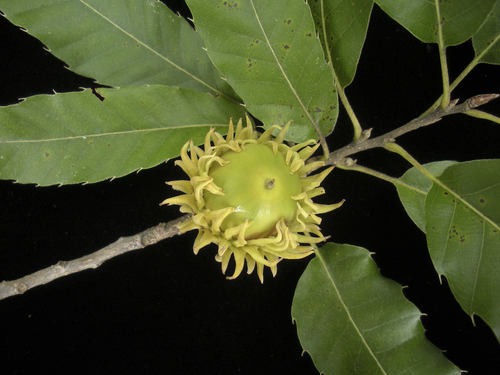
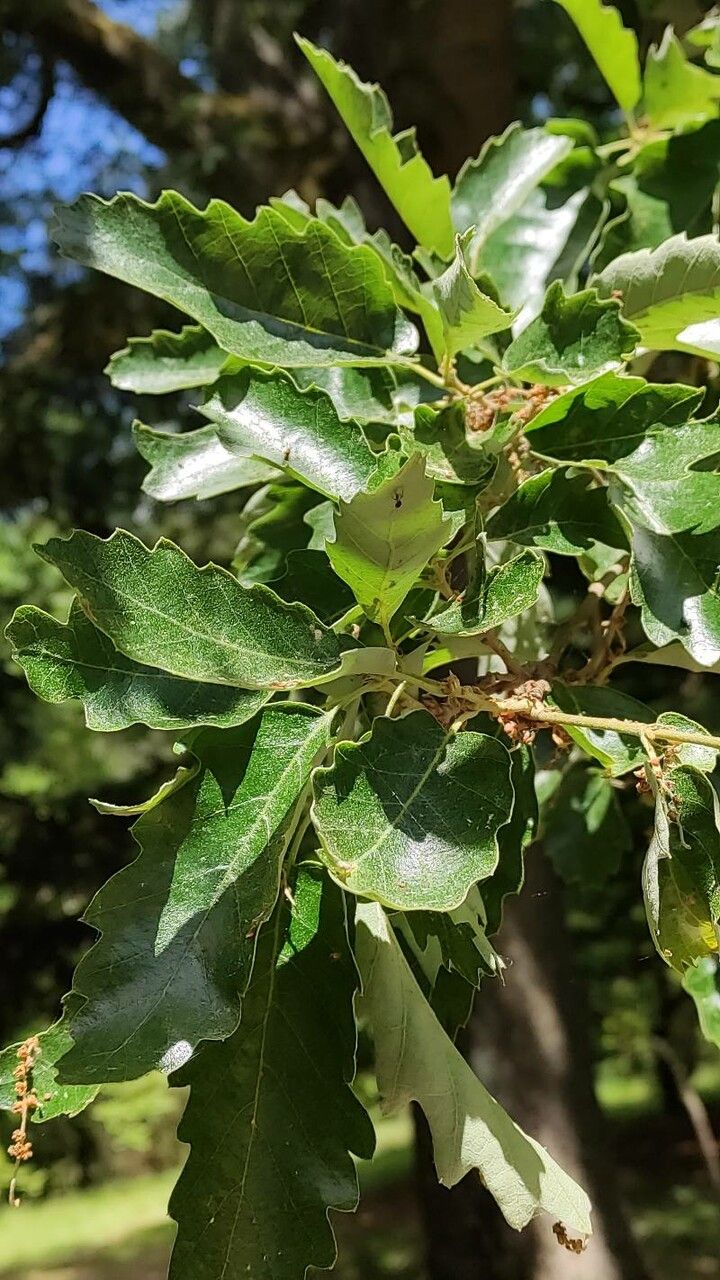
Quercus montana, the chestnut oak, is a species of oak in the white oak group, Quercus sect. Quercus. It is native to the eastern United States, where it is one of the most important ridgetop trees from southern Maine southwest to central Mississippi, with an outlying northwestern population in southern Michigan. It is also sometimes called rock oak because of its presence in montane and other rocky habitats. As a consequence of its dry habitat and ridgetop exposure, it is not usually a large tree, typically 18–22 m (59–72 ft) tall; occasional specimens growing in better conditions can however become large, with trees up to 40–43 m (131–141 ft) tall known. They tend to have a similar spread of 18–22 m (59–72 ft). A 10-year-old sapling grown in full sun will stand about 5 m (16 ft) tall. This species is often an important canopy species in an oak-heath forest.
The Chestnut Oak is a member of the white oak group and is named for its leaves, which resemble those of the chestnut tree.
Chestnut oak is resistant to disease and is generally not prone to illnesses. In terms of care, this plant is fairly low-maintenance. When grown outdoors it needs little watering, and larger specimens usually do not require pruning. Smaller plants, however, should be pruned after they finish blooming. Chestnut oak is suitable for anyone with an outdoor area, such as a garden or a deck, and does not demand much gardening experience.
How to keep Quercus Montana.
Light
The chestnut oak grows best with plenty of sunlight and can persist in areas with moderate light. Having originated in sun-rich environments, it becomes sturdy and robust. However, insufficient sun can cause reduced growth and vigor, while excessive exposure may also produce stress.
Water
Chestnut oak flourishes in deciduous forests that receive moderate rainfall and have well-draining soils. It prefers consistent moisture but can tolerate short periods of dryness. To mimic natural precipitation, water the tree every 1-2 weeks. When grown outdoors, applying mulch helps to retain moisture, particularly during the active growing season.
Temperature
Chestnut oak, a plant indigenous to its growth surroundings, can withstand varied temperatures, ranging from 23 to 90 ℉ (-5 to 32 ℃). Nevertheless, it is more comfortable within the temperature scope of 41 and 77 ℉ (5 to 25 ℃). During the harsh winter conditions, the chestnut oak adapts its temperature tolerance, being able to survive temperatures that dip as low as 5 to 14 ℉ (-10 to -5 ℃).
Fertilizer
Encourage healthy development by providing your Chestnut oak with fertilizer at the beginning of spring. Continuous fertilization improves the general health, promoting robust growth, and improved tolerance to harsh conditions as well as improved resistance to diseases and pests. Adhere to a unique fertilization timetable for your Chestnut oak to sustain its vibrant leaves with rich color and a luxurious look.
Pruning
Native to eastern North America, the chestnut oak is known for its sturdy bark and lobed leaves. To keep the tree healthy, prune it in early spring, focusing on removing any damaged branches. Be sure to use clean, sharp tools to help prevent disease. This will also improve air circulation and light penetration, leading to stronger and more visually appealing growth.
Botanical profile.
- Plant Type
- Tree
- Life Cycle
- Perennial
- Genus
- Quercus
- Family
- Fagaceae
- Hardiness Zone
- 4-8
- Mature Height
- 15.24 m to 21.34 m
- Mature Spread
- 14.94 m to 21.03 m
- Leaf Color
- Green, Yellow, Red, Gold, Bronze, Brown
- Leaf Type
- Deciduous
- Flower Color
- Yellow, Green, Gold
- Flower Size
- 2.54 cm
- Bloom Time
- Mid spring, Late spring
- Planting Time
- Spring
- Harvest Time
- Mid summer, Late summer
Other names.