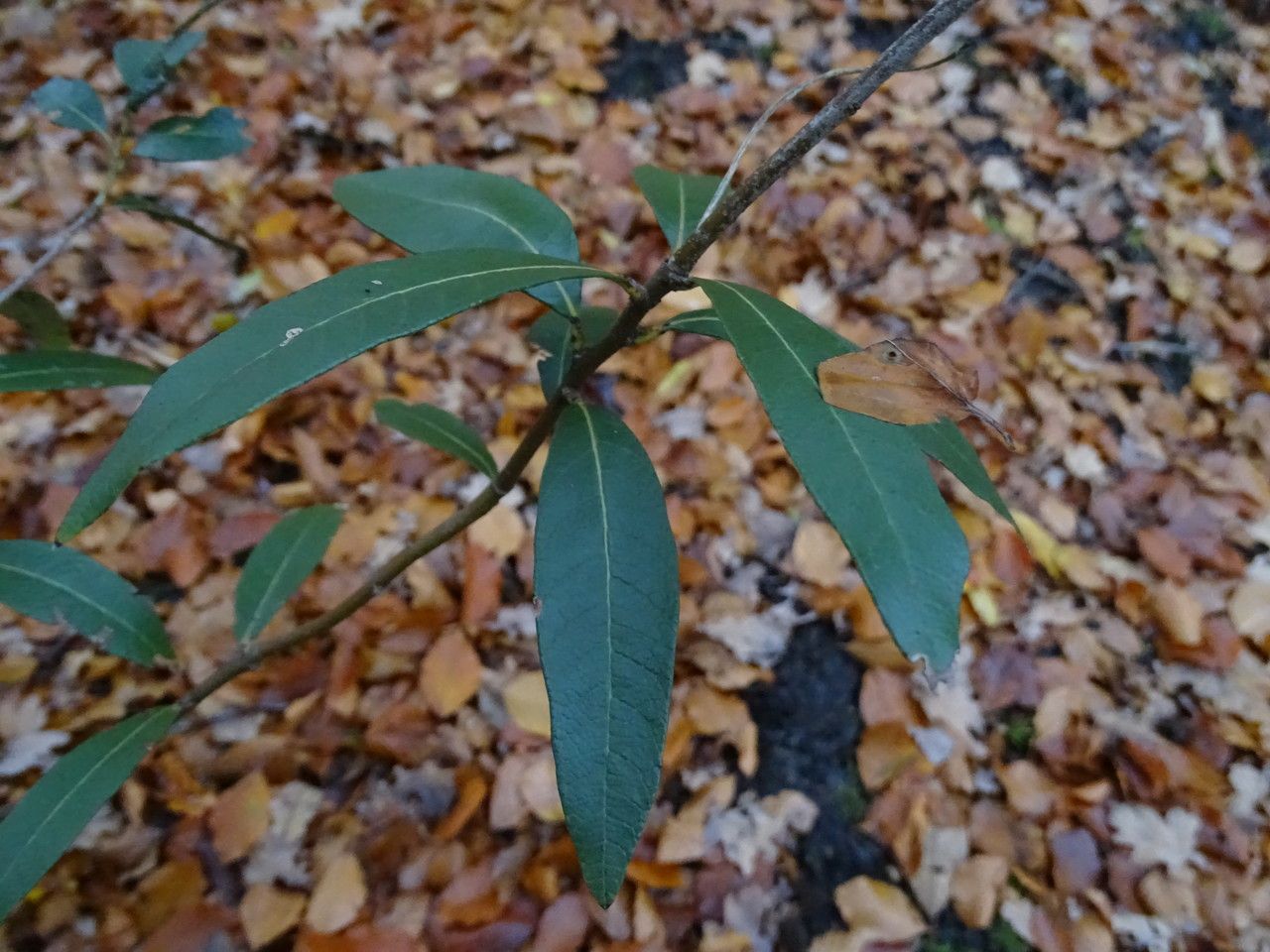
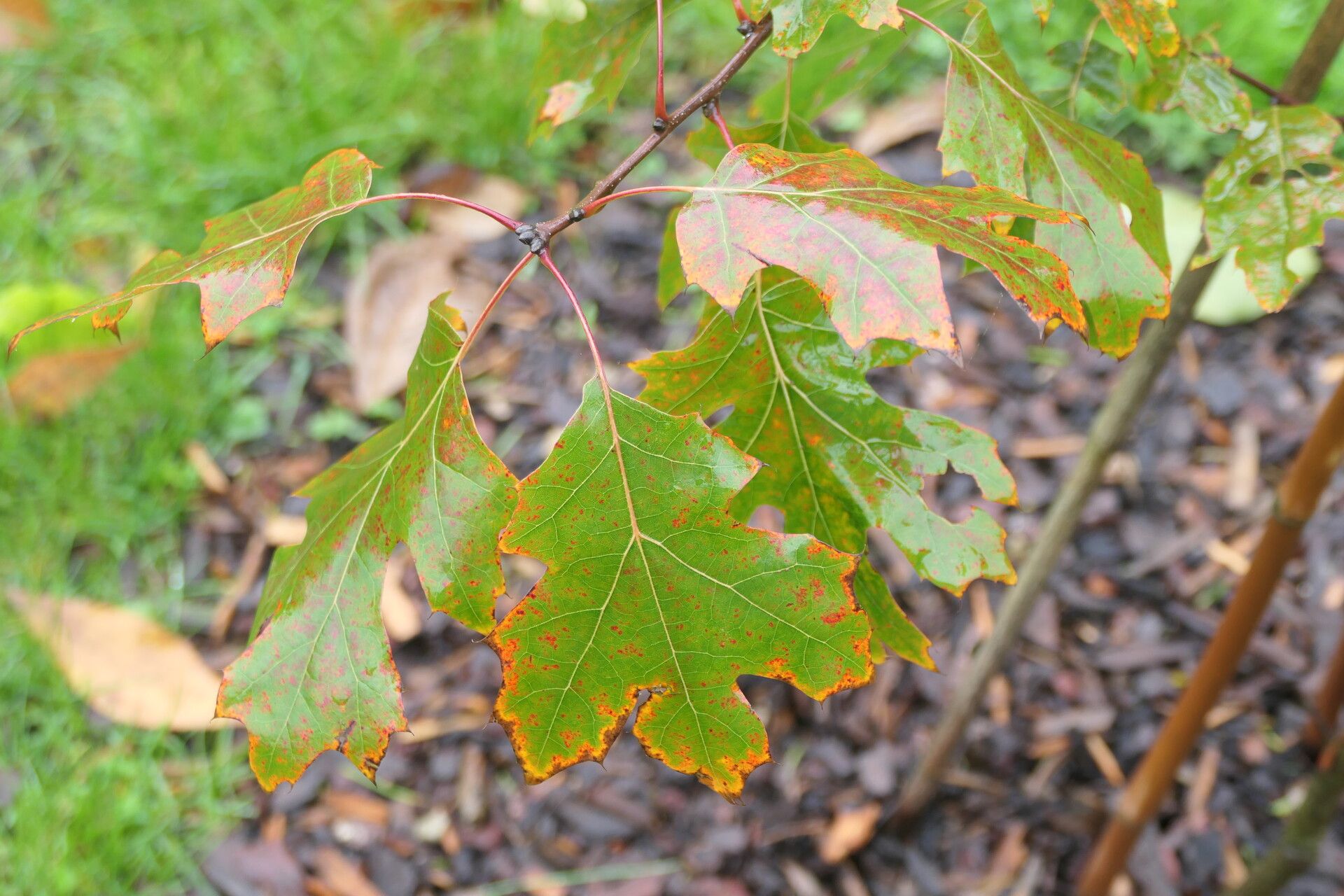
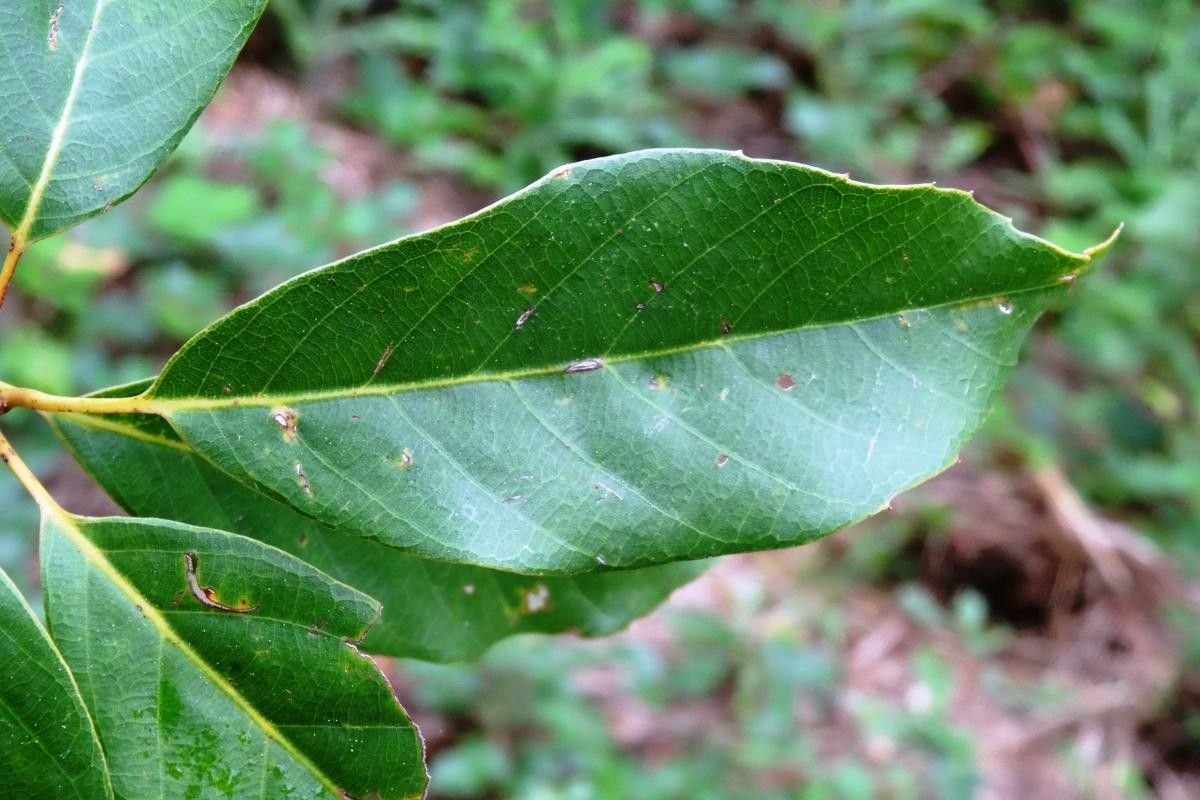
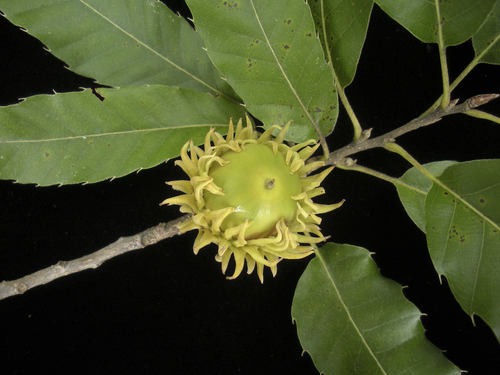
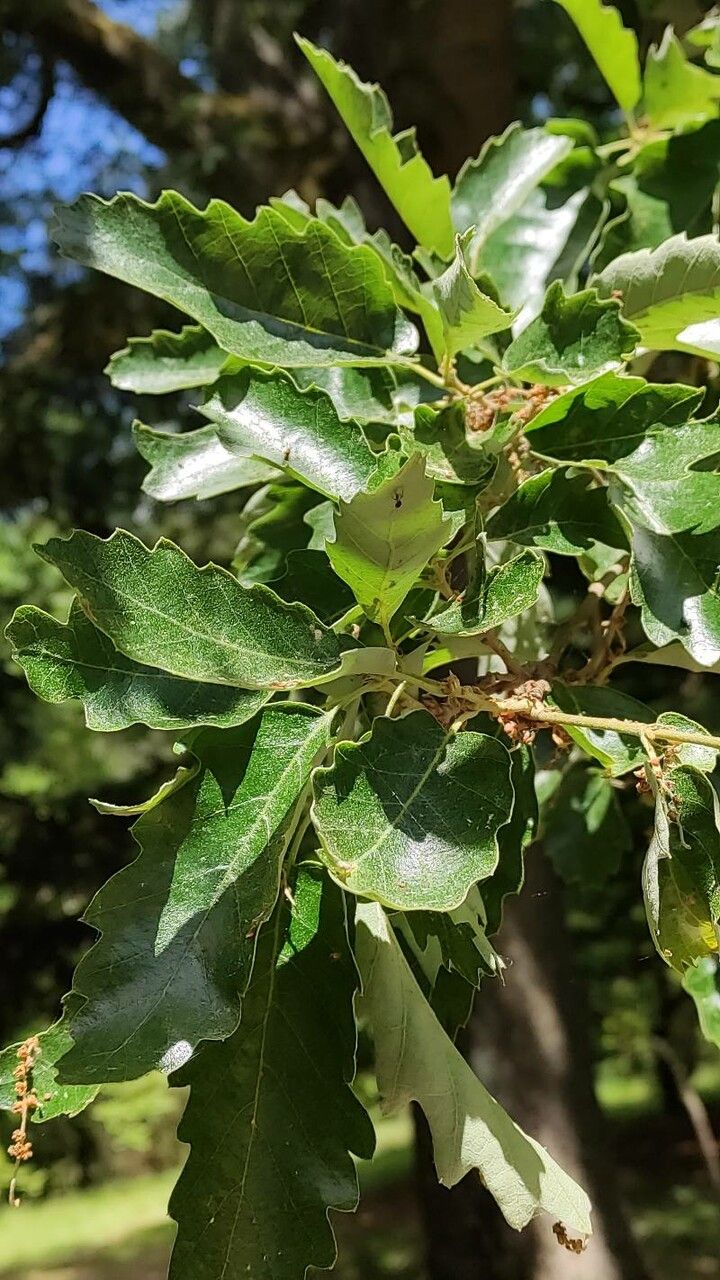
Quercus hypoleucoides, commonly known as the silverleaf oak or whiteleaf oak, is a species of oak tree native to the southwestern United States and northern Mexico. This medium-sized deciduous tree can grow up to 50 feet tall and features a rounded crown with spreading branches. Its leaves are oblong or elliptical, with serrated edges and a distinctive silvery-white underside, which lends the tree its common name. The bark is grayish-brown and deeply furrowed.
The silverleaf oak thrives in well-drained soils found in dry areas such as rocky slopes, canyons, and mesas, at elevations ranging from 3,000 to 7,000 feet above sea level. While it is drought-tolerant once established, it requires regular watering during its first few years of growth.
The acorns produced by the silverleaf oak are a crucial food source for wildlife, including squirrels and deer. Although the wood of this species has been used for fuelwood and fence posts, it is not commonly used for lumber due to the tree's relatively small size.
Overall, Quercus hypoleucoides plays an important role in maintaining ecological balance by providing habitat for wildlife and contributing to aesthetically pleasing landscapes with its unique silvery-white leaves, which stand out from other trees in the environment.
Silverleaf oak is resistant to disease and generally not prone to illnesses. In terms of care, this plant is fairly low-maintenance. When grown outdoors it needs minimal watering, and larger specimens usually do not require pruning. Smaller plants, however, should be pruned after they have bloomed. Silverleaf oakt is suitable for anyone with an outdoor area, such as a garden or deck, and does not demand much care experience.
How to keep Quercus Hypoleucoides.
Light
The silverleaf oak thrives in locations that receive sunlight for most of the day. This steady exposure to light plays an important role in its healthy growth. Because it naturally occurs in sunny habitats, both too little light and too much light can impede its development.
Water
The silverleaf oak is well-suited to arid environments and requires only minimal moisture. It thrives with deep watering every 2-3 weeks and can tolerate low humidity levels. This tree is suitable for outdoor growth and is efficient at conserving water during its dormant phase, which helps prepare it for the growing season.
Temperature
Silverleaf oak comes from areas with mild temperatures, ideally between 59 to 95 °F (15 to 35 ℃). Seasonal temperature variations should be taken into account to mimic its natural habitat.
Fertilizer
Apply fertilizer to your Silverleaf oak in early spring to encourage healthy growth. Consistent fertilization improves overall health, producing vigorous growth, increased tolerance of difficult conditions, and enhanced resistance to diseases and pests. Keep a regular fertilization schedule for your Silverleaf oak to preserve vibrant, deeply colored foliage and a lush appearance.
Pruning
The silverleaf oak is characterized by its silver-hued leaves and robust growth. To encourage healthy spring growth, it is best to prune the silverleaf oak from early to late winter. During this time, remove any dead branches and shape the plant as needed. Using clean tools ensures precise cuts and reduces the risk of disease. Pruning during the tree's dormancy minimizes stress and helps set the stage for a vigorous growing season.
Botanical profile.
- Plant Type
- Tree, Shrub
- Life Cycle
- Perennial
- Genus
- Quercus
- Family
- Fagaceae
- Hardiness Zone
- 8-10
- Mature Height
- 6.1 m to 9.14 m
- Mature Spread
- 10.36 m
- Leaf Color
- Green, Gray, Silver
- Leaf Type
- Evergreen
- Flower Color
- Yellow, Red, Brown
- Flower Size
- 3.05 cm to 6.35 cm
- Bloom Time
- Mid spring, Late spring
- Planting Time
- Spring, Autumn
- Harvest Time
- Late summer, Early fall, Mid fall
- Native Area
- Mexico
Other names.
Reader questions.
What are the sunlight requirements for Silverleaf oak?
Silverleaf oak thrives in various sunlight conditions, from full sun to partial sun. Full sun means the plant should receive above 6 hours of sunlight daily, while partial sun refers to about 3-6 hours of sunlight. It's crucial to observe the movement of sunlight through your garden to choose the best spots, ensuring a balance of light and shade that supports the plant's health.
What is the native environment of Silverleaf oak?
Silverleaf oak, known botanically as Quercus hypoleucoides, thrives in environments with moderate temperatures, ideally ranging from 59 to 95 °F (15 to 35 °C). To best mimic its natural habitat, seasonal temperature adjustments should be considered. The plant exhibits some cold tolerance and typically does not require special cold protection measures when temperatures are above -5°C. However, if temperatures are expected to drop below -5°C, it's necessary to temporarily protect the plant by wrapping it with materials like plastic film or fabric, which should be removed once temperatures rise again.
Why is sunlight important for Silverleaf oak growth?
Sunlight is vital for the growth and health of Silverleaf oak, as it naturally grows in environments with abundant sunlight. Adequate exposure to sunlight is crucial for its development, with insufficient or excessive light potentially hindering its growth. For indoor plants where natural sunlight may be lacking, artificial lighting can provide the necessary illumination to promote faster, healthier growth. For optimal indoor lighting, LED lights are recommended, with specific wattage requirements based on the plant's sunlight needs.
How does Silverleaf oak handle low temperatures?
Silverleaf oak has a moderate tolerance for low temperatures and performs optimally when the mercury stays above 15°C. Throughout the winter, it's crucial to ensure that temperatures remain above -5°C to prevent damage. If temperatures plunge below -10°C, the plant's leaves may begin to droop. While they can recover from mild exposures, severe cold will cause the leaves to wilt and eventually fall off. The recommended solution for frost damage includes trimming the affected portions and, before facing another cold spell, wrapping the plant with non-woven fabric or cloth and setting up a wind barrier for added protection.
What are some symptoms of inadequate sunlight in Silverleaf oak?
Inadequate sunlight can lead to several symptoms in Silverleaf oak, including smaller new leaves, leggy or sparse growth, faster leaf drop, slower or no new growth, lighter-colored new leaves, chlorosis, sunscald, leaf curling, wilting, and leaf scorching. These symptoms indicate a struggle with light deficiency or overexposure, affecting the plant's health and development.
How should Silverleaf oak be cared for in high temperature conditions?
In summertime, it's vital to keep Silverleaf oak below 35°C to ensure its health. Exposing the plant to temperatures above 41°C can lead to a lightening of leaf color, drying and withering of leaf tips, curling of leaves, and increased risk of sunburn. To mitigate damage from high temperatures, trim away any sunburned or dry parts of the plant. Relocate it to a spot shaded from the midday and afternoon sun or use shade cloth to provide protection. Additionally, watering the plant in the morning and evening can help maintain soil moisture, which is crucial for the plant's well-being during hot conditions.
How can you provide optimal light conditions for Silverleaf oak?
To ensure optimal light conditions for Silverleaf oak, gradually increase its exposure to sunlight if it's been in a low-light area. If indoors, move the plant closer to a south-facing window or use artificial lights like desk lamps or grow lights for at least 8 hours a day. For outdoor plants, move them gradually to sunnier spots to prevent sunburn. If physical obstructions like trees block sunlight, consider pruning or transplanting smaller plants during their dormant period to better-lit locations.