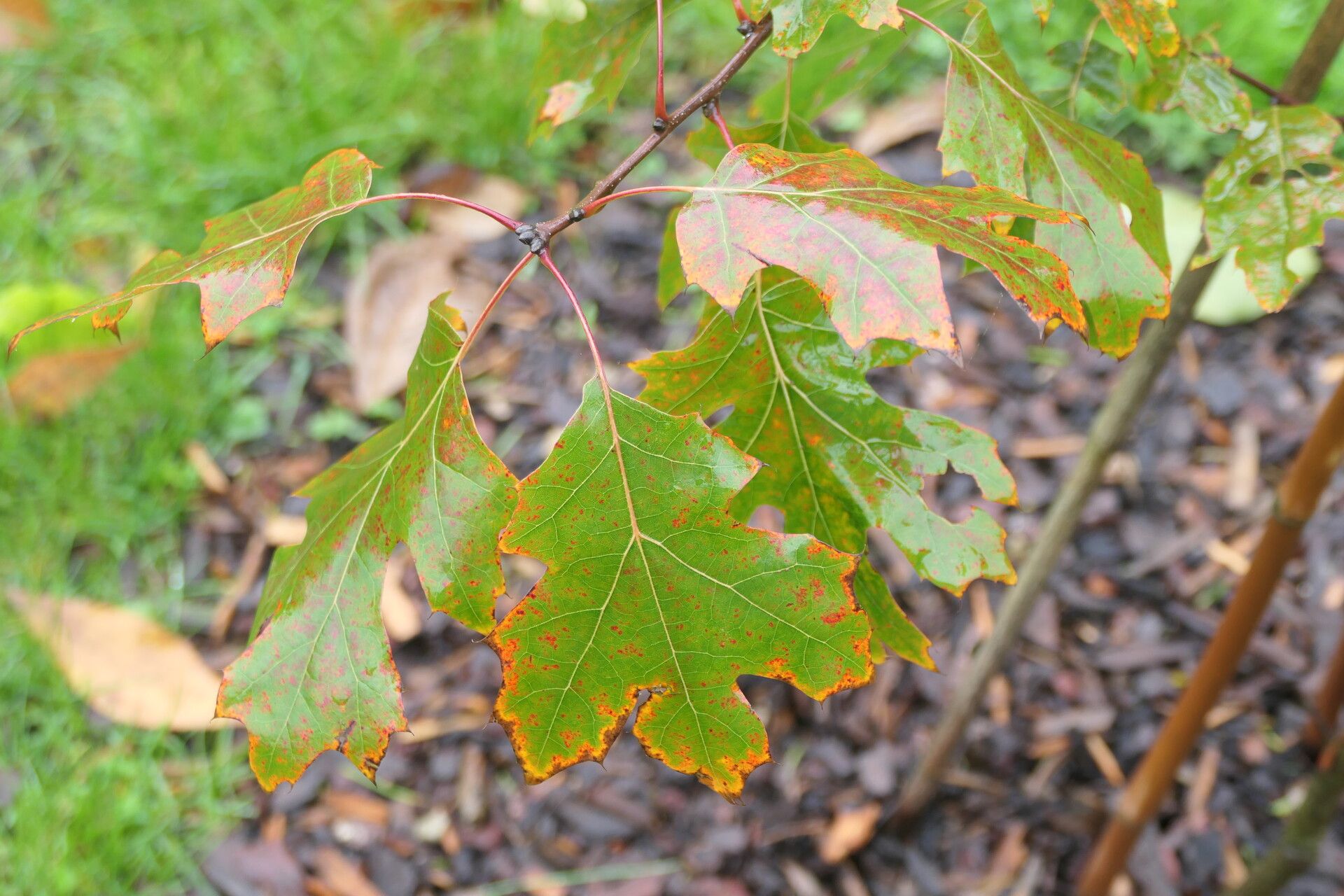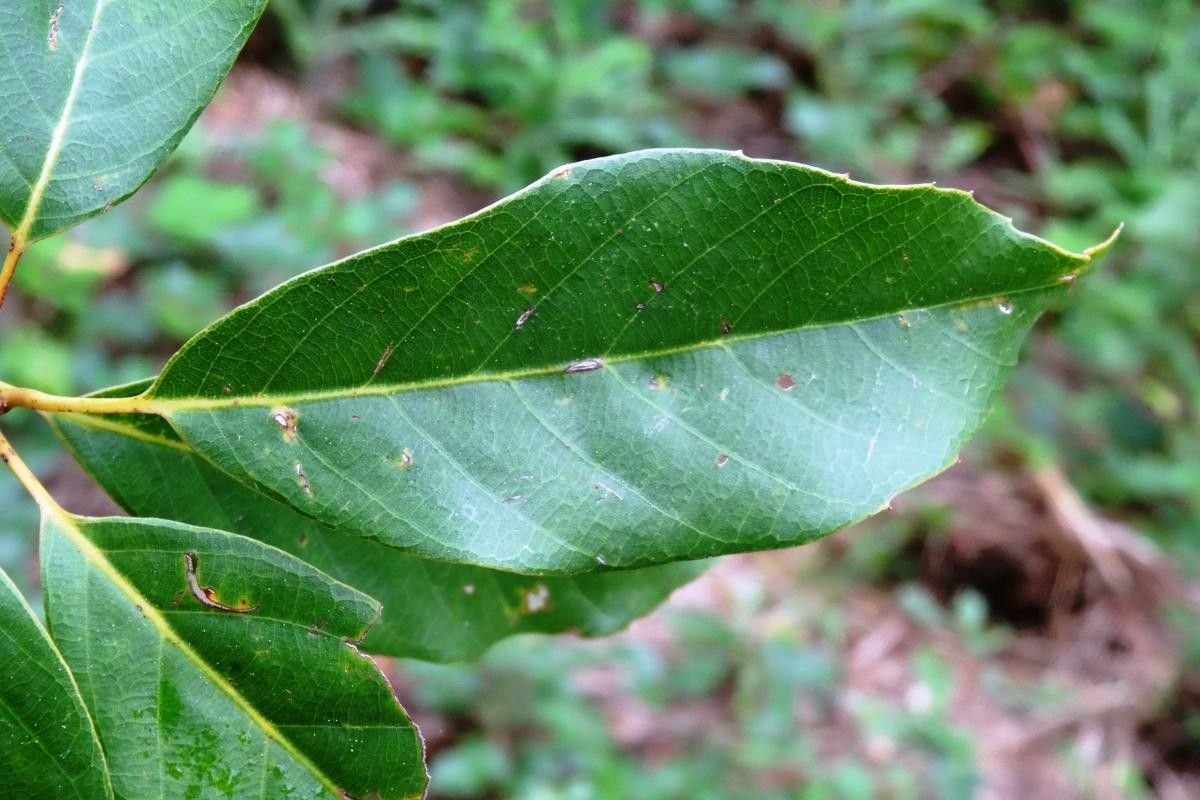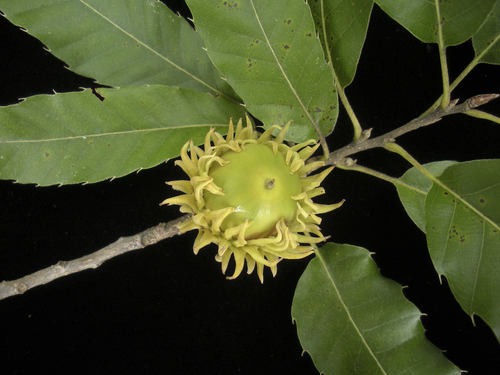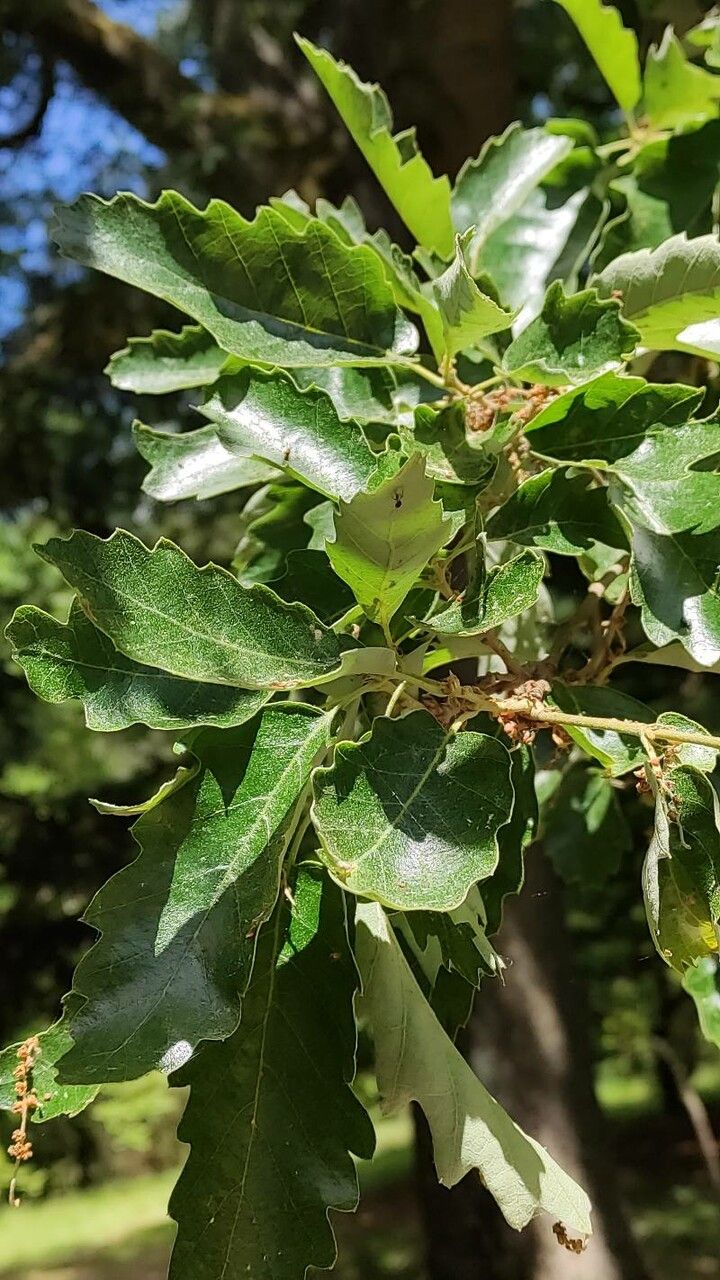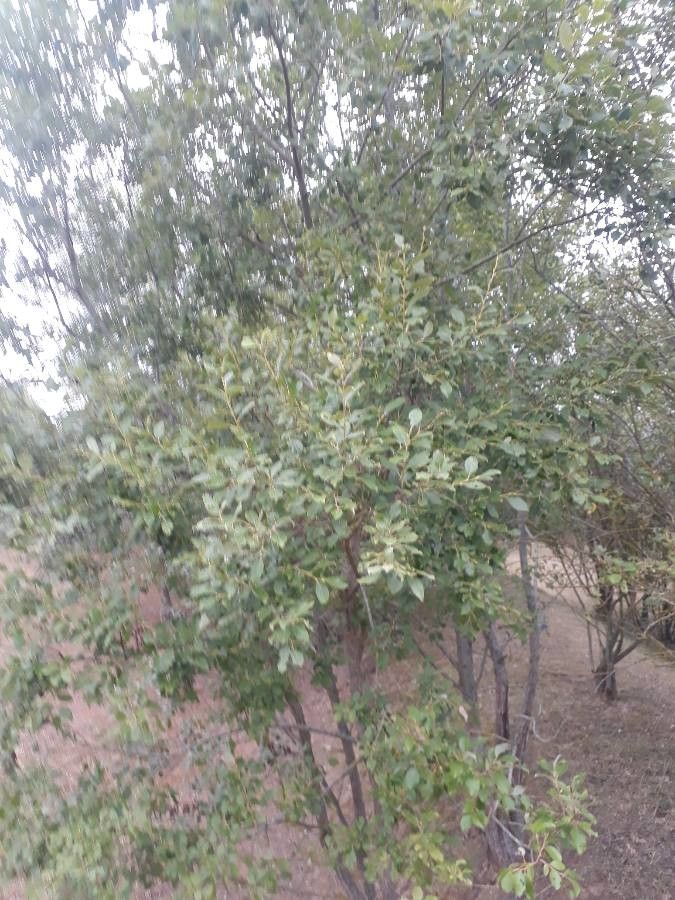
Quercus havardii (common names include shinnery oak, shin oak and Havard oak) is a deciduous, low-growing, thicket-forming shrub that occupies some two million to three million hectares (7,700 to 11,600 square miles) in the southern Great Plains of North America. Clones may reach hundreds to thousands of years old, although aboveground stems typically live only 11 to 15 years. Shinnery oak stems are usually 1 to 2 metres (3 feet 3 inches to 6 feet 7 inches) tall and codominate the plant community with mid- and tall-grasses, which are usually taller than the oaks. The specific epithet honors U.S. Army surgeon and botanist Valery Havard, who contributed much to the knowledge of southwestern plants. The word "shinnery" seems to be derived from chêne (French for oak), and not from the height of the plant.
Havard's oak has strong resistance to disease and is generally not susceptible to illnesses. Regarding care, this plant is fairly low-maintenance. When grown outdoors it needs minimal watering, and larger specimens typically do not require pruning. Smaller plants, however, should be pruned after they have finished blooming. Havard's oak is suitable for anyone with an outdoor area, such as a garden or deck, and does not demand extensive plant-care experience.
How to keep Quercus Havardii.
Light
Havard's oak is native to open habitats, such as sunny meadows and forest margins, that supply plenty of light. It does best in Full Sun but can also tolerate Partial Sun, adjusting well to different light conditions.
Water
Adapted to arid environments, Havard's oak is highly drought-tolerant and requires minimal moisture to thrive. It benefits from infrequent watering, ideally once a week, to stay healthy without causing soil saturation. Commonly found outdoors, Havard's oak efficiently uses rainfall during its active growing season to survive in conditions with limited water.
Temperature
Havard's oak is highly adaptable to different climate conditions, whether in hot summers or cold winters. Still, it has a preferred temperature range for growth. If temperatures get too high, the plant can suffer from heat and humidity stress, which may kill it. In areas where temperatures reach the lower edge of its cold tolerance, using insulation to protect the plant is important.
Fertilizer
Fertilize your Havard's oak in early spring to encourage healthy growth. Regular feeding boosts the tree’s overall health, leading to vigorous growth, improved tolerance of harsh conditions, and greater resistance to pests and diseases. Follow a set fertilization schedule for your Havard's oak to maintain vibrant, deeply colored foliage and a lush appearance.
Pruning
Pruning Harvard's oak in early spring is beneficial for its health and appearance. Start by removing dead branches and thinning the tree to improve airflow. This not only enhances the tree's growth but also reduces stress by ensuring optimal timing for the pruning process. Focus on removing branches that obstruct the tree's overall aesthetics and vitality.
Botanical profile.
- Plant Type
- Shrub
- Life Cycle
- Perennial
- Genus
- Quercus
- Family
- Fagaceae
- Hardiness Zone
- 5-9
- Mature Height
- 30 cm to 91 cm
- Mature Spread
- 2.13 m to 3.96 m
- Leaf Color
- Dark Green, Gray
- Leaf Type
- Deciduous
- Bloom Time
- Early spring, Mid spring
- Planting Time
- Spring, Summer, Autumn
- Harvest Time
- Late summer, Early fall, Mid fall
Other names.
Reader questions.
What are the sun requirements for Havard's oak?
Havard's oak (Quercus havardii) thrives in conditions where it can receive full sun, which is defined as more than 6 hours of sunlight per day. It can also grow well in partial sun, receiving about 3-6 hours of sunlight. When planting Havard's oak, it's important to observe the sunlight patterns in your garden. Find spots that provide an ideal balance of light and shade to ensure the best growth conditions for this oak variety, taking into consideration the warning to watch how sunlight moves through your garden. This observation helps in selecting optimal locations that cater to the plant's needs, contributing to its health and happiness.
What is Havard's oak?
Havard's oak, known botanically as Quercus havardii, is a species belonging to the oak tree family. Specific details about its characteristics, habitat, and other essential information were not provided.