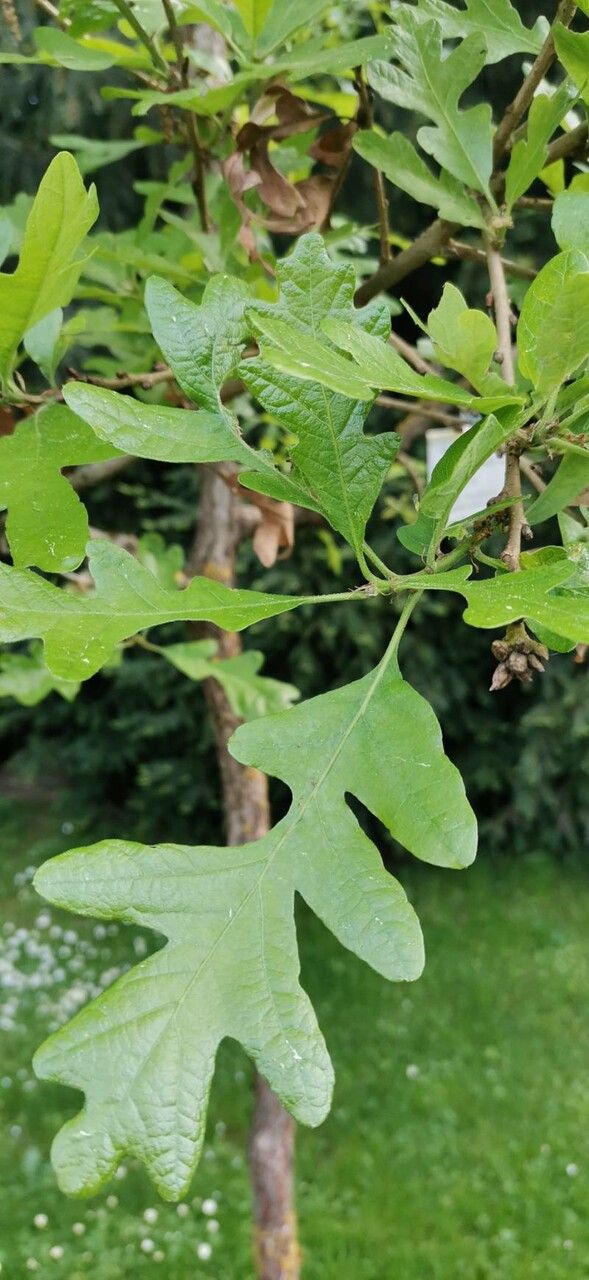
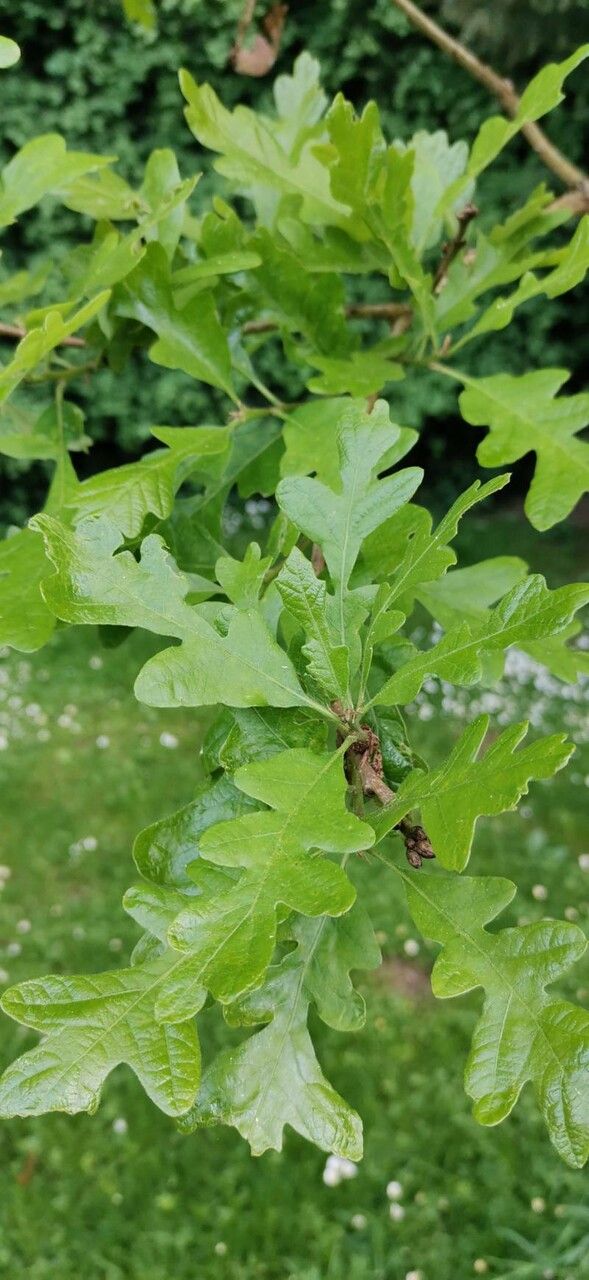
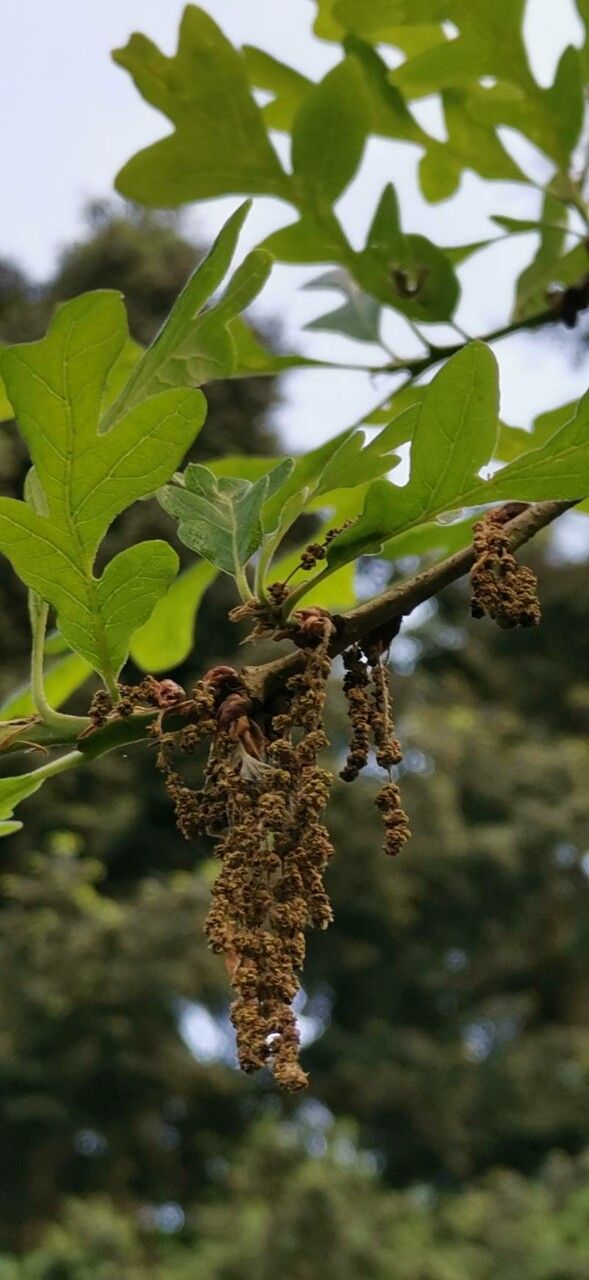
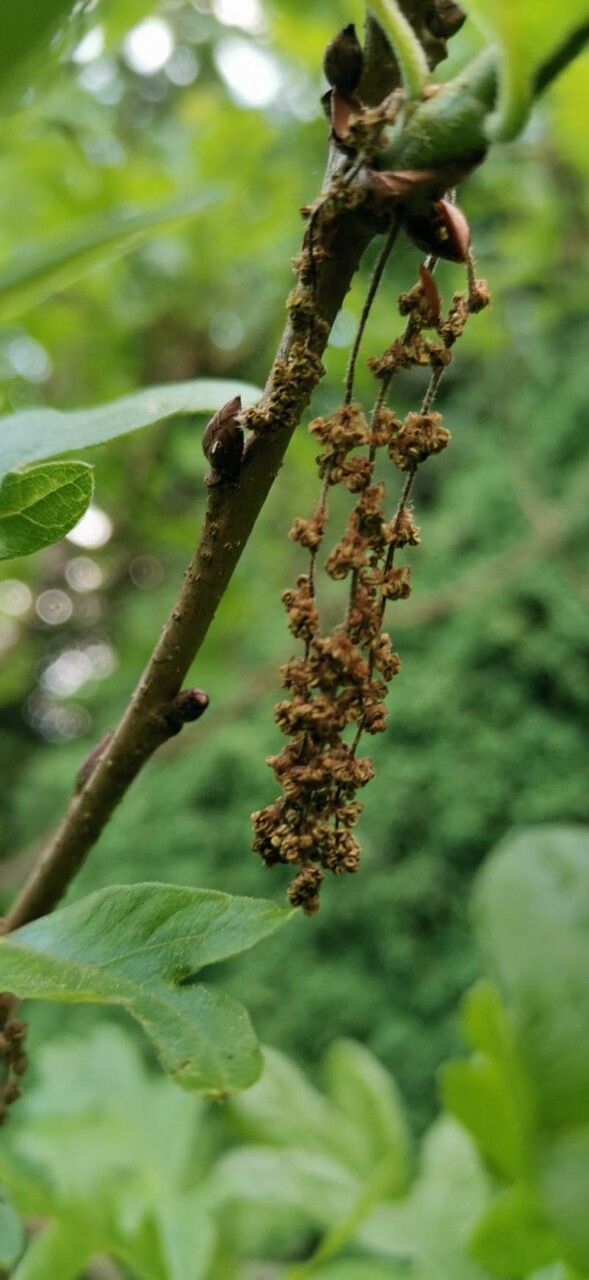
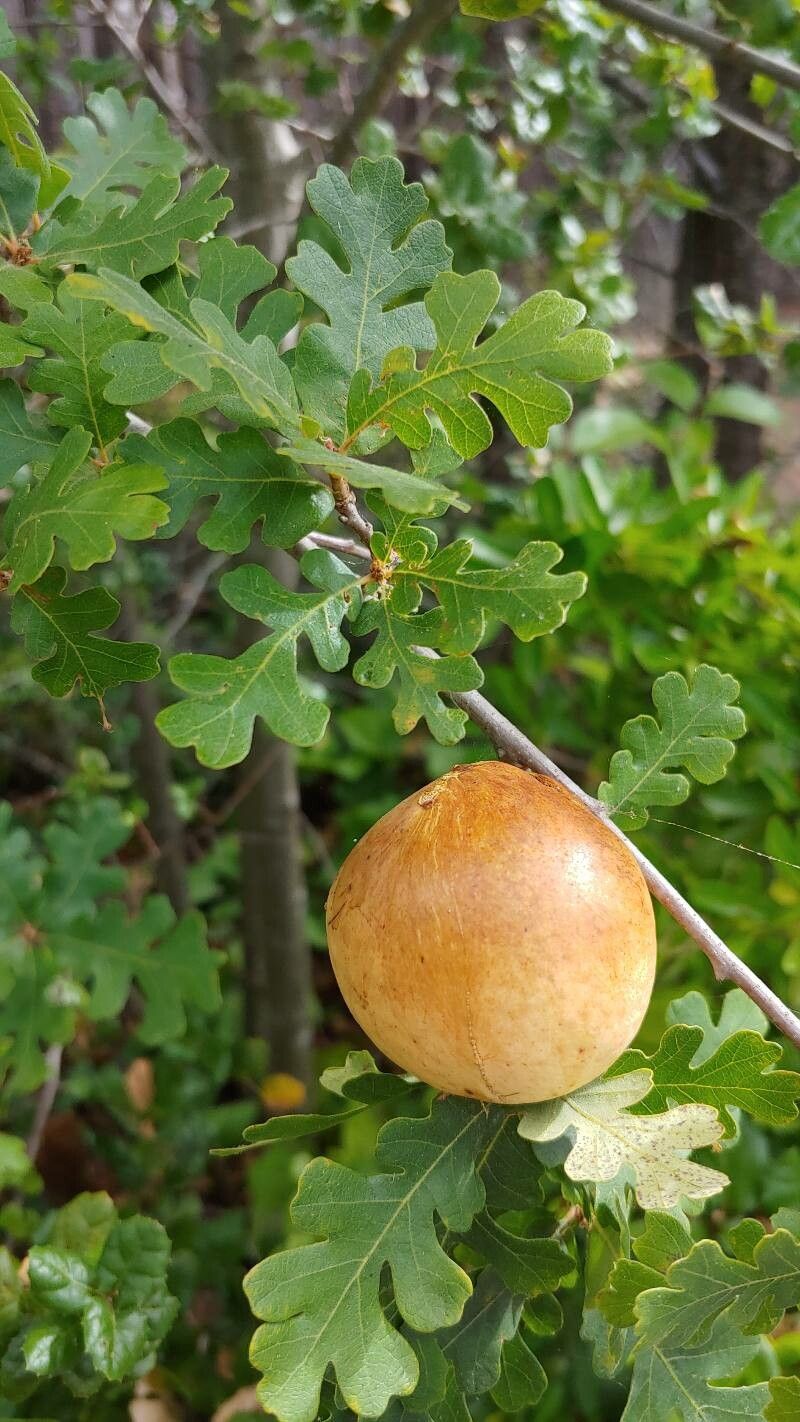
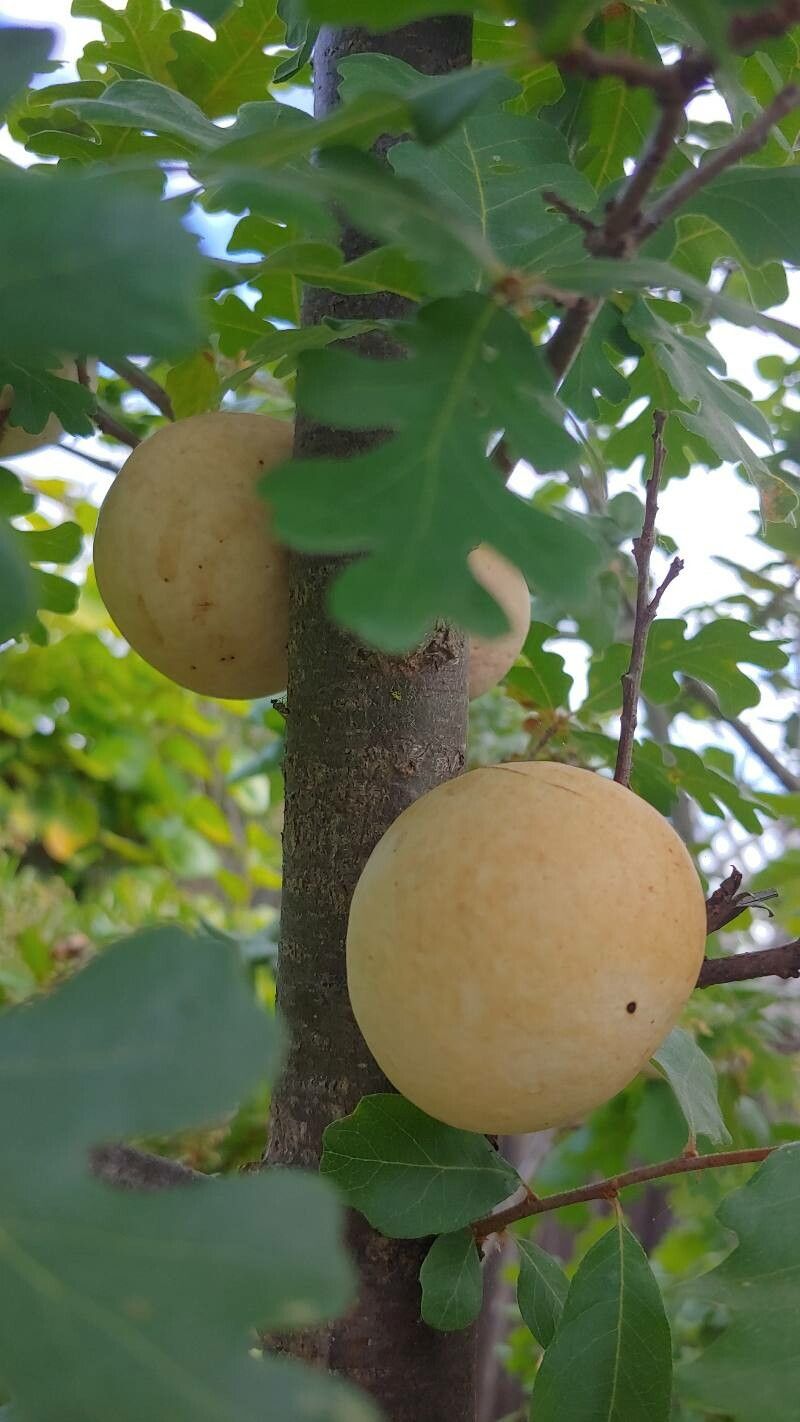
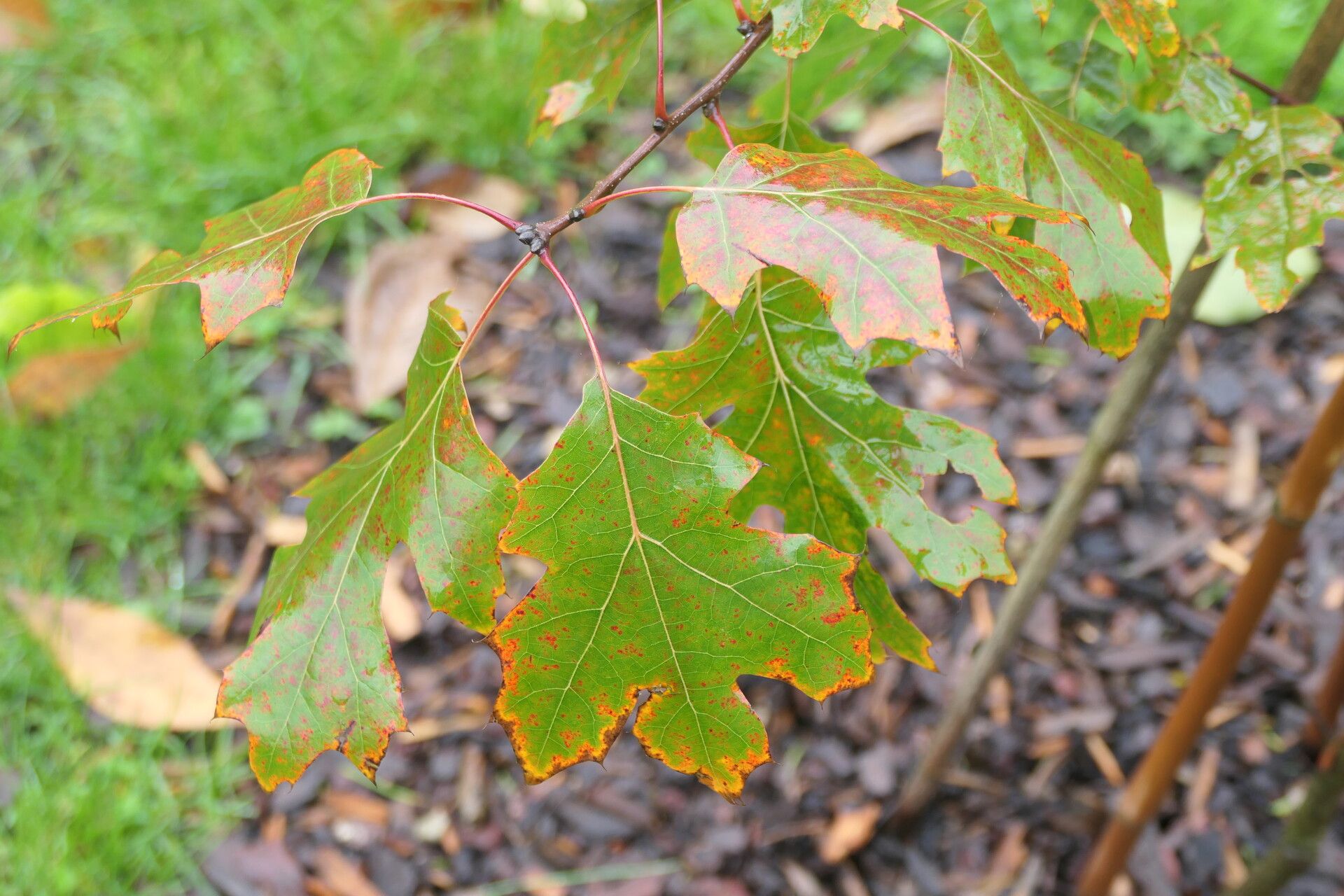
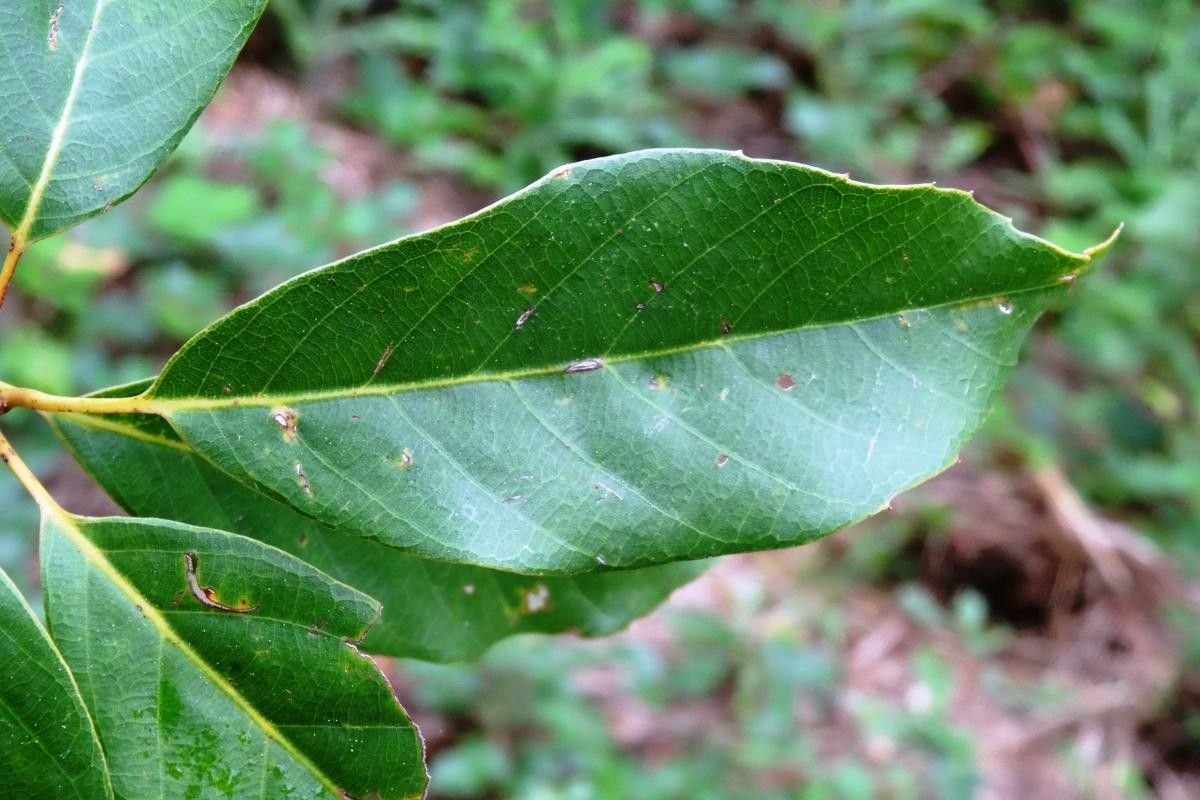
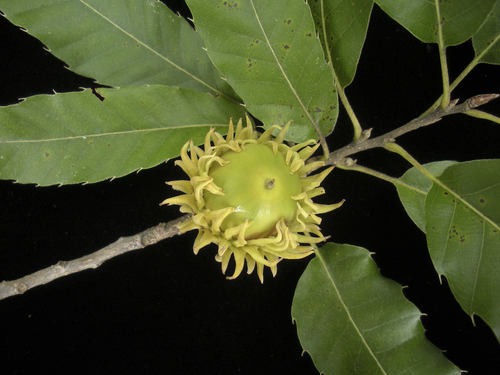
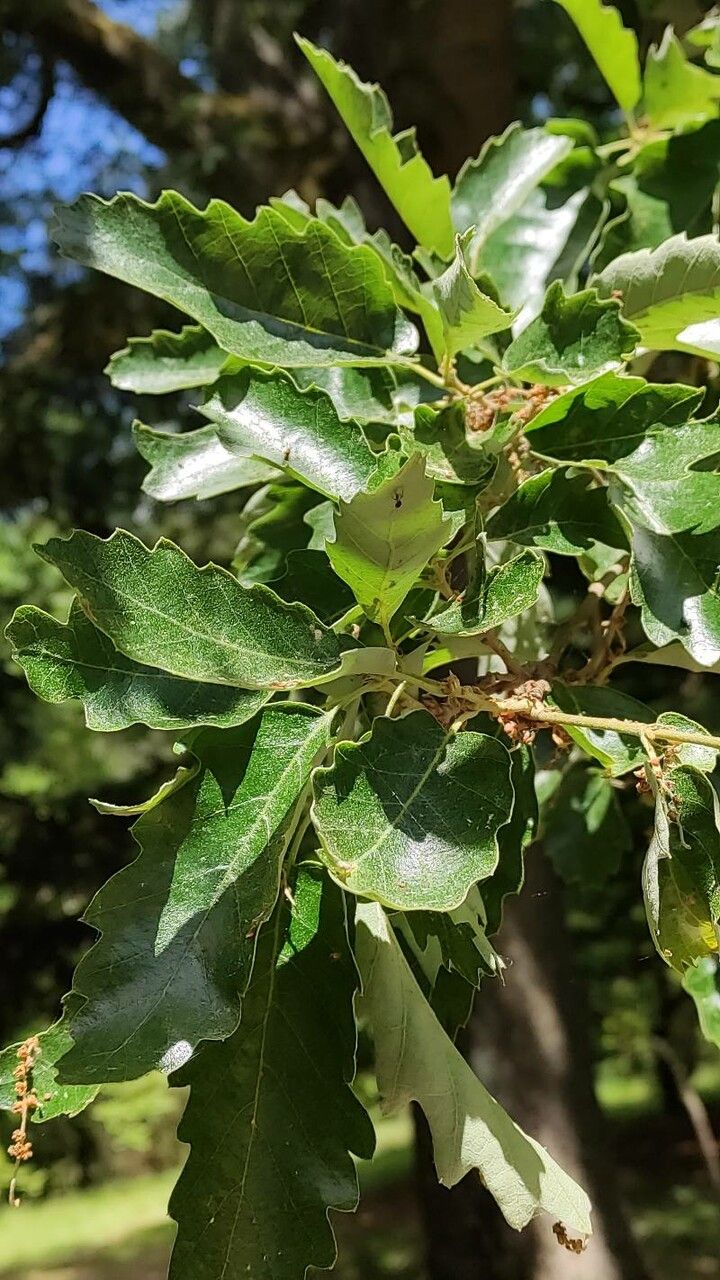
Quercus gambelii, commonly known as Gambel oak, is a deciduous tree species belonging to the Fagaceae family. Native to the western United States, it thrives in various habitats such as woodlands, canyons, and mountain slopes. Typically, the tree grows up to 30 feet tall with a spread of about 20 feet. The leaves of Quercus gambelii are simple and alternate, with an oval shape measuring approximately 2-4 inches in length. They are dark green with a glossy surface on the top and fine hairs on the underside. The bark is grayish-brown and features deep furrows. Quercus gambelii produces acorns that are about an inch long, with a cup-shaped cap covering one-third of the nut's surface. These acorns provide food for various wildlife, including squirrels, deer, birds, and bears. Gambel oak is known for its drought tolerance, making it suitable for xeriscaping and areas prone to drought. Its dense foliage also provides excellent shade during hot summer months. Overall, Quercus gambelii serves not only aesthetic purposes but also ecological ones. It provides food sources for wildlife and adapts well to harsh environmental conditions, making it an important plant species in the ecosystems of the western United States.
Gambel Oak shows good resistance to disease and is generally not susceptible to illnesses. In terms of care, this plant is fairly low-maintenance. When planted outdoors it needs only minimal watering, and larger specimens typically do not require pruning. Smaller plants should be pruned after they have finished blooming. Gambel Oakt is suitable for anyone who has outdoor space, such as a garden or deck, and it does not require a lot of care experience.
How to keep Quercus Gambelii.
Light
Gambel Oak does best when it gets a large amount of sunlight during the day, though it can also tolerate locations with moderate daily sun. A shortage of light can limit the plant's optimal growth. Its native habitat of wide, sunny areas aligns with this requirement, and excessive shade can adversely affect its development.
Water
Gambel Oak is well-suited for semi-arid climates, where it thrives with deep but infrequent watering every 2 to 3 weeks. Being drought-tolerant, it prefers dry roots, which makes it an excellent choice for xeriscaping. Its ability to adapt to varying soil moisture levels allows it to flourish in outdoor, water-wise gardens.
Temperature
The gambel Oak is a temperate woody plant that prefers temperatures between 41 and 95 ℉ (5 to 35 ℃). It is native to areas with a temperate climate and favors moderate temperatures. During colder seasons, lowering the temperature to 32 to 68 ℉ (0 to 20 ℃) can aid its growth.
Fertilizer
To encourage healthy growth, apply fertilizer to your Gambel Oak in early spring. Regular feeding improves its overall health, leading to vigorous growth, greater toughness in challenging conditions, and enhanced resistance to diseases and pests. Keep to a consistent fertilization schedule for your Gambel Oak to maintain foliage that is vivid in color and lush in appearance.
Pruning
Gambel Oak trees are deciduous and well-suited for rocky soils, characterized by their leathery leaves. It is best to prune them from early to late winter while they are dormant. Focus on removing dead wood, thinning branches, and improving the tree's structure. This practice reduces stress, lowers the risk of pests, and enhances air circulation, promoting healthier growth.
Botanical profile.
- Plant Type
- Tree
- Life Cycle
- Perennial
- Genus
- Quercus
- Family
- Fagaceae
- Hardiness Zone
- 4-9
- Mature Height
- 0.91 m to 9.14 m
- Mature Spread
- 4.57 m
- Leaf Color
- Green, Red, Brown
- Leaf Type
- Evergreen, Deciduous
- Flower Color
- Green, Yellow
- Flower Size
- 2.54 cm
- Bloom Time
- Late spring, Early summer
- Planting Time
- Spring, Autumn
- Harvest Time
- Mid summer
- Native Area
- Mexico
Other names.
Reader questions.
What is the most effective way to water my Gambel Oak?
Your Gambel Oak is not very selective when it comes to watering methods. You can use common tools like watering cans, hoses, or even cups to water this plant. Regardless of the tool, it's important to water the soil directly and make sure all areas are evenly moistened to provide water to the entire root system. Filtering the water can be helpful to remove harmful particles that tap water may contain. Also, using water that is at or slightly above room temperature is beneficial, as extremely cold or hot water can be a bit of a shock to the Gambel Oak. However, the plant generally responds well to any type of water you give it.
Why should I put fertilizer on my Gambel Oak?
No matter which type of Gambel Oak you have, fertilizing regularly will improve its overall health. Providing the right nutrients will promote stronger growth and make the plant better equipped to withstand challenging growing conditions, diseases, and pests. Maintaining the attractive foliage of your Gambel Oak is crucial, so be sure to establish a consistent fertilization schedule tailored to its specific needs. This will encourage the development of vibrant, lush leaves.
What are the sunlight requirements for Gambel Oak?
Gambel Oak thrives best when it receives a substantial amount of sunlight throughout the day, aligning with its natural habitat in expansive sunny landscapes. It can manage in areas with moderate daily sunlight, needing above 6 hours of full sunlight for optimal growth, and can also tolerate partial sun, which is about 3-6 hours of sunlight. It's crucial to observe the movement of sunlight in your garden to ensure areas are chosen that provide an adequate balance of light and shade, facilitating the plant's health and development.
What is the preferred temperature range for Gambel Oak?
The Gambel Oak, or Quercus gambelii, thrives in a temperate climate with a preferred temperature range of 41 to 95°F (5 to 35°C). During the colder seasons, it's advisable to adjust the surrounding temperature to a range of 32 to 68°F (0 to 20°C) to promote its growth. This plant is known for its strong cold resistance, making special frost protection measures generally unnecessary. However, in anticipation of winter temperatures dropping significantly low, it's critical to provide cold protection by wrapping the trunk and branches with insulating materials like non-woven fabric or cloth. Additionally, abundantly watering the plant before the first freeze of autumn to ensure the soil remains moist can help prevent drought and water scarcity during winter and early spring.
What do I do if I give my Gambel Oak too much or too little water?
For outdoor plants, especially newly planted plants or seedlings, lack of watering can be a problem. Remember to water enough for a few months when the tree is small or recently planted. Once the roots are established, Gambel Oak can rely on rain most of the time. When your Gambel Oak is in pots, overwatering is more likely. If you accidentally overwater your Gambel Oak, take immediate action to fix the situation. Stop watering right away to minimize the impact. Then, remove your Gambel Oak from the pot and check its roots. If there is no root rot, you can return the plant to its container. If you find signs of root rot, trim the affected roots and apply a fungicide to prevent further damage. Lastly, repot the Gambel Oak in well-draining soil. In the case of underwatering, simply water the plant more frequently. Underwatering is usually easy to fix. When underwatered, the leaves of the plant may droop, dry out, and fall off. After adequate watering, the leaves will quickly regain their fullness. Adjust your watering frequency as soon as you notice underwatering.
When should I fertilize my Gambel Oak tree?
To properly fertilize your Gambel Oak, start by applying fertilizer in late winter or early spring. This will give your oak tree the necessary nutrients to promote healthy growth when the weather warms up. If you live in a warm climate region, it's also helpful to provide a second round of fertilizer in early fall. This additional feeding enriches the soil and prepares your Gambel Oak for the upcoming growing season. It also improves the tree's ability to withstand winter cold without leaf damage. By fertilizing earlier, you give the new branches enough time to grow strong and resilient, ensuring they can endure the cold winter months.
How does artificial lighting support indoor plants like Gambel Oak?
When natural sunlight is not sufficient, especially in winter or less sunny spaces, artificial lighting becomes a critical supplement for indoor plants, including Gambel Oak. It promotes faster, healthier growth by providing the necessary light intensity and duration. LED lights are often preferred for their ability to emulate specific wavelengths needed by plants. Full sun plants require 30-50W per square foot, partial sun plants need 20-30W per square foot, and full shade plants benefit from 10-20W per square foot. The artificial light source should be placed 12-36 inches above the plant, mimicking natural sunlight, and kept on for about 8-12 hours a day to ensure the plant receives enough light for its growth phases.
How can Gambel Oak be protected from low and high temperatures?
To protect Gambel Oak from low temperatures, it is important to ensure it is kept above a certain minimum during the winter. Although the plant is cold-tolerant and there might not be noticeable changes in winter, falling below the critical low temperature can result in brittle and dry branches by spring, with no new shoots emerging. The solution involves pruning away any dead branches that have failed to produce new leaves in spring. In cases of high temperatures, particularly during summer, ensuring the Gambel Oak does not exceed a maximum temperature limit is crucial. Exceeding this limit can cause the leaves to lighten in color, tips to dry and wither, and increase susceptibility to sunburn. To mitigate this, trim away sunburned and dried-up parts, move the plant to a shaded location or use a shade cloth, and water the plant in the morning and evening to maintain soil moisture.
How often do I need to water my Gambel Oak?
If your area lacks rainfall, it's important to give your outdoor plants adequate watering. During the spring and fall, watering every 2 weeks should be sufficient. In the summer, plants will need more frequent watering, while in the winter, when growth is slower, watering can be done sparingly or not at all. However, if you have a young or newly planted Gambel Oak, more frequent watering is necessary for establishing growth. For potted plants, determining the watering frequency can be done in two ways. The first is to follow a set watering schedule, such as once every week or every other week. However, this may not always be suitable for the unique conditions of your Gambel Oak. Alternatively, you can base the watering frequency on the moisture level of the soil. It's best to wait until the top two to four inches of soil, about ⅓ to ½ depth of the pots, have completely dried out before watering again. This approach allows you to adjust the frequency depending on the season, especially during summer when the plant's water needs are highest.
When is it not a good idea to add fertilizer to my Gambel Oak plant?
To ensure the health of your Gambel Oak, it is important to avoid fertilizing at certain times of the year. One such time is the early and mid-winter months when the plant is dormant and doesn't require any nutrients. Additionally, it is not recommended to fertilize the oak during late spring and throughout the summer. These months tend to be hotter and drier, increasing the likelihood of a negative reaction to fertilizer. To prevent any problems, it is best to stick to a fertilization schedule that involves feeding only in early spring and early fall.
What are the symptoms of light deficiency in Gambel Oak?
Gambel Oak exhibits several symptoms when suffering from insufficient light: new leaves may appear smaller in size, growth can become leggy or sparse, and there may be a faster drop of older leaves. Furthermore, the plant may experience slower or halted new growth, lighter-colored or chlorotic leaves due to insufficient chlorophyll, and damage such as sunscald, leaf curling, wilting, and leaf scorching when exposed to excessive sunlight. These signs indicate the plant's struggle with its current light environment, either craving more illumination or being overexposed.
How much water does my Gambel Oak tree need?
When watering your Gambel Oak, it's important to know that it doesn't always require a lot of water. If only a few inches of soil have dried since the last watering, you can provide about five to ten ounces of water to support healthy growth. You can also gauge the amount of water based on soil moisture. Pay attention to how many inches of soil have dried out between waterings. To ensure the Gambel Oak receives enough moisture, water until all the dry layers of soil are moistened since the last watering. If more than half of the soil has dried out, it may be necessary to provide more water than usual. In such cases, continue watering until excess water drains from the pot's drainage holes. If your Gambel Oak is planted in a location that receives ample rain, it may not need additional watering. For young or newly established Gambel Oaks, they should receive 1-2 inches of rain per week. As the tree grows and becomes established, it can rely solely on rainwater. Only during hot weather with no rainfall for 2-3 weeks should you consider giving the Gambel Oak a thorough watering to prevent stress.