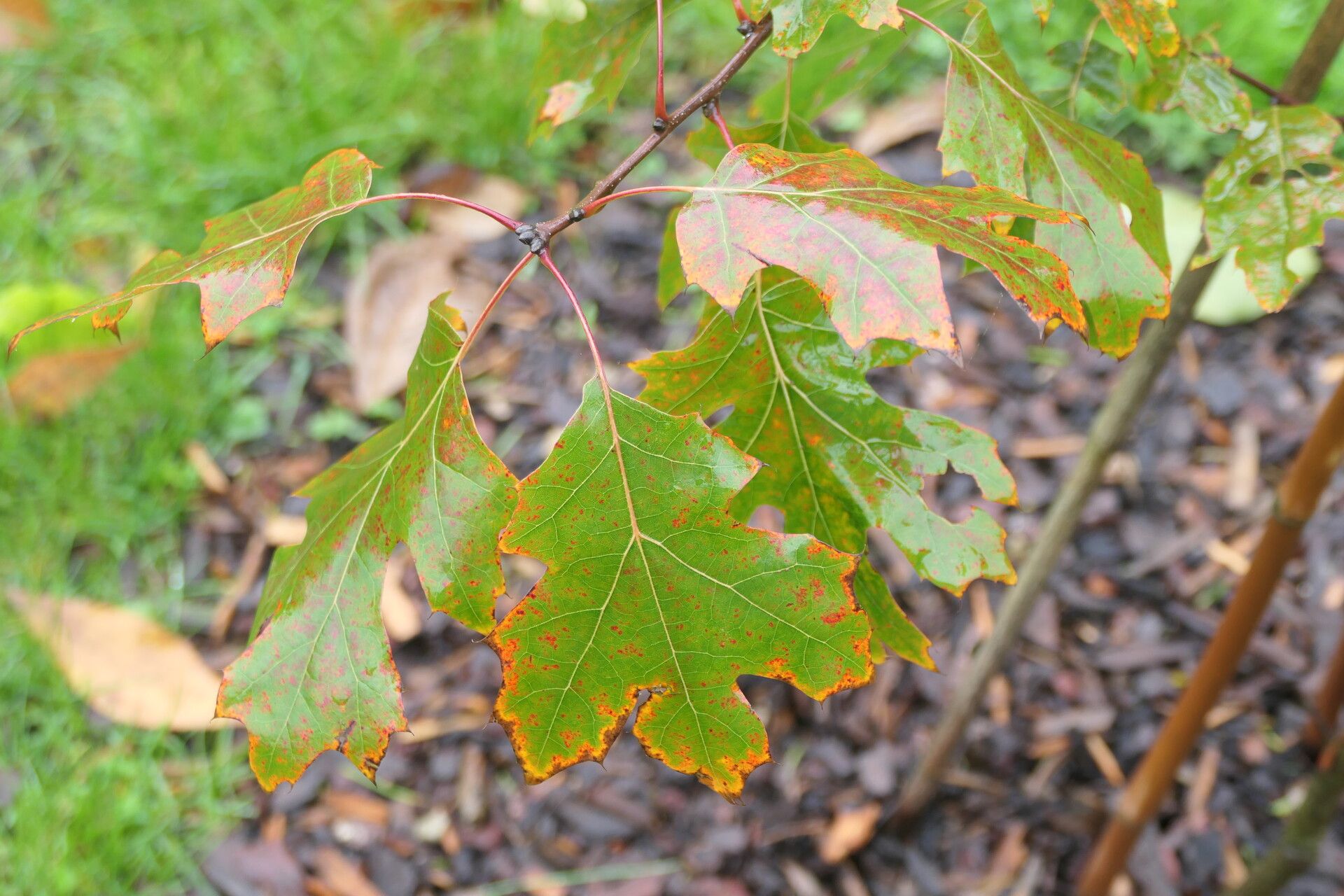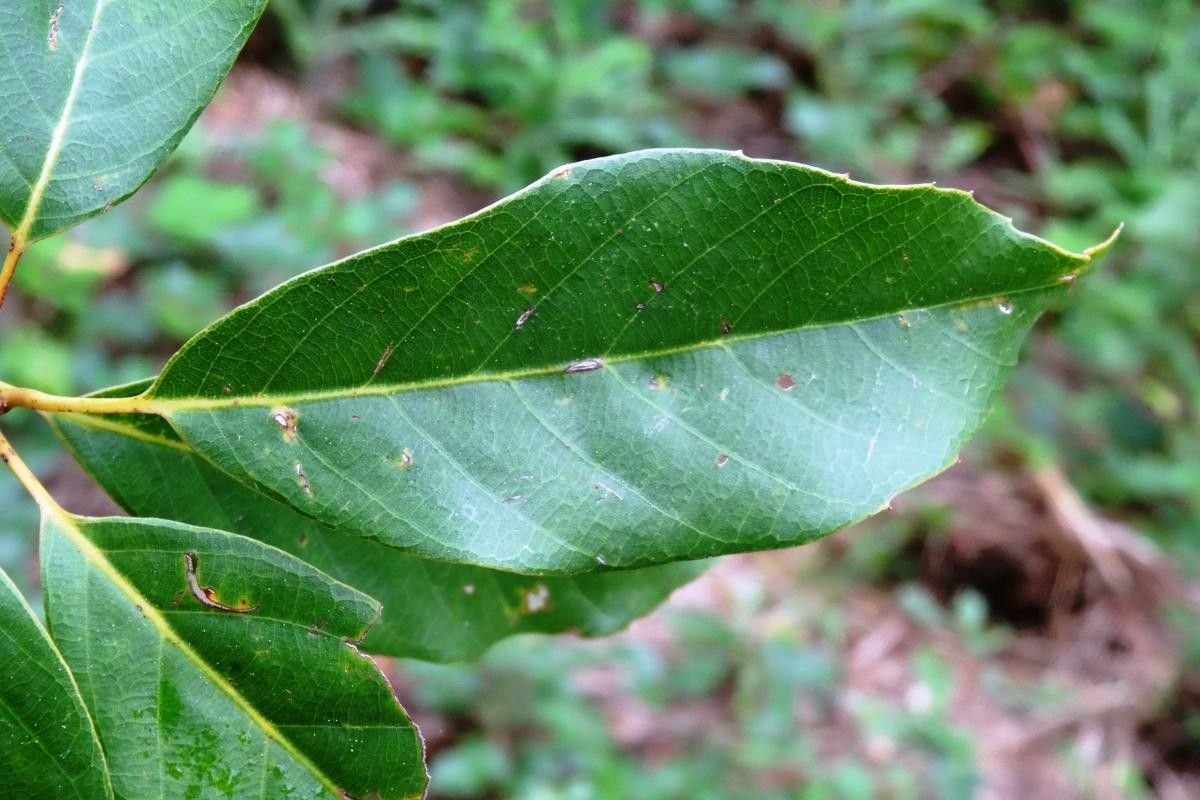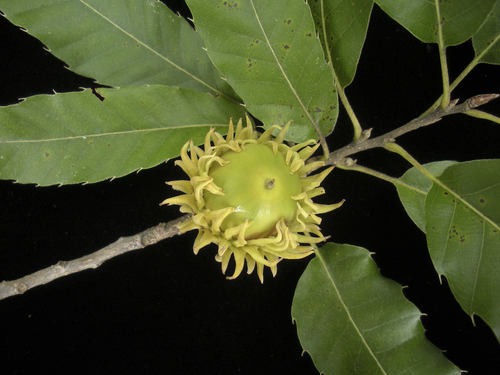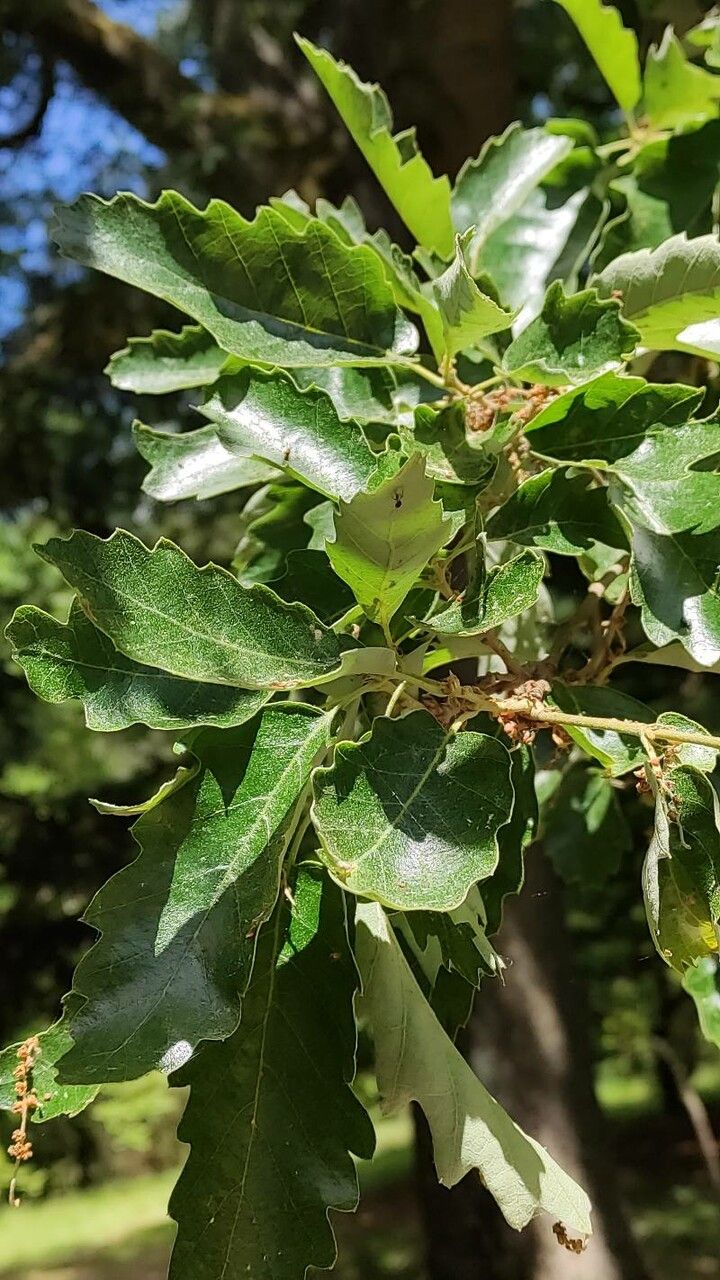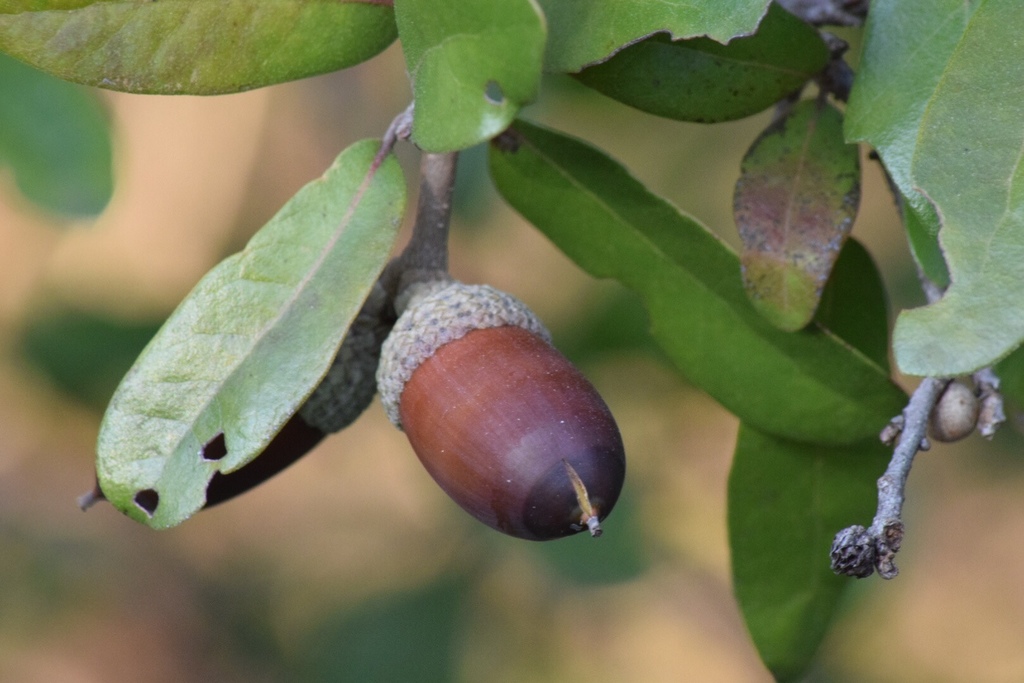
Quercus fusiformis, commonly known as the Texas live oak or the escarpment live oak, is a species of evergreen tree native to the southern United States. Belonging to the family Fagaceae, this tree can grow up to 50 feet tall and spread equally wide. It boasts a dense, rounded crown with dark green, leathery, glossy leaves on top and pale green underneath.
The Texas live oak is renowned for its hardiness and drought tolerance, making it an excellent choice for landscaping in arid regions. Its extensive root system allows it to anchor firmly in a variety of soil types, from sandy loam to clay.
This tree produces acorns, which are a crucial food source for wildlife including deer, squirrels, birds, and other small mammals. The wood of Quercus fusiformis is highly prized for its strength and durability, making it ideal for construction projects such as flooring and furniture.
Overall, Quercus fusiformis plays a vital role in maintaining ecological balance by providing shelter and food for wildlife, while also being economically valuable due to its strong and durable wood. This makes it one of the most valuable trees in the southern United States.
Texas live oak is quite resistant to disease and is generally not susceptible to illnesses. Regarding care, this tree is fairly low-maintenance. When grown outdoors it needs only minimal watering, and larger plants typically do not require pruning. Smaller plants, though, should be pruned after they have finished blooming. Texas live oak is appropriate for anyone with an outdoor area, like a garden or deck, and does not demand extensive care experience.
How to keep Quercus Fusiformis.
Light
The Texas live oak does very well when it receives sunlight for most of the day and can still grow with limited light, showing its natural resilience. Constant, ample sunlight creates the best conditions for healthy development. If sunlight is too scarce or too intense, it can negatively affect the plant’s health and growth.
Water
Originating from arid regions, the Texas live oak is exceptionally drought-tolerant, needing water only every 2 to 3 weeks. As an evergreen, it retains moisture in its leaves, allowing it to survive during periods of low precipitation. This tree is typically cultivated outdoors.
Temperature
Texas live oak does best in temperatures between 59 and 100 ℉ (15 to 38 ℃) and comes from hot, dry habitats. Providing shade and irrigation during the summer months is recommended to help the plant adjust to higher temperatures.
Fertilizer
Fertilize your Texas live oak in early spring to encourage healthy growth. Regular feeding improves overall health, producing vigorous growth, increased resilience to harsh conditions, and better resistance to diseases and pests. Keep a consistent fertilization schedule for your Texas live oak to maintain foliage that is vibrant, deeply colored, and lush in appearance.
Pruning
The Texas live oak has sturdy leaves and a wide-spreading growth pattern. To improve airflow and encourage healthy growth, prune any dead or overlapping branches between early and late winter. Regular pruning not only prevents disease but also strengthens the tree's structure. Make sure to use clean, sharp tools to reduce damage.
Botanical profile.
- Plant Type
- Tree
- Life Cycle
- Perennial
- Genus
- Quercus
- Family
- Fagaceae
- Hardiness Zone
- 8-11
- Mature Height
- 24.99 m
- Mature Spread
- 6.1 m to 11.89 m
- Leaf Color
- Green, Blue
- Leaf Type
- Evergreen, Semi-evergreen
- Flower Color
- Green, Yellow
- Flower Size
- 3.05 cm to 5.08 cm
- Bloom Time
- Mid spring, Late spring
- Planting Time
- Spring, Autumn
- Harvest Time
- Early spring, Mid spring, Mid summer, Late summer, Fall, Winter
- Native Area
- Mexico
Other names.
Reader questions.
How should I water my Texas live oak in the best way?
When watering your Texas live oak, you have various options for tools. Watering cans, hoses, or cups can all be used. The key is to apply the water directly to the soil and ensure that all areas of the soil are evenly moistened to provide adequate hydration to the root system. It may be helpful to use filtered water to avoid any harmful particles present in tap water. Additionally, using water at or slightly above room temperature is preferred to prevent any shock to the tree. However, Texas live oaks generally respond well to any type of water they receive.
Why should I put fertilizer on my Texas live oak?
Regular fertilization is crucial for all types of Texas live oak trees. It promotes overall health by providing the right nutrients, resulting in stronger growth and increased resilience against harsh conditions and diseases. By maintaining a consistent fertilization schedule tailored to your specific tree, you can ensure that its foliage remains attractive with vibrant color and a lush appearance.
What are the sunlight requirements for a Texas live oak?
The Texas live oak requires sunlight for the majority of the day to thrive splendidly, showcasing its inherent resilience even with limited light exposure. For optimal growth and health, continuous abundant sunlight is best. However, the plant can still flourish with less sunlight, though too much or too little light can negatively affect its well-being. It's essential to monitor the sunlight patterns in your garden carefully, ensuring that you choose locations that provide a perfect balance of light and shade to keep your plants happy.
What temperature conditions are best for Texas live oak?
Texas live oak, or Quercus fusiformis, thrives in temperatures ranging from 59 to 100 °F (15 to 38 °C), as it is native to hot and dry environments. It demonstrates cold tolerance, typically not requiring protective measures when temperatures are above its tolerable growing temperature minimum. However, during summer, providing shade and sufficient irrigation can help the plant cope with higher temperatures. If temperatures are expected to drop below the plant's cold tolerance threshold, temporary measures like wrapping the plant with protective materials should be implemented until warmer temperatures resume.
What should I do if I give my Texas live oak either too much or too little water?
Outdoor plants, especially newly planted ones or plant seedlings, can be prone to lack of watering. It's important to remember to water them enough for a few months when they are small or just planted. This is because Texas live oak trees can rely on rain once their roots are established. However, if your Texas live oak is planted in pots, overwatering becomes more likely. If you accidentally overwater your Texas live oak, you should take immediate action to remedy the situation. First, stop watering the plant to minimize the effect of overwatering. Then, remove the Texas live oak from its pot to inspect its roots. If there is no root rot, you can return the plant to its container. But if there are signs of root rot, trim away the affected roots and consider applying a fungicide. Lastly, repot the Texas live oak in well-draining soil. On the other hand, if your Texas live oak is underwatered, simply water it more frequently. Underwatering is usually easy to fix, as the plant's leaves will droop, dry out, and fall off. Once you provide sufficient watering, the leaves will quickly regain their fullness. Make sure to correct your watering frequency as soon as you notice underwatering.
When should I fertilize my Texas live oak tree?
To properly fertilize your Texas live oak, follow these guidelines: The first fertilization should take place in late winter or early spring to give the tree the nutrients it needs for healthy growth once the weather warms up. If you live in a warm climate region, it is beneficial to provide an additional fertilizer feeding in early fall. This not only adds nutrients for the following growing season but also makes the tree more resilient to winter cold, preventing foliage damage. Fertilizing earlier in fall allows new branches enough time to grow and withstand the winter.
How do artificial lights support indoor Texas live oak growth?
Indoor Texas live oak plants require adequate lighting for optimal growth, particularly when natural sunlight is insufficient, such as in winter or less sunny spaces. Artificial lights provide a vital solution, promoting faster, healthier growth. LED lights are recommended because they can be customized to emit specific wavelengths needed by the plants. The requirements are: 30-50W/sq ft for full sun plants, 20-30W/sq ft for partial sun plants, and 10-20W/sq ft for full shade plants. It's crucial to position the light source 12-36 inches above the plant, mimicking natural sunlight as closely as possible, and ensuring the plants receive 8-12 hours of light per day.
How should Texas live oak be cared for during low temperatures?
For Texas live oak, it is important to ensure that during winter, the temperature remains above its specified tolerable growing temperature minimum. If it falls below the limit growth temperature, leaves may droop or even wilt and fall off in severe cases. To mitigate frost damage and prepare for colder times, trim any frost-damaged parts and wrap the plant with insulating materials like non-woven fabric or cloth. Additionally, setting up a wind barrier can help protect the tree from cold winds, preventing further stress.
How frequently do I need to water my Texas live oak?
Plants that grow naturally outdoors usually don't need additional watering if there is enough rainfall. However, if your area doesn't get much rain, you should water your plants every 2 weeks in the spring and fall, and more frequently in the summer. During winter, when plant growth slows down, you can water less often or not at all. Young or newly planted Texas live oak trees may need more frequent watering to help them establish and become more drought tolerant. For potted Texas live oak plants, there are two ways to decide how often to water. The first is to stick to a set watering schedule, such as once a week or every other week. However, this may not always work because it doesn't account for the specific growing conditions of your plant. Another option is to check the soil moisture and water when the top two to four inches of soil, or about ⅓ to ½ depth of the pots, have completely dried out. This approach takes into consideration the plant's water needs, which are highest during summer.
When is it not a good idea to put fertilizer on my Texas live oak tree?
To ensure healthy growth, avoid fertilizing your Texas live oak during certain periods of the year. Firstly, refrain from fertilizing during the early and mid-winter months when the tree is dormant and does not require nutrients. It is also not recommended to fertilize in late spring and throughout the summer due to the hot and often dry weather conditions. Fertilizing during this time can have detrimental effects on your Texas live oak. Instead, adhere to a fertilization schedule that involves feeding only in the early spring and early fall to promote optimal growth.
What are the key symptoms of insufficient or excessive sunlight in Texas live oak?
Texas live oak shows various symptoms when facing light issues. Insufficient light can lead to smaller new leaves, leggy or sparse growth, faster leaf drop, slower or halted growth, and lighter-colored new leaves indicating a lack of chlorophyll. Excessive sunlight can cause chlorosis (leaves turning yellow), sunscald (damage from intense sunlight), leaf curling (to minimize water loss), wilting (due to increased water loss), and leaf scorching (brown, dry edges on leaves). These symptoms help in identifying whether the plant is receiving too much or too little light.
What should be done if Texas live oak experiences high temperatures?
During the hot summer months, it's essential to keep Texas live oak's environment below its suitable growth temperature maximum to prevent stress from high temperatures. Symptoms of heat stress include lighter leaf color, dry and withered leaf tips, curling leaves, and increased susceptibility to sunburn. To address this, trim away sunburned and dried parts of the plant, provide shade during the peak sun hours of midday and afternoon with natural or artificial shading, and ensure to water the soil thoroughly in the morning and evening to maintain moisture.