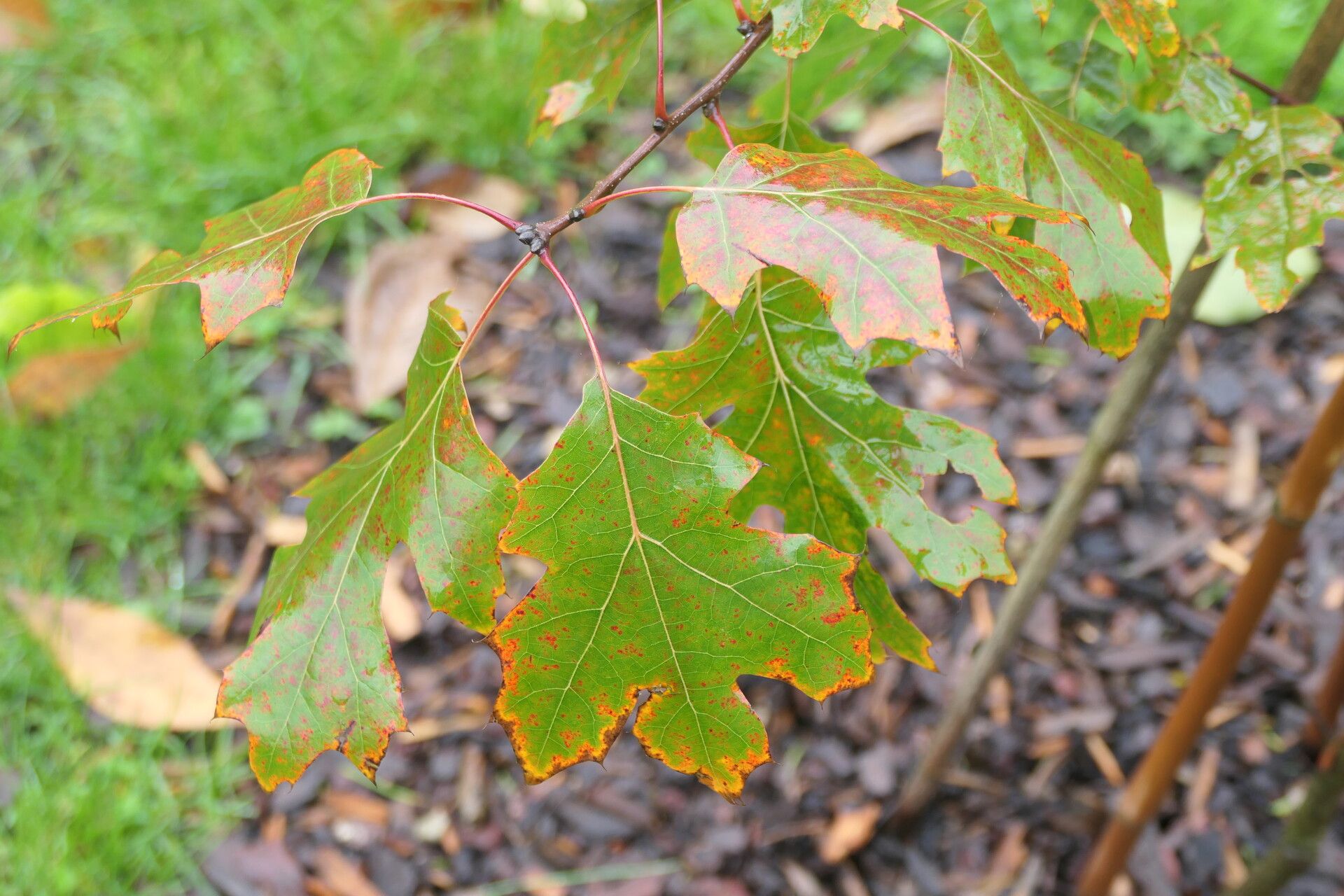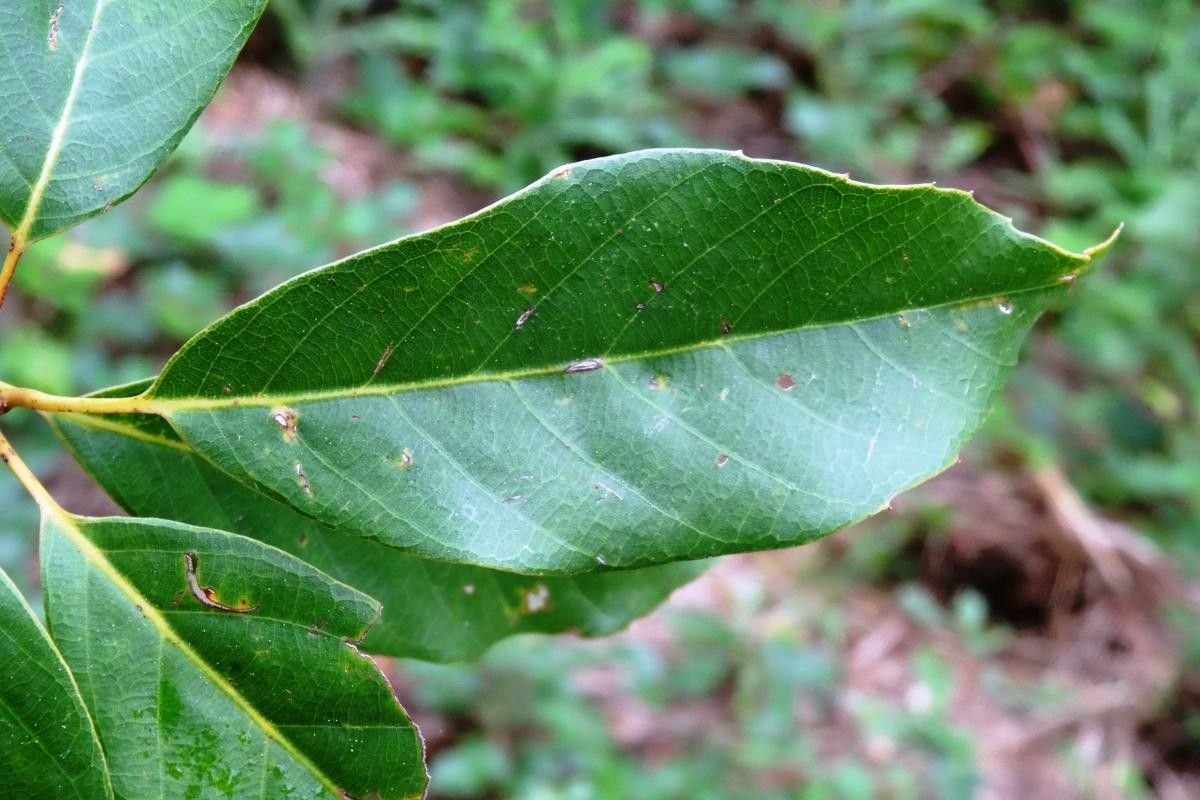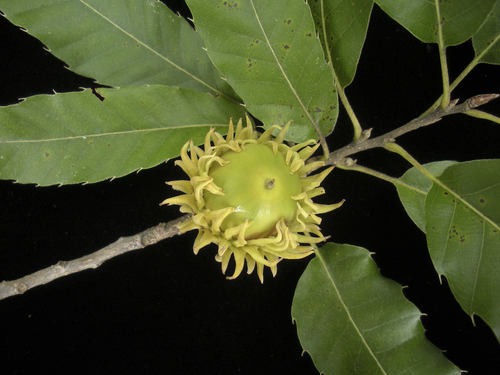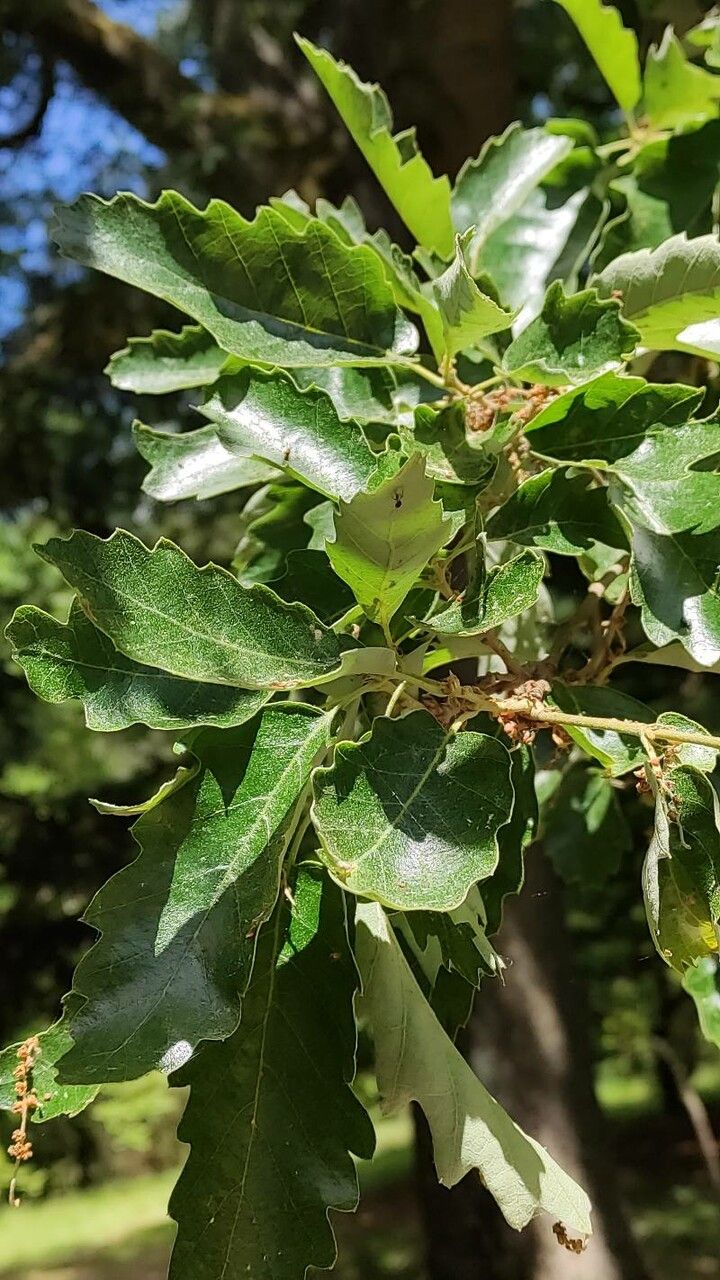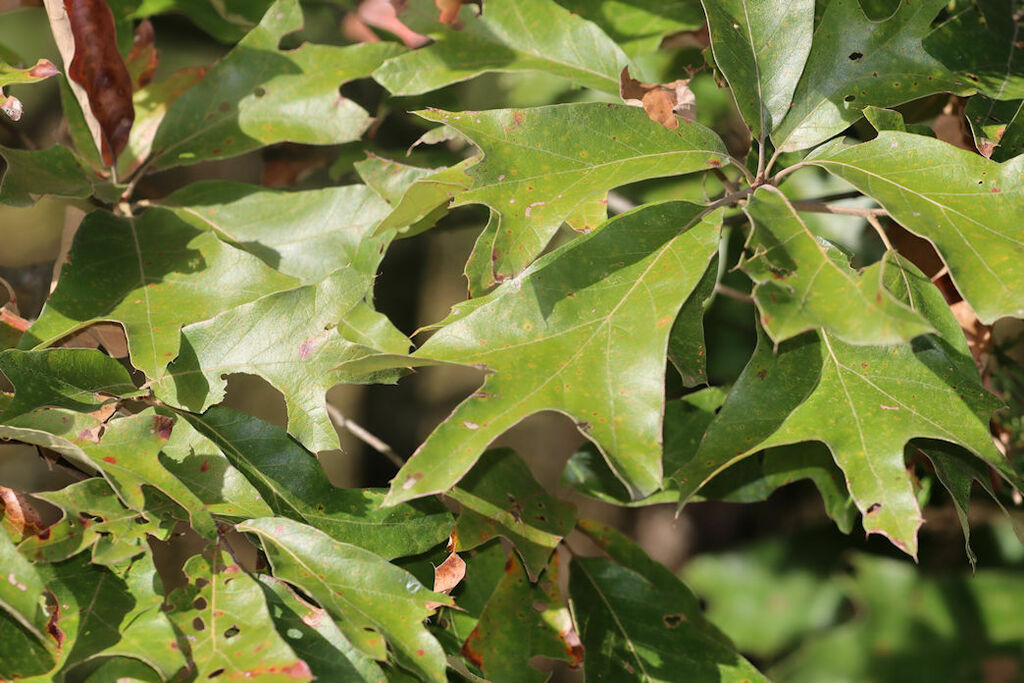
Quercus falcata, commonly known as the southern red oak, is a deciduous tree native to the southeastern United States. Typically reaching a height of 60-80 feet with a spread of 40-60 feet, this tree features an attractive rounded crown and dark gray, deeply furrowed bark.
The leaves of Quercus falcata are simple, alternate, and distinctively shaped, resembling the head of an eagle or falcon. They are dark green with serrated edges and can grow up to 8 inches long.
The southern red oak produces acorns that are about one inch long with shallow caps. These acorns mature in two years and provide food for wildlife such as squirrels, deer, turkeys, quail, and woodpeckers, among others.
Quercus falcata prefers well-drained soils but can tolerate wet conditions for short periods. It thrives best in full sun but can also grow in partial shade.
This tree has multiple uses, including lumber production for furniture and flooring due to its hard, decay-resistant wood. It also provides shade in parks and gardens and serves as a windbreak on farms.
Overall, Quercus falcata makes an excellent addition to any landscape, offering attractive seasonal appearances, providing food and shelter for wildlife, and being both economically and environmentally beneficial.
Southern Red Oak: The term "red oak" is used to refer to two significant timber species—the northern red oak (Quercus rubra) and the southern red oak (Quercus falcata). The southern red oak is named for its origin, which is in the central southern region of the United States.
Southern red oak shows strong resistance to disease and is typically not susceptible to illnesses. Regarding care, this plant is fairly low-maintenance. When grown outdoors it needs only light watering, and larger specimens usually do not require pruning. Smaller specimens, however, should be trimmed after flowering. Southern red oakt is well suited for anyone who has an outdoor area, such as a garden or a deck, and it does not demand extensive care experience.
How to keep Quercus Falcata.
Light
The southern red oak flourishes in locations that get abundant light during the day, promoting its optimal growth. The plant can also tolerate lower light levels, but will flourish less. Its native habitat features ample sun exposure, indicating its requirement for light. Too much or too little light can harm its health.
Water
The Southern red oak flourishes in regions that receive moderate rainfall. To stay healthy, it needs to be watered every 1-2 weeks. As a deciduous tree, it sheds its leaves in the winter, which helps reduce water loss and improve its chances of survival during dormancy.
Temperature
The southern red oak needs temperatures between 41 and 95 ℉ (5 and 35 ℃) for optimal growth. It is native to warm, humid areas, such as the southeastern United States. In hotter conditions, providing some shade for the southern red oak is recommended to avoid leaf scorching. In colder seasons like winter, the southern red oak will acclimate to cooler temperatures, but it is important to protect it from extreme cold snaps.
Fertilizer
Fertilize your Southern red oak in early spring to encourage healthy growth. Regular feeding improves overall condition, producing vigorous growth, greater tolerance of harsh conditions, and better resistance to pests and diseases. Follow a specific fertilization schedule for your Southern red oak to maintain vibrant foliage with deep color and a lush appearance.
Pruning
The Southern red oak is a deciduous tree characterized by its lobed leaves. To promote healthy growth, it is important to prune the tree in early spring, removing any dead or crossing branches. This practice helps improve air circulation and light penetration. Make sure to use clean, sharp tools when pruning to prevent the spread of disease, thereby supporting both the tree's overall health and its aesthetic appeal.
Botanical profile.
- Plant Type
- Tree
- Life Cycle
- Perennial
- Genus
- Quercus
- Family
- Fagaceae
- Hardiness Zone
- 5-9
- Mature Height
- 24.99 m to 43.89 m
- Mature Spread
- 17.98 m to 21.03 m
- Leaf Color
- Green, White
- Leaf Type
- Deciduous
- Flower Color
- Yellow, Green
- Flower Size
- 2.54 cm
- Bloom Time
- Mid spring, Late spring
- Planting Time
- Autumn
- Harvest Time
- Mid summer, Late summer, Fall
Other names.
Reader questions.
How should I water my Southern red oak tree in the best way?
To promote excellent root development in your plants, consider these watering tips. First, place a garden hose at the base of the plant, avoiding direct spraying of the leaves. If your plants are outdoors and exposed to direct sunlight, keep in mind that the leaves will need additional watering. One option is to use bubblers to moisten the roots of each plant. Another option is to use soaker hoses that cover the entire garden or bed when adding or removing plants, allowing the roots to be thoroughly watered. Remember to drain any excess water and wait for the soil to dry before watering again. Watering at ground level helps prevent diseases. On a sunny day, it can be beneficial to spray the entire bush with water. Whether your plants are in pots or in the ground, it's important to provide deep watering instead of light sprinkling for Southern red oak.
Why do I have to add nutrients to my Southern red oak?
No matter which type of Southern red oak you have, regular fertilization is crucial for its overall health. Providing the right nutrients will promote strong and robust growth, making your tree more resistant to harsh conditions, diseases, and pests. The foliage of your Southern red oak is its most appealing feature, so it's important to maintain it. This involves following a regular fertilization schedule tailored to your tree, which will result in vibrant and lush leaves.
How many hours of sunlight should Southern red oak get each day to grow healthily?
To ensure healthy growth, Southern red oak needs a minimum of 3-6 hours of sunlight per day. While most plants that can tolerate part sun can also do well in full sun, they actually need less light for photosynthesis, making them more adaptable than plants that specifically require full sun or part shade.
What temperature is best for Southern red oak?
The optimal temperature range for Southern red oak to thrive is between 65-80℉ (18-27℃). During the main growing phase, it can tolerate temperatures as high as 95℉ (35℃) and as low as 15℉ (-10℃). This species is able to survive freezing winters thanks to its tolerance for low temperatures. To summarize, the ideal temperature range is as follows: - Perfect: 65-80℉ (18-27℃) - Highest: 85-95℉ (30-35℃) - Lowest: -5 to 15℉ (-20 to -10℃) or below.
What should I do if I give too much or too little water to a Southern red oak tree?
An overwatered Southern red oak will show signs such as yellow leaves, wilting, and leaf drop. The plant may also appear dull and unhealthy with mushy stems. If these signs appear, it is best to adjust your watering schedule. Wilting can also be a sign of under watering, with leaves turning crispy and dry. In this case, check the soil and provide a thorough watering if needed. However, be aware that the damaged root system may still cause the plant to have dry and yellow leaves for a few days. Once the plant recovers, the yellowing will stop. Indoors, always check the moisture levels of the pot and avoid overwatering. Look out for black spots, and if present, allow the soil to dry out for a few days. Overwatering can lead to root rot, so transfer the plant to a different pot if you see discolored and slimy roots. Preventing root rot is crucial, so do not let the soil become too soggy. When planting the Southern red oak outdoors, make sure to dig deeper and check if the soil is too dry. Adequate watering is necessary for the plant to recover.
What's the ideal time to fertilize my Southern red oak tree?
To ensure healthy growth, fertilize your Southern red oak in late winter or early spring. This will provide the necessary nutrients for it to thrive once the weather warms up. Additionally, if you live in a warm climate region, consider giving your oak another round of fertilizer in early fall. This will supply extra nutrients for the upcoming growing season and help the tree withstand winter without leaf damage. By fertilizing earlier, you'll also allow enough time for new branches to grow and withstand the cold.
What kind of sunlight does Southern red oak require?
Southern red oak thrives in full or part sun, ideally with direct morning light. However, during summer, it requires protection from the strong rays of the afternoon sun to avoid leaf damage and maintain a healthy appearance, particularly in temperate environments where excessive afternoon sun can cause leaves to burn.
Should I change the temperature for Southern red oak during different growth stages?
According to research, the growth of Southern red oak is affected by higher temperatures, especially when it comes to the development of axillary buds and the growth of main shoots. To ensure healthy growth after germination or transplanting, it is recommended to keep temperatures consistent and cooler, around 65℉(18℃).
How frequently should I water my Southern red oak tree?
To properly water Southern red oak trees, it is important to follow a few guidelines. Firstly, these trees prefer deep and infrequent watering. When watering, it is recommended to soak the trees with a gallon of water, especially when they are in pots. Since the water storage capacity of pots is limited and the soil tends to dry out faster, regular watering every 3 to 5 days is required when living in a cold region. It is best to water the trees early in the morning when the soil is dry, whether they are placed outdoors or indoors. To determine if watering is necessary, you can check the soil moisture. If the top 2-3 inches of soil are dry, it is time to give the plant a thorough watering. Keep in mind that during hot days, the soil in the pot may quickly dry out, so checking the moisture daily might be necessary. In addition to pot watering, irrigation of the soil is also important for garden planting. In hot climates, watering once a week is recommended. However, it is crucial to water only when you notice that about 2 to 3 inches of soil have become too dry, both indoors and outdoors. It is also important to consider the amount of rainfall the plant receives, as excessive watering can lead to root rot. If there is abundant rainfall, extra watering may not be necessary. Southern red oak trees typically grow during spring and fall. When planted outdoors, adding mulch that is about 3 to 4 inches deep can help to conserve water. It is worth noting that sandy soil tends to drain faster, so more frequent watering may be needed. Conversely, clay soil retains moisture better, so watering less frequently, such as every 2-3 days, can help prevent root rot. To keep track of your watering schedule, you can mark the date on the calendar every time you water the plants. Additionally, keeping an eye on the leaves can provide an indication of watering needs. If the leaves start to droop, it may suggest that watering is overdue.
When is it not a good idea to fertilize my Southern red oak tree?
There are specific times when you should avoid fertilizing your Southern red oak. The first period is the early and mid-winter months, when the tree is dormant and doesn't require feeding. Fertilizing during this time is unnecessary. Additionally, it's not recommended to fertilize the plant during late spring and summer. This is because the weather is usually hotter and drier, which can have a negative impact on the tree if it's fertilized. To prevent any problems, it's best to stick to a fertilization schedule that focuses on feeding during early spring and early fall.
Can the sun harm Southern red oak trees? How can I shield Southern red oak trees from sun and heat damage?
When moving a Southern red oak plant from indoors to outdoors, it can easily be damaged by direct sunlight. To prevent sunburn, it is best to gradually move the plant pots from a shaded area to a brighter spot. However, even plants acclimated to the sun can still be harmed by extreme heat. During a heatwave, it is crucial to keep the soil consistently moist to help the plants tolerate the excessive heat. To protect the sensitive Southern red oak during extreme weather events, it is advisable to either move the container plants to areas with afternoon shade or put up a shade cloth over them.
How can I make sure the Southern red oak tree stays warm in cold weather?
Southern red oak can handle temperatures as low as 15℉ (-10℃) in the ground during winter. However, if planted in pots, their roots need protection from the cold. To do this, wrap the container in a blanket or bring it indoors for complete protection.