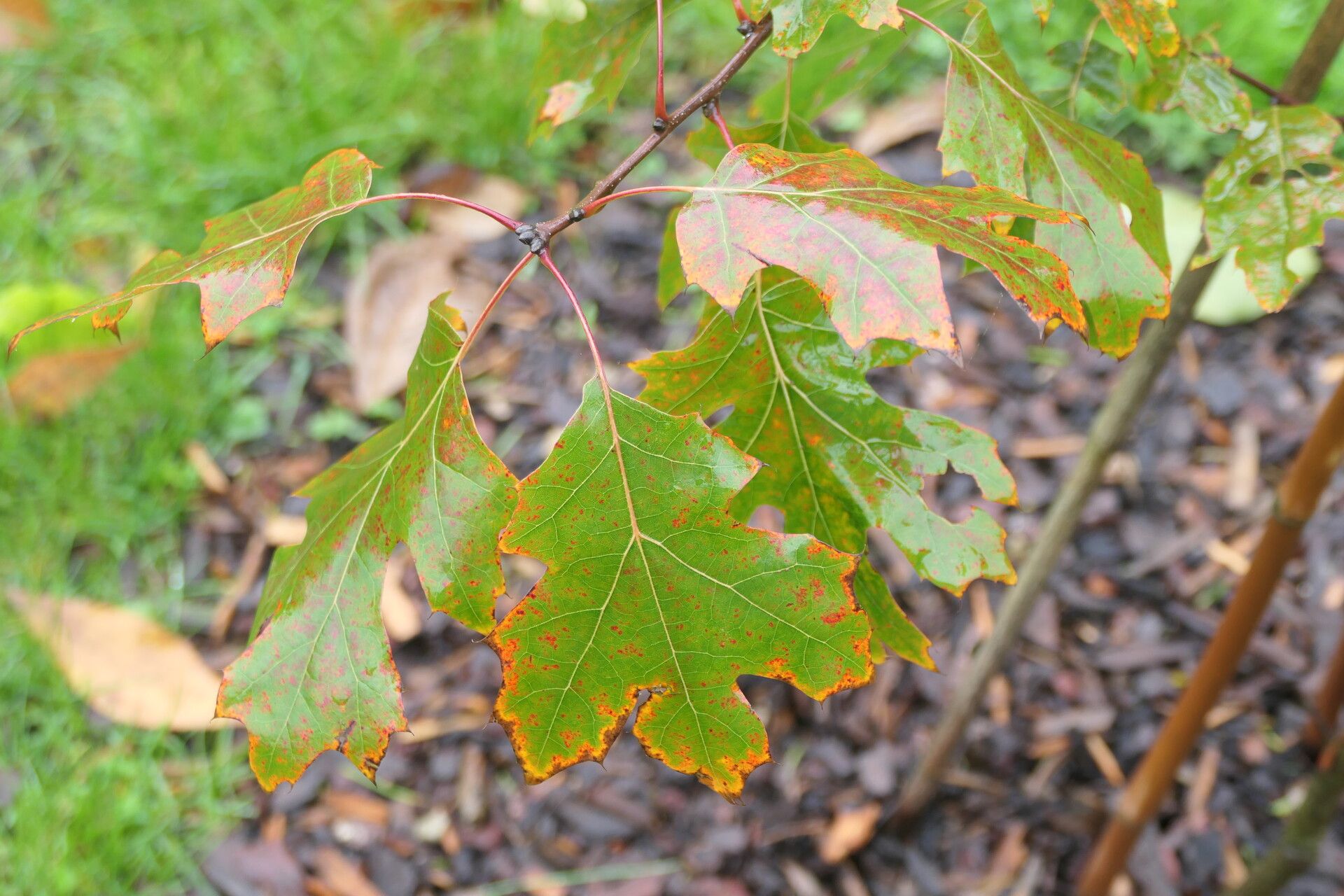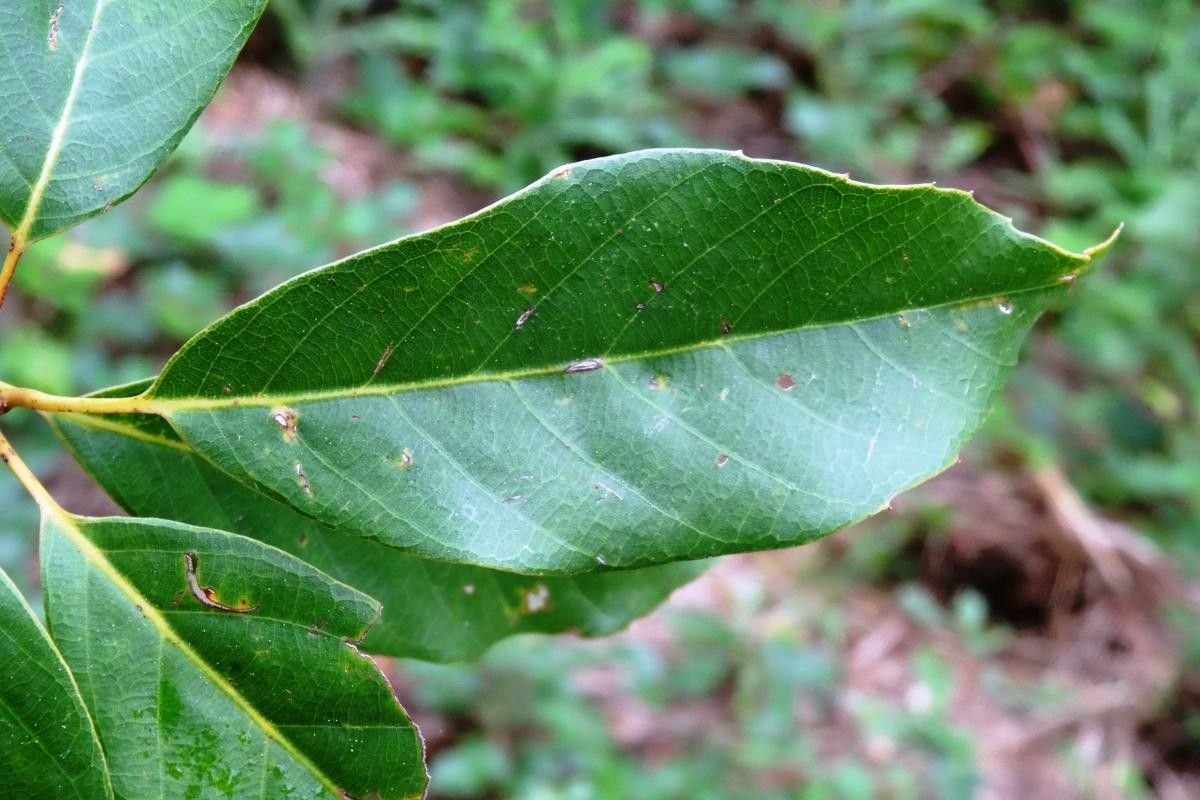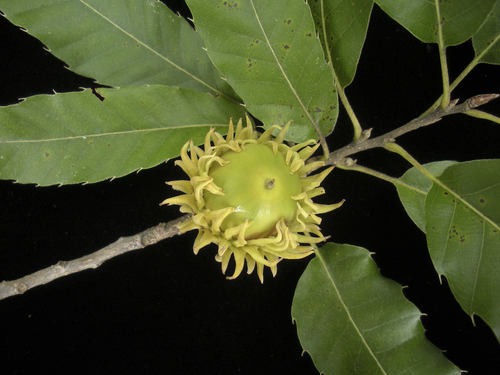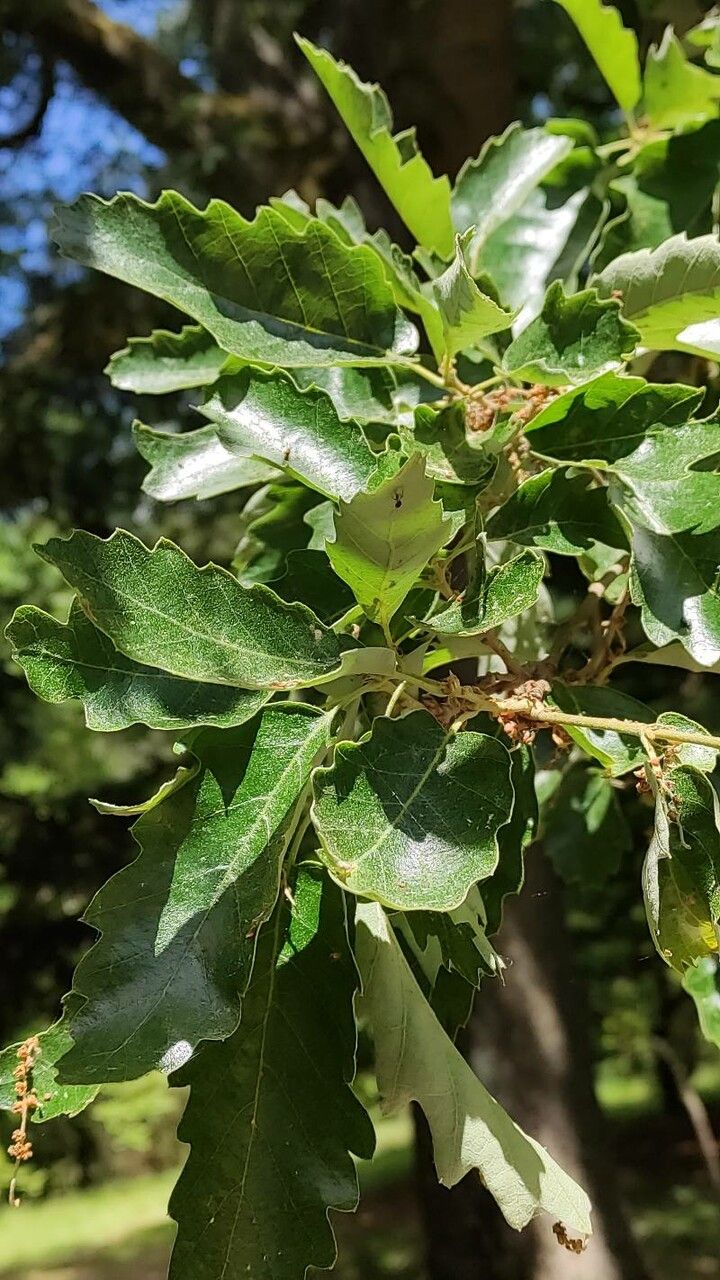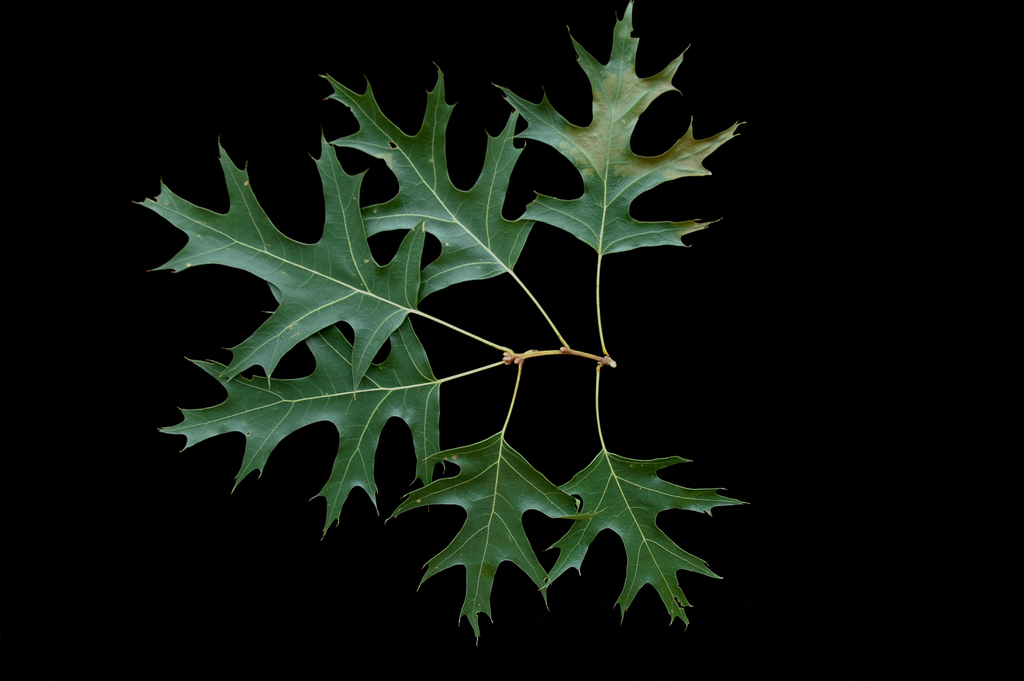
Quercus coccinea, commonly known as the Scarlet Oak, is a deciduous tree belonging to the Fagaceae family. Native to North America, it can be found across various regions of the United States, particularly in the eastern and central parts of the country. At maturity, the Scarlet Oak can reach a height of up to 80 feet with a spread of around 50 feet.
The tree is easily recognizable by its dark gray, deeply furrowed bark. Its lobed leaves, which have pointed tips, are glossy green in summer and turn a bright red in autumn. The Scarlet Oak produces oval-shaped acorns with shallow caps.
This species prefers well-drained soils but can tolerate a range of soil types as long as they are not waterlogged or too alkaline. It thrives in full sun but can also grow in partial shade.
The Scarlet Oak holds significant ecological importance, supporting diverse wildlife such as birds, squirrels, deer, and insects by providing food sources like acorns and shelter for nesting sites.
In addition to its ecological value, Quercus coccinea has cultural importance for Native American tribes, who utilized it for medicinal purposes such as treating diarrhea and fever symptoms.
Overall, Quercus coccinea is an attractive deciduous tree known for its stunning autumn foliage. It is an excellent choice for landscaping and natural forest regeneration projects alike.
Scarlet oak exhibits strong resistance to disease and is usually not susceptible to illnesses. Regarding care, this plant is fairly low-maintenance. Planted outdoors, it needs only minimal watering, and larger specimens typically do not require pruning. Smaller specimens, however, should be pruned after they have finished blooming. Scarlet oakt is appropriate for anyone with an outdoor area, such as a garden or a deck, and does not demand extensive gardening experience.
How to keep Quercus Coccinea.
Light
The scarlet oak does best when it receives plenty of sunlight throughout the day. In its native setting, the species grows well beneath open skies without shade. Although it can persist with fewer hours of sun than ideal, its growth may be limited and its leaves may become less vibrant. Excessive sunlight can also cause foliage discoloration and wilting.
Water
Scarlet oak, which originates from upland forests, thrives best in environments with moderate moisture. It prefers soil that remains consistently moist but can tolerate brief periods of dryness. Generally, you should water it every 1 to 2 weeks. This outdoor species is resilient across various climate zones due to its ability to adapt its water storage during different growth cycles.
Temperature
The scarlet oak needs a cool to moderate climate, preferring temperatures of 40 to 95 ℉ (5 to 35 ℃), which makes it suitable for temperate regions. In the spring and summer it can tolerate higher heat as long as it is given adequate water and moisture. Conversely, during the fall and winter it requires lower temperatures to ensure proper dormancy and growth in the following spring.
Fertilizer
Fertilize your Scarlet oak in early spring to encourage healthy growth. Consistent fertilization improves overall health, producing vigorous growth, increased tolerance to challenging conditions, and enhanced resistance to diseases and pests. Follow a set fertilization schedule for your Scarlet oak to maintain foliage that is vibrant, richly colored, and lush in appearance.
Pruning
The Scarlet oak showcases vibrant red leaves in the fall and benefits from pruning in early spring to promote growth. Prune by removing dead branches and thinning crowded areas to improve air circulation and sunlight exposure. This not only strengthens the tree's structure but also enhances its visual appeal.
Botanical profile.
- Plant Type
- Tree
- Life Cycle
- Perennial
- Genus
- Quercus
- Family
- Fagaceae
- Hardiness Zone
- 5-9
- Mature Height
- 20.12 m to 29.87 m
- Mature Spread
- 11.89 m to 14.94 m
- Leaf Color
- Green, Red
- Leaf Type
- Deciduous
- Flower Color
- Green, Yellow, Brown
- Flower Size
- 0.20 cm to 0.25 cm
- Bloom Time
- Late spring, Early summer
- Planting Time
- Spring, Autumn
- Harvest Time
- Mid summer, Late summer, Early fall
- Native Area
- Eastern United States
Other names.
Reader questions.
What is the most effective way to water my Scarlet oak tree?
To promote excellent root development, place a garden hose at the base of the plant instead of directly spraying the leaves. If the leaves are exposed to direct sunlight outdoors, they will need more watering. You can use bubblers or soaker hoses to ensure the roots are adequately moistened. When adding or removing plants, use soaker hoses that cover the entire garden or bed to help roots grow deep. Drain any excess water and wait for the soil to dry before watering again. Water at ground level to prevent diseases. On a sunny day, consider spraying the entire bush with water. Regardless of whether the Scarlet oak is in a pot or in the ground, deep watering is preferred over light sprinkling.
Why should I put fertilizer on my Scarlet oak tree?
No matter what type of Scarlet oak you have, regular fertilization is key to promoting overall plant health. By supplying the proper nutrients, you can encourage stronger growth and enhance your tree's ability to withstand challenging conditions and combat diseases and pests. Preserving the eye-catching foliage of your Scarlet oak is essential, so it's important to establish and stick to a fertilization regimen tailored to your specific tree. This will ultimately result in vibrant, lush leaves with a rich coloration.
What are the sunlight requirements for a scarlet oak?
The scarlet oak thrives best in locations where it receives an abundant amount of sunlight throughout the day. In its natural habitat, it grows best under clear skies, without any shade obstructing its access to sunlight. While it can manage with fewer hours of sunlight, its growth might be hindered, and its leaves could lose their vibrant color. Too much sun exposure, however, can lead to foliage discoloration and wilting. It's crucial to find a balance, with full sun defined as above 6 hours of sunlight and partial sun about 3-6 hours of sunlight daily. Observing how sunlight moves through your garden can help in choosing the ideal spots that provide this balance for your plants.
What are the ideal climate conditions for growing Scarlet Oak?
Scarlet Oak thrives in a cool to moderate climate, with ideal temperature ranges between 40 to 95°F (5 to 35°C), suitable for temperate regions. It can adapt to higher temperatures during the spring and summer as long as sufficient water and moisture are provided. In the fall and winter, it requires cooler temperatures to enter proper dormancy and to encourage growth in the spring. Scarlet Oak has strong cold resistance, meaning special frost protection measures aren't generally necessary. However, in case of unusually low winter temperatures, providing cold protection with materials like non-woven fabric or cloth on the trunk and branches is beneficial. Watering the plant abundantly before the first freeze in autumn to keep the soil moist can help prevent drought and water scarcity during the colder months.
What do I do if I give Scarlet oak too much or too little water?
An overwatered Scarlet oak may exhibit symptoms such as yellowing, wilting, and dropping of leaves. The plant may also appear dull and unhealthy, with mushy stems. To address these issues, it's advisable to adjust your watering schedule accordingly. Wilting can also be a sign of under watering, characterized by crispy and dry leaves. In such cases, check the soil for dryness and provide sufficient watering when necessary. Although the Scarlet oak will rebound with enough water, it may still display dryness and yellowing due to root damage. Once the plant returns to normal, the yellowing of leaves will cease. When keeping the Scarlet oak indoors, always monitor moisture levels in the pot, avoid overwatering, and watch out for black spots. If black spots are evident, allow the soil to dry out by withholding watering for a few days. Overwatering can result in root rot, which may necessitate repotting if discolored and slimy roots are present. It's crucial to prevent root rot by avoiding overly soggy soil. Additionally, when planting the Scarlet oak outdoors, ensure the soil is adequately moist. If the soil feels too dry when checking with your fingers, it could indicate underwatering, therefore requiring proper watering for the plant's recovery.
When should I put fertilizer on my Scarlet oak?
To ensure healthy growth, it is best to fertilize your Scarlet oak for the first time in late winter or early spring. This gives the tree the necessary nutrients to thrive once the weather warms up. If you live in a warm climate region, it's also beneficial to provide an additional fertilizer feeding in early fall. This not only adds nutrients for the following growing season, but also helps the tree withstand the cold winter without foliage damage. Fertilizing earlier in the year ensures that new branches have sufficient time to grow and become resilient to winter conditions.
How can artificial lighting be used for indoor scarlet oaks?
Indoor scarlet oaks require sufficient lighting to grow optimally, especially in situations where natural sunlight is not enough, like in winter or in less sunny spaces. Artificial lights, like LED lights, are beneficial because they can be adjusted to provide specific wavelengths needed by the plants. For proper growth, full sun plants need 30-50W/sq ft, partial sun plants 20-30W/sq ft, and full shade plants 10-20W/sq ft of artificial light. The light source should be placed 12-36 inches above the plant to simulate natural sunlight, and the lighting should last for 8-12 hours a day, mimicking natural daylight duration.
How does Scarlet Oak react to low temperature conditions?
Scarlet Oak is cold-tolerant and prefers temperatures above a certain minimum. During winter, it's essential to keep it above this minimum tolerable growing temperature. If temperatures drop below a critical growth limit, while the tree may not show immediate damage in winter, branches can become brittle, and dry come spring, with no new shoots appearing. To mitigate damage, pruning dead branches that fail to produce new leaves in spring is recommended.
How often should I give water to my Scarlet oak?
The Scarlet oak prefers deep, infrequent watering. When planted in pots, it is important to soak them with a gallon of water each time. Pots have limited water storage, so the soil dries out faster. In cold regions, watering is needed every 3 to 5 days. Water the plant early in the morning when the soil is dry, both indoors and outdoors. You can check if watering is needed by examining the soil. If the top 2-3 inches are dry, it's time for a full watering. During hot days, check the moisture daily as the heat can quickly dry out the soil in the pot. If you have a garden, irrigation is necessary. In hot climates, watering once a week is recommended. Only water when you notice about 2 to 3 inches of soil becoming too dry, indoors or outdoors. Take into account the amount of rainwater on the plant to avoid overwatering and root rot. If there is ample rainfall, additional watering may not be necessary. Scarlet oak trees typically grow in spring and fall. When outdoors, add mulch about 3 to 4 inches deep to conserve water. In sandy soil, frequent watering is needed due to its fast drainage. In clay soil, watering can be less frequent, with 2-3 days between waterings to prevent root rot. Keep track of watering dates on a calendar and watch out for drooping leaves, which may be a sign of delayed watering.
When is it best to not add fertilizer to my Scarlet oak?
There are a few times of the year when you should avoid fertilizing your Scarlet oak. One of these times is during the early and mid-winter months when the tree is dormant and doesn't need to be fed. It's also not recommended to fertilize the tree in late spring and throughout the summer. During this time, the weather is usually hotter and drier, which can have a negative impact on the tree if it's fertilized. To prevent any issues, it's best to stick to a fertilization schedule that involves feeding only in early spring and early fall.
What are the symptoms of light deficiency in scarlet oak?
When a scarlet oak doesn't receive sufficient sunlight, especially if it's grown indoors or in suboptimal outside conditions, it may show several symptoms indicating light deficiency. These include smaller new leaves, leggy or sparse growth, faster leaf drop, slowed or halted new growth, and leaves with lighter colors or irregular patterns indicating a lack of chlorophyll. Additionally, conditions such as chlorosis (leaves turning yellow), sunscald, leaf curling, wilting, and leaf scorching can occur, all pointing towards inappropriate light conditions affecting the plant's health.
What should be done if Scarlet Oak experiences high temperatures?
In the summer, maintaining a temperature below a certain maximum is crucial for the Scarlet Oak's health. Exceeding this max tolerable temperature can lead to lighter colored leaves, dry and withered tips, and increased susceptibility to sunburn. To protect the plant, trim away sunburned and dried-up parts and relocate it to a shaded area or use shade cloth during peak sunlight hours. Ensuring the soil remains moist through morning and evening watering is also beneficial.