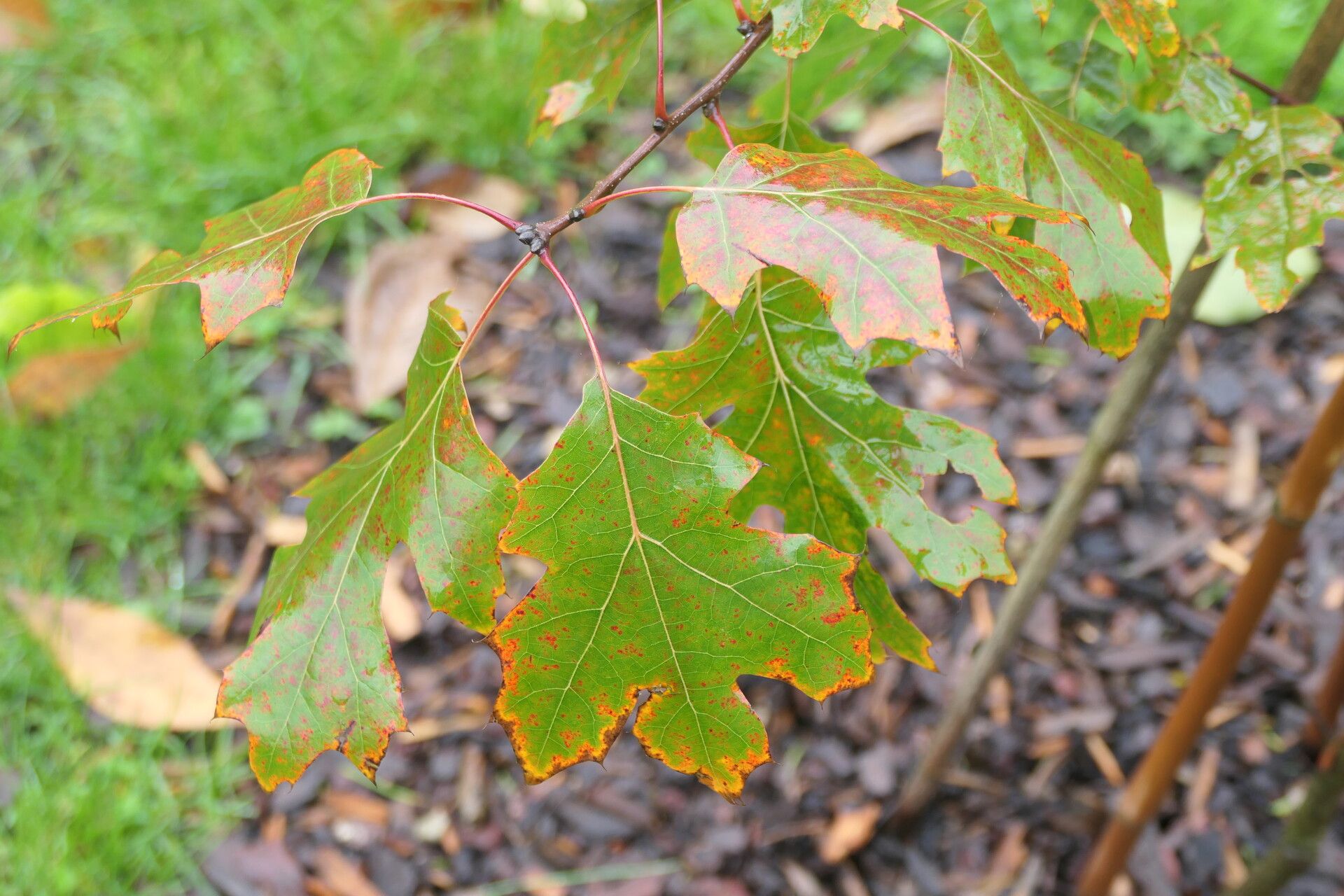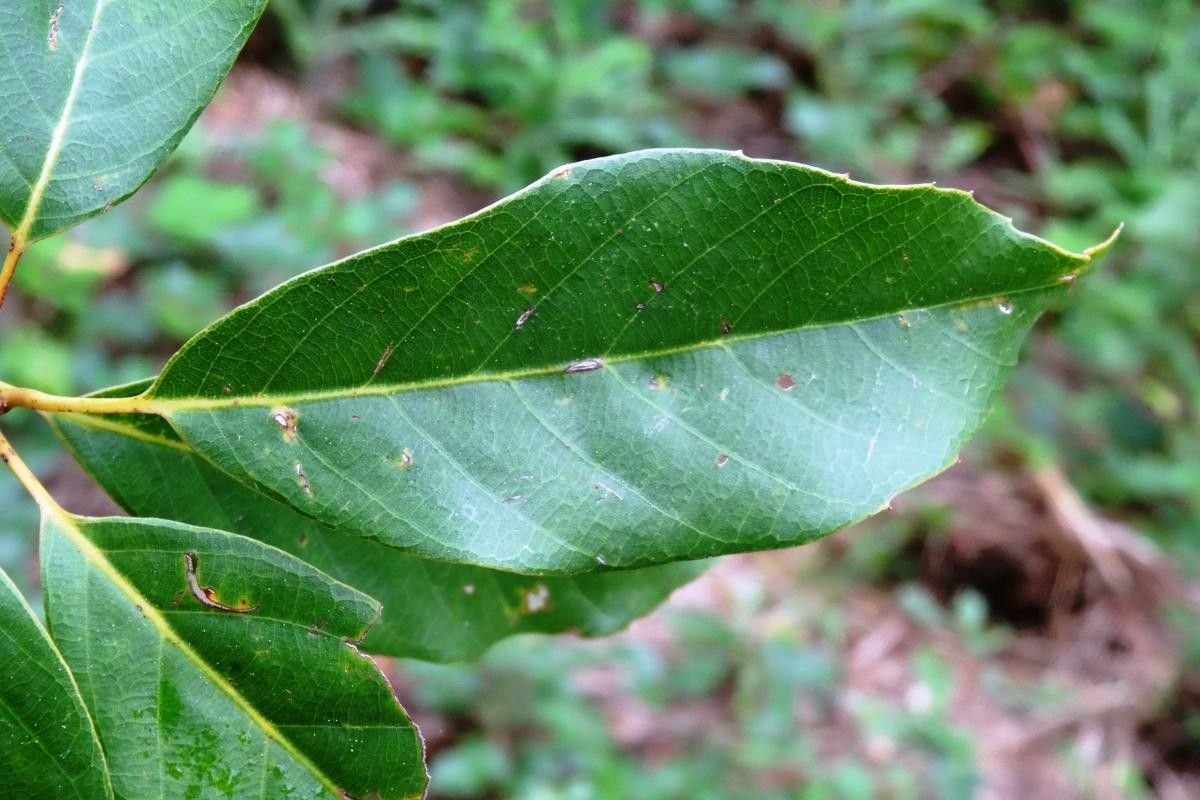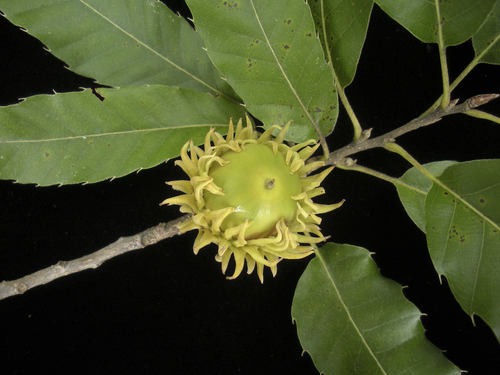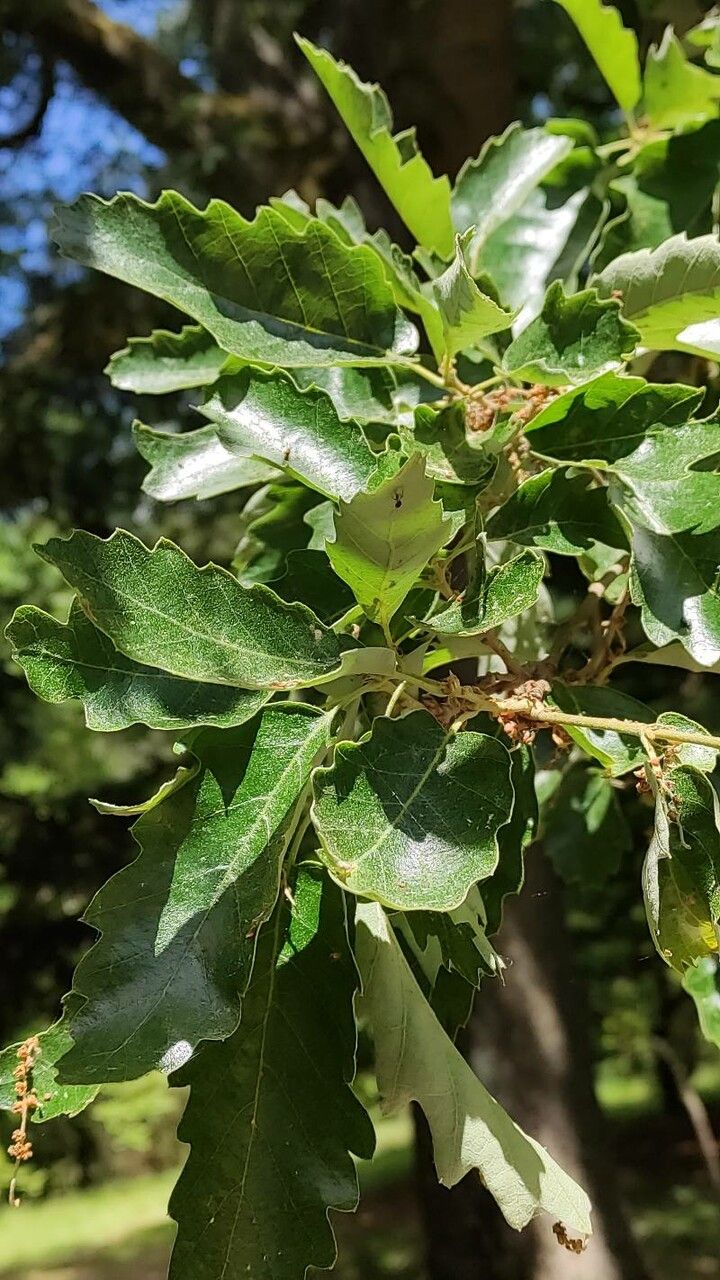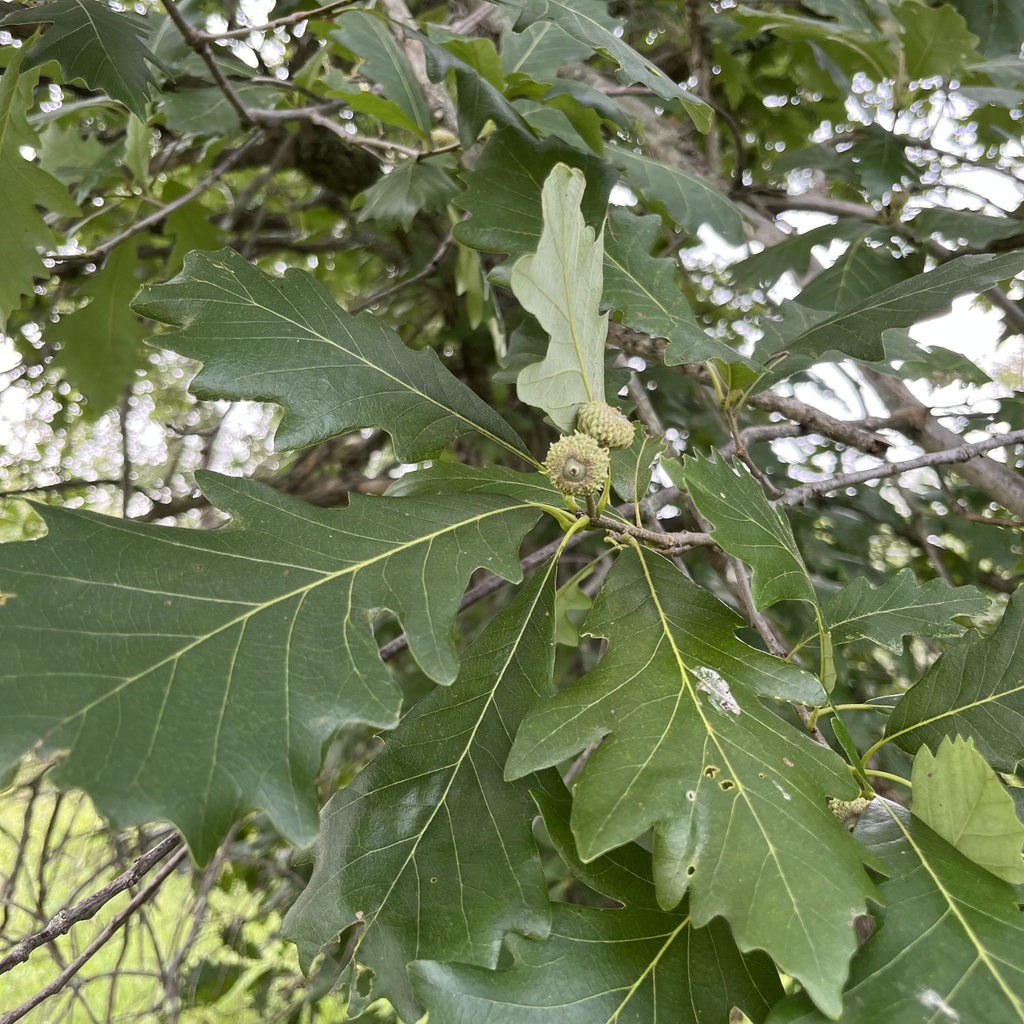
Quercus bicolor, commonly known as the swamp white oak, is a deciduous tree native to North America. Typically, it grows to a height of 60-80 feet and has a spread of 40-60 feet. The tree boasts an attractive rounded crown, with grayish-brown bark marked by deep furrows.
The leaves of the swamp white oak are simple, alternate, and lobed with deep sinuses. They are dark green in the summer and turn yellow-brown in autumn before falling off.
This oak produces acorns that are about an inch long, with a distinctive cap covering roughly one-third of the nut. These acorns serve as food for wildlife, including squirrels, deer, turkeys, and various birds.
The swamp white oak prefers moist soils but can tolerate some drought once established. It is commonly found in wetlands, such as swamps or along riverbanks, but also thrives in upland areas with adequate moisture.
Swamp white oaks have gained popularity as ornamental trees due to their appealing autumn foliage and their ability to provide shade in outdoor spaces like parks and gardens. Additionally, they are relatively low-maintenance once established.
The swamp white oak is considered one of the most important white oaks in the timber industry. Its wood resembles birch, and it is valued similarly in the wood trade. This tree typically grows in wet environments, such as broad valleys, low-lying fields, and around the edges of lakes, ponds, or swamps, which is how it earned its name, swamp white oak.
Swamp white oak is resistant to disease and generally not susceptible to illnesses. Regarding care, this plant is fairly low-maintenance. When planted outdoors it needs little watering, and larger plants typically do not require pruning. Smaller plants, however, should be pruned after they have bloomed. Swamp white oak is appropriate for anyone with an outdoor area, such as a garden or deck, and does not demand extensive care experience.
How to keep Quercus Bicolor.
Light
Swamp white oak does best when it receives ample sunlight all day, although it can tolerate reduced light if necessary. A pronounced shortage of sunlight can diminish its vigor, while too much sunlight can lead to scorching. It evolved in habitats with abundant sun exposure.
Water
The swamp white oak flourishes in moist conditions and prefers consistently damp soil. It is recommended to water it every 1-2 weeks. Although this deciduous tree is somewhat drought-tolerant, it needs plenty of water during its growing season to ensure healthy foliage development.
Temperature
Swamp white oak needs a temperature range of 32 to 89℉ (0 to 32℃) for optimal growth. It prefers a consistently cool, moderately humid environment, with temperatures of 65 to 75℉ (18 to 24℃) during the growing season. In winter it can tolerate temperatures as low as −13℉ (−25℃).
Fertilizer
Apply fertilizer to your Swamp white oak in early spring to encourage healthy growth. Regular feeding improves overall health, producing vigorous growth, greater tolerance of harsh conditions, and enhanced resistance to diseases and pests. Keep to a defined fertilization schedule for your Swamp white oak to maintain vibrant, deeply colored foliage and a lush appearance.
Pruning
The swamp white oak thrives in wet conditions. To keep the tree healthy and attractive, it's important to prune it in early spring. This involves removing any dead or crossing branches to improve air circulation and shape. Make sure to make clean cuts near the branch collar, as using proper technique and timing enhances both the tree's health and its visual appeal.
Botanical profile.
- Plant Type
- Tree
- Life Cycle
- Perennial
- Genus
- Quercus
- Family
- Fagaceae
- Hardiness Zone
- 3-8
- Mature Height
- 17.98 m to 28.96 m
- Mature Spread
- 14.94 m to 17.98 m
- Leaf Color
- Green, Yellow, Gold, Brown
- Leaf Type
- Deciduous
- Flower Color
- Yellow, Green, Red, Gold, Cream, Brown, Bronze, Burgundy
- Flower Size
- 0.25 cm
- Bloom Time
- Late spring, Early summer
- Planting Time
- Spring, Autumn
- Harvest Time
- Mid summer, Late summer, Early fall
- Native Area
- North America
Other names.
Reader questions.
When Should I Water My Swamp White Oak?
Proper and timely watering is crucial for the health and development of swamp white oak, impacting its growth, color, and disease resistance. To determine the need for watering, check the soil moisture by inserting a finger or a moisture meter 2-3 inches deep into the soil - if dry, it's time to water. Other indicators include wilted, brown, yellow, or curled leaves, dry soil at the plant's base, excessive bud drop, or changes due to temperature and humidity. Over-watering can lead to root diseases, while under-watering may cause wilting or even plant death. Understanding these signs helps manage swamp white oak's watering needs effectively.
Why should I add fertilizer to my Swamp white oak tree?
No matter what type of Swamp white oak you have, regular fertilization is key to ensuring the plant's overall health. By providing the proper nutrients, you can promote strong growth and enhance the tree's ability to withstand challenging conditions and fight off diseases and pests. Maintaining the foliage is particularly important as it is one of the tree's most attractive features. To achieve vibrant and lush leaves, it is crucial to establish and follow a fertilization schedule tailored to the specific needs of your Swamp white oak.
What are the sunlight requirements for swamp white oak?
Swamp white oak requires full sun, which means it thrives best with more than 6 hours of sunlight daily, but it can also grow in partial sun, getting about 3-6 hours of sunlight. It's crucial to monitor the sunlight moving through your garden to ensure you pick spots that offer a balance of light and shade suitable for your plants. Although swamp white oak prefers abundant sunlight, it can survive with less. However, a significant lack of sunlight may affect its vitality, and excessive sunlight can cause scorching.
What are the optimal temperature ranges for the growth of Swamp White Oak?
The Swamp White Oak thrives in a temperature range of 32 to 89°F (0 to 32°C) for optimal growth, ideally preferring a cooler and moderately humid environment with temperatures between 65 to 75°F (18 to 24°C) during its growing season. In winter, it can tolerate temperatures down to minus 13°F (-25°C). It exhibits strong cold resistance, thereby reducing the need for special frost protection measures. However, if temperatures are expected to fall below -25°C, protecting the tree by wrapping its trunk and branches with non-woven fabric or similar materials is recommended. Additionally, watering the plant abundantly before the first freeze in autumn can help ensure the soil remains moist and prevents drought and water scarcity.
How Should I Water My Swamp White Oak?
Watering your swamp white oak efficiently involves deep watering to reach its deep root system, promoting stronger growth and enhancing drought tolerance. This can be achieved using a watering tool or hose to apply water slowly at the tree's base, avoiding wetting the foliage to prevent disease. Tools like soil probes or soaker hoses can help achieve the required slow, deep watering. Before watering, check that the soil is not already moist to avoid waterlogging. Target the watering directly at the base, and ensure even distribution around the root area. Special caution should be taken not to over-water, as swamp white oak does not tolerate prolonged soggy conditions.
When should I put fertilizer on my Swamp white oak tree?
To properly fertilize your Swamp white oak, follow these guidelines. The first time to fertilize is during late winter or early spring, allowing the oak to receive necessary nutrients for healthy growth when the weather warms up. If you are in a warm climate region, consider giving an extra fertilizer feeding in early fall. This helps supply additional nutrients for the next growing season and makes the oak more resilient to winter cold, preventing foliage damage. Fertilizing earlier also allows new branches enough time to grow and withstand the cold winter.
How can artificial lighting support plant growth?
Indoor plants require adequate lighting for optimal growth, especially when natural sunlight is insufficient. Artificial lights, such as LED lights, provide an essential solution by supplying the specific wavelengths of light that plants need. Full sun plants should receive 30-50W/sq ft of artificial light, partial sun plants need 20-30W/sq ft, and full shade plants require 10-20W/sq ft. The light source should be placed 12-36 inches above the plant, mimicking natural sunlight as closely as possible, and plants typically need 8-12 hours of light per day.
How does low temperature affect Swamp White Oak, and what are the solutions?
Swamp White Oak is cold-tolerant, performing best when the temperature is kept above freezing. While it generally tolerates winter well, temperatures below -25°C (-13°F) might not induce visible distress during winter, but come spring, branches might become brittle and dry, preventing the emergence of new shoots. The solution for this is to prune away any dead branches that have failed to produce new leaves in spring, ensuring the tree remains healthy and can grow properly.
How Much Water Does Swamp White Oak Really Need?
Swamp white oak, native to wetland habitats, generally requires a thorough soaking at each watering to satisfy its deep-rooted system. While the exact amount varies with factors like pot size, root depth, and plant maturity, generally, 2 to 3 liters per session is recommended for a mature plant. Proper hydration is indicated by vibrant foliage, sturdy stems, and abundant acorns. Over-watering can lead to root rot and susceptibility to diseases; whereas, under-watering might result in stunted growth and reduced vitality. Although swamp white oak can stand short-term waterlogging, letting the soil dry somewhat between watering ensures better oxygen and nutrient absorption.
When shouldn't I fertilize my Swamp white oak?
There are a few times throughout the year when you should avoid fertilizing your Swamp white oak. The first time is in the early and mid-winter months when the oak is dormant and doesn't need any nutrients. It's also not recommended to fertilize the plant in late spring and summer when the weather is hotter and dryer. These conditions can negatively affect the oak's response to fertilization. To prevent any problems, it's best to stick to a fertilization schedule that only involves feeding in early spring and early fall.
What are the signs of insufficient or excessive sunlight in swamp white oak?
Swamp white oak may show various symptoms when it doesn't receive adequate sunlight, including smaller new leaves, leggy or sparse growth, faster leaf drop, slower or halted growth, and lighter-colored new leaves. Conditions like chlorosis, sunscald, leaf curling, wilting, and leaf scorching can also occur due to excessive sunlight exposure. These symptoms indicate the plant's struggle to adapt to the available light conditions, affecting its overall health and growth.
How does high temperature affect Swamp White Oak, and what are the solutions?
During the summer, it is crucial to ensure that the Swamp White Oak's environment doesn't exceed 89°F (32°C). Should temperatures go beyond this threshold, the tree's leaves may lighten in color, and their tips might dry out and wither, making it more susceptible to sunburn. To mitigate these effects, affected parts should be trimmed away. Furthermore, relocating the plant to a shaded area or employing a shade cloth can protect it from the midday and afternoon sun. It's also recommended to water the tree both in the morning and the evening to maintain soil moisture and support its well-being during higher temperatures.