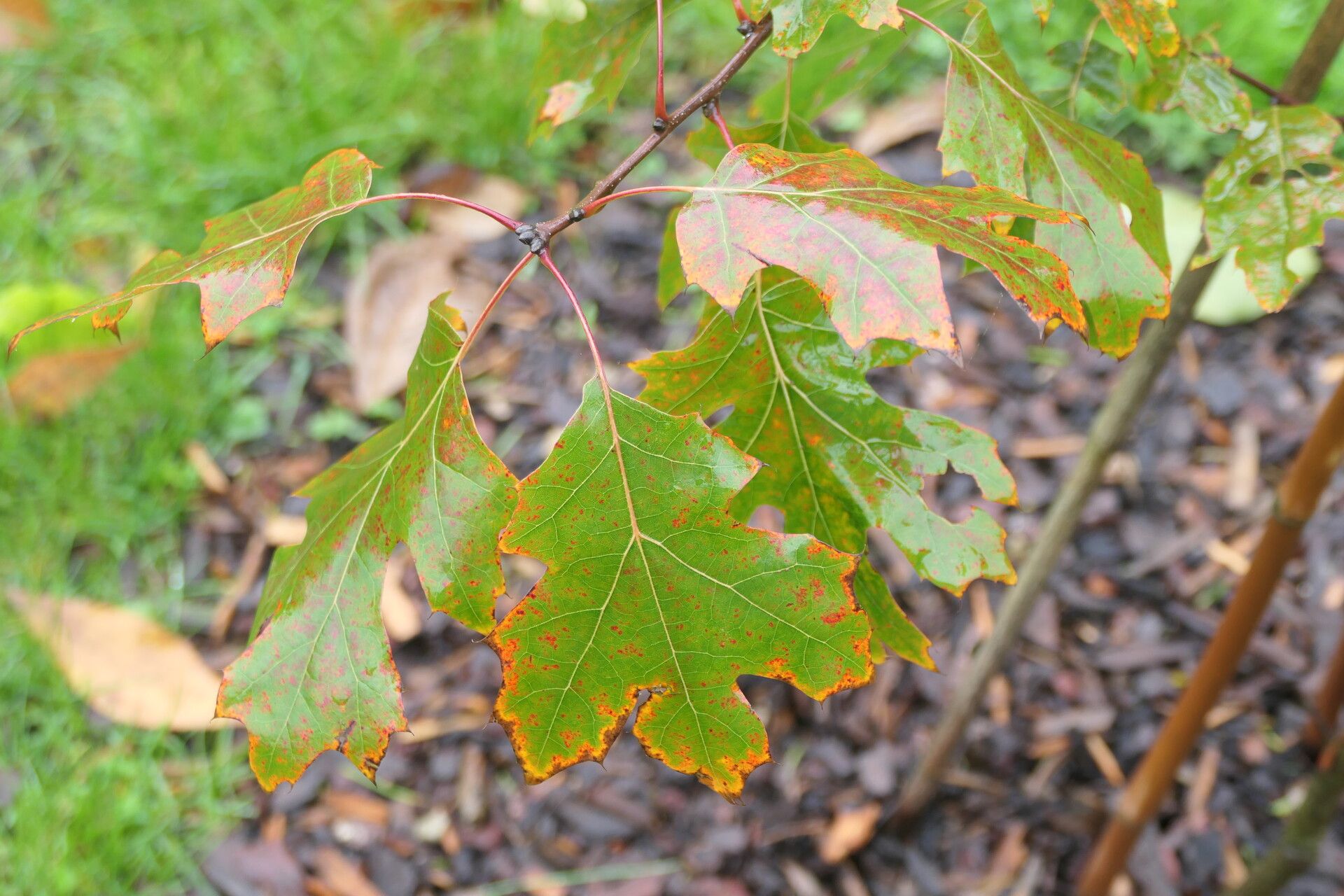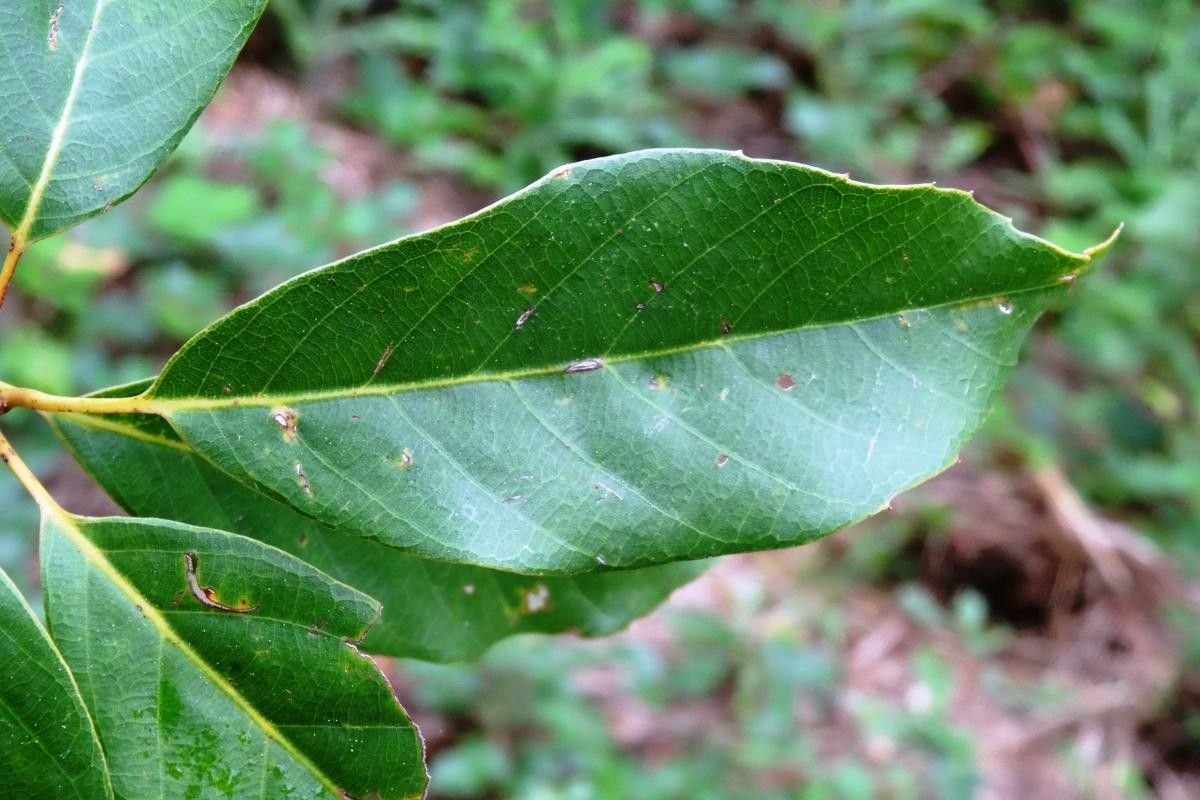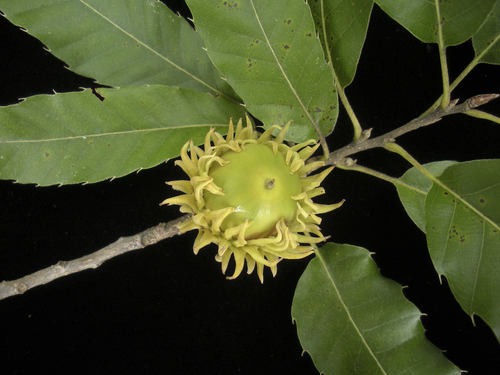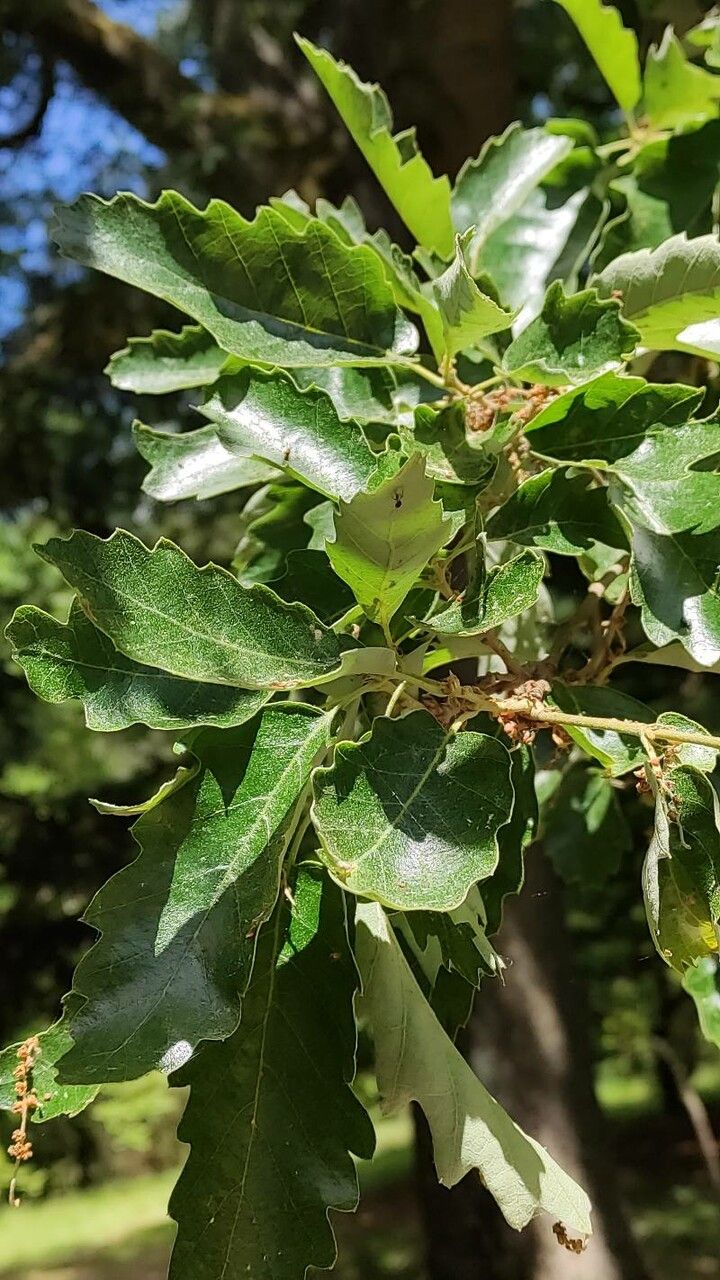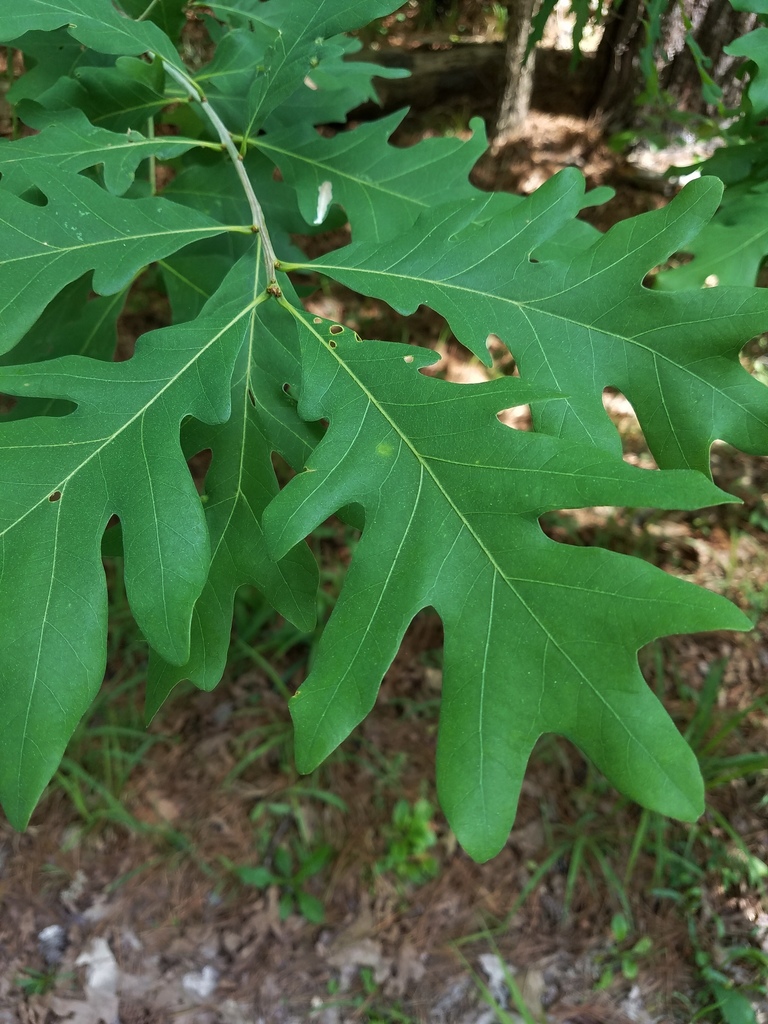
Quercus alba, the white oak, is one of the preeminent hardwoods of eastern and central North America. It is a long-lived oak, native to eastern and central North America and found from Minnesota, Ontario, Quebec, and southern Maine south as far as northern Florida and eastern Texas. Specimens have been documented to be over 450 years old.Although called a white oak, it is very unusual to find an individual specimen with white bark; the usual colour is a light grey. The name comes from the colour of the finished wood. In the forest it can reach a magnificent height and in the open it develops into a massive broad-topped tree with large branches striking out at wide angles.
White Oak: Despite the name, it is rare to find a tree with truly white bark. The bark of the white oak is typically light gray. The tree is called "white oak" because the processed wood has a white appearance.
White oak is highly resistant to disease and typically does not get sick. For care, this plant is fairly low-maintenance. Planted outdoors, it needs little watering, and larger plants normally do not require pruning. Smaller plants, however, should be pruned after they finish blooming. White oakt is appropriate for anyone with an outdoor area, such as a garden or a deck, and does not demand extensive care experience.
How to keep Quercus Alba.
Light
White oak does best with plenty of sun, which supports its growth and vigor. The species is equally capable of withstanding less generous light conditions. At every stage of development, ample sunlight is beneficial, reflecting the conditions of its original habitat, yet reduced illumination does not significantly impair its growth. Excessive exposure, however, can cause leaf damage, while insufficient light may limit vitality and growth.
Water
White oak thrives in environments similar to temperate forests. It benefits from consistent moisture but can also tolerate periods of dryness. For optimal growth, water the tree every 1-2 weeks, ensuring the soil remains evenly moist without becoming waterlogged. When planted outdoors, white oak requires well-draining soil to support its growth cycles and prevent root rot.
Temperature
In its native habitat, white oak prefers temperatures from 0 to 35 ℃ (32 to 95 ℉). In temperate regions it can tolerate cold winters and hot summers. During the growing season it favors warmer temperatures of 20 to 30 ℃ (68 to 86 ℉), and may require supplemental irrigation during drought conditions. In the fall, cooler temperatures around 10 to 15 ℃ (50 to 59 ℉) are beneficial, signaling the plant to begin shifting its energy toward root growth.
Fertilizer
Fertilize your White oak in early spring to promote healthy growth. Regular fertilization improves overall health, encouraging vigorous growth, greater resilience to harsh conditions, and enhanced resistance to diseases and pests. Keep to a specific fertilization schedule for your White oak to ensure its foliage remains vibrant, deeply colored, and lush in appearance.
Pruning
White oak trees feature broad, lobed leaves and grow to a tall height. To keep them healthy, it's best to prune them in early spring. This is the perfect time to remove any dead or crossing branches, which helps improve airflow and allows more sunlight to reach the tree. Structural pruning is also important as it maintains the tree’s shape, reduces the risk of storm damage, and promotes vigorous growth, ultimately leading to a strong and healthy tree.
Botanical profile.
- Plant Type
- Tree
- Life Cycle
- Perennial
- Genus
- Quercus
- Family
- Fagaceae
- Hardiness Zone
- 3-9
- Mature Height
- 20.12 m to 29.87 m
- Mature Spread
- 14.94 m to 24.08 m
- Leaf Color
- Green, Red
- Leaf Type
- Deciduous
- Flower Color
- Yellow, Green, Red
- Flower Size
- 2.54 cm
- Bloom Time
- Mid spring, Late spring
- Planting Time
- Spring, Autumn
- Harvest Time
- Mid summer, Late summer
- Native Area
- Eastern United States
Other names.
Reader questions.
When should I water my White Oak?
Watering your White Oak is critical to its health and growth. Look for signs like changes in leaf color, such as dark green leaves or yellowing at the edges, which indicate dehydration. The texture of the leaves should be slightly flexible and waxy, with crisp or wilting leaves signaling a lack of water. Check the soil moisture by pressing your fingers about an inch into the soil near the tree base; dry soil means it's time to water. Slow growth during the growing season can also suggest the need for more water. Be cautious with your watering schedule as both over-hydration and dehydration can have adverse effects on the tree, possibly leading to diseases or even death.
Why should I put fertilizer on my White oak tree?
Regardless of the type of White oak you have, regular fertilization is essential for its overall health. Providing the proper nutrients will enhance growth and make the tree more resistant to adversities such as difficult growing conditions, diseases, and pests. The foliage of your White oak is particularly appealing, so it is important to maintain its beauty. This can be achieved by following a tailored fertilization schedule that will encourage vibrant and lush leaves with deep color.
What are the sunlight requirements for white oak?
White oak thrives best under full sun conditions, requiring more than 6 hours of sunlight daily, but it can also adapt to partial sun, with about 3-6 hours of sunlight. It's important to observe how sunlight moves through your garden to find spots that offer the right balance of light and shade, ensuring optimal growth and health for your white oak.
What temperature range does white oak prefer in its native growth environment?
White oak prefers a temperature range of 0 to 35°C (32 to 95°F) in its native growth environment. It can tolerate the cold winters and hot summers typical of temperate regions. Optimal growing conditions during the season are warmer temperatures of 20 to 30°C (68 to 86°F). The tree may require additional watering during droughts. Cooler temperatures around 10 to 15°C (50 to 59°F) in the fall are beneficial, signaling the plant to shift its energy towards root growth. White oak has strong cold resistance, and special frost protection measures are usually not needed. However, for winter temperatures expected to drop below its tolerance level, protecting the tree with non-woven fabric or cloth around the trunk and branches is important. It's also recommended to water the plant abundantly before the first freeze in autumn to ensure the soil remains moist.
How should I water my White Oak?
White Oak thrives with consistent soil moisture but dislikes overwatering. Utilize deep watering techniques to ensure water reaches the root zone, promoting deep root growth. A slow and even watering method is preferred. While not essential, using a moisture meter can help avoid over or under-watering. Focus on watering the base of the tree and avoid excessive foliage wetting to prevent disease. Mulching can help maintain soil moisture. Regular checks for soil moisture will guide when to next water your White Oak.
When should I fertilize my White oak tree?
To ensure healthy growth, it is recommended to fertilize your White oak during late winter or early spring. This provides the necessary nutrients for growth once the weather warms up. If you live in a warm climate region, it can also be beneficial to give your White oak an extra fertilizer feeding during early fall. This supplies additional nutrients for the next growing season and helps the tree withstand the winter cold without foliage damage. Fertilizing earlier in the season allows the new branches to develop fully and prepare for the cold winter.
What essentials should be considered for growing white oak?
Growing white oak successfully requires ample sun exposure for growth and vigor, though it can also withstand less generous light conditions. Abundant sunlight is favorable and mimics its natural habitat, promoting stronger development. However, over-exposure to sunlight can cause foliar damage, whereas insufficient light may reduce the plant's vitality and growth. Additionally, when natural sunlight is not enough, especially indoors or during less sunny seasons, artificial lighting can provide a vital growth boost. LED lights are recommended, with full sun plants needing 30-50W/sq ft, partial sun plants 20-30W/sq ft, and full shade plants 10-20W/sq ft of artificial light. The distance from plant to light source should be 12-36 inches, and most plants benefit from 8-12 hours of artificial light daily.
What happens to white oak when temperatures fall below its cold tolerance limit, and what measures can be taken?
When temperatures fall below white oak's cold tolerance limit, there may not be any noticeable changes during winter. However, in spring, the branches can become brittle, dry, and fail to produce new shoots. To mitigate this issue, it's advisable to prune away any dead branches that did not produce new leaves in spring. This pruning helps in removing parts of the tree that have been negatively affected by the cold and encourages new growth.
How much water does White Oak really need?
The amount of water needed for White Oak varies depending on several factors like pot size, root depth, and plant size. In general, mature White Oaks in large pots may need around 4-6 liters per watering session. Proper hydration is shown by healthy-looking leaves and slightly moist top soil. Signs of underwatering include wilting leaves and dry, crumbly soil, while overwatering may cause yellowing leaves and soggy soil. Balance is crucial, as too much or too little water can harm the plant.
When is it not a good idea to add fertilizer to my White oak?
There are specific times during the year when you should avoid fertilizing your White oak tree. The first instance is during the winter months, from early to mid-winter, when the tree is dormant and does not require any nutrients. Additionally, it is not advisable to fertilize the tree during late spring and throughout the entire summer. During this period, the weather tends to be hotter and drier, which can have a detrimental effect on the tree if fertilized. To prevent any negative consequences, it is best to follow a fertilization schedule that only involves feeding the tree in early spring and early fall.
What are the symptoms of light deficiency in white oak?
White oak may exhibit several symptoms when experiencing light deficiency, including smaller new leaves than previous ones, leggy or sparse growth, earlier than expected leaf drop, delayed growth or halted new leaf production, lighter-colored new leaves, and conditions such as chlorosis, sunscald, leaf curling, wilting, and leaf scorching. These symptoms indicate that the plant is not receiving adequate sunlight, which is crucial for its health and development.
How does white oak react to high temperatures, and what solutions are recommended?
Under high temperatures, white oak's leaves may become lighter in color, and the tips can dry and wither, making the plant more susceptible to sunburn. To combat these symptoms, it's recommended to trim away sunburned and dried-up parts of the plant. Moving the plant to a location that provides shade from the midday and afternoon sun or using a shade cloth can protect it. Additionally, watering the plant in the morning and evening will help keep the soil moist and reduce stress on the plant during hotter periods.